NVIDIA is navigating an extraordinary period in its corporate history. In November 2026, founder Jensen Huang resigned as president, chief executive officer, and board director before being reinstated less than two weeks later. Meanwhile, the company’s artificial intelligence technology is becoming increasingly important in cancer research, drug discovery, medical imaging, and precision radiotherapy.
The developments highlight two different dimensions of NVIDIA’s influence: its position at the center of the global AI economy and the growing application of accelerated computing to healthcare. On October 21, 2026, NVIDIA announced collaborations involving AI-assisted protein design, scientific agents, autonomous laboratories, and adaptive radiotherapy. Among its partners was Siemens Healthineers, which is exploring how artificial intelligence and advanced simulation could support more personalized cancer treatment. NVIDIA also has a history of cancer philanthropy through its former Compute the Cure initiative, which supported research institutions, nonprofit cancer-care organizations, and employee fundraising.
However, these activities represent distinct forms of involvement in oncology. Compute the Cure was a philanthropic program that has since ended. NVIDIA’s current healthcare initiatives primarily involve commercial technology platforms, computational infrastructure, and scientific partnerships. The central question for oncology is whether these technologies can translate computational advances into faster scientific discovery, safer clinical workflows, and measurable improvements in patient outcomes.
What Happened to NVIDIA and Jensen Huang in November 2026?
NVIDIA experienced an unusual leadership transition in November 2026. On November 12, the company announced that founder Jensen Huang had resigned as president, chief executive officer, and a member of the board of directors, effective immediately. Colette Kress, NVIDIA’s executive vice president and chief financial officer, was appointed interim CEO while retaining her financial responsibilities. Harvey C. Jones became chair of the board.
The announcement came amid reporting concerning Huang’s personal conduct and questions involving corporate governance and potential foreign-intelligence activity. These matters attracted considerable public attention. However, allegations reported during the controversy should be distinguished from established investigative findings. On November 23, NVIDIA announced that Huang had been reinstated as president, CEO, and a member of the board, effective immediately.
According to the company’s announcement, the board had reviewed the circumstances surrounding his departure and held discussions with Huang. NVIDIA stated that its board had received input from senior levels of the United States government and was confident that Huang’s reinstatement posed no national-security risk. The company also indicated that an independent committee’s investigation would continue. The resignation and subsequent reinstatement marked an extraordinary sequence for a technology company whose products underpin major AI infrastructure projects worldwide.
Why Does NVIDIA’s Leadership Matter Beyond the Technology Industry?
NVIDIA is more than a manufacturer of graphics processing units. Its hardware, networking systems, AI software, and computational platforms support applications across scientific research, manufacturing, telecommunications, robotics, and healthcare. Hospitals, pharmaceutical companies, medical-device manufacturers, biotechnology firms, and academic institutions increasingly rely on accelerated computing to analyze complex information.
In oncology, these technologies can support molecular modeling, medical-image processing, genomic analysis, and treatment-planning research. Corporate decisions involving NVIDIA may therefore affect organizations that depend on its technological ecosystem.
Changes in leadership, supply-chain strategy, investment priorities, or product development could influence the broader adoption of AI applications. Nevertheless, corporate governance and clinical effectiveness are separate questions. The existence of promising healthcare partnerships does not resolve corporate concerns. Equally, a corporate controversy does not automatically invalidate a technology’s scientific performance. Each issue requires independent evaluation.
How Financially Powerful Is NVIDIA in 2026?
Despite the leadership disruption, NVIDIA reported substantial financial growth. On November 17, 2026, the company announced its third-quarter fiscal 2027 financial results, covering the period ending October 25, 2026. Quarterly revenue reached $115.8 billion, representing a 103% year-over-year increase. Its data-center business generated $107.6 billion, up 110% compared with the corresponding quarter of the previous year. These results reflected continued demand for AI computing infrastructure.
NVIDIA’s data-center technologies support large-scale model development, inference, enterprise computing, and scientific applications. The figures are relevant to healthcare because advanced biological modeling, computational drug discovery, and medical simulation may require substantial processing capacity. However, NVIDIA does not separately identify oncology-specific revenue within these headline financial results. Therefore, the company’s overall revenue growth should not be interpreted as evidence of equivalent growth in its cancer-related business.
Why Is NVIDIA Becoming Important in Cancer Research?
Cancer research increasingly depends on analyzing large and complex datasets. Researchers investigate genomic alterations, protein structures, tumor microenvironments, treatment resistance, pathology images, radiological scans, and clinical outcomes. These investigations can involve millions of individual measurements and complicated relationships between biological variables.
Traditional computing methods may require considerable resources to process this information. Graphics processing units are particularly useful for computational tasks that can be performed in parallel, including many machine-learning and molecular-simulation workloads. NVIDIA provides hardware and software platforms designed to accelerate these processes.
Its technologies can help researchers develop biological AI models, analyze imaging datasets, explore molecular interactions, and prioritize candidate compounds. For oncology, the potential applications extend from early-stage laboratory research to clinical workflow support. However, faster computation is not equivalent to a better cancer treatment. A model may identify an interesting biological relationship without establishing that the finding is clinically useful. The value of a computational approach depends on whether its predictions can be validated experimentally and, when appropriate, translated into clinical benefit.
What Is NVIDIA BioNeMo, and How Could It Support Cancer Drug Discovery?
One of NVIDIA’s principal life-sciences initiatives is BioNeMo, an open development platform supporting AI-driven biological research and drug discovery. BioNeMo provides tools, models, and computational infrastructure that researchers and companies can use to develop AI applications involving biological information. Traditional drug development begins with identifying a relevant biological target or therapeutic mechanism. Scientists then investigate potential drug candidates, evaluate their activity, study toxicity, and conduct progressively more complex laboratory and clinical testing.
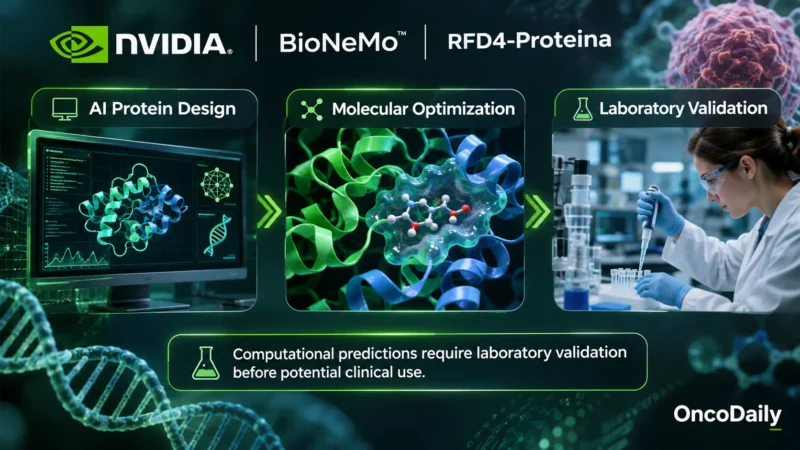
This process is time-consuming, expensive, and associated with substantial failure rates. AI-based molecular modeling could help researchers prioritize promising candidates before laboratory evaluation. Potential applications include identifying protein interactions, exploring molecular structures, designing biologically active compounds, and evaluating potential therapeutic targets. In oncology, such approaches may contribute to research involving cancer-associated proteins, signaling pathways, immune targets, and resistance mechanisms.
How Could AI Accelerate Early Cancer Drug Development?
AI systems can analyze relationships across large molecular datasets and generate predictions about biological structures or interactions. For example, a computational model may help researchers evaluate whether a candidate molecule is likely to bind to a target protein. Another model may generate structural candidates designed to perform a particular biological function. The potential advantage is better prioritization of experiments.
Rather than testing every possible candidate, researchers can use computational predictions to identify a smaller group for laboratory investigation. These approaches may improve efficiency in some stages of discovery.
However, biological systems are considerably more complex than computational models. A candidate that performs well in a simulation may fail because of inadequate biological activity, poor stability, limited tissue delivery, toxicity, or unexpected interactions. AI-generated candidates therefore require experimental testing, pharmacological evaluation, toxicology assessment, and appropriate clinical development. BioNeMo is a drug-discovery technology platform, not an approved cancer treatment.
What Is RFD4-Proteina, NVIDIA’s New Protein-Design Model?
On October 21, 2026, NVIDIA announced RFD4-Proteina, an open protein-design model developed with the University of Washington Medicine Institute for Protein Design. The model forms part of NVIDIA’s BioNeMo ecosystem. Proteins perform essential biological functions, including cellular signaling, immune recognition, molecular transport, and enzymatic activity. Designing new proteins or modifying existing ones could create opportunities for therapeutic research, diagnostics, and biotechnology. RFD4-Proteina combines programmable protein design with computational search capabilities.
Researchers can provide molecular inputs, constraints, and scoring objectives to guide the generation and refinement of candidate proteins. According to NVIDIA, the model demonstrated favorable computational performance against evaluated baselines across several protein-design benchmarks. These included protein binding, small-molecule binding, enzyme scaffolding, and DNA binding. However, computational performance does not establish biological effectiveness. Researchers must test generated proteins experimentally to determine whether they behave as intended.
Why Could Protein Design Matter in Oncology?
Many cancer therapies and diagnostic approaches depend on molecular recognition. Proteins may be engineered to interact with tumor-associated targets, influence biological signaling, or support the development of experimental diagnostic systems. AI-assisted protein design could help researchers explore molecular configurations that would otherwise require extensive computational searches. For example, scientists may investigate designed proteins that recognize specific molecular structures or modulate disease-associated biological pathways. Such research could eventually contribute to new therapeutic platforms.
However, potential applications should not be confused with established clinical results. RFD4-Proteina has not been demonstrated to provide a cancer cure, and the announcement did not establish an approved oncology product developed using the model. Its immediate significance lies in expanding research capabilities rather than directly changing standard patient treatment.
How Are Autonomous Laboratories Changing Drug Discovery?
One of the more ambitious aspects of NVIDIA’s healthcare strategy involves scientific agents and autonomous laboratories. In conventional research, scientists design experiments, perform laboratory procedures, analyze results, and use their findings to plan subsequent investigations. AI-supported scientific workflows aim to connect more of these stages. A computational agent may help propose a molecular design, organize relevant experimental information, initiate a procedure through automated laboratory equipment, and analyze the resulting data. The objective is to make the transition between scientific hypotheses and experimental testing more efficient. NVIDIA’s October 2026 announcement described several organizations developing such systems.
Which Companies Are Working With NVIDIA on Scientific AI?
Automata is connecting scientific agents with automated laboratory infrastructure, allowing computational workflows to initiate experiments and capture structured results. Benchling is developing approaches that connect scientific agents with experimental data, research context, and laboratory workflows. Boltz is working on models and tools intended to support molecular structure prediction, candidate design, evaluation, and scientific workflow planning. Biolevate is developing systems that connect biological data and specialized scientific tools with AI-based reasoning.
Danaher and Genedata are exploring an AI co-scientist workflow that integrates protein design and laboratory testing, including the use of RFD4-Proteina. Other organizations identified in NVIDIA’s healthcare announcement include Hologen and Therna Biosciences. These collaborations represent a broader attempt to connect computational biology with laboratory automation.
Could Autonomous Laboratories Accelerate Cancer Research?
In principle, autonomous laboratory systems could help investigators test more biological hypotheses and evaluate candidate molecules more efficiently. This may be particularly relevant to cancer drug discovery, where researchers often investigate numerous potential molecular targets and therapeutic mechanisms. Automated workflows could improve the consistency of some experimental processes and help organize complex research data.
However, the word autonomous should not imply that scientific systems can independently discover, validate, and approve cancer medicines. Human scientists remain responsible for designing meaningful experiments, evaluating unexpected findings, assessing biological relevance, and interpreting results. Drug candidates must still undergo laboratory validation, toxicology studies, clinical trials, and regulatory review. The potential benefit lies in accelerating selected research processes rather than eliminating the stages required to establish safety and efficacy.
Can NVIDIA’s AI Improve Radiation Therapy for Cancer?
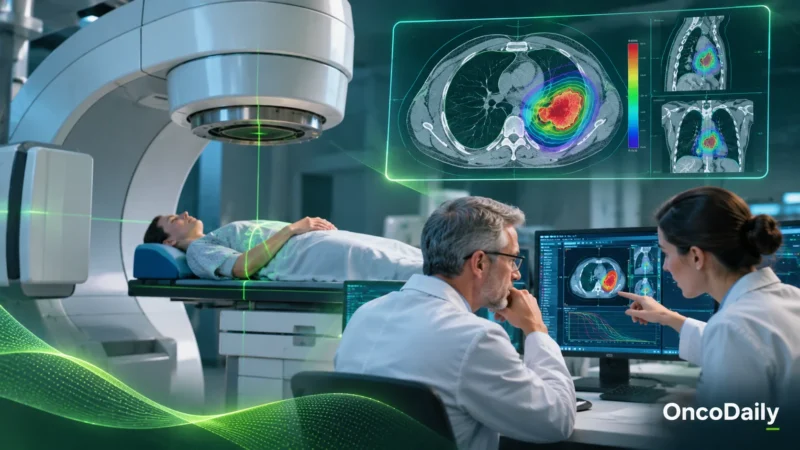
One of NVIDIA’s most directly relevant oncology collaborations involves Siemens Healthineers. On October 21, 2026, the companies announced a collaboration to explore advanced AI technologies for adaptive radiotherapy. Radiotherapy is a major component of cancer treatment and can be delivered with curative, adjuvant, neoadjuvant, or palliative intent.
Its goal is to deliver an appropriate radiation dose to a defined target while limiting unnecessary exposure to surrounding healthy tissues. Treatment planning involves imaging, target delineation, anatomical assessment, dose calculations, and evaluation of organs at risk. These processes can become particularly complex when tumors are situated near critical structures. NVIDIA and Siemens Healthineers are investigating whether accelerated computing, AI agents, and simulation could improve treatment-planning efficiency and adaptability.
What Is Adaptive Radiotherapy?
Adaptive radiotherapy is an approach in which a radiation treatment plan is reassessed and modified when clinically meaningful anatomical changes occur during treatment. A patient’s anatomy can change over the course of radiation therapy. Tumors may shrink, surrounding organs may shift, and changes in body weight or positioning may affect treatment geometry. These changes can influence how a planned radiation dose is distributed. In some circumstances, the original plan may no longer provide the most appropriate balance between tumor coverage and normal-tissue protection.
Adaptive radiotherapy allows clinicians to evaluate updated imaging information and modify treatment when indicated. The objective is to maintain appropriate dose coverage while respecting constraints for healthy tissues. However, adaptive planning can be resource-intensive. It requires imaging, contouring, plan optimization, clinical review, and quality assurance. These activities often involve specialized radiation oncologists, medical physicists, radiation therapists, and technical infrastructure. AI-supported workflows may help reduce some operational barriers.
How Are NVIDIA and Siemens Healthineers Developing AI-Assisted Radiotherapy?
The collaboration focuses on three related areas: AI-assisted co-planning, patient-specific simulation, and real-time computing.
AI-Assisted Treatment Planning
Radiotherapy planning involves balancing multiple clinical objectives. The treatment team must ensure adequate target coverage while minimizing radiation exposure to relevant organs at risk. AI agents may help evaluate alternative treatment plans, identify planning trade-offs, and support repetitive computational tasks. NVIDIA’s Nemotron models are being explored for agentic co-planning applications. However, clinical decisions require professional judgment. AI-generated recommendations must be reviewed and validated by appropriately qualified healthcare professionals.
Patient-Specific Digital Simulations
The companies are also investigating computational approaches that could support patient-specific treatment simulation. A digital twin is a computational representation of relevant features of a physical system or patient. In radiation oncology, such simulations could potentially incorporate anatomical information, treatment geometry, and dose calculations. Researchers hope these tools may help clinicians evaluate how anatomical changes influence radiation delivery.
For example, updated imaging might reveal that a target has decreased in size or that an organ at risk has moved. Simulation tools could help assess whether treatment-plan adaptation is necessary. However, digital simulations are not perfect replicas of biological systems. Their reliability depends on the quality of the underlying data, computational assumptions, and validation.
Real-Time Computing and Treatment Adaptation
NVIDIA’s Holoscan platform is designed to process streaming information with low latency. Potential radiotherapy applications involve connecting live sensor or imaging data with AI and simulation systems. Such approaches could eventually support faster recognition of relevant anatomical changes. The goal is to improve the efficiency of treatment adaptation while maintaining clinical oversight. Nevertheless, these applications remain areas of technological development and evaluation. The collaboration does not establish that fully autonomous radiotherapy is standard clinical practice.
Could AI Make Personalized Radiotherapy More Accessible?
Advanced radiotherapy often requires substantial technical and professional resources. Specialized imaging systems, planning software, clinical expertise, and quality-assurance procedures can create operational challenges. These barriers may be particularly important in hospitals with limited staffing or computational infrastructure. AI-supported systems could potentially automate selected repetitive tasks, improve planning efficiency, and help clinicians evaluate more treatment options.
Siemens Healthineers has described expanding access to personalized radiation therapy as an important objective of its work with NVIDIA. However, improved access remains a goal rather than a demonstrated result of the announced collaboration. Achieving broader access also depends on affordability, infrastructure, workforce training, reimbursement, regulatory approval, and reliable clinical implementation. The availability of advanced software alone cannot eliminate disparities in cancer care.
What Was NVIDIA’s Compute the Cure Initiative?
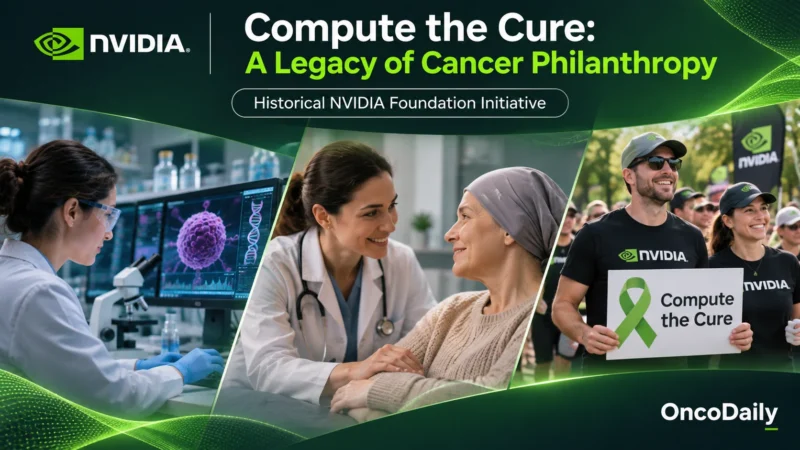
Before its recent healthcare AI initiatives, NVIDIA supported cancer research through a dedicated philanthropic program. Compute the Cure was a cancer-focused initiative operated through the NVIDIA Foundation. It combined charitable grants, employee participation, fundraising, and support for organizations involved in cancer research and care. NVIDIA reported that the initiative directed more than $5 million toward cancer-related causes during its operation.
The program reflected NVIDIA’s view that computing technology could help researchers investigate complex biological problems. At the same time, it supported organizations providing services to people affected by cancer. Compute the Cure operated for nearly a decade before NVIDIA ended the initiative as part of a shift in Foundation priorities. It should therefore be described as a historical philanthropic program rather than an active cancer-charity initiative.
What Did NVIDIA’s Compute the Cure Actually Fund?
Compute the Cure operated through three principal forms of support: cancer research grants, cancer-care grants, and employee engagement.
Cancer Research Grants
The program supported investigators using computational approaches to advance cancer research. These grants aimed to help scientists investigate cancer biology, identify molecular vulnerabilities, and explore potential biomarkers. Historical NVIDIA Foundation reporting identified support for projects at the Translational Genomics Research Institute and the University of North Texas. The research included investigations into individualized therapeutic vulnerabilities and potential cancer biomarkers. These areas are important because precision oncology increasingly depends on understanding molecular characteristics that distinguish tumors and influence treatment response. The grants supported scientific investigation rather than the direct provision of approved treatments.
Cancer-Care Grants
Compute the Cure also supported nonprofit organizations providing cancer care and patient-support services. This aspect of the program extended beyond laboratory research. Cancer affects patients through financial difficulties, treatment-related symptoms, emotional distress, caregiving responsibilities, and disruptions to everyday life. Nonprofit organizations may provide services that help address some of these challenges.
NVIDIA’s historical reporting described grants directed toward organizations offering cancer-related care and support. Its 2017 Foundation report documented four cancer-care grants of $50,000 each. Importantly, these were charitable grants to organizations, not a direct patient-assistance program that paid individual treatment bills. This distinction helps clarify the nature of NVIDIA’s philanthropic involvement.
Employee Engagement and Fundraising
The third component involved NVIDIA employees participating in fundraising and community activities. The Foundation encouraged employees to support cancer-focused charitable organizations. Historical reporting documented employee participation in activities supporting organizations such as the Leukemia & Lymphoma Society.
For example, NVIDIA described employee involvement in Light the Night fundraising walks and other workplace fundraising events. These activities provided a way for employees to participate directly in the company’s broader charitable efforts. Together, the three components demonstrate that Compute the Cure combined scientific support, nonprofit care funding, and community engagement.
Why Did a Computing Company Create a Cancer Charity?
Cancer research involves some of the most complex information-processing challenges in biomedical science. Researchers analyze large genomic datasets, protein interactions, cellular pathways, pathology images, and molecular characteristics associated with treatment response. Advanced computing can help investigators process these datasets and generate hypotheses for experimental testing. Compute the Cure reflected NVIDIA’s interest in applying computational capabilities to cancer research. The initiative supported scientists investigating biological questions through computing-intensive methods.
At the same time, NVIDIA funded organizations that delivered cancer-related care and support services. This combination distinguished the program from a charity focused exclusively on one area of cancer research. It connected scientific innovation with broader community support. However, philanthropic research funding and commercial technology development remain fundamentally different activities.
Is NVIDIA’s Compute the Cure Program Still Active?
No. Compute the Cure is no longer an active NVIDIA Foundation initiative. NVIDIA states that the Foundation ended the program after nearly a decade as it consolidated resources and shifted its priorities. This clarification is important because historical Foundation webpages and reports remain accessible online. Readers may encounter these materials and assume the initiative continues to operate. However, the program’s historical existence does not establish that it remains active.
NVIDIA’s current healthcare involvement is primarily associated with accelerated computing, scientific software, research partnerships, and commercial AI technologies. Its ongoing Foundation activities are separate from the former Compute the Cure initiative.
How Has NVIDIA’s Role Evolved From Cancer Charity to AI Infrastructure?
NVIDIA’s relationship with oncology illustrates a transition from philanthropic support to a broader role in biomedical computing infrastructure. Through Compute the Cure, the company funded researchers, nonprofit care organizations, and employee-led charitable activities. Those contributions supported specific projects and services. Today, NVIDIA’s healthcare work is primarily focused on providing technologies that other organizations use to develop scientific and clinical applications. BioNeMo supports AI-driven biology and drug discovery.
RFD4-Proteina provides a computational model for protein design. Nemotron models are being explored for scientific and clinical AI workflows. Holoscan supports low-latency processing of streaming data. Collaborations with organizations such as Siemens Healthineers seek to apply these technologies to complex healthcare challenges.
This evolution matters because the success of a philanthropic grant and the success of a commercial technology platform are measured differently. A charitable grant may support a research project or a nonprofit service. A healthcare AI platform must demonstrate that its intended applications are scientifically reliable, safe, clinically useful, and appropriate for deployment. The two forms of involvement should not be conflated.
What Is NVIDIA Inception, and How Does It Support Healthcare Startups?
NVIDIA Inception is a program designed to support startups developing technologies that use NVIDIA’s computing ecosystem. In its October 2026 healthcare announcement, NVIDIA stated that more than 1,800 healthcare AI startups participated in the program. These companies work across areas such as medical imaging, clinical software, biotechnology, healthcare operations, and patient-support technologies. Participation may provide access to technical resources, developer support, educational opportunities, and connections within NVIDIA’s ecosystem.
However, NVIDIA Inception is not a clinical-validation program. Membership does not establish that a startup’s technology has obtained regulatory approval or demonstrated safety and efficacy in patient care.
For oncology, this distinction is particularly important. A startup developing an AI-assisted diagnostic system may have promising technical results without sufficient evidence for routine clinical use. Likewise, a company developing treatment-planning software must demonstrate that its product performs reliably within the intended clinical environment. Startup participation should therefore be understood as an indicator of ecosystem involvement, not proof of clinical effectiveness.
How Is NVIDIA Supporting Hospital Operations and Patient Communication?
NVIDIA’s healthcare activities extend beyond laboratory research and radiotherapy. Its October 2026 announcement also described organizations developing AI applications for clinical documentation, patient communication, and hospital operations. These applications may be less visible than drug discovery, but they address practical challenges that affect healthcare delivery.
AI-Assisted Clinical Documentation
Administrative tasks can occupy considerable clinical time. AI-assisted documentation systems aim to help clinicians organize information and prepare elements of medical records. NVIDIA identified companies including Avelios, Corti, Dedalus, Dawn Health, and Sword as developing healthcare applications using Nemotron-related technologies. Potential uses include AI scribes, clinical workflow support, and patient-facing services.
In oncology, reducing documentation burdens could potentially allow clinicians to spend more time on direct patient care. However, AI-generated records require review because errors or omissions could affect medical decisions.
Multilingual Patient Communication
Language barriers can complicate healthcare access and patient understanding. Patients undergoing cancer treatment often need to navigate appointments, investigations, medication instructions, and follow-up plans. NVIDIA highlighted PolyAI’s work with medical software provider Corilus on multilingual conversational applications. Such systems could potentially help healthcare organizations communicate with patients more efficiently.
However, automated communication should not replace qualified medical interpretation when discussing complex diagnoses, treatment risks, or informed consent. Accuracy, privacy, and appropriate escalation to healthcare professionals remain essential.
Hospital Digital Twins
NVIDIA also described work involving Apian and VitVio, which are exploring digital twins for hospital operations using NVIDIA technologies. These systems aim to represent aspects of hospital activity computationally. Potential applications include monitoring workflows, analyzing resource use, and identifying operational inefficiencies.
For oncology services, improved scheduling or workflow coordination could eventually help reduce avoidable delays. However, whether such systems improve access or outcomes requires evidence from actual healthcare environments.
Could NVIDIA’s AI Help Accelerate Cancer Clinical Trials?
Cancer clinical trials involve complex eligibility criteria, biomarker testing, clinical assessments, and extensive data collection. AI and accelerated computing may help researchers manage some of these challenges. Computational systems can support large-scale data analysis, identify patterns in research datasets, and assist with molecular modeling. In principle, these capabilities could contribute to biomarker discovery, trial design, and research prioritization.
AI may also support selected administrative or analytical tasks. However, identifying a potential application is not equivalent to demonstrating a clinical-trial benefit. Improved computational speed does not automatically mean faster enrollment, better patient retention, or more successful clinical trials. Trial participation requires accurate eligibility assessment, informed consent, protocol compliance, and appropriate medical oversight. Any AI system intended to influence these processes must be evaluated for accuracy, reliability, and patient safety.
Can NVIDIA’s Technology Help Detect Cancer Earlier?
AI is increasingly being investigated in diagnostic imaging and pathology. Machine-learning systems can be developed to recognize patterns in radiological scans, digital pathology images, and other clinical datasets. Some applications aim to assist clinicians in identifying abnormalities or prioritizing images for review. NVIDIA’s computing platforms may support the development or deployment of these systems. However, NVIDIA’s involvement as a technology supplier does not establish that it has created an approved cancer-screening test.
Different diagnostic AI products have different clinical indications, evidence bases, and regulatory statuses. A model that performs well in retrospective research may not perform equally well across hospitals or patient populations. Furthermore, earlier detection is valuable only when it supports an appropriate clinical pathway. A suspicious finding may require additional imaging, pathology, specialist evaluation, or confirmatory testing. Cancer screening also requires evidence that the benefits outweigh potential harms, including false-positive findings, unnecessary investigations, and overdiagnosis. AI should therefore be evaluated as part of a complete diagnostic process rather than as a standalone technological solution.
Why Is the Global Cancer Burden Important for Healthcare AI?
The global burden of cancer continues to grow, increasing pressure on diagnostic services, treatment infrastructure, and healthcare professionals. According to the International Agency for Research on Cancer, the latest GLOBOCAN estimates available in 2026 indicate approximately 20.6 million new cancer cases and 9.8 million cancer deaths worldwide in 2024. These estimates highlight the scale of the challenge facing healthcare systems. An aging global population and other demographic changes are expected to contribute to increasing cancer incidence.
Healthcare services must manage expanding demand for pathology, imaging, radiotherapy, systemic treatment, supportive care, and survivorship services. Advanced computing may help address selected operational and scientific challenges. For example, more efficient medical-image processing or treatment planning could potentially reduce delays in specialized workflows. However, technological improvements alone cannot meet the full needs of patients with cancer. Effective cancer care also depends on prevention, screening, trained professionals, accessible treatments, and sustainable healthcare systems.
What Are the Main Risks of Using AI in Oncology?
Artificial intelligence creates opportunities for research and clinical care, but its implementation also introduces important challenges. One concern is the reliability of algorithms across different healthcare environments. A system developed using data from a specialized academic institution may perform differently in a hospital with different equipment, clinical practices, or patient characteristics. Another concern is algorithmic bias.
If a model’s training data inadequately represent certain populations, performance may vary across demographic or clinical groups. Errors are particularly consequential in oncology because diagnostic and treatment decisions can affect survival, toxicity, and quality of life.
An incorrect imaging interpretation or treatment-planning recommendation could lead to inappropriate clinical decisions if it is not identified through proper review. AI also introduces questions about accountability. Healthcare institutions must establish who is responsible for evaluating model outputs, responding to errors, and monitoring performance. Privacy and cybersecurity are additional considerations because medical AI applications may process sensitive health information. Finally, models can change over time. Updates to software, training data, or clinical workflows may affect performance and require additional evaluation.
How Should Oncology Professionals Evaluate AI Tools?
Before an AI application becomes part of routine cancer care, its value should be assessed according to the clinical task it is intended to perform.
Intended Clinical Use
The first question is whether the technology is designed for research, screening, diagnosis, prognosis, treatment planning, workflow support, or another purpose. A model validated for one task should not automatically be used for another.
External and Prospective Validation
Models should be evaluated using data and clinical environments that are sufficiently independent of those used during development. Prospective evaluation may be necessary to understand how a tool performs during real clinical use.
Meaningful Clinical Benefit
A technically accurate model may not necessarily improve patient outcomes. Clinical benefits may include more reliable diagnosis, better treatment quality, reduced toxicity, improved access, or shorter delays. For some applications, evidence of effects on survival or quality of life may be particularly important.
Safety and Human Oversight
Healthcare institutions should define what happens when an AI model produces an incorrect result. Qualified professionals must have appropriate opportunities to review and challenge recommendations. For treatment-planning systems, independent quality assurance remains essential.
Equity and Representativeness
Model performance should be evaluated across relevant populations and healthcare settings. Researchers should investigate whether accuracy varies according to age, sex, ethnicity, language, geography, or other clinically relevant characteristics.
Privacy and Governance
Healthcare AI requires appropriate safeguards involving patient information, informed consent when applicable, cybersecurity, data governance, and accountability.
Clinical Integration
Even a scientifically promising system may fail if it disrupts workflows, creates unnecessary alerts, or adds delays. Successful implementation requires alignment with the needs of clinicians and patients. Together, these considerations help distinguish promising technology from clinically established innovation.
Could AI Increase Inequalities in Cancer Care?
One of the most important challenges is ensuring that advances in healthcare AI are accessible beyond well-resourced institutions. Advanced computational infrastructure, molecular diagnostics, and specialized radiotherapy equipment are often concentrated in major hospitals and academic centers. Smaller institutions may face barriers involving cost, workforce training, technical infrastructure, and maintenance.
If AI technologies are adopted primarily in high-income settings, they could widen existing disparities rather than reduce them. NVIDIA and Siemens Healthineers have described broader access to personalized cancer treatment as an objective of their collaboration. More efficient planning and computational workflows could potentially help healthcare systems provide specialized services to more patients.
However, this benefit has not yet been established for the announced technologies. Improving access requires more than advanced software. It depends on affordable technology, trained clinicians, reliable infrastructure, appropriate reimbursement, and healthcare policies that support equitable care. The challenge is especially significant in low- and middle-income countries, where access to radiotherapy, pathology, molecular testing, and modern cancer medicines may already be limited.
What NVIDIA Is and What It Is Not
NVIDIA is primarily a supplier of accelerated computing infrastructure, AI software, and development platforms. Its technologies are used by organizations involved in biomedical research, healthcare software, medical devices, and scientific discovery. NVIDIA is not itself a hospital, cancer center, pharmaceutical company, medical regulator, or direct provider of cancer treatment. Its role in oncology generally involves enabling other organizations to develop research and clinical applications.
Similarly, Compute the Cure was a philanthropic program, not a currently operating cancer charity or direct patient-treatment funding service. The distinction is essential for accurately describing the company’s historical and current activities.
From Charity to Infrastructure: NVIDIA’s Changing Role in Oncology
NVIDIA’s relationship with cancer has evolved from dedicated philanthropic grant-making toward a broader role in the computational infrastructure of biomedical research. Compute the Cure supported researchers, cancer-care organizations, and employee-led fundraising. It was a charitable program with a defined mission and a defined end. Today, NVIDIA’s healthcare involvement is primarily technological and commercial. Through BioNeMo, RFD4-Proteina, Nemotron, Holoscan, and collaborations with companies such as Siemens Healthineers, NVIDIA is positioning accelerated computing as a foundation for scientific research and selected healthcare applications.
That shift matters. A philanthropic grant may fund exploratory research or patient-support services. A computational platform may enable researchers to investigate more molecular hypotheses or help clinicians perform complex tasks more efficiently. However, the clinical value of a technology platform depends on validation, regulation, safe implementation, and measurable benefit. The two approaches are connected by NVIDIA’s broader involvement in scientific computing, but they should be evaluated using different standards.
What Does NVIDIA’s AI Strategy Mean for Cancer Patients?
For patients, the most important question is not how powerful NVIDIA’s hardware is or how sophisticated an AI model appears. It is whether these technologies eventually improve the experience and outcomes of cancer care. In drug discovery, AI may help researchers prioritize potential therapeutic candidates. In molecular biology, computational models may support the investigation of cancer-related mechanisms. In radiotherapy, AI-assisted planning and simulation may improve selected workflows when appropriately validated. In healthcare operations, AI may help reduce administrative burdens, improve scheduling, or support patient communication.
These developments could contribute to more efficient and personalized care. However, no AI model should be treated as a substitute for qualified oncology professionals. Patients continue to require accurate diagnosis, evidence-based treatment, informed consent, appropriate monitoring, and multidisciplinary support. The success of AI in oncology will ultimately depend on whether it produces meaningful improvements in these areas.
You Can Also Read Anthropic CEO Dario Amodei: Can AI Cure Cancer by 2036? by OncoDaily
Written by Aharon Tsaturyan, MD, Editor at OncoDaily Intelligence Unit
FAQ
Why did Jensen Huang resign as NVIDIA CEO in 2026?
Jensen Huang resigned as NVIDIA's president, CEO, and board director on November 12, 2026, following reports involving personal conduct and national-security concerns. NVIDIA subsequently reinstated him on November 23. The reported allegations should not be confused with established legal findings.
Is Jensen Huang still the CEO of NVIDIA?
Yes. As of November 26, 2026, Jensen Huang is NVIDIA's president and CEO. He was reinstated on November 23, just 11 days after his resignation.
Why did Jensen Huang make such a sudden comeback?
NVIDIA's board reinstated Huang following a review of his situation and discussions about his return. The company said it had received input from senior levels of the U.S. government and was confident that his reinstatement posed no national-security risk.
Is NVIDIA using artificial intelligence to cure cancer?
NVIDIA develops computing platforms and AI technologies that support cancer research, drug discovery, and medical imaging. Although these tools may accelerate scientific investigations, NVIDIA has not developed a universal cure for cancer.
How is NVIDIA helping cancer research?
NVIDIA supports cancer research through accelerated computing, AI-driven protein design, molecular modeling, and scientific partnerships. Its BioNeMo platform helps researchers investigate biological systems and develop potential therapeutic candidates.
What is NVIDIA's Compute the Cure cancer charity?
Compute the Cure was a philanthropic initiative operated by the NVIDIA Foundation. It supported cancer research grants, nonprofit cancer-care organizations, and employee fundraising. NVIDIA reported more than $5 million in contributions to cancer-related causes before the program ended.
Can NVIDIA's AI improve cancer treatment and radiotherapy?
Potentially. NVIDIA and Siemens Healthineers are exploring AI-assisted adaptive radiotherapy, including treatment planning and patient-specific simulation. These technologies aim to improve treatment efficiency and personalization, but their clinical benefits require validation.
Was Jensen Huang involved in a Chinese espionage scandal?
Reports raised concerns about a possible foreign-intelligence effort targeting Huang. However, allegations of espionage should not be treated as proven facts. NVIDIA announced an independent investigation and stated that it had no reason to believe company secrets or national security had been compromised.
Was Jensen Huang's resignation and comeback planned?
There is no verified evidence that Huang's resignation and reinstatement were part of a prearranged strategy. His rapid return prompted speculation, but NVIDIA described the reinstatement as a board decision following discussions and review.
Did Donald Trump help Jensen Huang return to NVIDIA?
Reuters reported that President Donald Trump intervened in support of Huang's return. NVIDIA confirmed receiving input from senior levels of the U.S. government before reinstating him. The company's announcement did not characterize that input as a presidential order.
Did Jensen Huang's controversy involve a cover-up?
There is no established finding demonstrating a corporate cover-up. NVIDIA acknowledged the concerns, initiated an independent investigation, and stated on November 23 that the investigation would continue despite Huang's reinstatement.