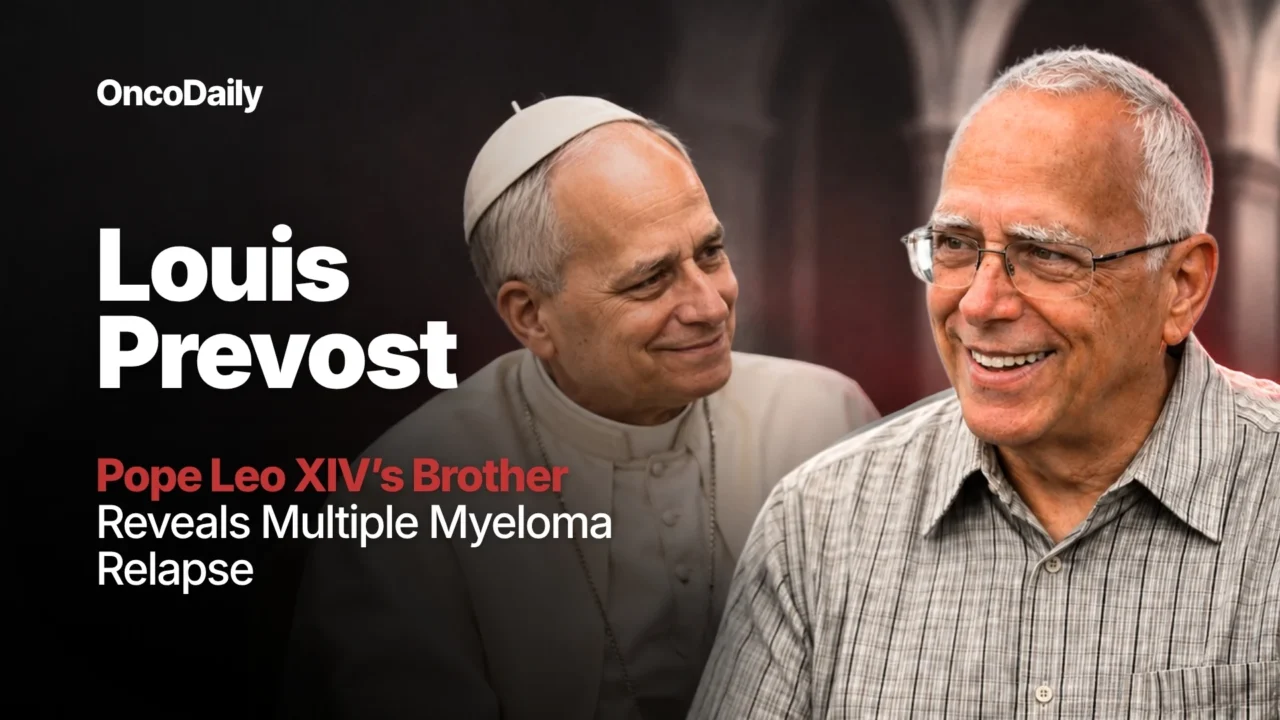
Louis Prevost, the older brother of Pope Leo XIV, is undergoing treatment for recurrent multiple myeloma, a hematologic malignancy characterized by the abnormal proliferation of plasma cells in the bone marrow. His wife, Deborah Prevost, confirmed in October 2026 that the disease had returned following several years of remission. The announcement came as Pope Leo XIV was recovering from surgery for a separate diagnosis of localized lung adenocarcinoma.
Louis was first diagnosed with multiple myeloma in 2017 and underwent treatment in 2019, including stem cell-based therapy and participation in a clinical trial. According to his wife, the treatment reduced his disease activity to a very low level for several years before the cancer became active again around July 2026. He is currently receiving treatment through another clinical trial at a hospital in Florida. His experience highlights one of the central challenges in multiple myeloma management: despite substantial advances in treatment, the disease frequently follows a relapsing course, requiring long-term monitoring and successive lines of therapy.
Who Is Louis Prevost, Pope Leo XIV’s Older Brother?
Louis Prevost is the eldest brother of Pope Leo XIV, formerly Cardinal Robert Francis Prevost, who became the first American-born pope in May 2025. The brothers grew up in the Chicago area alongside their brother John. Louis later settled in Florida with his wife, Deborah. Following his brother’s election as pope, Louis appeared in several media interviews discussing their family, childhood, and relationship.
His own health became part of the public conversation in October 2026, when the Vatican announced that Pope Leo had undergone surgery for lung cancer. During an October 13 interview with CBS News, Deborah Prevost confirmed that her husband was also being treated for cancer. Although both brothers have received cancer diagnoses, their conditions are medically distinct. Pope Leo was diagnosed with lung adenocarcinoma, whereas Louis has multiple myeloma, a malignancy arising from plasma cells within the bone marrow.
When Was Louis Prevost Diagnosed With Multiple Myeloma?
According to Deborah Prevost, Louis received his initial multiple myeloma diagnosis in 2017. In 2019, he underwent treatment involving stem cells and participated in a clinical trial. His wife explained that the disease remained at a very low level following treatment. However, approximately three months before his condition became publicly known in October 2026, the cancer returned. Deborah described the recurrence as her husband having fallen out of remission.
Louis subsequently began receiving further treatment through a clinical trial in Florida. The publicly reported timeline illustrates an important feature of multiple myeloma: patients may experience prolonged periods of disease control, sometimes lasting several years, before additional treatment becomes necessary. However, Louis’s complete treatment history, laboratory results, cytogenetic risk classification, and current response have not been disclosed.
What Is Multiple Myeloma?
Multiple myeloma is a malignant plasma cell disorder characterized by the accumulation of clonal plasma cells in the bone marrow, often accompanied by abnormal monoclonal protein production and organ damage. Plasma cells are specialized immune cells responsible for producing antibodies that help the body recognize infections. In multiple myeloma, malignant plasma cells multiply and interfere with normal bone marrow function. They may also produce monoclonal immunoglobulins or free light chains that contribute to complications affecting the kidneys and other organs. The disease commonly affects the skeletal system, kidneys, blood cell production, and immune function.
According to the National Cancer Institute’s Surveillance, Epidemiology, and End Results (SEER) program, approximately 36,000 new multiple myeloma cases and 10,850 deaths are expected in the United States in 2026. Multiple myeloma accounts for approximately 1.7% of newly diagnosed cancers in the United States. The age-adjusted incidence rate is approximately 7.4 cases per 100,000 people annually, based on 2019–2023 data. The condition primarily affects older adults, with a median age at diagnosis of approximately 69 years. Although modern therapies have substantially improved survival, multiple myeloma remains a challenging malignancy because relapse is common.
What Are the Symptoms and Complications of Multiple Myeloma?
Clinical manifestations of multiple myeloma vary according to disease burden and the organs affected. Some patients initially have minimal symptoms, while others present with bone pain, fatigue, recurrent infections, anemia, or kidney dysfunction. One of the most recognized clinical frameworks is CRAB, which describes four major manifestations of myeloma-related organ damage:
- Hypercalcemia: Elevated blood calcium levels, potentially causing nausea, constipation, dehydration, confusion, or kidney problems.
- Renal impairment: Kidney dysfunction, sometimes associated with excess monoclonal free light chains.
- Anemia: Reduced red blood cell production, leading to fatigue, weakness, and shortness of breath.
- Bone lesions: Osteolytic bone damage, which may cause persistent pain and increase fracture risk.
Bone involvement is particularly characteristic of multiple myeloma. The disease disrupts normal bone remodeling, increasing bone resorption and contributing to structural damage. Patients may experience pain in the spine, ribs, pelvis, or other skeletal locations. Multiple myeloma can also impair immune function, increasing susceptibility to serious infections. Importantly, the diagnosis does not always require established CRAB-related organ damage. Certain myeloma-defining biomarkers can establish active disease requiring treatment before irreversible organ complications develop. Louis Prevost has not publicly disclosed the symptoms associated with his initial diagnosis or recurrence.
How Is Multiple Myeloma Diagnosed and Staged?
The diagnosis of multiple myeloma requires clinical, laboratory, and pathological evaluation. Initial investigations commonly include a complete blood count, kidney function tests, calcium measurements, serum protein electrophoresis, immunofixation, and serum free light chain assessment. Urine studies may help identify monoclonal protein excretion. Bone marrow aspiration and biopsy are used to evaluate plasma cell infiltration and obtain material for cytogenetic testing. Modern imaging, including low-dose whole-body CT, PET/CT, or MRI, can identify skeletal lesions and other disease-related abnormalities. The International Myeloma Working Group diagnostic framework incorporates evidence of clonal plasma cells or a biopsy-proven plasmacytoma together with myeloma-defining events.
These include traditional CRAB features and selected biomarkers associated with a high risk of disease progression. For prognosis, clinicians commonly use the Revised International Staging System (R-ISS), which considers serum beta-2 microglobulin, albumin, lactate dehydrogenase, and high-risk cytogenetic abnormalities. More recently, additional risk-stratification approaches have incorporated other molecular and cytogenetic features. These assessments help estimate disease risk and guide treatment planning. However, Louis’s R-ISS stage and cytogenetic findings remain private.
Why Can Multiple Myeloma Return After Several Years of Remission?
Multiple myeloma frequently follows a pattern of treatment response followed by relapse. Remission indicates that disease activity has decreased substantially, sometimes to levels undetectable using conventional laboratory methods. However, even patients achieving a complete response may retain small populations of malignant plasma cells.
These residual cells may survive treatment and later expand, leading to renewed disease activity. Biological mechanisms contributing to relapse include clonal evolution, changes in the bone marrow microenvironment, and the emergence of cells resistant to previous therapies. The depth and duration of remission differ considerably among patients. A period of several years without clinically significant progression can represent an important treatment achievement, even when the disease eventually returns. According to the National Cancer Institute’s treatment guidance, relapse remains common following induction therapy, transplantation, and maintenance treatment.
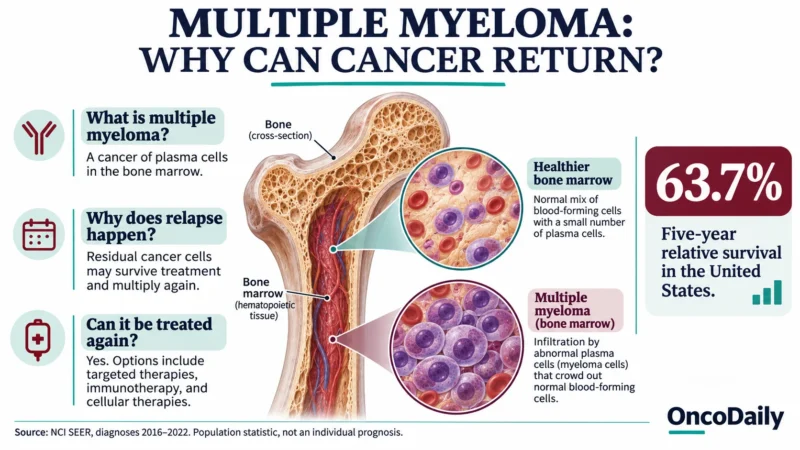
Management typically involves selecting additional therapies based on prior drug exposure, treatment sensitivity, disease biology, and the patient’s clinical condition. Louis Prevost’s reported course—from treatment in 2019 to recurrence around July 2026—illustrates how prolonged disease control can be followed by a need for further therapy. However, his experience should not be interpreted as representative of every patient with multiple myeloma.
What Treatment Is Louis Prevost Receiving?
Deborah Prevost confirmed that her husband was receiving treatment through a clinical trial at a Florida hospital. Media reporting has also described Louis discussing CAR-T cell therapy, an advanced immunotherapy used in selected patients with relapsed or refractory multiple myeloma. However, the specific CAR-T product, trial identifier, treatment schedule, and eligibility criteria have not been independently confirmed through publicly available clinical documentation.
It is therefore not possible to determine whether he is receiving an approved cellular therapy, an investigational regimen, or another treatment approach within the clinical trial. His previous treatment in 2019 reportedly included stem cell-based therapy. An autologous stem cell transplant is different from CAR-T treatment. In myeloma, autologous transplantation generally follows high-dose chemotherapy and supports recovery of blood cell production. CAR-T therapy instead modifies immune T cells to recognize specific antigens expressed by cancer cells. Both have roles in contemporary multiple myeloma management, but their mechanisms, indications, and toxicity profiles differ substantially.
How Does CAR-T Cell Therapy Work in Multiple Myeloma?
Chimeric antigen receptor T-cell therapy, or CAR-T therapy, is a form of adoptive cellular immunotherapy in which a patient’s T cells are genetically engineered to recognize and destroy malignant cells. Treatment generally begins with leukapheresis, a procedure used to collect T cells from the patient’s blood. The collected cells are genetically modified to express a chimeric antigen receptor directed against a specific antigen. In multiple myeloma, an important therapeutic target is B-cell maturation antigen (BCMA), expressed on many malignant plasma cells. After manufacturing, patients generally receive lymphodepleting chemotherapy before the modified T cells are infused. The engineered cells can then identify and attack antigen-expressing myeloma cells.
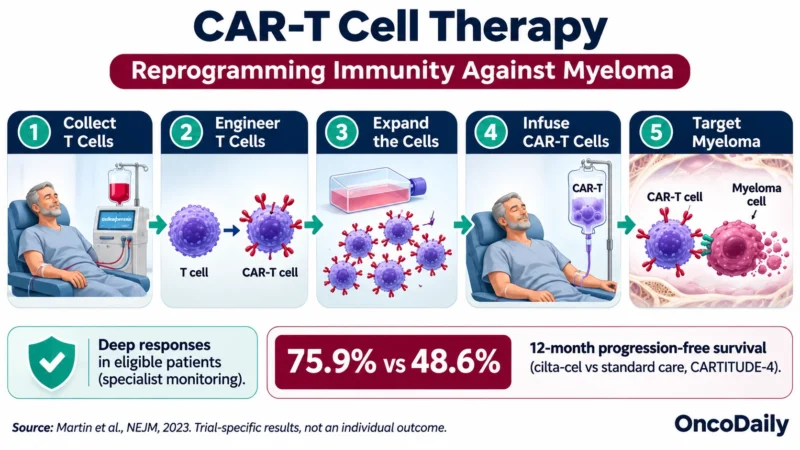
Two BCMA-directed CAR-T therapies approved in the United States for eligible patients with relapsed or refractory multiple myeloma are idecabtagene vicleucel (ide-cel; Abecma) and ciltacabtagene autoleucel (cilta-cel; Carvykti). These therapies can produce deep and durable responses in selected patients, including some whose disease has progressed after several previous treatments. However, CAR-T therapy requires specialized facilities and careful monitoring. Potential adverse effects include cytokine release syndrome, neurotoxicity, infections, cytopenias, and other potentially serious complications. Treatment eligibility and anticipated benefit must be assessed individually.
How Effective Is CAR-T Therapy for Relapsed Multiple Myeloma?
Clinical trials have demonstrated substantial improvements in disease control with BCMA-directed CAR-T therapy compared with selected standard treatment regimens. In the phase III CARTITUDE-4 trial, involving 419 patients with lenalidomide-refractory multiple myeloma after one to three previous treatment lines, ciltacabtagene autoleucel significantly improved progression-free survival compared with standard care. At 12 months, progression-free survival was 75.9% with cilta-cel versus 48.6% with standard treatment. The hazard ratio for progression or death was 0.26, indicating a substantial reduction in the relative risk of progression or death during the study period (Martin et al., 2023).
The overall response rate was also higher with cilta-cel, at 84.6% compared with 67.3%. Another phase III study, KarMMa-3, evaluated idecabtagene vicleucel in patients with relapsed or refractory myeloma who had received two to four previous treatment regimens. At the final progression-free survival analysis, median progression-free survival was 13.8 months with ide-cel compared with 4.4 months with standard regimens. The overall response rate was approximately 71% versus 42%, respectively (Rodríguez-Otero et al., 2024).
These findings represent major advances in relapsed multiple myeloma treatment. However, the populations, previous therapies, and disease characteristics differed between trials. Their results should not be compared as if the treatments were tested head-to-head. Importantly, these statistics cannot predict Louis Prevost’s individual outcome, particularly because his exact treatment protocol has not been disclosed.
What Other Treatments Are Available for Relapsed Multiple Myeloma?
Treatment options for relapsed multiple myeloma have expanded considerably over the past decade. Proteasome inhibitors, including bortezomib and carfilzomib, interfere with the degradation of cellular proteins and can promote malignant plasma cell death. Immunomodulatory drugs, such as lenalidomide and pomalidomide, affect immune function and myeloma cell survival. Anti-CD38 monoclonal antibodies, including daratumumab and isatuximab, target proteins expressed on malignant plasma cells.
Bispecific antibodies represent another important development. These agents connect T cells with myeloma cells, allowing the immune system to recognize and attack the malignancy. Several bispecific therapies targeting BCMA or GPRC5D have demonstrated activity in heavily pretreated disease. Additional options may include selected targeted agents, alkylating chemotherapy, corticosteroids, and transplantation in appropriate circumstances. Treatment selection depends on factors such as prior therapies, duration of response, cytogenetic risk, renal function, frailty, and patient preferences. Clinical trials remain particularly important because they evaluate new treatment combinations, cellular therapies, and strategies aimed at overcoming resistance.
What Is the Survival Rate for Multiple Myeloma?
Survival outcomes in multiple myeloma have improved substantially with the introduction of newer systemic and immune-directed therapies. According to the National Cancer Institute’s SEER database, the five-year relative survival rate for multiple myeloma is approximately 63.7%, based on patients diagnosed in the United States between 2016 and 2022. This represents an improvement compared with earlier decades, when fewer effective treatment options were available. For 2026, SEER estimates approximately 36,000 new diagnoses and 10,850 deaths in the United States.
However, survival varies considerably according to age, comorbidities, renal function, cytogenetic risk, treatment response, and disease biology. Patients with standard-risk disease who achieve deep and sustained responses may experience prolonged survival, while individuals with high-risk cytogenetic abnormalities or treatment-resistant disease may face more challenging outcomes. Minimal residual disease (MRD) assessment has become increasingly important in evaluating treatment depth.
MRD negativity indicates that highly sensitive testing has not detected malignant plasma cells above the assay’s detection threshold and is generally associated with improved progression-free outcomes. Nevertheless, MRD negativity does not guarantee cure. Five-year relative survival statistics describe outcomes in large populations, not the expected survival of a particular patient. Louis Prevost’s prognosis cannot be determined from the publicly available details of his diagnosis and treatment.
How Is Louis Prevost’s Cancer Different From Pope Leo XIV’s Lung Cancer?
The Prevost family has faced two distinct cancer diagnoses. Pope Leo XIV underwent surgery at Rome’s Gemelli Hospital on October 13, 2026, following the identification of a suspicious nodule in his right lung. Surgeons performed a right lower lobectomy, removing the lower lobe of the lung. Histological examination confirmed lung adenocarcinoma, a type of non-small-cell lung cancer. On October 21, the Vatican announced that final pathological and molecular assessments had confirmed localized disease and that no additional cancer treatment was necessary. Louis Prevost, meanwhile, is being treated for recurrent multiple myeloma, which originates in plasma cells rather than lung tissue.
Lung adenocarcinoma is a solid tumor, whereas multiple myeloma is a hematologic malignancy. Their diagnostic approaches, molecular characteristics, treatment pathways, and expected clinical courses differ considerably. Although both diagnoses occurred within the same family, there is no evidence that one caused or contributed to the other.
Does Cancer in Multiple Family Members Suggest a Hereditary Risk?
Having more than one family member diagnosed with cancer does not necessarily indicate an inherited cancer syndrome. Most multiple myeloma cases occur sporadically, although epidemiological studies have identified an increased risk among first-degree relatives of affected individuals. Researchers continue to investigate inherited genetic susceptibility, environmental exposures, and other factors associated with myeloma development. Likewise, lung adenocarcinoma can arise through a complex interaction of acquired genetic changes, environmental factors, and, less commonly, inherited predisposition.
A hereditary cancer syndrome cannot be established simply because two relatives have different types of cancer. Determining inherited susceptibility requires a detailed family history and, when clinically appropriate, genetic counseling and testing. No publicly available clinical evidence establishes a shared hereditary or environmental cause for the cancers affecting Pope Leo XIV and Louis Prevost.
Why Does Louis Prevost’s Story Matter?
Louis Prevost’s experience highlights both the progress and persistent challenges in treating multiple myeloma. His reported remission lasting several years demonstrates that modern treatment can achieve prolonged disease control. However, his subsequent relapse reflects the continuing difficulty of eliminating residual malignant plasma cells and preventing recurrence. The emergence of CAR-T therapies, bispecific antibodies, and other immunotherapies has transformed treatment options, particularly for patients whose disease progresses after earlier regimens. Clinical trials are also central to improving the sequencing and effectiveness of these therapies.
Beyond the medical developments, the story illustrates the emotional challenges that patients and families may experience when cancer affects several relatives. Although Louis has discussed drawing strength from his faith and family, his experience also underscores the importance of comprehensive medical care, treatment access, and long-term support.
You Can Also Read Pope Leo XIV Lung Cancer Diagnosis: Surgery, Prognosis and Survival Rates by OncoDaily
Written by Aharon Tsaturyan, MD, Editor at OncoDaily Intelligence Unit
FAQ
What Type of Cancer Does Pope Leo XIV's Brother Have?
Pope Leo XIV's older brother, Louis Prevost, has multiple myeloma, a blood cancer that develops in plasma cells within the bone marrow. He was initially diagnosed in 2017, and his wife confirmed in October 2026 that the disease had returned after several years of remission.
2. Who Is Louis Prevost, Pope Leo XIV's Brother?
Louis Prevost is the eldest brother of Pope Leo XIV, formerly Cardinal Robert Francis Prevost. The brothers grew up in the Chicago area. Louis lives in Florida with his wife, Deborah Prevost, and has spoken publicly about his family, faith, and experience with multiple myeloma.
3. When Was Louis Prevost Diagnosed With Multiple Myeloma?
Louis Prevost was first diagnosed with multiple myeloma in 2017. He underwent treatment in 2019, including stem cell-based therapy and participation in a clinical trial. His disease remained controlled for several years before reportedly returning around July 2026.
4. What Cancer Treatment Is Louis Prevost Receiving?
Louis Prevost is receiving treatment through a clinical trial in Florida. Reports have described CAR-T cell therapy as part of his treatment, although the exact therapeutic product and clinical trial protocol have not been publicly confirmed.
5. What Is CAR-T Cell Therapy for Multiple Myeloma?
CAR-T cell therapy is an advanced immunotherapy that genetically modifies a patient's T cells to recognize and attack cancer cells. Approved CAR-T treatments for eligible patients with relapsed multiple myeloma include idecabtagene vicleucel (Abecma) and ciltacabtagene autoleucel (Carvykti).
6. Can Multiple Myeloma Be Cured?
Multiple myeloma is generally considered treatable but not routinely curable with currently established therapies. Modern treatments can produce deep and prolonged remissions. However, relapse remains common, and some patients require multiple lines of treatment over time.
7. What Is the Life Expectancy for Someone With Multiple Myeloma?
According to the National Cancer Institute's SEER database, the five-year relative survival rate for multiple myeloma is approximately 63.7% among US patients diagnosed between 2016 and 2022. Individual outcomes vary based on age, disease biology, genetic risk, and treatment response. This statistic cannot predict Louis Prevost's prognosis.
9. Why Does Multiple Myeloma Return After Remission?
Multiple myeloma may relapse because small populations of malignant plasma cells can survive treatment and eventually begin multiplying again. Resistance to previous therapies and changes in cancer cell biology can contribute to recurrence, sometimes after several years of disease control.
10. Do Pope Leo XIV and His Brother Louis Prevost Have the Same Cancer?
No. Pope Leo XIV was diagnosed with localized lung adenocarcinoma, while his brother Louis has multiple myeloma. Lung adenocarcinoma is a solid tumor originating in lung tissue, whereas multiple myeloma is a blood cancer involving plasma cells. The diagnoses are medically distinct.