





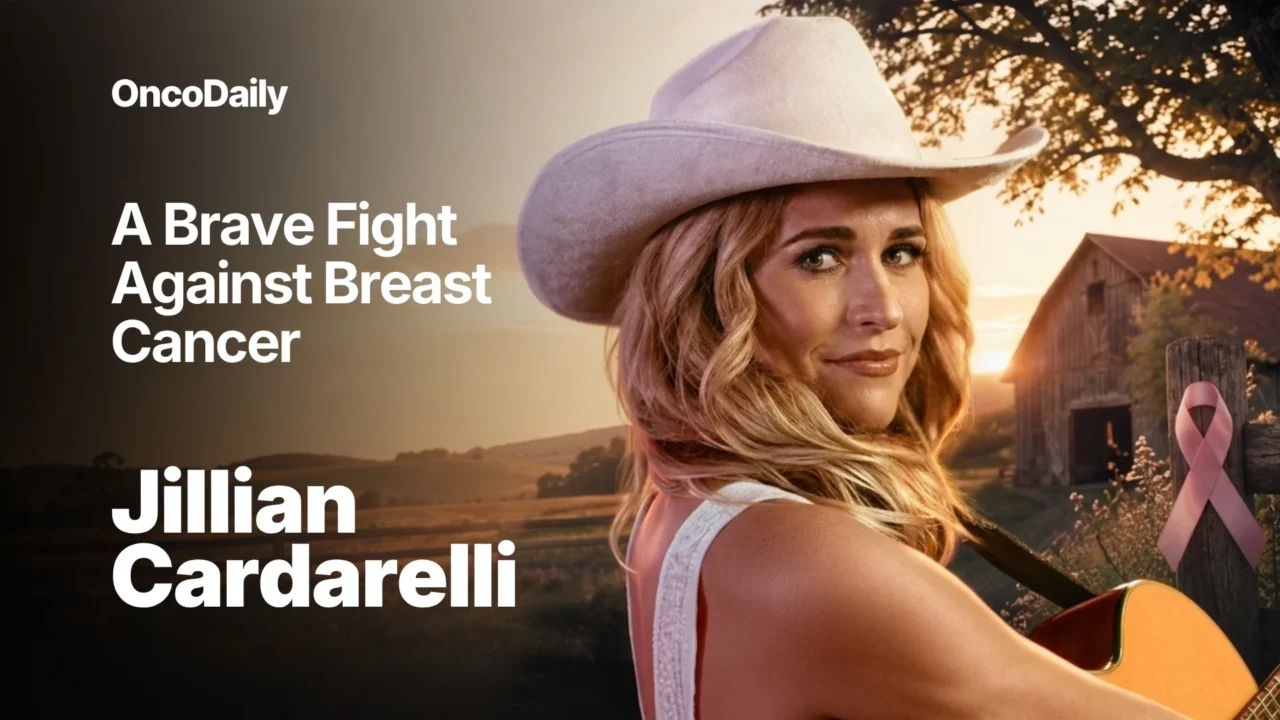
Country singer and actress Jillian Cardarelli has shared the unexpected news that she was diagnosed with breast cancer at age 33. Her story has drawn attention not only because of her public career, but also because it challenges the common belief that breast cancer primarily affects older women or only those with a strong family history of the disease.
Cardarelli was diagnosed on May 21, 2026, with stage 2 invasive ductal carcinoma. Within weeks, her daily life shifted from music, filming schedules, and career plans to medical appointments, scans, pathology reports, surgery, and decisions about treatment.
How Did Jillian Cardarelli Realize Something Was Wrong?
Before her diagnosis, Cardarelli began feeling unusually tired. During a recent photo shoot, she noticed that she did not have her usual energy and needed to stop earlier than expected. Around the same time, she felt a lump in her breast. Cardarelli had previously been told that she had areas of dense fibrous breast tissue, which had been evaluated in the past. This time, however, the lump felt different. Trusting that something had changed, she sought medical attention, and further testing found a malignant tumor. Fatigue alone is common and can have many causes. In Cardarelli’s case, the more important warning sign was a new breast lump that felt different from what she had noticed before.
What Type of Breast Cancer Was She Diagnosed With?
Cardarelli was diagnosed with stage 2 invasive ductal carcinoma. Invasive ductal carcinoma begins in the cells lining a milk duct and then grows beyond the duct into the surrounding breast tissue. It is the most common type of invasive breast cancer. The term “invasive” means that the cancer has grown into nearby breast tissue. It does not automatically mean that the disease has spread to distant organs.
Did She Have a Family History of Breast Cancer?
Cardarelli later said that she had no family history of breast cancer and that genetic testing was negative. Her mother has lived with stage 4 colon cancer for more than a decade, but Cardarelli did not believe that she fit the expected profile of someone who would develop breast cancer at 33. Family history can increase breast cancer risk, but many women who develop the disease do not have a known family history. The absence of an inherited genetic variant also does not remove the possibility of developing breast cancer.
What Was the First Step in Her Treatment?
Surgery was the first major step in Cardarelli’s treatment. After the procedure, she shared that the first big part of her treatment was behind her and that she would focus on healing while waiting for the next stage of her care. She thanked the team at Dana-Farber Cancer Institute for supporting her through the process.
What Did the Results After Surgery Show?
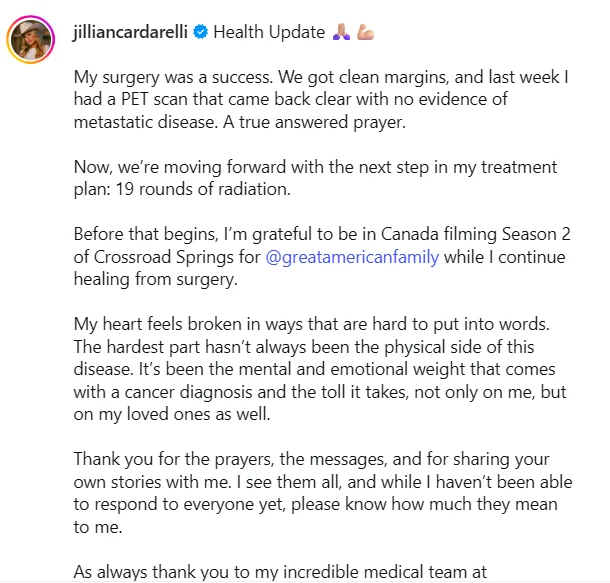
In a later health update, Cardarelli said that her surgery had been successful and that clean margins had been achieved. A clean or negative surgical margin means that no cancer cells were found at the edge of the tissue removed during surgery. This finding suggests that the visible tumor was removed without cancer extending to the outer edge of the surgical specimen. Cardarelli also said that a PET scan showed no evidence of metastatic disease, meaning that the scan did not identify signs that the cancer had spread to distant parts of the body. These were encouraging early results, although they did not mark the end of her treatment.
What Treatment Will Jillian Cardarelli Receive Next?
Cardarelli said that her treatment plan included 19 rounds of radiation therapy following her recovery from surgery. Radiation therapy may be used after breast surgery to treat the breast or surrounding area and reduce the risk that cancer will return locally. The exact treatment plan depends on factors such as the tumor’s characteristics, surgical findings, lymph-node involvement, and the recommendations of the treating team.
How Has She Described the Emotional Impact of Her Diagnosis?
Cardarelli has spoken openly about the fear, sadness, anger, and uncertainty that followed her diagnosis. She described the experience as suddenly having to learn a new language, as unfamiliar medical terms, test results, and treatment decisions quickly became part of her everyday life. Her diagnosis also carried an additional emotional weight because her mother has been living with advanced colon cancer. Cardarelli said it felt unfair that her mother, after navigating her own cancer journey, now had to help her daughter face another diagnosis. Throughout the process, Cardarelli has relied on her faith, family, friends, medical team, and husband, Brian Parker. She has described her husband as a central source of support during appointments, difficult conversations, and treatment decisions.
Why Does Her Story Matter for Younger Women?
Breast cancer becomes more common with age, but it can also affect younger women. Cardarelli’s diagnosis is a reminder that being young, active, and otherwise healthy does not make breast cancer impossible. Women without a known family history can also develop the disease. Younger women may be less likely to expect breast cancer, and a new lump may initially be attributed to hormonal changes, dense breast tissue, cysts, or another benign condition. Most breast lumps are not cancer, but a new or unusual change should still be assessed by a healthcare professional.
As always thank you to my incredible medical team at @danafarber for treating me not only as a patient, but as a person.
I’ll leave you with this: get familiar with your body. If something feels off, advocate for yourself.
💖 #CheckYourGirls
What Breast Changes Should Not Be Ignored?
Skin changes are not the only possible signs of breast cancer. A new lump in the breast or underarm is one of the most recognized symptoms, but other changes may also warrant medical attention. These can include a change in the size or shape of the breast, thickening or swelling in part of the breast, dimpling or irritation of the skin, redness or flaky skin on the breast or around the nipple, nipple discharge other than breast milk, a nipple that turns inward, persistent pain in the breast or nipple, or any new area that feels different from the surrounding tissue.
Many of these changes can be caused by conditions other than breast cancer, but any new, persistent, or concerning symptom should be evaluated by a healthcare professional.
What Message Is Jillian Cardarelli Sharing With Other Women?
Cardarelli has used her experience to encourage women, particularly younger women, to become familiar with their bodies, trust their instincts, and speak up when something feels wrong. She has emphasized that she knew the lump felt different, even though she had previously been told that she had dense fibrous tissue. Seeking medical attention led to the discovery of the tumor and the beginning of treatment. Her message is not that every breast change is cancer. Rather, it is that age, good health, a lack of family history, or previous benign findings should not be reasons to ignore a new change.
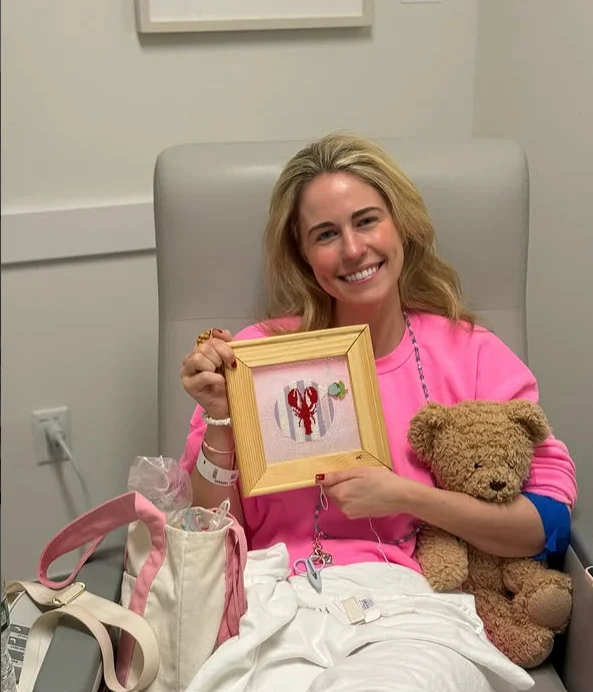
Photo:@jilliancardarelli Instagram
Why Is Early Medical Attention Important?
Breast awareness does not replace recommended screening or professional medical evaluation. However, knowing how the breasts normally look and feel can help a person notice a change and discuss it with a healthcare professional. The earlier a concerning change is evaluated, the sooner doctors can determine whether it is benign or requires further testing and treatment.
What Can We Learn From Jillian Cardarelli’s Journey?
Jillian Cardarelli’s experience shows how quickly a cancer diagnosis can change a person’s life. At 33, she moved from an active schedule in music and television to surgery, recovery, and preparation for radiation therapy. Her postoperative update brought encouraging news: clean surgical margins and no evidence of metastatic disease on PET imaging. However, her treatment journey continues as she prepares for radiation. By speaking publicly, Cardarelli is turning a deeply personal experience into a wider message for young women: know your body, pay attention to changes, and do not be afraid to ask for medical evaluation when something feels different. A new lump does not always mean cancer but it should never be ignored.
You Can Also Read Kylie Minogue and Breast Cancer: Her Diagnosis, Recovery, and Lasting Public Health Impact by OncoDaily

Written by Aharon Tsaturyan, MD, Editor at OncoDaily Intelligence Unit
FAQ
What type of breast cancer was Jillian Cardarelli diagnosed with?
Jillian Cardarelli said she was diagnosed with stage 2 invasive ductal carcinoma, the most common type of invasive breast cancer. It begins in a milk duct and grows into the surrounding breast tissue.
How old was Jillian Cardarelli when she was diagnosed with breast cancer?
Cardarelli was 33 years old when she received her breast cancer diagnosis on May 21, 2026.
How did Jillian Cardarelli discover her breast cancer?
She noticed unusual fatigue and felt a lump in her breast that seemed different from areas of dense fibrous tissue she had experienced previously. She sought medical attention, and further testing identified a malignant tumor.
Did Jillian Cardarelli have a family history of breast cancer?
Cardarelli said she had no known family history of breast cancer. She also reported that her genetic testing was negative.
What treatment did Jillian Cardarelli receive first?
Surgery was the first major step in her treatment. She later reported that the procedure was successful and that clean surgical margins had been achieved.
What do clean margins mean after breast cancer surgery?
Clean or negative margins mean that no cancer cells were identified at the outer edges of the tissue removed during surgery. This suggests that the tumor did not extend to the edge of the surgical specimen.
Did Jillian Cardarelli’s breast cancer spread to other organs?
Cardarelli said that a PET scan showed no evidence of metastatic disease. This means the scan did not identify signs that the cancer had spread to distant parts of the body.
What treatment will Jillian Cardarelli receive after surgery?
She said her treatment plan included 19 rounds of radiation therapy after recovering from surgery. Radiation may be used to reduce the risk of cancer returning in the breast or nearby tissues.
What breast cancer symptoms should younger women know?
Possible warning signs include a new breast or underarm lump, changes in breast size or shape, swelling, skin dimpling, nipple changes, unusual discharge, persistent pain, or any area that feels different from the surrounding tissue. New or persistent changes should be evaluated by a healthcare professional.