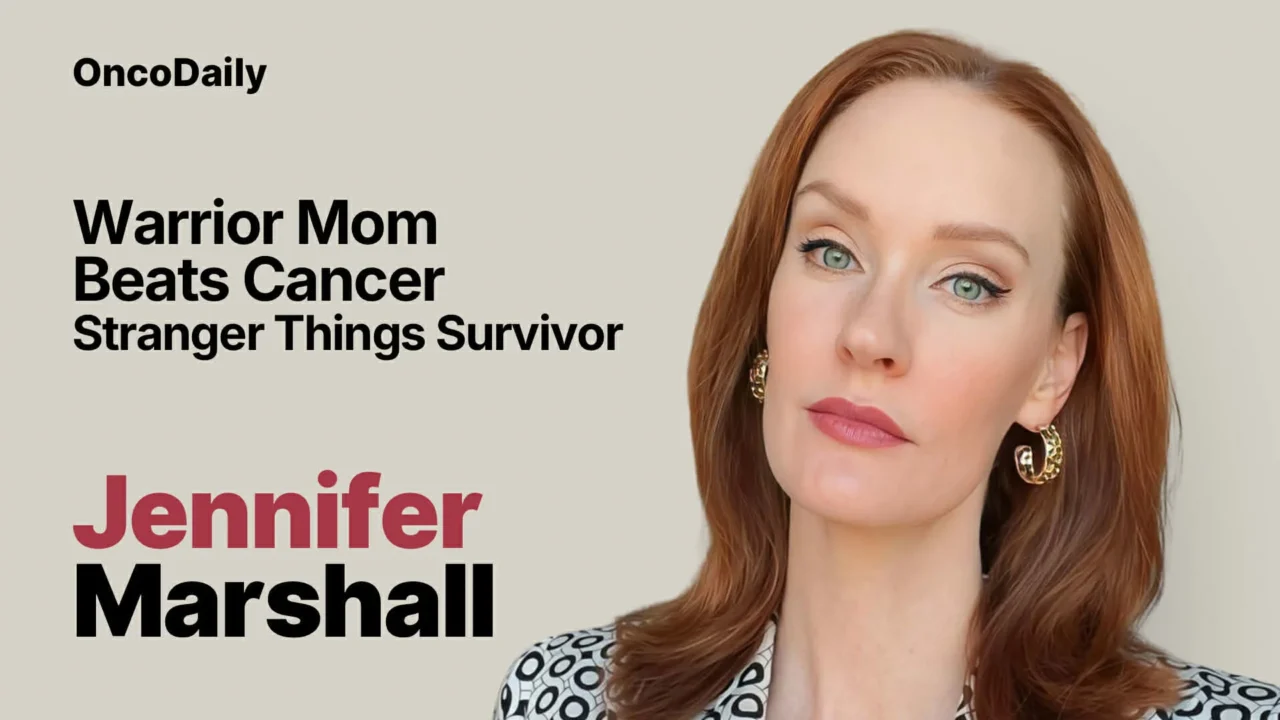
In a raw January 2026 Instagram post that stunned Stranger Things fans, actress Jennifer Marshall revealed why she skipped Season 5 filming: the hidden scars of her stage 3 melanoma battle lingered, from insurance black holes to post-treatment fatigue that Hollywood rarely accommodates. This Navy veteran who served her country before stealing scenes as Susan Hargrove, Max’s no-nonsense mom in Seasons 2 and 4 faced a foot lesion in 2020 that biopsy-proved melanoma with lymph node spread, demanding surgery, likely adjuvant immunotherapy like pembrolizumab, and grueling recovery amid acting gigs like The Terminal List: Dark Wolf. By 2024, remission freed her creatively, but production realities sidelined her return, sparking her fierce advocacy for cancer survivors in showbiz.
Her story spotlights a stark win: modern anti-PD-1 therapies have propelled stage 3 melanoma’s 5-year survival from ~50% to 70%, proving early detection and immunotherapy transform fatal odds into fighting chances.
Jennifer Marshall: From U.S. Navy Service to the Hollywood Spotlight
Jennifer Marshall’s journey from military service to Hollywood spotlight sets a compelling backdrop for her melanoma survivorship story. A U.S. Navy veteran who enlisted post-high school, she honed discipline and resilience during active duty before pivoting to acting in her 30s, building credits in shows like Scandal and Grey’s Anatomy. Her breakout came with Stranger Things, portraying Susan Hargrove Max’s tough, flawed mother in Seasons 2 (2017) and 4 (2022), a role that resonated amid her private health crisis. She later joined The Terminal List: Dark Wolf (2024) as a key player, showcasing grit on screen.
The turning point hit around 2020: a persistent foot lesion, initially dismissed as minor, prompted a biopsy revealing stage 3 melanoma with lymph node metastasis—demanding swift wide excision and sentinel node dissection. This dual identity veteran warrior turned actress fueled her resolve, blending service-honed tenacity with fame’s pressures during early treatment.
Jennifer Marshall: Career Milestones Leading Up to Stage III Melanoma
Jennifer Marshall joined the U.S. Navy at 17, undergoing boot camp in Great Lakes, Illinois, and serving nearly five years as a forklift operator, aircraft handler, and logistics specialist, forging the resilience that later defined her cancer fight. After honorable discharge, she moved to Los Angeles in 2013 to chase acting, landing early TV credits like NCIS (Marine Sergeant, 2019), Scandal, Grey’s Anatomy, and hosting Mysteries Decoded on CW as a licensed private investigator.
Her defining role arrived with Stranger Things as Susan Hargrove, Max’s flawed yet fierce mother, across six episodes in Seasons 2 (2017) and 4 (2022), cementing her amid Hawkins’ horrors. She expanded into Reacher (military cop, 2022), NCIS: Los Angeles (Navy Commander, 2022), and Sugar (recurring Roberta, 2024), plus The Terminal List: Dark Wolf (Defense Attaché, 2025).
Around 2020-2021, a nagging foot lesion overlooked at first led to biopsy confirming stage 3 melanoma with lymph node involvement, thrusting her military grit into a real-life battle just as Hollywood peaked.
You Can Also Read The Angelina Jolie Effect: A Lasting Global Impact on Cancer Prevention by OncoDaily

Photo: Depositphotos
Written by Aharon Tsaturyan, MD, Editor at OncoDaily Intelligence Unit
FAQ
What type of cancer did Jennifer Marshall have?
Jennifer Marshall battled stage 3 melanoma, originating from a foot lesion that spread to nearby lymph nodes around 2020-2022.
How did her Navy background influence her cancer fight?
Her U.S. Navy service as a logistics specialist and aircraft handler built resilience, helping her endure surgery, adjuvant immunotherapy, and Hollywood filming pressures during treatment.
Why was she absent from Stranger Things Season 5?
In remission by 2024, post-treatment fatigue and insurance gaps needing union work hours for SAG-AFTRA coverage—prevented her return as Susan Hargrove, as shared in her January 2026 Instagram posts.
What treatments led to her remission?
Marshall underwent wide excision, sentinel lymph node dissection, and likely adjuvant anti-PD-1 immunotherapy (e.g., pembrolizumab), standard for stage 3 melanoma, achieving remission amid acting roles.
What survivorship lesson does her story highlight?
Her advocacy exposes Hollywood stigma and insurance barriers for cancer survivors, while underscoring immunotherapy's impact: boosting stage 3 melanoma 5-year survival from ~50% to 70%.