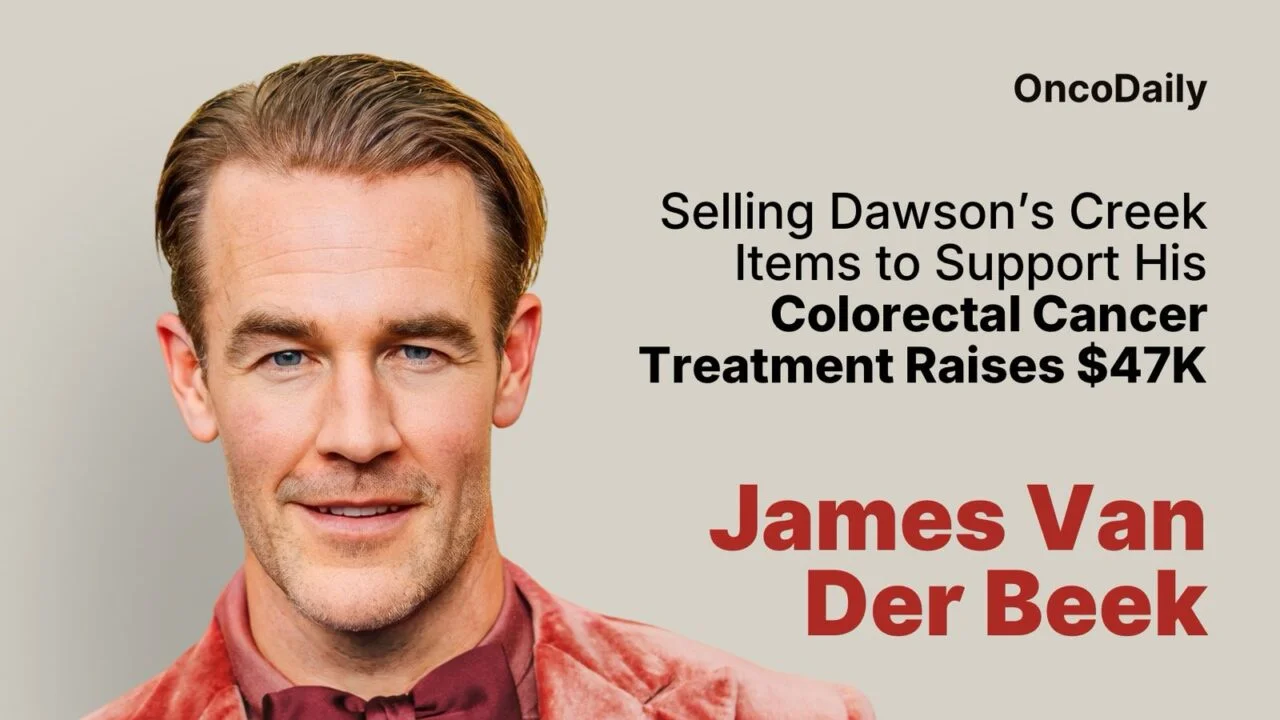
James Van der Beek, iconic as Dawson Leery in the 1990s teen drama Dawson’s Creek, auctioned cherished personal memorabilia from the series through Propstore’s online platform from December 5–7, 2025, to offset mounting costs of his stage 3 colorectal cancer treatment, ultimately raising over $47,000.
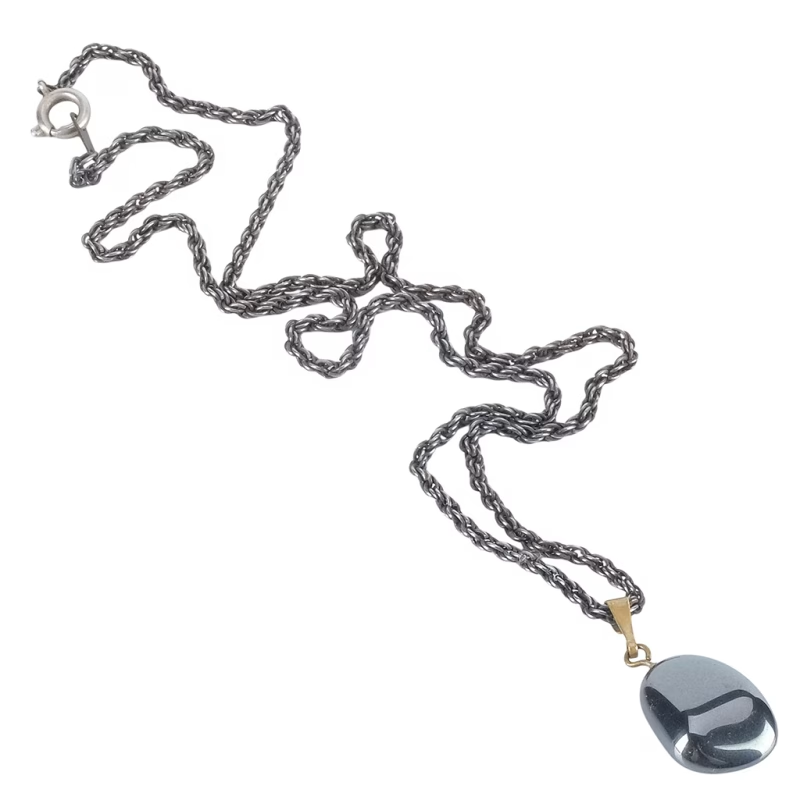
Diagnosed in late 2023 but kept private until a candid 2024 revelation, the 48-year-old actor stunned fans by noting he felt “healthy and in great shape” beforehand—no family history, no warning symptoms like blood in stool or unexplained weight loss, underscoring colorectal cancer’s silent progression even in fit individuals. Standout lots included the silver necklace Dawson gifted Joey Potter in season 3 (sold for $26,628 including premium), a rare E.T. action figure from Dawson’s bedroom ($5,991), his signature blue flannel shirt ($2,396), and various props like scripted pages and decor, with every dollar directed to medical expenses amid ongoing chemotherapy and surveillance. This heartfelt move galvanized fans, blending 90s nostalgia with raw cancer advocacy.
From Script Pages to Set Keepsakes: Highlights from the Dawson’s Creek Auction
The silver necklace Dawson gifted Joey Potter in season 3 commanded the top bid at $26,628 (including buyer’s premium), evoking iconic romance; an E.T. action figure from Dawson’s bedroom sold for $5,991, his blue flannel shirt for $2,396, and additional props like scripted pages, posters, and bedroom decor fetched $2,000–$4,000 each.
The auction surpassed $47,000 exceeding Propstore’s estimates amid overwhelming fan support, with bids from nostalgic collectors worldwide driving competitive frenzy over the three days.
Hosted exclusively online by Propstore (December 5–7, 2025) for rapid fundraising urgency; all 20+ lots from Van der Beek’s personal collection sold, with proceeds 100% allocated to stage 3 colorectal cancer treatment costs like chemotherapy, scans, and supportive care.

Inside His Cancer Journey: How James Van Der Beek Is Facing Colorectal Cancer
Van der Beek was diagnosed with stage 3 colorectal cancer in late 2023 following routine screening that revealed a tumor, prompting immediate surgical resection and adjuvant chemotherapy (likely FOLFOX or CAPOX regimen per NCCN guidelines for stage III CRC). He battled privately for over a year, undergoing multiple cycles of treatment including infusions, scans (CT/MRI for surveillance), and managing side effects like neuropathy and fatigue, before publicly disclosing in mid-2024 to destigmatize the disease and share his journey.
Lacking family history or classic symptoms no rectal bleeding, altered bowel habits, or weight loss despite his active lifestyle as a father of six and fitness advocate—the case exemplifies colorectal cancer’s rising incidence in under-50s (up 2% annually per ACS data), driven by factors like diet, microbiome shifts, and genetics (e.g., possible MSI-high or KRAS status undisclosed). Van der Beek stressed early detection via colonoscopy from age 45, even for asymptomatic individuals, noting his “healthy” pre-diagnosis state masked progression to stage III (T3N1M0).
Intensive treatment ongoing FOLFOX maintenance, immunotherapy consideration if MSI-high, and frequent CEA/PET monitoring prevented attendance at the Dawson’s Creek cast reunion in September 2025, where co-stars Katie Holmes and Joshua Jackson honored him virtually; he shared raw updates on Instagram about isolation, financial strain, and resilience amid family support.
Why This Story Matters Beyond One Person
The auction ignited a global wave of support, with #VanDerBeekStrong trending on X and Instagram; fans shared childhood Dawson’s Creek memories alongside personal CRC stories, raising secondary funds via GoFundMe ($15K+ in days) and boosting Google searches for “colorectal cancer symptoms” by 40% post-announcement.
Stage 3 CRC treatment burdens exceed $150K/year (surgery ~$30K, FOLFOX chemo $50K/cycle, surveillance $20K annually), exposing even insured celebrities to copays, travel, and lost income—underscoring systemic inequities where 25% of U.S. patients delay care due to costs (per ASCO data), fueling demands for value-based care models.
Van der Beek’s narrative fit 48-year-old blindsided by silent disease—amplifies NCCN/ASCO pushes to lower screening age to 45 (post-2021 USPSTF update), highlighting rising early-onset CRC (1 in 5 U.S. cases <55) linked to obesity, processed foods, and microbiome dysbiosis.
How Can Colon Cancer Be Prevented?
Preventing colon cancer involves a combination of regular screenings, healthy lifestyle changes, and dietary recommendations
Regular Screenings and Colonoscopies
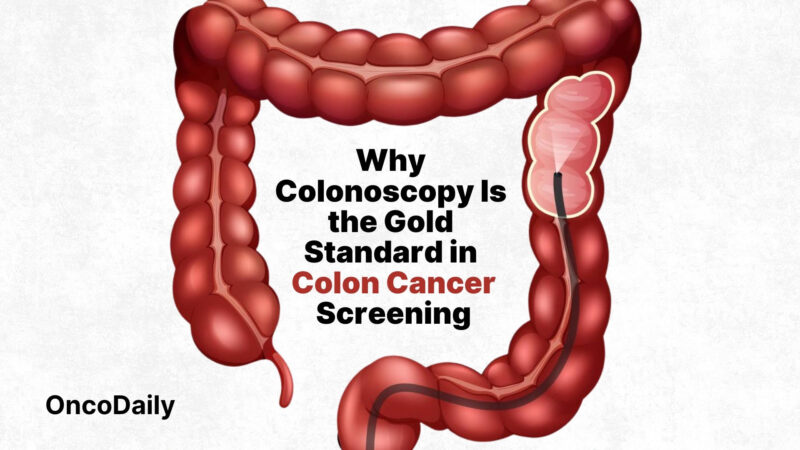
Colorectal cancer is often asymptomatic early on, making regular screenings vital for early detection. Colonoscopies can identify precancerous polyps and early cancers, allowing for treatment before they progress. Routine screening helps reduce cases and deaths by catching cancer when it’s most treatable (CDC, 2021). Survival rates depend on stage, with a 91% five-year survival rate for stage I, but just 14% for stage IV (American Cancer Society, 2023). Early detection through screenings significantly improves survival. Health organizations recommend screening starting at age 45, or earlier for those at higher risk (U.S. Preventive Services Task Force, 2021). Colonoscopy is the gold standard, as it can visualize the entire colon and remove polyps (American College of Gastroenterology, 2022).
You Can Also Read Why Colonoscopy Is the Gold Standard in Early Detection of Colon Cancer Screening by OncoDaily
Lifestyle Changes
Incorporating regular exercise into your routine is essential; aim for at least 30 minutes of moderate activity most days (American Heart Association, 2021). Additionally, quitting smoking can significantly reduce your overall cancer risk (National Cancer Institute, 2023). Finally, maintaining a healthy weight through a balanced diet and regular physical activity is crucial. By making these changes, you can significantly lower your risk of colon cancer.
Dietary Recommendations
To help prevent colon cancer, consider adopting key lifestyle changes. First, increase your fiber intake by eating more fruits, vegetables, legumes, and whole grains, while limiting red and processed meats in favor of lean proteins like poultry and fish (American Cancer Society, 2023). Staying hydrated by drinking plenty of water is also important, as is moderating alcohol consumption—aim for one drink per day for women and two for men (U.S. Dietary Guidelines, 2020).
You Can Also Raed James Van Der Beek: Battle with Colorectal Cancer and Marriage Challenges During Treatment by OncoDaily
Written by Aharon Tsaturyan, MD, Editor at OncoDaily Intelligence Unit