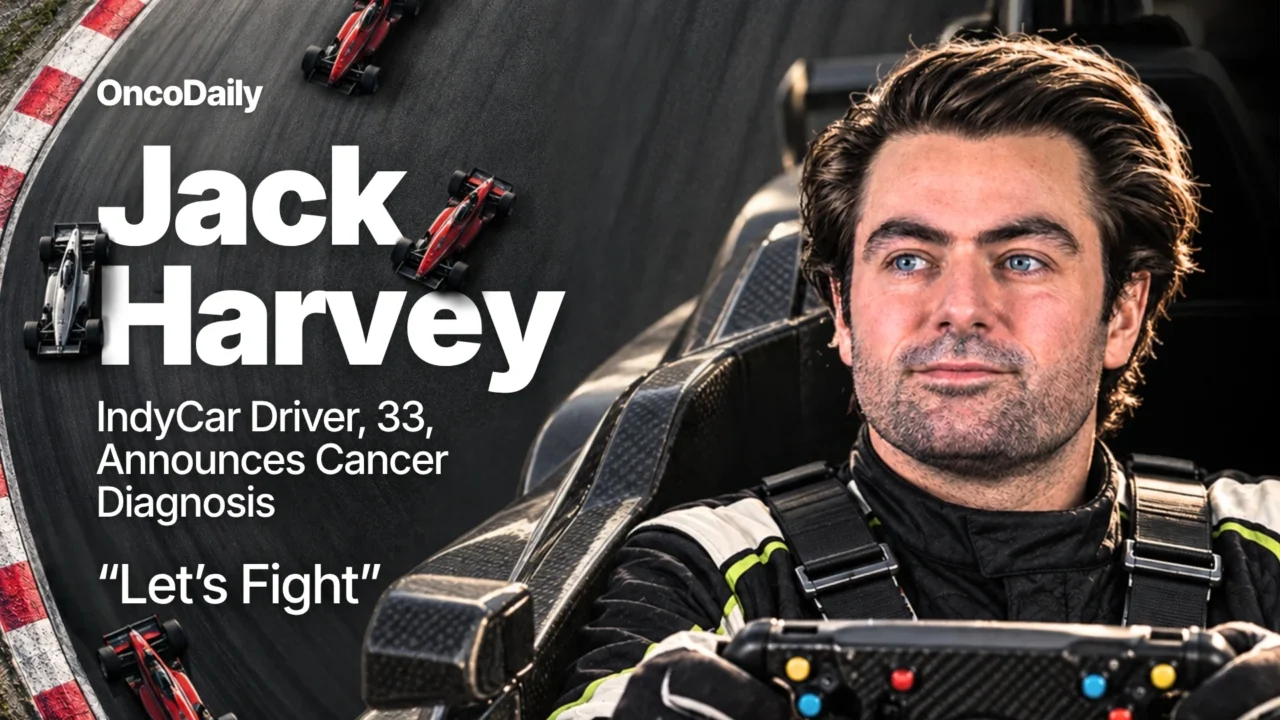
British IndyCar driver and FOX Sports broadcaster Jack Harvey has announced that he has been diagnosed with cancer at age 33, sharing the news in a social media statement on October 13, 2026. The former full-time IndyCar competitor, who now combines racing appearances with television broadcasting, described his diagnosis as an unexpected challenge but emphasized that his determination to return to the track remains unchanged. Harvey accompanied his announcement with a short message: “Let’s fight.”
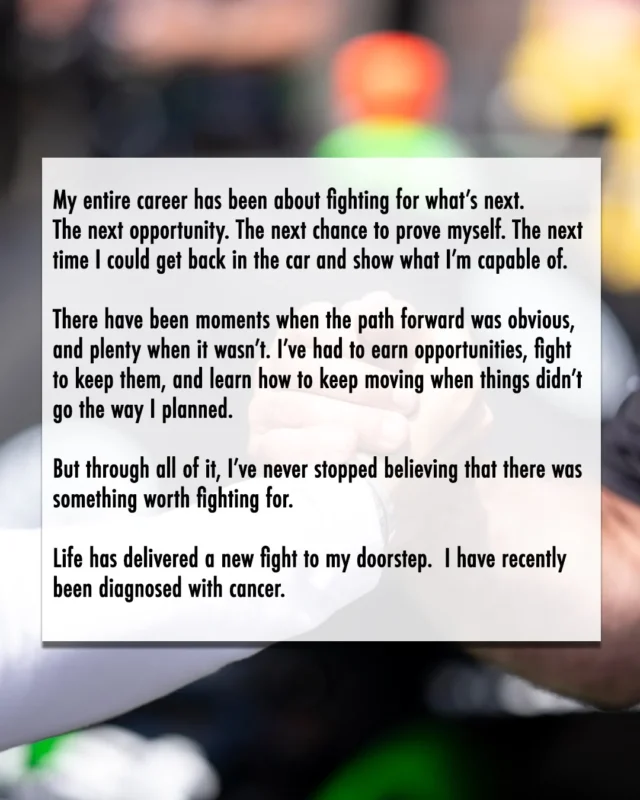
Photo: Jack Harvey X
Although he has not disclosed his cancer type or stage, Harvey expressed gratitude for the support of his family, friends, racing team, and colleagues. He also confirmed that he intends to return to FOX Sports’ IndyCar coverage for the 2027 season opener in St. Petersburg and compete in the Indianapolis 500 in May. His announcement has prompted messages of encouragement from across the motorsport community.
Who Is Jack Harvey?
Jack Harvey is a 33-year-old British professional racing driver and motorsport broadcaster known for competing in the NTT IndyCar Series. Born in Bassingham, Lincolnshire, England, Harvey began his racing career in karting before progressing through junior single-seater championships. He competed in British Formula 3 and later moved to the United States, where he established himself in Indy Lights, now known as INDY NXT. Harvey finished runner-up in the Indy Lights championship twice before making his Indianapolis 500 debut in 2017. Throughout his IndyCar career, he has competed for teams including Meyer Shank Racing, Rahal Letterman Lanigan Racing, and Dale Coyne Racing.
He has recorded 17 top-10 finishes across 95 IndyCar starts. In recent years, Harvey has balanced racing with broadcasting responsibilities. He joined FOX Sports’ IndyCar coverage as a pit reporter in 2025 and has also worked as an analyst for INDY NXT broadcasts. In 2026, he competed in the Indianapolis 500 for Dreyer & Reinbold Racing while continuing his television work.
When Did Jack Harvey Announce His Cancer Diagnosis?
Jack Harvey publicly announced his cancer diagnosis on October 13, 2026, through a statement shared on social media. In the message, he reflected on the challenges he had experienced throughout his racing career, including the constant need to earn opportunities and prove himself. He described his diagnosis as another difficult situation that he intends to confront with determination. One of the central messages of his announcement was that his professional ambitions remain intact.
Harvey confirmed that he hopes to return to FOX Sports’ IndyCar coverage for the 2027 season opener in St. Petersburg, Florida, and compete in the Indianapolis 500 in May. He also thanked the people and organizations supporting him, including his family, friends, Dreyer & Reinbold Racing, FOX Sports, and IndyCar. While his statement focused on his determination to continue racing and broadcasting, Harvey did not disclose details about the cancer itself.
What Type of Cancer Does Jack Harvey Have?
Jack Harvey has not publicly disclosed the specific type of cancer he has been diagnosed with. As of October 24, 2026, his announcement has not identified the primary tumor location, histological diagnosis, disease stage, or molecular characteristics. There is also insufficient publicly confirmed information to establish whether the disease is localized or has spread to other organs. These details are important because cancer is not a single disease.
Different malignancies have substantially different biological characteristics, treatment options, and prognoses. Without confirmed information about Harvey’s diagnosis, it would be inappropriate to speculate about the cancer type based on his age, professional background, or appearance. Public figures sometimes choose to announce a serious diagnosis while keeping medical details private. Such decisions should be respected, particularly when treatment and recovery are ongoing.
Is Jack Harvey Receiving Cancer Treatment?
Harvey has indicated that he is receiving medical care and support following his diagnosis. However, he has not provided a detailed public treatment plan, including specific medications, treatment schedules, or anticipated duration. Cancer treatment depends on several factors, including tumor type, stage, molecular characteristics, the patient’s overall health, and therapeutic goals. Depending on the diagnosis, treatment may involve surgery, chemotherapy, radiation therapy, immunotherapy, targeted therapy, or combinations of these approaches.
In Harvey’s case, none of these specific treatments should be assumed without confirmation. He has expressed confidence in the medical team supporting him and has emphasized his intention to continue pursuing his professional goals. His future participation in motorsport will depend on his health, treatment requirements, and medical recommendations.
Cancer at 33: Why Younger Adults Can Also Be Affected
although malignancies are more frequently diagnosed in older adults, cancer among adolescents and young adults represents a significant and increasingly recognized public health concern. The National Cancer Institute (NCI) defines adolescent and young adult (AYA) cancer as cancer diagnosed between ages 15 and 39. According to the latest estimates from the NCI’s Surveillance, Epidemiology, and End Results (SEER) Program, approximately 88,120 people aged 15–39 are expected to receive a cancer diagnosis in the United States in 2026, accounting for 4.2% of all new cancer cases.

Cancer incidence also varies substantially across age groups. NCI data indicate that the annual incidence among adolescents and young adults was approximately 74.9 cases per 100,000 people during 2017–2021, compared with 528.9 cases per 100,000 among adults aged 40–64. Although the overall incidence remains lower in younger populations, trends have changed. Between 2013 and 2022, cancer incidence among people aged 15–39 increased by an average of approximately 0.3% annually in the United States.
Which Cancers Are Most Common in Younger Adults?
The distribution of malignancies differs considerably by age and sex. According to the NCI, the most frequently diagnosed cancers among people aged 30–39 include breast cancer, thyroid cancer, melanoma, and colorectal cancer. Among younger men, testicular cancer, lymphoma, thyroid cancer, and melanoma are particularly relevant, although other malignancies can also occur. Cancer biology and treatment considerations may differ from those in older patients. Depending on the diagnosis, factors such as inherited cancer predisposition, tumor molecular characteristics, fertility preservation, long-term treatment toxicity, and psychosocial needs may influence clinical management.
What Are the Survival Outcomes?
Advances in diagnosis and treatment have improved outcomes for many young patients with cancer. According to the latest SEER statistics, the five-year relative survival rate across all cancers diagnosed at ages 15–39 is approximately 86.1%, based on patients diagnosed during 2016–2022. However, survival varies substantially by cancer type, stage, molecular characteristics, and treatment response. This population-wide statistic cannot be used to estimate the prognosis of an individual patient.
In Harvey’s case, the type and stage of cancer have not been disclosed, making any individualized survival estimate inappropriate. His diagnosis nevertheless illustrates an important clinical principle: young age and good physical fitness do not exclude the possibility of cancer, and persistent or unexplained symptoms warrant medical assessment regardless of age.
What Symptoms Should Younger Adults Pay Attention To?
Cancer symptoms vary considerably depending on the affected organ and underlying disease. Persistent or unexplained symptoms that warrant medical evaluation may include unintentional weight loss, a new or growing lump, persistent unexplained pain, unusual bleeding, changes in bowel or urinary habits, persistent fatigue, or unexplained fever. These symptoms are not specific to cancer and often have less serious explanations. However, symptoms that persist, worsen, or remain unexplained should be assessed by a healthcare professional. There is no public evidence linking any of these symptoms to Harvey’s diagnosis.
Jack Harvey Plans to Return for the 2027 Indianapolis 500
Despite his cancer diagnosis, Harvey has made clear that his motorsport ambitions have not changed. He intends to be involved in the season-opening weekend at St. Petersburg in March 2027 and return to the cockpit for the Indianapolis 500 in May. The Indianapolis 500 is one of the most prestigious events in international motorsport, and Harvey has previously participated in the race on multiple occasions. His intention to compete again has become one of the most widely discussed elements of his announcement. However, expressing a goal to return is not equivalent to medical clearance or confirmation that he will be able to compete.
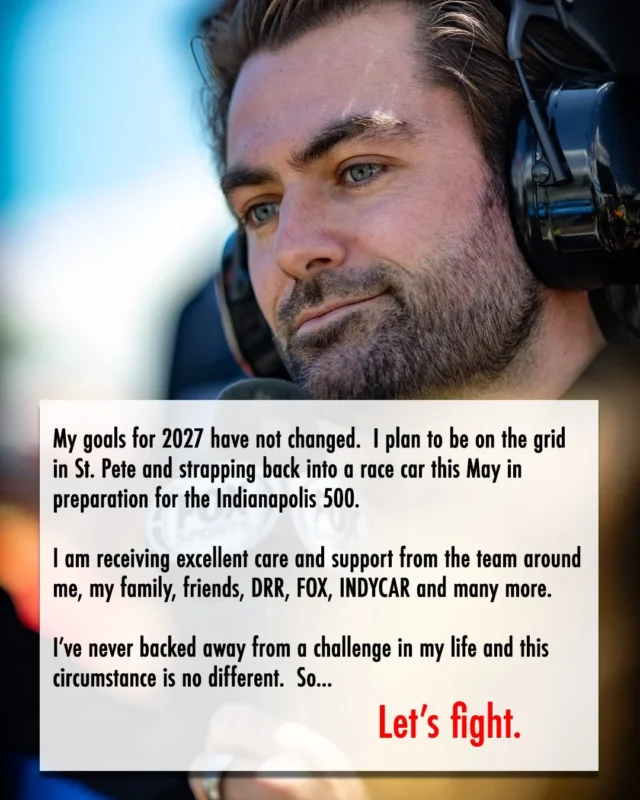
Photo: Jack Harvey X
Cancer treatment and recovery can involve periods of fatigue, additional medical appointments, or complications that require changes in activity. For professional athletes, returning to competition depends on individual medical circumstances and the physical demands of the sport. Harvey’s plans therefore reflect his personal determination rather than an established recovery timeline.
Racing Community Shows Support for Jack Harvey
Following Harvey’s announcement, fellow drivers, broadcasters, racing teams, and fans publicly expressed their support. Dreyer & Reinbold Racing, the team he represented at the 2026 Indianapolis 500, issued a statement expressing solidarity with Harvey and his family. FOX Sports colleagues and other IndyCar personalities also shared messages of encouragement. The Indianapolis Motor Speedway displayed #JackStrong on its scoring pylon in recognition of Harvey’s announcement.
The response illustrates the close professional relationships formed within motorsport, where drivers and team members often work together for many years. For patients facing cancer, social support can play an important role in emotional well-being and adjustment to diagnosis. However, supportive messages should not create expectations that patients must remain constantly optimistic or share personal medical information publicly.
Jack Harvey Cancer Diagnosis: Key Facts
Jack Harvey, a 33-year-old British IndyCar driver and FOX Sports broadcaster, publicly announced his cancer diagnosis on October 13, 2026. He has not disclosed the type or stage of the cancer, and no detailed treatment regimen has been publicly confirmed. Harvey has indicated that he is receiving medical care and remains determined to continue his professional career. He intends to return for the 2027 IndyCar season opener in St. Petersburg and compete in the Indianapolis 500 in May. His announcement included the message “Let’s fight,” which has been widely shared by fans and the racing community.
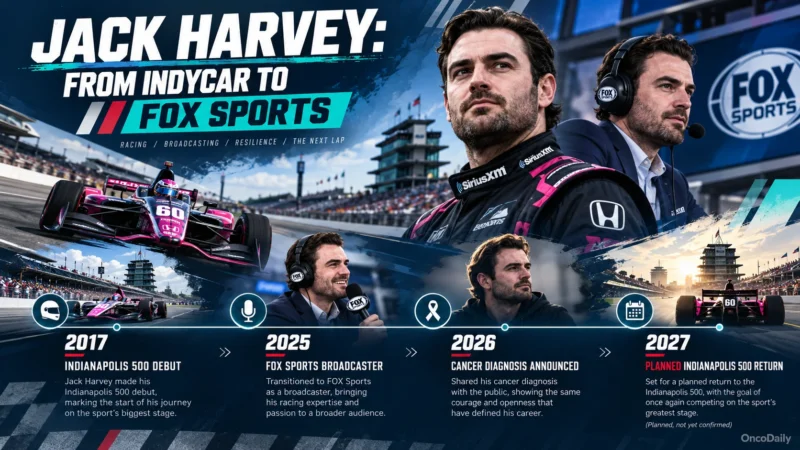
What Happens Next for Jack Harvey?
Harvey has not announced a detailed treatment timeline or indicated when further medical updates may become available. His stated intention is to continue working toward his 2027 motorsport commitments while receiving medical care. Any information about his diagnosis, treatment response, or return to competition should come from Harvey himself or verified statements from his representatives. Until additional details are confirmed, there is no reliable basis for estimating his prognosis or predicting how treatment may affect his career. For now, his announcement represents an important personal health disclosure made by a familiar figure in international motorsport.
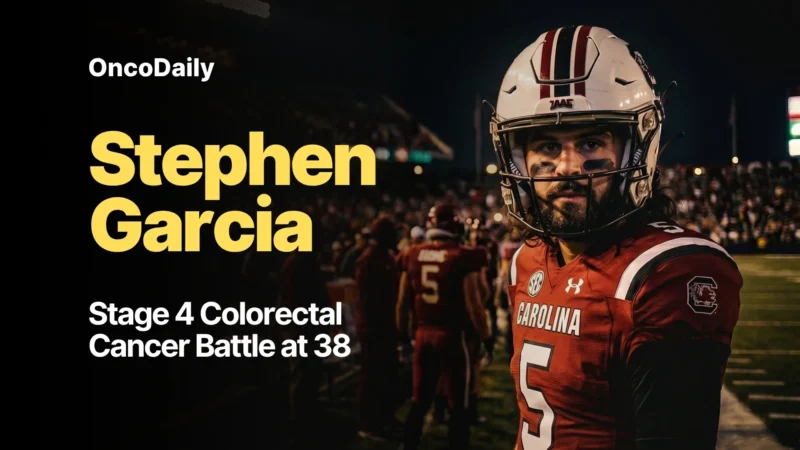
You Can Also Read Former NFL Prospect and South Carolina QB Stephen Garcia Diagnosed With Stage 4 Colon Cancer by OncoDaily
Written by Aharon Tsaturyan, MD, Editor at OncoDaily Intelligence Unit
FAQ
What Type of Cancer Does IndyCar Driver Jack Harvey Have?
Jack Harvey has not publicly disclosed the type or stage of cancer he was diagnosed with. The British IndyCar driver and FOX Sports broadcaster announced his diagnosis on October 13, 2026, at age 33, but has not shared specific details about his condition.
When Did Jack Harvey Announce His Cancer Diagnosis?
Jack Harvey announced his cancer diagnosis on October 13, 2026, through social media. The former full-time IndyCar driver shared a message of determination, writing, “Let’s fight,” and received widespread encouragement from the motorsport community.
How Old Is IndyCar Driver Jack Harvey?
Jack Harvey is 33 years old as of October 2026. Born on April 15, 1993, in Bassingham, Lincolnshire, England, he is a British racing driver known for competing in the NTT IndyCar Series and working as a pit reporter for FOX Sports.
Is Jack Harvey Still Racing After His Cancer Diagnosis?
Jack Harvey has expressed his intention to continue his racing career despite his cancer diagnosis. He plans to return for the 2027 Indianapolis 500 and participate in FOX Sports' coverage of the IndyCar season opener in St. Petersburg, although his return will depend on his health and medical clearance.
Which IndyCar Drivers Supported Jack Harvey After His Cancer Announcement?
Several prominent motorsport figures expressed support for Jack Harvey, including Conor Daly, Scott McLaughlin, Marcus Ericsson, Tony Kanaan, James Hinchcliffe, and David Malukas. Their messages reflected the widespread encouragement Harvey received following his October 2026 cancer announcement.
Did FOX Sports Support Jack Harvey Following His Cancer Diagnosis?
Yes. Jack Harvey received support from colleagues across FOX Sports and the motorsport broadcasting community. FOX Sports personalities, including Jamie Little and Bob Pockrass, were among those who expressed encouragement following his announcement.
What Did Indianapolis Motor Speedway Do to Support Jack Harvey?
Indianapolis Motor Speedway displayed #JackStrong on its scoring pylon following Harvey's cancer announcement. The gesture became a visible symbol of support from the IndyCar community and fans.
Which IndyCar Teams Supported Jack Harvey During His Cancer Diagnosis?
Dreyer & Reinbold Racing, Chip Ganassi Racing, and Abel Motorsports were among the racing organizations that expressed support for Harvey. Dreyer & Reinbold Racing, which fielded Harvey in the 2026 Indianapolis 500, publicly expressed solidarity with him and his family.
Will Jack Harvey Compete in the 2027 Indianapolis 500?
Jack Harvey has stated that he intends to compete in the 2027 Indianapolis 500, despite announcing his cancer diagnosis in October 2026. His planned return reflects his determination to continue racing, but participation remains subject to his health, medical clearance, and racing arrangements.