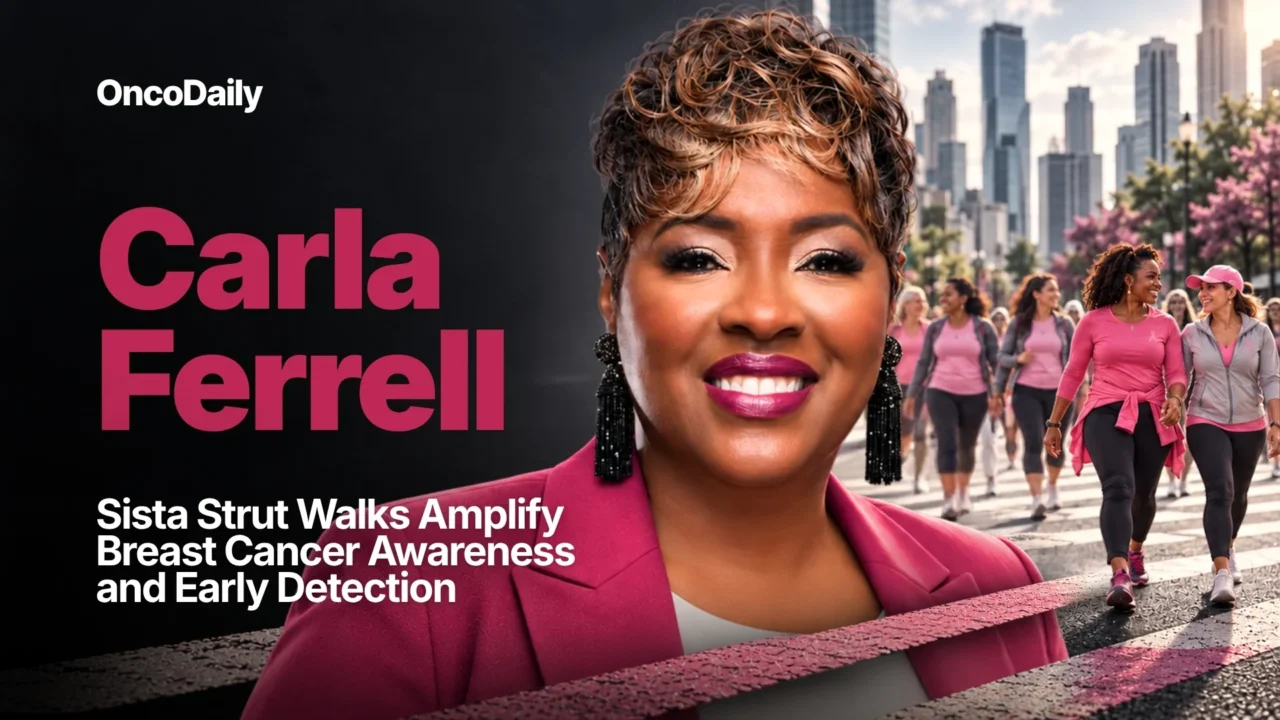
Carla Ferrell, co-host of The Steve Harvey Morning Show, continued her long-standing commitment to breast cancer awareness in 2026, joining survivors, advocates, and community members for the annual Sista Strut walks. Through a campaign rooted in personal loss, Ferrell is helping bring attention to early detection, breast cancer disparities, and the importance of accessible screening and support. In September and October 2026, Sista Strut events brought communities together across several US cities, transforming traditional charity walks into public-health initiatives focused on education, advocacy, and survivor support.
Ferrell participated in events in Detroit and Chicago, while her fellow radio personality Junior represented The Steve Harvey Morning Show at the Jacksonville walk. Their involvement helped extend the campaign’s message beyond those attending in person. For Ferrell, the mission is deeply personal. Her mother, Patricia Ann Boatner, died from breast cancer in 2004, and the experience has shaped her years of advocacy for women facing the disease.
What Is Sista Strut Breast Cancer Awareness Walk?
Sista Strut is a community-based breast cancer awareness initiative designed to encourage early detection, provide educational resources, and support individuals and families affected by the disease. The campaign focuses particularly on women of color, who continue to experience significant disparities in breast cancer outcomes in the United States. Its signature event is a 3-kilometer walk that combines physical activity, survivor recognition, music, community celebrations, and health education. Unlike a traditional sporting event, Sista Strut emphasizes participation rather than competition.
Attendees include breast cancer survivors, patients undergoing treatment, caregivers, families, healthcare advocates, radio personalities, and local organizations. The initiative is supported by iHeartMedia and participating local radio stations, which use their audiences to promote education and community engagement. Through partnerships with regional breast cancer organizations, Sista Strut also helps connect participants with information about screening, diagnosis, treatment, and support services. The campaign reflects a broader public-health objective: making breast cancer awareness part of everyday community conversations rather than limiting it to healthcare settings.
Who Is Carla Ferrell?
Carla Ferrell is an American radio personality, broadcasting executive, and breast cancer awareness advocate best known for her work on the nationally syndicated Steve Harvey Morning Show. She began her broadcasting career in Houston, Texas, after studying communications at Prairie View A&M University.Her professional experience includes radio production, programming, and management roles in several major US markets. Ferrell joined The Steve Harvey Morning Show in August 2005 as program director and subsequently became an on-air co-host. Over the years, she has developed a recognizable presence in American radio, combining entertainment programming with conversations about family, health, and community issues.
She has also received recognition for her broadcasting work, including a Gracie Award for Best National Radio Co-Host in 2020. Beyond her radio career, Ferrell has become an advocate for breast cancer education, particularly through her involvement with Sista Strut. Her public platform allows her to reach listeners who might otherwise have limited exposure to breast health information and community screening resources.
Why Is Breast Cancer Awareness Personal to Carla Ferrell?
Ferrell’s commitment to breast cancer advocacy is closely connected to the death of her mother, Patricia Ann Boatner. Her mother died from breast cancer in 2004, an experience Ferrell has publicly referenced when discussing the importance of breast health awareness. During the 2018 Sista Strut walk in Chicago, Ferrell participated in memory of her mother. The event coincided with her birthday, making the occasion particularly meaningful.
Rather than focusing exclusively on the personal milestone, she used the opportunity to recognize her mother’s memory and encourage women to take their breast health seriously. Later that year, Ferrell publicly shared her experience undergoing a screening mammogram. Her participation helped reinforce the message that screening should be discussed openly rather than approached with fear or embarrassment. By connecting her family’s experience with community education, Ferrell has helped bring a personal dimension to the broader conversation about breast cancer prevention and early detection.
How Did Carla Ferrell Support Sista Strut in 2026?
Ferrell continued her involvement with Sista Strut during the 2026 Breast Cancer Awareness Month campaign. On September 26, 2026, she participated in Detroit’s 27th annual Sista Strut, organized in connection with Mix 92.3. The event took place at Spirit of Detroit Plaza and benefited Henry Ford Health’s Game On Cancer initiative. Ferrell was joined by local radio personality Cheron, an eight-year breast cancer survivor, and recording artist Raheem DeVaughn. Together, they helped bring attention to the importance of community engagement, survivor support, and continued investment in cancer-related services.
On October 3, 2026, Ferrell also hosted the ninth annual Sista Strut Pink Celebration in Chicago. The event took place at the Salvation Army Ray and Joan Kroc Community Center on Chicago’s South Side. She was joined by V103 personality Bioncé Foxx, Inspiration 1390 host Sonya Blakey, and KeKe Hampton of 103.5 KISS FM and WGCI. Seven iHeartMedia Chicago stations participated in promoting the event.
The 3K walk benefited Sisters Network Chicago, Inc., an organization dedicated to breast cancer advocacy and survivorship support, particularly within the African American community. According to Premiere Networks, the 2026 Chicago event attracted record attendance. Although an exact participant count was not provided, the announcement highlighted the continuing growth of community interest in the campaign. The involvement of multiple radio stations also helped extend the initiative’s reach across audiences with different cultural backgrounds and musical preferences.
How Has Sista Strut Grown Over the Years?
Sista Strut has developed into a recurring breast cancer awareness initiative in multiple US cities. Its history includes community walks, radio partnerships, survivor recognition, and collaborations with health organizations. In October 2018, Ferrell and fellow Steve Harvey Morning Show personality Shirley Strawberry joined more than 4,000 participants at the Chicago Sista Strut walk. The event illustrated the campaign’s ability to mobilize local communities around a shared public-health message. The Chicago initiative continued in subsequent years, with Ferrell returning as a host and advocate.
In 2023, the city held its seventh annual Sista Strut Pink Celebration, followed by the eighth annual event in 2024. Ferrell also participated in Sista Strut activities in New Orleans and other cities, reinforcing the campaign’s national reach. By 2026, the Chicago celebration had reached its ninth edition, while Detroit’s event had a longer local history. The continuity of these initiatives demonstrates how breast cancer awareness campaigns can build lasting community engagement beyond a single annual event.
Why Is Breast Cancer Early Detection Important?
Early detection can identify breast cancer before symptoms develop, when treatment options are often broader and outcomes are generally more favorable. Breast cancer may initially develop without noticeable symptoms. Screening mammography can detect abnormalities that are too small to be felt during a physical examination. When cancer is diagnosed at an earlier stage, treatment may be less extensive, and the likelihood of successful disease control is often higher.
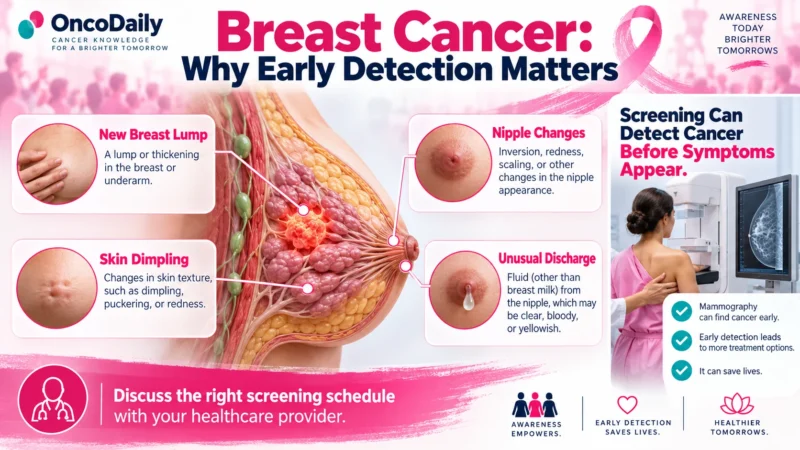
However, screening is not perfect. Some cancers may develop between examinations, and abnormal screening results require additional investigation to determine whether cancer is present. Awareness of breast changes remains important, even for people who undergo regular screening. Potential warning signs include a new lump in the breast or underarm, changes in breast size or shape, nipple discharge particularly when bloody skin dimpling, persistent localized changes, or nipple retraction.
These symptoms do not necessarily indicate cancer, but new or persistent changes should be evaluated by a healthcare professional. In the United States, the US Preventive Services Task Force recommends biennial screening mammography for women aged 40–74 years at average risk. Other professional organizations offer somewhat different screening schedules. Women with higher-than-average risk, including certain inherited genetic mutations or strong family histories, may need earlier screening or additional imaging, such as breast MRI. The central message of Sista Strut is therefore not simply to encourage awareness but to help women understand their individual risk and access appropriate medical care.
How Common Is Breast Cancer in the United States?
Breast cancer remains one of the most commonly diagnosed malignancies among women in the United States. According to the American Cancer Society’s 2026 estimates, approximately 321,910 new cases of invasive breast cancer are expected to be diagnosed in US women during the year. An additional 60,730 cases of ductal carcinoma in situ are expected, while approximately 42,140 women are projected to die from breast cancer.
Breast cancer accounts for roughly one-third of newly diagnosed cancers among US women, excluding common skin cancers. The median age at diagnosis is approximately 63 years, although breast cancer can affect younger adults. Around one in ten women diagnosed with breast cancer is younger than 45. These statistics highlight why community awareness campaigns remain relevant even as treatment options continue to improve. Earlier diagnosis, effective treatment, and long-term follow-up all contribute to better outcomes. However, progress has not been equal across all communities.
Why Does Sista Strut Focus on Women of Color?
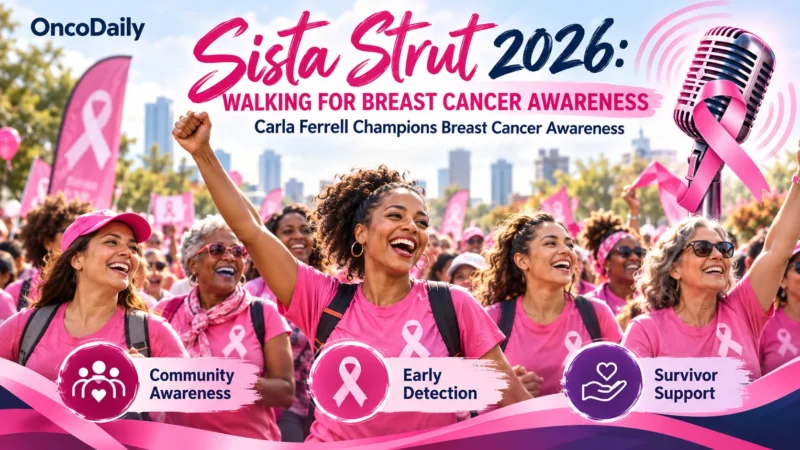
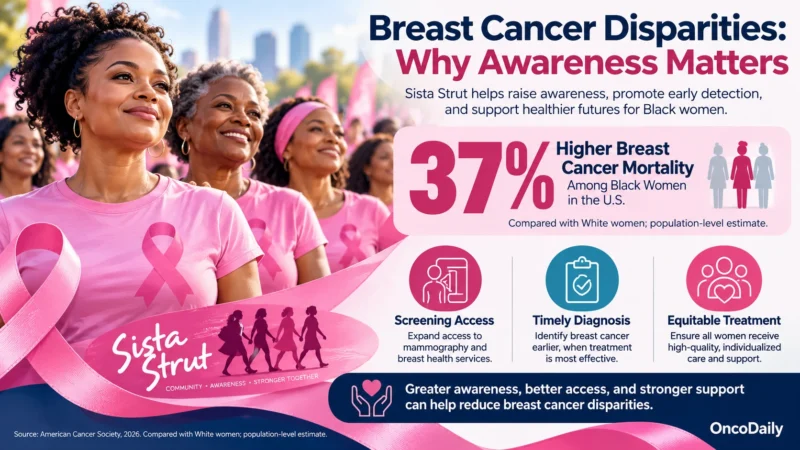
One of Sista Strut’s central objectives is to address disparities in breast cancer outcomes among Black women and other underserved communities. According to the American Cancer Society’s 2025 report on cancer statistics among Black Americans, Black women were approximately 38% more likely to die from breast cancer than White women, despite having slightly lower incidence rates. More recent 2026 analyses continue to document a substantial mortality disparity. Several factors contribute to these differences, including unequal access to timely diagnosis and high-quality treatment, socioeconomic barriers, structural inequities, and variations in tumor biology.
Black women are also disproportionately affected by triple-negative breast cancer, a subtype that lacks estrogen and progesterone receptors and HER2 overexpression. Triple-negative breast cancer can behave aggressively and has historically presented additional treatment challenges, particularly when diagnosed at an advanced stage.
However, biological differences alone do not explain disparities in breast cancer mortality. Access to appropriate screening, rapid diagnostic evaluation, guideline-based treatment, supportive care, and long-term follow-up is also essential. Community initiatives such as Sista Strut seek to address some of these barriers by creating trusted opportunities for health education and connecting women with local support organizations. Importantly, the campaign recognizes that improving breast cancer outcomes requires more than telling individuals to undergo screening. Women must also have practical access to diagnostic services and effective treatment when an abnormality is identified.
What Role Do Community Events Play in Breast Cancer Prevention?
Public-health initiatives such as Sista Strut help bring health information into familiar social environments. For some women, attending a community walk may provide their first opportunity to speak openly about breast cancer symptoms, screening, or family history. For others, the event offers emotional support after diagnosis or treatment. Survivors can share experiences with people who understand the physical and emotional consequences of cancer, while families and caregivers gain access to support networks. Events also create opportunities for local organizations to explain available resources.
These may include screening programs, patient navigation, financial assistance, transportation support, survivorship services, and information about treatment. Although community awareness events cannot replace mammography or medical evaluation, they can encourage people to seek those services. The effectiveness of such initiatives ultimately depends not only on participation but also on whether awareness translates into timely screening, appropriate follow-up, and access to treatment.
How Does Carla Ferrell Use Her Radio Platform for Breast Cancer Advocacy?
Ferrell’s role demonstrates how media personalities can contribute to public-health communication. As a co-host of a nationally syndicated radio program, she can introduce breast cancer awareness messages to listeners across multiple cities. Her involvement with Sista Strut connects that broad national platform with community organizations and local events. By publicly discussing her mother’s death and her own commitment to screening, Ferrell also helps make conversations about breast health more approachable.
The campaign’s messaging emphasizes that discussing cancer should not be limited to those already affected by the disease. Families, friends, employers, faith communities, and local organizations can all contribute to creating environments where health concerns are discussed without stigma. Through her recurring involvement, Ferrell has helped Sista Strut remain visible across different cities and awareness campaigns.
How Can People Support Sista Strut and Breast Cancer Awareness?
Individuals interested in supporting Sista Strut can participate in local walks, volunteer with community organizations, or contribute to the charitable partners associated with particular events. Supporting patient navigation programs and organizations that improve screening and treatment access is another practical way to contribute. People can also encourage eligible family members and friends to discuss breast cancer screening with their healthcare providers. Those who notice persistent breast changes should seek medical evaluation rather than waiting for the next scheduled screening appointment.
Sharing medically reliable information and supporting people undergoing cancer treatment can also help reduce fear, misinformation, and isolation. For individuals with a significant family history of breast, ovarian, pancreatic, or related cancers, discussing hereditary cancer risk assessment with a healthcare professional can be particularly important.
What Is Carla Ferrell’s Lasting Impact on Breast Cancer Awareness?
Carla Ferrell’s long-standing involvement with Sista Strut illustrates how personal experiences can become sustained public-health advocacy. Her mother’s death from breast cancer helped shape a commitment to education, early detection, and community support.Through her broadcasting career and continued participation in Sista Strut events, Ferrell has helped bring breast health conversations to audiences beyond traditional medical settings.
The campaign’s continued growth, including the record attendance reported at Chicago’s 2026 event, demonstrates the value of partnerships between media organizations and local breast cancer advocacy groups. Yet the message extends beyond attendance figures or annual celebrations. For women facing barriers to screening, diagnosis, or treatment, the most meaningful outcome of public awareness is access to timely, appropriate medical care. Sista Strut’s enduring message is that breast cancer awareness should lead to action—not only during Breast Cancer Awareness Month, but throughout the year.
You Can Also Read The Angelina Jolie Effect: A Lasting Global Impact on Cancer Prevention by OncoDaily

Photo: Depositphotos
Written by Aharon Tsaturyan, MD, Editor at OncoDaily Intelligence Unit
FAQ
What Is Sista Strut 2026, and How Does It Raise Breast Cancer Awareness?
Sista Strut is a community-based breast cancer awareness campaign featuring 3K walks across US cities. It focuses particularly on women of color, promoting early detection, screening education, survivor support, and access to healthcare resources. Premiere Networks
Who Is Carla Ferrell, and What Is Her Role in Sista Strut?
Carla Ferrell is a co-host and program director of The Steve Harvey Morning Show. She is a longtime breast cancer awareness advocate who has helped host and promote Sista Strut events, using her radio platform to encourage early detection and community participation.
Why Does Carla Ferrell Support Breast Cancer Awareness?
Carla Ferrell's involvement is deeply personal. Her mother, Patricia Ann Boatner, died from breast cancer in 2004. Ferrell has used her family's experience to encourage women to prioritize breast health and participate in community awareness initiatives.
Where Did Sista Strut 2026 Take Place?
Sista Strut 2026 included events in Detroit on September 26 and Chicago and Jacksonville on October 3. Carla Ferrell participated in the Detroit and Chicago events. The Chicago celebration took place at the Salvation Army Ray and Joan Kroc Community Center.
How Does Sista Strut Support Black Women With Breast Cancer?
Sista Strut focuses on education, screening awareness, survivor recognition, and connections to local support organizations. The initiative addresses important healthcare disparities, as Black women in the United States experience higher breast cancer mortality despite having a slightly lower incidence than White women.
What Is the Connection Between Carla Ferrell and Steve Harvey?
Carla Ferrell is a longtime co-host and program director of The Steve Harvey Morning Show. Her involvement in Sista Strut has helped bring breast cancer awareness to the program's national audience and local radio communities.
What Are the Early Warning Signs of Breast Cancer?
Possible warning signs include a new breast or underarm lump, changes in breast size or shape, nipple discharge, skin dimpling, and nipple retraction. However, early breast cancer often has no noticeable symptoms, making appropriate screening particularly important.
At What Age Should Women Start Breast Cancer Screening?
The US Preventive Services Task Force recommends mammography every two years for women aged 40–74 at average risk. Other medical organizations offer somewhat different schedules. Women with higher-than-average risk may require earlier or additional screening based on their medical and family history.
Why Is Breast Cancer Mortality Higher Among Black Women?
According to the American Cancer Society's 2026 statistics, breast cancer mortality is approximately 37% higher among Black women than White women in the United States. Contributing factors include inequalities in diagnosis and treatment, access to healthcare, and differences in tumor biology, including a higher frequency of triple-negative breast cancer.
How Can People Participate in Sista Strut or Support Breast Cancer Awareness?
People can join local Sista Strut walks, volunteer, support participating breast cancer organizations, or share reliable screening information. Supporting patient navigation, early diagnosis, and access to appropriate treatment can also help improve breast cancer outcomes.