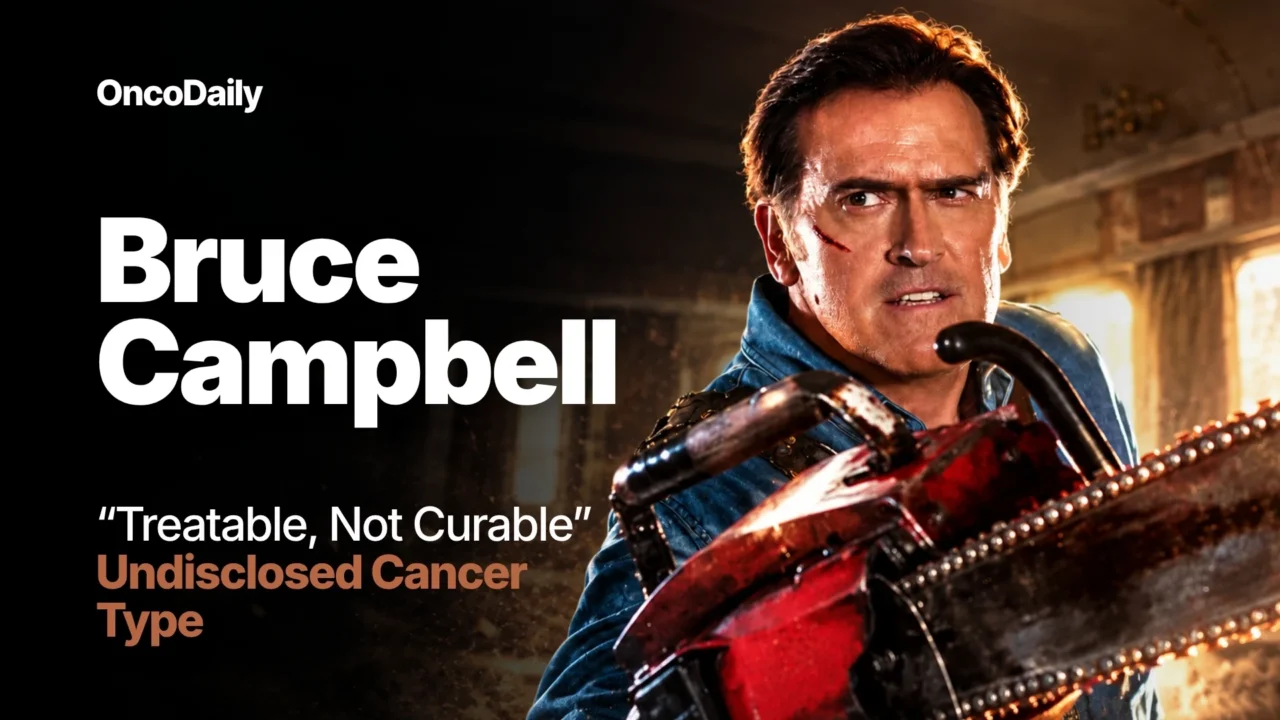
Bruce Campbell’s cancer diagnosis has attracted widespread attention after the American actor, best known for portraying Ash Williams in the Evil Dead franchise, spoke publicly about his treatment and expectations for the years ahead. His recent interviews have also raised important questions about what a cancer prognosis really means. The 68-year-old actor first disclosed his diagnosis in March 2026 and has since shared how the disease has affected his personal and professional life.
In September, Campbell discussed his outlook during an appearance on The Adam Carolla Show, explaining that his doctors had provided an estimated prognosis of approximately five years. Although Campbell has addressed his diagnosis openly, he has chosen to keep certain medical details private. His comments have prompted broader discussions about the difference between treatable and curable cancer, the meaning of survival estimates, and how patients approach life during ongoing treatment.
Who Is Bruce Campbell?
Bruce Campbell is an American actor, producer, writer, and director, widely recognized for his longstanding collaboration with filmmaker Sam Raimi. He gained international recognition portraying Ash Williams in the 1981 horror film The Evil Dead, a role he reprised in subsequent productions, including Evil Dead II, Army of Darkness, and the television series Ash vs Evil Dead.

Photo: Depositphotos
His performances helped establish him as a prominent figure in horror cinema, particularly among audiences drawn to the franchise’s combination of suspense, dark humor, and unconventional storytelling. Beyond Evil Dead, Campbell has appeared in numerous film and television productions, including Burn Notice, Sky High, and Raimi’s Spider-Man trilogy. He has also worked behind the camera as a writer, director, and producer. His more recent work includes Ernie & Emma, an independently produced film that he wrote, directed, and starred in. Despite his cancer diagnosis, Campbell has continued discussing his creative projects and plans to remain professionally active.
When Did Bruce Campbell Announce His Cancer Diagnosis?
Campbell publicly disclosed his cancer diagnosis in March 2026 through a message on X. In the announcement, he described the diagnosis as unexpected and explained that the disease was considered treatable but not curable. He also indicated that he was receiving treatment and that some professional commitments would need to be adjusted. Rather than revealing extensive medical information, Campbell focused on reassuring fans that he had support and intended to continue with his work when possible. His announcement received widespread attention, particularly among fans who had followed his career for decades.
July 2026: Discussing Treatment and His Outlook
During a July appearance on the podcast Inside of You with Michael Rosenbaum, Campbell discussed his experience of living with cancer and maintaining his professional commitments. His comments reflected an effort to approach treatment as part of his ongoing life rather than allowing the diagnosis to determine every aspect of his daily routine. He expressed hope about the future and discussed his intention to continue working.
September 2026: The Five-Year Prognosis
In September 2026, Campbell offered a more specific update during The Adam Carolla Show. He explained that his medical outlook involved an estimated five-year prognosis, while making clear that he did not wish to identify the specific type of cancer. When asked whether the estimate represented approximately five years of remaining life, Campbell answered, “Give or take.” The statement generated considerable media coverage, with some headlines presenting the estimate as a definite prediction.
However, a clinical prognosis is not a fixed deadline. It represents an assessment based on the information available at a particular point in a patient’s illness. Campbell also emphasized that he was continuing to focus on work and everyday life rather than allowing medical predictions to dominate his activities.
What Type of Cancer Does Bruce Campbell Have?
Bruce Campbell has not publicly disclosed his specific cancer type. As of the latest verified reporting, he has not identified the primary tumor location, histological diagnosis, disease stage, molecular characteristics, or whether the malignancy has spread to other organs. He has described the cancer as treatable but not curable, but this description does not identify a particular malignancy. Many different cancers can be treated over prolonged periods without being considered curable. Their clinical behavior, treatment options, and expected outcomes vary considerably. Without confirmed medical information, it would be inappropriate to infer Campbell’s diagnosis from his age, appearance, treatment schedule, or comments about prognosis.
Likewise, an estimated five-year prognosis cannot establish whether his disease is localized, advanced, or metastatic. His decision to keep the diagnosis private should be respected, particularly because he has explicitly chosen not to discuss certain details during interviews. The medically accurate description remains that Campbell is receiving treatment for an undisclosed type of cancer that he has characterized as treatable but not curable.
What Does “Treatable but Not Curable” Cancer Mean?
When Campbell first announced his diagnosis, he described the cancer as treatable but not curable. The distinction is clinically important because treatment effectiveness and the possibility of cure are not always the same. A treatable cancer is one for which medical interventions may control disease activity, reduce tumor burden, relieve symptoms, slow progression, or extend survival.
These interventions can include chemotherapy, immunotherapy, targeted therapies, hormone therapy, radiation therapy, surgery, or combinations of treatments, depending on the cancer type and clinical circumstances.
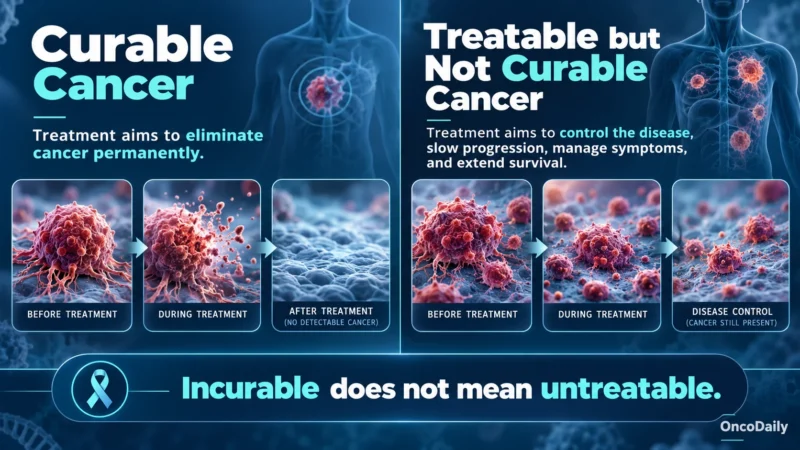
A cancer described as incurable generally means that currently available treatments are not expected to eliminate the disease permanently. However, incurable does not necessarily mean that treatment cannot provide meaningful benefits or that a patient will experience rapid deterioration. Some cancers can remain controlled for prolonged periods with systemic therapy. Patients may experience stable disease, partial remission, or periods in which treatment produces substantial reductions in tumor burden.
In certain malignancies, treatment can be modified over time as new therapies become available or the disease develops resistance. The duration of disease control varies considerably according to cancer type, stage, molecular characteristics, general health, and response to treatment.
For example, advances in targeted therapy and immunotherapy have transformed outcomes in selected molecular subgroups of cancer, allowing some patients to experience prolonged survival despite advanced disease. Nevertheless, the term treatable does not indicate how well an individual cancer will respond, and incurable does not establish a specific life expectancy. The National Cancer Institute emphasizes that prognosis is influenced by multiple clinical factors and may change as a patient’s condition and treatment response evolve.
What Does Bruce Campbell’s Five-Year Cancer Prognosis Mean?
Campbell’s September 2026 statement about a five-year prognosis became one of the most widely reported aspects of his diagnosis. During The Adam Carolla Show, he described the estimated outlook as approximately five years, while acknowledging that the timeline was uncertain. The distinction between a prognosis and a definitive survival prediction is particularly important.
A Prognosis Is an Estimate, Not a Fixed Timeline
In oncology, prognosis refers to the expected course and likely outcome of a disease. Doctors consider several factors when estimating prognosis, including the cancer’s histological type, stage, biological characteristics, available treatments, and the patient’s general health.Treatment response can also influence the outlook. A cancer that responds well to therapy may remain controlled longer than initially anticipated, while resistant or rapidly progressive disease may require changes in treatment.
Prognostic estimates are often informed by clinical trials and survival data collected from patients with similar diagnoses. However, these statistics describe populations rather than individuals. Two patients with the same cancer type and stage may experience very different outcomes because of variations in tumor biology, treatment response, other medical conditions, and access to therapy. Consequently, an estimate of approximately five years should not be interpreted as a fixed expiration date.
Five-Year Prognosis vs. Five-Year Survival Rate
These expressions are related but describe different concepts. A five-year survival rate represents the proportion of patients within a defined population who are alive five years after a specified starting point, commonly diagnosis. Several survival measures are used in oncology. Overall survival (OS) measures the proportion of patients alive after a certain period, regardless of cause of death. Cancer-specific survival considers deaths attributable to a particular cancer. Relative survival compares the survival of people with cancer against that of a comparable general population. A physician’s individual prognostic estimate may draw upon these measures, but it also incorporates patient-specific clinical information.
When Campbell referred to a five-year prognosis, he was discussing an estimate concerning his own illness. He was not reporting a population-level five-year survival percentage. Because he has not disclosed his cancer type, stage, or pathology, it would be scientifically inappropriate to assign him survival statistics from a particular malignancy. Even a highly accurate population survival estimate could not determine exactly how long an individual patient will live. The National Cancer Institute specifically cautions that survival statistics cannot predict an individual’s outcome with certainty.
What Has Bruce Campbell Said About His Cancer Treatment?
Campbell has confirmed that he is undergoing cancer treatment, but he has not publicly identified the specific medications or treatment modalities being used. There has been no verified disclosure confirming whether he is receiving chemotherapy, immunotherapy, targeted therapy, radiation treatment, or another intervention. During his July 28 appearance on Inside of You with Michael Rosenbaum, Campbell discussed the emotional and practical experience of receiving cancer care. He described the challenges of managing an illness that requires continued medical attention, using the comparison of a whack-a-mole game to explain how new issues can require intervention over time.
The actor also indicated that he remained hopeful and intended to maintain as much normality as possible while undergoing treatment. In interviews, he has described periods of feeling well despite his diagnosis and expressed a desire to continue his professional activities. Earlier in 2026, some scheduled appearances and work commitments were affected by treatment. However, Campbell has continued discussing and promoting his film Ernie & Emma, which he wrote, directed, produced, and starred in.
His decision to remain professionally active should not be interpreted as evidence that the disease is mild or that treatment is no longer necessary. People receiving cancer treatment can experience periods of relatively good physical function even while managing serious disease. Likewise, a patient’s public appearance does not reliably indicate tumor response or long-term prognosis. The available information supports only that Campbell is receiving treatment, has acknowledged the chronic nature of his illness, and intends to continue working as his health allows.
How Has Bruce Campbell Responded to His Diagnosis?
One of the most distinctive aspects of Campbell’s public discussion has been his approach to living with cancer. Rather than centering his interviews exclusively on the disease, he has repeatedly emphasized the importance of maintaining his everyday life and professional identity. During his September interview, Campbell summarized his approach in a brief statement:
“I’ve decided, though, pretty specifically, to live with it, not die from it.”
His remarks suggest an effort to avoid allowing the diagnosis to dominate every decision or conversation. He has also discussed deliberately limiting the amount of time he spends researching his illness or reading other patients’ experiences. For some individuals, extensive medical information can provide reassurance and a greater sense of control. Others may find constant exposure to statistics, treatment experiences, and prognostic discussions overwhelming.
There is no single emotional response that every person with cancer must adopt. Psychological adjustment is highly individual, influenced by personal circumstances, coping preferences, social support, and the demands of treatment. Campbell has said that he appreciates the support he has received and remains focused on pursuing creative projects. Following the widespread coverage of his September comments, he thanked supporters on social media and indicated that he wanted to return his attention to living rather than continuously discussing his prognosis. His response reflects a personal approach to illness, not a treatment recommendation or a strategy that should be expected of other patients.
Can People Live for Years With Incurable Cancer?
Yes. Some patients live for years with cancers that cannot currently be cured, although outcomes vary substantially by diagnosis and treatment response. In modern oncology, the goals of treatment are not always limited to permanently eliminating cancer. For certain patients, treatment may aim to maintain disease control, prevent or delay complications, reduce symptoms, and preserve quality of life for as long as possible. This can involve continuous therapy, scheduled treatment cycles, maintenance treatment, or switching to another therapy when the disease progresses.
The availability of multiple treatment options can influence how long a cancer remains manageable. For example, patients with specific molecular alterations may benefit from targeted therapies that interfere with signaling pathways essential to tumor growth. Immunotherapy can also produce durable responses in selected cancers, although many patients do not respond and others eventually develop resistance.
At the same time, some malignancies progress despite treatment, and not all patients are candidates for additional therapies. The phrase living with cancer therefore encompasses very different medical situations. For Campbell, the specific treatment goals, expected duration of disease control, and potential future options have not been publicly established. His statements are consistent with the experience of managing a serious illness over time, but they do not provide enough information to characterize his disease course more precisely.
Why Bruce Campbell’s Cancer Disclosure Matters
Public cancer diagnoses often receive widespread attention because audiences feel connected to actors, musicians, athletes, and other familiar figures. These disclosures can also create opportunities to improve public understanding of cancer terminology and treatment. Campbell’s experience highlights several distinctions that are frequently misunderstood. The first is that a diagnosis does not necessarily reveal how a person feels or functions on a given day. Some patients continue working, traveling, and participating in everyday activities while receiving cancer treatment. The second is that treatment and cure are different outcomes. Modern therapies may provide meaningful disease control even when they are not expected to eliminate a malignancy permanently.
The third is that prognosis is not an exact prediction. Five-year survival rates are important measures in cancer research, but they cannot establish precisely how long an individual patient will live.
Finally, Campbell’s decision to withhold details about his cancer type underscores the importance of medical privacy. Public figures may choose to disclose a diagnosis while keeping pathology, treatment, staging, and other medical information confidential. That decision does not diminish the significance of their public statements or justify speculation about undisclosed clinical details. In Campbell’s case, the most informative aspect of the story may be the opportunity to discuss how cancer can be managed over time without confusing treatment goals, survival statistics, and individual expectations.
Bruce Campbell Cancer: Key Facts
Bruce Campbell publicly announced his cancer diagnosis in March 2026, describing the illness as treatable but not curable. In July 2026, he discussed living with cancer during an appearance on Inside of You with Michael Rosenbaum, expressing hope and discussing the adjustments associated with ongoing treatment. During a September appearance on The Adam Carolla Show, he shared an approximate five-year prognosis, while acknowledging uncertainty about the timeline. Campbell has confirmed that he is receiving treatment but has not publicly identified the cancer type, formal stage, or specific therapeutic regimen. He has continued discussing his creative projects and has emphasized his intention to remain active for as long as his health allows.
What Is Known About Bruce Campbell’s Current Health?
As of October 22, 2026, the most substantial publicly verified information about Campbell’s condition comes from his March announcement and subsequent interviews in July and September. He has acknowledged receiving treatment for a form of cancer that he considers manageable but not curable. He has also shared an estimated five-year prognosis and described himself as maintaining hope while continuing his professional life. There has been no verified public announcement identifying a specific cancer diagnosis, confirming a change in disease stage, or detailing a new treatment regimen. Similarly, no reliable information establishes whether recent medical assessments have demonstrated tumor response, stable disease, or progression. Without those details, it would be inappropriate to infer a change in prognosis.
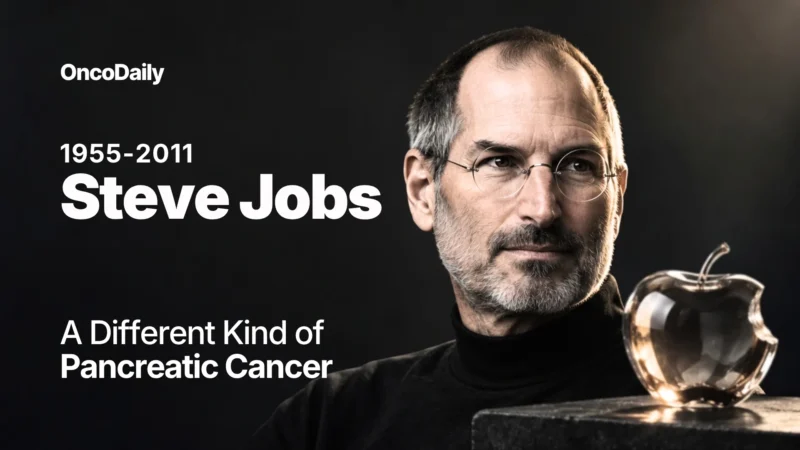
You Can Also Read Steve Jobs, Apple, and Cancer: The True Story Behind His Rare Diagnosis by OncoDaily
Written by Aharon Tsaturyan, MD, Editor at OncoDaily Intelligence Unit
FAQ
What Type of Cancer Does Bruce Campbell Have?
Bruce Campbell has not publicly disclosed his specific cancer type. He confirmed his diagnosis in March 2026, describing the disease as treatable but not curable. His cancer stage and other medical details remain private.
Is Bruce Campbell's Cancer Terminal?
Bruce Campbell has described his cancer as treatable but incurable. In September 2026, he shared an estimated five-year prognosis. However, this does not establish an exact life expectancy, and medical prognoses can change with treatment response.
How Long Does Bruce Campbell Have to Live?
In September 2026, Bruce Campbell revealed that his doctors had given him an approximate five-year prognosis. This is a medical estimate rather than a definite prediction of how long he will live.
What Is the Latest Update on Bruce Campbell's Cancer?
As of October 2026, Bruce Campbell has discussed his ongoing cancer treatment and approximate five-year prognosis. He has also expressed his intention to continue working and pursuing creative projects.
Is Bruce Campbell Receiving Chemotherapy?
Bruce Campbell has confirmed that he is receiving cancer treatment but has not disclosed whether it includes chemotherapy, immunotherapy, radiation therapy, or other treatments.
What Does Bruce Campbell's Five-Year Cancer Prognosis Mean?
A five-year prognosis represents an estimated outlook based on medical information available at a particular time. It is not a fixed survival deadline. Outcomes can vary depending on cancer biology, treatment response, and other clinical factors.
Is Bruce Campbell Still Working After His Cancer Diagnosis?
Yes. Despite his diagnosis, Bruce Campbell has continued discussing and promoting his professional projects, including Ernie & Emma. He has emphasized his desire to remain active while managing his illness.
How Old Is Bruce Campbell, and How Is His Health in 2026?
Bruce Campbell is 68 years old in 2026. He has acknowledged living with cancer and receiving treatment but has also described periods of feeling well and remaining professionally active. His detailed medical condition has not been publicly disclosed.