





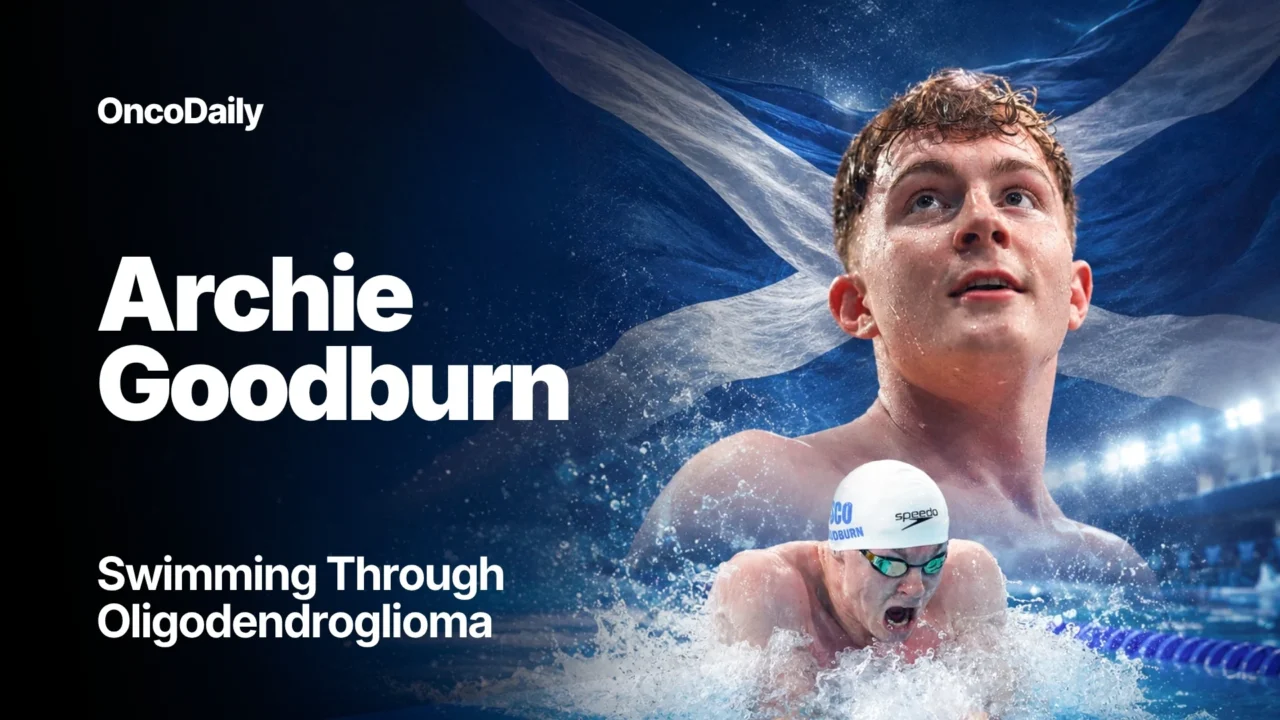
At just 22 years old, Scottish swimmer Archie Goodburn was preparing to chase an Olympic dream when doctors delivered life-changing news: three inoperable brain tumors. Diagnosed with low-grade oligodendroglioma, he was told he might not live beyond his 40s. Yet only two years later, Goodburn stood in the Commonwealth Games final, proving that his greatest race was no longer against the clock it was against brain cancer itself.

Photo: archie_goodburn Instagram account
Who Is Archie Goodburn?
Archie Goodburn has spent most of his life in the swimming pool. Born on June 26, 2001, in Edinburgh, Scotland, he developed into one of Britain’s leading breaststroke specialists, winning Scottish and British national titles in the 50-meter breaststroke while representing Scotland on the international stage. His first major multi-sport appearance came at the 2022 Commonwealth Games, establishing him as one of Scotland’s brightest swimming prospects.
Away from sport, Goodburn pursued an equally demanding academic career. While competing internationally, he completed a Master of Engineering in Chemical Engineering at the University of Edinburgh, graduating with first-class honors a remarkable achievement even before his cancer diagnosis. By early 2024, everything appeared to be pointing toward the Olympic Games. Then everything changed.
How Was Archie Goodburn Diagnosed With Oligodendroglioma?
During preparations for Olympic qualification, Goodburn began experiencing symptoms that initially seemed easy to explain. Elite athletes often live with exhaustion, headaches, and physical discomfort, making it difficult to distinguish normal training fatigue from something more serious. But his symptoms became increasingly concerning. He experienced:
- Seizures
- Numbness affecting the left side of his body
- Episodes of nausea
- Déjà vu sensations
- An MRI performed in May 2024 revealed a devastating diagnosis.
Doctors discovered three brain tumors. Following biopsy, they were identified as three low-grade oligodendrogliomas. Instead of preparing for Paris, Goodburn suddenly found himself preparing for cancer treatment.
What Is Oligodendroglioma?
Oligodendroglioma is a rare type of primary brain tumor arising from oligodendrocytes, the cells responsible for producing myelin, the protective covering surrounding nerve fibers. According to the American Brain Tumor Association, oligodendrogliomas account for only about 3% of all primary brain tumors, making them among the less common forms of brain cancer.
Many tumors carry IDH mutations and 1p/19q codeletion, molecular features that help define the disease and guide treatment decisions. Although classified as low-grade, the term can be misleading. Low-grade does not mean harmless. These tumors often grow slowly over many years, but they continue to infiltrate healthy brain tissue and may eventually transform into more aggressive disease.
Why Couldn’t Archie Goodburn’s Brain Tumors Be Removed?
For many patients, surgery represents the first step in treatment. That was not possible for Archie Goodburn. His tumors were spread through critical areas of the brain, meaning surgery carried an unacceptable risk of permanent neurological damage. Doctors determined that removing the tumors would likely cause more harm than benefit. He was also told something almost impossible for a 22-year-old to hear: His life expectancy had been dramatically shortened, and he might not live beyond his 40s.
How Is Archie Goodburn Being Treated?
Without surgery as an option, Goodburn’s treatment pathway looked very different from that of many patients.
Standard management for oligodendroglioma may include:
- Surgery (when feasible)
- Radiotherapy
- Chemotherapy, including temozolomide
- Long-term MRI surveillance
- Instead, Goodburn gained access to vorasidenib (Voranigo), a targeted IDH inhibitor developed specifically for IDH-mutant low-grade gliomas.
The treatment has helped slow tumor growth while delaying the need for radiotherapy and chemotherapy important for a young athlete because both treatments may affect cognitive function and quality of life. The approval of vorasidenib represented a major milestone in neuro-oncology, with many clinicians describing it as one of the first significant advances for adult low-grade gliomas in decades. For Goodburn, it meant something even more important: More time.
Why Does Access to New Brain Cancer Treatments Matter?
Goodburn’s story extends beyond his own diagnosis. Brain tumors receive only a small proportion of overall cancer research funding despite remaining one of the leading causes of cancer-related death in young adults. For decades, treatment options changed very little. The arrival of molecularly targeted therapies such as vorasidenib demonstrates how precision medicine is beginning to reshape brain tumor care, but access remains unequal across countries and healthcare systems. For patients diagnosed today, timely approval of innovative medicines and access to clinical trials can influence not only survival but also years of preserved quality of life.
How Did Archie Goodburn Return to the Commonwealth Games?
Perhaps the most extraordinary chapter of his story came not in the hospital but in the swimming pool. Only two years after receiving his diagnosis, Goodburn qualified for the 2026 Commonwealth Games in Glasgow. Competing in front of a home crowd, he reached the 50-meter breaststroke final, finishing joint seventh against some of the world’s fastest swimmers.
He also contributed to Scotland’s relay performances during the Games. The result was significant far beyond the stopwatch. Every race became proof that cancer had not taken away his identity. Afterward, Goodburn spoke not simply about swimming, but about purpose. His mission, he said, was to compete “for the future Archies” young people who may one day face the same diagnosis.
You Can Also Read Gold After Cancer: Summer Olympians Who Returned to Win Medals by OncoDaily
How Has Archie Goodburn Become a Voice for Brain Cancer Patients?
Cancer transformed Goodburn from athlete into advocate. He has repeatedly called for:
- Greater investment in brain tumor research
- Faster access to innovative therapies
- Expanded clinical trial opportunities
- Better national leadership for brain cancer care
Following the Commonwealth Games, his emotional interviews including an appearance on BBC Breakfast—brought renewed public attention to the challenges faced by patients with rare brain tumors. Rather than asking only for himself, he spoke about the thousands of patients who may benefit from future discoveries.
What Does Archie Goodburn’s Story Tell Us About Brain Cancer?
Goodburn’s experience illustrates several realities about brain tumors. Symptoms can initially appear subtle. Young, otherwise healthy adults can develop primary brain tumors. Even tumors described as “low-grade” can carry life-changing consequences. And despite major advances in precision oncology, patients with rare brain tumors still face limited treatment options compared with many other cancers. His story also highlights the growing importance of molecular diagnosis. Today, identifying mutations such as IDH is no longer simply a laboratory finding it directly influences treatment decisions and access to targeted therapies.
How Has Cancer Changed Archie Goodburn Beyond Sport?
Throughout treatment, Goodburn continued balancing elite athletics, university studies, medical appointments, and advocacy work. Completing a first-class master’s degree while living with three brain tumors reflects the determination that has defined both his sporting and personal life. Those close to him often describe him as someone who remains grounded despite extraordinary circumstances. For Goodburn, being an athlete is only part of the story. Being able to use his platform to improve the future of brain cancer care has become equally important.
What Comes Next for Archie Goodburn?
Goodburn continues treatment with vorasidenib while undergoing regular MRI monitoring. His future remains uncertain, as it does for many patients living with low-grade glioma. Yet his mission has become remarkably clear. He wants to continue competing. He wants more patients to gain access to innovative therapies. He wants greater investment in brain tumor research. And he wants future generations diagnosed with oligodendroglioma to face a better outlook than the one he received.
You Can Also Read $70 Million Guinness World Record Livestream: How Łatwogang Changed Cancer Philanthropy by OncoDaily
Written by Aharon Tsaturyan, MD, Editor at OncoDaily Intelligence Unit
FAQ
Who is Archie Goodburn?
Archie Goodburn is a Scottish breaststroke swimmer, British and Scottish champion, and Commonwealth Games finalist who was diagnosed with three inoperable oligodendrogliomas in 2024.
What type of brain tumor does Archie Goodburn have?
He was diagnosed with three low-grade oligodendrogliomas, a rare form of primary brain tumor that develops from oligodendrocytes in the brain.
When was Archie Goodburn diagnosed with brain cancer?
Goodburn's brain tumors were discovered in May 2024 after MRI scans performed following neurological symptoms. A biopsy later confirmed oligodendroglioma.
What symptoms did Archie Goodburn experience before his diagnosis?
He has spoken about experiencing seizures, numbness on the left side of his body, nausea, and episodes of déjà vu before doctors identified the tumors.
Why couldn't Archie Goodburn have surgery?
His tumors were considered inoperable because they were located in critical areas of the brain where surgery carried a high risk of permanent neurological damage.
What treatment is Archie Goodburn receiving?
He is being treated with vorasidenib (Voranigo), a targeted IDH inhibitor that has slowed tumor growth and delayed the need for radiotherapy and chemotherapy.
Why is Archie Goodburn advocating for brain cancer research?
Following his diagnosis, Goodburn has called for greater investment in brain tumor research, improved access to clinical trials, faster approval of innovative therapies, and better support for patients with rare brain cancers.
What is Archie Goodburn doing now?
Archie Goodburn continues elite swimming while receiving ongoing treatment and MRI monitoring. He is also an active advocate for brain cancer awareness, research funding, and improved access to new treatments.