The ESMO Congress 2026 is the annual meeting of the European Society for Medical Oncology. It stands as one of the world’s most influential oncology platforms for presenting pioneering cancer research. The event takes place from October 23 to 27, 2026, in Madrid, Spain, at the IFEMA MADRID convention center, utilizing a highly accessible hybrid (in-person and virtual) format.
Rasha Aboelhassan, Council Member at International Association for the Study of Lung Cancer, Senior Oncology Consultant at Nasser Institute Hospital, shared on LinkedIn:
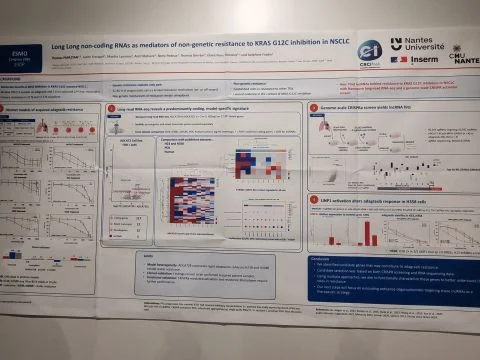
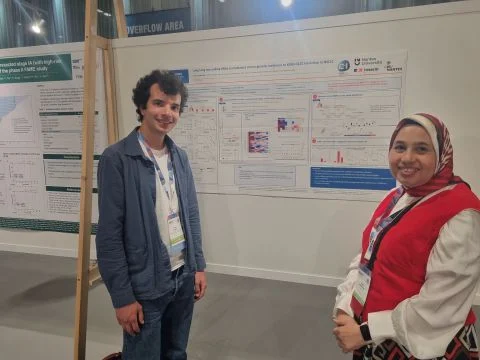
“Im pleased to interview Dr. Thomas Papazyn investigator for KRAS lung cancer, poster presenter during ESMO26:
Unlocking the ‘Other 50%’ of Resistance to KRAS Inhibitors:
Insights from ESMO 2026:
- Targeted therapies like sotorasib and adagrasib changed the paradigm for patients with metastatic KRAS G12C-mutated non-small cell lung cancer (NSCLC). Yet, disease progression remains a major clinical hurdle.
- While known genomic alterations explain roughly half of resistance mechanisms, what drives the remaining 50%?
- The Mechanism: Long Non-Coding RNAs (lncRNAs)
Thomas and his team are looking beyond classical coding mutations, focusing on the regulatory role of lncRNAs in acquired resistance:
High-Throughput Discovery: - Utilized long-read sequencing alongside a CRISPR activation screen targeting ~10,000 distinct lncRNAs in resistant cell line models.
- Functional Validation: Identified candidates whose selective overexpression alone is sufficient to induce resistance to KRAS G12C inhibitors.
- A 4-Step Blueprint for Preclinical Discovery
When asked about structuring translational oncology research, Thomas shared a clean, reproducible framework for early-career researchers:
Model Selection: Establish and refine robust resistant cell line models. - Comprehensive Characterization: Profile models via sequencing and functional CRISPR screens.
- Candidate Prioritization: Isolate high-confidence mechanistic targets.
Functional Validation: Prove causality through targeted phenotypic induction.
What’s Next?
The immediate focus is advancing from cell lines into in vivo models and validating findings across real-world patient biopsies as more post-progression clinical tissue cohorts mature.
Thomas’s core takeaway for young investigators: ‘Stay open to different fields, and listen to everything.’ Cross-disciplinary approaches – bridging functional genomics with clinical oncology – are key to solving treatment resistance.
SCLC: Can We Finally Tackle It? | Live from ESMO 2026
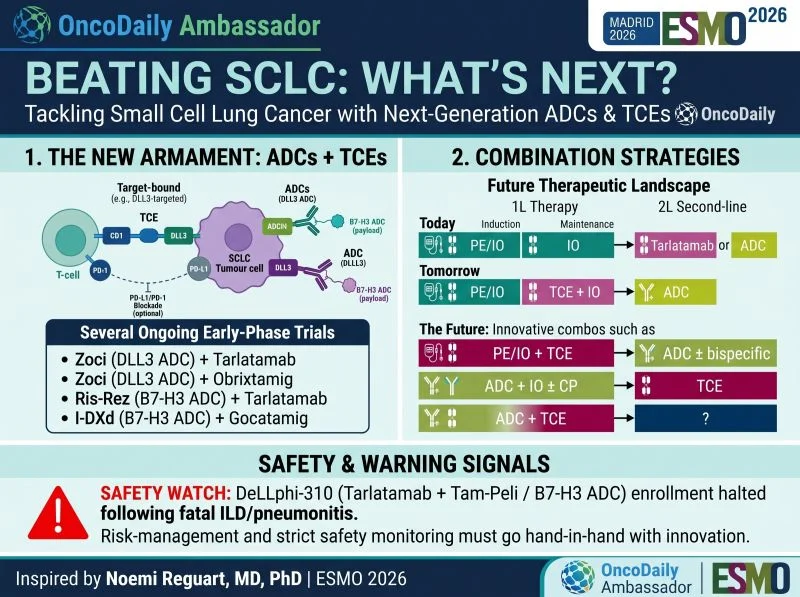
At ESMO26, Dr. Noemi Reguart highlighted how the treatment paradigm for Small Cell Lung Cancer (SCLC) is shifting from conventional chemoimmunotherapy to precision immunotherapy and targeted delivery:
ADCs + TCEs (The New Armament): Combining T-cell engagers (TCEs like tarlatamab targeting DLL3) with antibody-drug conjugates (ADCs targeting DLL3 or B7-H3) to overcome tumor escape. Active trials include Zoci + Tarlatamab and I-DXd + Gocatamig.
Next-Line Combination Strategies: The therapeutic roadmap is advancing TCEs into 1L maintenance (PE/IO + TCE) and evaluating upfront combinations (ADC + IO, ADC + TCE) to prevent early relapse.
Critical Safety Watch: Innovation requires vigilance – enrollment in the DeLLphi-310 trial (Tarlatamab + B7-H3 ADC Tam-Peli) was halted due to fatal ILD/pneumonitis, underscoring the vital need to manage overlapping toxicities.
Can combinatorial ADC + TCE strategies overcome refractory SCLC without compromising safety profiles?
When you spend your days deep in trial protocols, endpoints, and translational data, it’s easy to get lost in the grind.
Moments like this reset your perspective.
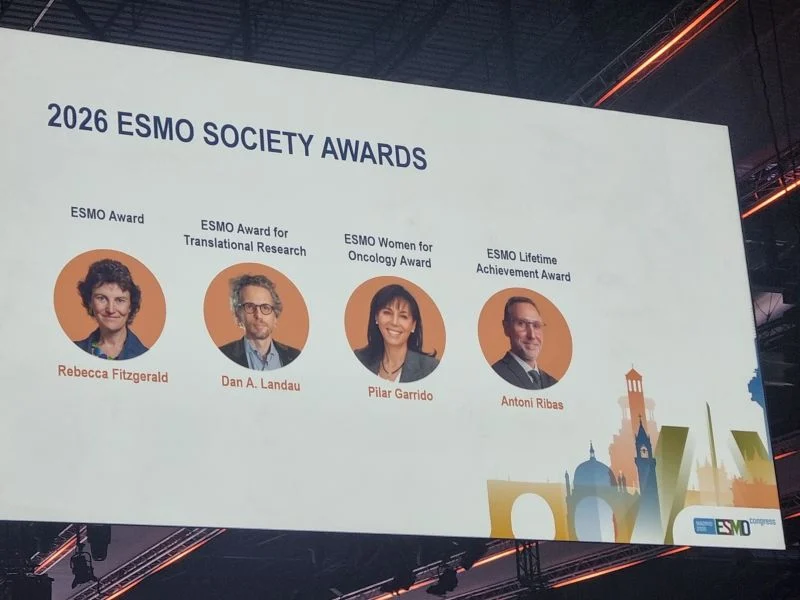
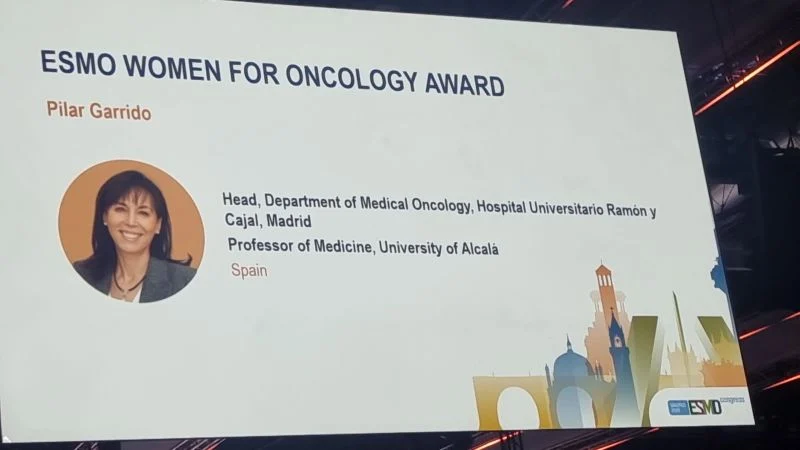
Watching Prof. Pilar Garrido receive the ESMO Women for Oncology Award at ESMO26 struck a deeply personal chord.
Her trajectory – leading medical oncology at Ramón y Cajal, advancing thoracic oncology, and dismantling barriers across global oncology – offers a clear blueprint for researchers and clinicians:
Rigorous science and active advocacy belong together.
Visibility matters: seeing someone break through gives the rest of us permission and confidence to aim higher.
True leadership isn’t just about taking a seat at the table; it’s about pulling up more chairs for those following behind.
Deeply motivating to witness this recognition right here in Madrid. Congratulations, Prof. Garrido!
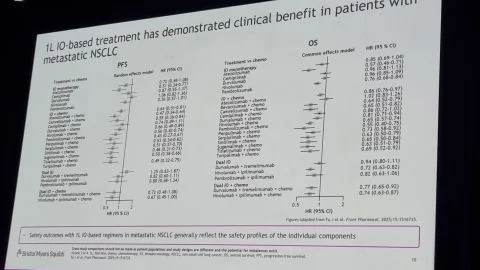
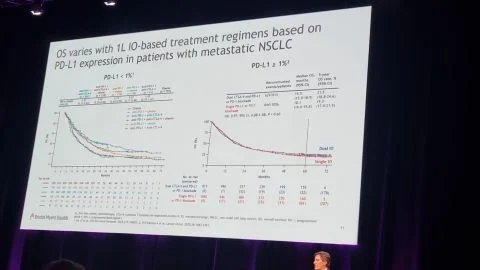
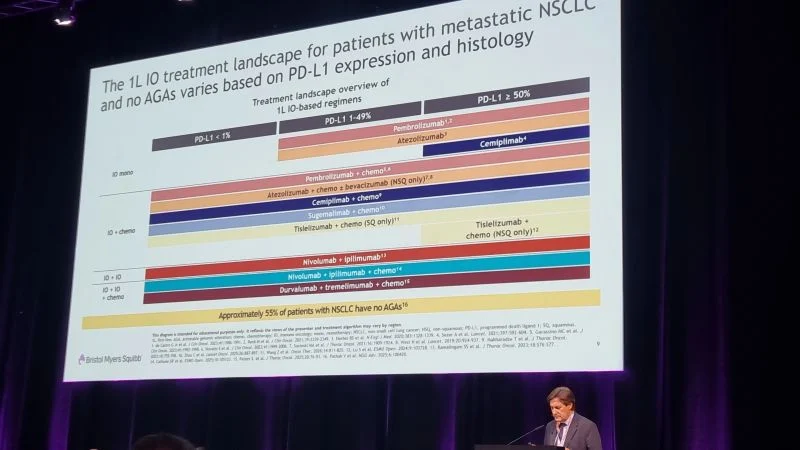
When should we use immunotherapy combinations in advanced NSCLC?
This was one of the key clinical debates at the BMS symposium during ESMO Congress 2026.
PD-L1 <1% is where the answer becomes particularly clear. For most eligible patients without actionable genomic alterations, immunotherapy monotherapy is generally not the preferred first-line strategy. Chemo-immunotherapy or selected dual-immunotherapy regimens, with or without chemotherapy, are important treatment options.
But the decision goes beyond PD-L1 expression. Histology, molecular profile, disease burden, need for rapid response, comorbidities, and toxicity risk all matter.
The real challenge is not simply choosing immunotherapy. It is selecting the right combination for the right patient.”
You can also read:
KRAS Mutant NSCLC in 2026: From G12C Inhibition to RAS(ON), Pan-RAS and Combination Strategies