For decades, KRAS was considered one of oncology’s most important but least druggable targets. That assumption has now been decisively overturned.
The development of sotorasib and adagrasib established that direct KRAS inhibition can produce clinically meaningful responses in KRAS G12C-mutated non-small-cell lung cancer. But those first successes also exposed a larger problem: KRAS-mutant NSCLC is not one molecular disease, and suppressing a single KRAS state or allele rarely produces durable control.
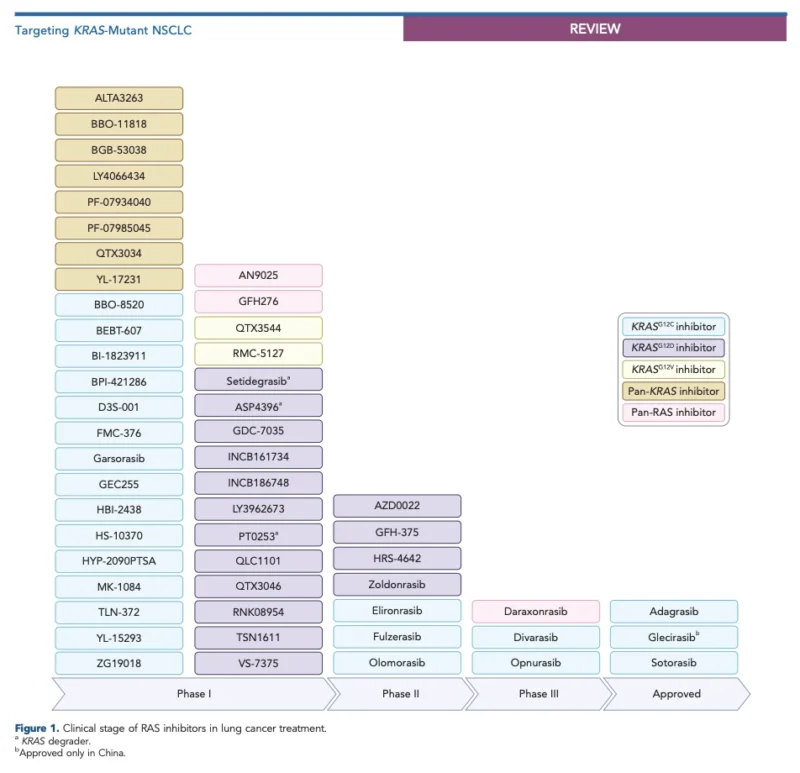
A 2026 review in the Journal of the National Comprehensive Cancer Network describes a rapidly changing treatment landscape that now extends far beyond first-generation G12C inhibition. Development includes next-generation KRAS G12C inhibitors, RAS(ON) inhibitors, dual ON/OFF inhibitors, pan-KRAS and pan-RAS agents, KRAS G12D- and G12V-directed strategies, protein degraders, rational combinations, cellular therapies and vaccines.
The central question has shifted from whether KRAS can be targeted to something more difficult: How deeply, how broadly and in which molecular context should RAS signaling be suppressed to produce durable disease control?
KRAS-Mutant NSCLC Is Biologically Heterogeneous
KRAS is the most frequent oncogenic driver in NSCLC, particularly lung adenocarcinoma, occurring in approximately 20%–30% of cases. The most common alterations involve codon 12, particularly G12C, G12D and G12V.
KRAS G12C represents approximately 10%–13% of NSCLC, whereas G12D accounts for roughly 15% of KRAS-mutant NSCLC. But mutation subtype is only one component of the biology. Co-occurring genomic alterations can strongly influence both tumor behavior and response to treatment.
Tumors with TP53 co-mutation may have a more inflamed immune microenvironment, whereas STK11 and KEAP1 alterations are associated with reduced CD8-positive T-cell infiltration, an immune-cold phenotype and resistance to immune checkpoint inhibition.
KRAS G12D appears biologically distinct from smoking-associated G12C disease. It is enriched among never-smokers and tends to demonstrate lower tumor mutational burden, reduced immune infiltration and lower PD-L1 expression.
These differences are increasingly important because future KRAS treatment may need to be selected according to allele, co-mutation pattern and immune context, rather than KRAS positivity alone.
KRAS G12C Established the Proof of Principle
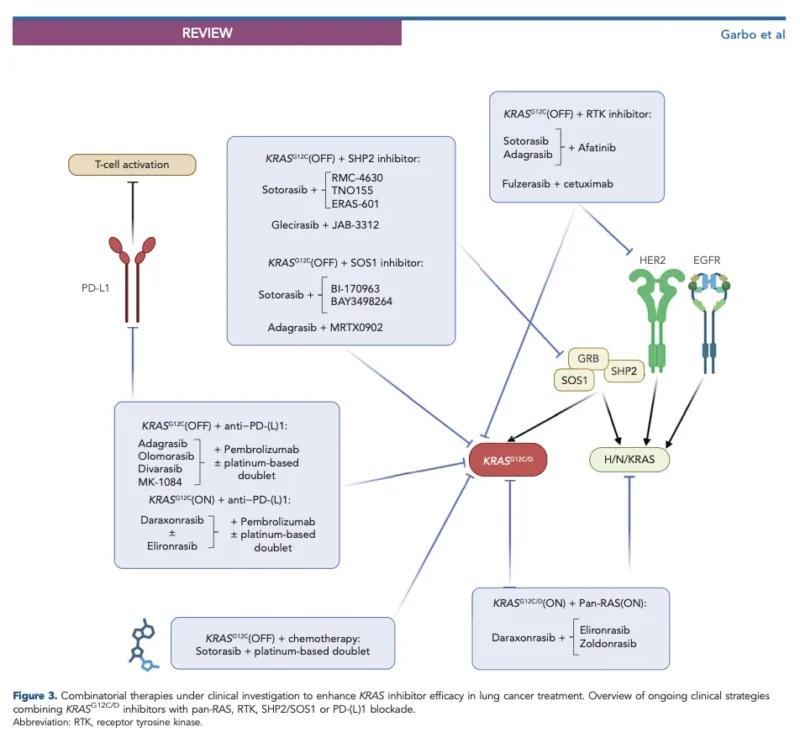
Sotorasib and adagrasib provided the first convincing evidence that KRAS could be directly inhibited in patients with lung cancer. Both selectively bind the inactive, GDP-bound form of KRAS G12C and prevent downstream oncogenic signaling.
In early studies, sotorasib achieved an objective response rate of approximately 41%, while adagrasib produced an ORR of approximately 42.9%. Their randomized phase III studies subsequently confirmed improvement in progression-free survival compared with docetaxel.
With sotorasib, median PFS was:
- 5.6 months versus 4.5 months with docetaxel, corresponding to an HR of 0.66
However, median OS was:
- 10.6 versus 11.3 months, without a significant survival advantage
In KRYSTAL-12, adagrasib produced median PFS of:
- 5.5 months versus 3.8 months with docetaxel, HR 0.58
Overall survival data remained immature at the time summarized.
These drugs validated KRAS G12C as a therapeutic dependency but also demonstrated that first-generation KRAS inhibition alone frequently produces limited durability.
Divarasib May Raise the Ceiling for G12C Inhibition
Newer KRAS G12C inhibitors aim to improve potency, selectivity and tolerability. Among the most advanced is divarasib, which demonstrated:
- ORR: 55.6%
- Median PFS: 13.8 months in early clinical development
The review describes these as among the strongest reported results for a KRAS G12C(OFF) inhibitor. Divarasib also appeared to have a more favorable toxicity profile than several earlier agents, with grade 3 adverse events reported less frequently than with many other G12C inhibitors.
Other next-generation agents include MK-1084, garsorasib, fulzerasib, glecirasib, olomorasib and D3S-001, several of which have produced response rates in the 40%–50% range.
The number of active molecules underscores how quickly KRAS G12C has moved from an undruggable target to a competitive drug class. But increasing potency alone may not solve the main biological problem.
Resistance to KRAS G12C Inhibition Is Highly Diverse
Resistance can arise before treatment ever produces a meaningful response or after an initial period of disease control. Primary resistance has been linked to factors including:
- mucinous histology
- low TTF-1 expression
- KEAP1 alterations
- biallelic CDKN2A loss
- NRF2 activation
- tumor states that reduce dependence on RAS signaling
Acquired resistance is even more heterogeneous. Secondary KRAS mutations can directly interfere with drug binding. Alterations including R68S, H95D/Q/R and Y96C have been observed following G12C inhibition.
Tumors may also acquire new activating KRAS alterations such as G12D, G12V, G12R, G13D or Q61H, or amplify the existing KRAS G12C allele.
In pooled circulating tumor DNA analyses, new KRAS alterations emerged in approximately 39% of patients at progression, while KRAS amplification occurred in approximately 22%.
Bypass Signaling Creates Another Route Around KRAS Blockade
Tumors do not necessarily need to mutate KRAS itself. They can instead reactivate downstream signaling through parallel pathways. Reported bypass mechanisms include:
- MET amplification
- NRAS mutations
- BRAF mutations
- MAP2K1 alterations
- RET activation
- oncogenic fusions involving ALK, RET, BRAF, RAF1 and FGFR3
Adaptive mechanisms can also emerge without a new genomic alteration. WNT/β-catenin signaling can promote survival through AKT–mTOR, while KRAS inhibition itself can lead to adaptive reloading of KRAS-GTP, restoring pathway activity.
These observations explain why simply producing a more potent G12C inhibitor may not be sufficient. Tumors can escape around the target even when the target itself remains inhibited.
Targeting Active KRAS: The Rise of RAS(ON) Inhibitors
Traditional G12C inhibitors bind KRAS in its inactive GDP-bound state. A major new therapeutic strategy is to target the active GTP-bound RAS state directly. This is the foundation of the RAS(ON) approach.
These agents use a tri-complex mechanism in which a small molecule first binds cyclophilin A, creating a new binding surface capable of engaging active RAS.
The resulting complex suppresses downstream MAPK signaling. This strategy offers two theoretical advantages. First, it attacks the oncogenic protein while it is actively signaling. Second, multi-selective RAS(ON) inhibitors can potentially target several mutant RAS variants and wild-type RAS signaling simultaneously.
Daraxonrasib Broadens Targeting Beyond One KRAS Allele
Daraxonrasib (RMC-6236) is one of the most advanced RAS(ON) multi-selective inhibitors. In previously treated, locally advanced or metastatic RAS-mutant NSCLC, early clinical results showed an:
- ORR of 38%
Safety was also encouraging in the reported dataset. Grade ≥3 adverse events occurred in approximately 16% while treatment discontinuation occurred in 4%. No treatment-related deaths had been reported.
Daraxonrasib has progressed into phase III development, representing an important test of whether broader RAS inhibition can provide clinically meaningful benefit across molecularly diverse RAS-mutated disease. But multi-RAS targeting does not eliminate resistance.
RAS(ON) Inhibitors Develop Their Own Escape Mechanisms
Chronic RAS(ON) inhibition can lead to adaptive MAPK reactivation. Potential mechanisms include:
- KRAS amplification
- feedback activation of receptor tyrosine kinases
- SHP2-dependent RAS cycling
- secondary structural alterations
- changes that promote RAF dimerization
A KRAS Y64 alteration has been identified as one mechanism capable of disrupting tri-complex stabilization. Low-activity or kinase-dead BRAF mutations may also promote RAF dimerization and restore downstream signaling.
The lesson mirrors what has already been learned from EGFR and ALK resistance follows the biology of the drug used to create the selective pressure.
Dual ON/OFF Inhibitors Try to Block KRAS in Both States
Another strategy is to prevent KRAS from escaping by shifting between GDP-bound and GTP-bound conformations. Agents including BBO-8520 and FMC-376 are designed to inhibit both the ON and OFF states of KRAS G12C.
The rationale is particularly relevant to adaptive resistance, where KRAS-GTP reloads following prolonged OFF-state inhibition. By simultaneously targeting both conformations, these drugs may provide more continuous pathway suppression.
Whether this translates into longer clinical disease control remains under investigation.
KRAS G12D Is Emerging as the Next Major Target
After G12C, KRAS G12D has become one of the most important targets in RAS drug development. Unlike G12C, G12D does not contain the reactive cysteine that enabled development of the original covalent inhibitors.
The chemistry therefore required a fundamentally different approach. The most advanced clinical agent highlighted is zoldonrasib, previously RMC-9805. Zoldonrasib is a G12D-selective RAS(ON) tri-complex inhibitor.
In an early cohort of 18 patients with NSCLC, treatment produced ORR: 61%, with a favorable initial safety profile. Only two grade ≥3 adverse events were reported in that cohort. These early results are particularly important because patients with KRAS G12D NSCLC historically lacked a direct targeted-treatment option.
The data remain preliminary, however, and larger randomized studies are required to determine durability, survival benefit and optimal sequencing.
Protein Degradation Offers Another Route Against G12D
Instead of inhibiting KRAS activity, another strategy is to remove the mutant protein entirely. Setidegrasib, previously ASP3082, is a first-in-class KRAS G12D protein degrader. Early clinical experience showed an approximately 36% ORR, with low treatment-discontinuation rates due to adverse events.
Protein degradation is conceptually attractive because it removes the oncogenic protein rather than relying only on reversible suppression of kinase signaling. Whether this translates into meaningful differences in resistance patterns remains unknown.
KRAS G12V Remains More Difficult
KRAS G12V presents a different structural challenge. Unlike G12C, valine does not provide a nucleophilic amino acid suitable for conventional covalent targeting, and its bulky hydrophobic structure complicates access to the switch-II pocket.
Several approaches are being investigated. RMC-5127 is a G12V-selective, CNS-penetrant inhibitor in early clinical development. QTX3544 targets multiple oncogenic KRAS variants with particular activity against G12V and is designed to inhibit both ON and OFF states.
Another strategy, EFTX-G12V, uses EGFR-directed RNA interference to selectively reduce KRAS G12V expression. At present, clinical evidence remains much less mature than for G12C or G12D.
Pan-KRAS and Pan-RAS Could Move Treatment Beyond Mutation-by-Mutation Development
Developing one separate drug for every KRAS variant is scientifically possible but clinically inefficient. That has driven interest in pan-KRAS and pan-RAS strategies. Pan-KRAS inhibitors are designed to recognize conserved structural features shared across multiple KRAS variants, potentially targeting mutations involving codons 12, 13 and 61.
Pan-RAS inhibitors go further by targeting multiple RAS paralogs. The theoretical advantage is significant. If a tumor escapes G12C inhibition by activating another KRAS allele or wild-type NRAS or HRAS, broader RAS inhibition may suppress that bypass route.
But the potential disadvantage is equally important. The broader the inhibition of physiologic RAS signaling, the narrower the therapeutic window could become.
The success of these drugs will therefore depend on achieving enough pathway suppression to prevent escape without producing unacceptable normal-tissue toxicity.
First-Line Combination Therapy May Be the Next Major Battleground
The earliest KRAS inhibitors were developed primarily as monotherapy after prior treatment. That paradigm is now changing. The field increasingly asks whether KRAS inhibitors should move into the first-line setting in combination with immunotherapy, chemotherapy or pathway-directed partners.
This strategy has strong biological logic. KRAS inhibition may alter the tumor immune microenvironment, reduce immunosuppressive signaling and potentially increase responsiveness to immune checkpoint blockade. But combination therapy has also revealed important toxicity differences among KRAS inhibitors.
Not All KRAS + Immunotherapy Combinations Behave the Same
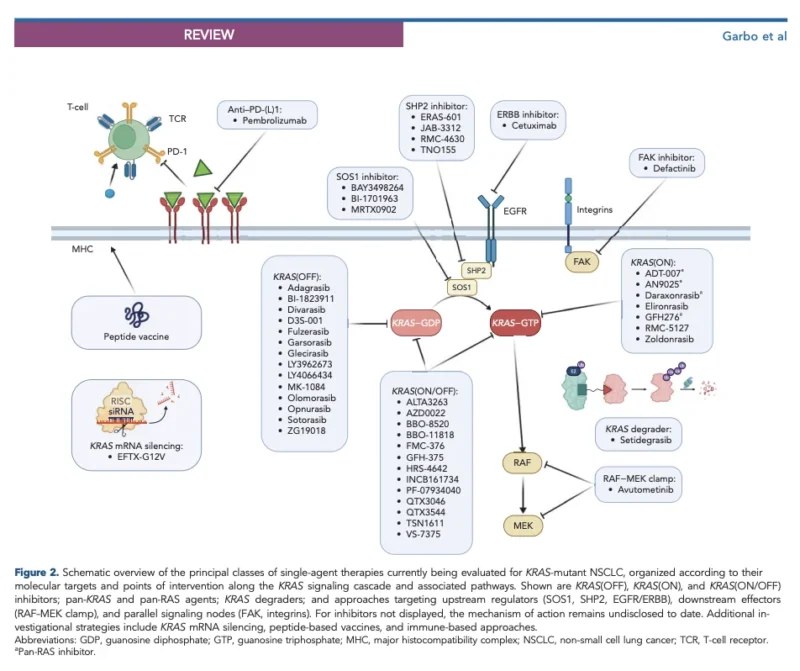
Early experience with sotorasib plus pembrolizumab demonstrated substantial hepatic toxicity. Grade ≥3 events occurred in approximately 30%–50% of patients across cohorts, creating concern about combining early-generation G12C inhibitors with PD-1/PD-L1 therapy.
However, newer molecules may behave differently.
Adagrasib + Pembrolizumab in KRYSTAL-7, adagrasib plus pembrolizumab produced an ORR of 44% across the overall first-line population. Among patients with PD-L1 ≥50%, median PFS reached 27.7 months. Grade ≥3 hepatic toxicity was approximately 2%, substantially lower than that reported with some earlier sotorasib combinations.
Olomorasib + Pembrolizumab produced particularly high response rates in untreated patients with PD-L1-high disease. Among patients with PD-L1 ≥50%, ORR reached 90%. The agent is administered at a reduced dose when combined with immunotherapy because hepatotoxicity remains a consideration.
MK-1084 + Pembrolizumab early results also showed substantial activity ORR was approximately 58% in PD-L1 1%–49% disease, and 88% in PD-L1 ≥50%. These results suggest that the feasibility of combining KRAS inhibition with immunotherapy may depend strongly on the specific inhibitor rather than representing a uniform class effect.
Chemotherapy Combinations Are Another Route Into the First Line
KRAS inhibition is also being integrated with cytotoxic chemotherapy. The SCARLET study evaluated sotorasib with carboplatin and pemetrexed in KRAS G12C-mutated nonsquamous NSCLC. The regimen produced an ORR of 88.9%. However, grade ≥3 adverse events occurred in approximately 89.7%. This illustrates the central challenge of first-line intensification.
Very high response rates are attractive, but the clinical value of adding targeted therapy depends on whether efficacy gains outweigh the additional treatment burden.
EGFR Blockade May Prevent Adaptive KRAS Reactivation
Adaptive signaling through receptor tyrosine kinases, particularly EGFR, represents another mechanism by which tumors restore MAPK activity during KRAS inhibition. This creates a rationale for combining KRAS inhibitors with EGFR-directed therapy.
In untreated KRAS G12C NSCLC, fulzerasib plus cetuximab produced an early ORR of 80%. This approach attempts to suppress both the primary oncogenic driver and the upstream signaling responsible for pathway rebound.
The strategy resembles resistance-directed combinations already familiar from other oncogene-driven cancers.
SHP2 and SOS1 Could Cut Off KRAS Reactivation Upstream
SHP2 and SOS1 help regulate RAS cycling and maintain the transition between inactive and active states. Inhibiting these proteins may therefore prevent the tumor from restoring KRAS signaling after direct inhibition.
Agents under investigation include:
- RMC-4630
- TNO155
- ERAS-601
- JAB-3312
SOS1 inhibitors including:
- BI-1701963
- BAY3498264
- MRTX0902
One of the most notable clinical signals comes from glecirasib plus the SHP2 inhibitor sitneprotafib.
ORR reached 71% in untreated KRAS G12C NSCLC, 49% in previously treated but KRAS G12C inhibitor-naïve disease, and 10% after previous KRAS G12C inhibitor exposure. Grade 3–4 toxicity occurred in approximately 46%, although discontinuation was uncommon at around 2%.
These results suggest that upstream pathway inhibition may be most effective before extensive resistance has already developed.
Combining RAS(ON) and Allele-Specific Inhibition Could Produce Deeper Suppression
Another emerging strategy is simultaneous inhibition of multiple RAS states or alleles. Trials are evaluating combinations such as:
- daraxonrasib + elironrasib
and
- daraxonrasib + zoldonrasib
The rationale is to suppress broader RAS signaling while simultaneously delivering deeper inhibition of the dominant oncogenic allele. This approach could theoretically reduce both mutant KRAS amplification and activation of parallel RAS proteins.
But it may also narrow the therapeutic window. Determining how much RAS pathway suppression is biologically useful, and how much becomes clinically intolerable. will be one of the major challenges for this class.
KRAS Therapy Is Moving Beyond Small Molecules
Direct inhibitors are only one component of the future KRAS landscape. Several entirely different treatment modalities are being explored.
RAF–MEK Clamps
Avutometinib simultaneously inhibits RAF and MEK signaling. Combination with the FAK inhibitor defactinib has demonstrated disease control in early KRAS-mutant and KRAS G12V NSCLC cohorts, although activity has so far been modest. These strategies may prove more useful in rational combinations than as isolated treatments.
Cellular Therapy
KRAS mutations create tumor-specific neoantigens that can potentially be recognized by engineered immune cells. Investigational platforms include:
- T-cell receptor-engineered T cells
- T-cell engagers
- CAR-T strategies
TCR-T programmes targeting KRAS G12D and G12V have entered early clinical development. These approaches could be particularly valuable after exhaustion of standard targeted and systemic therapy.
KRAS Vaccines
Vaccination strategies aim to generate durable immune responses against mutant KRAS peptides or broader neoantigen repertoires. Clinical trials are investigating KRAS-directed vaccines with:
- chemoimmunotherapy
or
- dual immune checkpoint blockade.
Whether vaccination can generate sufficiently strong and durable antitumor immunity in established metastatic NSCLC remains to be demonstrated.
The Future Is Unlikely to Belong to a Single “Best” KRAS Inhibitor
One of the clearest conclusions from the rapidly expanding KRAS pipeline is that this is unlikely to become a simple winner-takes-all drug class. The biology is too heterogeneous. A patient with G12C/TP53-mutated, PD-L1-high disease may require a different strategy from a patient with G12D, low PD-L1 and an immune-cold phenotype.
A tumor progressing through an on-target Y96 mutation is biologically different from one escaping through MET amplification. Likewise, a tumor that restores MAPK signaling through adaptive KRAS-GTP reloading may require a different strategy from a cancer that has become less dependent on RAS altogether.
The next generation of clinical trials will therefore need to move beyond mutation status alone. Important variables are likely to include:
- specific KRAS allele
- STK11, KEAP1 and TP53 co-mutations
- PD-L1 expression
- baseline and acquired resistance alterations
- prior KRAS inhibitor exposure
- potentially longitudinal ctDNA changes
Sequencing May Become as Important as Drug Selection
The number of new compounds creates another major problem: what comes first? Should the most potent allele-specific inhibitor be used before broader RAS blockade? Should RAS(ON) therapy be reserved for resistance to OFF-state inhibitors? Should immunotherapy be given concurrently or sequentially? Should pathway combinations be introduced from the beginning to prevent resistance — or saved until resistance develops?
These questions are unresolved.
Using increasingly complex combinations from treatment initiation could delay resistance but also expose every patient to additional toxicity.
Sequential therapy may preserve tolerability but allow resistant clones to become established. The optimal approach will likely differ according to tumor biology.
OncoDaily Takeaway
KRAS-mutant NSCLC has moved from being one of the clearest examples of an “undruggable” oncogene to one of the most rapidly expanding areas of targeted drug development. Sotorasib and adagrasib proved that KRAS G12C can be therapeutically targeted, but modest durability and rapid resistance showed that allele-specific OFF-state inhibition is only the beginning.
Next-generation G12C drugs such as divarasib are improving potency and potentially tolerability. RAS(ON) inhibitors such as daraxonrasib expand treatment beyond one KRAS allele, while zoldonrasib has produced encouraging early activity in KRAS G12D NSCLC, a population that historically lacked a direct targeted option.
Dual ON/OFF inhibition, pan-KRAS and pan-RAS strategies attempt to prevent tumors from escaping through changes in RAS activation state or parallel RAS signaling. At the same time, combinations with pembrolizumab, chemotherapy, EGFR blockade, SHP2 inhibition and SOS1 inhibition are beginning to move KRAS targeting toward the first-line setting.
The challenge is that deeper pathway inhibition does not automatically mean more durable benefit. KRAS-mutant cancers can escape through secondary KRAS mutations, amplification, bypass RTK signaling, MAPK reactivation, immune context and cell-state plasticity.
The future of KRAS treatment will therefore likely depend less on finding one universally superior inhibitor and more on building a biomarker-driven treatment framework that matches mutation subtype, co-mutations, immune biology and resistance mechanism to the right drug or combination at the right time.
KRAS is no longer undruggable.
The next challenge is making KRAS-directed therapy durable.
Source
- Garbo E, Scaparone P, Hoe HJ, Luo J, Shaw AT, Ambrogio C, Ricciuti B. Targeting KRAS-Mutant Lung Cancers. Journal of the National Comprehensive Cancer Network. 2026;24(10):e267038. DOI: 10.6004/jnccn.2026.7038.