Union for International Cancer Control (UICC) shared on LinkedIn:
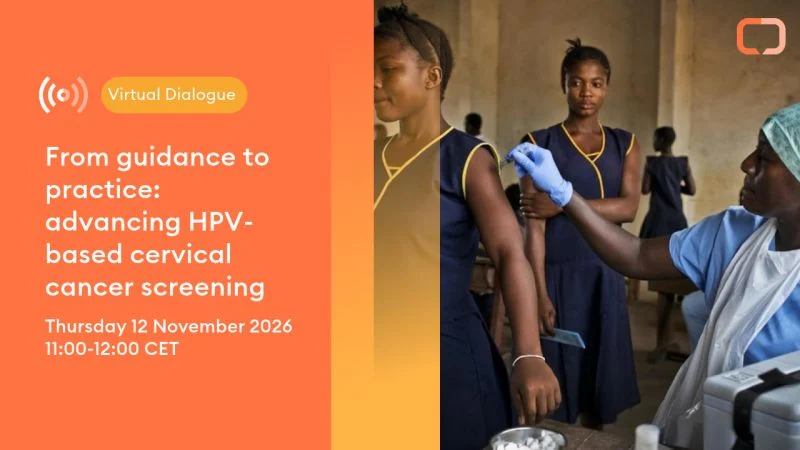
“Join our upcoming Virtual Dialogue, ‘From guidance to practice: advancing HPV-based cervical cancer screening‘, hosted in collaboration with the World Health Organization, to explore how new WHO guidance on HPV-based cervical cancer screening can be translated into practice, drawing on experiences from Mongolia and Malawi.
Building on country experiences, WHO experts will present the latest guidance and discuss how recommendations on HPV genotyping and program implementation can support countries in strengthening screening strategies, risk-based management and sustainable scale-up, contributing to progress towards cervical cancer elimination.
Thursday 12 November
Time: 11:00-12:00 CET
Speakers: Dr Mariluz Hernandez Viadel, World Health Organization (WHO), Dr Tsetsegsaikhan Batmunkh, Ministry of Health, and National Cancer Council of Mongolia, Maud Mwakasungula, Women’s Coalition Against Cancer (WOCACA), Malawi, Timothy Tchereni H., Clinton Health Access Initiative, Inc. (CHAI), Malawi,
Moderator: Sabrina Zucchello, UICC.
About WHO Guidance on HPV-Based Cervical Cancer Screening
This release strongly reaffirms HPV DNA testing as the preferred primary screening tool over traditional Pap smears or Visual Inspection with Acetic Acid due to its significantly higher sensitivity and negative predictive value. Consequently, the reliability of molecular testing allows health systems to safely extend screening intervals to five to ten years for the general population.
A central highlight of the guidance is the categorization of testing capacity to assist program managers in structuring risk-based triage and clinical management.
The framework outlines three primary testing tiers:
- No Genotyping: Identifies whether any high-risk HPV strain is present without specifying which one.
- Limited Genotyping: Specifically flags HPV 16 and 18 (and sometimes HPV 45), which cause the vast majority of cervical cancers worldwide.
- Extended Genotyping: Distinguishes additional high-risk strains (such as HPV 31, 33, 35, 52, and 58) into separate risk profiles.
Incorporating these genotyping categories enables targeted clinical decision-making by allowing highest-risk infections to proceed directly to treatment while lower-risk HPV-positive cases undergo secondary triage.
Women living with HIV face a significantly higher risk of persistent HPV infection and rapid disease progression. The guidance establishes tailored clinical pathways for this population:
- Screening starts earlier, at age 25 instead of 30.
- Re-screening occurs more frequently, every 3 to 5 years.
- Triage algorithms are adjusted to prevent diagnostic delays and ensure rapid linkage to treatment.
The guidance provides actionable operational strategies to support countries in scaling up their screening infrastructure. It outlines concrete steps for health system planning, supply chain stability, laboratory quality assurance, and workforce training. Furthermore, the WHO emphasizes self-collected vaginal sampling as a critical delivery mechanism to overcome cultural and access barriers, while establishing key monitoring indicators to track screening coverage, triage compliance, and treatment completion worldwide.”
You can also read: Cervical Cancer Screening’s Global Evolution: From Pap Smears to HPV Testing