Tomas Ciordia Cagigal, Co-Founder and Operations Manager, at Event Base, shared on LinkedIn:
“Beating chemotherapy in a phase 3 trial is the easy part.
Beating it in a health budget is the hard one.
ZUMA-7 is the proof. In second-line large B-cell lymphoma, CAR-T (axi-cel) went head-to-head with salvage chemo + stem cell transplant and cut the risk of death by 27% (NEJM, 2023). The EU approved it for that line in October 2022.
By August 2024, 71% of European countries paid for CAR-T in this lymphoma after two failed lines. Only 45% paid for it in second line, the setting where it actually beat chemo.
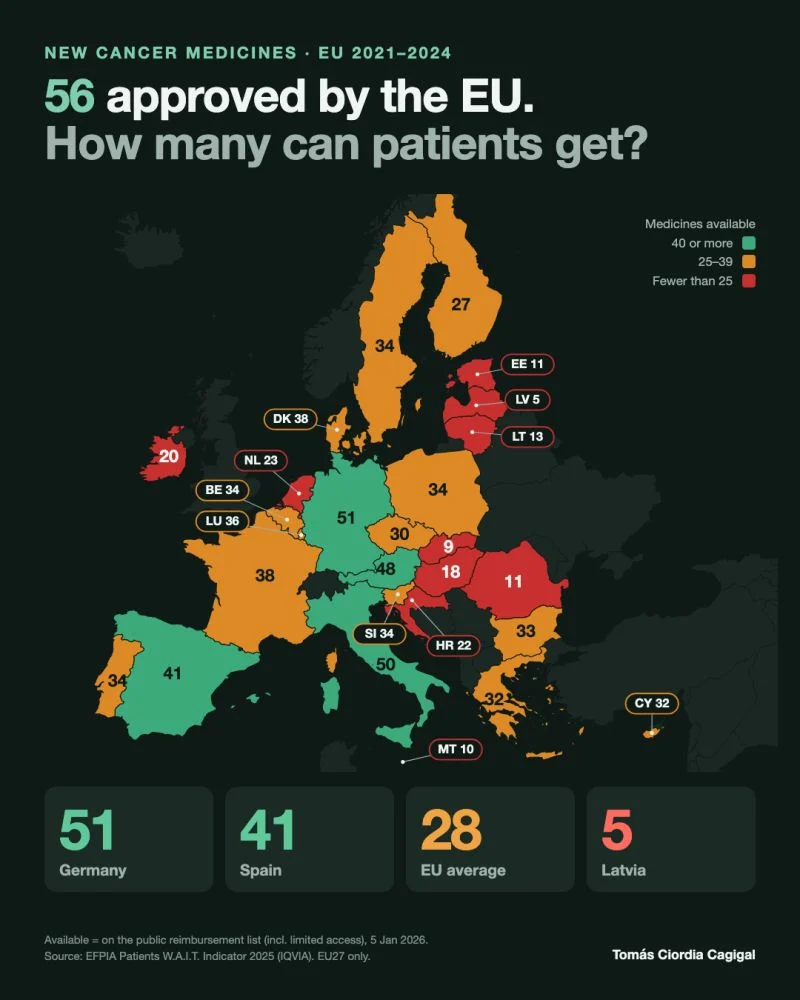
And it’s not just CAR-T. Of the 56 cancer medicines the EU approved in 2021–2024, patients in Germany can get 51. Spain: 41. EU average: 28. Latvia: 5.
Same approval. A 10x gap.
When chemo keeps its place, it’s often not because it’s better:
- It’s generic and cheap; CAR-T is a six-figure, one-off hit to this year’s hospital budget
- Every newcomer must prove its value twice: to the EMA, then to each national payer
- Guidelines, pathways and referral habits were built around it
Germany makes new drugs available at launch and negotiates the price afterwards: median wait for a new cancer drug, 47 days. The EU median is 598.
If a therapy beats chemo on overall survival in a phase 3, should it be funded from day one and priced later? Or is that gatekeeping the only thing keeping health systems solvent?”
You can also read:
Asian Patients Showed Longer Survival With Atezolizumab-Chemotherapy in Pooled ES-SCLC Analysis