The ESMO Congress 2026 is the annual meeting of the European Society for Medical Oncology. It stands as one of the world’s most influential oncology platforms for presenting pioneering cancer research. The event takes place from October 23 to 27, 2026, in Madrid, Spain, at the IFEMA MADRID convention center, utilizing a highly accessible hybrid (in-person and virtual) format.
Jeff Ryckman, Associate Professor of Radiation Oncology at WVU Medicine Camden Clark Medical Center, shared on X:
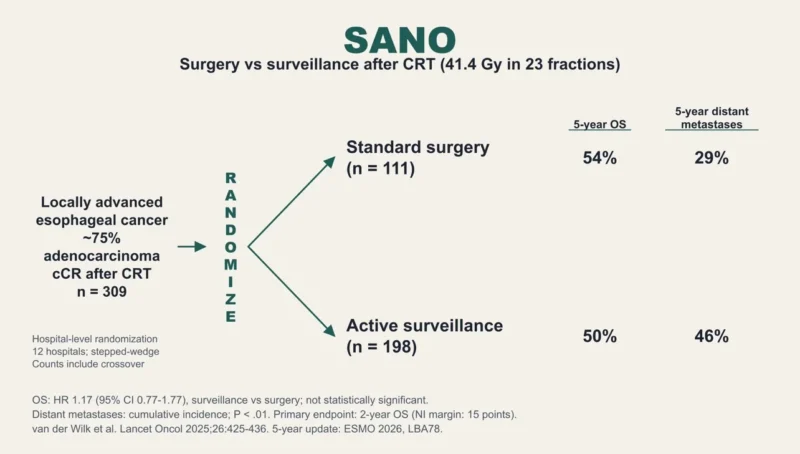
“SANO 5y: surveillance vs surgery after cCR
OS 50% vs 54% (NS)
Distant mets 46% vs 29% (P<.01)
Reminder: only 41.4 Gy/23 fx, a pre-op, arguably non-definitive dose, especially with/ ~75% adenocarcinoma.
Nonsignificant OS doesn’t establish noninferiority.”
SANO Study Examines Long-Term Esophageal Cancer Outcomes
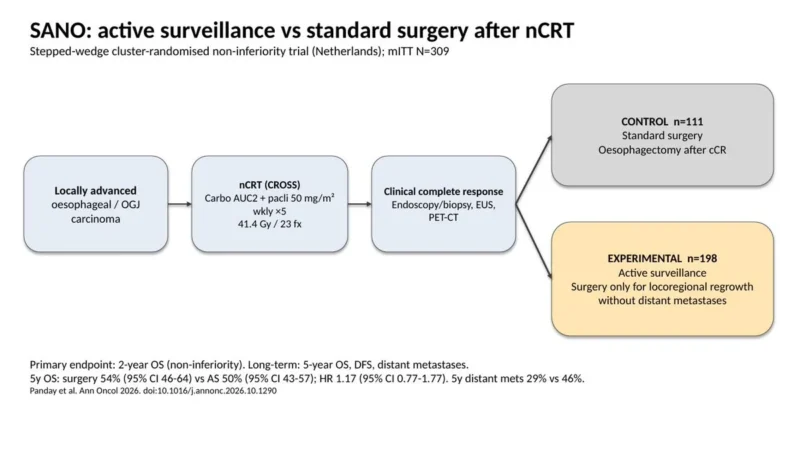
“Full SANO paper is out! (Ann Oncol, open access)
What it adds:
Death from esophageal cancer at 5y: 40% with active surveillance vs 30% with surgery (HR 1.67, 95% CI 1.02-2.73). Other-cause death: 10% vs 15% (HR 0.49, 0.22-1.09). These are competing-risk secondary outcomes.
Of 91 metastases in the surveillance arm, 44 came after delayed oesophagectomy, a median 11.1 mo after regrowth (not after surgery). 22 were found within 6 mo of nCRT.
Regrowth was associated with later metastasis (HR 2.49), but the trial can’t separate seeding from biology.
Regrowth risk comes early: ~21% remaining if still in cCR at 1 year, 2% at 3 years.
The ‘43% spared esophagectomy’ figure includes patients with early metastases. Durable organ preservation: 32% in cCR at last evaluation, and 21% completed 5 years of surveillance.
The protocol does define volumes (§8.3.2): regional nodes within ≥3 cm craniocaudal, 3 mm radial CTV, 1 cm PTV. There’s no RTQA or adherence analysis.
Adjuvant systemic therapy isn’t reported.
The authors now call it ‘selectively delayed surgery rather than surgery avoidance.’ Fair.”
Title: Active surveillance versus standard surgery after neoadjuvant chemoradiotherapy for oesophageal cancer: long-term results of a cluster-randomised controlled trial (SANO)
Authors: S.S.G. Gangaram Panday, B.J. van der Wilk, S.M. Lagarde, B.M. Eyck, C. Rosman, B.J. Noordman, M.J. Valkema, T.M. Bisseling, P.P.L.O. Coene, M.J. van Det, J.W.T. Dekker, J.M. van Dieren, M. Doukas, S. van Esser, W.E. Fiets, H.H. Hartgrink, J. Heisterkamp, I.L. Holster, B. Klarenbeek, E. Kouw, E.A. Kouwenhoven, M.D. Luyer, B. Mostert, G.A.P. Nieuwenhuijzen, L.E. Oostenbrug, J.P. Pierie, J.W. van Sandick, M.N. Sosef, M.C.W. Spaander, R. Valkema, E.S. van der Zaag, E.W. Steyerberg, D. van Klaveren, B.P.L. Wijnhoven, J.J.B. van Lanschot, SANO Study Group
Read the full article.
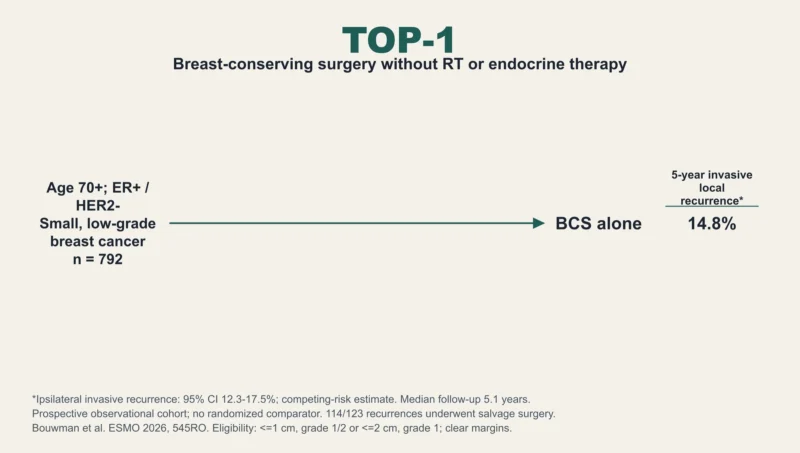
TOP-1 Reveals Recurrence Risks With Breast-Conserving Surgery Alone
“14.8% invasive local recurrence at 5y after BCS alone in TOP-1.
Age 70+, small low-grade ER+ tumors, no RT or ET.
Most recurrences were salvaged, but that is still more treatment. I’d be cautious about routinely omitting both.”
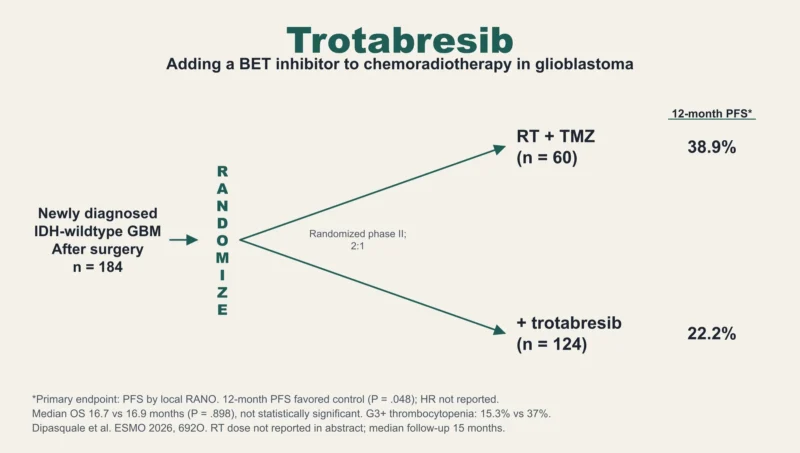
Trotabresib Adds Toxicity Without Improving GBM Outcomes
“Trotabresib added toxicity without helping newly diagnosed GBM.
12mo PFS 22% vs 39% w/ RT+TMZ alone (P=.048); OS similar.
G3+ thrombocytopenia 37% vs 15%.”
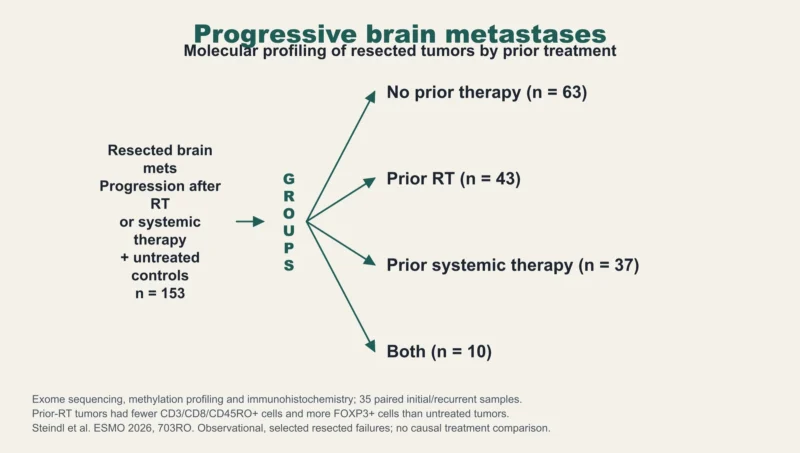
Radiotherapy-Resistant Brain Metastases Show Distinct Immune Changes
“In resected brain mets progressing after RT: fewer CD8+ cells and more FOXP3+ cells than untreated tumors.
These are selected treatment failures. I wouldn’t read this as evidence that RT broadly suppresses antitumor immunity.”
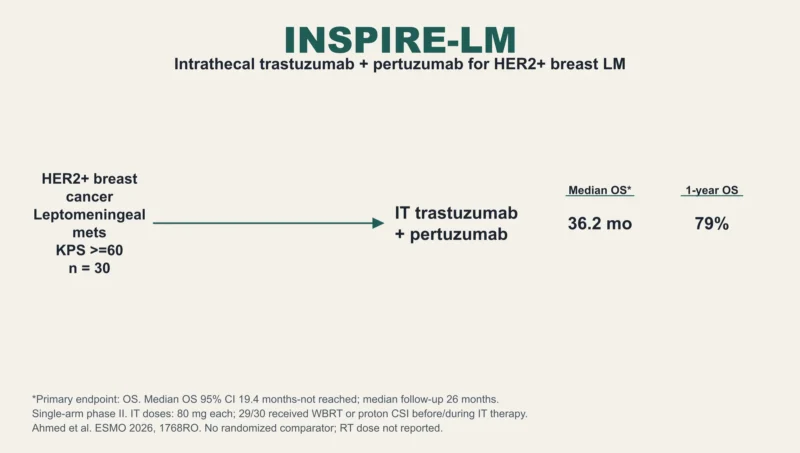
INSPIRE-LM Shows Promising Survival in HER2+ Breast Cancer Leptomeningeal Metastases
“Median OS 36.2mo in INSPIRE-LM is striking: 30 pts w/ HER2+ breast LM treated w/ IT trastuzumab + pertuzumab. 29/30 also had WBRT or proton CSI.
Single-arm study. Encouraging, but we can’t separate the contributions of RT and IT therapy.”
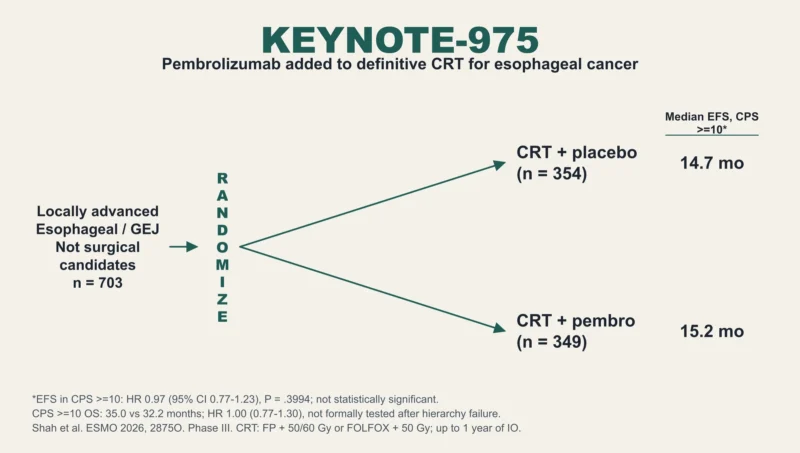
KEYNOTE-975 Finds No EFS Benefit From Pembrolizumab in Esophageal Cancer
“KEYNOTE-975: adding pembro to definitive CRT didn’t improve EFS in CPS>=10 esophageal/GEJ cancer. HR 0.97 (95% CI 0.77-1.23).
Hierarchy stopped there; OS wasn’t formally tested. Another reason not to assume IO helps every CRT backbone.
RT dose wasn’t randomized. Sites chose FP + 50 Gy, FP + 60 Gy, or FOLFOX + 50 Gy, and dose was a stratification factor.
The 50 vs 60 Gy and SCC vs adeno breakdowns will be worth seeing, with the caveat that dose was site-selected.
Grade 5 AEs: 10% placebo vs 13% pembro.
Discontinuation for any AE: 27% vs 34%.
The abstract lists grade ≥3 AEs in 100% of both arms. I’d want to see the slides or paper before taking that at face value.
Still missing: RTQA, pneumonitis and esophagitis data.”
ARION Trial Finds No Survival Benefit From Durvalumab Plus CRT in Esophageal Cancer
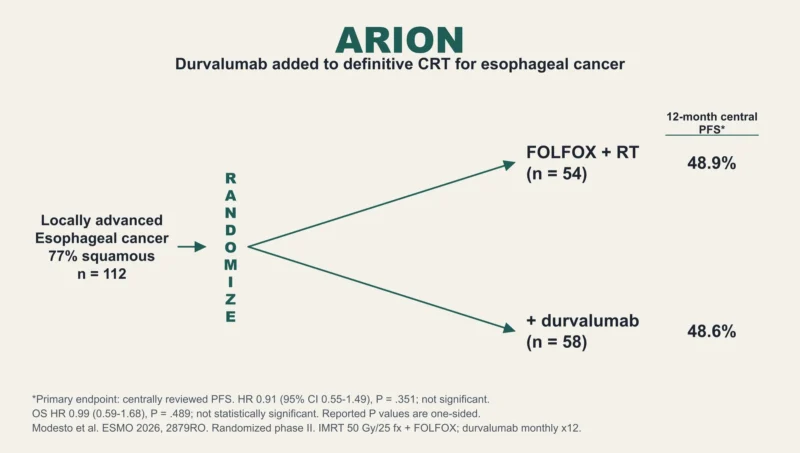
“ARION adds to the negative IO+CRT story in esophageal cancer.
Durvalumab + FOLFOX/50 Gy in 25 fx: PFS HR 0.91 (95% CI 0.55-1.49), OS HR 0.99.
Only 112 pts, mostly SCC. No demonstrated benefit from adding durva here.”
MASTERPLAN Trial Highlights the Critical Role of RT Quality Assurance in Pancreatic Cancer
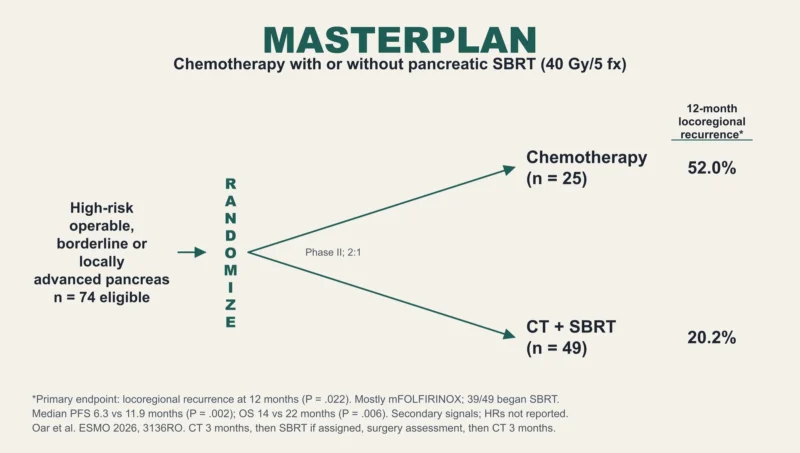
“MASTERPLAN full publication is out!
The RT volumes are worth a closer look. CTV = primary GTV + nodal GTV + tumour-vessel interface. The TVI extends 5 mm proximally and 5 mm distally along involved/closely adjacent vessels, for patients where surgery is likely. PTV = CTV/ITV + 5 mm. No elective nodal irradiation, and no elective perineural or celiac/SMA plexus volume specified in the protocol. That is a focused target, with gross nodal disease included.
Real-time RTQA is a big part of this story. Review identified 36 major planning deviations in 12 patients, reduced to 2 deviations in 2 patients after QA. All plans passed independent review before treatment. As a radiation oncologist, I want that detail alongside the outcomes. Reproducing the treatment means reproducing the contour review, OAR constraints and image guidance too.
Also worth keeping the treatment delivery denominator in view: only 40/49 patients assigned to SBRT actually received it (82%). The efficacy analysis is intention-to-treat. It should not be read as an outcome series of patients who all completed SBRT.
The surgical numbers need some unpacking. All comparisons below are chemo + SBRT vs chemo alone:
- Underwent surgery: 62% vs 44% (29/47 vs 11/25).
- Completed resection: 53% vs 44% (25/47 vs 11/25).
- R0 among all resected patients: 52% vs 36% (13/25 vs 4/11).
- R0 in the resected POPC subset: 62% vs 40% (13/21 vs 4/10).
POPC is the potentially operable cohort. So the 62% surgery figure includes exploration without resection, while the 62% R0 figure applies only to resected POPC patients. These are different endpoints with different denominators. None of those between-arm surgical comparisons was statistically significant. The paper also defines R0 as more than 1 mm clearance.
Adjuvant chemo is another important difference: 80% vs 36% of resected patients received it (20/25 vs 4/11). That complicates attribution within the treatment pathway. Early progression in the control group may have contributed, so this is a post-randomisation imbalance with more than one possible explanation. The post-hoc analyses were directionally consistent, but the authors explicitly caution about selection bias.
For the planning details: PTV_EVAL excluded the GI PRVs, with a minimum 3 mm PRV expansion. OAR constraints took priority over target coverage. Duodenum, stomach and small bowel D0.5cc were each constrained to <33 Gy, with V30 <5 cc. Delivery used standard linacs; breath hold was recommended, and fiducials were placed in 35/40 patients (88%). This is relevant to how we would implement the approach in practice.
With no elective nodes, isolated regional nodal relapse was 4% vs 8% (2/49 vs 2/25). Reassuring, although that does not establish the optimal elective volume (especially considering these patients went to surgery – ASTRO/NRG recommends inclusion of elective perineural coverage). Overall G3+ AEs were 70% vs 64% (33/47 vs 16/25). One G3 pancreatitis and one G2 small bowel obstruction were attributed to SBRT. The practical takeaway for me is to keep the target definition and prospective QA attached to the results, and to be precise about what the surgery and R0 numbers actually measure.”
Title: Perioperative chemotherapy and stereotactic body radiotherapy versus perioperative chemotherapy alone in patients with high-risk, localised pancreatic cancer (MASTERPLAN): an open-label, phase 2, multicentre, randomised trial of the Australasian Gastro-Intestinal Trials Group
Authors: Andrew Oar, Prof Andrew Kneebone, Katrin M Sjoquist, David Espinoza, Mark Lee, Prof Hien Le, Leily Gholamrezaei, Julie Chu, James Lynam, Girish Mallesara, Dominique Lee, Dinesh Vignarajah, Iain Ward, Prof Jaswinder Samra, Prof Andrew Barbour, Angela Whitehead, Susan Brooks, Anna Nicholson, Tim Wei Wang, Prof Weng Ng, Fathalla Ali, Derrick Siu, Juanita Lopez Gaitan, Olivia Cook, Alisha Moore, Martinus B Oostendorp, Sonia Yip, John Shakeshaft, David Pryor, Prof Nam Nguyen, Prof David Goldstein, on behalf of the Australasian Gastro-Intestinal Trials Group (AGITG).
Read the full article.
UNION Trial Shows Improved EFS With Short-Course RT and Immunotherapy in Rectal Cancer
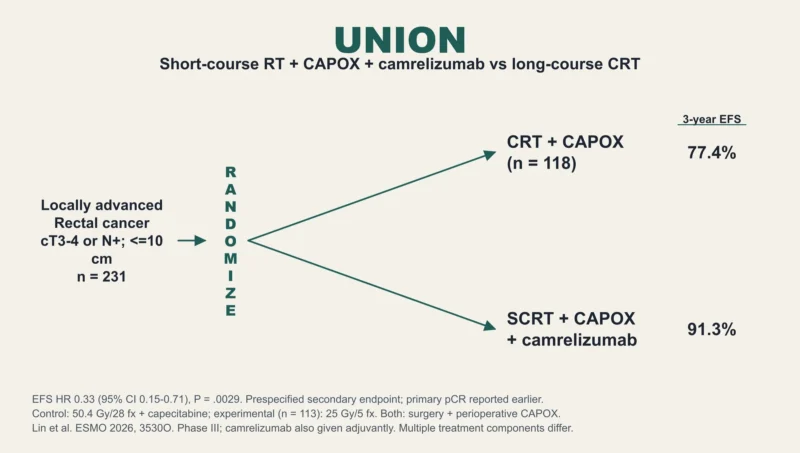
“UNION: 3y EFS 91% vs 77% with SCRT/CAPOX/camrelizumab vs long-course CRT/CAPOX in rectal cancer. HR 0.33 (95% CI 0.15-0.71).
Impressive signal. But RT schedule and IO both changed, so this doesn’t isolate the benefit of either.”
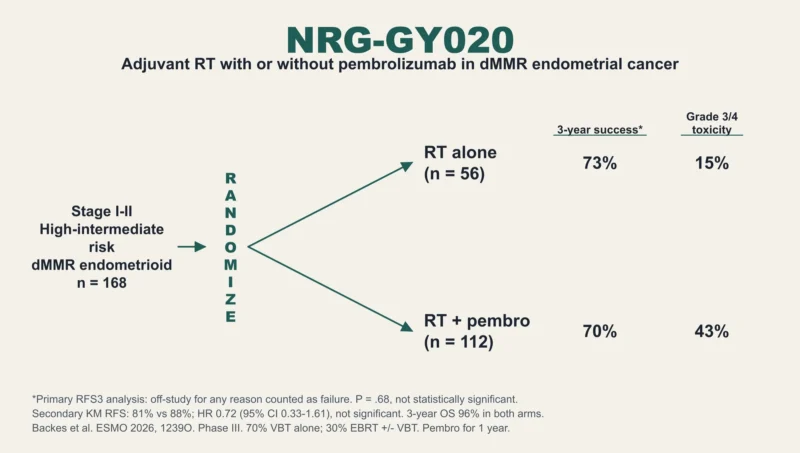
GY020 Finds No Benefit From Adding Pembrolizumab to RT
“GY020 didn’t meet its primary endpoint: 3y success 70% w/ pembro+RT vs 73% RT alone. Leaving study counted as failure.
KM RFS numerically favored pembro, but CI crossed 1. G3/4 toxicity 43% vs 15%. RT alone remains my default here.”
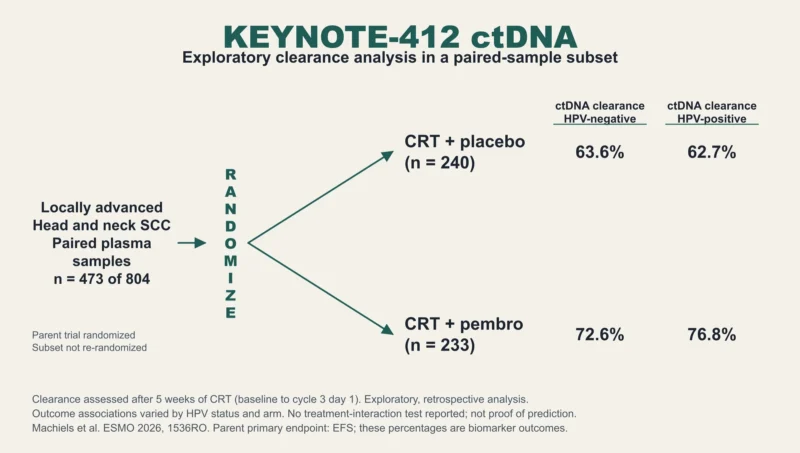
KEYNOTE-412 Reveals HPV-Dependent ctDNA Trends After CRT
“KEYNOTE-412 ctDNA: clearance after 5wk CRT was more frequent w/ pembro, but outcome associations varied by HPV status and arm.
Interesting biomarker work. Without an interaction test, I wouldn’t call this predictive of pembro benefit.”
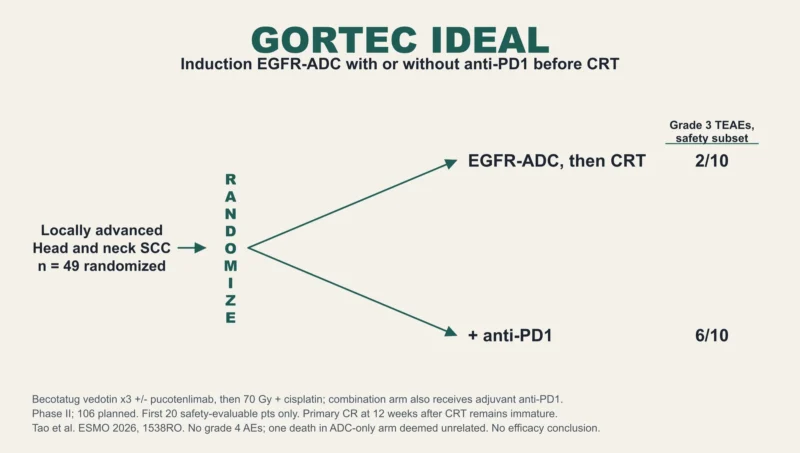
GORTEC IDEAL Reports Early Safety Signals With EGFR-ADC and Immunotherapy
“GORTEC IDEAL is early: induction EGFR-ADC +/- anti-PD1, then 70 Gy/cisplatin. G3 TEAEs in 6/10 combination pts vs 2/10 ADC alone.
20 pts in this safety analysis.”
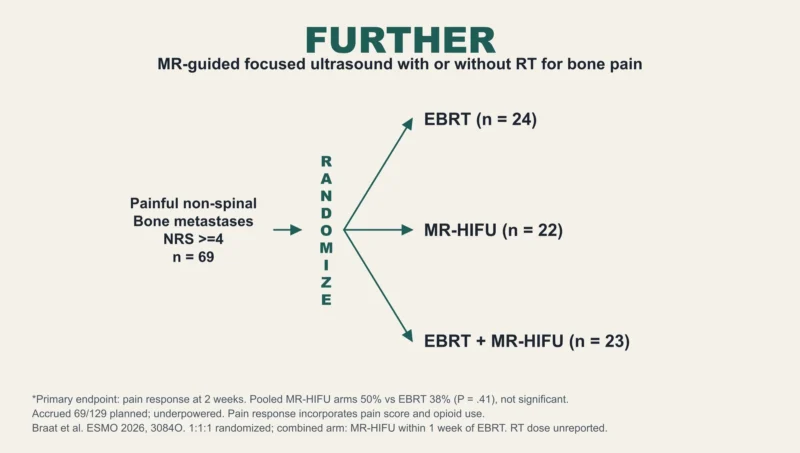
FURTHER Trial Finds No Significant Pain Relief Benefit With MR-HIFU vs EBRT
“FURTHER enrolled 69/129 planned pts.
At 2wk, pain response 50% in pooled MR-HIFU arms vs 38% with EBRT (P=.41).
Just refer these folks for EBRT. Most data for invasive ablation is confounded by receipt of EBRT. Love me some kypho after EBRT (for select cases), though.”
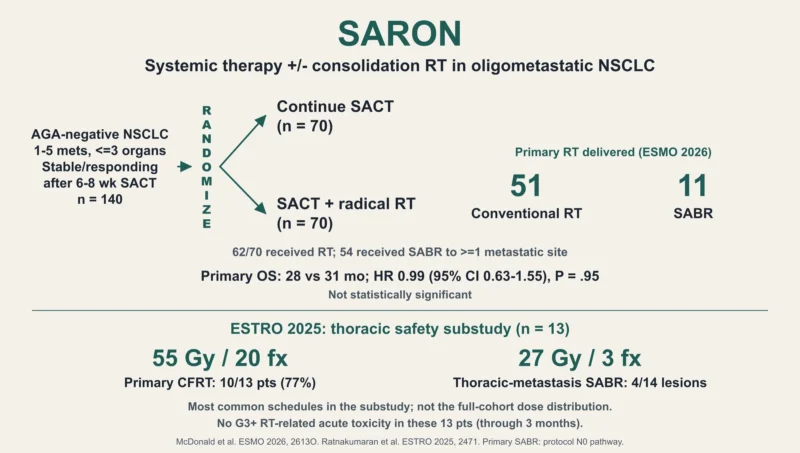
SARON Trial Shows Improved Local Control and PFS Without OS Benefit
“Congrats to the SARON investigators! Important randomized data for a question we face all the time.
Consolidation RT improved local control and PFS, but no OS benefit demonstrated: HR 0.99 (95% CI 0.63-1.55).
The RT details caught my eye. Of 62 pts who received RT, 51 had conventional treatment to the primary and only 11 had primary SABR. About 53% of the full cohort had N2/3 disease.
Side note: in the separate 13-pt ESTRO safety substudy, the most common schedules were 55 Gy/20 fx to the primary (10/13 pts) and 27 Gy/3 fx to thoracic mets (4/14 lesions). Those are substudy doses, not the dose distribution for the whole trial.
Curious how pts who actually received SABR to all sites did. That would be exploratory, but I’d like to see the dose/volume details and patterns of failure before generalizing these results to patients receiving total consolidation.
Looking forward to the full paper!”
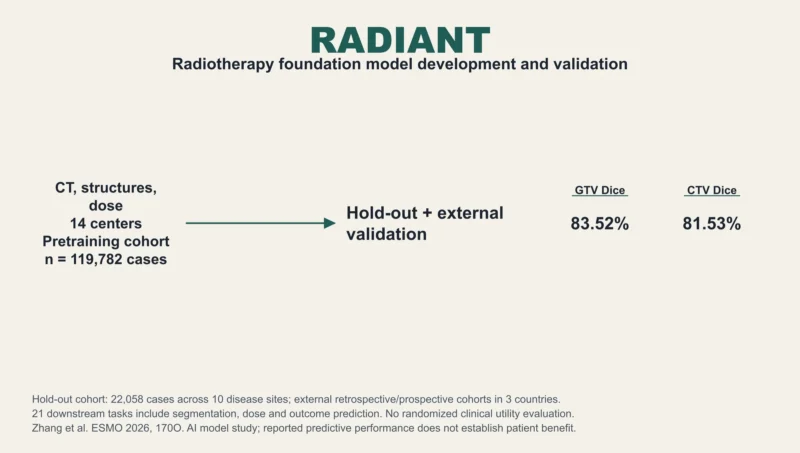
RADIANT Advances AI in Radiotherapy With Clinical Utility Still to Prove
“RADIANT trained on 119,782 RT cases and tested segmentation, dose and outcome prediction across sites.
What I want next is clinical utility: does using it improve planning decisions, toxicity or outcomes? Accuracy alone isn’t enough.”
You may also be interested in: 20 Posts Not to Miss from ESMO Congress 2026: Day 1