The ESMO Congress 2026
The ESMO Congress 2026 is underway in Madrid, Spain, bringing together the international oncology community from October 23–27 for a major exchange of scientific research, clinical evidence, and perspectives on the future of cancer care. Organized by the European Society for Medical Oncology, the congress provides a platform for researchers, clinicians, and oncology professionals to examine emerging treatment strategies, discuss new clinical findings, and consider how scientific advances can translate into meaningful progress for patients.
This year’s scientific programme features developments across cancer immunotherapy, targeted therapies, antibody-drug conjugates (ADCs), and artificial intelligence in cancer research and clinical care. Discussions also address important questions around treatment optimization, therapeutic resistance, and how to maximize treatment benefits while reducing unnecessary burden for patients. As new data emerge across multiple cancer types, the congress offers an opportunity to assess their clinical significance and explore how they may influence future research and treatment decisions.
Amid these discussions, Arndt Vogel, Full Professor at Princess Margaret Cancer Centre, shared his insights on the congress on X, offering his perspective on key developments and conversations taking place at ESMO 2026:
ESMO Updates the ESCAT Framework for Precision Oncology
“The ESMO Scale for Clinical Actionability of Molecular Targets, version 2 (ESCAT v2): an evidence-based framework for ranking alterations as actionability and resistance biomarkers in precision oncology.
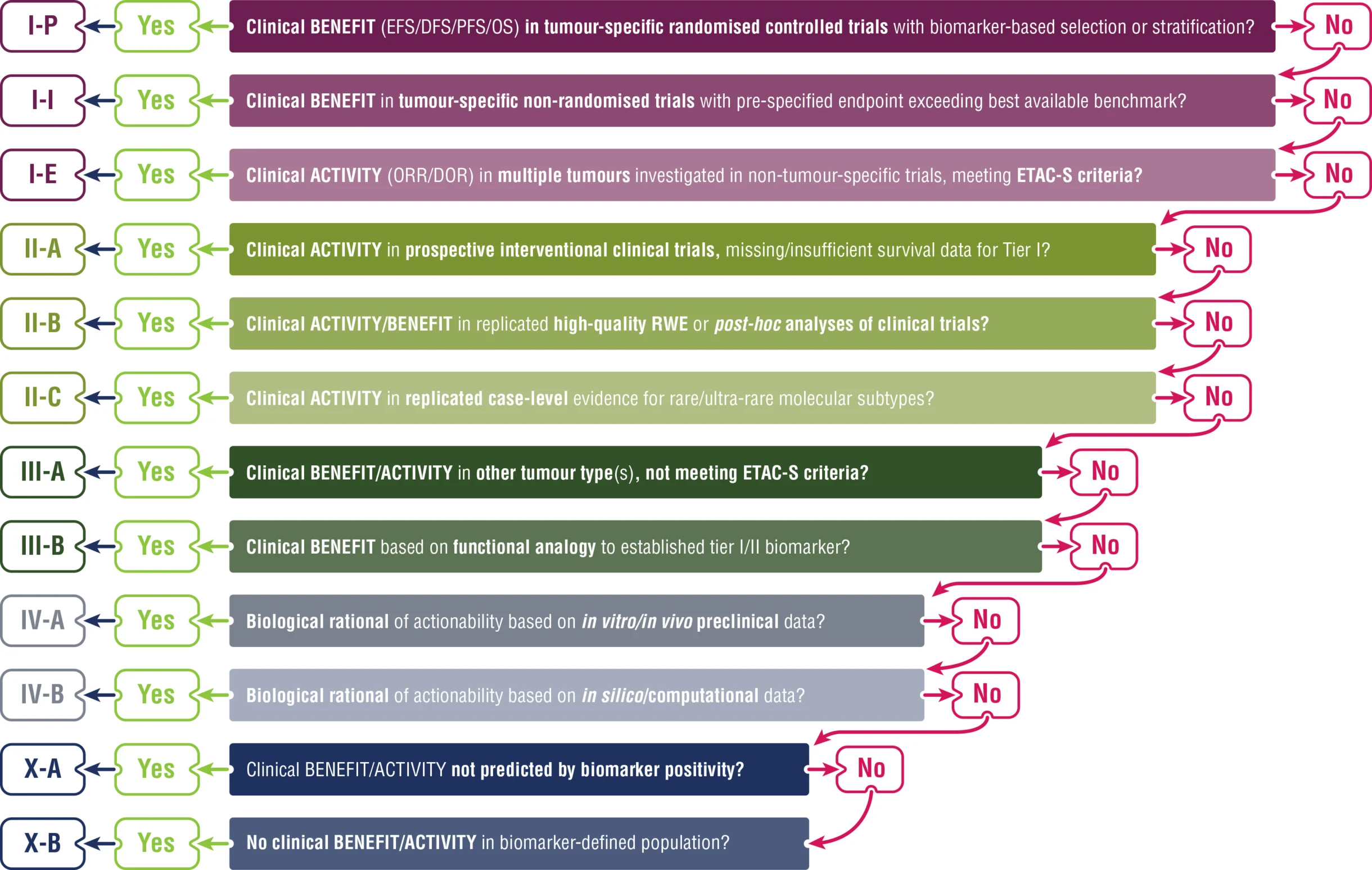
Title: The ESMO Scale for Clinical Actionability of Molecular Targets, version 2 (ESCAT v2): an evidence-based framework for ranking alterations as actionability and resistance biomarkers in precision oncology
Authors: A. El Helali, C. Cardone, N. Coleman, J.R. Beal, M.V. Cruz-Ordinario, E. Kocakavuk, M. K-l. Chiu, D. Thomas, C. Turnbull, F. Meric-Bernstam, M.F. Mosele, D. Chakravarty, R. Dienstmann, D. Tamborero, H.E.G. Russnes, M. Kordes, H.H.F. Loong, A. Stenzinger, J. Rueter, D. Martins-Branco, G. Pentheroudakis, J. Mateo, C.B. Westphalen.
Read the full article here.”
Arcotatug Tavatecan Shows Promise in G/GEJ Cancer
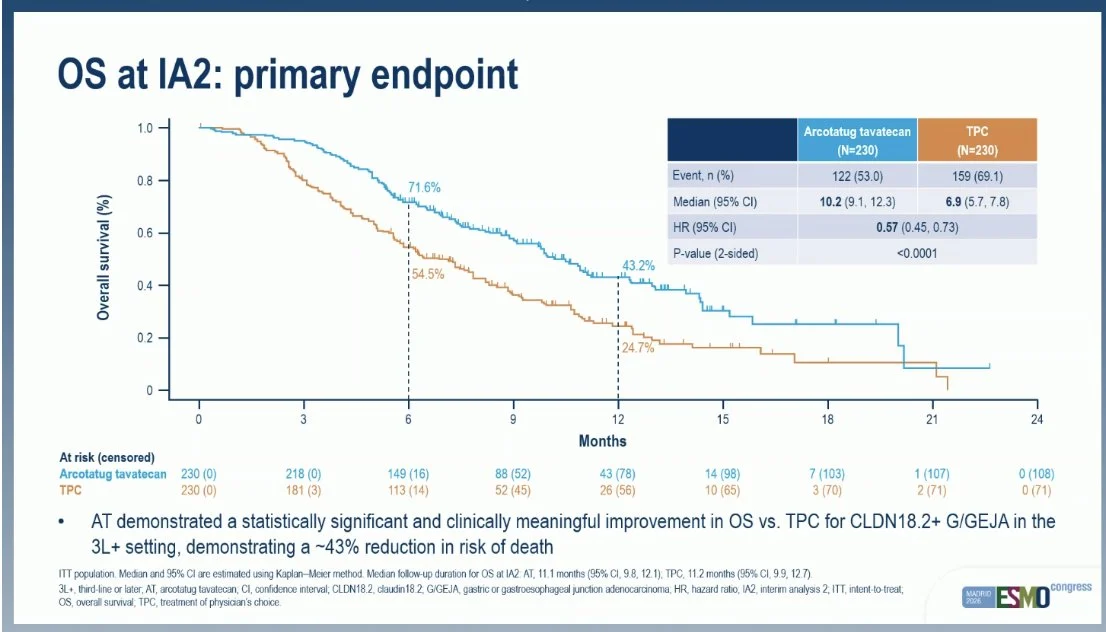
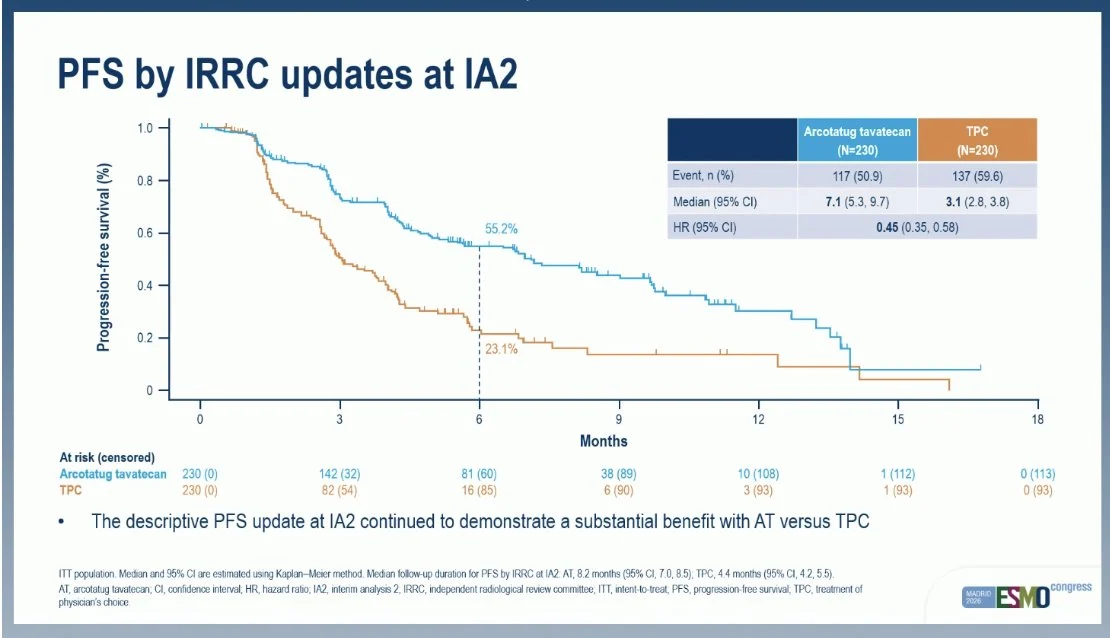
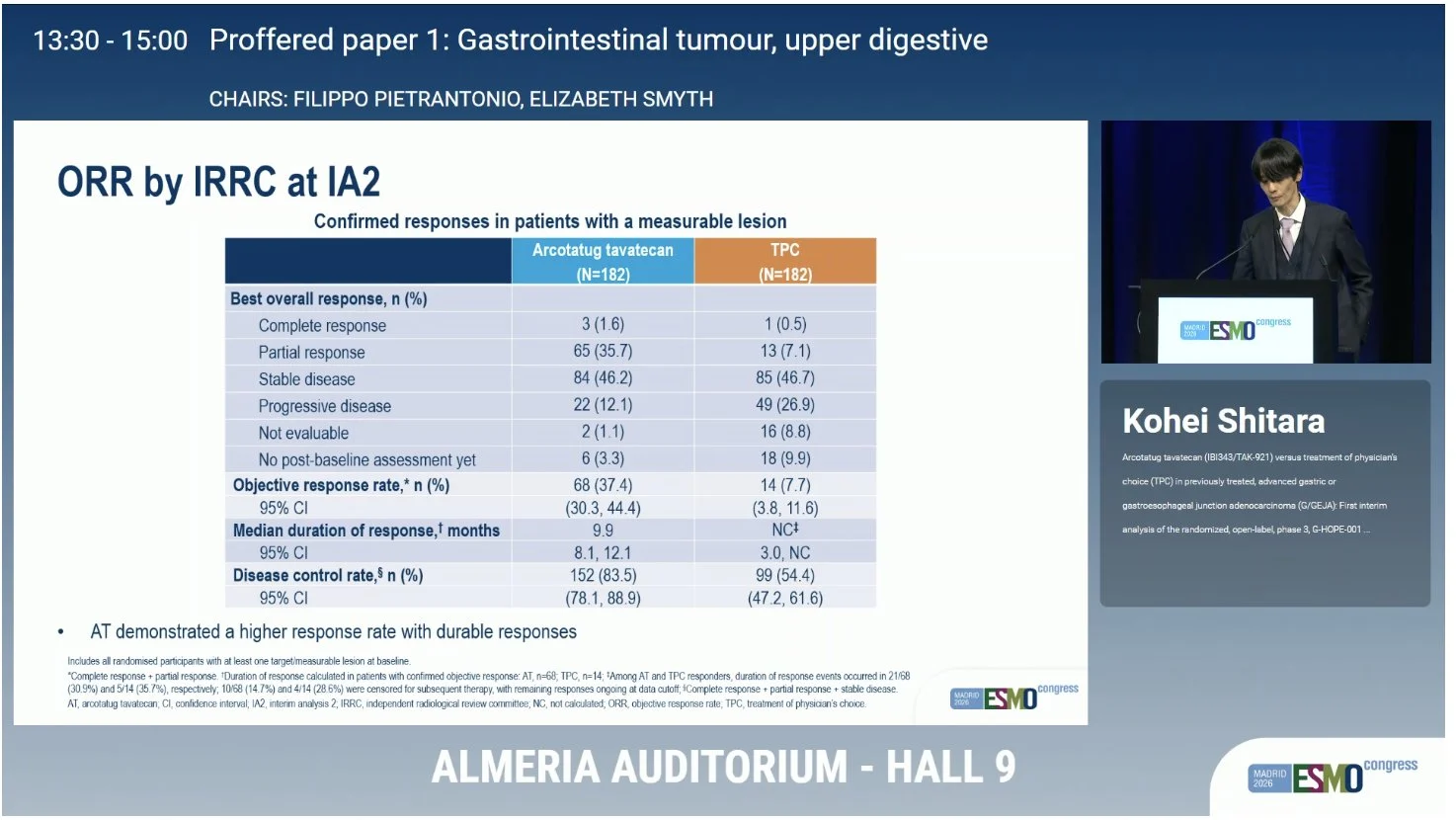
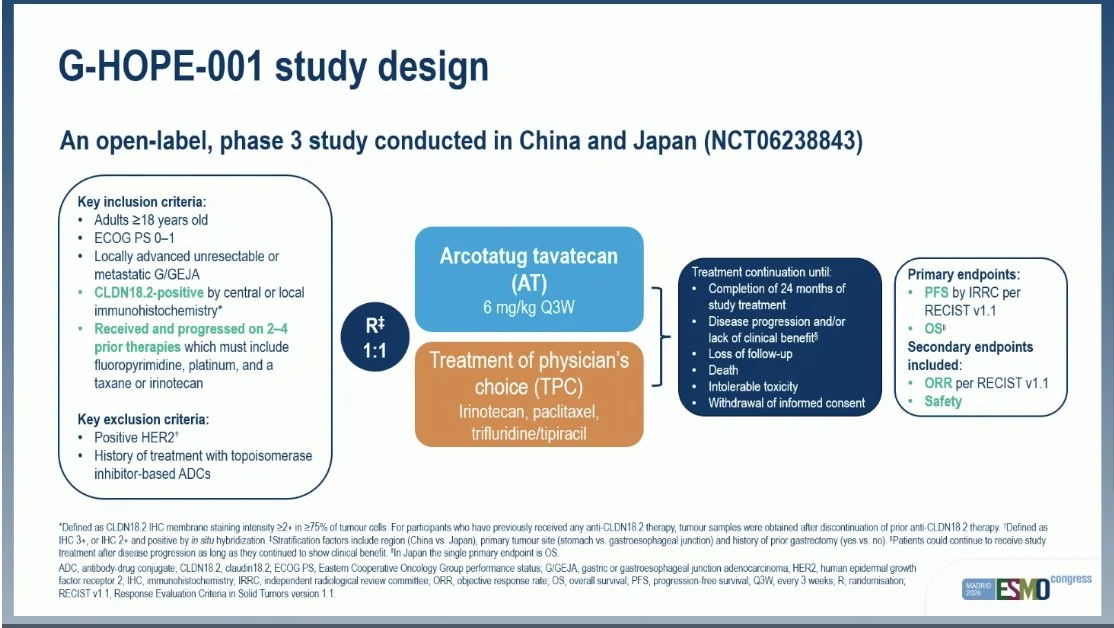
“G-HOPE-001 phs-3: Arcotatug tavatecan vs TPC in previously treated G/GEJA: First interim analysis.
China, Japan, 2600 prescreened, 430 included
- ORR: 37 vs 7.7%
- mPFS: 7.1 vs 3.1 mo
- mOS: 10.2 vs 6.9 mo
- CLDN-2 ADC, strong signal of efficacy, acceptable safety.”
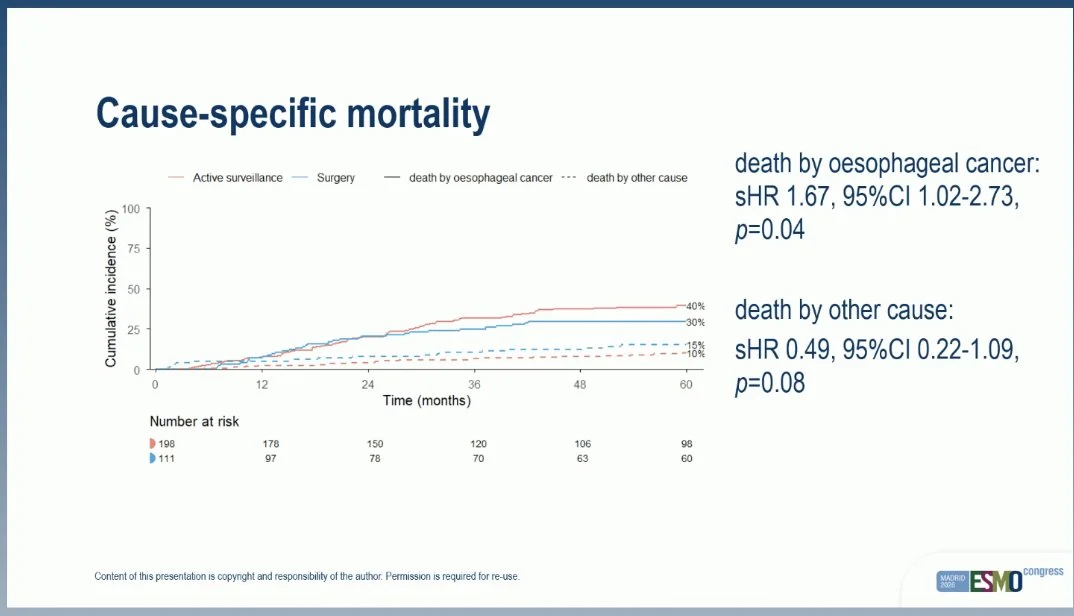
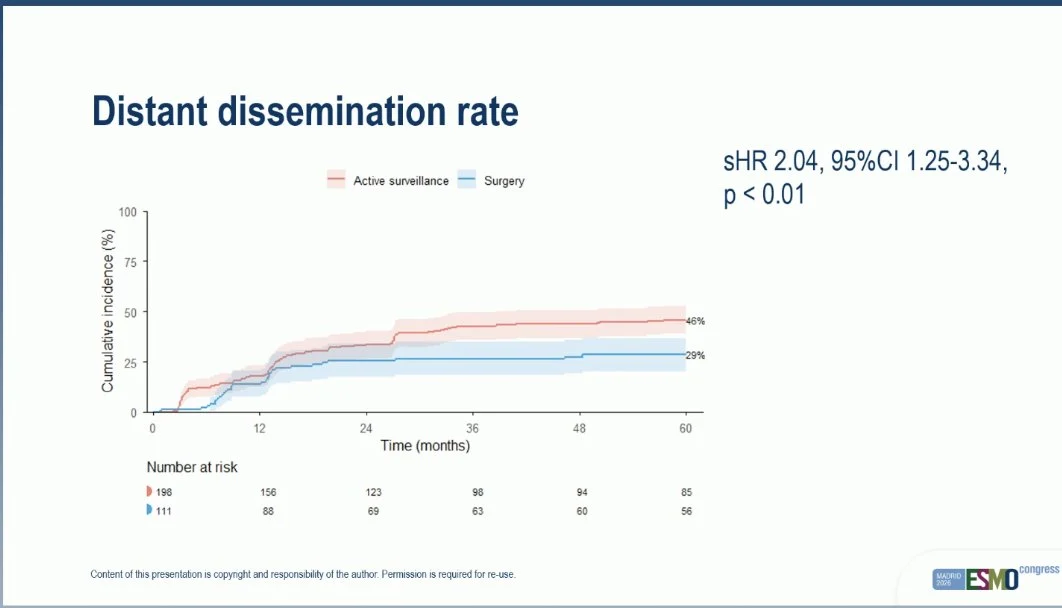
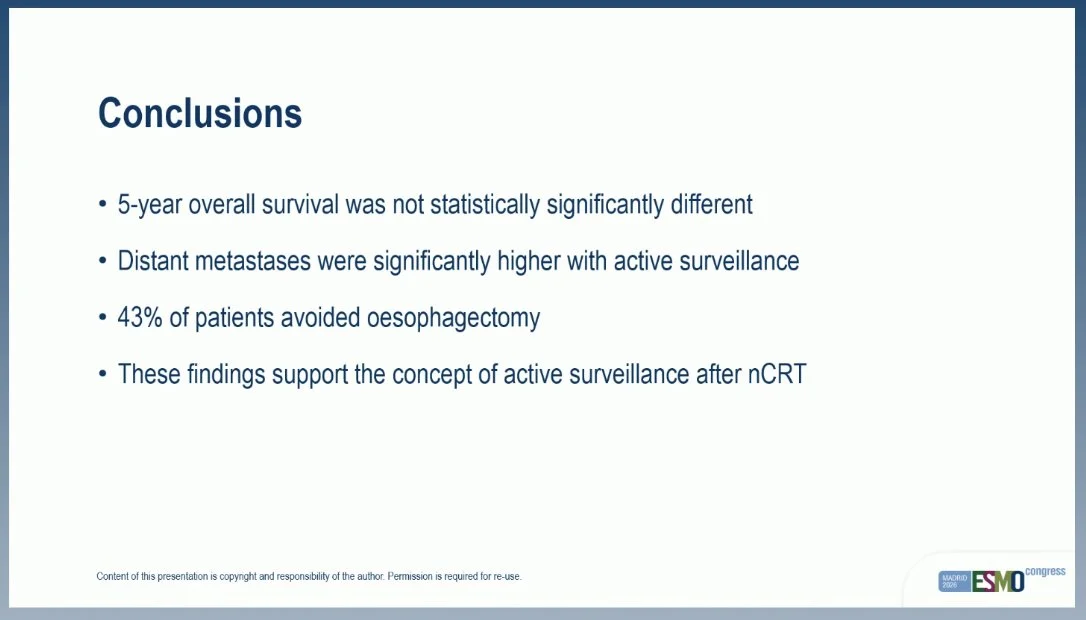
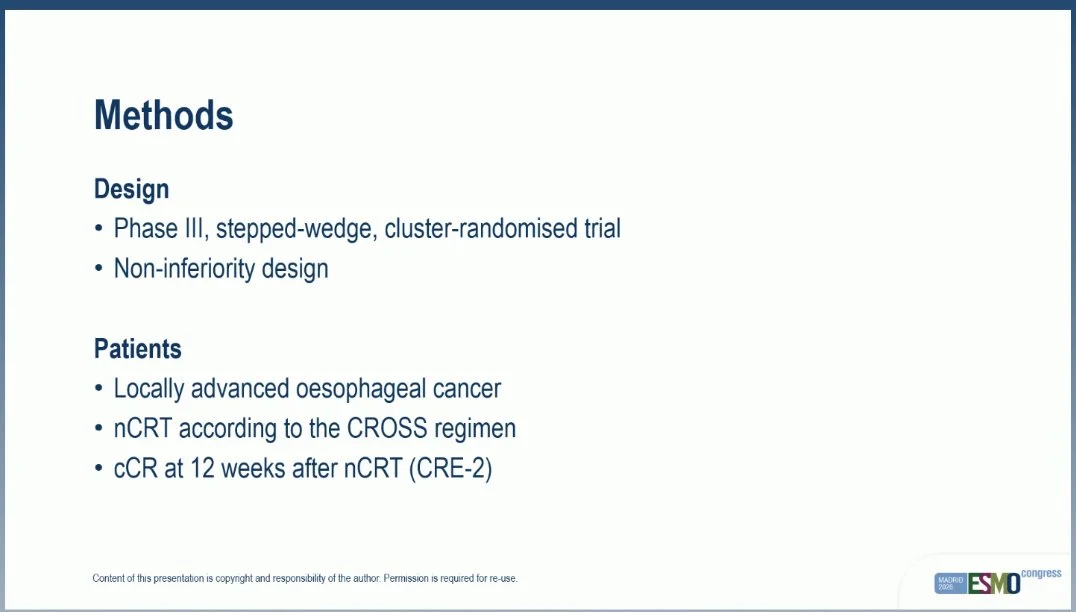
“SANO trial: Active surveillance vs standard surgery after neoadjuvant chemoradiotherapy for oesophageal cancer: Long-term results.
- DFS HR: 1.39
- OS HR:1.17
- Distant mets: sHR 2.04
- OS not different, supports consideration of active surveillance.”
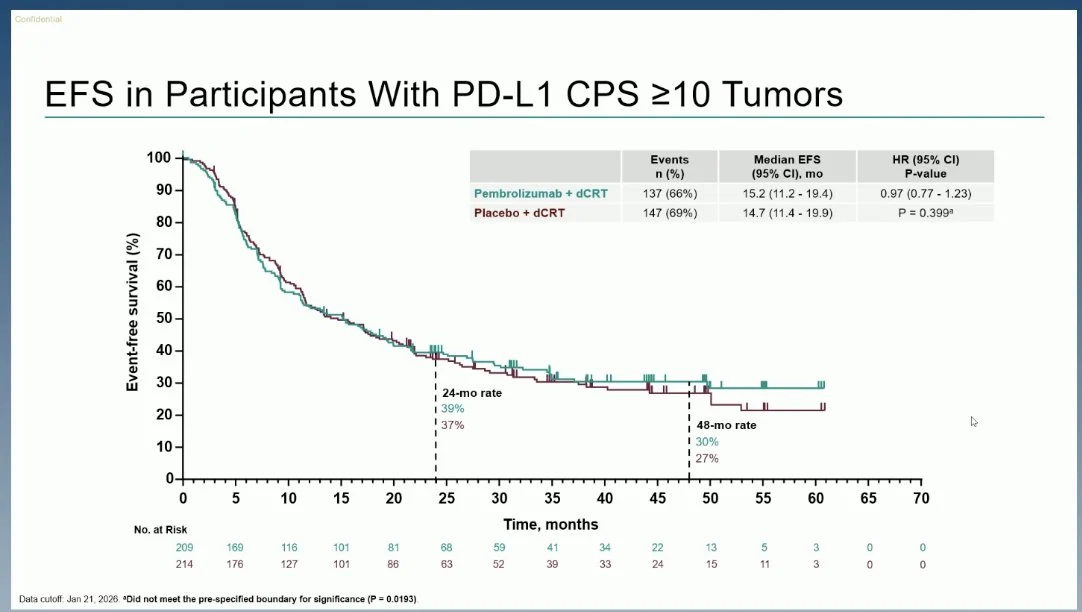
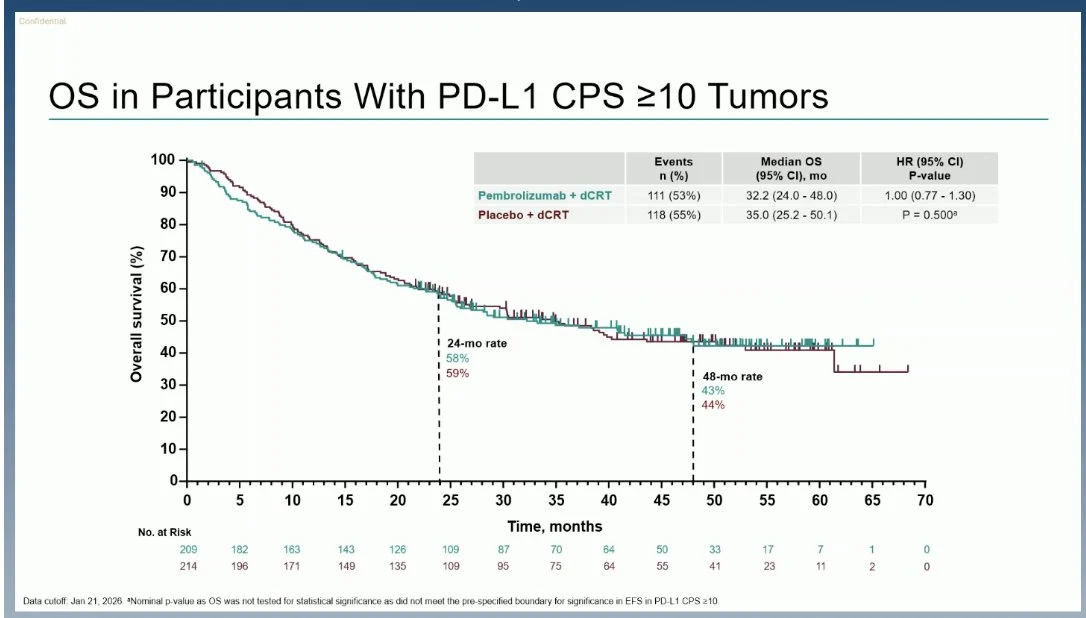
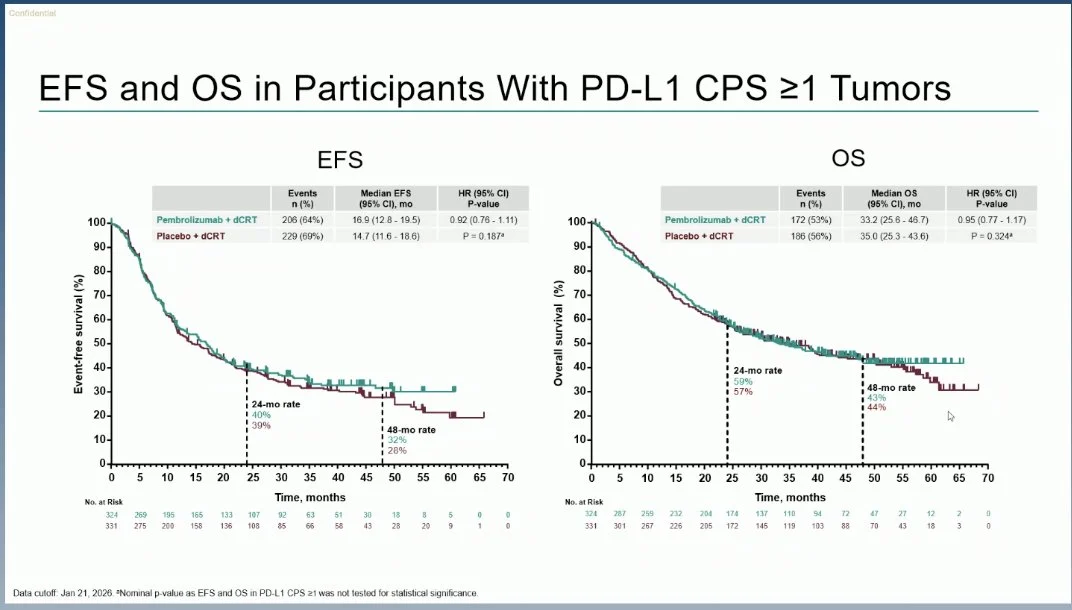
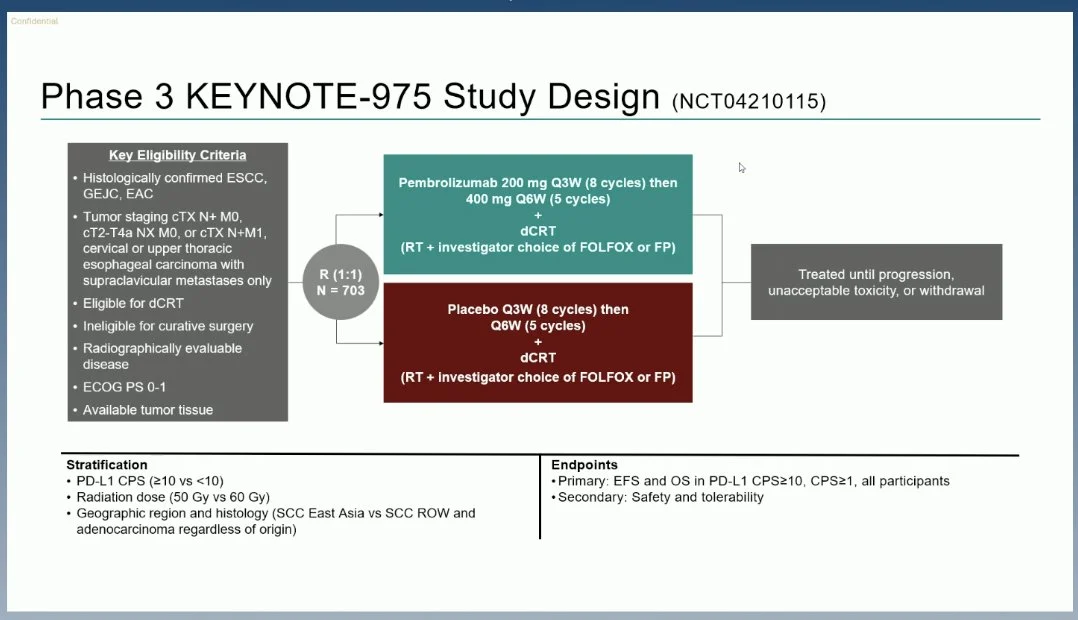
“KEYNOTE-975 phs-3 study: Pembrolizumab or placebo plus concurrent definitive chemoradiotherapy in E/GEJ cancer.
- mEFS: 15.2 vs 14.7 mo
- mOS: 32 vs 35 mo
- disappointing, no benefit in all & CPS>10 patients.”
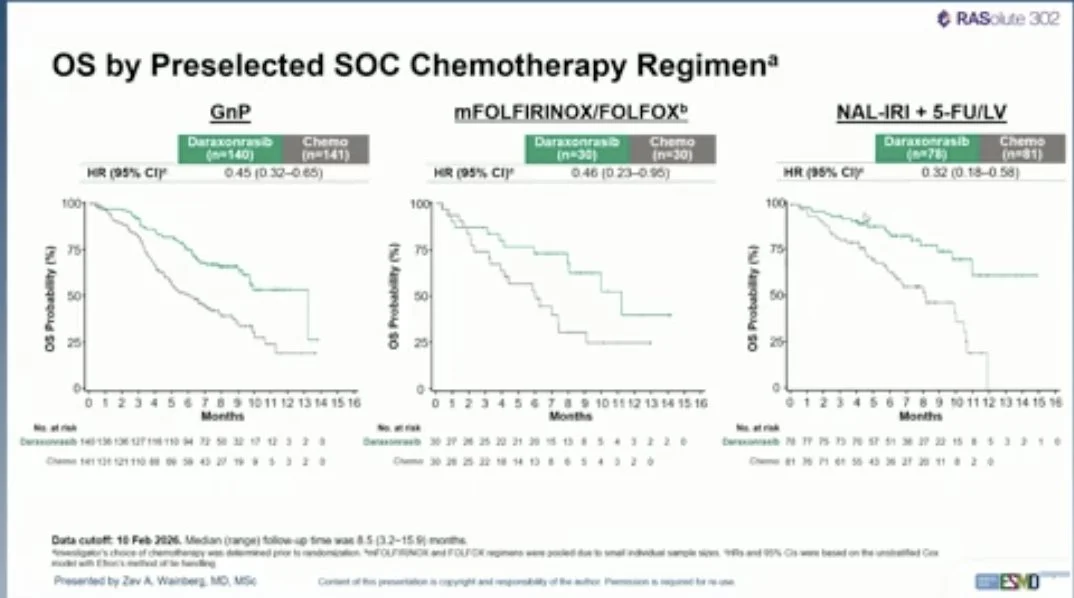
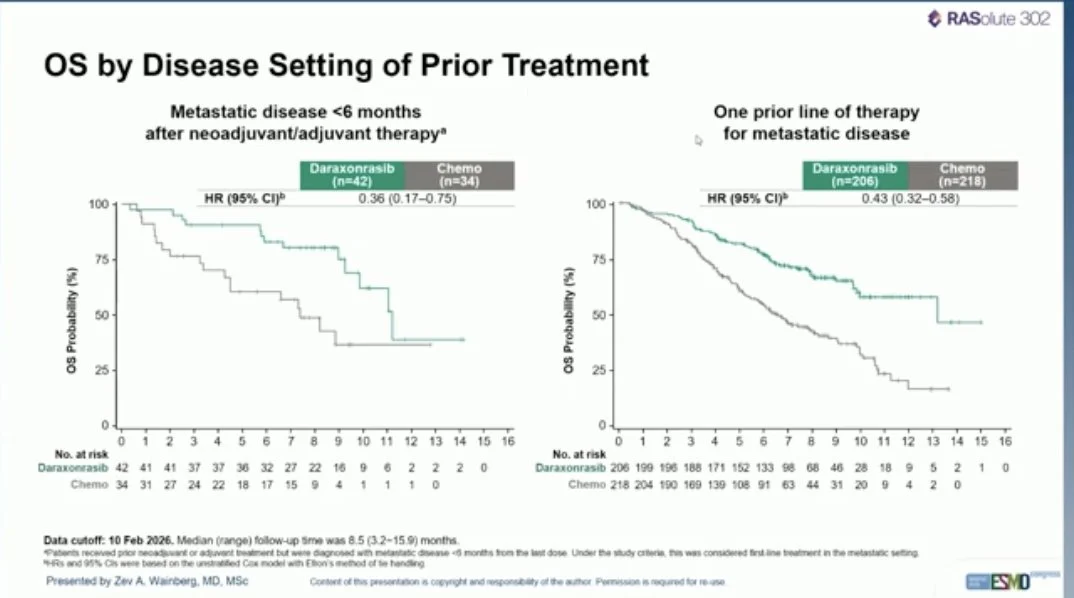
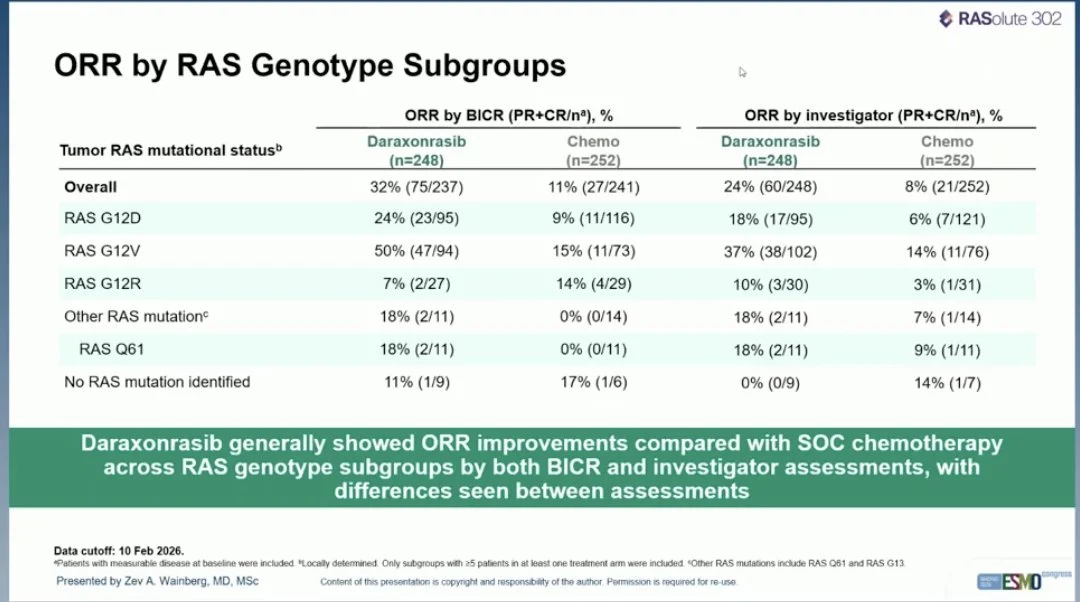
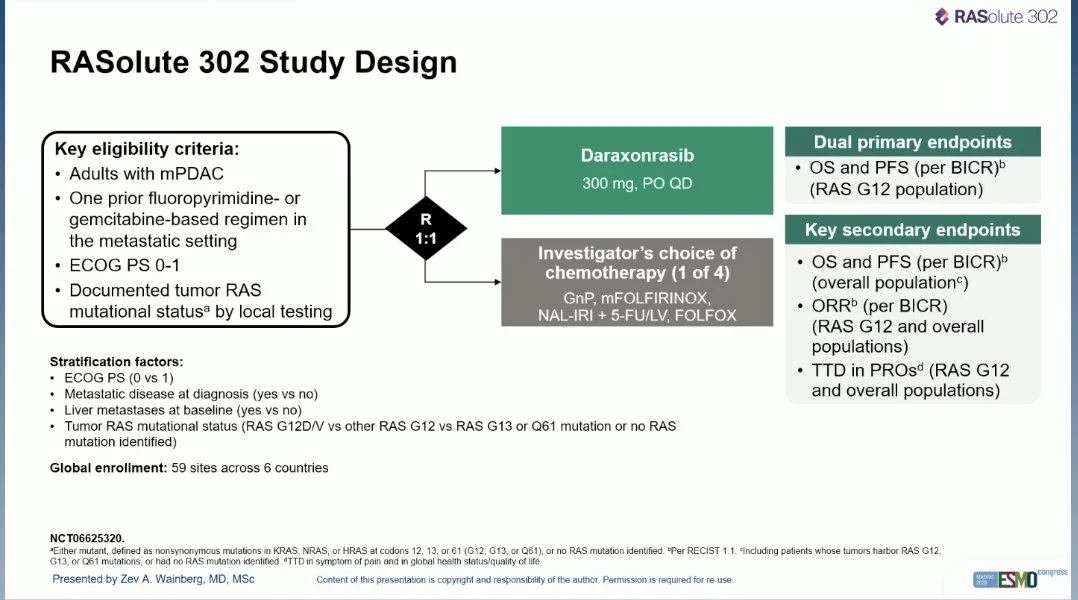
“RASolute 302 ph3 study: Daraxonrasib, a RAS(ON) multi-selective inhibitor vs chemotherapy in previously treated mPDAC
mOS: 13.2 vs 6.7 mo
- ORR improved in all RAS mutations
- PFS & OS: small subgroups, favourable for all
- great data, consistent benefits for all patients.”
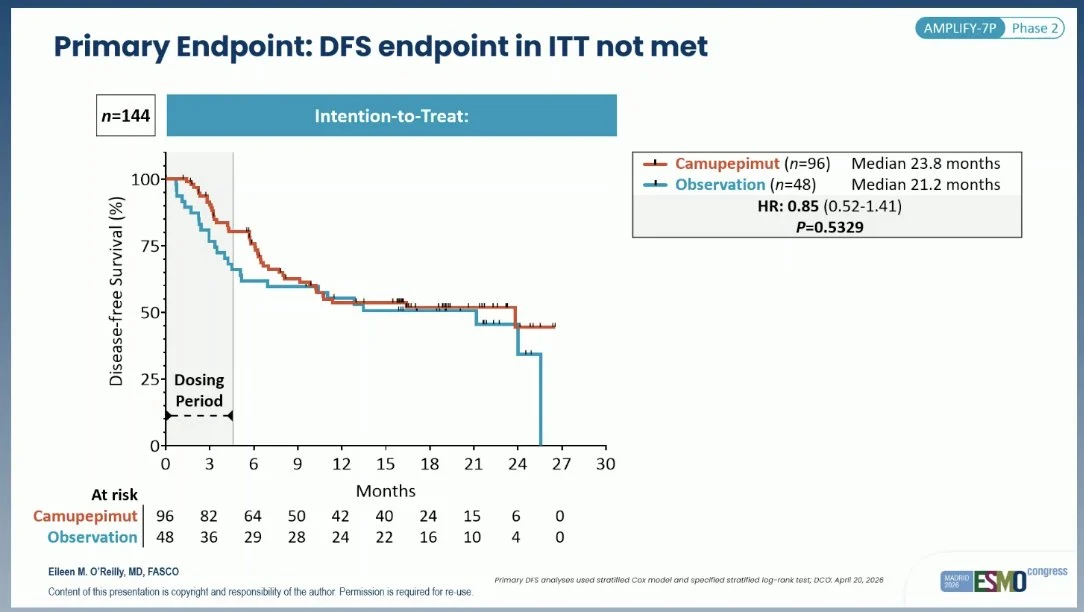
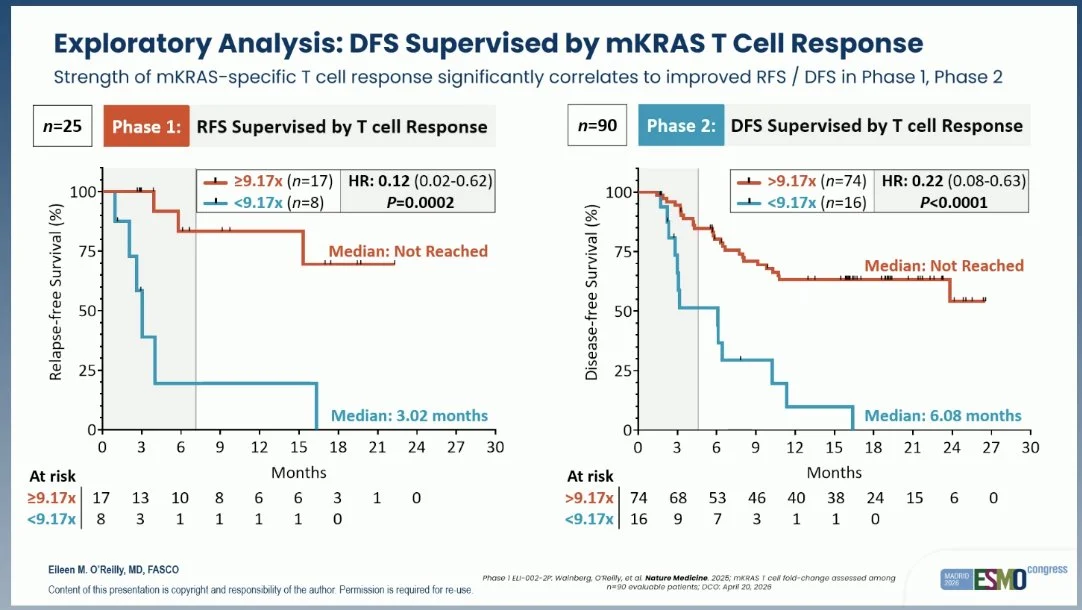
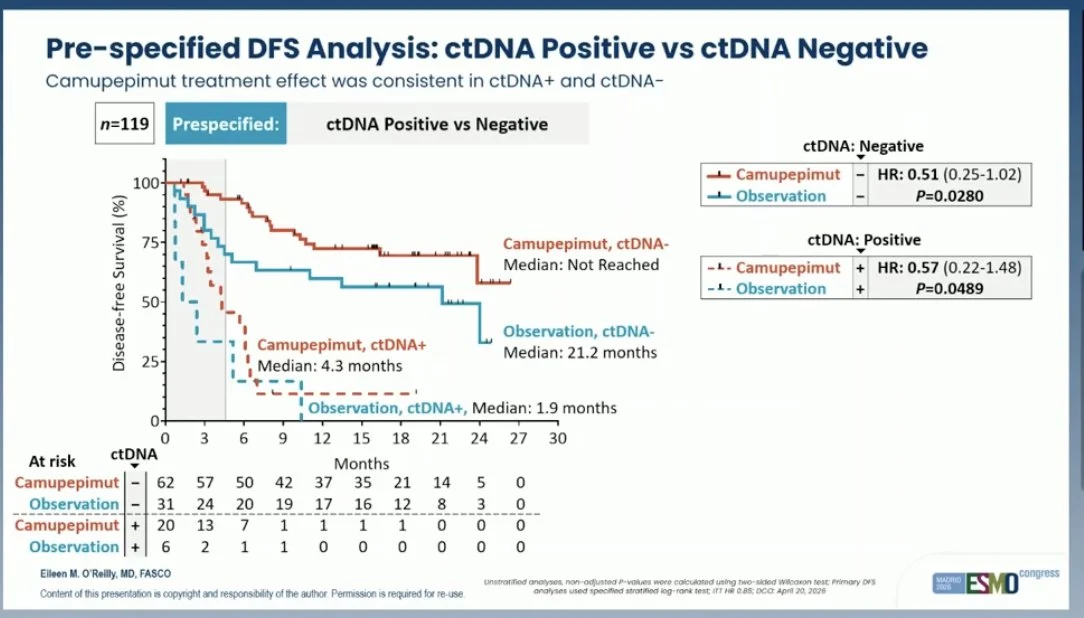
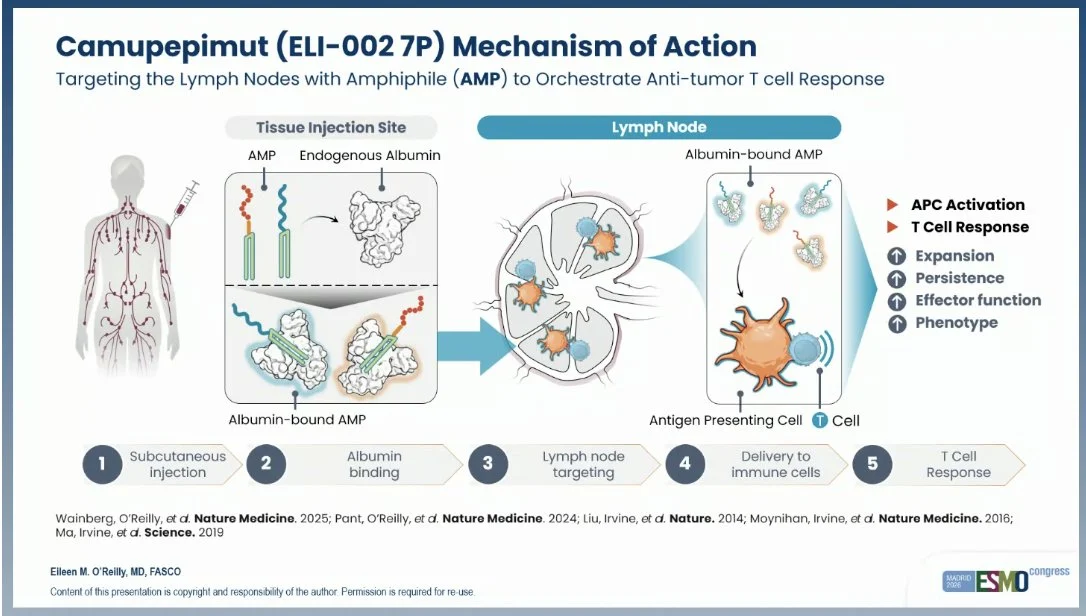
“AMPLIFY-7P ph 2 study: Seven-valent mKRAS-specific lymph node targeted amphiphile immunotherapy versus observation in resected PDAC).
- Targeting lymph nodes to activate T-cells
- T-cells response in 99% of pts
- poor outcome in ctDNA pos pts
- promising data, specifically in pts with Tcell response.”
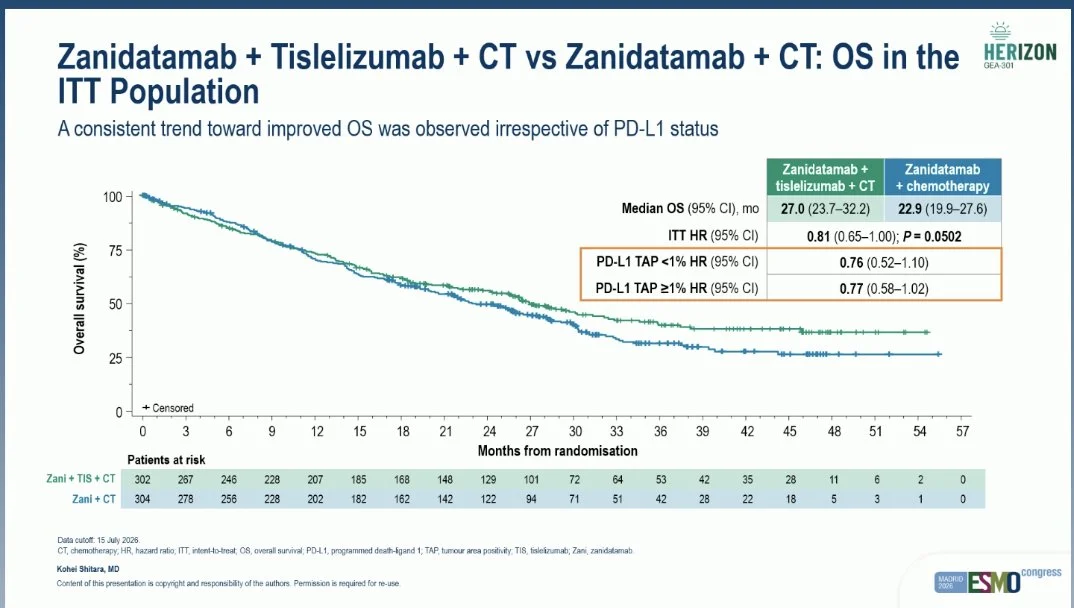
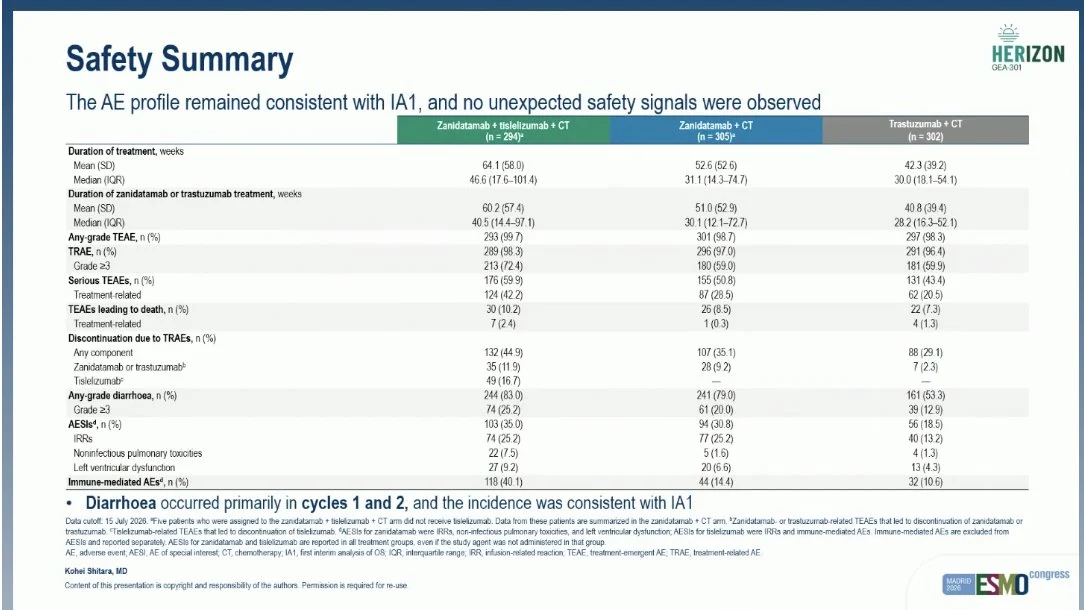
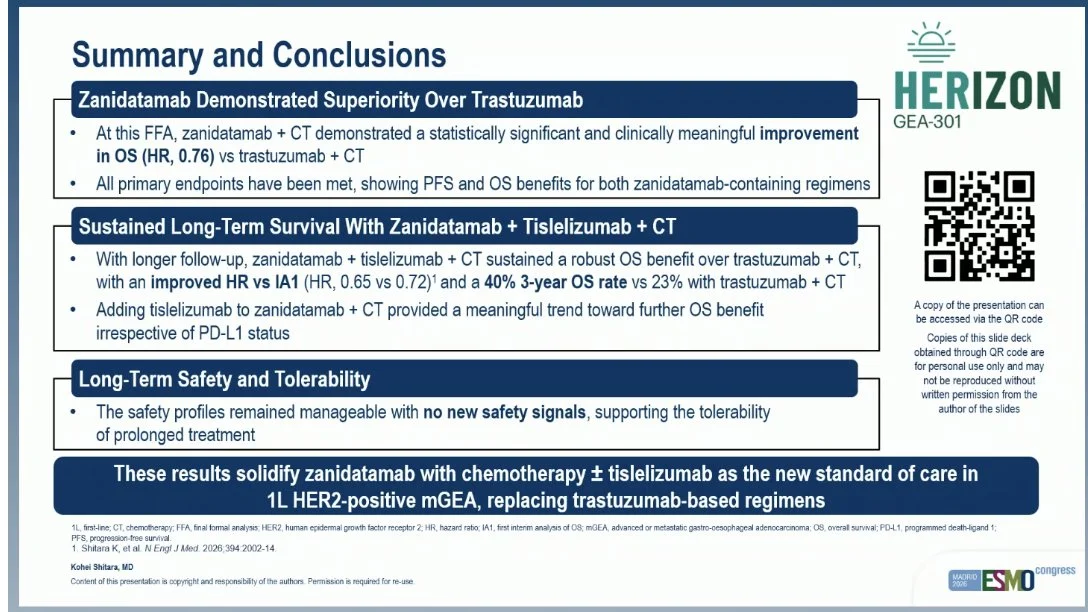
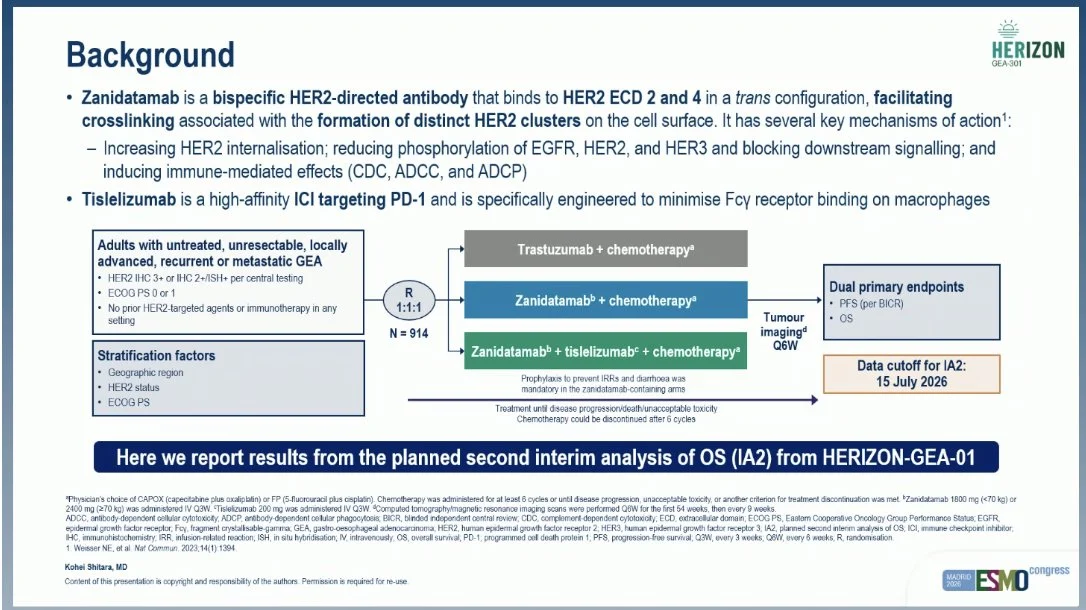
Zanidatamab Improves Survival in HER2-Positive GEA
“Zanidatamab + CT ± tislelizumab for 1L HER2-positive mGEA: Second IA from HERIZON-GEA-01
- mOS: 27 vs22.9 vs 19.6 mo
- Continued meaningful benefit for Zani & Tis independent of PDL-1.”
Anbenitamab Improves Survival in HER2-Positive Gastric Cancer
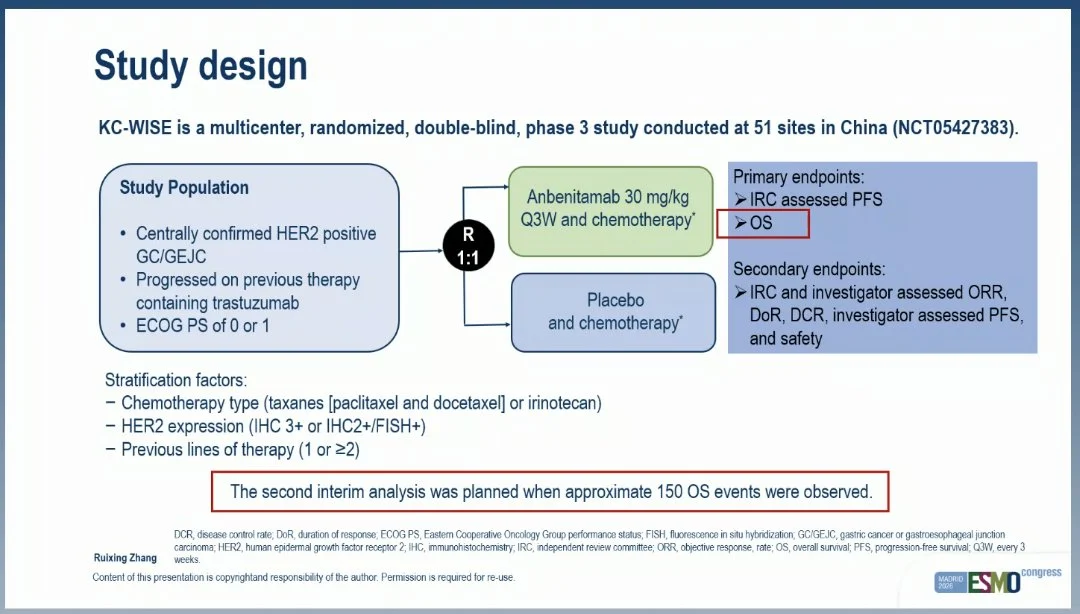
“Anbenitamab plus chemotherapy for previously treated HER2-positive GC/GEJC: Updated OS analysis of KC-WISE
- ORR: 56 vs 13%
- mOS: 19.6 vs 9.7 mo
- no unexpected safety signal
- Supports sequential targeting of Her2.”
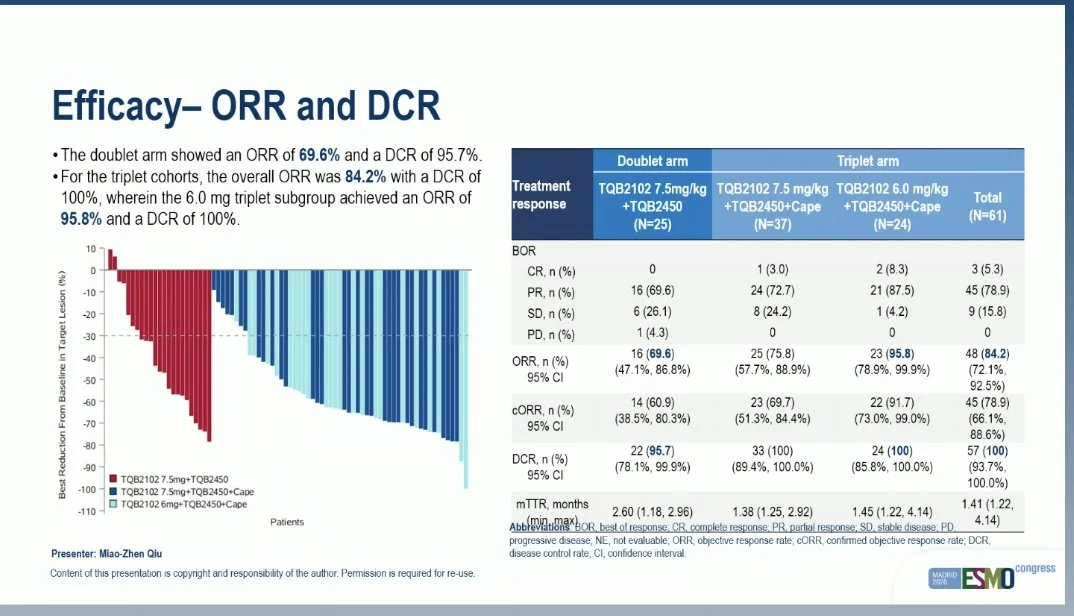
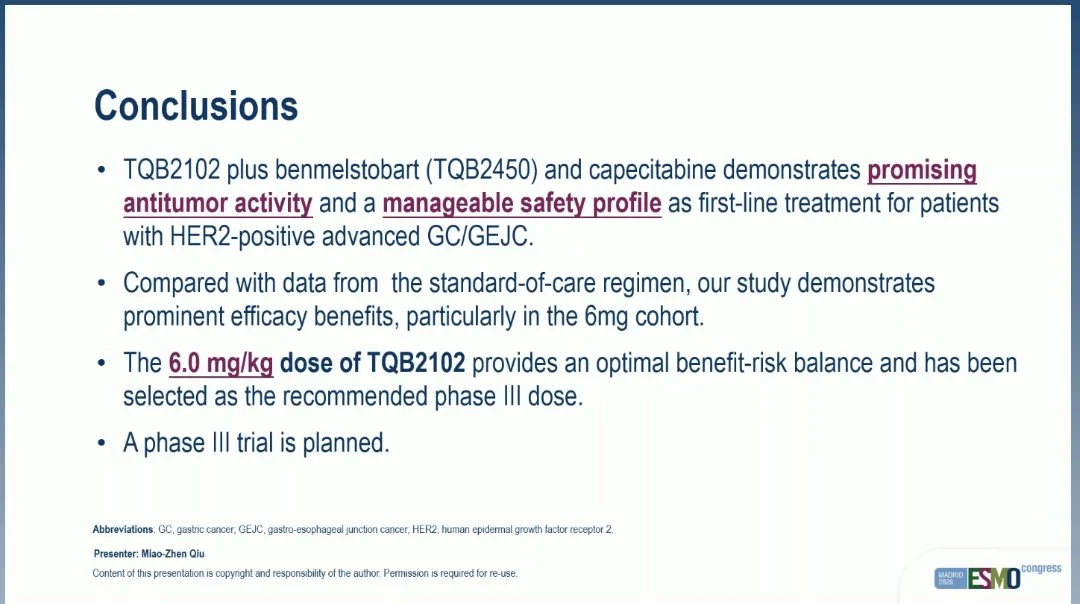
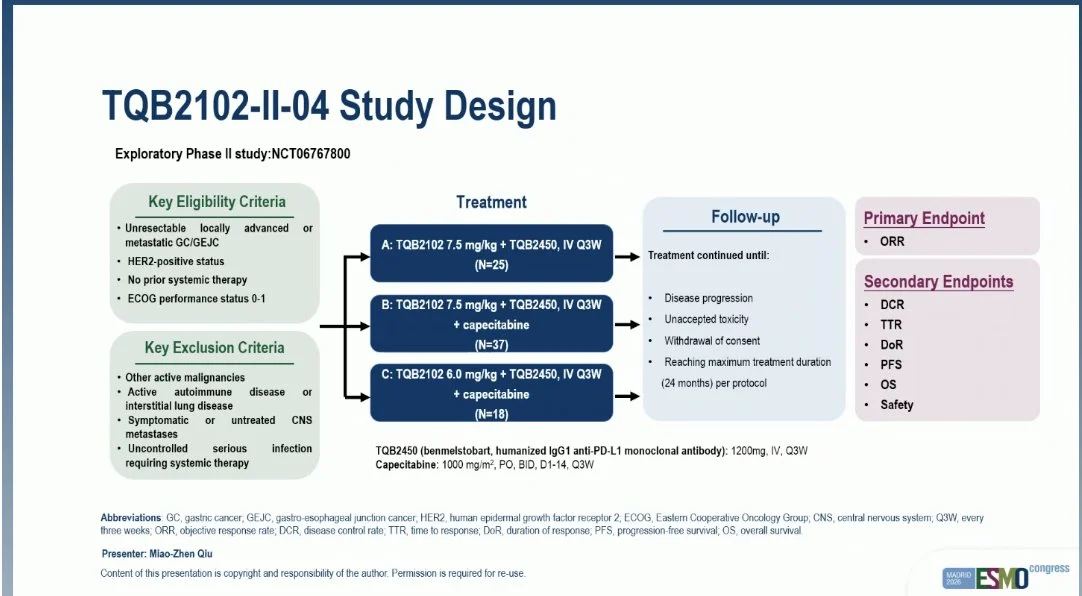
TQB2102 Shows Promise in First-Line HER2-Positive Gastric Cancer
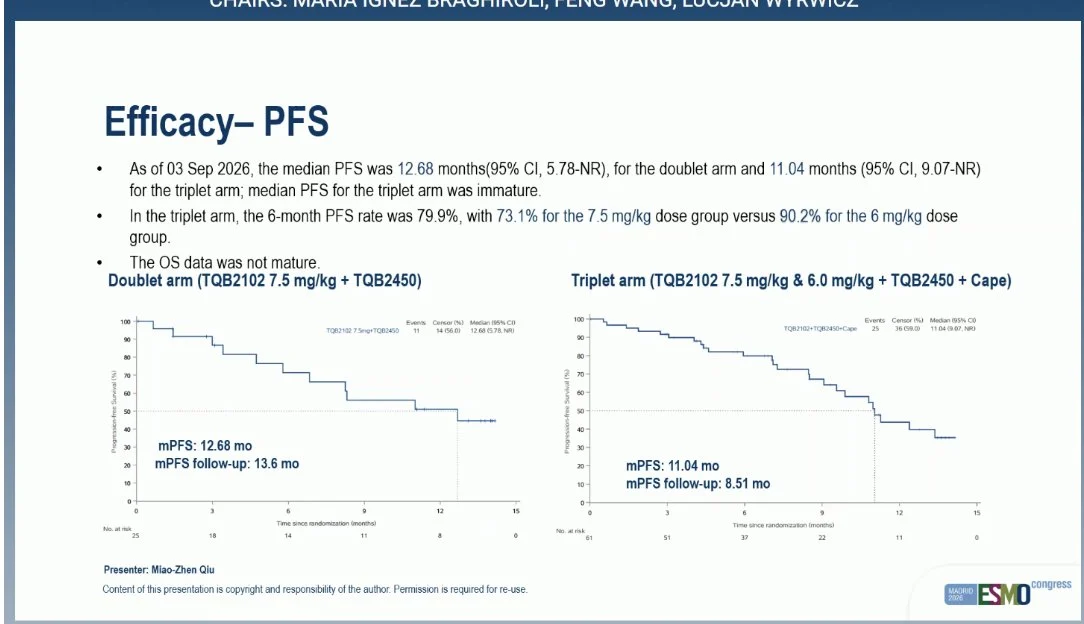
“TQB2102, a novel HER2 bispecific ADC, combined with bemotrizumab with or without capecitabine as 1L for HER2+ GC/GEJC: A phase II study.
- ORR: 69 vs 84% DCR 9
- mPFS: 12.7 vs 11.04 mo
- Supports combining CTx, ICI & Her2 in 1L.”
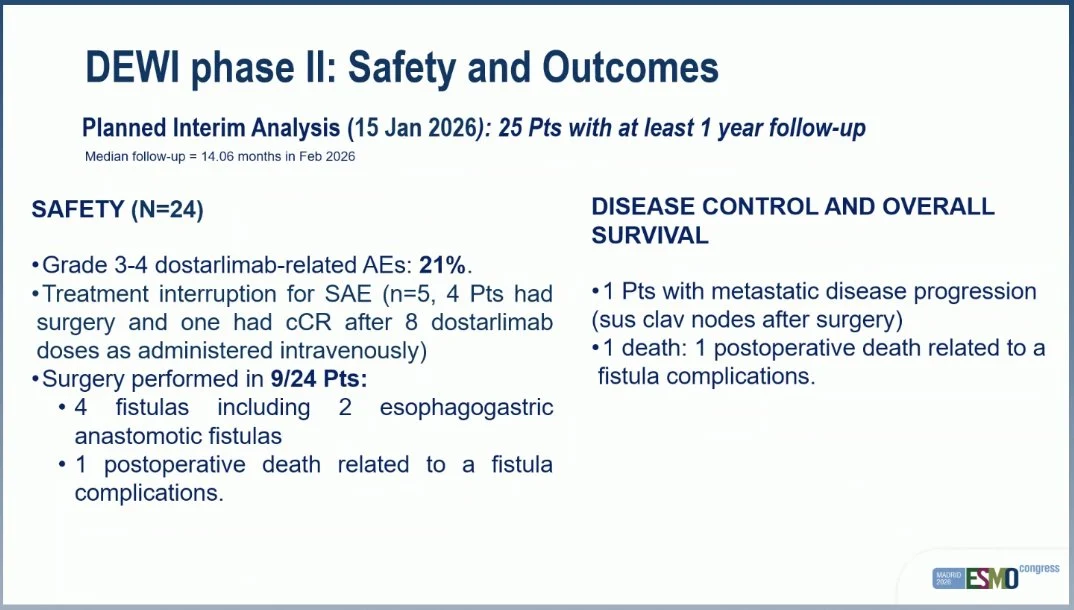
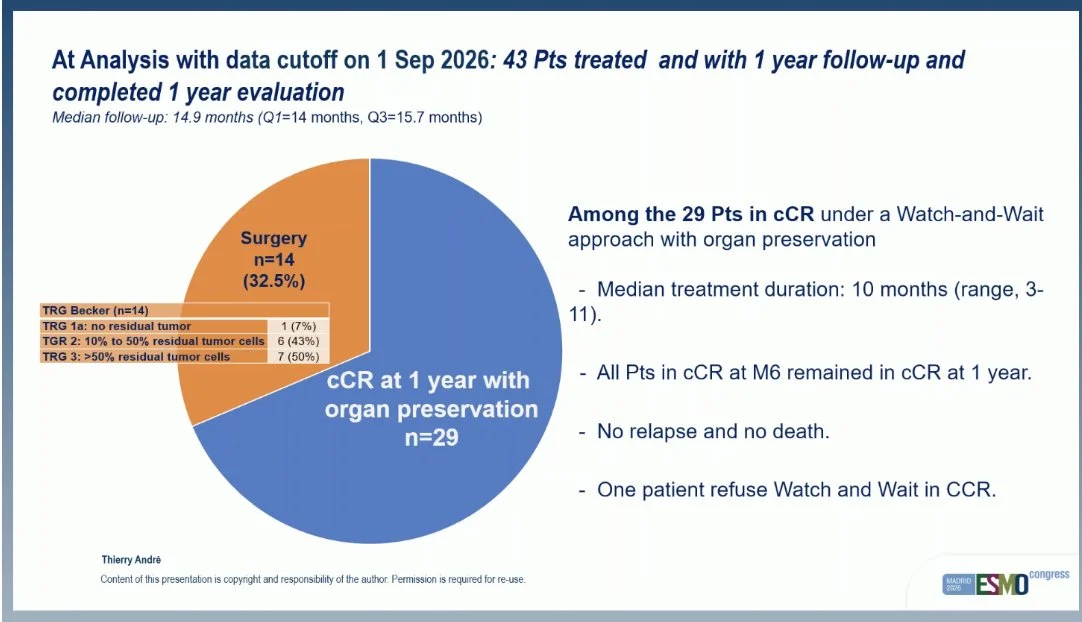
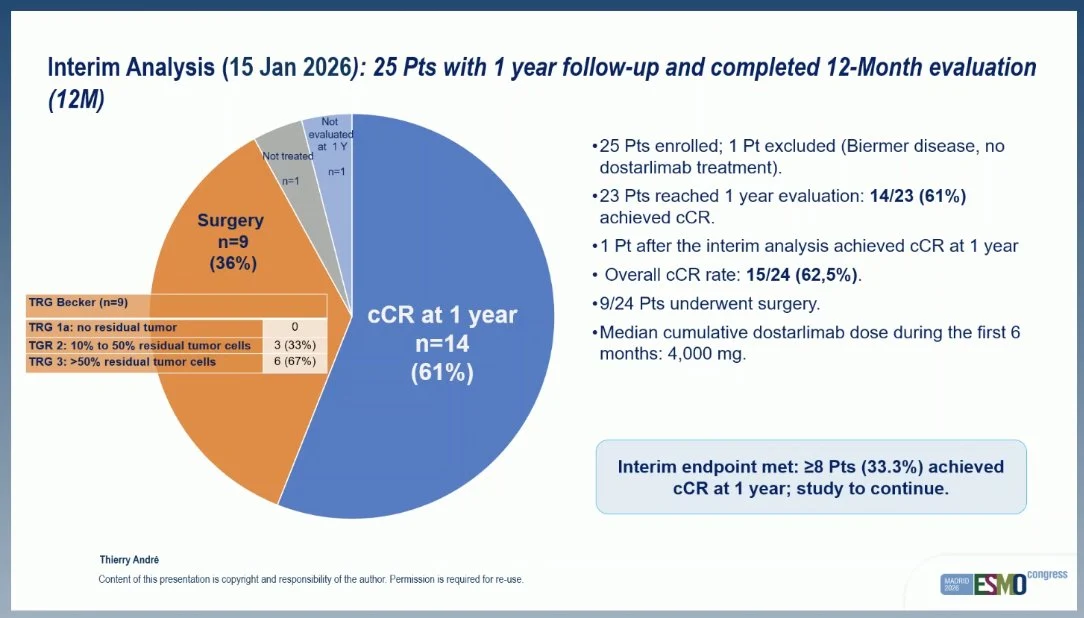
Dostarlimab Shows Promise in dMMR/MSI-H Gastric Cancer
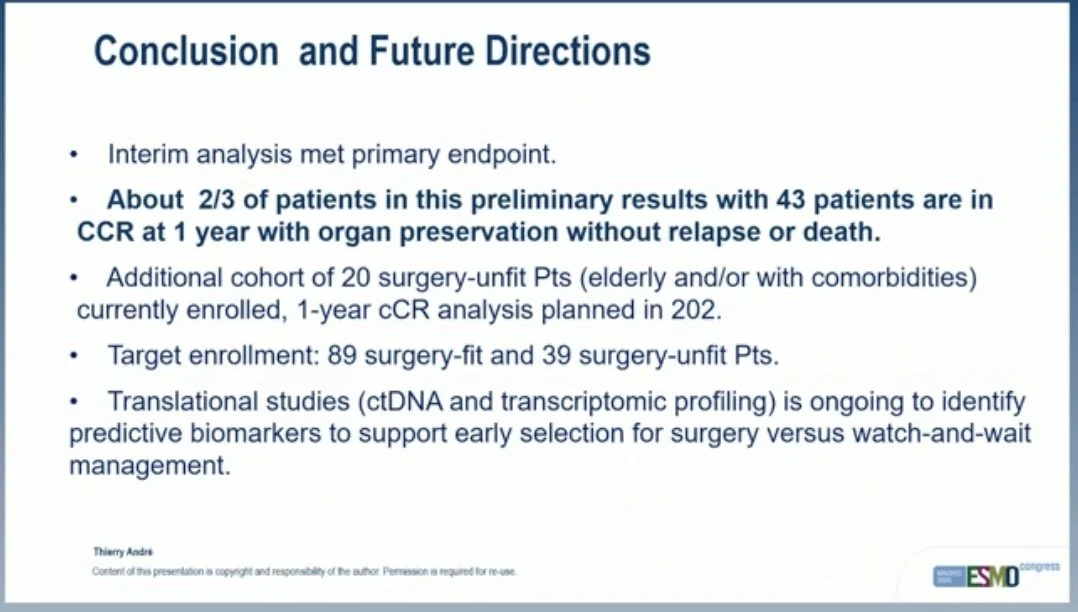
“W&W strategy for dostarlimab in localized deficient dMMR/MSI-H GC/GEJC: Results from the first interim analysis of the GERCOR-GONO DEWI phase II study.
- 25pts enrolled, 33% of pts achieved cCR at 1yr
- 1 pts with PD
- Study continues.”
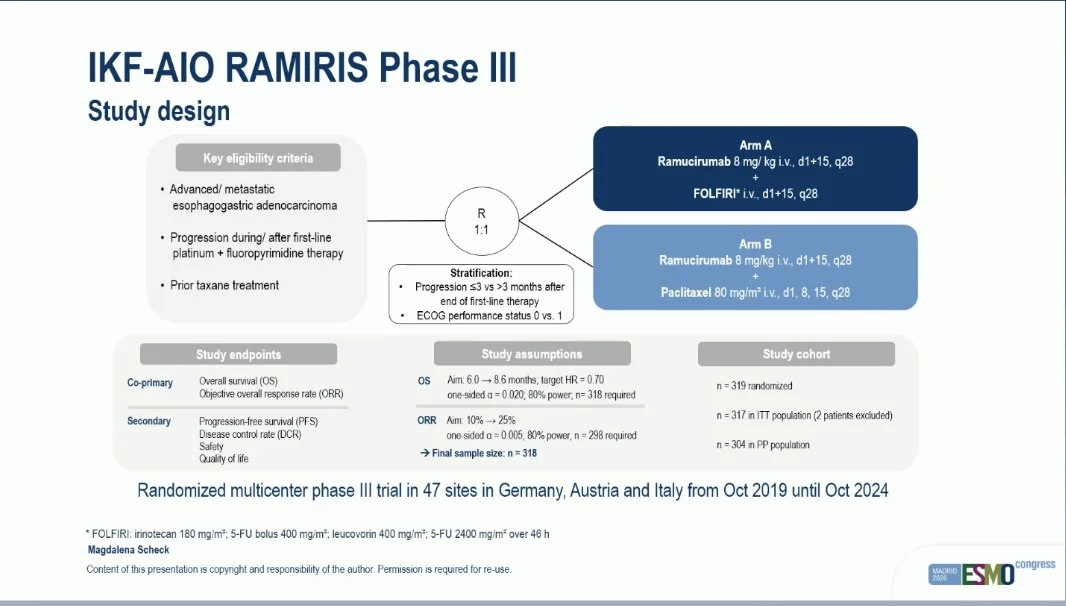
RAMIRIS: FOLFIRI Plus Ramucirumab as Second-Line Therapy in mGEA
“FOLFIRI plus ramucirumab vs paclitaxel plus ramucirumab as 2L therapy for taxane-pretreated patients with mGEA–Final results of the phase III IKFs602/AIO RAMIRIS Study.
- ORR: 25 vs 23%
- mPFS: 5.5 vs 3.7 mo
- mOS: 8.7 vs 7.5 mo
- neg. study, but FOLFIRI + Ram appears reasonable option.”
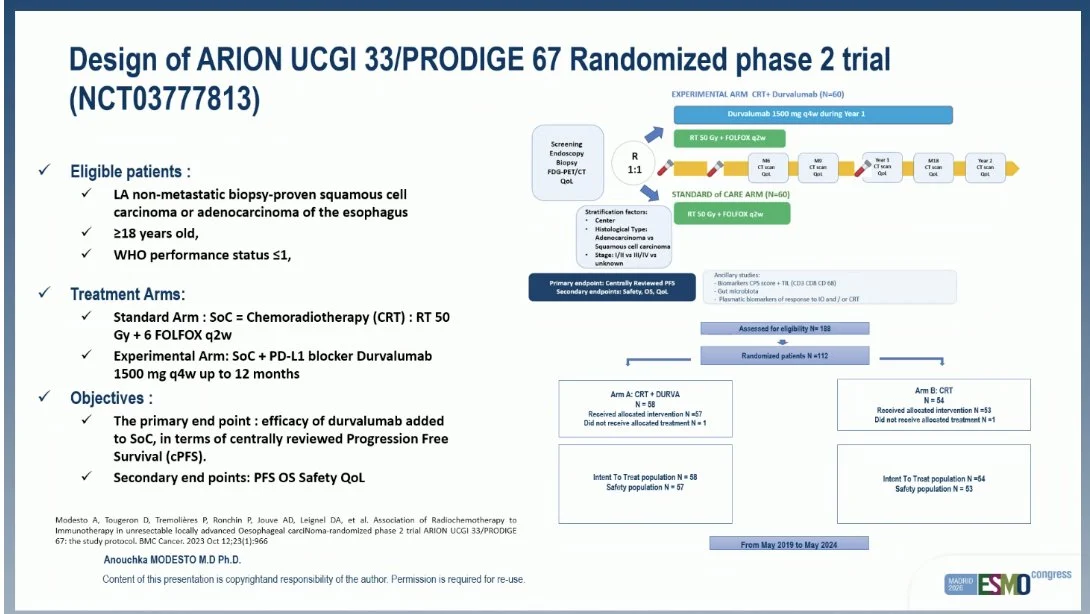
“ARION PRODIGE 67 phs 2 trial: Durvalumab plus definitive chemoradiotherapy vs definitive chemoradiotherapy in patients with locally advanced esophagus carcinoma.
- ORR: xx vs xx%
- 1yr-PFS: 50.5 vs 48.9%
- 1yr-OS: 75 vs 67%
- No benefit for addition of Durva.”
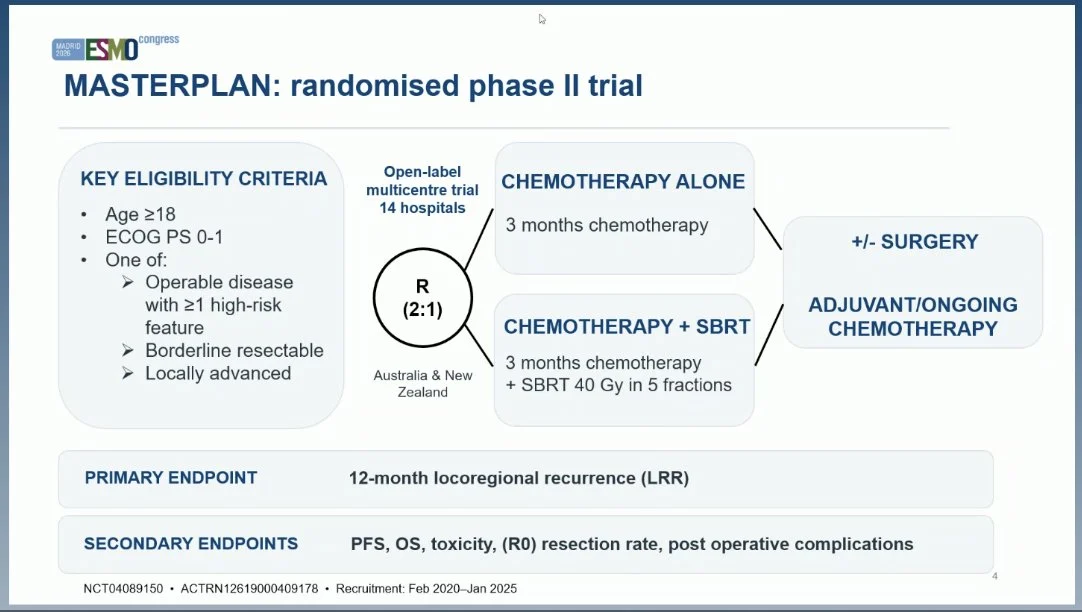
“AGITG MASTERPLAN ph II study: mFOLFIRINOX ± SBRT in patients with high risk, borderline resectable or locally advanced PDAC.
- Local recurrence: 20 vs 52%
- mPFS: 11.3 vs 6.3 mo
- mOS: 22 vs 14 mo
- Provides evidence for SBRT.”
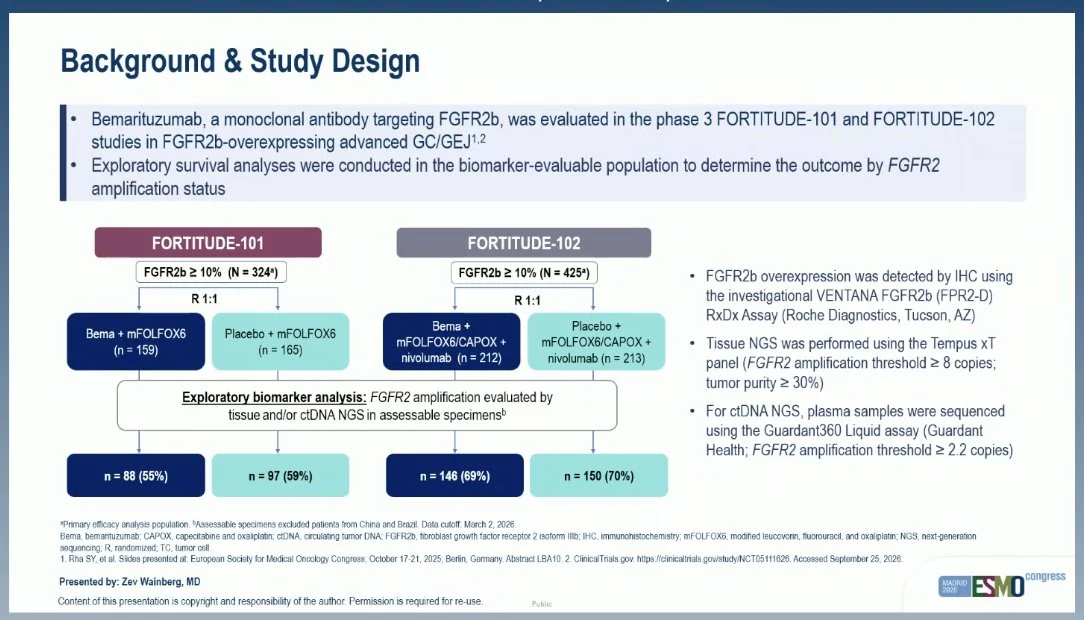
Bemarituzumab Shows OS Benefit in FGFR2-Amplified Gastric Cancer
“Efficacy of bemarituzumab in GC/GEJ by FGFR2 amplification status: Exploratory analysis from FORTITUDE-101 and -102.
- Amplification of FGFR2 in 16 -19%
- OS benefit in FGFR2 Amp pts for bema with & without Nivo
- FGFR2 Amp negative prognostic, potentially predictive for FGFR2.”
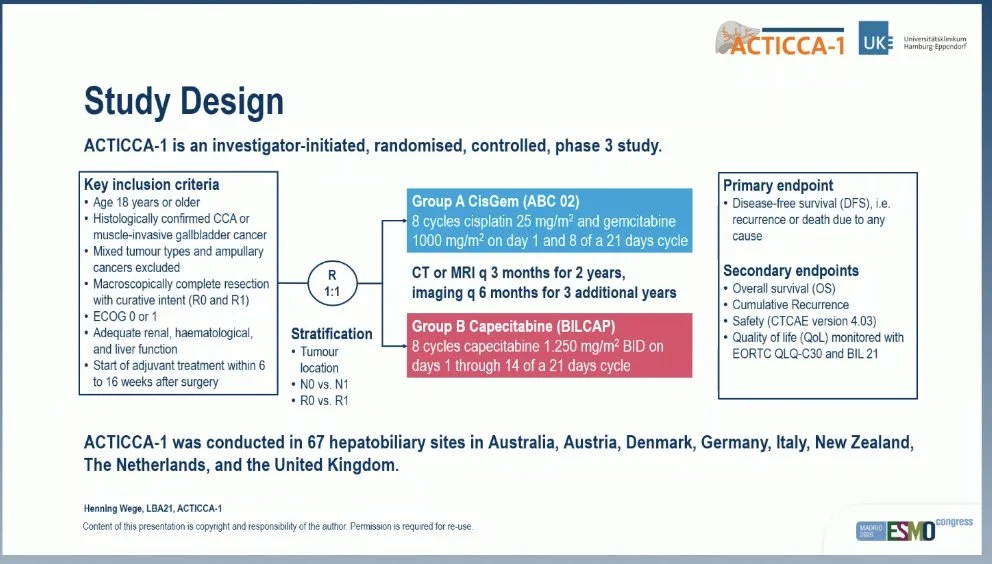
“ACTICCA-1 trial: Adj. GemCis vs standard of care after curative intent resection of BTC
- DFS at 2yrs: 52 vs 44%
- mDFS: 23.3 vs 20.6
- mOS: 58 vs 48 mo
- expected toxicity for the doublet
- Trend for OS benefit, not an option for all, but may be considered as option for selected patients.”
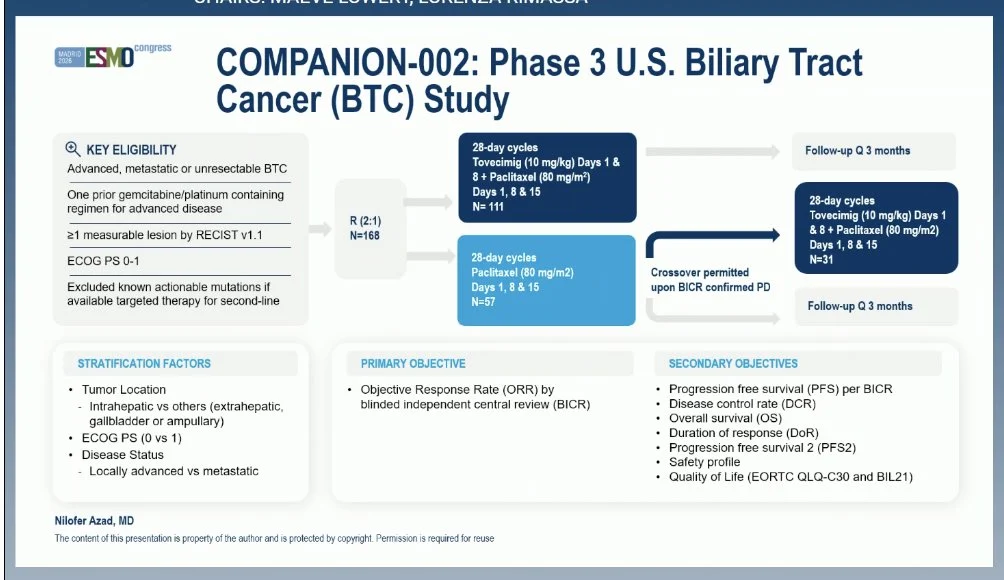
Tovecimig Shows Activity in Previously Treated Biliary Tract Cancer
“A randomized trial of paclitaxel ± tovecimig in previously treated patients with advanced biliary tract cancer.
- ORR: 18 vs 5.3%
- mPFS: 4.7 vs 2.6 mo
- mOS: 8.9 vs 9.4 mo
- Active drug, but no OS benefit in 2nd line, could be explored in 1L.”
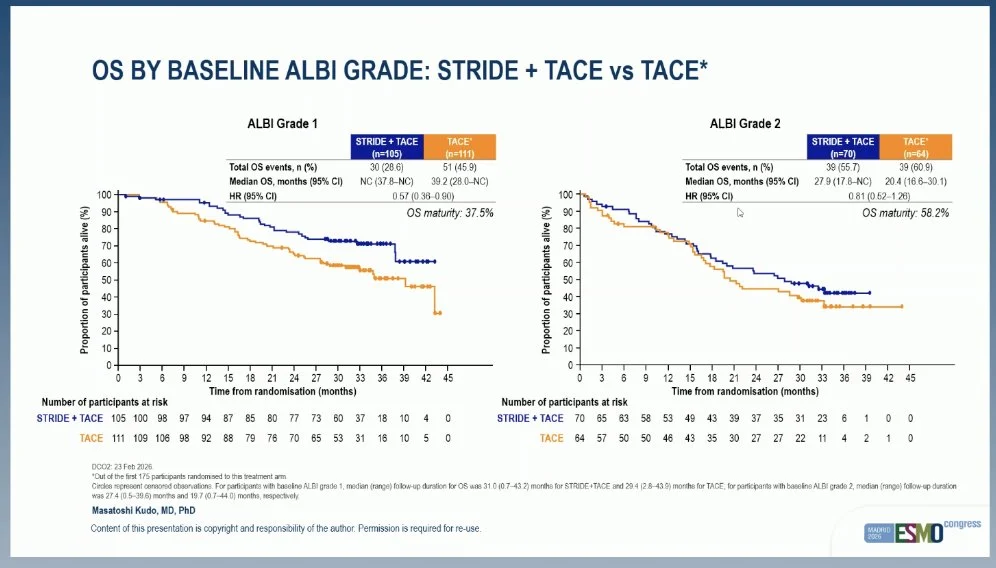
EMERALD-3: STRIDE Shows an OS Signal in ALBI 1 HCC Patients
“Liver function trajectory & post-progression outcomes in the pts 3 EMERALD-3 study of STRIDE ± Lenva + TACE in HCC
- liver function maintained
- similar subsequent therapies
- No overal OS benefit, but interesting OS signal for STRIDE in ALBI 1 patients.”
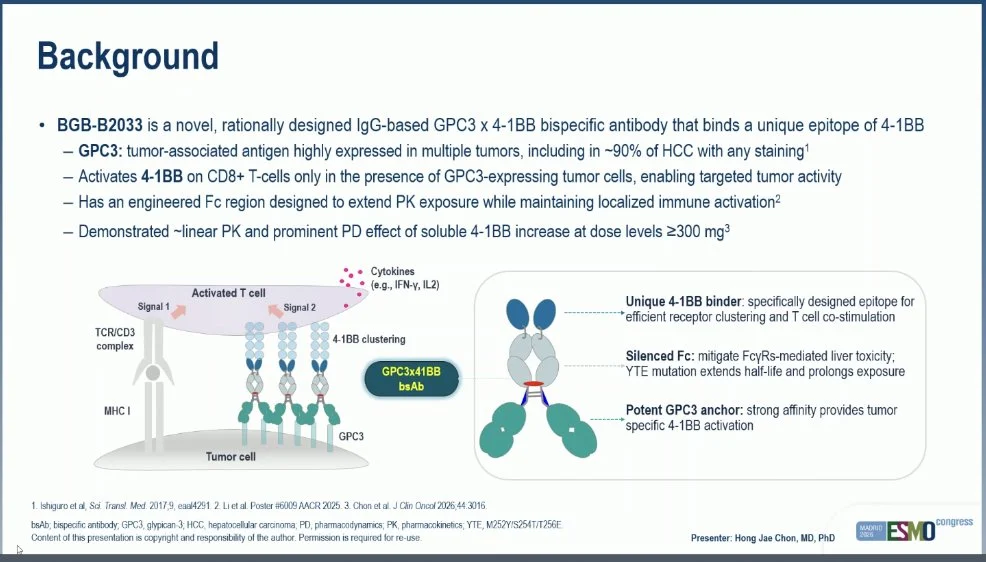
“Phase I study of BGB-B2033 (GPC3 x 4-1BB bispecific AB): Dose optimization and escalation update in advanced HCC
- ORR: 30%
- manageable safety
- very promising agent, looking forward to see combination with ICI.”
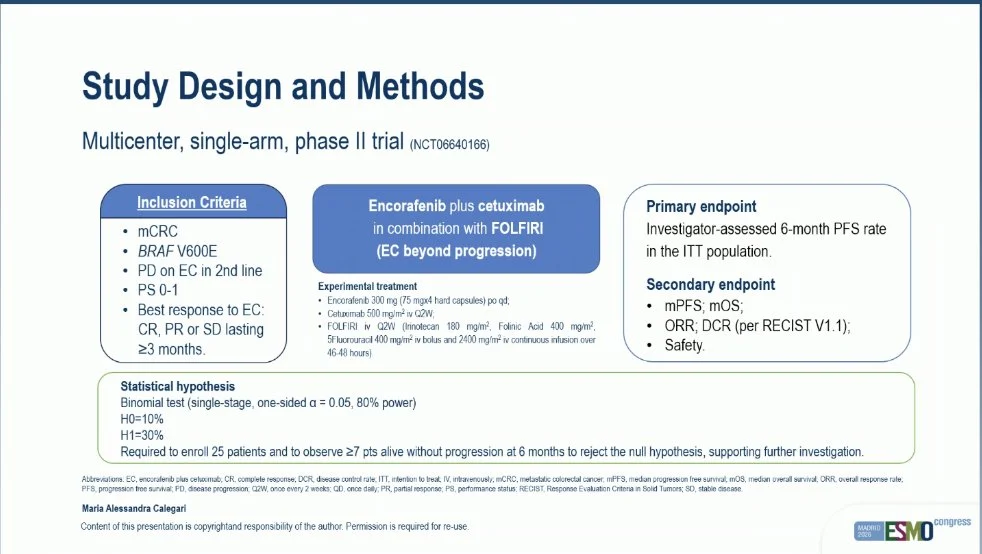
ECLYPse: Encorafenib Beyond Progression in BRAF V600E mCRC
“Encorafenib plus cetuximab beyond progression in combination with FOLFIRI in BRAF V600E mCRC progressing on EC: Results from the ECLYPse phase II trial
- mPFS: 7.1
- mOS: NR
- ORR 15%
- Interesting signal to continue EC, more translational data would be great.”
TRIDENTE: BRAF-Targeted Rechallenge in mCRC
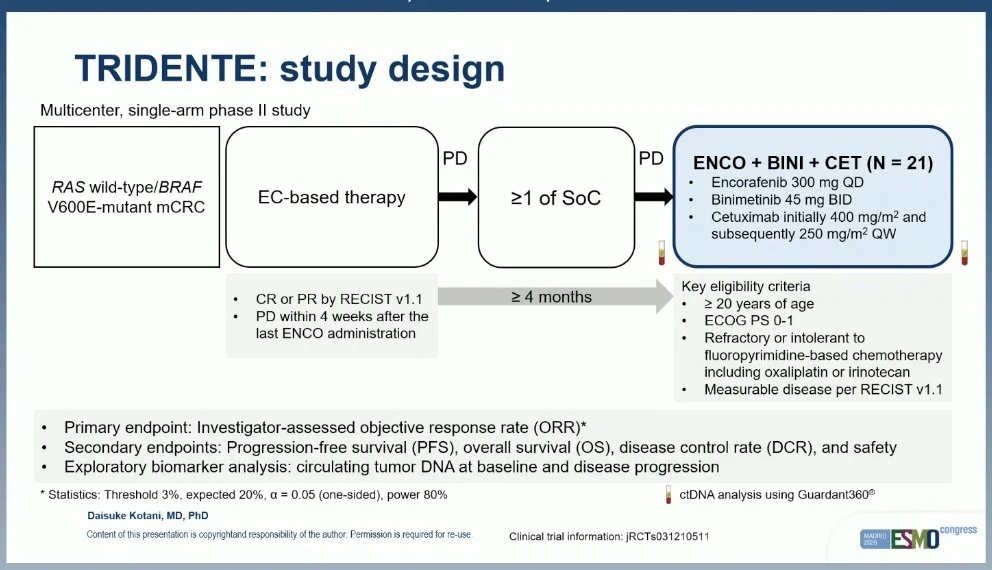
” TRIDENTE: A phase II study of rechallenge with ENCO, BINI, and CET in BRAF V600E-mutant mCRC
- mPFS: 2.8 mo
- mOS: 9.6 mo
- ORR: 19%
- Supports biomarker-driven re-challenging concepts for
- therapies in CRC.”
QTX3034 Shows Promise in KRAS G12D-Mutant mCRC
“Preliminary clinical results of QTX3034, an oral G12D-preferring KRAS inhibitor with cetuximab ± mFOLFOX6 in KRASG12D-mCRC
- ORR: 25% vs 50%, DCR: 75 vs 90%
- no new safety signals
- Supports the combination with CTx.”
Temab-A Plus Bevacizumab Shows Promise in Refractory CRC
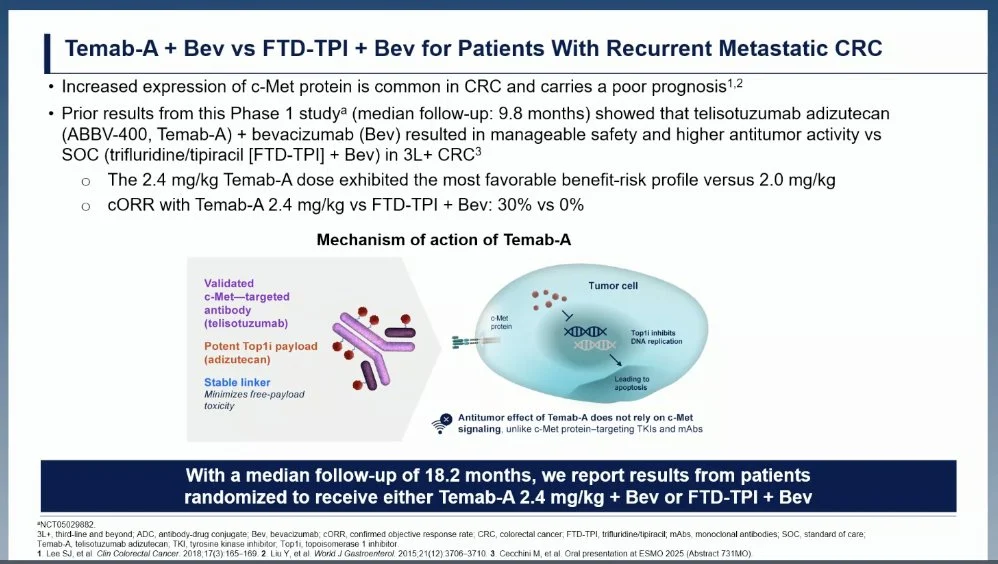
“Long-term follow-up of Temab-A with Bev vs SOC in 3L+ CRC: Updated results of a ph 1
- mPFS: 6.8 vs 4.2 mo
- mOS: 14.7 vs 10.2 mo
- manageable safety
- Promising, ph-3 ongoing.”
PRABITAS: Biweekly Trifluridine/Tipiracil Maintains Efficacy With Less Toxicity
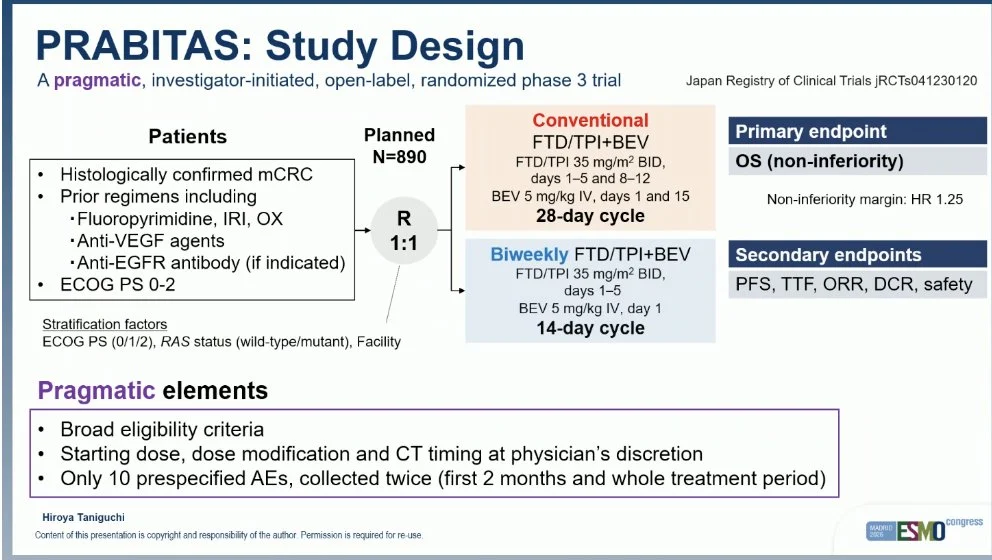
“Biweekly vs conventional trifluridine/tipiracil plus bevacizumab for refractory mCRC: The pragmatic ph 3 PRABITAS trial
- ORR: 2 vs 2%
- mPFS: 3.9 vs 3.9 mo
- mOS: 10.3 vs 11.3 mo
- similar efficacy, less toxicity, supports biweekly schedule.”
Final OS results from CheckMate 8HW
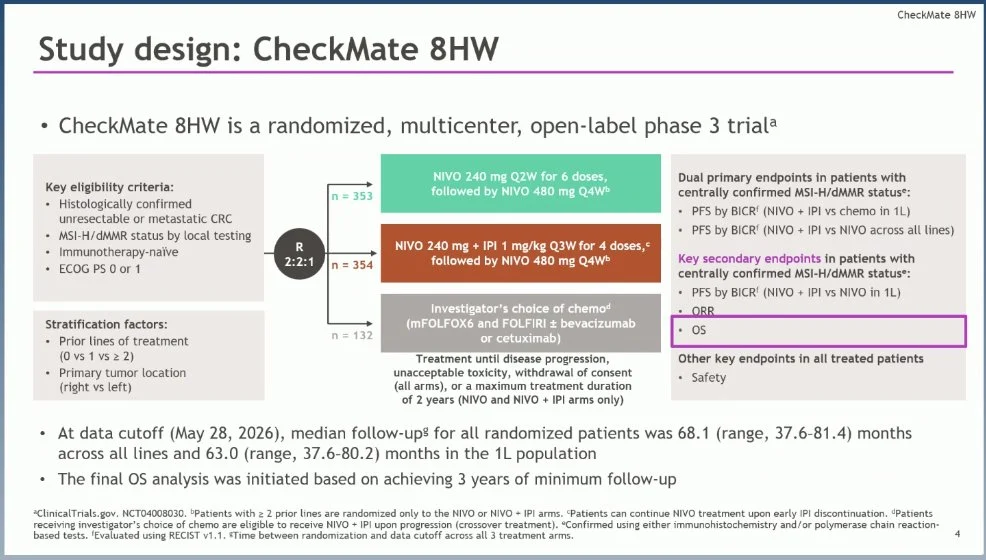
“Final OS results from CheckMate 8HW: Nivo plus ipi vs nivo or CTx in MSI-H/dMMR mCRC.
- ORR 72% 58%
- mOS: NR –> NI vs N HR 0.66
- 5-yr for Nivo/Ipi: 77%
- Convincing, Nivo + Ipi as SOC in 1L MSI CRC.”
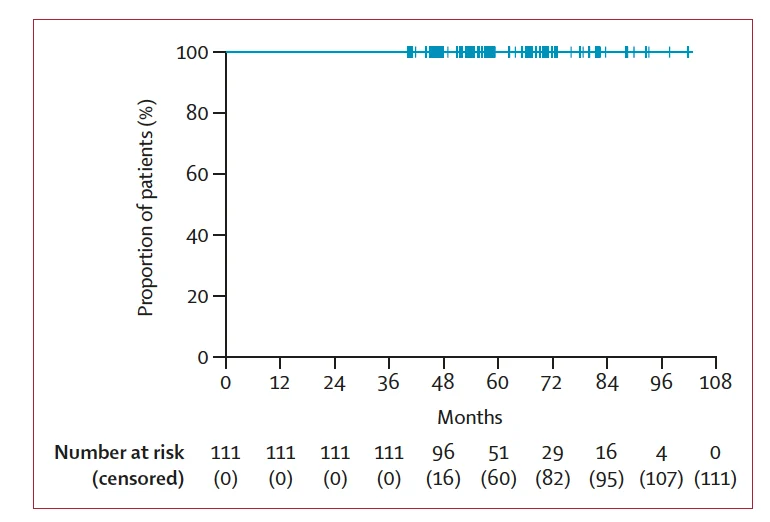
NICHE-2: 100% DFS and OS in dMMR Colon Cancer
“DFS and OS after neoadjuvant immunotherapy in mismatch repair-deficient colon cancer in the Netherlands: results of the single-arm, multicentre, phase 2, NICHE-2 trial.
- 100% DFS
- 100% OS
- does not need any comment.”
Stay informed on the latest research, insights, and discussions from ESMO 2026 with OncoDaily.
Check out: Oncologists Discuss NATALEE Trial