
Arndt Vogel, Full Professor at Princess Margaret Cancer Centre, shared on X:
“The ESMO Scale for Clinical Actionability of Molecular Targets, version 2 (ESCAT v2): an evidence-based framework for ranking alterations as actionability and resistance biomarkers in precision oncology.
Helpful for interpreting actionability and decision making.”
Title: The ESMO Scale for Clinical Actionability of Molecular Targets, version 2 (ESCAT v2): an evidence-based framework for ranking alterations as actionability and resistance biomarkers in precision oncology
Authors: A. El Helali, C. Cardone, N. Coleman, J.R. Beal, M.V. Cruz-Ordinario, E. Kocakavuk, M. K-l. Chiu, D. Thomas, C. Turnbull, F. Meric-Bernstam, M.F. Mosele, D. Chakravarty, R. Dienstmann, D. Tamborero, H.E.G. Russnes, M. Kordes, H.H.F. Loong, A. Stenzinger, J. Rueter, D. Martins-Branco, G. Pentheroudakis, J. Mateo, C.B. Westphalen.
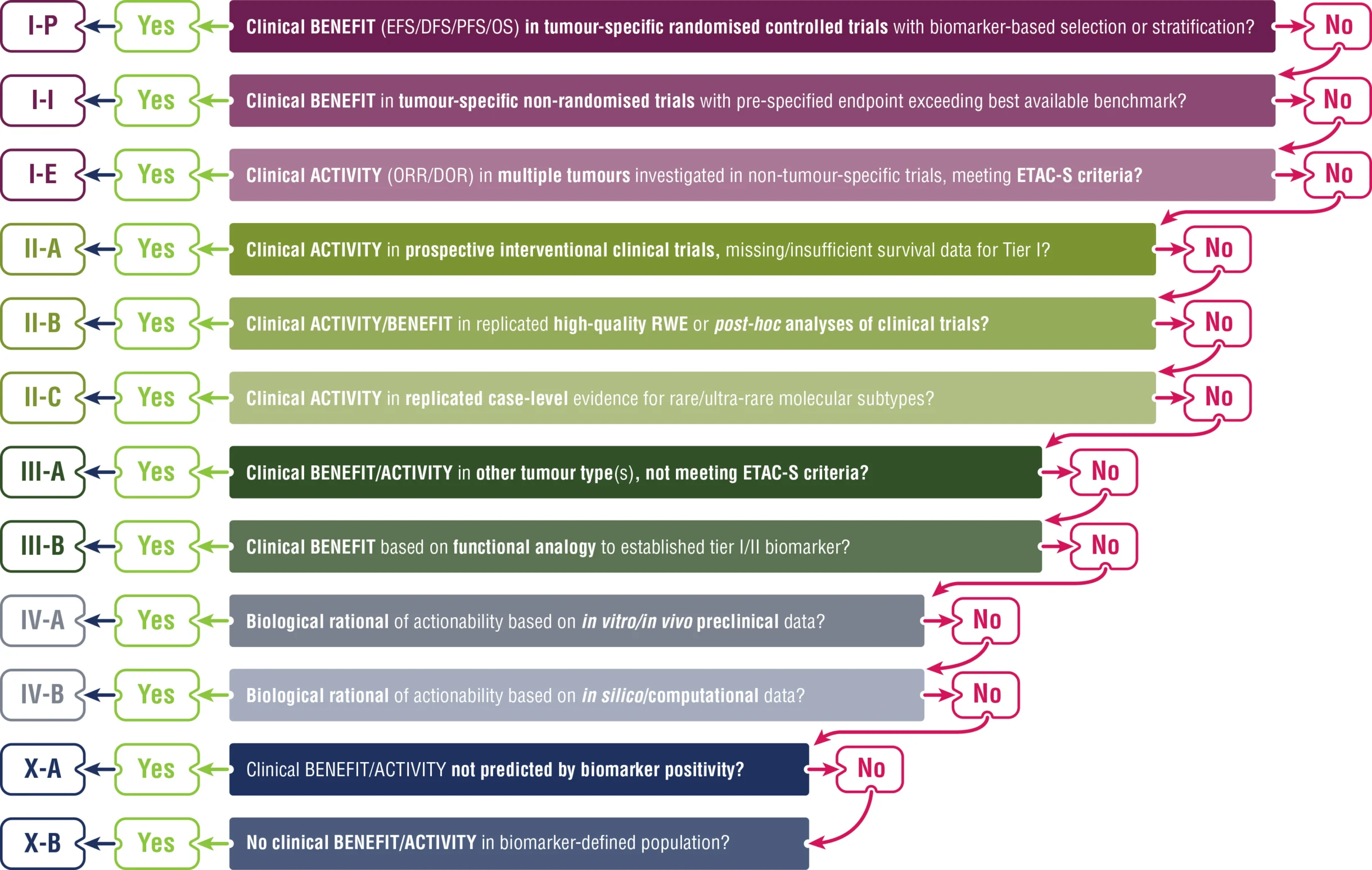
What is ESCAT v2?
ESCAT v2 is the updated, second version of this framework, designed to address the increasing volume and complexity of genomic data in precision oncology. Beyond categorizing actionability biomarkers (predictive of response to targeted therapy), ESCAT v2 expands guidance to incorporate resistance biomarkers and refined tiering systems.
Tier Classification
ESCAT ranks genomic alterations based on clinical evidence:
- Tier I matches are ready for routine use supported by prospective trial benefit in the specific tumor type;
- Tier II targets show antitumor activity in early phase trials;
- Tier III alterations have proven actionability in other tumor types;
- Tier IV matches rely primarily on preclinical data;
- Tier V alterations require combinatorial strategies to overcome resistance;
- and Tier VI represents alterations currently lacking actionable evidence.
How ESCAT is Applied in Practice
ESCAT serves as a practical bridge between Next-Generation Sequencing (NGS) data and clinical treatment decisions:
- Integration into NGS Diagnostic Reports: Pathology and genomics laboratories utilize ESCAT tiers in molecular reports so treating oncologists can immediately identify high-tier alterations (e.g., Tier I or II) vs. variants of uncertain or low clinical significance.
- Molecular Tumor Board (MTB) Decision-Making: MTBs use ESCAT to evaluate next-generation sequencing reports, prioritizing targeted therapies for patients harboring Tier I alterations in routine practice or guiding enrollment into relevant clinical trials for Tier II–IV alterations.
- Clinical Practice Guidelines and Reimbursement: ESMO clinical practice guidelines explicitly embed ESCAT levels to define which genomic testing panel (routine NGS vs. expanded panels) is recommended for specific cancer types, assisting health systems and insurers in making evidence-based reimbursement decisions.
- Managing Therapeutic Resistance: With ESCAT v2, clinicians can systematically classify resistance mechanisms (e.g., acquired mutations driving treatment failure) to select appropriate next-line therapies or combination regimens.
ESCAT v2 provides a comprehensive, evidence-graded framework for interpreting actionability and resistance biomarkers in cancer, enabling more nuanced communication among clinicians, patients, regulators, and researchers while preserving a clear directive to act when evidence supports patient benefit.
You can also read: Noha Rashad at COGC 2026: Precision Medicine in the Best and Worst of Times – Hope, but Not for All