Key takeaways
- Finding an actionable mutation is only useful if the patient can access the drug.
- Precision oncology in community practice starts with choosing the right test, not always the broadest one.
- Targeted therapies are expanding quickly, but infrastructure, cost, and workforce gaps still limit their reach.
- The field may be in its “best of times,” but unequal access means many patients are still living through the worst of them.
At the Community Oncology Global Congress (COGC 2026), organized by OncoDaily, Noha Rashad, Lecturer of Medical Oncology at the Faculty of Medicine, Suez University in Egypt, explored how precision medicine in hepatobiliary and pancreatic cancers can move from molecular discovery into community practice.
The opportunities are growing, but access to testing, targeted drugs, reimbursement, and specialist expertise can still determine whether those advances reach patients.
As Rashad put it through Charles Dickens:
“It was the best of times, it was the worst of times, it was the age of wisdom, it was the age of foolishness, it was the spring of hope, it was the winter of despair, we had everything before us, we had nothing before us…” – Charles Dickens, A Tale of Two Cities
From Molecular Profiles to Precision Treatment
“As we all know, the molecular profile of pancreatic and biliary tract cancers is very complicated and also rich in actionable mutations.
In intrahepatic cholangiocarcinoma, we have mutations such as IDH1 and FGFR2 rearrangements and fusions, which can be targeted with specific drugs, with clinical benefits seen in both second- and first-line treatment.
For extrahepatic cholangiocarcinoma, we can add the HER2 family as well.
For pancreatic carcinoma, we have the dominant KRAS mutation, which is present in around 90% of pancreatic adenocarcinoma patients, as well as BRCA mutations.
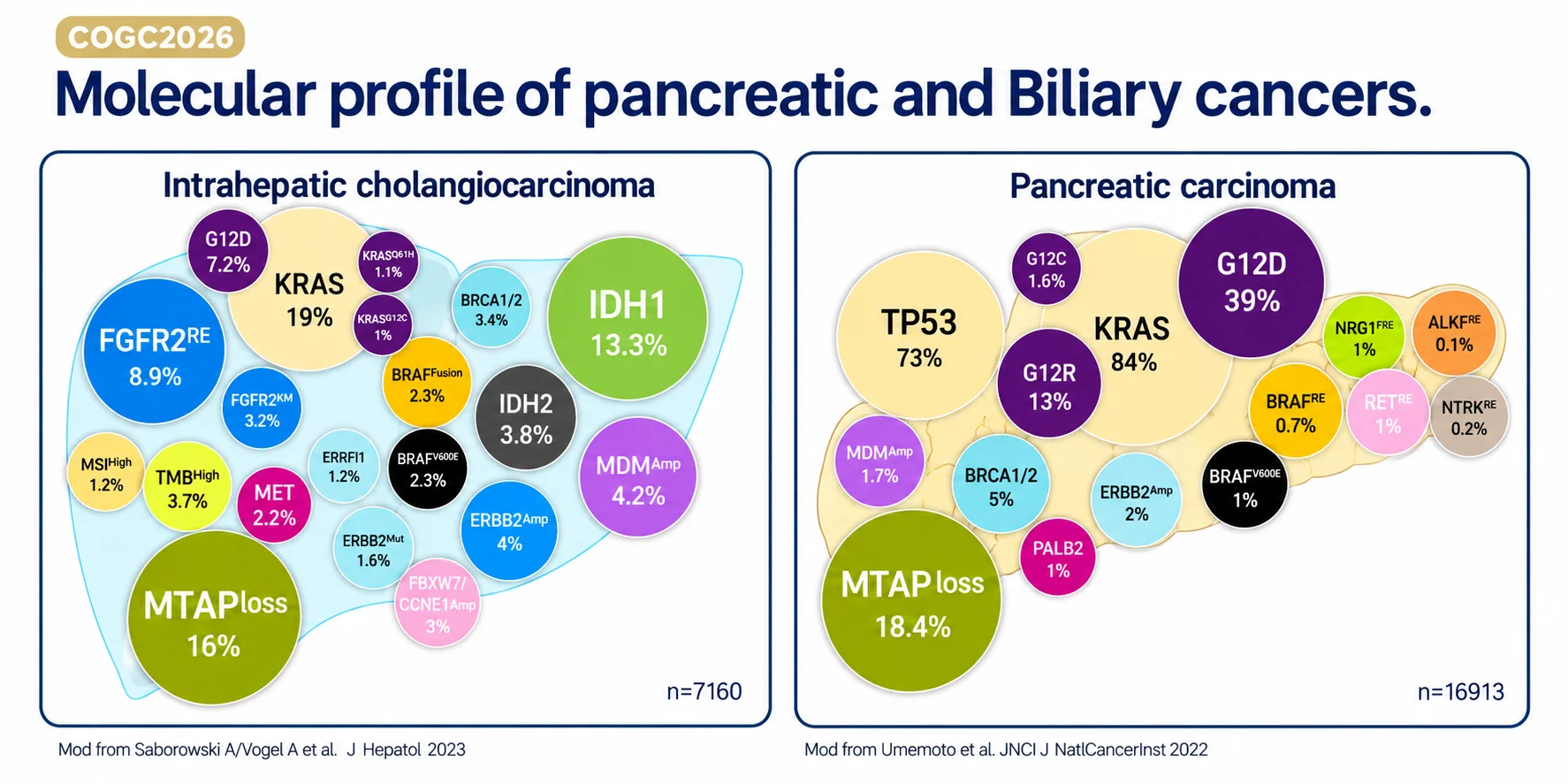
Unfortunately, for liver cancer, until now, we do not have a specific biomarker that may guide treatment.
This richness and complexity of the molecular profile has been reflected in the treatment guidelines for both diseases. For biliary tract tumors, molecular profiling is recommended by the ESMO guidelines before initiating treatment in patients with locally advanced and advanced or metastatic disease.
Patients with IDH1 mutations are candidates to receive ivosidenib for metastatic disease after progression on first-line treatment. Patients with FGFR fusions or rearrangements are candidates for treatment with drugs such as pemigatinib as second-line treatment as well.
However, this might change, and the addition of pemigatinib may be seen during the next few months based on the results of the FIGHT-302 study. This study tested pemigatinib as monotherapy in the first-line treatment of metastatic biliary tumors compared with the standard of care, chemotherapy with gemcitabine and cisplatin.
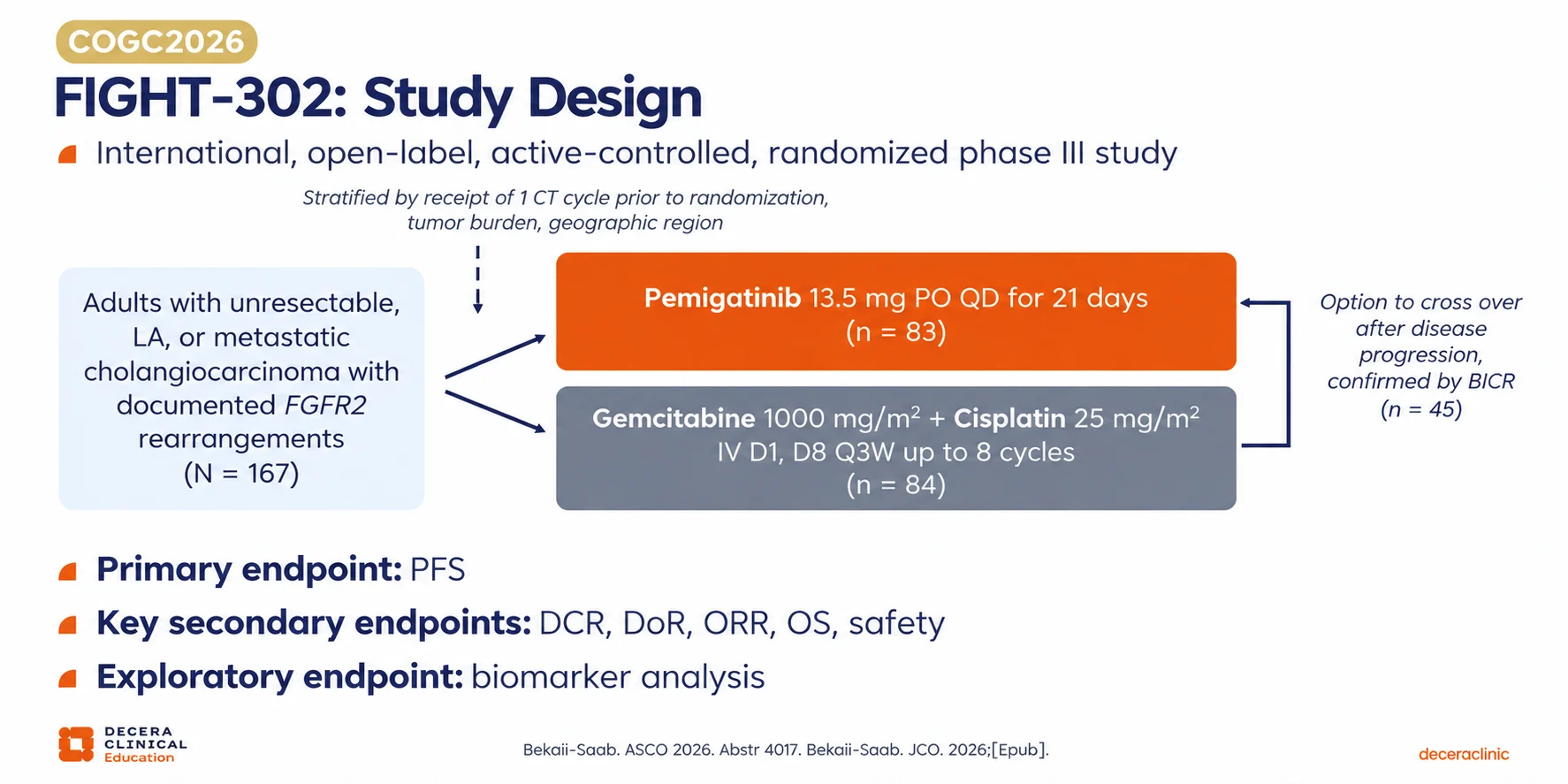
The primary endpoint was progression-free survival. The study met its primary endpoint, with an improvement in progression-free survival in patients who received pemigatinib.”
When RAS Became a Druggable Target
“Until about two or three weeks ago, the precision medicine guidelines in metastatic pancreatic cancer suggested testing for BRCA mutations, MSI status, and NTRK fusions for the possibility of adding precision-guided treatment for pancreatic cancer patients.
Olaparib maintenance after response to first-line platinum-based chemotherapy in patients with metastatic pancreatic cancer has been one of the most widely studied targeted approaches.
However, after the release of the results of the RASolute 302 study, this became revolutionary because, for the first time, we could see that RAS mutation is not only a druggable target, but that targeting it has also translated into meaningful benefit for patients.
The study included patients who had progressed on one prior fluoropyrimidine- or gemcitabine-based regimen in the metastatic setting, with documented tumor RAS mutation status by local testing.
Patients were stratified according to liver metastases at baseline, ECOG status, and tumor RAS status, including RAS G12D/V and patients with no RAS mutation identified.
The study tested daraxonrasib as a single agent compared with the investigator’s choice of chemotherapy.
The primary endpoints were overall survival and progression-free survival.
During the last ASCO, the results of the RASolute 302 study were released, and there was almost a doubling of median overall survival in this population of patients with metastatic pancreatic cancer, which usually carries a dismal prognosis.
Median overall survival in the experimental arm with daraxonrasib was 13.3 months compared with 6.7 months for patients who received chemotherapy.
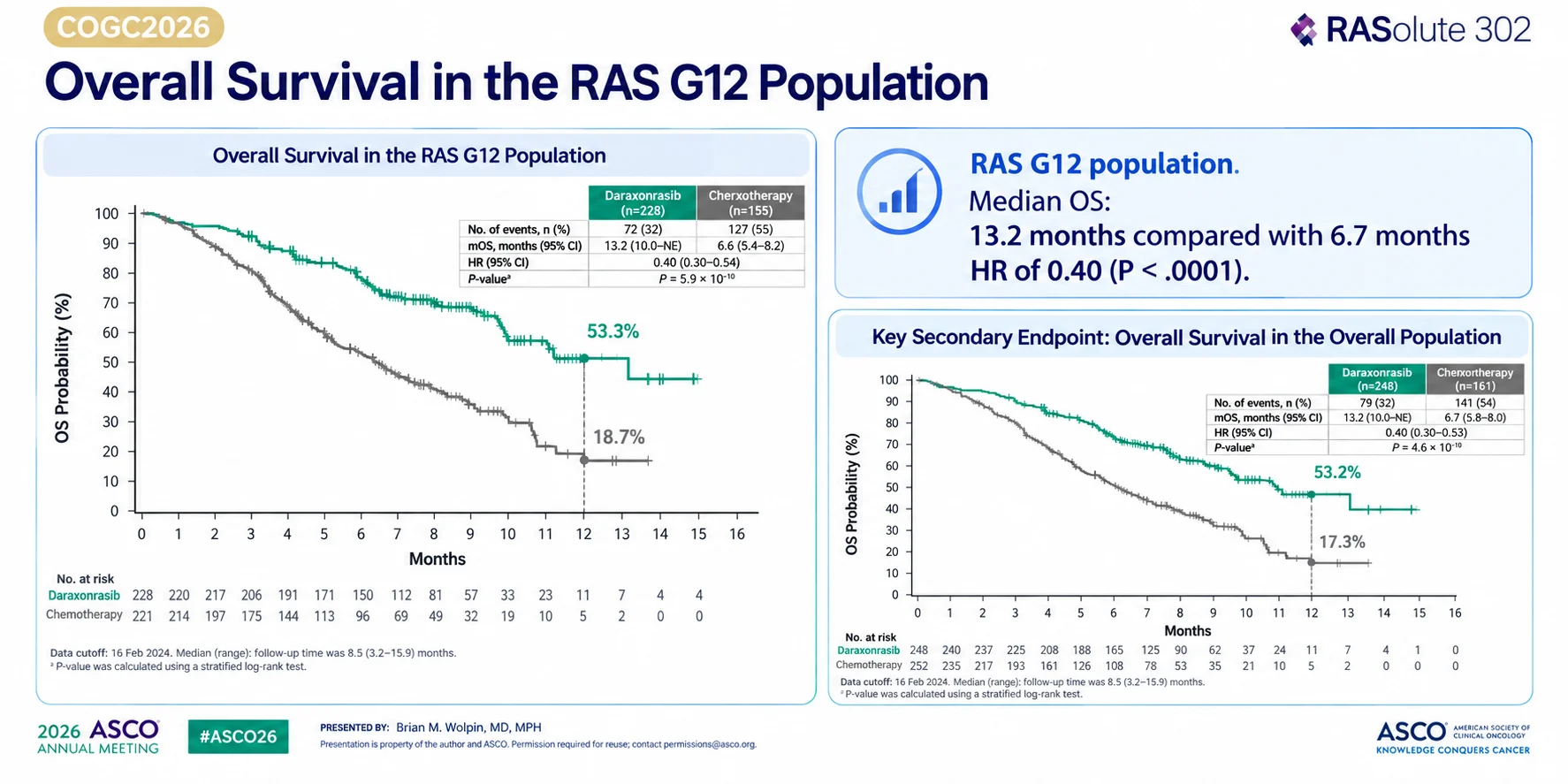
The overall survival benefit was seen as well in the overall population, even in patients with unknown RAS mutational status.
Based on that, about two weeks ago, the ESMO guidelines added daraxonrasib as a treatment option in patients with RAS mutations after progression on first-line treatment. And just a few hours ago, daraxonrasib also gained FDA approval for use in the same indication.”
Taking Precision Medicine Into Community Oncology
“So, as we can see, we have targetable mutations. We have new drugs and new agents that seem to be effective and have shown efficacy in clinical trials.
However, the question is: how do we take precision medicine into community oncology practice, especially in a low- and middle-income country like Egypt?
A report looking at the barriers to expanding access to molecular oncology testing in Africa and low- and middle-income countries showed that less than 20% of African national cancer centers have routine access to immunohistochemistry testing.
More than 70% of Africa’s NGS platforms are located in just five countries, including Egypt.
Together with the high burden and the projected rise in cancer incidence across sub-Saharan Africa – around a 90% increase – we can see that we are facing a very challenging situation.
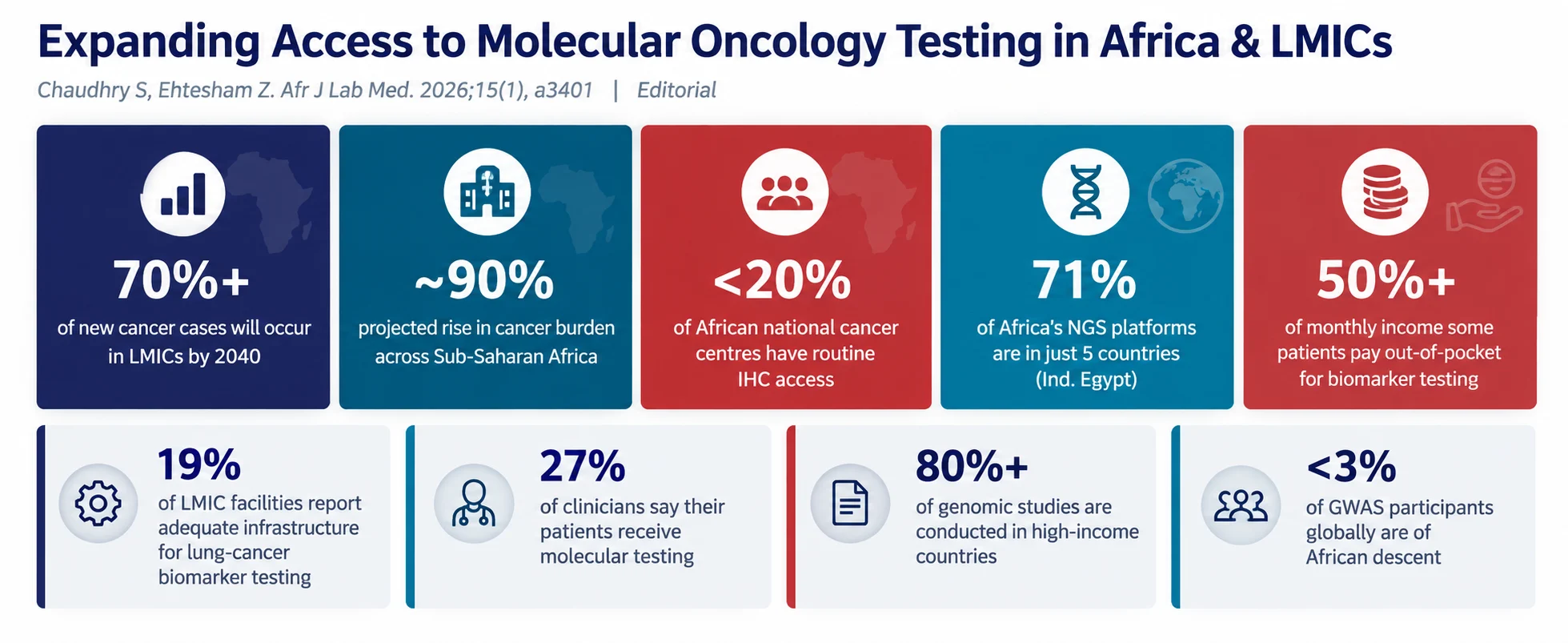
The key access barriers can be summarized as lack of infrastructure, financial barriers, and workforce shortages, especially molecular pathologists, genomic scientists, and bioinformaticians.
The emerging solutions mainly depend on centralizing testing and creating centers of excellence to overcome these barriers, as well as building capacity and training personnel working in the precision medicine field.”
NGS or Targeted Panels?
“The first step in practicing precision medicine is selecting the proven testing method.
As we may all be familiar with this comparison, NGS versus a targeted gene panel can be compared to a Ferrari versus an ordinary car. The Ferrari, or NGS, has its advantages for sure. It scans the exome or genome and thousands of genes at once. It can uncover novel and rare mutations.
A focused or targeted gene panel looks at a selected group of genes linked to a specific disease. It is faster, simpler, and less costly than broad NGS.
The choice of test should be guided by the available evidence and guidelines, particularly the ESMO ESCAT framework. For example, BRCA1 and BRCA2 testing in pancreatic cancer and IDH1 testing in advanced cholangiocarcinoma are supported by strong evidence, while FGFR, HER2, BRAF, KRAS, PALB2, and NRG1 may also be relevant depending on the disease and level of evidence.
But before ordering any molecular test, we should ask: Is it going to be out-of-pocket? Will it be covered by insurance? Or will one of the NGOs working in the healthcare system provide support to the patient?”
What Happens After a Target Is Found?
“Let us take olaparib as a case study for how things work in a community medicine setting such as my institution.
First, we had the results of the POLO study, which evaluated olaparib as maintenance treatment after platinum-based chemotherapy. Median progression-free survival was 7.4 months with olaparib compared with 3.8 months without maintenance treatment, although this did not translate into an overall survival benefit.
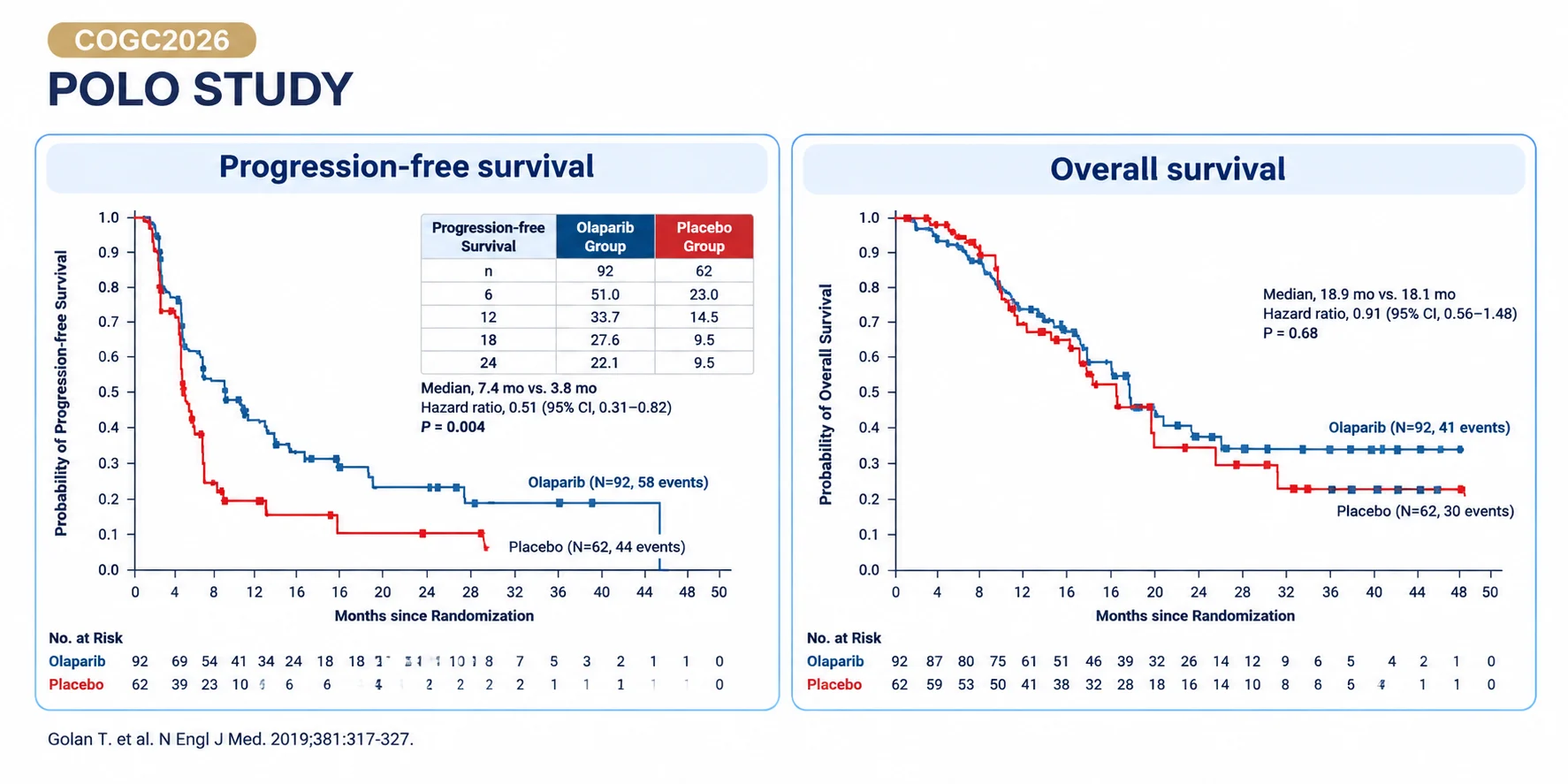
When we look at the ESMO Magnitude of Clinical Benefit Scale, olaparib is considered a non-curative treatment with a relatively limited benefit, mainly in progression-free survival.
Because of that, and because there was no overall survival benefit, olaparib maintenance is not reimbursed by the insurance system at my institution and is also not supported by the NGOs.
As a reflection of this, if the drug is not going to be available to patients, pharmaceutical companies as well as insurance companies are no longer supporting the testing.
So we can see that the cycle of practicing precision medicine is highly affected by the availability of the drug and the reimbursement policies surrounding the drugs that target these mutations.”
A Step-by-Step Path to Targeted Treatment
“We can summarize the precision-testing decision-making algorithm in the community setting where we are supposed to practice precision medicine.
First, we identify the patient who is a candidate for precision testing.
Then we look at whether the targeted drug is available, approved, and present in our market.
If the drug is accessible and available, we move to the next step and perform the precision testing as suggested by the study that used the drug, either NGS or a targeted gene panel.
If the result becomes positive in favor of a possible drug benefit, we go in one of two directions.
- We pursue access through governmental or private insurance coverage
- We refer the patient to one of the non-governmental organizations, charity hospitals, or patient-support programs that may offer access to the targeted drug.
At these institutions, whether insurance institutions or NGOs, the request for each patient is evaluated on many levels: the economic level, the social evaluation of the patient’s situation, and also the clinical benefit assessment using, as we have seen before, the ESMO Magnitude of Clinical Benefit Scale.
If the drug is considered beneficial and the economic and social evaluation supports offering the drug to the patient, then the institution – whether insurance or an NGO – can endorse reimbursement and dispense the targeted drug, followed by treatment monitoring and follow-up.
If any step of this pathway is not available or not adequate, the patient goes back to traditional chemotherapy.”
Building the Workforce and Sharing Expertise
“One of the main barriers we also have is workforce training and education.
Through the C.A.I.R.O Journal Club or the Critical Appraisal Initiative for Research in Oncology, we have organized two major precision oncology events in Egypt over the past two years, one in 2025 and the latest in 2026, about a month ago.
They focused on many aspects of precision medicine and precision oncology practice: testing, terminology, and the benefits in specific tumor and disease entities.
We were also focusing not only on the benefit, but on toxicity and how to manage the toxicity of targeted agents as well.
One of the main opportunities we are currently offering is a virtual Molecular Tumor Board held once monthly, with access from across the MENA region. Cases are submitted by participants, and discussions are held by experts from Egypt and from across the MENA region.
In this way, we can disseminate the culture, the concepts, and the best practices of precision oncology throughout the MENA region.”
The Best of Times, the Worst of Times
“My presentation comes to an end, and I would love to quote Charles Dickens from the opening of A Tale of Two Cities: ‘It was the best of times, it was the worst of times.’
Because now we have access to knowledge, we have access to testing, and we have a lot of targeted drugs that may affect and improve the survival of patients in many ways.
However, access to these drugs, and even access to testing, is limited in many countries.
There are still a lot of barriers that I hope we can overcome during the next few years.”
Written by Eliz Baloyan, MD, Features Writer and Editor at OncoDaily and CancerWorld