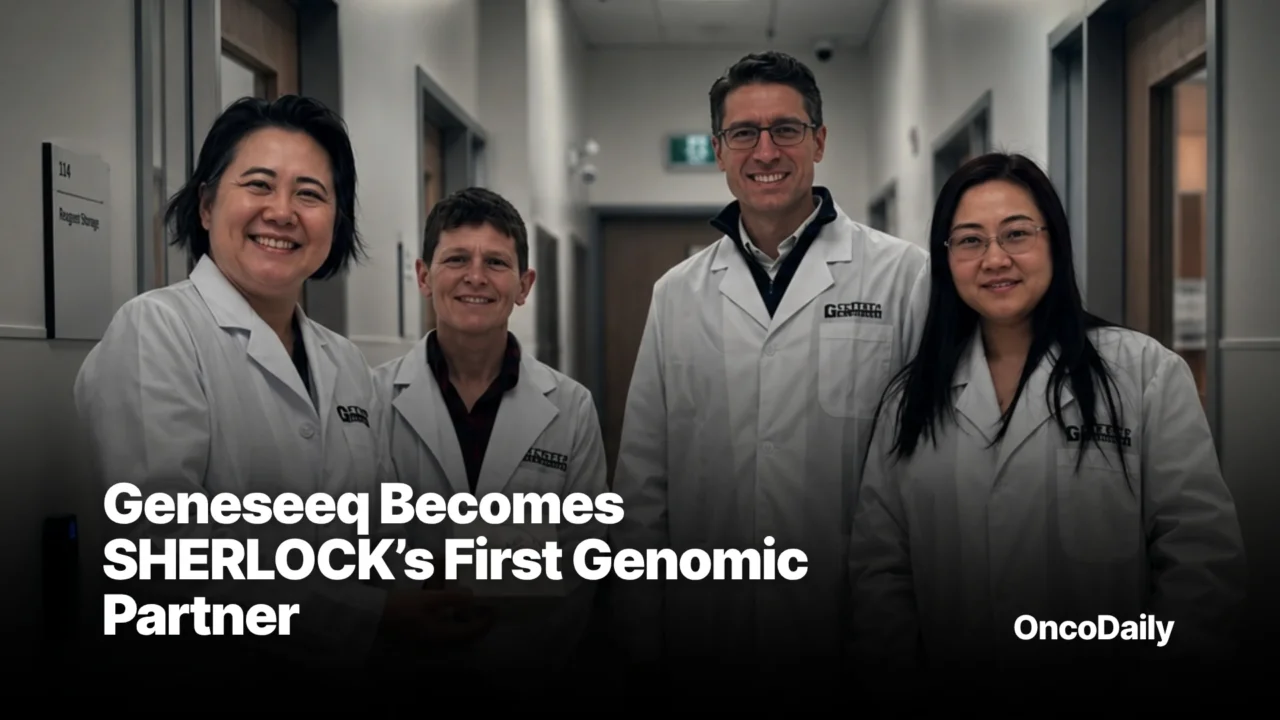
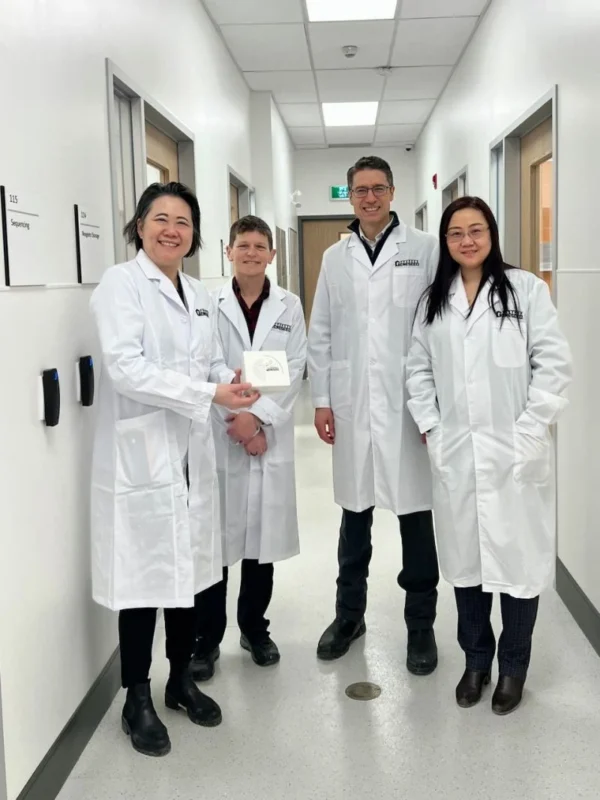
Geneseeq Technology Inc., also known as Geneseeq Canada, has been named the first commercial genomic testing partner in the SHERLOCK study, a large prospective cancer genomics and molecular residual disease research initiative led by investigators at University Health Network’s Princess Margaret Cancer Centre.
The collaboration will support genomic profiling, molecular residual disease monitoring, and precision oncology translational research in Canada. Geneseeq Canada is expected to provide genomic testing and molecular monitoring services for approximately 1,000 patients participating in the SHERLOCK study.
A Major Prospective Cancer Research Platform
The SHERLOCK study, registered on ClinicalTrials.gov as NCT07524114, is expected to enroll approximately 7,000 patients over five years. The study will include people with a broad range of solid tumours and hematologic malignancies.
Researchers will follow participants over time and analyze tumour tissue and blood samples to better understand treatment response, disease recurrence, and the evolution of cancer. The study will also examine how genomic technologies may contribute to future approaches to cancer monitoring and care.
By combining molecular findings with clinical outcomes, SHERLOCK aims to generate evidence about how cancer-related genomic signals change during and after treatment.
Genomic Testing for Approximately 1,000 Participants
Under the collaboration, Geneseeq technologies may be used for selected participants depending on the requirements of the study and the availability of appropriate samples.
For participants with solid tumours, baseline tumour tissue may be analyzed using GeneseeqPrime®, the company’s comprehensive genomic profiling assay. The testing is intended to characterize the molecular features of each participant’s cancer.
Longitudinal blood samples may also be evaluated using Shielding® Ultra, Geneseeq’s molecular monitoring technology. The assay is designed to track cancer-associated molecular signals over time with high sensitivity, using either information from matched tumour tissue or blood samples alone.
For patients with hematologic malignancies, genomic analysis may be performed using Hemasalus®, Geneseeq’s comprehensive genomic profiling assay developed for blood cancers.
Investigating Molecular Residual Disease
A central focus of SHERLOCK is molecular residual disease, commonly referred to as MRD. Molecular residual disease describes cancer-related material that may remain in the body after treatment, even when there is no visible evidence of disease using conventional clinical assessments.
Understanding whether cancer has been completely eliminated after potentially curative treatment remains an important challenge in oncology. Detecting persistent or recurring molecular signals could help researchers better understand which patients are at greater risk of relapse.
“One of the biggest challenges in cancer care is knowing whether curative treatment has truly eliminated cancer or whether the disease remains and may return,” said Dr. Lillian Siu, Clinician and Senior Scientist at UHN’s Princess Margaret Cancer Centre.
“Through SHERLOCK, we are following patients over time and combining genomic analyses with clinical outcomes to better understand treatment response, detect signs of recurrence earlier, and generate evidence that could help guide future approaches to cancer monitoring and care.”
Building Evidence for Future Precision Oncology Strategies
The SHERLOCK study is expected to produce important evidence regarding the biological and clinical significance of molecular residual disease.
Findings from the program may contribute to the development of future precision oncology strategies, biomarker research, and clinical trial design. The study may also clarify how genomic profiling and repeated blood-based molecular monitoring could be integrated into research programs evaluating cancer recurrence and treatment response.
The prospective design of the study will allow investigators to compare genomic findings with long-term clinical outcomes across multiple cancer types.
Strengthening Academic and Industry Collaboration
The partnership reflects the growing role of collaboration between cancer centres, healthcare systems, academic investigators, and genomic testing companies in advancing precision oncology research.
“Advancing precision oncology requires close collaboration between academic institutions, healthcare systems, and industry partners,” Dr. Siu said.
Dr. Xue Wu, CEO of Geneseeq Canada, described the partnership as part of the company’s continued commitment to supporting Canadian cancer research.
“Canada has played an important role in Geneseeq’s journey,” Dr. Wu said. “We are pleased to support Canadian-led cancer research through the SHERLOCK program and honoured to become its first commercial genomic testing partner.”
“Our participation reflects Geneseeq’s long-term commitment to advancing the scientific understanding of cancer genomics and MRD while supporting research that may ultimately benefit patients.”
Expanding Research Across Cancer Genomics
The SHERLOCK partnership is one of several ongoing collaborations between Geneseeq and investigators at UHN.
These initiatives are focused on cancer genomics, early cancer detection, molecular residual disease, biomarker research, and broader precision oncology development.
Through these research programs, investigators aim to improve the understanding of how molecular information can be used to study cancer development, treatment response, and recurrence.
About Geneseeq Canada
Geneseeq Technology Inc. is the Canadian subsidiary of Geneseeq, a global precision oncology company developing next-generation sequencing technologies for cancer detection, diagnosis, and treatment research.
The company is headquartered in Ontario and operates a CAP- and CLIA-certified laboratory supporting cancer genomic research, precision oncology programs, and international clinical collaborations.
Its portfolio includes comprehensive genomic profiling across tumour types, molecular residual disease monitoring, and multi-cancer early detection technologies.
GeneseeqPrime®, the company’s flagship comprehensive genomic profiling assay, has received FDA clearance in the United States, CE-IVD marking in Europe, and approval from China’s National Medical Products Administration.
Shielding® Ultra and Hemasalus® are also CE-IVD marked.
Geneseeq collaborates with hospitals, academic institutions, and pharmaceutical companies worldwide to support translational research, precision medicine programs, and biomarker-driven therapeutic development.
Written by Nare Hovhannisyan, MD
For more updates and expert insights, visit OncoDaily