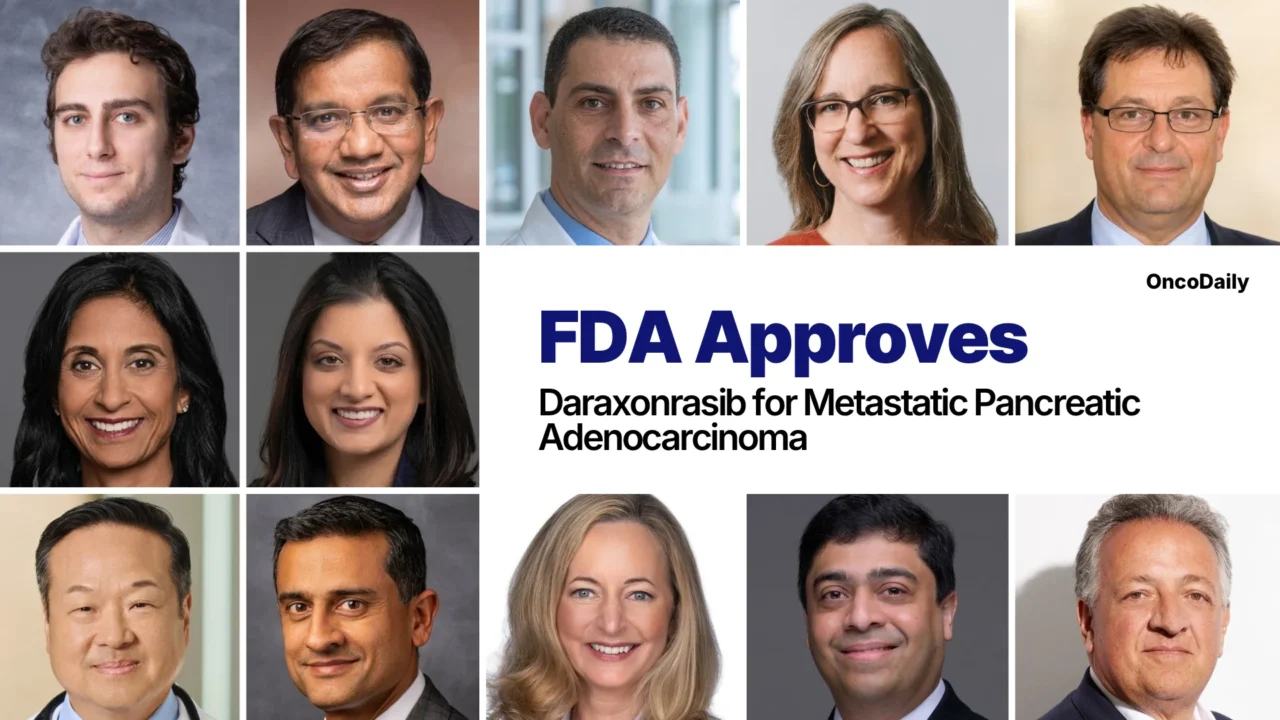
“The FDA has approved Rasonque (daraxonrasib), a first-in-class RAS inhibitor developed by Revolution Medicines, Inc., for the treatment of adults with metastatic pancreatic adenocarcinoma who have received at least one prior systemic therapy or are not candidates for multiagent systemic therapy.
Pancreatic adenocarcinoma accounts for 90-95% of the ~67,000 annual pancreatic cancer diagnoses in the U.S. and carries a disproportionately high mortality burden due to late detection and historically limited treatment options. Rasonque works by targeting multiple forms of the RAS protein – a key oncogenic driver present in the vast majority of these tumors.
The clinical results are striking: In a randomized, open-label, multicenter trial of 500 patients, Rasonque improved median overall survival to 13.2 months, compared to 6.7 months with standard chemotherapy – nearly doubling survival in a population with severe unmet need.
The FDA granted Rasonque Breakthrough Therapy and Orphan Drug designations, and the application was reviewed under the Commissioner’s National Priority Voucher (CNPV) pilot program. The approval was granted 6.5 months ahead of the user fee deadline, reflecting the agency’s commitment to accelerating access to treatments for life-threatening conditions.
This approval represents a meaningful inflection point for the field and underscores what rigorous science, regulatory efficiency, and patient-centered development can achieve together.”
Noubar Afeyan, Founder and CEO of Flagship Pioneering , Co-Founder and Chairman of Moderna Therapeutics
“Pancreatic cancer was long considered one of medicine’s deadliest diagnoses. But today, the FDA approved Revolution Medicines’ Daraxonrasib – a new treatment that has in trials nearly doubled how long patients survive compared to standard chemotherapy.
Daraxonrasib works by targeting a molecule, KRAS, that until now was considered undruggable. The story is a reflection of biotech at its best – pioneering what was once believed impossible, persevering through booms and busts, bringing together enabling research, academic labs, and industry to create breakthroughs for patients and their families.
The FDA deserves our commendation for approving this life-changing treatment with the urgency it demanded, and for moving quickly to allow patients to begin accessing it even before formal approval. Who can say how many lives have been extended – how many more birthdays and weddings and anniversaries will be celebrated – thanks to this wonder of science. Here’s to continuing the momentum on revolutionary new treatments for cancer.”
Nicholas Hornstein, Assistant Professor at Northwell Health
“Zanidatamab is now FDA approved in 1L HER2+ metastatic/unresectable gastric, GEJ, and esophageal adenocarcinoma.
Back at GI26, after HERIZON-GEA-01, I wrote:
We have a new first line.
Now its official.
For context:
ToGA established trastuzumab + chemo in 2010. KEYNOTE-811 added pembrolizumab. But trastuzumab stayed the HER2 backbone for ~15 years.
HERIZON changes that.
Zanidatamab + tislelizumab + chemo vs trastuzumab + chemo:
- PFS 12.4 vs 8.1 mo
- HR 0.63
- OS 26.4 vs 19.2 mo
- HR 0.72
That is a meaningful step forward (with one caveat). This was not compared against trastuzumab + pembrolizumab + chemo, so we do not have a direct KEYNOTE-811 head-to-head.
Practically though,
- IHC 3+ or IHC 2+/ISH+, IO eligible: zani + PD1+ chemo is now my 1L option
- IHC 3+, no IO: zani + chemo is also FDA approved (although the PDL1 null subgroup is its own complicated + somewhat confusing discussion)
And please, for the love of all things GI oncology:
WATCH FOR DIARRHEA. ESPECIALLY THE FIRST 2 CYCLES.
- Any-grade diarrhea was 83%.
- Grade ≥3: ~25%.
Most first episodes happened early. The study mandated loperamide prophylaxis in cycle 1.
PLEASE counsel aggressively, have loperamide in hand before treatment starts, and watch hydration/electrolytes closely.
With that said, excited that we finally have a new HER2 backbone in gastroesophageal cancer.”

Ed Kim, Senior Vice President and Physician-in-Chief at City of Hope Orange
“One of the most rewarding parts of oncology research is seeing an idea move from the laboratory to a clinical trial and ultimately to patients.
Today’s FDA approval of daraxonrasib is a powerful example of that journey.
City of Hope participated in the pivotal clinical trial that vaulted this targeted therapy forward. Our national clinical trials network accelerated access to this therapy for our patients across the country through the FDA-authorized Expanded Access Program.
Each new treatment option matters. It reflects years of scientific discovery, rigorous clinical evaluation and the willingness of patients to participate in research that may help both them and future generations.
Thank you to Pashtoon Kasi, Vincent Chung, M.D., and physicians, researchers and teams across the country for always putting the needs of our patients first.
Moments this reinforce why we continue to invest in research and clinical trials at City of Hope – today, tomorrow and beyond.”
Shikha Jain, Associate Professor of Medicine, Associate Director of Oncology Communications and Digital Innovation at University of Illinois Cancer Center
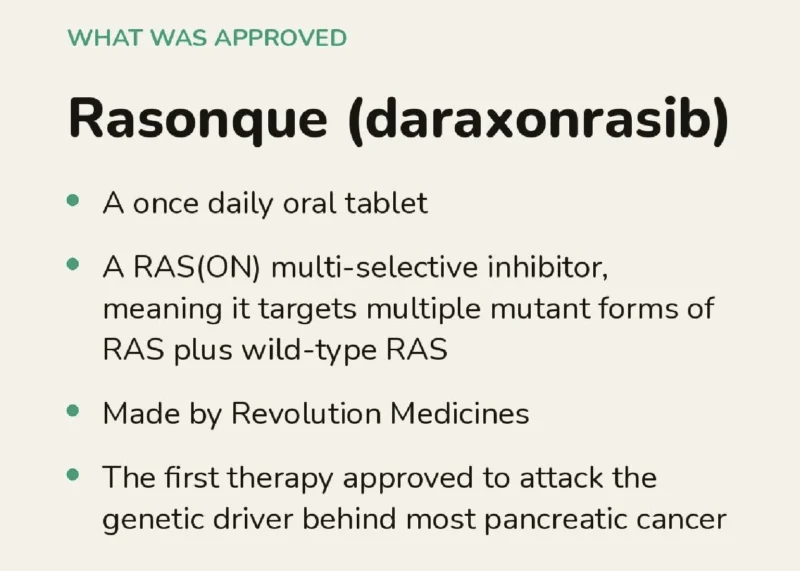
“Today, the FDA approved a first-in-class therapy that nearly doubled median overall survival for patients with metastatic pancreatic adenocarcinoma.
Rasonque (daraxonrasib) is the first RAS(ON) multi-selective inhibitor approved for this disease.
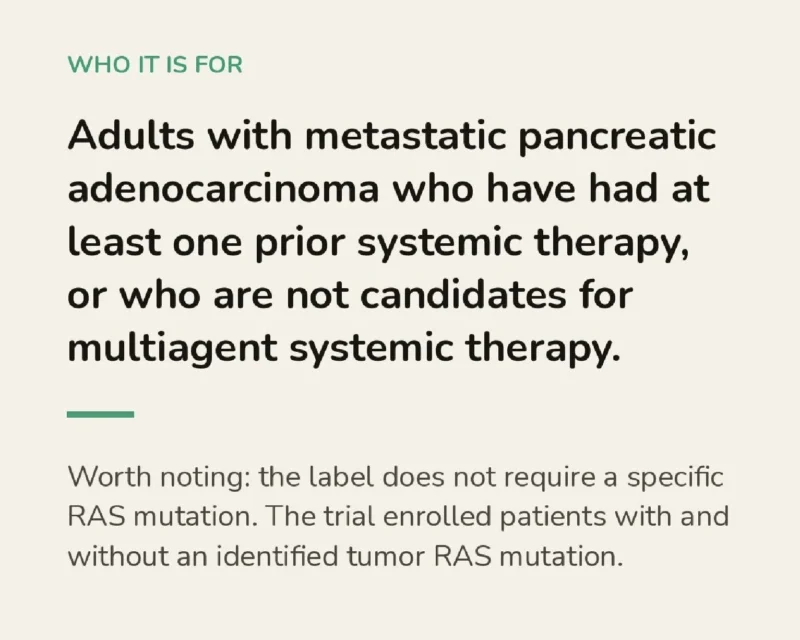
The indication includes adults who have received at least one prior systemic therapy or who are not candidates for multiagent systemic therapy. Importantly, the label does not require a specific RAS mutation.
The phase 3 RASolute 302 trial, presented during the ASCO plenary and published in the New England Journal of Medicine, showed:
- Median overall survival of 13.2 months with daraxonrasib versus 6.7 months with standard chemotherapy
- A 60% reduction in the risk of death
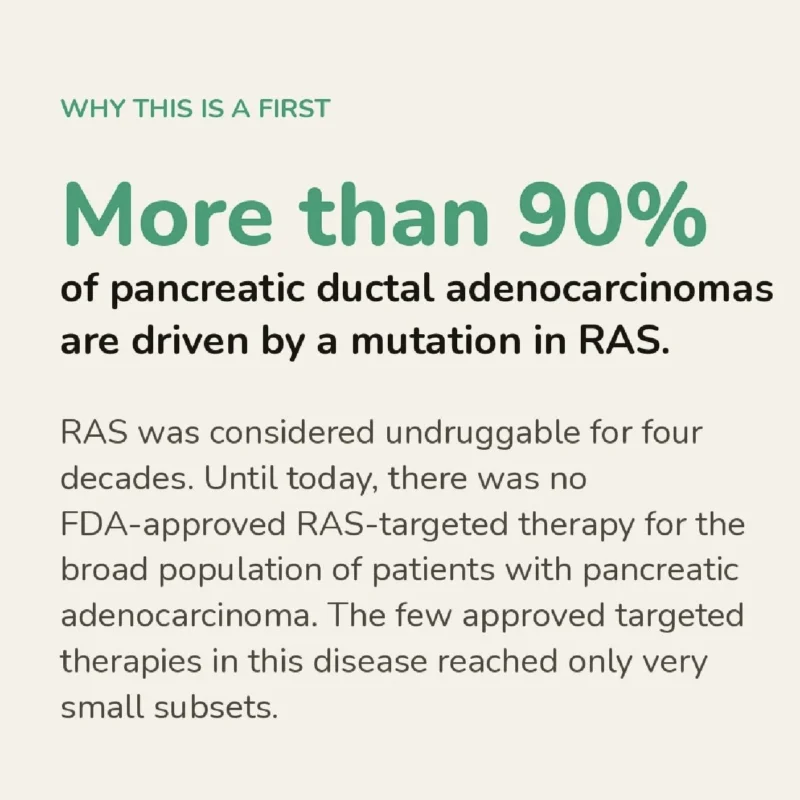
- Fewer grade 3 or higher treatment-related adverse events: 43.6% versus 57.5%
- Treatment discontinuation because of toxicity in 1.2% versus 11.2%
- Significantly delayed deterioration in cancer-related pain and global health status
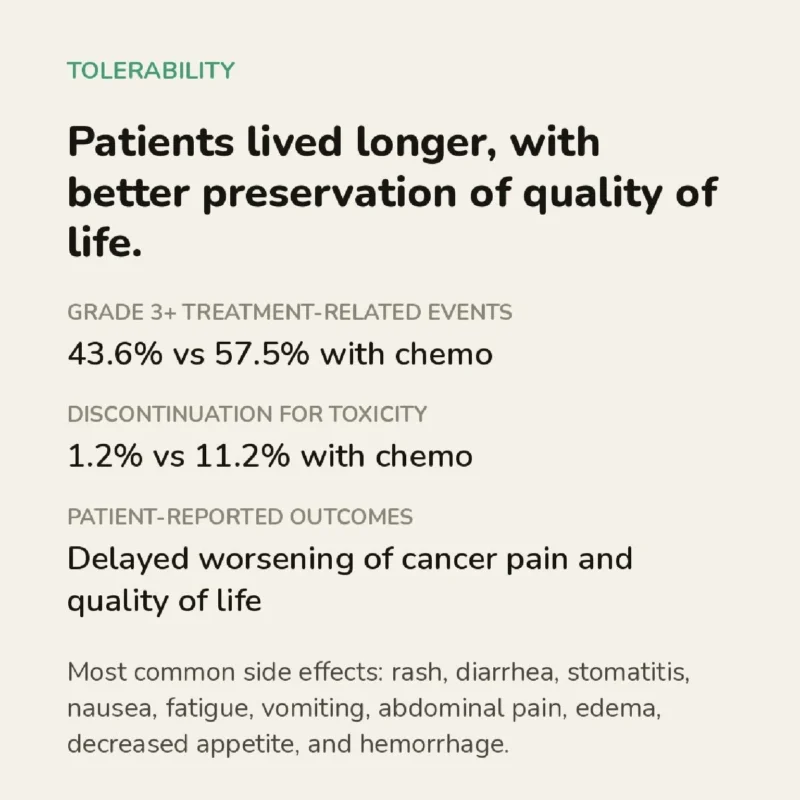
Oncogenic RAS mutations are found in more than 90% of pancreatic ductal adenocarcinomas. For four decades, RAS was considered ‘undruggable.’
This approval came 6.5 months ahead of the user fee deadline through the FDA Commissioner’s National Priority Voucher pilot, an acceleration that is itself worth watching as a regulatory model.
I learned about the approval while rounding on the inpatient oncology service.
There is a particular weight to reading an approval notice between patient rooms, on a service where I have had to tell patients and families that we were running out of options.
This is what decades of scientific discovery and investment in clinical trial infrastructure can produce.
It is also where the harder work begins.
Approval is not the same as access. A first-in-class oral therapy changes outcomes only if patients can reach a knowledgeable prescriber, navigate coverage and cost, and begin treatment while they are still well enough to benefit.
Those barriers are often greatest for patients receiving care in rural and community settings – and they do not disappear on the day a drug is approved.
For health systems, the operational question starting today is this: How quickly can we move this therapy from approval to prescription in the settings where most patients actually receive their care?
The science changed today. Now access must catch up.”
Vivek Subbiah, Chief of Early-Phase Drug Development at the Sarah Cannon Research Institute
“HUGE news and MAJOR milestone in oncology.
The FDA just approved the first targeted therapy for metastatic pancreatic cancer a breakthrough in precision oncology and a landmark step in making the BIG KRAS officially druggable (beyond KRAS K12C). A new era in the fields battle against a devastating Emperor of all maladies.”
Julie Fleshman, President and CEO of Pancreatic Cancer Action Network (PanCAN)
“I’m incredibly excited and proud to share the news that today there is a new standard of care for pancreatic cancer!
The U.S. Food and Drug Administration (FDA) has approved the first RAS inhibitor for patients with metastatic pancreatic adenocarcinoma (PDAC) who have received at least one prior systemic therapy or are not candidates for multiagent systemic therapy – Rasonque™ (daraxonrasib). We have all fought so hard to get to this moment – it is the most significant advancement we have ever seen in pancreatic cancer.
As you know, for decades, RAS was considered ‘undruggable,’ meaning that there was no effective way to target RAS. Rasonque™ is a targeted therapy that showed a doubling of survival compared to chemotherapy as well as improved quality of life for patients following clinical trials. This represents the first FDA approval of a RAS-targeting therapy that is broadly effective for this disease, greatly expanding the potential benefit of targeted therapies for patients with pancreatic cancer.
Today’s announcement represents transformational progress for people affected by pancreatic cancer and reflects what is possible when patients, researchers, clinicians, advocates, industry and government work together toward a common goal. PanCAN has advocated for years to increase federal research funding for this disease, and we have invested millions of dollars in our own research strategy. Now, we are seeing advances in research, clinical trials and more personalized treatment approaches like Rasonque™.
Today’s approval closes one chapter and opens the next, a new era of pancreatic cancer treatment. This first approval, along with more drugs in the pipeline targeting RAS than ever before, marks the start of what promises to be a much more hopeful future for patients facing this devastating diagnosis.
We are grateful to industry partners like Revolution Medicines for investing in the science and research that made this clinical trial possible. And we are very thankful for the patients who participated in this trial and all clinical trials.
A special thanks to the PanCAN Community for helping us get to this historic moment and turning science into survival.”
Shubham Pant, Professor of Gastrointestinal Medical Oncology and Investigational Cancer Therapeutics at MD Anderson Cancer Center
“The dawn of a new Era in the treatment of Pancreatic Cancer.
A huge thank you to all the patients who participated in the clinical trials and to the researchers who have worked tirelessly for decades to crack the KRAS Code.”
Revolution Medicines
“Breaking News: The U.S. FDA approved the first targeted medicine against the main driver of pancreatic cancer, known as RAS, representing a groundbreaking new approach.
Positioned to become a new standard of care in metastatic pancreatic cancer.
Anirban Maitra, Director of Perlmutter Cancer Center and Professor of Pathology and Medicine at NYU Langone Health
“Important caveat: The FDA
Daraxonrasib (Rasonque) approval is REALLY broad and the ‘OR’ in the indication below potentially opens the door for a ‘soft 1st line’ extension. Also, no requirement to document KRAS status, acknowledging that 95% of Pancreatic Cancer harbor a mutation.
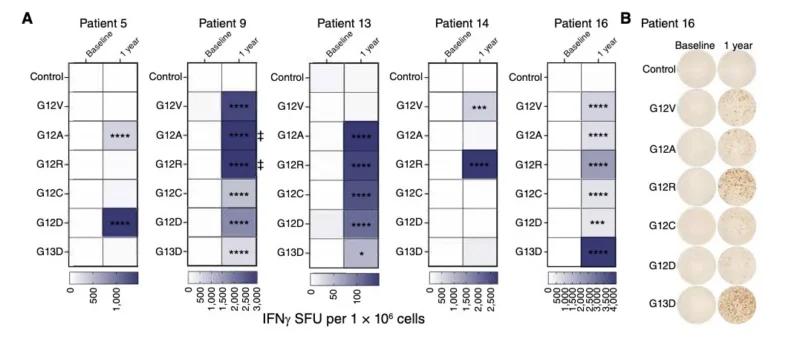
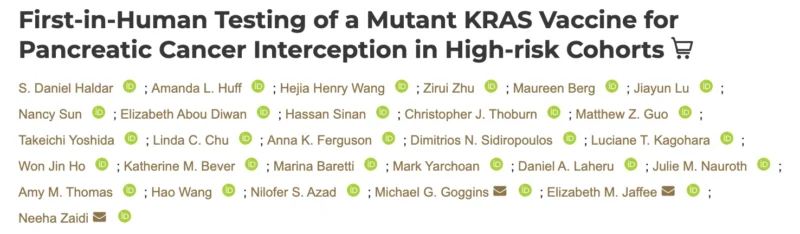
Final version of Dr. Neeha Zaidi paper on Mutant KRAS Vaccine for Pancreatic Cancer interception in high risk cohorts out in Cancer Discovery.
Notable data is detection of KRAS antigen targeted T cells 1 year post vaccine – annual boosters as a prevention strategy?”
Title: First-in-Human Testing of a Mutant KRAS Vaccine for Pancreatic Cancer Interception in High-risk Cohorts
Authors: S. Daniel Haldar, Amanda L. Huff, Hejia Henry Wang, Zirui Zhu, Maureen Berg, Jiayun Lu, Nancy Sun, Elizabeth Abou Diwan, Hassan Sinan, Christopher J. Thoburn, Matthew Z. Guo, Takeichi Yoshida, Linda C. Chu, Anna K. Ferguson, Dimitrios N. Sidiropoulos, Luciane T. Kagohara, Won Jin Ho, Katherine M. Bever, Marina Baretti, Mark Yarchoan, Daniel A. Laheru, Julie M. Nauroth, Amy M. Thomas, Hao Wang, Nilofer S. Azad, Michael G. Goggins, Elizabeth M. Jaffee, Neeha Zaidi
Read The Full Article
Maen Abdelrahim, Professor of Medicine, Chief of GI Medical Oncology, Medical Director of CCAT Phase I Center, Houston Methodist
“Great news to our patients with pancreatic cancer. Daraxonrasib is now fully approved by the FDA. Exciting time for our GI Oncology community and for the oncologists who treat pancreatic cancer to offer hope and targeted therapy will longer survival!”
Miguel Bronchud, Co-Founder at Regenerative Medicine Solutions
“As expected, Food and Drug Administration on Wednesday approved daraxonrasib, a life-extending treatment for advanced pancreatic cancer. The medicine, which will be sold under the brand name Rasonque and is made by Revolution Medicines, is the first to attack a genetic cause of the aggressive, highly lethal malignancy.
‘It will be transformative in the way we treat pancreas cancer. It’s the biggest development we’ve had in pancreas cancer in decades,’
– said Andrew Ko, a medical oncologist at the University of California, San Francisco.
It will also be realistic (now that the drug can be marketed) to find out the optimal use of this drug in ‘the real world’, outside clinical trials, with regards to palliative treatment in advanced stages of pancreatic cancer – gradually moving up (hopefully and thanks to new clinical trials) to more curative options in adjuvant treatment or even the possibility of preventing cancer treatments in high risk pancreatic duct pathologies ; and (let us be reasonably optimistic about this) in other RAS-mut human malignant diseases.”
Anna Berkenblit, Chief Scientific and Medical Officer at Pancreatic Cancer Action Network, Board Member at TORL Biotherapeutics LLC
“The FDA approval of RASONQUE™ is the most significant advancement we have ever seen in the fight against pancreatic cancer. This drug will transform how we treat pancreatic cancer – giving people the opportunity for more time with loved ones, the possibility of a better quality of life and assurance that continued research will deliver even greater advances.
We thank Revolution Medicines for its commitment to advancing science and the patients with pancreatic cancer who participated in daraxonrasib clinical trials. We applaud the FDA for moving with urgency and for their patient-centric approach to the broad label. This first FDA approval of a RAS-targeting therapy for pancreatic cancer is a landmark achievement, but it is only the beginning. Continued research – including clinical trials of next-generation RAS-targeted therapies and combination approaches – will be essential to overcoming resistance and bringing even more treatment options to patients.”
Memorial Sloan Kettering Cancer Center
“The FDA has approved daraxonrasib, which will be sold under the brand name Rasonque, for patients with metastatic pancreatic adenocarcinoma who no longer respond to at least one other form of treatment or are not candidates for multiagent systemic therapy.
Dr. Eileen O’Reilly, a gastrointestinal medical oncologist at Memorial Sloan Kettering Cancer Center (MSK), led the phase 3 clinical trial at MSK that resulted in the approval. The study found that daraxonrasib doubled median survival time compared with chemotherapy, while patients also tolerated its side effects better.
‘To date in my career, I have not seen this level of benefit from any single anti-cancer drug in this disease.’
– says Dr. O’Reilly.
The targeted therapy blocks KRAS mutations, which drive more than 90% of pancreatic cancers. Learn more about the approval and what it could mean for patients.”
Jyoti D. Patel, SVP, Clinical Science at Tempus AI
“The FDA approval of daraxonrasib is officially ushering in a new era for precision oncology. Targeting the long-thought ‘undruggable’ RAS pathway to nearly double median survival in metastatic pancreatic cancer is a true biological breakthrough.
Yet, getting therapies like this approved requires running complex, biomarker-driven clinical trials at unprecedented speed.
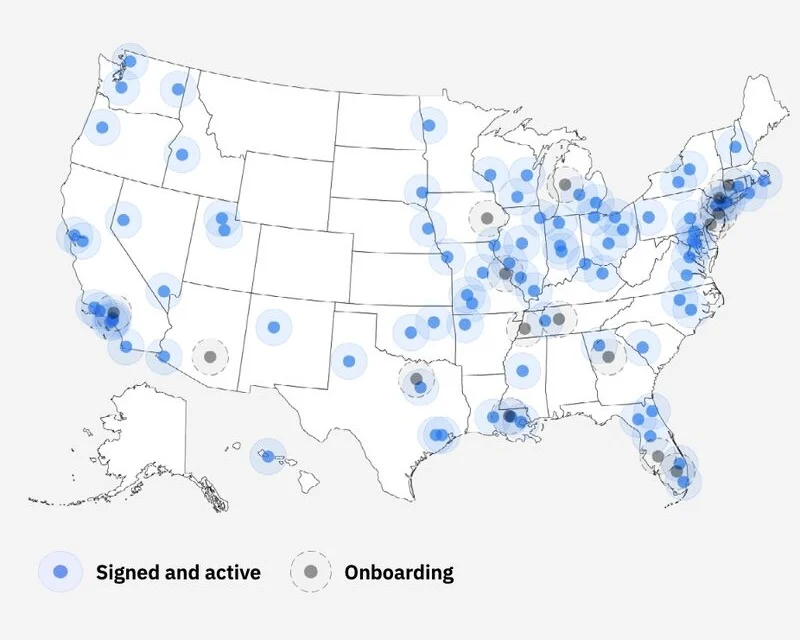
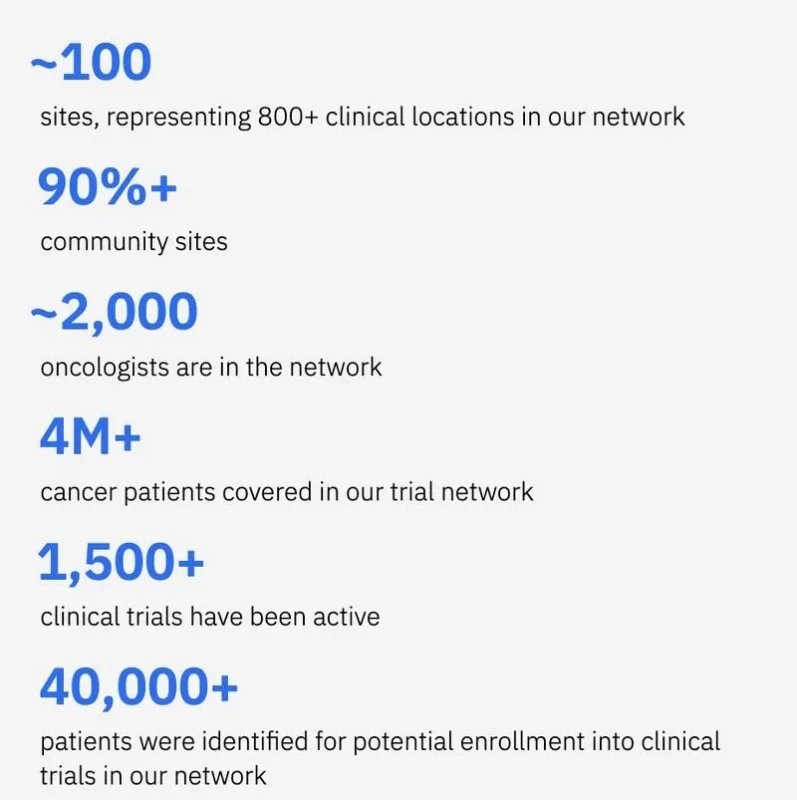
That is why I am so passionate about the impact of the Tempus TIME Network:
- Speed: Utilizing a Just-In-Time model to open trial sites in days, accelerating enrollment timelines.
- Reach: Empowering community oncologists across the country to offer cutting-edge precision trials to patients locally.
- Representation: Broadening access to historically underserved and geographically diverse patient cohorts.
Congratulations to the researchers, clinicians, and trial teams whose work made daraxonrasib a reality!
Precision medicine isn’t just about developing better drugs—it’s about building smarter, more equitable access networks so no patient gets left behind.”
City of Hope
“Today’s FDA approval of daraxonrasib marks an important new chapter for patients facing metastatic pancreatic cancer – one that will expand access to this new breakthrough treatment.
City of Hope is proud to have been among 59 centers worldwide that enrolled patients in the landmark clinical trial that helped bring this therapy forward, and among the first to help patients access it through the FDA-authorized Expanded Access Program.
City of Hope has long been a leader in translational pancreatic cancer research and care. In 2024, that work gained new momentum with a $150 million gift from philanthropists A. Emmet Stephenson Jr. and Tessa Stephenson Brand to help speed progress against one of the deadliest cancers. The gift launched a worldwide effort (Stephenson Global Pancreatic Cancer Research Institute) focused on advancing new ideas and bringing researchers together to move discoveries forward faster.
Pancreatic cancer remains one of the most difficult cancers to treat, making advances like this especially meaningful. Every breakthrough represents more time, more possibilities and more hope for patients and families facing this disease.”
For more on this topic: FDA Approves Rasonque (Daraxonrasib), First-in-Class Targeted Therapy for Metastatic Pancreatic Cancer