The first week of January 2026 begins with a wide-ranging and practice-relevant set of discussions across GI Oncology, reflecting how the field is evolving at the intersection of prevention, biology, and therapeutic innovation. This week’s selected posts span the full continuum of care—from population-level risk factors and early detection, to real-world treatment sequencing, translational biomarkers, and next-generation immuno-cellular therapies.
Key themes include the growing impact of obesity and metabolic disease on liver cancer incidence, the importance of prospective registries and quality-of-life data in pancreatic cancer, and the accelerating role of liquid biopsy and machine learning in treatment selection. Several contributions focus on refractory and rare GI malignancies, highlighting unmet needs in colorectal, anal, and appendiceal cancers, as well as the expanding clinical footprint of adoptive cell therapies in solid tumors.
Together, these posts underscore a central message as 2026 begins: progress in GI oncology will depend not only on new agents, but on better patient stratification, smarter trial design, multidisciplinary judgment, and the integration of translational science into everyday clinical decision-making.
Shivan Sivakumar – Associate Professor in Oncology, University of Birmingham; Honorary Consultant in Medical Oncology, NHS
“Happy new year! Even though it is a new year, my group are still starting the year as active as we ended the last! As we all know in the UK, 2/3rds of the UK population is overweight or obese. This is a significant risk factor for cancer and we should be aiming to be under a BMI of 25. There is no pragmatic or sensible public health strategy to tackle this.
As an oncologist who specialises in liver and pancreas cancer, we now see that almost 70% of our liver cancer cases are due to being overweight or obese. Luckily most patients are caught with the disease early though due to underlying liver scarring (cirrhosis) they will not be cured and have further liver cancers. Interestingly, close to 40% of patients with weight related liver cancer do not have underlying cirrhosis.
With the ultra-talented Dr Richard Phillips we postulate whether using GLP1 agonists can increase time to relapse and ultimately stop patients relapsing if they lose weight. It could also help increase patients being fit for liver transplant! It is an important question that we need to ask and we are now conducting a real world study based on this which can have ramifications for millions of patients with weight driven liver cancer.”
Salah-Eddin Al-Batran – Professor of Oncology; Executive Director, The Frankfurt Institute of Clinical Cancer Research (IKF)
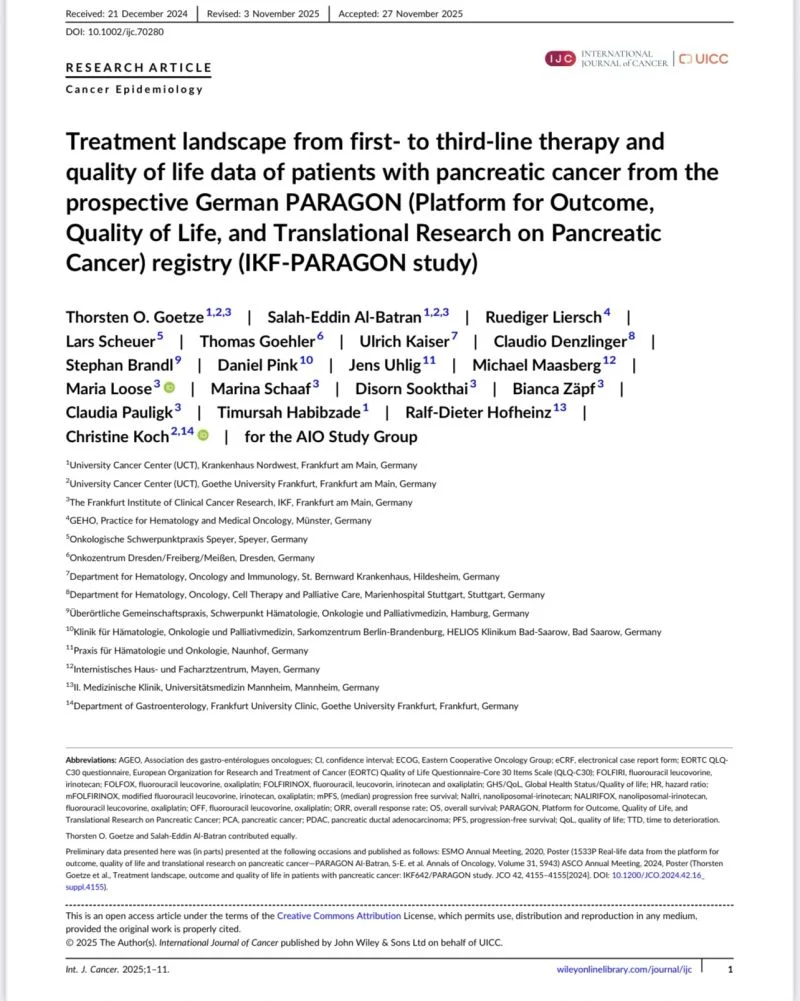
“We are pleased to share our latest publication:
“Treatment landscape from first to third line therapy and quality of life data of patients with pancreatic cancer from the prospective German PARAGON registry (IKF-PARAGON)”
Based on the prospective German PARAGON registry, this study provides a comprehensive real world overview of systemic treatment sequences, quality of life trajectories, and translational research potential in patients with pancreatic cancer.
🔹 Key insights:
- Detailed mapping of first to third line treatment pathways in routine clinical practice
- Longitudinal quality of life data demonstrating a substantial deterioration already during first line therapy
- Identification of clinical factors associated with access to second line treatment
- Systematic prospective collection of biomaterial enabling future translational and biomarker driven research
This work highlights the importance of prospective clinical registries that integrate treatment data, patient reported outcomes, and biospecimen collection to bridge clinical care and translational science in a disease with major unmet medical need.
Congratulations to the leading Authors Christine Koch and Thorsten Götze.
Proud to see the strong contribution of the IKF – The Frankfurt Institute of Clinical Cancer Research to high impact, practice relevant oncology research.”
Ajay Goel – Professor and Founding Chair, Department of Molecular Diagnostics and Experimental Therapeutics; Associate Director of Basic Sciences; Director, Biotech Innovations, City of Hope Comprehensive Cancer Center
“I’m pleased to share that our article, ‘A machine-learning powered liquid biopsy predicts response to paclitaxel plus ramucirumab in advanced gastric cancer: results from the prospective IVY trial,’ has been published in Molecular Cancer. In this work led by Dr. Katsutoshi Shoda, our team developed a machine-learning powered liquid biopsy that can predict response to paclitaxel plus ramucirumab in advanced gastric cancer. Significantly, this approach may provide a clinically applicable, non-invasive tool for personalized treatment selection.
If you work on gastric cancer, liquid biopsy biomarkers, machine learning in oncology, treatment response prediction, or precision oncology, I’d love to connect and discuss potential collaborations.”
Read the full-length article here.
Erman Akkus – Medical Oncologist, Gastrointestinal Oncology
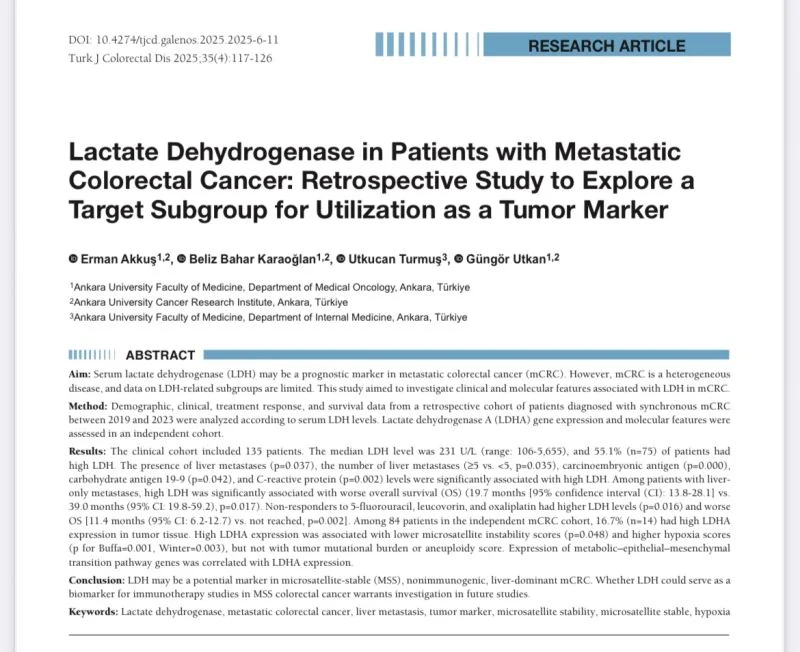
“Lactate dehydrogenase (LDH) in metastatic colorectal cancer
Our hypothesis-generating study
High serum LDH is associated with liver metastasis and increased liver metastatic burden
Elevated serum LDH is associated with worse overall survivalHigh LDHA expression in tumor tissue is associated with lower microsatellite instability scores and higher hypoxia
Gene expression analyses show correlation with the glucose–pentose pathwayMay LDH serve as a biomarker for immunotherapy studies in microsatellite-stable metastatic colorectal cancer? Further studies are warranted.”
Katie McKenna – Assistant Professor, Baylor College of Medicine; Center for Cell and Gene Therapy; Immunotherapies for Solid Tumors
“Exciting publication of a promising phase 1/2 clinical trial in Nature Medicine reporting on an autologous multi-antigen T cell therapy for pancreatic ductal adenocarcinoma (PDAC), a cancer historically resistant to immunotherapy.
Congratulations to Ann Leen and the team at BCM–CAGT.”
Amol Akhade – Senior Medical & Hemato-Oncologist; Precision Oncologist, Fortis Hospital Mumbai; Founder, Suyog Cancer Clinics; Oncology Data Advisor; Affordable Cancer Care Advocate
“ASCO GI 2026 highlights how GI oncology is evolving—not just through new drugs, but through better patient selection, sequencing, and multidisciplinary decision-making.
Late-Breaking Abstracts to watch out
- ILUSTRO (Kohei Shitara et al.): zolbetuximab + mFOLFOX6 + nivolumab in CLDN18.2-positive gastric/GEJ adenocarcinoma
- HERIZON-GEA-01 (Elena Elimova et al.): zanidatamab + chemotherapy ± tislelizumab in HER2-positive gastroesophageal adenocarcinoma
- LyRICX (Denice Kamp et al.): liposomal irinotecan + platinum ± nivolumab in first-line esophagogastric adenocarcinoma
Major MDT Sessions
- Liver Power Hour hepatobiliary tumor board (Nina Sanford, Riad Salem)
- Managing liver tumors with hepatic dysfunction—disease control versus toxicity
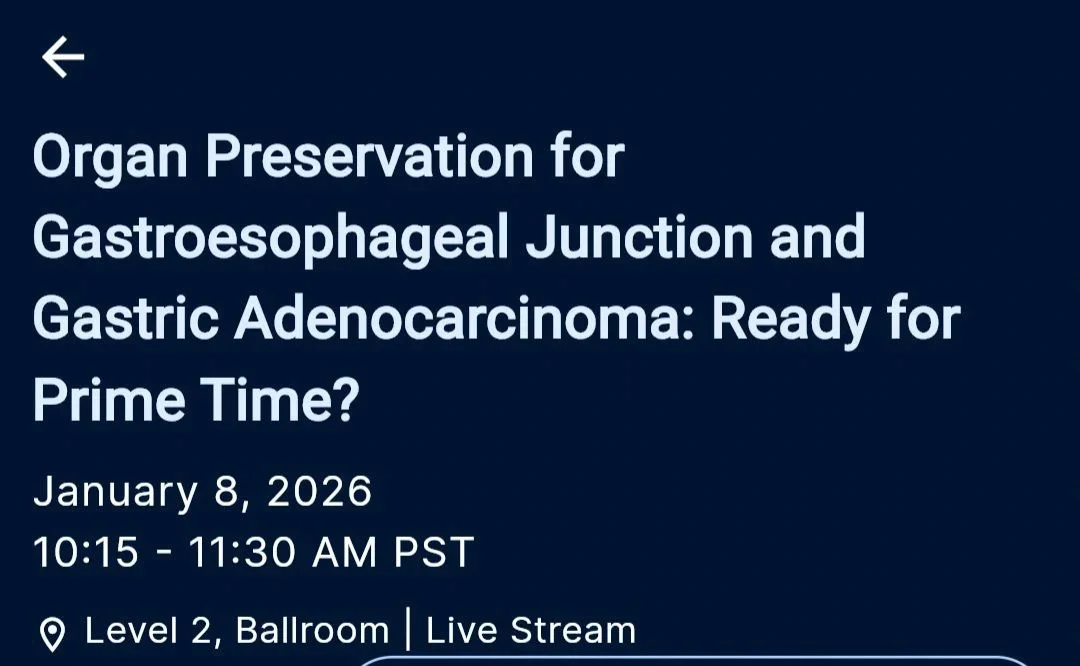
- Organ preservation in GEJ/gastric cancer
- MDT approaches in borderline and locally advanced pancreatic cancer
- T2 rectal cancer management innovations
Colorectal Cancer Trials to Look Forward To
- BREAKWATER (Scott Kopetz et al.): encorafenib + cetuximab + FOLFIRI in BRAF V600E–mutant metastatic colorectal cancer
- COMMIT (Caio Rocha Lima et al.): immunotherapy alone versus immunotherapy plus chemotherapy in dMMR/MSI-H metastatic colorectal cancer
The recurring message: progress will depend less on enthusiasm and more on judgment—who, when, and how.”
Víctor Albarrán Fernández – Medical Oncologist and Researcher, Translational Immuno-Oncology; Adoptive Cell Therapy for Solid Tumors (TILs, TCRs, CARs)
“2025 has been a truly interesting year for cell therapy in solid tumors.
Not all challenges are solved—far from it—but the paradigm shift is clear: success in solid tumors will not come from replicating hematologic models, but from embracing biological heterogeneity.
My (subjective) ‘Top 5 highlights’:
- First randomized CAR-T trial in a solid tumor: satri-cel (anti-CLDN18.2) outperformed standard of care in gastric and gastroesophageal junction cancers, moving the field toward comparative clinical evidence.
- Clinical results of PRAME-targeted TCR-T therapy: anzu-cel achieved an overall response rate of 53% (75% in melanoma). This raises the question of whether it may become the third adoptive cell therapy approved for solid tumors, following lifileucel and afamicel.
- Strong signals from neoantigen-specific TILs in gastrointestinal cancers, especially in combination with pembrolizumab, demonstrating that TIL selection can overcome lower immunogenicity and generate synergy with immune checkpoint blockade, extending the potential of TIL therapy beyond ‘hot’ tumors.
- First patient data with IL-15–armored CAR-T cells, providing clinical proof that genetically enhanced CARs can improve fitness and persistence in the hostile tumor microenvironment.
- CAR-macrophage therapy entering the clinic, with early safety and feasibility data using HER2-targeted CAR-macrophages. Together with progress in CAR-NK therapies, this marks the emergence of non–T-cell CAR platforms, aligned with the promise of allogeneic, more scalable, and potentially cost-effective products.
2025 has also delivered robust translational work on biomarkers and a wave of preclinical innovation, including synthetic biology, genetic and epigenetic engineering, dynamically adaptable constructs, and AI-guided CAR and TCR design.
But even more lies ahead. Here’s to a 2026 full of new advances for our patients.”
Anirban Maitra – Professor of Pathology and Translational Molecular Pathology, Baylor College of Medicine
“New Nature Medicine paper from Baylor College of Medicine:
Autologous multiantigen-targeted T cell therapy for pancreatic cancer: a phase 1/2 trial
Hard to conclude too much beyond feasibility and safety, given the very heterogeneous patient population and the use of concurrent chemotherapy.”
Zahra Shokati Eshkiki – Deputy Project Manager and Assistant Professor, Alimentary Tract Research Center, Clinical Science Research Institute, Jundishapur University of Medical Sciences
“Lab-on-a-chip and nanotechnologies approaches for early detection of colorectal cancer biomarkers.”
Namrata Anand – Scientist I, University of Chicago
“Happy New Year Everyone!
So excited to share my recent lead author publication from the University of Chicago, published in JCO Oncology Advances. This article discusses the role of liquid biopsy and its significant needs in the treatment of hepatocellular carcinoma. Thank you to all the authors, especially Dr. Bhan from Harvard Medical School, MGH, MA.”
You can also read about 10 Must-Read Posts in GI Oncology from the Last week of December on OncoDaily.