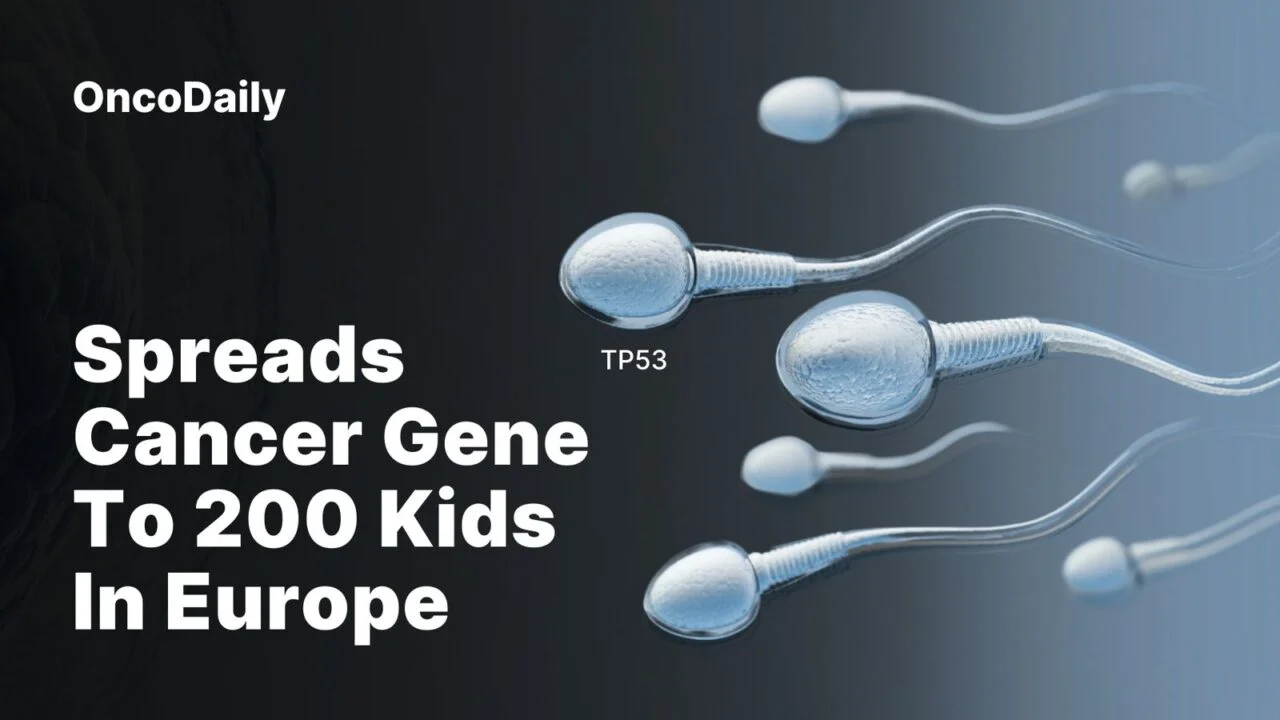
A healthy Danish sperm donor, who passed all standard genetic screenings, fathered nearly 200 children across 14 European countries from 2005 to 2022, unknowingly passing on a TP53 gene mutation in up to 20% of his sperm. This mutation causes Li-Fraumeni syndrome, dramatically increasing lifetime cancer risk—including childhood sarcomas, breast cancer, brain tumors, and leukemias with affected individuals facing up to a 90% chance of malignancy.

Photo: Depositphotos
The issue surfaced after children conceived via clinics in Denmark, Germany, Spain, and elsewhere developed early-onset cancers; some have died, prompting urgent notifications to families. Due to gonadal mosaicism the mutation limited to sperm cells—it evaded blood-based tests, highlighting screening flaws. European Sperm Bank quarantined the donor in 2020 after an initial alert (later cleared), but banned him permanently in 2023 following confirmation, urging genetic counseling for all offspring.
The sperm donor, a Danish student in his early 20s, began donating at European Sperm Bank (ESB) clinics in 2005, undergoing routine physical exams, infectious disease tests, and basic genetic screening all of which he passed as healthy. From 2007, he was listed online under the pseudonym “Kjeld,” attracting recipients for his profile of good health and education, leading to widespread use across 14 countries including Denmark, Germany, Spain, the UK, and Poland.
Expanded Timeline:
- 2005-2020: Unrestricted donations produce ~197 children; first red flag in 2020 when a conceived child is diagnosed with cancer, prompting ESB to quarantine donor straws and retest blood (negative), allowing resumed donations.
- 2022: Second child case confirms inheritance; ESB investigates.
- 2023: Full genetic analysis verifies mosaicism; donor permanently banned January 2023. ESB notifies clinics, tracing families; by late 2025, 150+ parents contacted, with ongoing efforts amid regulatory limits (e.g., Denmark caps 12 families/donor).
How Can a Cancer-Linked Mutation Hide from Genetic Screening?
Gonadal mosaicism represents a rare post-zygotic genetic event where the TP53 germline mutation specifically the pathogenic variant c.818G>A (p.Arg273His)arises de novo in a subset of primordial germ cells during early embryonic development, propagating solely into gonadal lineage (spermatozoa) while sparing somatic tissues like blood leukocytes.
This variant disrupts TP53’s tumor suppressor function, a “guardian of the genome” critical for DNA repair, apoptosis, and cell cycle arrest; heterozygous carriers face 70-90% lifetime cancer risk via Li-Fraumeni syndrome (LFS), manifesting as early-onset sarcomas (e.g., osteosarcoma <15 years), breast cancer (<30 years), adrenocortical carcinoma, gliomas, and leukemias, often with multiple primaries.
Why Did Standard Screening Fail?
Standard EU donor protocols (e.g., ESHRE guidelines) mandate blood karyotyping, CFTR/hemoglobinopathy panels, and infectious screens but not broad germline sequencing or sperm-specific assays. Blood PCR/sequencing detects >5-10% variant allele frequency (VAF); here, somatic VAF was 0%, while sperm VAF ranged 10-20% per ejaculate, requiring single-sperm WGS or targeted droplet digital PCR—non-routine, costly methods absent in 2005-2022 screening.
50% per conception if mutation-bearing sperm used, yielding ~20-40 mosaic/heterozygous offspring among 197 children; confirmed via parental trio sequencing in affected cases.
What Does This Mean for Health? The Real-World Impact of a Hidden TP53 Mutation
Children conceived from mutation-bearing sperm (10-20% of donor ejaculates) faced a 50% Mendelian transmission risk for the heterozygous TP53 c.818G>A (p.Arg273His) variant, confirmed in affected offspring via parental trio whole-exome sequencing revealing paternal germline origin and ~50% variant allele frequency (VAF) in probands.
Clinical Outcomes
Heterozygous carriers develop Li-Fraumeni syndrome (LFS; OMIM #151623), characterized by 70-90% cumulative cancer risk by age 70, with core tumors including soft-tissue/bone sarcomas (peak <15 years), premenopausal breast carcinoma, adrenocortical carcinoma, and >90% secondary malignancies. Reported cases: rhabdomyosarcoma/osteosarcoma in toddlers, leukemias, and gliomas; p.Arg273His abolishes DNA-binding (IARC class 5), impairs transactivation of p21/CDKN1A/PUMA (loss-of-function), exerts dominant-negative effects over WT p53, and confers gain-of-function (e.g., enhanced invasion via ROS tolerance, apoptosis resistance; PMIDs: 12826609, 24677579). At least 2 pediatric deaths; survivors require TP53/LFS surveillance protocols (e.g., biannual MRI, abdominal US, blood counts from infancy).
Expert Perspectives
Molecular biologist Edwige Kasper (LFS advocacy) provides genetic counseling, stressing penetrance and multi-cancer screening; ClinVar aggregates classify p.Arg273His as pathogenic (PVS1+PS3+PM1+PM5+PP3), with functional assays showing null transactivation (Kato 2003) and aggressive phenotypes (Li 2014). ESB experts note mosaicism incidence ~1:10,000 but urge sperm ddPCR/TP53 panels.
You Can Also Read Is Cancer Hereditary? Myths and Facts about Cancer Genetics by OncoDaily
What Can Regulators Learn from a Hidden Germline Mutation?
EU sperm donor regulations vary significantly: Denmark caps at 12 families per donor (including own children), while countries like Germany and Spain impose looser limits (25-75 families); no unified EU mandate exists for comprehensive germline sequencing beyond karyotyping and CFTR panels, leaving gaps for mosaicism.
European Sperm Bank (ESB) issued a statement expressing sympathy to families, asserting compliance with national standards (e.g., Danish Health Authority guidelines), but acknowledged the mutation’s undetectability via blood-based tests, halting notifications and offering free TP53 testing.
Calls to Action
Advocate mandatory TP53 hotspot panels (exons 5-8), sperm-specific ddPCR for mosaics, pan-EU donor family caps at 10, and post-conception registries for rapid tracing—experts like ESHRE propose these to prevent recurrence.
Affected families should pursue immediate genetic counseling and enroll in Li-Fraumeni syndrome surveillance protocols for early cancer detection. This case underscores the need for oncology vigilance in heritable risks, pushing for robust donor genomics.
Written by Aharon Tsaturyan, MD, Editor at OncoDaily Intelligence Unit