Radiotherapy continues to evolve through faster workflows, more precise treatment techniques, stronger quality assurance, and a growing focus on patient experience and access to care.
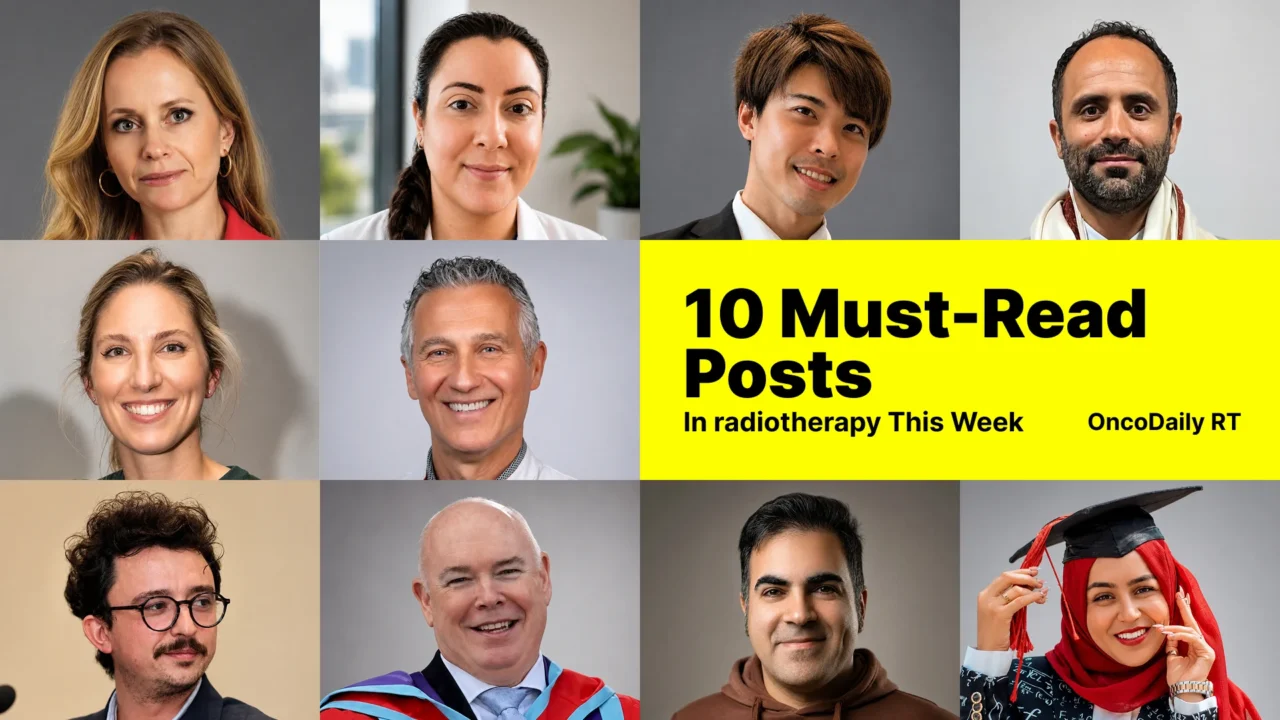
This week’s must-read posts highlight major developments across the field—from same-day SABR for early-stage lung cancer and scalable VMAT-TBI quality assurance to new linear accelerator implementation in Tanzania and advances in re-irradiation. They also feature important educational initiatives, patient advocacy efforts, recognition for high-impact ESTRO research, and new evidence shaping care for head and neck, breast, and genitourinary cancers.
Here are 10 radiotherapy posts you should not miss from June 15 to June 21.
“This month’s edition of Radiotherapy and Oncology includes a brilliant paper led by Dr. Neil Wallace, A/Prof. Susan Harden, and colleagues at the Peter MacCallum Cancer Centre.
In a world first, they report a pilot study of a “one-stop shop” model for single-day treatment of lung cancer with stereotactic ablative radiotherapy.
Early-stage lung cancer can be treated with radiotherapy within a single hospital visit.
Patients reported satisfaction with same-day simulation, planning, and treatment using SABR for early lung cancer.
Modern technology and workflows are making radiotherapy planning faster and more efficient.”
“Improving the VMAT-TBI Workflow: The Next Challenge
Total body irradiation remains one of the most demanding workflows in radiation oncology.
At our institution, we have adopted VMAT-TBI because it allows us to use the same treatment-planning and delivery framework as conventional radiotherapy workflows.
Over the years, many TBI techniques have been proposed. However, maintaining expertise and ensuring long-term sustainability can be challenging, particularly as modern radiotherapy increasingly relies on treatment planning-based workflows.
To date, we have treated 35 patients using VMAT-TBI. As our clinical experience has grown, a new challenge has become apparent: patient-specific quality assurance.
A typical VMAT-TBI plan requires five to six isocenters and a large number of treatment beams. While comprehensive verification is important, the workload associated with patient-specific QA can become substantial.
The next step for us is not changing the treatment technique itself. It is simplifying and standardizing the verification workflow.
As treatment numbers increase, QA methods must become scalable, reproducible, and practical for the entire team.
Improving a workflow is often not about changing how we treat patients. Sometimes, it is about changing how we verify treatments.”
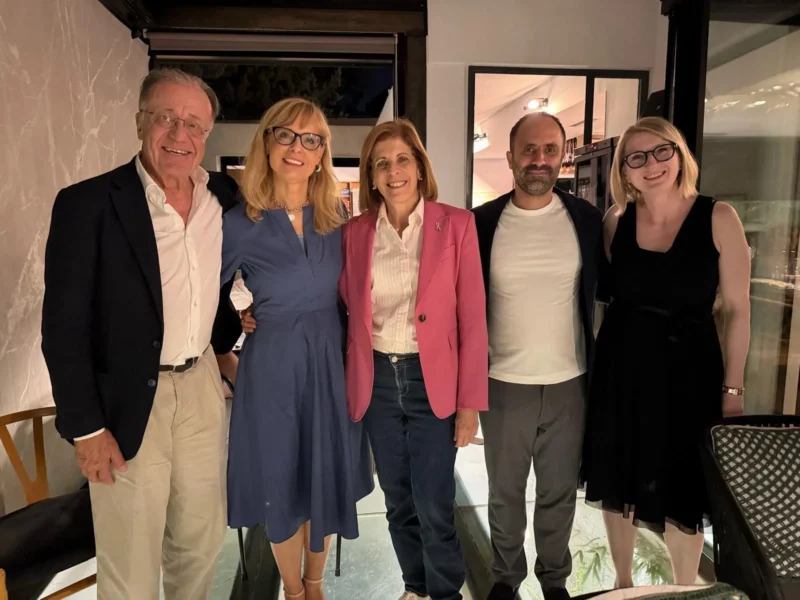
“Honored to have participated as faculty in the genitourinary cancer session of the European School of Oncology Multidisciplinary Masterclass in Oncology in Athens.
It was a fantastic opportunity for interdisciplinary exchange on the management of genitourinary cancers, bringing together young medical oncologists, radiation oncologists, and experts from across Europe.
The quality of the discussions, case-based learning, and enthusiasm of the next generation of oncology professionals were truly inspiring.
Thank you to the organizers, faculty colleagues, and all participants for creating such an engaging educational experience.”
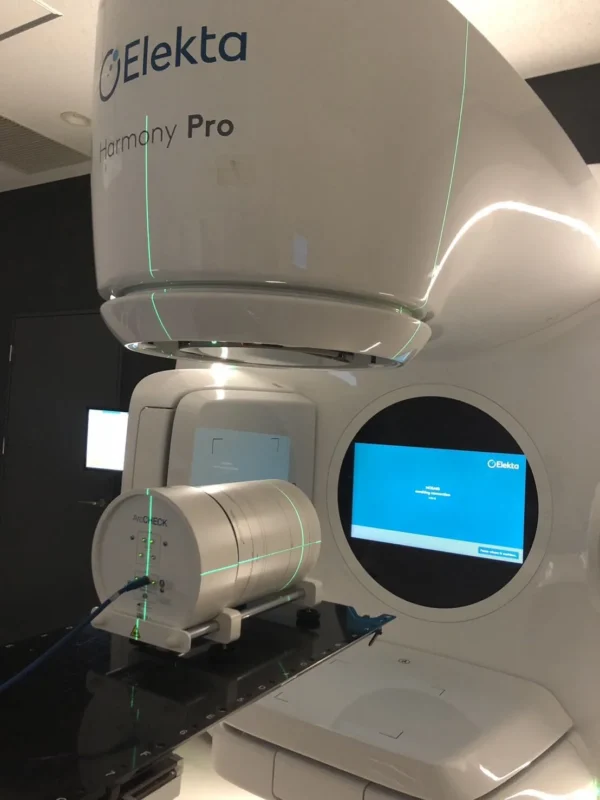
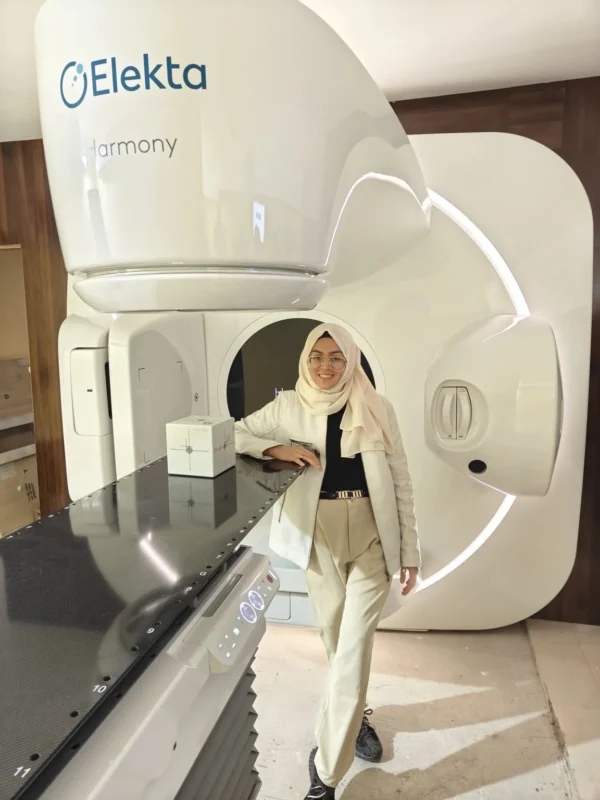
“A major milestone at the Ocean Road Cancer Institute, as we officially inaugurated the new Elekta Harmony linear accelerator following weeks of training, auditing, validation, and clinical preparation.
I am proud to be part of the first center in Africa implementing the latest Elekta software ecosystem, including the newest version of MOSAIQ.
The journey has been inspiring, bringing together application specialists, engineers, and medical physicists from around the world.
Beyond learning a new system, we strengthened our skills in clinical operation, administration, treatment planning, and contouring. We also gained valuable practical knowledge that will help advance radiotherapy services and cancer care in Tanzania.”
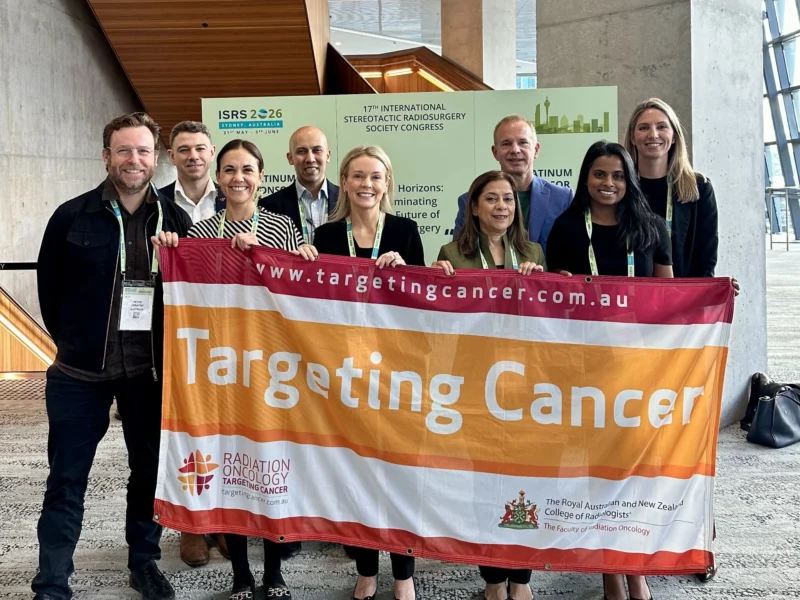
“Two weeks ago, I had the pleasure of attending ISRS 2026 in Sydney.
As expected, the meeting delivered an incredible array of presentations from world leaders in stereotactic radiosurgery, alongside novel research and updates in treatment techniques.
What truly stood out was the value placed on patient advocacy, consumer engagement, community education, and the role of social media in information dissemination. Huge credit to Cecelia Gzell and the organizing committee.
Both Radiation Oncology: Targeting Cancer and World Radiotherapy Awareness Day are important campaigns that aim to ensure patients, communities, and governments understand the crucial role of radiation therapy in cancer care.
Education is an important part of our role as clinicians. Ensuring patients have the information they need to make informed decisions is essential—so join the campaigns.”
“We are honored and proud to announce that our work, ‘Paradigm Shift From Bilateral Elective Nodal Irradiation to SPECT/CT-Based Sentinel Node Procedure to Guide Unilateral Irradiation in Pharyngeal and Laryngeal Cancer: The SUSPECT-2 Multicenter Prospective Study,’ presented at the 45th Annual Meeting of ESTRO 2026 in Stockholm, Sweden, was ranked among the top 5% of submitted abstracts.
Many thanks to ESTRO for this honorable distinction, to the SUSPECT-2 team, and to our patients who made this recognition possible.
I am also grateful to my co-authors for their tremendous efforts: Pieter de Vey Mestdagh, Ellen Zwijnenburg, Maarten Donswijk, Jimmie Honings, Anne Arens, Luc Karssemakers, Jeroen Houben, Emilia Owers, Pim Schreuder, and Hans Kaanders.
Briefly, the SPECT/CT-based sentinel node approach used in SUSPECT-2 to select patients with lateralized head and neck squamous cell carcinoma for unilateral elective nodal irradiation was feasible, safe, and effective.
It resulted in a significant reduction in the incidence, severity, and duration of acute and late toxicity, while only 2.4% of patients developed contralateral regional failure.
Furthermore, 91% of patients with an indication for bilateral elective nodal irradiation under current Dutch guidelines received unilateral elective nodal irradiation and were spared associated toxicities, including grade 2–3 xerostomia and feeding-tube dependency.
Stay tuned for the publication.”
“Can a patient safely receive radiation therapy twice? Increasingly, the answer is yes—but only through careful planning, advanced technology, and exceptional teamwork.
As cancer outcomes continue to improve, more patients are living long enough to face the challenge of recurrent disease. For selected individuals, re-irradiation may offer another opportunity for local control, symptom relief, and improved quality of life.
Advances in image guidance, treatment planning, adaptive radiotherapy, and multidisciplinary care have transformed re-irradiation from a high-risk consideration into a carefully planned treatment option.
In this article, I explore the evolving role of re-irradiation, the technologies that make it possible, and the critical contributions of radiation oncology professionals who help ensure treatment is delivered safely and accurately.
Every millimeter matters. Every patient matters more.”
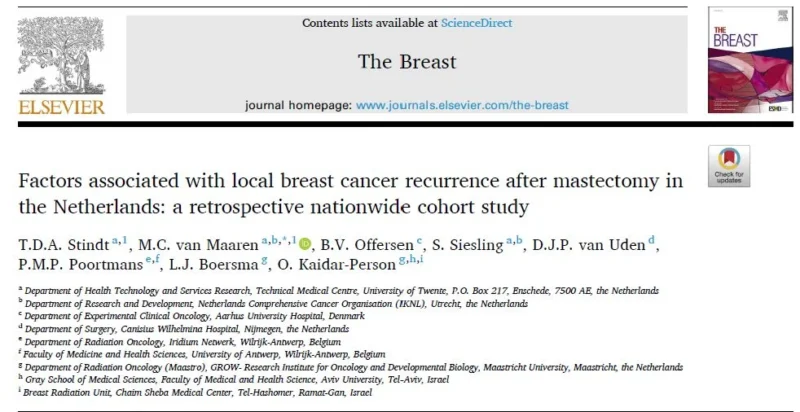
“Just published—data from more than 17,000 patients with breast cancer.
Congratulations to Thomas Stindt, Marissa van Maaren, and the entire team on this achievement: the SECRET project.
It has been an outstanding experience working with the Netherlands Cancer Registry.
A special thank you to my wonderful colleagues and co-authors: Birgitte Offersen, Sabine Siesling, Dominique van Uden, Philip Poortmans, and Liesbeth Boersma.”
“Proud to have contributed to OpenAI’s work to improve health intelligence in ChatGPT, alongside physicians from around the world.
It is meaningful to help evaluate and strengthen how AI responds to real-world health questions, with a focus on accuracy, clarity, safety, and usefulness.
This work helps make advanced health intelligence available to hundreds of millions of people who can access and benefit from it for free.
Congratulations to Rebecca Soskin Hicks, MD, and the entire OpenAI Health team on this important progress.
Learn more: https://lnkd.in/dKPFW6rt”
“New publication: a comprehensive review on systemic treatment for older patients with head and neck cancer undergoing radiotherapy, now published in Head & Neck.
More than half of head and neck squamous cell carcinoma cases are diagnosed in patients aged 65 years and older, yet this population remains chronically underrepresented in the clinical trials that shape treatment guidelines.
Together with our team at the Radiation Oncology Research Center, Cancer Research Institute, Tehran University of Medical Sciences—Pardis Zamani, Erfan Barootchi, Romina Abyaneh, Hamidreza Jamshidi, and Kiarash Saleki—and in collaboration with Dr. Kaveh Zakeri, we screened more than 11,000 records and synthesized findings from 35 studies to assess where the evidence currently stands.
Key takeaways:
Cisplatin-based chemoradiation remains the most effective and best-tolerated option for fit older patients in the definitive setting.
Cetuximab- and carboplatin-based regimens are reasonable alternatives for patients who are not eligible for cisplatin, although results across studies are inconsistent.
Evidence for adjuvant systemic therapy in this age group remains limited, and benefit appears to diminish in patients aged 75 years and older.
Adding immune checkpoint inhibitors to radiotherapy appears feasible and safe, but efficacy data specific to older patients, including findings from the IMPORT trial, are still preliminary.
Chronological age alone is a poor decision-making tool. A comprehensive geriatric assessment should guide which patients may benefit from intensive systemic therapy.
Proud of the work the team put into this review, and hopeful that it helps shift the conversation from ‘Is this patient too old for treatment?’ to ‘What does this specific patient actually need?’
Full paper: https://lnkd.in/em7unBZK”
Stay informed with more articles like this on OncoDaily.