Fear of cancer recurrence (FCR) is one of the most prevalent and persistent psychological challenges among breast cancer survivors. Although radiotherapy represents a major milestone in treatment completion, evidence shows that fear frequently intensifies after treatment ends rather than during it.
Systematic reviews indicate that up to 60–70% of breast cancer survivors report moderate levels of FCR, while approximately 20–30% experience clinically significant fear requiring intervention. FCR is now recognized as a distinct survivorship construct, not simply generalized anxiety.
Understanding this phenomenon is essential for radiation oncologists and survivorship teams.
Why Fear Often Peaks After Radiotherapy
During active radiotherapy, patients experience:
- Structured daily schedules
- Frequent medical contact
- A sense of “actively fighting” the disease
Once treatment ends
- Appointments become less frequent
- Surveillance decreases
- The structured routine disappears
This transition period has been described in the literature as a vulnerable survivorship phase.
Patients often assume fear will subside after treatment completion. Instead, psychological space expands — and uncertainty becomes more noticeable.
Radiotherapy offers disease control. It does not offer certainty. Fear often lives in that gap.
What Is Fear of Cancer Recurrence (FCR)?
Fear of cancer recurrence refers to worry or concern that cancer could return or progress in the same or another part of the body.
It is pisodic rather than constant, trigger-based, and linked to intolerance of uncertainty.
According to the Lancet Oncology Commission on cancer survivorship, FCR is one of the most common unmet needs in oncology follow-up care. Importantly, FCR exists on a spectrum. Not all fear is pathological. Moderate fear can be adaptive, promoting adherence to follow-up. However, persistent high FCR may impair quality of life.
Common Triggers After Breast Radiotherapy
Evidence identifies predictable triggers:
- Follow-up appointments and imaging (“scanxiety”)
- New or unfamiliar somatic sensations
- Fatigue or benign pain
- Hearing of another patient’s recurrence
These triggers are well documented in psycho-oncology research . What unsettles patients is often not intensity — but unpredictability.
Why Statistics Alone Do Not Calm Fear
Clinicians often provide recurrence percentages for reassurance. While accurate risk communication is important, studies show that statistical reassurance alone rarely
reduces FCR intensity.
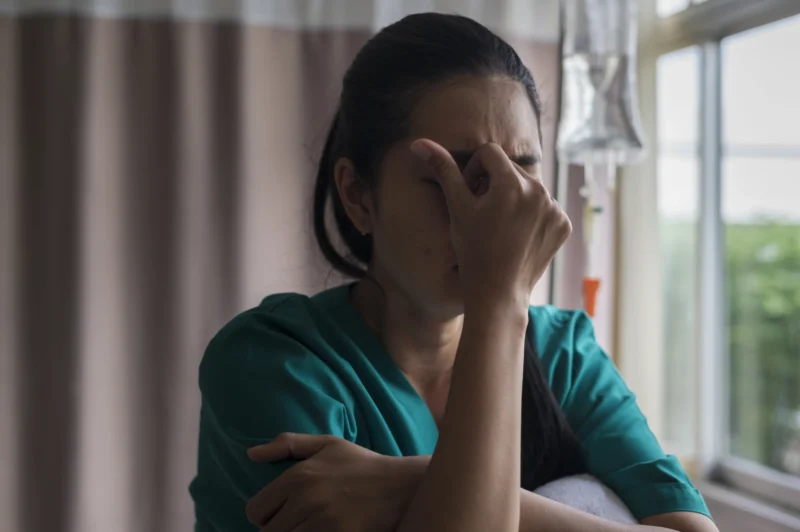
This is because FCR is not purely cognitive. It is existential. The underlying question patients ask is rarely:
“What is my percentage risk?”
It is:
“Will I ever feel safe again in my body?”
Addressing this requires normalization and structured guidance — not only numbers.
When Fear Becomes Clinically Significant
Clinically significant FCR may include:
- Persistent intrusive thoughts
- Repetitive body checking
- Avoidance of future planning
- Excessive medical reassurance seeking
- Sleep disturbance
High FCR is associated with reduced quality of life and increased healthcare utilization. Importantly, elevated fear does not imply poor coping. It reflects difficulty tolerating uncertainty. Clinical practice guidelines now recommend that FCR be routinely assessed and managed within survivorship care.
What Helps: Evidence-Based Approaches
Research indicates that patients are more likely to regain psychological balance when follow-up plans are clearly communicated, anticipated post-radiotherapy sensations are discussed in advance, fear is normalized early, and access to psycho-oncology support is available when needed. Such structured communication helps reduce uncertainty-driven hypervigilance. Addressing fear of cancer recurrence is therefore not beyond the scope of radiation oncology practice; it is an integral component of comprehensive patient care.
Clinical Implications for Radiation Oncology
Breast radiotherapy is often described as the “final step” of active treatment. For many patients, it marks the beginning of a different psychological phase.
Survivorship care should therefore include anticipatory discussions about recurrence anxiety, clear surveillance plans, validation of emotional responses, and close interdisciplinary collaboration.
Fear of recurrence is not a sign of weakness. It is a predictable human response to having faced a life-threatening diagnosis. With time, structured follow-up, and appropriate support, fear usually becomes quieter, more predictable, and less dominant.
Fear of cancer recurrence after breast radiotherapy is common, evidence-based, and clinically relevant.
Recognizing it allows clinicians to move beyond purely technical success and toward holistic survivorship care. Radiotherapy may conclude treatment. It does not conclude uncertainty. Helping patients live alongside that uncertainty is part of modern oncology practice.
Written By Eftychia Tataridou, MD