Cancer is often viewed as a disease of modern life, shaped by industrialization and longer survival. Yet archaeological and medical evidence tells a much older story. Long before modern diagnostics or therapy, ancient societies were already confronting malignant disease, recognizing its clinical patterns, and acknowledging its limits.
In ancient Egypt, this reality is revealed through an extraordinary convergence of sources. Modern CT imaging allows non-invasive examination of mummies, uncovering internal tumors, bone destruction, and metastatic spread indistinguishable from contemporary cancer. At the same time, medical texts such as the Edwin Smith Papyrus document systematic observation of tumors, prognosis, and ethical restraint in cases deemed incurable.
Together, these findings place ancient Egypt at the earliest foundations of oncology and represent the oldest evidence of cancer currently known. They demonstrate that cancer often advanced and fatal was recognized thousands of years ago, and that early physicians distinguished malignant disease from treatable conditions, adopting palliative approaches that echo enduring principles of modern cancer care.
CT Scans Reveal the Oldest Anatomical Evidence of Cancer in Ancient Egypt
CT imaging has transformed paleopathology by allowing researchers to “virtually dissect” mummies without disturbing wrappings or bone, revealing internal tumors, marrow changes, and metastatic spread that would be invisible on the surface. In a landmark 2017 study from the University of Granada, CT scans of 13 high-status mummies from Qubbet el-Hawa (Middle Kingdom–Second Intermediate Period, ca. 2000–1800 B.C.) uncovered what are considered the oldest well-documented cases of breast cancer and multiple myeloma in humans.
One elite woman showed destructive lesions in the pelvis and adjacent bone consistent with metastatic breast adenocarcinoma, indicating an advanced, painful disease that likely caused her death; there was no sign of surgical or local treatment, underlining how limited therapeutic options were despite sophisticated burial status. Another elite male mummy displayed classic multiple myeloma features punched-out vertebral lesions and diffuse bone rarefaction matching modern radiologic criteria for plasma-cell malignancy, again with no evidence of intervention beyond careful mummification. Together, these cases demonstrate that complex hematologic and solid cancers affected privileged individuals in ancient Egypt and were recognized anatomically long before modern oncology.
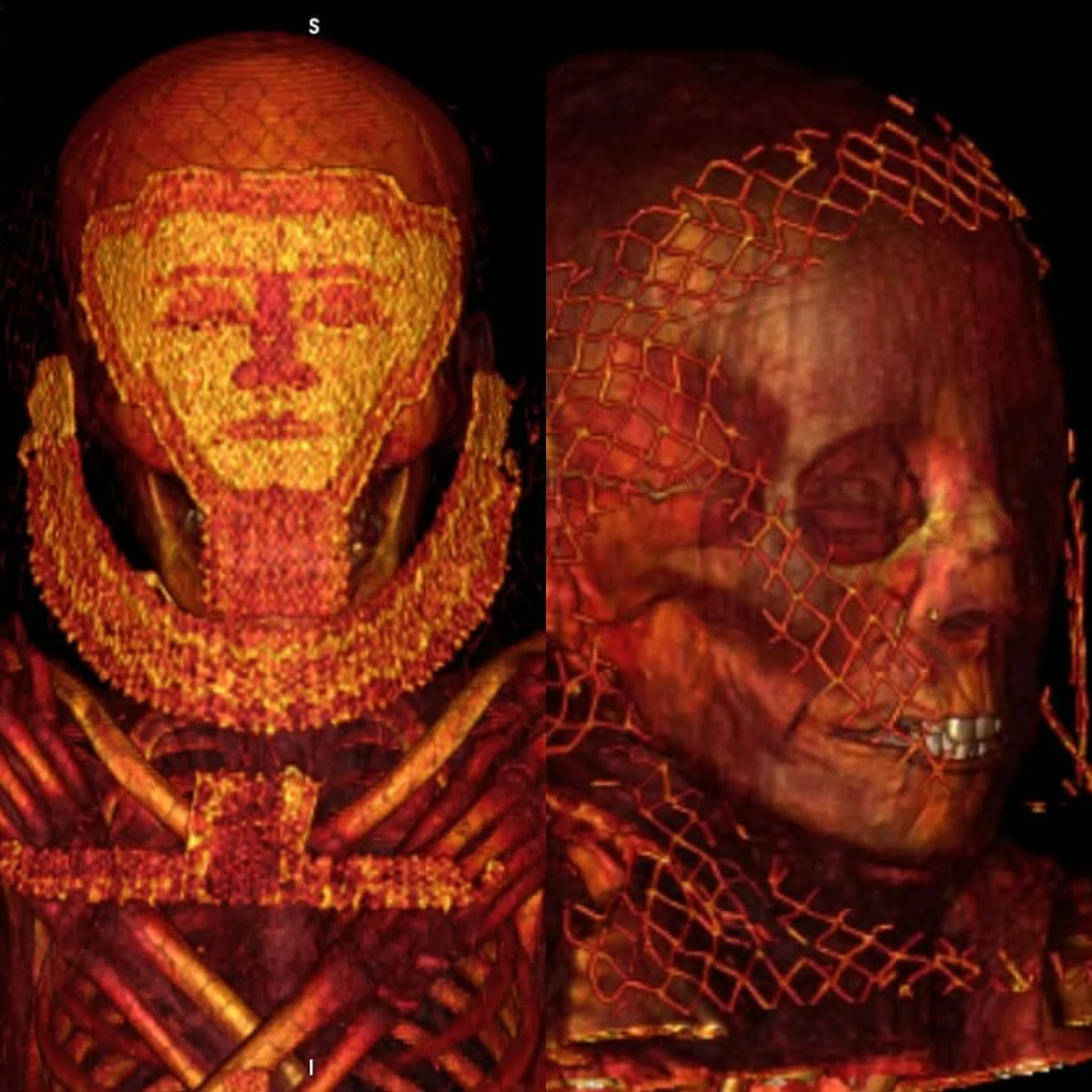
UGR’s anthropology group led by Prof. Miguel Cecilio Botella López of the Department of Legal Medicine,
Additional evidence comes from later periods. A Ptolemaic-era mummy commonly referred to as “Meritamun” (ca. 700 B.C.) shows erosive changes in the facial bones and skull base that investigators attribute to nasopharyngeal carcinoma rather than taphonomic damage or embalming artifacts. The pattern of bone destruction and location around the nasopharynx match contemporary descriptions of this tumor type, suggesting a primary head-and-neck cancer that progressed without surgical or radiotherapeutic options. This case further supports the view that cancer across breast, bone marrow, and upper aerodigestive tract was already present and sometimes advanced in ancient Nile populations, even if it could not yet be cured. Universidad de Granada 2017.
Edwin Smith Papyrus: The World’s First Oncology Textbook (3000–2500 B.C.)
Discovered in the 1860s among Luxor’s black market antiquities and fully translated by James Breasted in 1930, the Edwin Smith Surgical Papyrus stands as humanity’s oldest surviving medical text and oncology’s first systematic documentation. This 4.6-meter scroll, written in hieratic script, contains 48 trauma cases presented in rigorous case-study format: examination findings, diagnosis, prognosis, and treatment (or nontreatment). Six of these cases (38-45) focus exclusively on breast pathology, offering unprecedented insight into ancient Egyptian tumor recognition, classification, and therapeutic restraint.
Case-by-Case Analysis: Breast Tumors
Ancient Egyptian medical texts already documented the devastating clinical course of advanced breast cancer. In a series of cases recorded in what is now known as the Edwin Smith Papyrus, physicians described women with “bulging tumors all over the breast,” noting that the masses were cool to the touch and associated with putrefaction features consistent with necrotic, advanced malignancy. One case explicitly concludes with a stark prognosis: “There is no treatment.” Subsequent entries detail swellings that “protrude like grapes” with ulcerated surfaces, closely mirroring the appearance of advanced breast carcinoma. Additional cases describe progressive ulceration, edema, and tissue breakdown, each followed by the same unambiguous assessment: “There is no medicine to tell you about it.”
In the most severe descriptions, tumors are reported to involve not only the breast but also the vulva, suggesting metastatic spread beyond the primary site. Collectively, these cases represent some of the earliest clinical observations of breast cancer, revealing that ancient Egyptian physicians recognized the disease’s characteristic progression—even while acknowledging the limits of available treatment.
Radical Honesty: “No Treatment” Verdict
Unlike contemporary Mesopotamian incantations or later Greek humoral therapies, Egyptian physicians rejected magical or heroic interventions for incurable disease. Instead, they prescribed palliative topical therapy:
- Honey (antimicrobial, now known to contain methylglyoxal)
- Grease/fat (moisturizing emollient)
- Fresh meat (protein-rich, possibly absorbent)
This regimen targeted odor control, infection prevention, and comfort—modern supportive care principles predating the Hippocratic Corpus by 1,000+ years.
Diagnostic Brilliance: Cool = Lethal
The papyrus’ temperature-based prognosis fascinates modern oncologists: *”cool to the touch” tumors signaled necrosis and incurability, while “hot” swellings might still respond to treatment. This empirical observation—cool skin overlying dead tissue—anticipated physiologic staging by millennia, recognizing advanced malignancy through clinical exam alone.
Malignant vs. Benign: Early Classification
The text differentiates malignant breast “bulging masses” from benign vulvar “tumors” elsewhere on the scroll, suggesting pathologic correlation between appearance, behavior, and outcome. Case 39’s “swellings that bulge and form ulcers” versus Case 27’s “tumors all over her vulva” (which received treatment) demonstrates differential diagnosis three millennia before Virchow’s cellular theory.
Ethical Milestone: “First, Do No Harm”
By explicitly rejecting overtreatment of incurable disease, the Edwin Smith Papyrus embodies medical ethics predating Hippocrates. This calculated restraint “There is no treatment” protected patients from iatrogenic harm when outcomes were inevitably fatal, modeling modern palliative care philosophy.
Photo: Depositphotos
Surgical Boldness, Different Priorities
In Skull 236, some cut marks around metastatic lesions show signs of bone healing, suggesting the individual survived for a period after cranial intervention, likely trepanation or debridement to relieve pain or pressure. This implies that at least one ancient practitioner recognized the lesion as a target for surgery and the patient was stable enough to live beyond the procedure. In contrast, Skull E270 from the Late Period carries clear evidence of healed traumatic injuries (such as fractures) alongside untreated cancerous lesions, indicating that trauma care was prioritized while malignancy received no direct intervention—possibly because it was recognized as beyond available capabilities.
Modern Echoes and Global Burden
Today, cancer’s “timelessness” is quantified rather than inferred from bone: around 20 million new cancer cases and roughly 10 million deaths occur worldwide each year, according to recent WHO and IARC estimates. Despite genomic profiling, immunotherapy, and CAR‑T cells, patients and clinicians still confront the same core questions visible in these skulls: when to operate, when to palliate, and how to allocate attention between acute injury and chronic malignancy.
Imhotep: The World’s First Physician Who Became a God of Medicine
Imhotep whose name means “He Who Comes in Peace” transcends history as ancient Egypt’s original polymath: physician, architect, high priest, and chancellor to Pharaoh Djoser of the 3rd Dynasty. Born a commoner near Memphis, he rose through merit to design the Step Pyramid of Saqqara, launching Egypt’s pyramid era with the first large-scale stone monument (6 steps, 200 feet tall). His full titles included “Chief of Sculptors,” “High Priest of Ra at Heliopolis,” and “First After the King,” marking unprecedented influence for a non-royal.
Contemporary records don’t detail Imhotep’s medical practice, but tradition credits him with the Edwin Smith Surgical Papyrus—your article’s centerpiece. This trauma-focused text (48 cases, including breast tumors) emphasizes anatomical observation over incantations, describing tumors’ “cool to touch” necrosis and rejecting overtreatment: “There is no medicine.” As Djoser’s court physician during pyramid construction, Imhotep likely treated workers’ fractures and injuries, blending surgery with early pharmacology (honey, grease poultices).
Two millennia after death, Imhotep was worshipped as medicine’s god during Egypt’s Late Period, with temples at Saqqara and Philae becoming healing sanctuaries. Patients offered clay votives of diseased organs, slept for dream prescriptions (incubation therapy), and sought cures for epilepsy, infertility, and tumors proto-cancer clinics. Greeks equated him with Asclepius; his cult persisted into Roman times, symbolizing rational healing over superstition.
You Can Also Read A Man From the Roman Empire Diagnosed With Metastatic Cancer 1,700 Years After His Death by OncoDaily
Written by Aharon Tsaturyan, MD, Editor at OncoDaily Intelligence Unit
FAQ
Did ancient Egyptians know about cancer?
Yes, the Edwin Smith Papyrus (ca. 3000 B.C.) describes breast tumors as "bulging masses" with ulceration, declaring them incurable.
What is the oldest evidence of cancer surgery?
Skull 236 (2686–2345 B.C.) shows cut marks around metastatic lesions, suggesting trepanation—the earliest attempted cancer treatment.
Were mummies scanned for cancer?
Yes, 2017 Granada University CT scans of Qubbet el-Hawa mummies found the oldest breast cancer (woman, ca. 2000 B.C.) and multiple myeloma (man, ca. 1800 B.C.).
How did Egyptians treat breast cancer?
Palliative only: honey, grease, and fresh meat poultices for advanced cases "There is no treatment," per Edwin Smith Papyrus.
Was cancer common in ancient Egypt?
Found mainly in elites (better preservation), suggesting lifestyle factors like diet/sun exposure; cases span breast, myeloma, nasopharyngeal.
What is Skull 236?
Old Kingdom male skull with 30+ metastases and healed cut marks around lesions—evidence of post-op survival.
Did they distinguish benign vs. malignant tumors?
Yes, Edwin Smith differentiates "bulging ulcers" (malignant breast) from treatable vulvar tumors.
Nasopharyngeal cancer in mummies?
Ptolemaic "Meritamun" mummy (ca. 700 B.C.) shows facial bone erosion matching this head/neck cancer.
Modern lesson from Egyptian oncology?
Ethical restraint: recognize incurability early, prioritize palliation—"first, do no harm" predates Hippocrates.