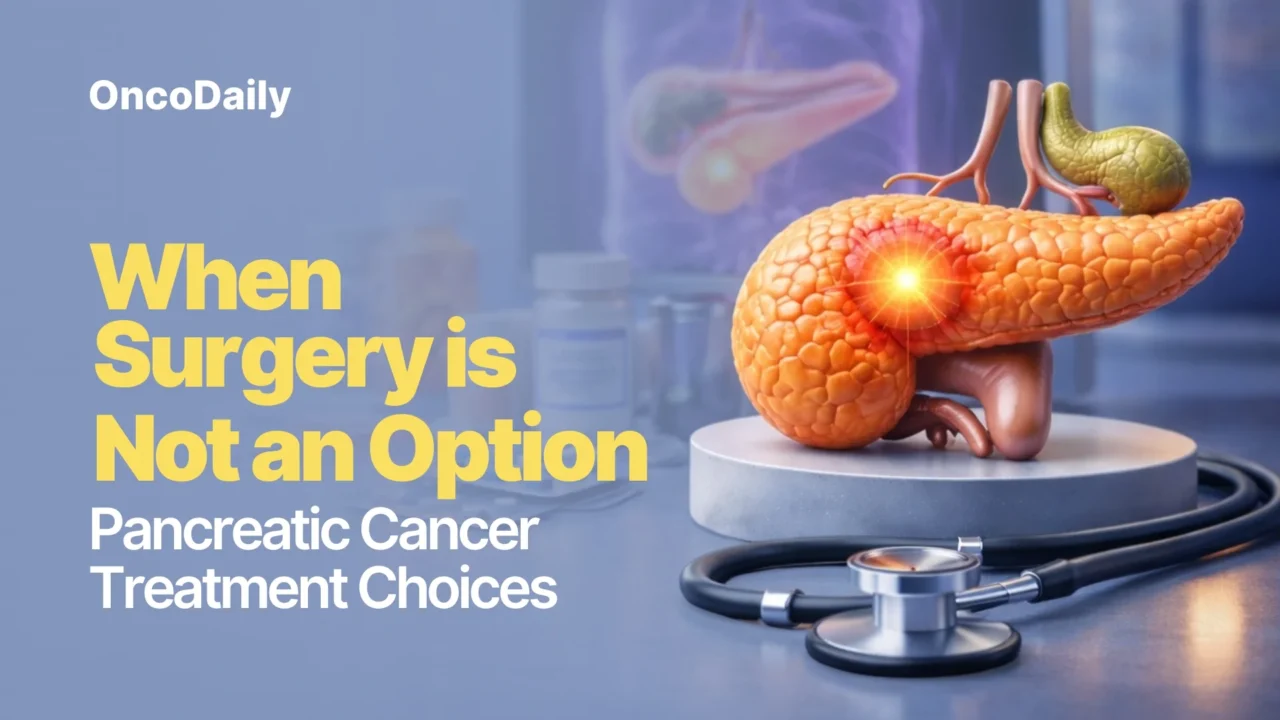
For many patients diagnosed with pancreatic cancer, surgery offers the only potential path toward long-term disease control. However, the reality is that most patients are not eligible for surgery at diagnosis. Tumors may be locally advanced, involve critical blood vessels, or have already spread to distant organs. In these situations, understanding when surgery is not an option: pancreatic cancer treatment choices becomes essential for patients, families, and caregivers navigating a complex and emotionally challenging landscape.
Although the absence of surgery can feel discouraging, it does not mean that treatment stops or that meaningful benefit is impossible. Modern pancreatic cancer care offers multiple non-surgical strategies aimed at prolonging survival, controlling symptoms, and improving quality of life.
Read About Pancrearic Cancer on OncoDaily
Why Surgery Is Often Not Possible in Pancreatic Cancer
Pancreatic cancer is notorious for late detection. Early symptoms are vague, and the pancreas is located deep in the abdomen, allowing tumors to grow silently. By the time symptoms such as jaundice, weight loss, or pain appear, the disease is frequently advanced.
Surgery may not be an option for several reasons. In locally advanced disease, the tumor may encase major blood vessels such as the superior mesenteric artery or celiac axis, making safe resection impossible. In metastatic disease, cancer has spread to organs such as the liver or lungs, and removing the primary tumor does not improve survival (Conroy et al., 2018). Patient-related factors, including frailty or significant comorbidities, may also preclude major surgery.
These realities underscore the importance of understanding when surgery is not an option: pancreatic cancer treatment choices and how they are used in clinical practice.
The Role of Systemic Chemotherapy
Chemotherapy is the cornerstone of treatment when surgery is not feasible. Systemic therapy targets cancer cells throughout the body, addressing both visible tumors and microscopic disease.
Combination chemotherapy regimens have significantly improved outcomes over the past decade. Multi-agent therapies have demonstrated superior survival compared with older single-agent approaches, particularly in patients with good performance status (Conroy et al., 2011; Von Hoff et al., 2013).
Chemotherapy serves several purposes. In metastatic disease, it aims to prolong survival and relieve symptoms. In locally advanced disease, it may control tumor growth and, in rare cases, downstage the cancer enough to reconsider surgery. Even when surgery remains impossible, effective chemotherapy can offer meaningful months or years of disease control.
Chemoradiation for Local Disease Control
For patients with locally advanced pancreatic cancer, chemoradiation may play a role after initial chemotherapy. Radiation therapy targets the primary tumor and surrounding tissues, while chemotherapy enhances radiosensitivity.
The goal of chemoradiation is not cure but local control—reducing tumor growth that could cause pain, bowel obstruction, or bleeding. Clinical trials have shown that carefully selected patients may benefit from improved local disease control, though its impact on overall survival remains debated (Hammel et al., 2016).
In discussions about when surgery is not an option: pancreatic cancer treatment choices, chemoradiation is often considered for patients whose disease remains confined to the pancreas after systemic therapy.
Targeted Therapies and Precision Medicine
While pancreatic cancer has fewer actionable mutations than some other malignancies, targeted therapies play an important role for select patients. Molecular testing is increasingly recommended to identify rare but clinically meaningful alterations.
Patients with germline or somatic DNA repair defects may benefit from targeted approaches that exploit these vulnerabilities. Similarly, a small subset of tumors with specific molecular features may respond to targeted agents, underscoring the importance of comprehensive testing (Golan et al., 2019).
Although these therapies apply to a minority of patients, they represent an important evolution in when surgery is not an option: pancreatic cancer treatment choices, offering more personalized strategies.
Immunotherapy: Limited but Evolving Role
Unlike melanoma or lung cancer, pancreatic cancer has shown limited responsiveness to immunotherapy. Most pancreatic tumors have an immunosuppressive microenvironment that limits immune activation.
However, rare subsets of pancreatic cancer with high microsatellite instability (MSI-high) or mismatch repair deficiency may respond to immune checkpoint inhibitors (Le et al., 2017). While these cases are uncommon, they highlight the need for molecular testing even when surgery is not an option.
Ongoing research is exploring combination strategies to make immunotherapy more effective in pancreatic cancer, but at present, its role remains limited to specific molecular contexts.
Palliative Care as an Active Treatment Strategy
A critical but often misunderstood component of care is palliative treatment. Palliative care is not synonymous with end-of-life care; rather, it focuses on symptom management, psychosocial support, and quality of life at any stage of disease.
For patients facing when surgery is not an option: pancreatic cancer treatment choices, palliative interventions can dramatically improve daily functioning. Pain control, nutritional support, management of jaundice, and psychological care are integral to comprehensive treatment (Temel et al., 2017).
Early integration of palliative care has been shown to improve quality of life and, in some cancers, even survival, reinforcing its role as a proactive therapeutic approach.
Clinical Trials and Experimental Therapies
Clinical trials are especially important when standard options are limited. Patients who cannot undergo surgery may be eligible for trials evaluating new chemotherapy combinations, targeted agents, immunotherapies, or novel delivery methods.
Participation in clinical trials provides access to emerging treatments and contributes to advancing the field. For many patients, trials represent hope and opportunity within the framework of when surgery is not an option: pancreatic cancer treatment choices.
Symptom-Focused Interventions
Beyond anti-cancer treatments, symptom-focused interventions play a vital role. Procedures such as biliary stenting can relieve jaundice and improve liver function. Nerve blocks may help control severe abdominal pain. Nutritional interventions address weight loss and malabsorption, which are common in pancreatic cancer.
These supportive measures do not treat the cancer directly but profoundly influence comfort, strength, and the ability to tolerate systemic therapy.
Living With Pancreatic Cancer Without Surgery
When surgery is not possible, pancreatic cancer is often managed as a chronic condition. Patients may receive sequential therapies over time, balancing disease control with side effects.
Understanding when surgery is not an option: pancreatic cancer treatment choices helps patients reframe success. Success may mean tumor shrinkage, symptom relief, stable disease, or simply maintaining independence and meaningful activities for as long as possible.
Read About Pancreatic Cancer Cure Rate on OncoDaily
Emotional and Psychological Considerations
The realization that surgery is not an option can be emotionally devastating. Patients may feel grief, fear, or a sense of lost opportunity. Honest communication, psychosocial support, and counseling are essential components of care.
Clear explanations about treatment goals, whether prolonging life, relieving symptoms, or both help patients align expectations and make informed decisions.
Looking Ahead: Progress Beyond Surgery
Although surgery remains central in early-stage pancreatic cancer, advances in non-surgical treatments continue to improve outcomes. Combination chemotherapy, better supportive care, molecular profiling, and innovative research are steadily expanding the possibilities for patients who cannot undergo resection.
As research evolves, when surgery is not an option: pancreatic cancer treatment choices will continue to grow, offering more tailored and effective strategies for a disease that has long been considered one of the most challenging in oncology.
Key Takeaway
When surgery is not possible, pancreatic cancer treatment does not end—it changes focus. Chemotherapy, radiation, targeted therapy, supportive care, and clinical trials together form a comprehensive approach aimed at extending life and preserving quality. Understanding these options empowers patients and families to navigate treatment with clarity, realism, and hope.
You Can Watch More on OncoDaily Youtube TV
Written by Armen Gevorgyan, MD