






Neuroendocrine tumors (NETs) represent a diverse group of neoplasms that can develop in different organs throughout the body. Their biological behavior varies considerably, from slow-growing tumors that may remain undetected for years to more aggressive forms requiring intensive treatment.
One of the greatest challenges in neuroendocrine oncology is delayed diagnosis. Symptoms are often nonspecific and may resemble common gastrointestinal, respiratory, or hormonal conditions, making early recognition difficult.
As advances in molecular imaging, targeted therapies, and radiopharmaceutical treatments continue to expand therapeutic options, understanding the complexity of neuroendocrine tumors remains essential for improving diagnosis, treatment decisions, and patient outcomes.
What Are Neuroendocrine Tumors?
Neuroendocrine tumors (NETs) arise from specialized cells that share characteristics of both nerve cells and hormone-producing endocrine cells. These cells help regulate essential physiological processes, including digestion, metabolism, and hormonal activity.
Because neuroendocrine cells are distributed throughout the body, NETs can develop in several organs, most commonly:
- Small intestine
- Pancreas
- Lungs
- Rectum
- Appendix
- Stomach
Neuroendocrine tumors vary considerably in their biological behavior. Some grow slowly over several years, while others grow more rapidly and spread to distant organs.

Understanding the Different Types of Neuroendocrine Tumors
Not all neuroendocrine neoplasms behave in the same way. Their classification is essential for determining prognosis and selecting appropriate treatment.
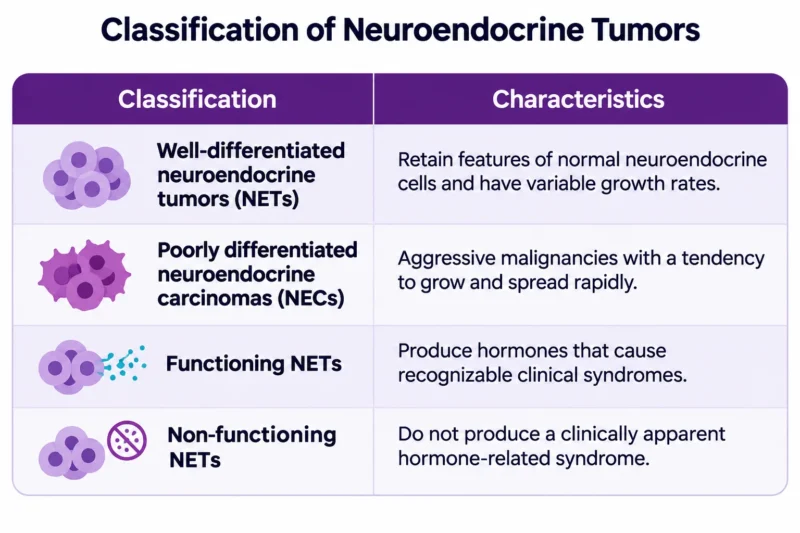
Tumor differentiation, grade, primary location, and disease stage are important factors influencing treatment decisions.
Why Are Neuroendocrine Tumors Difficult to Diagnose?
One of the greatest challenges in managing NETs is recognizing symptoms that may not initially suggest cancer.
Patients experiencing persistent diarrhea, abdominal discomfort, or facial flushing may initially be evaluated for conditions such as irritable bowel syndrome or other gastrointestinal disorders.
Some patients experience no noticeable symptoms at all. In these cases, a neuroendocrine tumor may be discovered incidentally during imaging or procedures performed for unrelated medical reasons/
Recognizing the Symptoms: What Patients Should Know
The clinical presentation of neuroendocrine tumors depends on their location, size, and hormonal activity.
Common symptoms may include:
- Persistent abdominal pain
- Chronic diarrhea
- Facial or upper-body flushing
- Unexplained weight loss
- Persistent fatigue
- Wheezing or difficulty breathing
- Episodes of low blood sugar
- Recurrent peptic ulcers
- Persistent cough in patients with pulmonary NETs
These symptoms are not specific to neuroendocrine tumors. However, persistent, unexplained, or recurrent symptoms warrant medical evaluation.
What Is Carcinoid Syndrome?
Carcinoid syndrome develops in some patients when tumors release excessive amounts of serotonin and other biologically active substances into the systemic circulation.
Its characteristic manifestations include flushing, diarrhea, abdominal discomfort, and wheezing. In some patients, prolonged exposure to these substances can also damage heart valves, leading to a complication known as carcinoid heart disease.
Not all patients with neuroendocrine tumors develop carcinoid syndrome.
Diagnosing Neuroendocrine Tumors: Beyond Conventional Imaging
An accurate diagnosis requires a combination of clinical assessment, laboratory investigations, imaging, and histopathological examination.
Depending on the suspected tumor type, diagnostic investigations may include:
- Blood and urine tests: Assessment of relevant hormones and biomarkers, including 5-HIAA when serotonin secretion is suspected.
- CT and MRI: Identification of the primary tumor and assessment of disease extent.
- Somatostatin receptor PET imaging: Specialized molecular imaging that identifies tumors expressing somatostatin receptors.
- Endoscopy and endoscopic ultrasound: Evaluation of selected gastrointestinal and pancreatic tumors.
- Biopsy and histopathology: Confirmation of tumor type, differentiation, and grade.
- Ki-67 proliferation index: An important parameter in grading gastroenteropancreatic neuroendocrine neoplasms.
Molecular imaging can also help identify patients who may benefit from receptor-targeted treatments.

What Causes Neuroendocrine Tumors?
The exact cause of most neuroendocrine tumors is not fully understood. These tumors develop when genetic changes disrupt the normal regulation of cell growth, allowing neuroendocrine cells to multiply uncontrollably and form a tumor.
Although most neuroendocrine tumors occur sporadically, certain inherited genetic conditions can increase an individual’s risk of developing these tumors.
Genetic Conditions and Risk Factors
According to Mayo Clinic, inherited genetic syndromes associated with an increased risk of certain neuroendocrine tumors include:
- Multiple Endocrine Neoplasia Type 1 (MEN1): Associated with tumors of the parathyroid glands, pituitary gland, and pancreatic and duodenal neuroendocrine cells.
- Multiple Endocrine Neoplasia Type 2 (MEN2): Associated primarily with medullary thyroid carcinoma and pheochromocytoma.
- Von Hippel–Lindau (VHL) Disease: An inherited disorder associated with several tumor types, including pancreatic neuroendocrine tumors.
- Tuberous Sclerosis Complex (TSC): A genetic disorder associated with tumor development in multiple organs, occasionally including pancreatic NETs.
- Neurofibromatosis Type 1 (NF1): Associated with an increased risk of certain neuroendocrine neoplasms, particularly duodenal somatostatinomas and pheochromocytomas.
Having one of these genetic conditions does not necessarily mean that a person will develop a neuroendocrine tumor. However, identifying an inherited predisposition can help guide genetic counseling, appropriate surveillance, and individualized medical care.
There are currently no established strategies to prevent most neuroendocrine tumors.
The Future of Neuroendocrine Tumor Research
Advances in molecular imaging, radiopharmaceutical therapy, and targeted treatments have expanded the therapeutic possibilities for patients with neuroendocrine tumors.
Ongoing research is exploring new radiopharmaceuticals, combination therapies, predictive biomarkers, and strategies to overcome treatment resistance.
Nevertheless, significant unmet needs remain, particularly for patients with aggressive neuroendocrine neoplasms and disease that progresses despite available treatments.
Greater awareness among patients and healthcare professionals, improved access to specialized diagnostic technologies, and continued investment in research remain essential to improving outcomes.
You may also be interested in: FDA Approves Curium’s Bexlutry (Lutetium Lu 177) for SSTR-Positive Gastroenteropancreatic Neuroendocrine Tumors

Written by Mane Hovhannisyan, Editor at OncoDaily.