
Bone metastases occur when cancer cells from the lungs spread to the bones, forming secondary tumors that can weaken the skeleton and cause pain, fractures, and other complications. Bone is one of the most common sites of distant spread in advanced lung cancer, particularly non-small-cell lung cancer (NSCLC).
Research suggests that approximately 30–40% of patients with lung cancer develop bone metastases during the course of their disease, although reported rates vary depending on the population studied, cancer subtype, and methods of detection. The spine, ribs, and pelvis are among the most frequently affected areas (Knapp et al., 2022).
Bone metastases do not necessarily cause symptoms immediately. Some patients discover them during routine cancer staging, while others experience persistent back pain, difficulty walking, or an unexplained fracture. Early recognition is important because bone involvement can increase the risk of serious complications, including spinal cord compression and elevated blood calcium levels.
Although bone metastases generally indicate advanced lung cancer, modern treatments can help control the disease, reduce pain, prevent skeletal complications, and maintain quality of life. Treatment may include targeted therapy, immunotherapy, chemotherapy, radiation therapy, and medications that protect bone strength.
Understanding how lung cancer affects the bones, what symptoms to recognize, and which treatments are available can help patients participate more confidently in decisions about their care.
What Are Bone Metastases in Lung Cancer?
Bone metastases are secondary cancerous growths that develop when malignant cells from a primary lung tumor spread to the bones. Unlike primary bone cancers, which originate in bone tissue, bone metastases contain lung cancer cells and are treated according to the underlying lung cancer.
For example, if a patient with lung adenocarcinoma develops a metastatic lesion in the spine, the lesion remains lung adenocarcinoma rather than becoming a separate type of bone cancer.
Bone is continuously renewed through a process called bone remodeling. This process involves two main types of cells: osteoclasts, which remove old bone, and osteoblasts, which produce new bone. Under normal conditions, these activities remain balanced, allowing the skeleton to maintain its strength.
When lung cancer cells enter bone tissue, they can interfere with this balance. Tumor cells release substances that stimulate bone breakdown, while the damaged bone environment can release growth factors that further support tumor development.
This interaction may lead to several patterns of bone involvement:
- Osteolytic metastases: Areas where bone is destroyed faster than it can be replaced, weakening its structure and increasing fracture risk.
- Osteoblastic metastases: Areas characterized by increased production of abnormal, often structurally altered bone.
- Mixed metastases: Lesions containing both bone destruction and increased bone formation.
Osteolytic lesions are particularly common in NSCLC, although other patterns can also occur.
Bone metastases are considered a form of distant metastatic disease and generally correspond to stage IV lung cancer. Their presence can affect treatment decisions, symptom management, and the need for additional supportive care (Knapp et al., 2022; Macedo et al., 2017).
How Does Lung Cancer Spread to the Bones?
Lung cancer spreads to the bones through a process called metastasis. This happens when cancer cells break away from the original lung tumor, enter the bloodstream or lymphatic system, and travel to distant parts of the body.
Some cancer cells reach the bone marrow, where they can survive, multiply, and form new tumors. Once established, these cells interfere with normal bone remodeling, the continuous process through which old bone is removed and replaced with new bone.
How Bone Destruction Develops
Lung cancer cells can stimulate osteoclasts, the cells responsible for breaking down bone, through biological pathways such as RANK/RANKL signaling.
As bone breakdown increases, calcium and growth factors are released from the bone tissue. Some of these substances can further support cancer growth, creating a cycle of bone destruction and tumor progression.
Over time, affected bones may become weaker and more vulnerable to fractures. For example, metastases in the spine can cause vertebral compression fractures, while lesions in weight-bearing bones, such as the femur, may increase fracture risk during everyday activities.
Not all patients with lung cancer develop bone metastases. The risk depends on factors such as cancer stage, tumor biology, and molecular characteristics (Knapp et al., 2022).
Where Does Lung Cancer Most Commonly Spread in the Bones?
Lung cancer bone metastases most frequently affect the axial skeleton, particularly the spine, ribs, and pelvis. These regions contain substantial amounts of bone marrow and have vascular characteristics that can facilitate the establishment of metastatic cancer cells.
The spine is an especially important site because metastatic lesions may weaken vertebrae or extend toward the spinal canal, where they can compress nerves or the spinal cord.
The ribs and pelvis are also commonly affected. Metastases can additionally develop in the upper portions of long bones, including the femur and humerus.
The following table summarizes approximate locations reported in studies of NSCLC bone metastases.
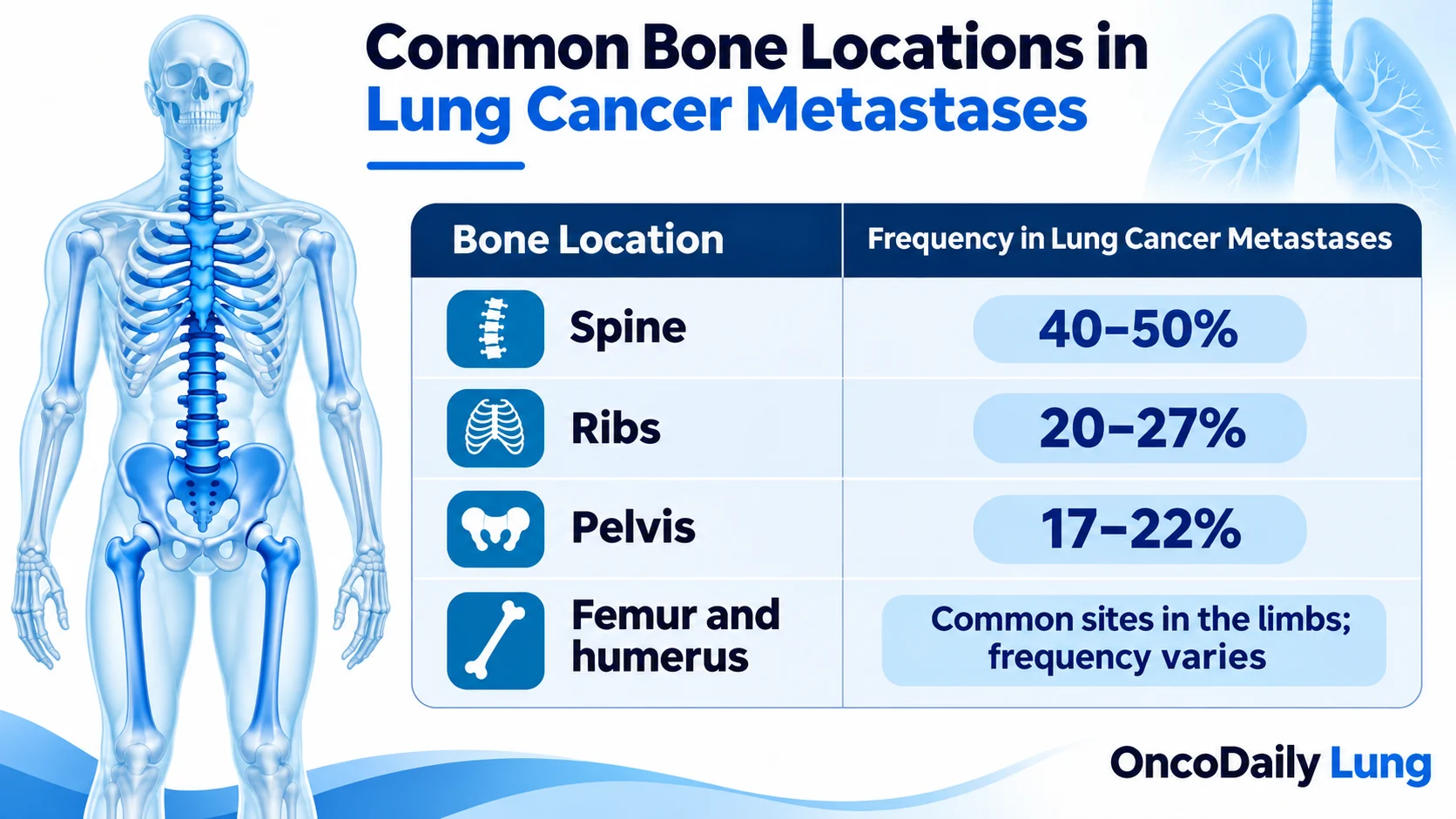
The location of a bone metastasis can influence both symptoms and treatment.
Spinal metastases may cause back or neck pain, vertebral fractures, or neurological complications. Rib metastases can produce localized chest wall pain that becomes more noticeable during movement, coughing, or deep breathing.
Pelvic and femoral lesions may cause pain during walking or standing, particularly when the affected bone carries body weight.
Importantly, bone metastases may be present without noticeable pain. This is why imaging plays an important role in lung cancer staging and monitoring, even when patients do not report skeletal symptoms.
What Are the Symptoms of Lung Cancer Bone Metastases?
Persistent bone pain is the most common symptom of lung cancer bone metastases, although some lesions remain asymptomatic and are detected only during imaging examinations.
Symptoms depend on the location and extent of the metastatic disease, whether the bone has become structurally weakened, and whether nearby nerves or other tissues are affected.
Pain may develop gradually, initially appearing during movement or physical activity before becoming more frequent or persistent.
Common symptoms include:
- Back or neck pain: May occur when metastases affect the vertebrae, sometimes becoming progressively worse.
- Rib or chest wall pain: May be localized to one area and become more noticeable during coughing, deep breathing, or movement.
- Hip or leg pain: Can occur with pelvic or femoral metastases and may interfere with walking.
- Shoulder or arm pain: May develop when metastases involve the humerus or nearby skeletal structures.
- Pathological fractures: Bones weakened by cancer may break following minor trauma or everyday activities.
- Neurological symptoms: Numbness, tingling, weakness, or walking difficulties may indicate pressure on nerves or the spinal cord.
- Hypercalcemia symptoms: Increased calcium levels may cause excessive thirst, frequent urination, constipation, nausea, fatigue, or confusion.
Why Can Bone Metastases Cause High Calcium Levels?
Calcium is stored primarily in the skeleton. When metastatic lesions stimulate excessive bone breakdown, calcium may be released into the bloodstream faster than the body can regulate it.
This can produce hypercalcemia, a potentially serious complication of advanced cancer.
Mild elevations may cause few symptoms, while more severe hypercalcemia can lead to dehydration, impaired kidney function, confusion, and changes in heart rhythm.
Not every patient with bone metastases develops hypercalcemia, and cancer-associated hypercalcemia can also occur through mechanisms unrelated to direct bone destruction.
When Do Symptoms Become an Emergency?
Metastatic spinal cord compression occurs when a tumor, collapsed vertebra, or associated tissue presses on the spinal cord or the nerves at the lower end of the spinal canal.
Warning signs include new or worsening limb weakness, difficulty walking, numbness, loss of sensation around the groin, and new problems controlling urination or bowel movements.
These symptoms require immediate emergency medical assessment. Early diagnosis and treatment are essential because prolonged compression may cause permanent neurological damage.
NICE guidance recommends MRI as soon as possible, and within 24 hours, when metastatic spinal cord compression is suspected (NICE, 2023).
What Does Bone Metastasis Pain Feel Like?
Bone metastasis pain is often described as a deep, persistent ache that seems to originate from within the affected bone rather than from the surrounding muscles or skin.
Patients may describe the pain as dull, throbbing, gnawing, or pressure-like. However, pain characteristics vary considerably, and no single pattern can reliably identify metastatic disease.
In the early stages, pain may occur intermittently or become noticeable only during certain movements. As bone destruction progresses, it may become more constant and interfere with sleep or daily activities.
Several patterns can occur.
Pain at rest or during the night: Bone metastasis pain may become particularly noticeable when a person is resting or lying down. Nighttime pain can be concerning when it is persistent or progressively worsening, but it is not specific to cancer.
Pain during movement or weight-bearing: Metastases in the pelvis, femur, or vertebrae can cause pain when walking, standing, changing position, or lifting objects. Increasing pain with weight-bearing may also indicate that a bone is at risk of fracture.
Radiating or nerve-related pain: When a spinal lesion compresses a nerve root, pain may spread from the back into the chest, arm, or leg. This pain can feel sharp, shooting, burning, or electric and may be accompanied by tingling or numbness.
Sudden severe pain: A sudden increase in localized pain, particularly after a minor movement or injury, may indicate a pathological fracture and requires urgent medical evaluation.
It is important to recognize that most back, hip, and shoulder pain is caused by conditions unrelated to cancer, including muscle strain, arthritis, or degenerative spinal disorders.
Even in people with established lung cancer, new pain does not automatically mean that the disease has spread. Clinical assessment and imaging are necessary to determine the cause.

How Are Bone Metastases in Lung Cancer Diagnosed?
Diagnosing bone metastases involves evaluating a patient’s symptoms, medical history, cancer characteristics, laboratory findings, and imaging results.
In patients with newly diagnosed lung cancer, imaging is often performed as part of the staging process to determine whether the disease has spread beyond the chest.
Patients already receiving treatment may need additional investigations if they develop new bone pain, unexplained fractures, or neurological symptoms.
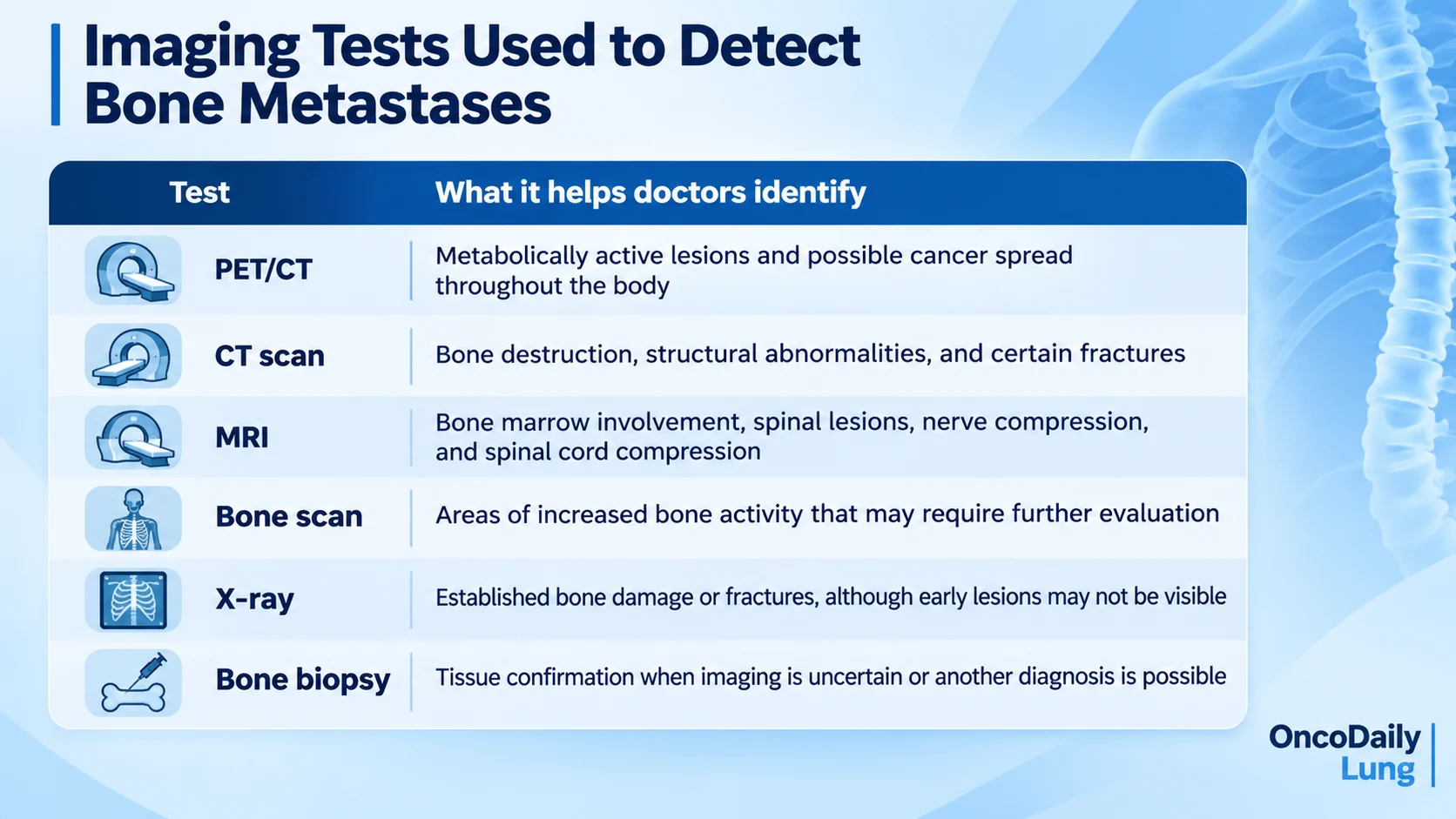
FDG-PET/CT is widely used in NSCLC staging because it can identify metabolically active disease in multiple organs, including bones. However, inflammatory conditions and other noncancerous processes can also produce abnormal uptake.
CT provides detailed information about bone structure and may reveal destructive lesions or fractures.
MRI is particularly valuable when spinal metastases or spinal cord compression are suspected because it provides detailed images of bone marrow, nerves, and surrounding soft tissues.
A bone scan may be used in selected circumstances, although it can be less sensitive for predominantly osteolytic lesions than FDG-PET/CT.
Can Blood Tests Detect Bone Metastases?
Blood tests can identify complications associated with bone involvement, but they cannot independently confirm or exclude bone metastases.
Doctors may request serum calcium, alkaline phosphatase, kidney function, and a complete blood count.
Elevated calcium can suggest hypercalcemia, while increased alkaline phosphatase may reflect abnormal bone turnover. However, these results are not specific to metastatic cancer.
A biopsy may be necessary when imaging findings are uncertain, when a lesion could have another cause, or when tissue is needed to guide treatment decisions.
The diagnostic approach should be individualized according to the patient’s cancer history, symptoms, and imaging findings (Knapp et al., 2022; Macedo et al., 2017).
How Are Lung Cancer Bone Metastases Treated?
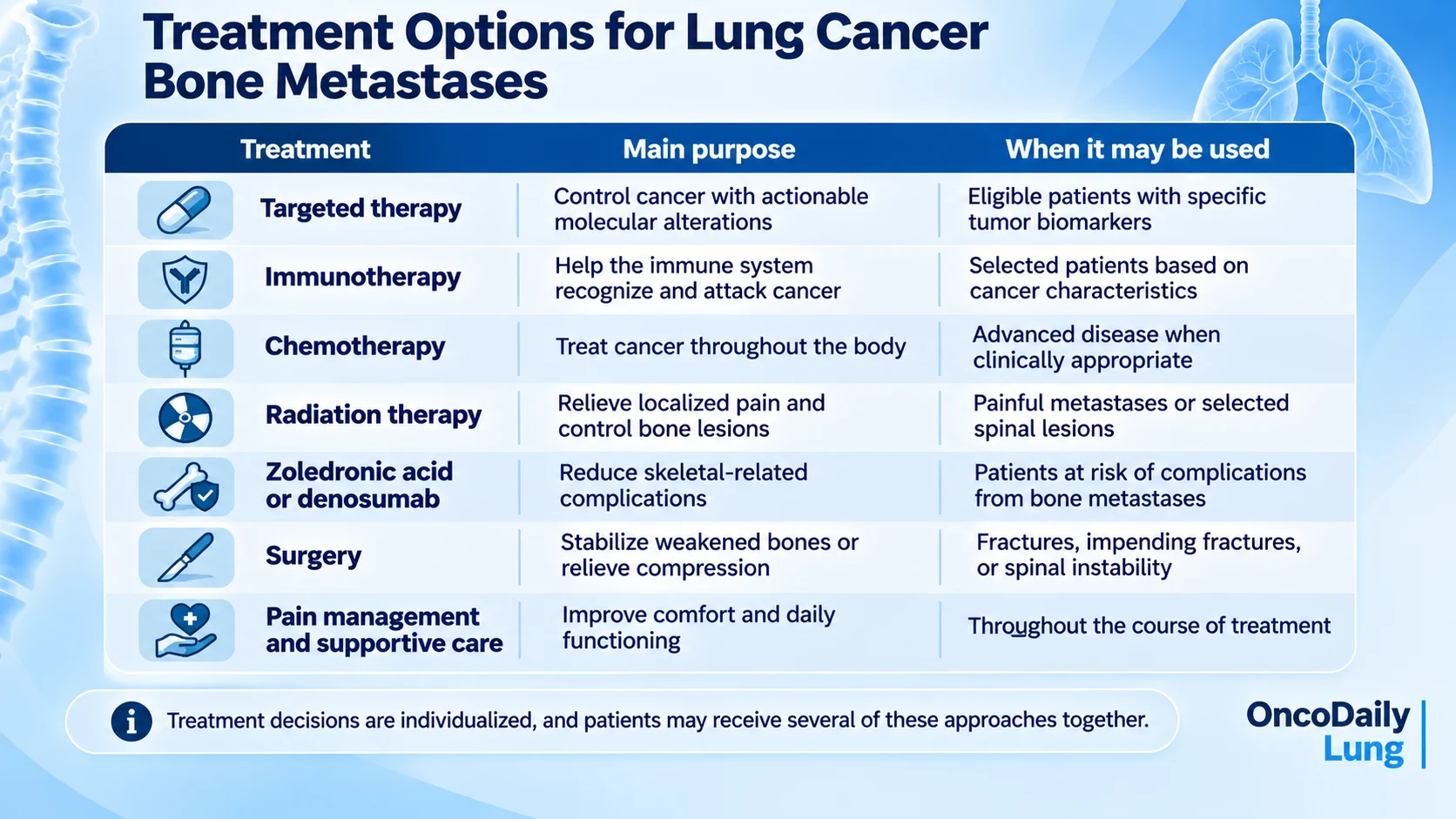
Treatment of lung cancer bone metastases aims to control cancer growth, relieve pain, prevent fractures, and maintain quality of life. The approach depends on the type of lung cancer, the extent of bone involvement, molecular characteristics, and the patient’s overall health.
Systemic Cancer Treatment
Systemic therapies target cancer cells throughout the body, including those that have spread to the bones. Treatment may include chemotherapy, immunotherapy, targeted therapy, or combinations of these approaches.
For patients with non-small-cell lung cancer (NSCLC), molecular testing can identify alterations such as EGFR, ALK, or ROS1 that may respond to targeted treatments. When treatment is effective, bone lesions may stabilize or show signs of healing, although weakened bones can remain vulnerable to fractures.
Radiation Therapy for Bone Pain
Radiation therapy is commonly used to relieve pain caused by bone metastases. It targets cancer cells in affected areas, helping reduce tumor activity and improve symptoms.
Treatment may involve one or several sessions, depending on the location of the metastasis and the patient’s condition. Pain relief often develops over several weeks (Alcorn et al., 2024).
Bone-Modifying Medications
Medications such as zoledronic acid and denosumab help slow bone destruction and reduce the risk of fractures and other skeletal complications.
These treatments are used alongside anticancer therapy. Doctors monitor calcium levels, kidney function when appropriate, and dental health because complications such as low calcium and osteonecrosis of the jaw can occur (Knapp et al., 2022).
Surgery and Bone Stabilization
Surgery may be necessary when metastases weaken bones, cause fractures, or create spinal instability. For example, a weakened femur may require stabilization to prevent a fracture and preserve mobility.
Selected patients may also benefit from minimally invasive procedures to strengthen affected bones or relieve pain.
Pain Management and Supportive Care
Pain management may involve anti-inflammatory medications, opioids, or treatments for nerve-related pain, depending on symptom severity.
Rehabilitation, mobility support, and palliative care can help patients maintain independence and improve quality of life alongside cancer treatment.
New limb weakness, difficulty walking, or loss of bladder or bowel control requires emergency evaluation, as these may indicate spinal cord compression.
Can Lung Cancer Bone Metastases Be Cured?
Lung cancer that has spread to the bones is generally classified as stage IV disease and, in most cases, cannot be completely cured with current treatments.
However, incurable does not mean untreatable. Advances in targeted therapy, immunotherapy, radiation therapy, and supportive care have improved treatment options for patients with metastatic lung cancer.
Some patients experience prolonged disease control, particularly when their tumors have molecular alterations that respond to targeted therapies. Treatment outcomes depend on the cancer subtype, molecular profile, extent of metastases, overall health, and response to therapy.
Can Bone Metastases Disappear After Treatment?
Bone metastases can respond to treatment, becoming smaller or less active on imaging studies such as PET/CT. Some damaged areas may also show signs of bone repair, although these changes do not necessarily mean that all cancer cells have disappeared.
For patients with a limited number of metastases, known as oligometastatic disease, more intensive treatment may be considered. In selected cases, systemic therapy may be combined with surgery or focused radiation to control individual lesions (Management of Lung Cancer Presenting with Solitary Bone Metastasis, 2022).
How Long Can Someone Live With Lung Cancer Bone Metastases?
Survival varies considerably, depending on the cancer type, molecular characteristics, extent of disease, and response to treatment.
Older studies often reported median survival measured in months after bone metastases were diagnosed. However, these estimates may not fully reflect outcomes with modern targeted therapies and immunotherapy.
Some patients, particularly those with actionable molecular alterations or sustained treatment responses, may live considerably longer than historical estimates suggest.
There is no single life expectancy for everyone with lung cancer bone metastases. Prognosis should be discussed individually with the treating oncologist, considering the patient’s specific disease and available treatment options (Knapp et al., 2022).
Sources
- Knapp BJ, Devarakonda S, Govindan R. Bone Metastases in Non-Small Cell Lung Cancer: A Narrative Review. Journal of Thoracic Disease. 2022;14(5):1696–1712. DOI: 10.21037/jtd-21-1502
- Alcorn S, Artal Cortés Á, Bradfield L, et al. External Beam Radiation Therapy for Palliation of Symptomatic Bone Metastases: An ASTRO Clinical Practice Guideline. Practical Radiation Oncology. 2024;14(5):377–397. DOI: 10.1016/j.prro.2024.04.018
- Nistor CE, Ciuche A, Cucu AP, et al. Management of Lung Cancer Presenting with Solitary Bone Metastasis. Medicina.2022;58(10):1463. DOI: 10.3390/medicina58101463
- National Institute for Health and Care Excellence (NICE). Spinal Metastases and Metastatic Spinal Cord Compression. NICE Guideline NG234. Published September 6, 2023. Official guideline
FAQ
Can Lung Cancer Spread to the Bones Without Causing Pain?
Yes. Bone metastases do not always cause noticeable symptoms, particularly in their early stages. Some patients discover bone involvement during routine staging examinations, such as PET/CT or CT scans. As metastases progress, they may cause pain, fractures, or other complications.
Is Back Pain Always a Sign That Lung Cancer Has Spread to the Bones?
No. Back pain is common and can result from muscle strain, arthritis, or spinal conditions unrelated to cancer. However, persistent or worsening back pain in someone with lung cancer should be evaluated, especially if it occurs at night or is accompanied by weakness, numbness, or difficulty walking.
Can Bone Metastases From Lung Cancer Shrink With Treatment?
Yes. Bone metastases may shrink, become less active, or show signs of healing following chemotherapy, targeted therapy, immunotherapy, or radiation therapy. However, even when treatment is effective, damaged bones may remain weakened and require additional monitoring or protection.
Can Patients With Lung Cancer Bone Metastases Walk and Exercise?
Many patients can remain physically active, depending on the location and severity of their bone metastases. Gentle activities, such as walking, may help maintain strength and mobility. However, patients with weakened bones, particularly in the spine, pelvis, or femur, should consult their healthcare team before exercising to reduce the risk of fractures.
Are Lung Cancer Bone Metastases Always Stage IV Cancer?
Yes. When lung cancer spreads to distant bones, it is classified as stage IV metastatic lung cancer. Although this usually means the disease cannot be cured, modern treatments can help control cancer growth, relieve symptoms, and improve quality of life. Some patients experience prolonged disease control, particularly when effective targeted therapies or immunotherapies are available.