Lung cancer care is entering a new era shaped by earlier risk detection, ultra-precise molecular profiling, streamlined treatment delivery, and stronger prevention strategies. From blood-based signatures that may identify lung cancer risk years before diagnosis to evolving insights into rare genomic alterations and same-day radiotherapy workflows, this week’s conversations reflect how rapidly the field is moving beyond a one-size-fits-all approach.
The latest lung cancer updates also spotlight important public health challenges, including the rising burden of lung cancer among never-smokers, particularly women across Asia-Pacific, as well as the need for clear smoking-cessation guidance in the era of e-cigarettes. Meanwhile, new discussions in oligometastatic disease continue to examine how best to interpret emerging evidence and personalize local and systemic treatment decisions.
In this edition, we highlight 10 essential lung cancer posts featuring key perspectives on squamous NSCLC education, EGFR compound mutations, NRG1 fusions, early detection biomarkers, prevention, SABR innovation, vaping-related risk, and more. These updates offer a timely look at the research, clinical questions, and patient-focused advances shaping the future of lung cancer care.
“Squamous non-small cell lung cancer accounts for approximately 30% of lung cancer cases.
Learn more about this subtype, including how it is diagnosed and the available treatment options, through LUNGevity Foundation’s NSCLC Patient Gateway.
Read more: https://lnkd.in/gUCB7PZT
Additional resource: https://lnkd.in/guvW3Bef ”
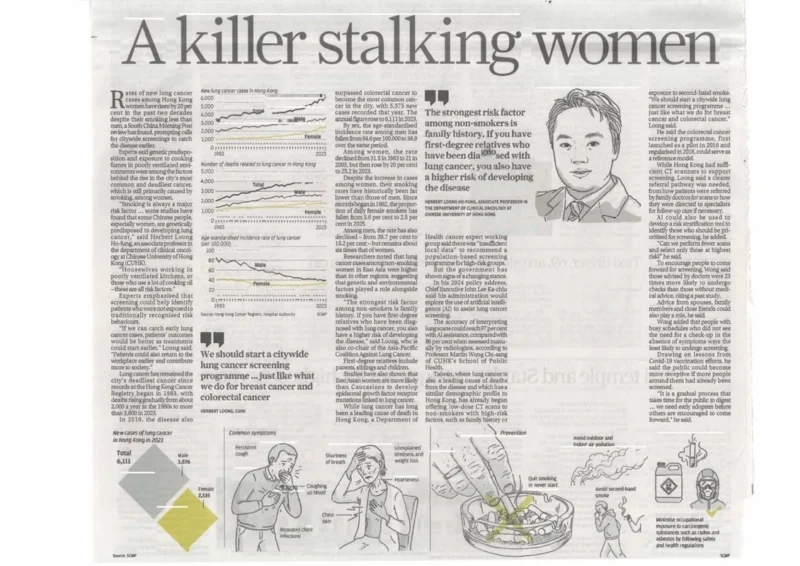
”Thanks South China Morning Post for their coverage on the increasing incidence of lung cancer, amongst people who have never smoked esp. In women in Hong Kong and the Asia Pacific region. This is an emerging and urgent public health issue that warrants coordinated action by all stakeholders.
Incidentally – the title and the picture is a bit misleading. I am merely a messenger, not a killer.”
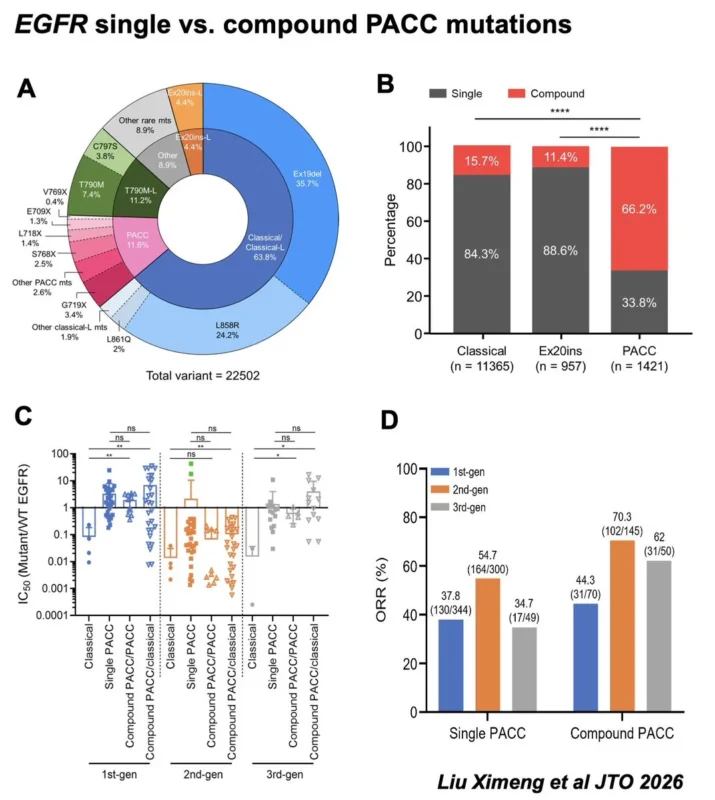
“New online from our group at The University of Texas MD Anderson Cancer Center on ultra-precision oncology in lung cancer.
Analysis from over 22,000 EGFR-mutant tumor samples identified PACC mutations in 12% of cases (A).
While classical and Ex20 mutations more commonly occur as single mutations, PACC mutations are more frequently (66%) observed as compound mutations (B).
PACC/PACC and PACC/classical-like compound mutations function biologically similar to single PACC mutations, NOT classical mutations (C).
Compound PACC mutations demonstrate greater sensitivity to EGFR TKIs than single PACC mutations (D).”
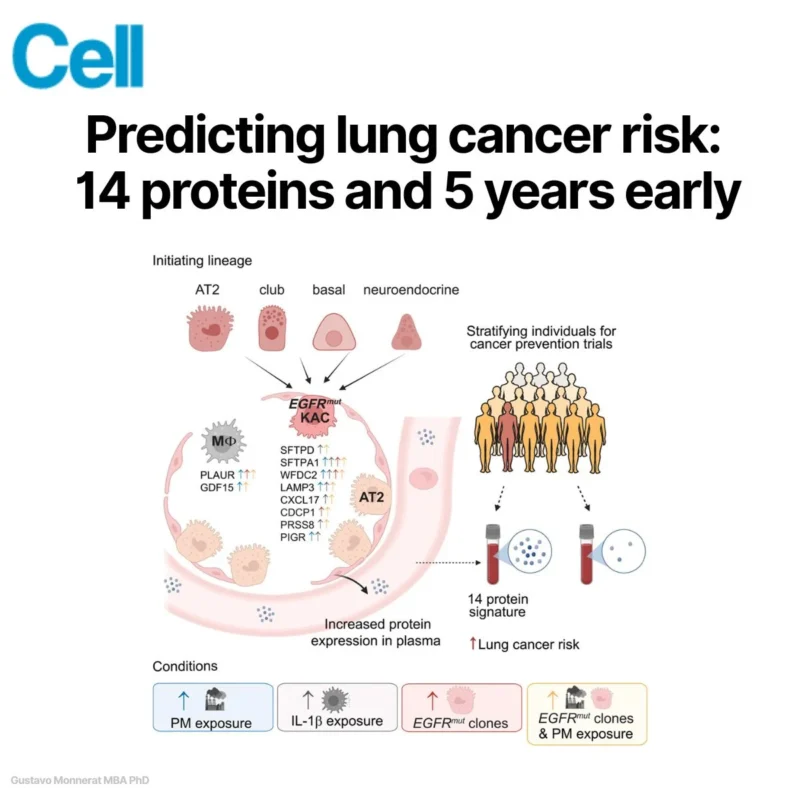
“A promising step toward lung cancer interception.
Researchers identified a 14-protein plasma signature that predicts lung cancer risk more than 5 years before diagnosis, validated across 8 independent cohorts. The signature was linked to smoking, particulate matter exposure, IL-1β signaling, and early tumor-promoting cellular states in the lung.
Importantly, the biomarker also appeared to identify individuals most likely to benefit from IL-1β inhibition in the CANTOS study, potentially lowering the number needed to treat for lung cancer prevention.
Key implications:
Blood-based risk stratification years before diagnosis
Insights into inflammation-driven lung carcinogenesis
Potential enrichment strategy for future prevention trials
A step toward precision cancer prevention rather than population-wide intervention
Could circulating protein signatures help identify patients for targeted lung cancer prevention strategies before cancer develops?”
”5 years. That’s how early a 14-protein blood test predicts lung cancer in a new Cell paper.
The model was built on 48,099 UK Biobank participants, validated in 8 independent cohorts, and reached AUC 0.865
The proteins are tied to air pollution exposure (PM2.5 exposure), IL-1β signaling, and oncogenic mutations.
In a retrospective re-analysis of CANTOS, individuals with a high signature score had an Number needed to trea of 55 to prevent one lung cancer case with anti-IL-1β therapy.
Caveat:
The CANTOS analysis is exploratory. Prospective validation still needed before any clinical use.
Ref: Pandya et al., Cell 2026.”
“This month’s edition of Radiotherapy and Oncology includes this brilliant paper led by Dr Neil Wallace and A/Prof Susan Harden and colleagues at the Peter MacCallum Cancer Centre.
In a world first, they report a pilot study of ‘one stop shop’ of single day treatment of lung cancer with stereotactic ablative radiotherapy.
Early lung cancer can be treated by radiotherapy within a single hospital visit
Patients are satisfied with same-day sim-plan-and-treat SABR for early lung cancer
Modern technology and workflows allow more expedient radiotherapy planning
Congratuations to all the team including:
Mark Burns, Vanessa Panettieri, Nick Hardcastle, Michael MacManus, Shankar Siva, Mark Shaw, Mary Duffy.”
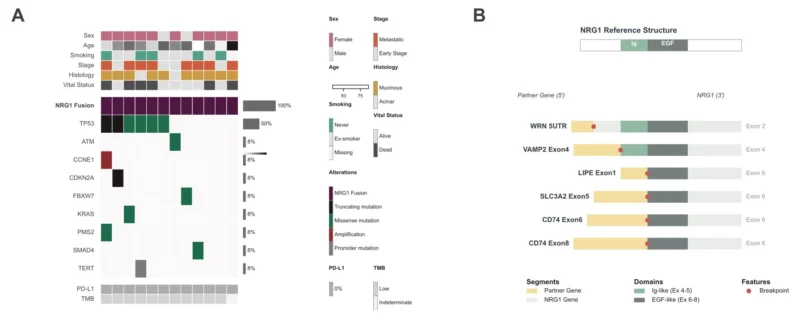
“NRG1 Fusions in NSCLC.
In a real-world cohort of 1,536 non-squamous NSCLC cases evaluated with paired DNA/RNA NGS, NRG1 fusions were detected in 0.8%, higher than historical estimates.
Most cases were invasive mucinous adenocarcinomas, PD-L1 negative and TMB-low. Metastatic patients without access to targeted therapy had a median OS of only 7.9 months.
RNA sequencing matters.”
“Novel Blood-Based Diagnostic Tool Offers Early Warning for Lung Cancer
Researchers have identified a new blood-based risk score capable of predicting lung cancer development up to five years before a formal clinical diagnosis, according to findings published this Thursday.
The study, which marks a significant shift toward proactive oncology, utilizes a specialized biomarker analysis to identify high-risk individuals long before traditional symptoms or imaging abnormalities emerge. By pinpointing these biological indicators, the medical community aims to transition from late-stage treatment to early intervention for the world’s deadliest cancer….”
“New in Nature Medicine: vaping after quitting raises lung cancer risk (Korean cohort, 4.5M).
Risk versus complete quitters:
Incidence aHR 1.56 (1.24–1.97).
LC death aHR 2.00 (1.28–3.15).
For clinicians: go for complete cessation, not a switch to e-cigs!”
“Are you trying to make sense of conflicting data for treating oligometastatic lung cancers? Us too! Here’s a summary from our fellow Dr. Niall O’Dwyer ”
Discover more articles like this on OncoDaily
Written by Nare Hovhannisyan, MD