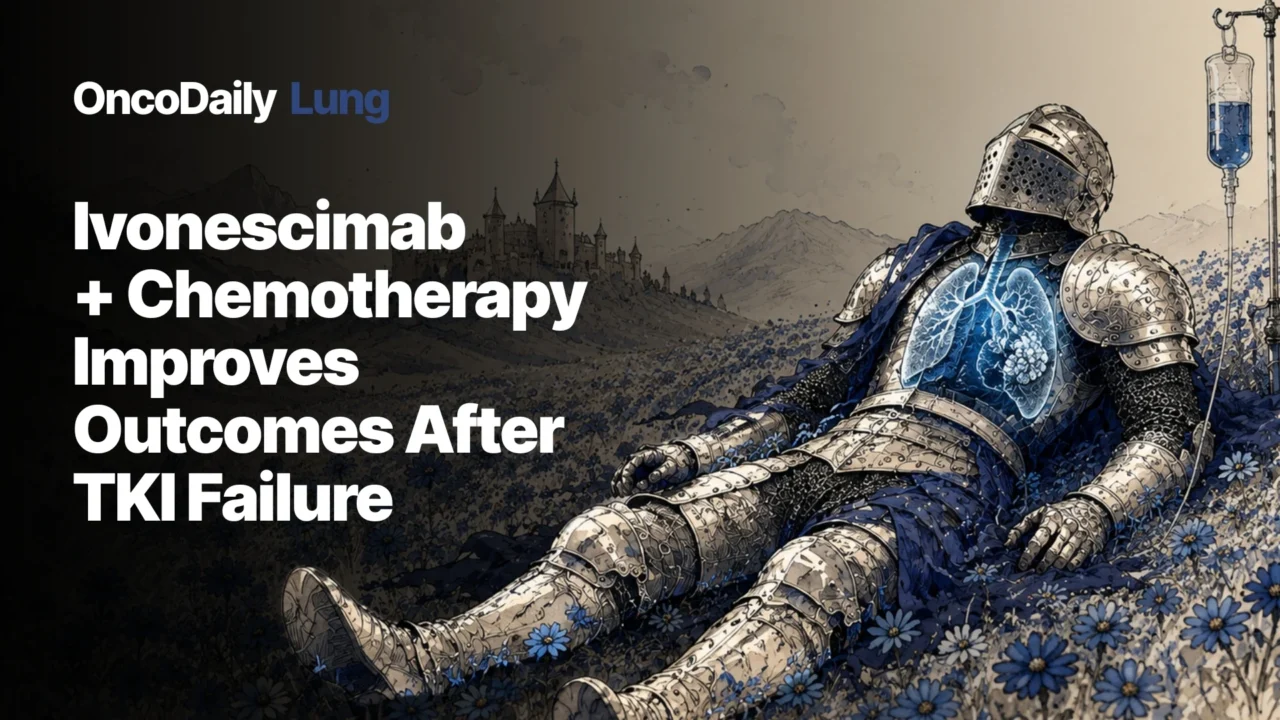
The treatment journey for patients with EGFR-mutated non-small-cell lung cancer (NSCLC) has been transformed by third-generation EGFR tyrosine kinase inhibitors (TKIs), particularly osimertinib, which have become a cornerstone of modern targeted therapy.
However, resistance remains inevitable for most patients. Once disease progression occurs after EGFR-TKI therapy, treatment options become significantly more challenging. Historically, platinum-based chemotherapy has remained the standard approach, but outcomes have been limited, highlighting the need for new strategies.
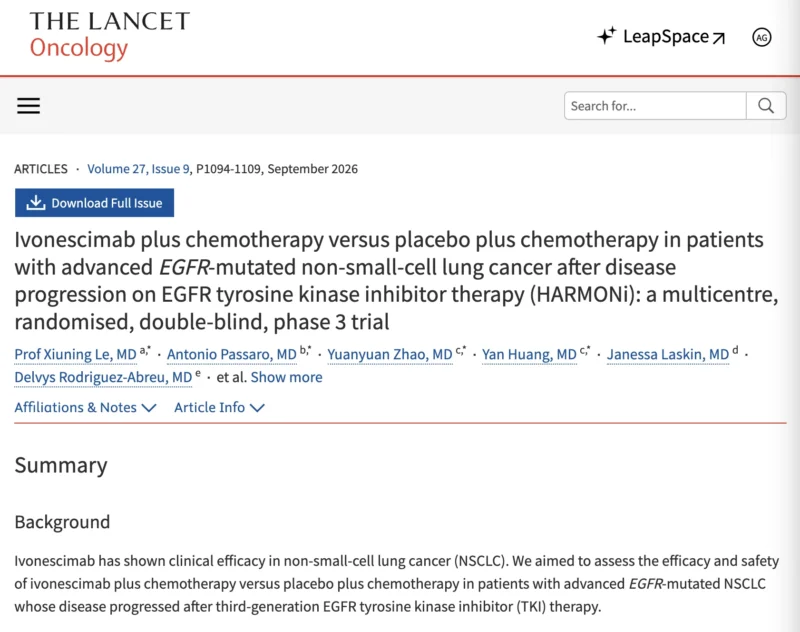
A new phase 3 trial published in The Lancet Oncology provides important evidence that combining chemotherapy with a next-generation immune-vascular targeted approach (Ivonescimab) may improve outcomes in this difficult-to-treat population.
The HARMONi trial evaluated ivonescimab plus chemotherapy compared with placebo plus chemotherapy in patients with advanced EGFR-mutated NSCLC whose disease progressed after third-generation EGFR-TKI therapy.
The results demonstrate a significant improvement in progression-free survival, introducing a potential new treatment option for patients after EGFR-TKI resistance.
Why EGFR-TKI Resistance Remains a Major Challenge
EGFR mutations represent one of the most clinically important genomic alterations in NSCLC. The development of targeted therapies has dramatically improved outcomes, allowing many patients to achieve prolonged disease control.
Despite these advances, tumors eventually develop mechanisms that allow them to escape EGFR inhibition.
Resistance can occur through multiple pathways, including:
- acquisition of additional molecular alterations
- activation of alternative signaling pathways
- changes in the tumor microenvironment
- reduced sensitivity to targeted inhibition
After progression on third-generation EGFR TKIs, chemotherapy has historically provided modest benefit.
Previous trials evaluating immune checkpoint inhibitors alone or in combination with chemotherapy have produced limited activity in EGFR-driven tumors, partly because these cancers often demonstrate an immunologically distinct tumor microenvironment.
This has created a major clinical question:
Can the biology of EGFR-mutated tumors be altered enough to make immunotherapy strategies effective?
Ivonescimab: Targeting Two Pathways at Once
Ivonescimab is a bispecific antibody designed to simultaneously target:
- PD-1, a key immune checkpoint pathway that suppresses antitumor immune activity
- VEGF, a major driver of tumor angiogenesis and immune suppression
The rationale behind this combination is that VEGF inhibition may help overcome immune resistance by modifying the tumor microenvironment, improving immune cell activity, and enhancing the effects of checkpoint blockade.
Rather than targeting immune escape and tumor vascular biology separately, ivonescimab aims to address both mechanisms through a single therapeutic approach.
HARMONi Trial Design
HARMONi was a multicenter, randomized, double-blind, placebo-controlled phase 3 trial conducted across 114 cancer centers and hospitals in Asia, Europe, and North America.
The study enrolled patients with:
- Stage IIIB/IIIC or IV nonsquamous EGFR-mutated NSCLC
- Disease progression after third-generation EGFR-TKI therapy
- ECOG performance status of 0 or 1
A total of 438 patients were randomly assigned:
- Ivonescimab + chemotherapy group: 219 patients
- Placebo + chemotherapy group: 219 patients
Patients received either ivonescimab or placebo combined with:
- pemetrexed
- carboplatin
every three weeks.
Progression-Free Survival Improves With Ivonescimab Combination
The primary endpoint of the study was progression-free survival (PFS).
After a median follow-up of 22.3 months, the trial showed a clinically meaningful improvement:
Median PFS:
- 6.8 months with ivonescimab plus chemotherapy
- 4.4 months with chemotherapy alone
This represented a:
- 52% reduction in the risk of progression or death
- (HR 0.52; 95% CI 0.41–0.66; p<0.0001).
The magnitude of benefit suggests that combining immune and vascular targeting with chemotherapy may provide additional disease control after EGFR-TKI resistance.
Overall Survival Shows a Positive Trend
Overall survival remains the most important endpoint in metastatic cancer.
At a median follow-up of 29.7 months:
Median overall survival:
- 16.8 months with ivonescimab plus chemotherapy
- 14.0 months with chemotherapy alone
The hazard ratio for death was:
- HR 0.79 (95% CI 0.62–1.01)
showing a favorable numerical trend, although the reported analysis did not demonstrate statistical significance.
These findings suggest potential survival improvement, while longer follow-up will help define the full impact of the combination.
Safety Profile: Increased Immune-Vascular Toxicity Requires Attention
Adding ivonescimab increased treatment-related toxicity, but no new safety signals were identified.
The most common grade 3–4 treatment-related adverse events included:
- decreased neutrophil count
- decreased white blood cell count
- decreased platelet count
- anemia
Serious treatment-related adverse events occurred in:
- 28% of patients receiving ivonescimab plus chemotherapy
- 15% receiving chemotherapy alone
Treatment-related deaths occurred in both groups, with different causes reported.
The findings highlight the importance of careful patient selection and toxicity monitoring when combining chemotherapy with immune and angiogenesis-directed therapy.
Changing the Role of Immunotherapy in EGFR-Mutated Lung Cancer
For years, EGFR-mutated NSCLC has represented one of the major exceptions to the success of immune checkpoint inhibitors.
Unlike many smoking-associated lung cancers, EGFR-driven tumors frequently have:
- lower tumor mutational burden
- less immune activation
- distinct immune microenvironment characteristics
As a result, immunotherapy approaches that revolutionized treatment in other NSCLC populations have shown limited benefit in EGFR-mutated disease.
The HARMONi results suggest that simply adding PD-1 inhibition may not be enough. Instead, reshaping the tumor microenvironment through VEGF blockade may be a key strategy to unlock immune activity.
Where Ivonescimab Fits in the Evolving EGFR Landscape
The post-osimertinib treatment landscape is rapidly expanding.
Recent approaches include:
- chemotherapy combinations
- EGFR/MET-directed strategies
- antibody-drug conjugates
- immune-vascular combinations
The challenge now is determining which patients benefit from which strategy.
Important future questions include:
- Can biomarkers identify patients most likely to benefit from ivonescimab?
- Does benefit differ according to resistance mechanism?
- How should ivonescimab compare with emerging targeted approaches?
- Could earlier use of immune-vascular combinations improve outcomes?
The Bottom Line
The HARMONi phase 3 trial represents an important step forward for patients with EGFR-mutated NSCLC after progression on third-generation EGFR-TKI therapy.
Ivonescimab plus chemotherapy significantly improved progression-free survival compared with chemotherapy alone, reducing the risk of progression or death by nearly half.
While overall survival data remain immature, the findings suggest that combining PD-1 inhibition with VEGF blockade may overcome some of the immune resistance historically associated with EGFR-driven lung cancer.
The next era of EGFR-mutated NSCLC treatment may not rely on a single pathway, but on strategically combining targeted therapy, immune modulation, and tumor microenvironment remodeling.
Reference
- Le X, Passaro A, Zhao Y, et al.
Ivonescimab plus chemotherapy versus placebo plus chemotherapy in patients with advanced EGFR-mutated non-small-cell lung cancer after disease progression on EGFR tyrosine kinase inhibitor therapy (HARMONi): a multicentre, randomised, double-blind, phase 3 trial.
The Lancet Oncology. 2026;27:1094-1109.