Rare genomic alterations in non-small cell lung cancer are no longer peripheral findings. They are increasingly shaping treatment decisions, trial design, sequencing strategies, and the future of precision thoracic oncology.
A new review published in Cancers discusses two particularly challenging molecular groups: EGFR exon 20 insertion-mutated NSCLC and HER2-deregulated NSCLC, including HER2 mutations, amplification, and overexpression.
These alterations represent small subsets of NSCLC, but their clinical importance has grown rapidly. The reason is simple: new targeted agents and antibody-drug conjugates are beginning to change what was once a chemotherapy-dominated treatment landscape.
Why These Alterations Matter
EGFR exon 20 insertions occur in approximately 2–3% of all NSCLC cases and account for around 10–12% of EGFR-mutated tumors. These alterations are more often seen in patients with adenocarcinoma histology, women, and nonsmokers, and brain metastases may be present at baseline in a substantial proportion of patients.
HER2 dysregulation is broader and more complex. HER2 alterations may appear as mutations, gene amplification, or protein overexpression. Activating HER2 mutations occur in around 2–4% of NSCLC, while HER2 dysregulation overall may be seen in about 5% of cases.
The review emphasizes that these are not interchangeable biomarkers. HER2 mutation, amplification, and overexpression may have different biology, different clinical behavior, and different therapeutic implications.
NGS Is No Longer Optional
One of the strongest messages from the review is the importance of comprehensive molecular profiling.
EGFR exon 20 insertions are highly heterogeneous, with more than 100 unique variants described. PCR-based assays may miss rare insertion variants, making next-generation sequencing the preferred method for accurate detection.
The same principle applies to HER2. NGS can detect HER2 mutations and copy-number changes, while HER2 protein overexpression requires immunohistochemistry. However, unlike breast cancer, NSCLC still lacks a fully standardized HER2 IHC scoring system, creating uncertainty in biomarker interpretation.
In practice, precision therapy begins with precision diagnosis.
EGFR Exon 20: From Chemotherapy to Targeted Therapy
For years, platinum-based chemotherapy was the main first-line treatment for metastatic EGFR exon 20 insertion NSCLC. Conventional EGFR TKIs had limited activity because exon 20 insertions create structural changes that reduce drug binding and confer intrinsic resistance.
That landscape changed with amivantamab-based therapy.
In the phase III PAPILLON trial, first-line amivantamab plus carboplatin-pemetrexed improved median progression-free survival compared with chemotherapy alone: 11.4 vs 6.7 months, with an objective response rate of 73% vs 47%. These data supported FDA and EMA approval of amivantamab plus chemotherapy in the first-line setting for advanced EGFR exon 20 insertion NSCLC.
However, toxicity remains important. The review notes higher rates of grade ≥3 treatment-emergent adverse events with the amivantamab combination, as well as infusion reactions, rash, paronychia, edema, and venous thromboembolic events.
New EGFR Exon 20 TKIs Are Changing the Discussion
The next wave of progress is coming from oral EGFR exon 20-directed TKIs.
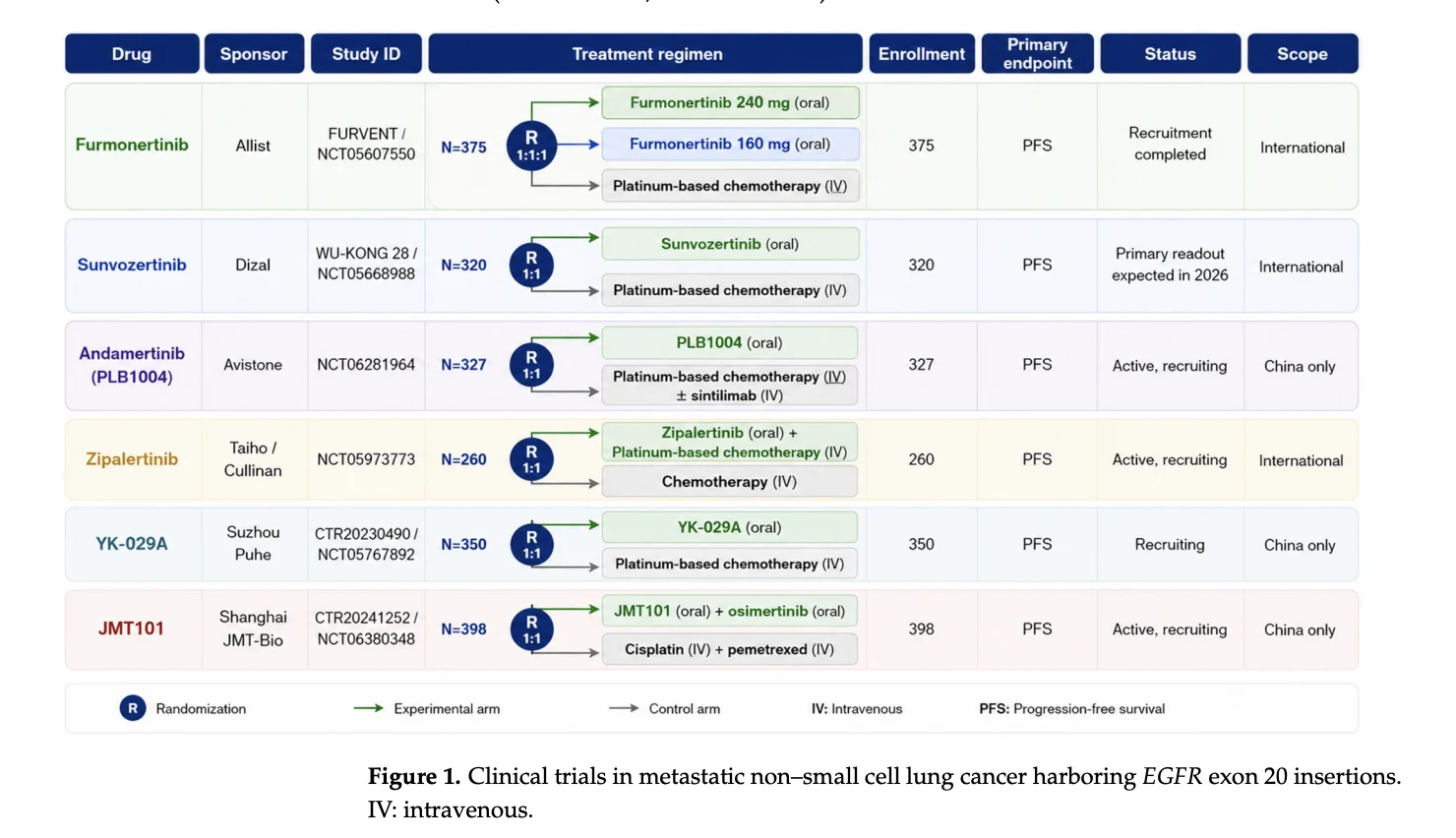
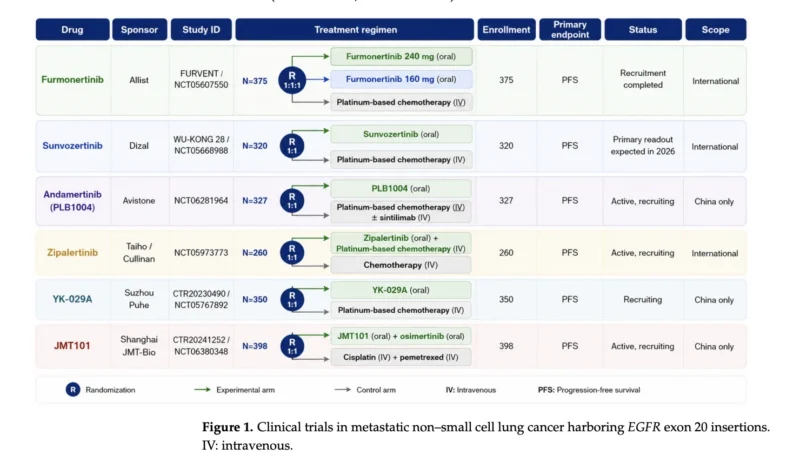
Sunvozertinib has shown activity in platinum-pretreated disease and, in the phase III WU-KONG28 trial, improved first-line PFS compared with platinum-pemetrexed chemotherapy: 10.3 vs 7.5 months. The oral administration and potential intracranial activity make this an important candidate in the evolving first-line setting.
Firmonertinib has demonstrated promising activity in EGFR exon 20 insertion NSCLC, including treatment-naïve and previously treated populations. In the FURMO-003 setting, the confirmed ORR was 44.3%, with median PFS and OS of 8.3 months and 21.2 months, respectively.
Zipalertinib has also shown activity after platinum therapy, including in patients previously exposed to amivantamab. In REZILIENT data, zipalertinib produced objective response rates around the mid-30% to 40% range in selected previously treated populations, with evidence of intracranial activity.
The field is moving quickly, but one challenge remains: most pivotal first-line trials are using chemotherapy as the control arm rather than amivantamab plus chemotherapy. This may make future treatment positioning more difficult.
EGFR Exon 20 Is Not One Disease
The review makes an important biological point: EGFR exon 20 insertions are not uniform.
Near-loop and far-loop insertions may respond differently to targeted therapies. Several TKIs appear more active in near-loop insertions than far-loop insertions, although these findings often come from subgroup analyses with small patient numbers.
This has practical implications. In the future, the exact EGFR exon 20 insertion subtype may help guide whether a patient receives TKI monotherapy, intensified therapy, an antibody-based approach, or a clinical trial.
HER2-Mutant NSCLC: TKIs and ADCs Move Forward
HER2-mutant NSCLC has historically been difficult to treat with older pan-ErbB inhibitors because clinical activity was modest and toxicity was substantial.
That has changed with newer selective HER2 TKIs and HER2-directed ADCs.
Sevabertinib showed encouraging activity in the SOHO-01 study, with an ORR of 64% in previously treated patients without prior HER2 exon 20-directed therapy, 38% after prior HER2-targeted ADCs, and 71% in previously untreated patients. The FDA granted accelerated approval in 2025 for previously treated non-squamous NSCLC with HER2 tyrosine kinase domain activating mutations.
Zongertinib has produced some of the most clinically striking data in HER2-mutant NSCLC. In previously treated HER2 TKD-mutant disease, zongertinib achieved an ORR of 71% and median PFS of 12.4 months. In treatment-naïve patients, the ORR reached 77%, with median PFS of 14.4 months. The review notes that the FDA granted accelerated approval for first-line zongertinib in February 2026 for non-squamous NSCLC with activating HER2 tyrosine kinase domain mutations.
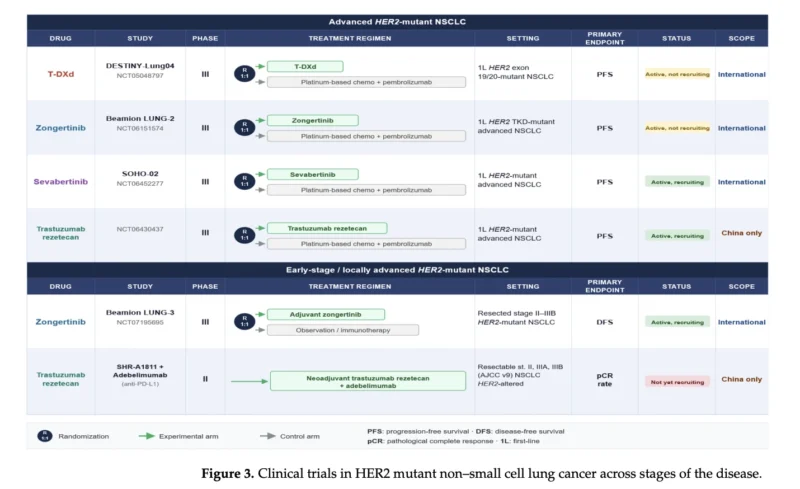
These data suggest that HER2 TKIs may become a major part of first-line treatment, especially if ongoing phase III trials confirm benefit.
Trastuzumab Deruxtecan Remains a Key ADC Standard
HER2-directed ADCs have also reshaped the field.
In HER2-mutant NSCLC, trastuzumab deruxtecan demonstrated clinically meaningful activity in DESTINY-Lung studies. In DESTINY-Lung01, T-DXd at 6.4 mg/kg produced an ORR of 55%, median PFS of 8.3 months, and median OS of 17.8 months, but any-grade interstitial lung disease occurred in 28% of patients.
DESTINY-Lung02 helped define the currently used lower dose of 5.4 mg/kg, maintaining activity while reducing ILD risk. The review also notes intracranial activity in pooled analyses, although the sample size remains limited.
New HER2 ADCs are also emerging. Trastuzumab rezetecan reported an ORR of 73% and median PFS of 11.5 months in the phase II HORIZON-Lung study, with any-grade ILD reported in 7% of patients.
Sequencing Is the Central Unanswered Question
The biggest clinical challenge is no longer whether targeted therapy can work. It is how to sequence the expanding options.
For EGFR exon 20 insertion NSCLC, the sequence may include amivantamab plus chemotherapy, oral exon 20 TKIs, chemotherapy, and possibly ADCs.
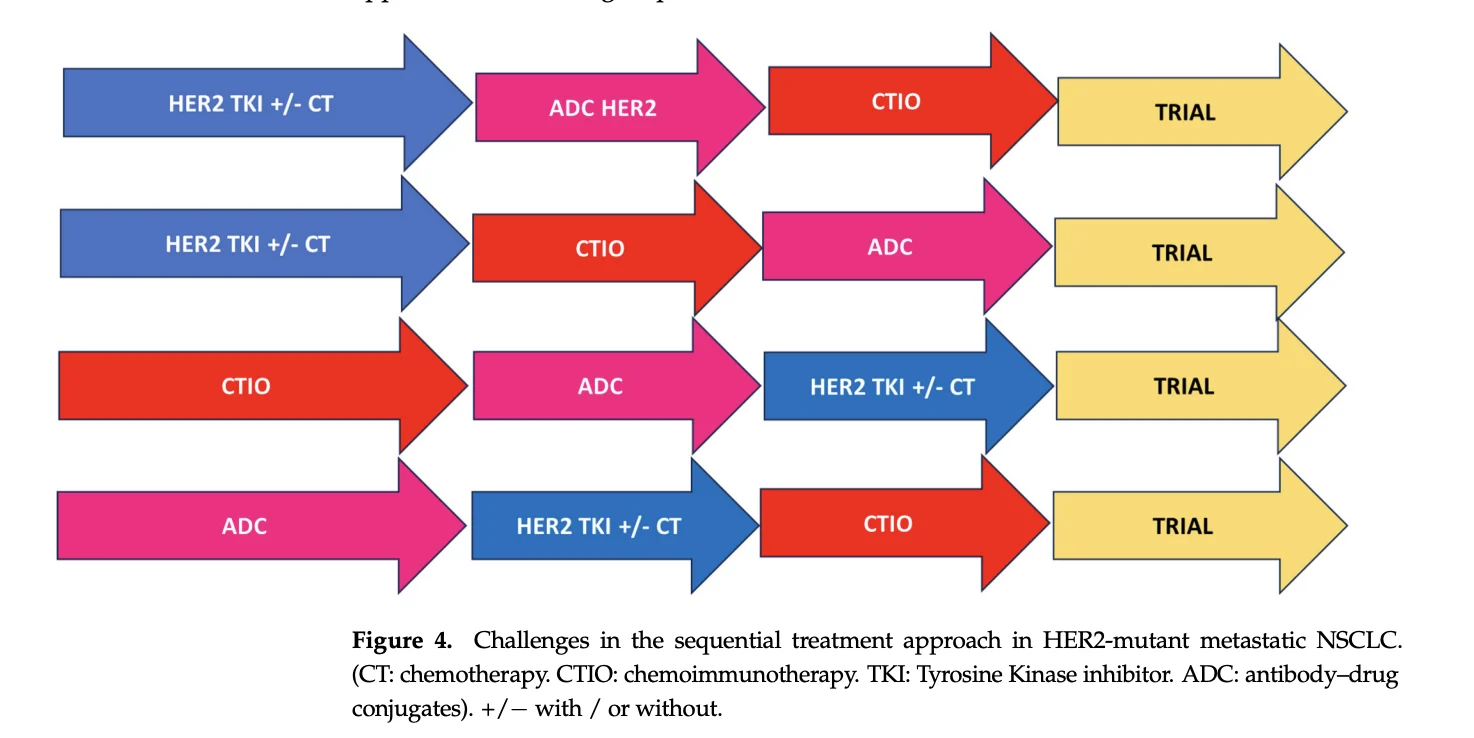
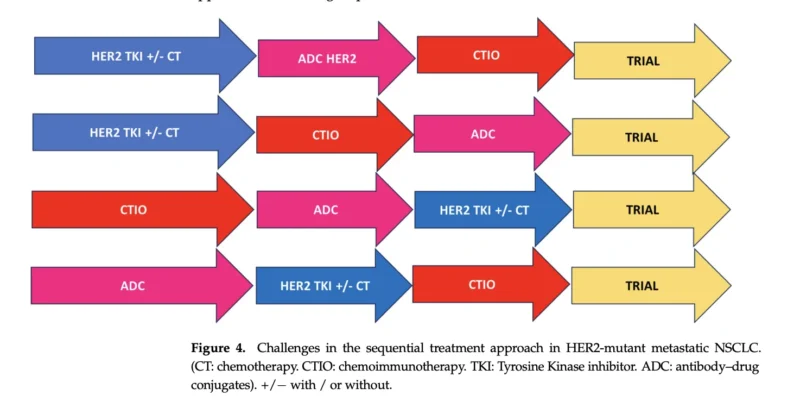
For HER2-mutant NSCLC, the future may include HER2 TKIs, HER2-directed ADCs, chemoimmunotherapy, and clinical trials.
The review’s Figure 4 illustrates this uncertainty clearly, showing several possible sequencing pathways in HER2-mutant metastatic NSCLC: HER2 TKI, ADC, chemoimmunotherapy, and clinical trial strategies in different orders.
The optimal sequence will likely depend on mutation subtype, brain metastases, prior therapy, toxicity risk, access, and resistance mechanisms.
HER2 Overexpression Still Needs Better Definitions
HER2 overexpression is emerging as a potential therapeutic target, especially after tumor-agnostic approvals for HER2 IHC 3+ solid tumors.
However, NSCLC remains complicated. HER2 protein expression is heterogeneous, dynamic, and difficult to standardize. IHC captures only one tissue region at one time point, and there is no NSCLC-specific HER2 IHC scoring system.
This creates uncertainty about how best to use HER2 overexpression as a predictive biomarker in lung cancer.
Earlier-Stage Disease Is the Next Frontier
The review also highlights ongoing trials moving targeted therapy into earlier-stage disease.
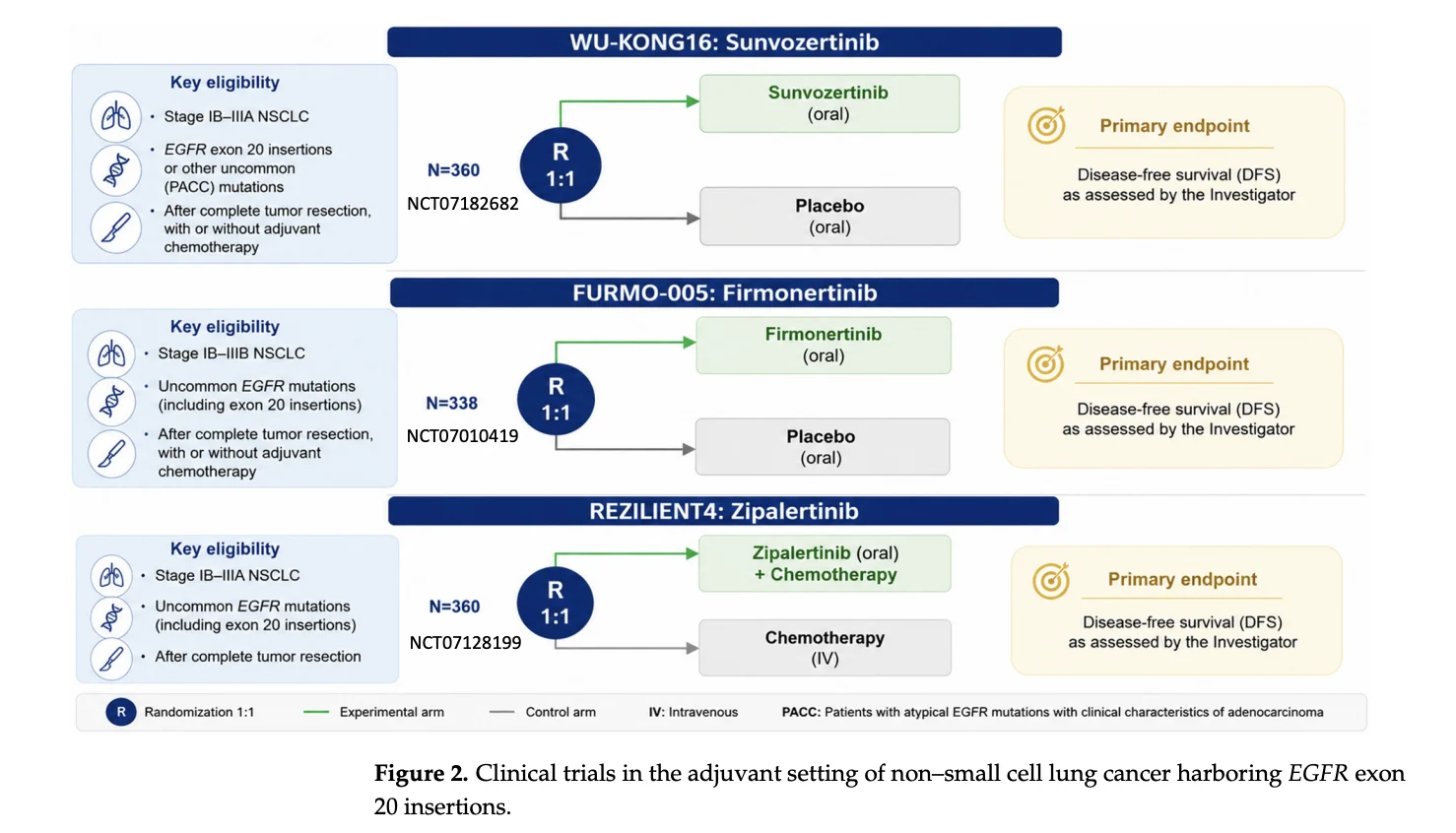
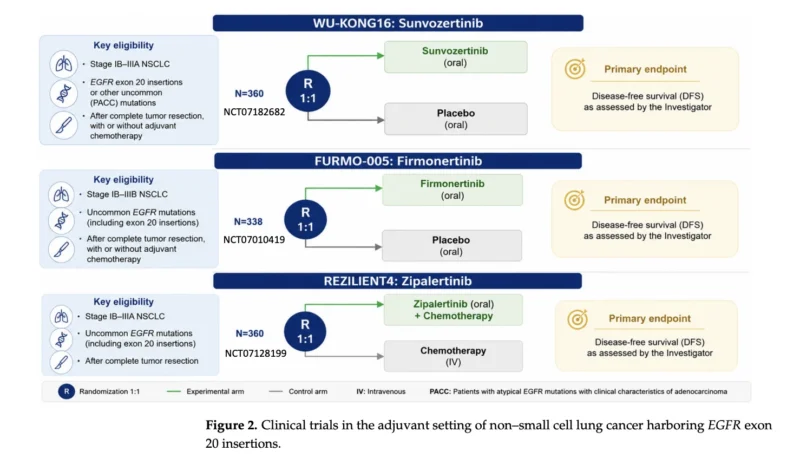
In EGFR exon 20 insertion NSCLC, adjuvant trials are evaluating agents such as sunvozertinib, firmonertinib, and zipalertinib after complete resection.
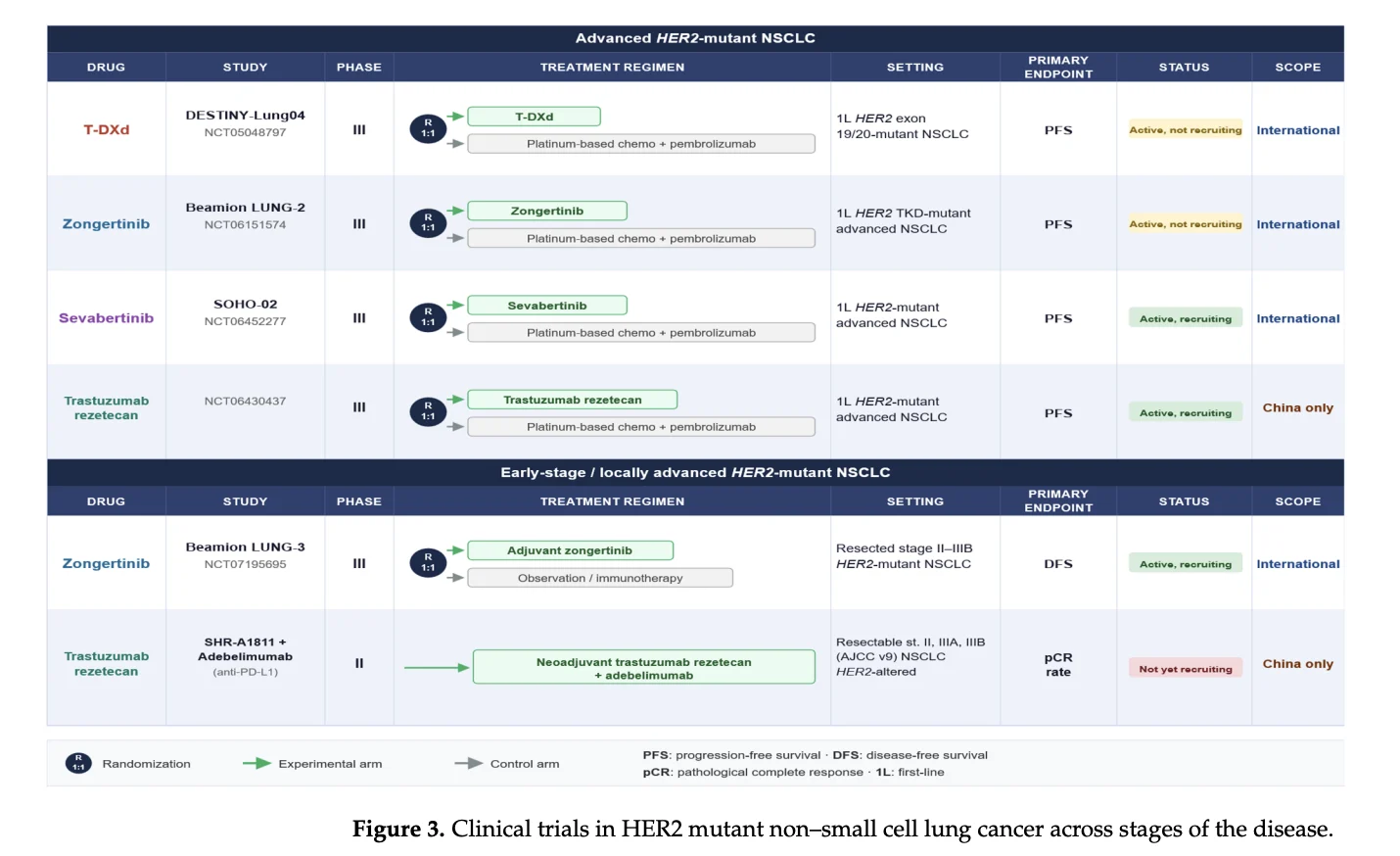
In HER2-mutant NSCLC, the phase III BEAMION-Lung 03 trial is evaluating adjuvant zongertinib after curative-intent surgery in stage II-IIIB disease.
This is an important shift. If targeted therapies can reduce recurrence risk in rare oncogene-driven lung cancers, treatment may move from controlling metastatic disease to preventing relapse.
The Bottom Line
EGFR exon 20 insertion and HER2-deregulated NSCLC are entering a new therapeutic era.
For EGFR exon 20 insertion disease, amivantamab plus chemotherapy has established a first-line antibody-based standard, while oral TKIs such as sunvozertinib, firmonertinib, and zipalertinib are rapidly redefining the field.
For HER2-mutant NSCLC, selective HER2 TKIs such as zongertinib and sevabertinib, together with HER2-directed ADCs such as trastuzumab deruxtecan and trastuzumab rezetecan, are expanding treatment options.
The next challenge is not simply finding active drugs.
It is selecting the right biomarker test, identifying the right mutation subtype, choosing the right first-line therapy, managing toxicity, treating brain disease, and defining the right sequence after progression.
For rare genomic alterations in NSCLC, precision oncology is finally becoming practical — but it is also becoming more complex.
References
- Zullo L, Remon J. New treatment strategies for rare genomic alterations: EGFR exon 20 insertions and HER2-deregulated lung cancer. Cancers. 2026;18:2334. doi:10.3390/cancers18142334.
- Zhou C, Tang K-J, Cho BC, et al. Amivantamab plus chemotherapy in NSCLC with EGFR exon 20 insertions. New England Journal of Medicine. 2023;389:2039-2051.
- Zhou C, Greillier L, Liu G, et al. First-line sunvozertinib in NSCLC with EGFR exon 20 insertion mutations. New England Journal of Medicine. 2026.
- Heymach JV, Ruiter G, Ahn MJ, et al. Zongertinib in previously treated HER2-mutant non-small-cell lung cancer. New England Journal of Medicine. 2025;392:2321-2333.
- Heymach JV, Yamamoto N, Girard N, et al. First-line zongertinib in advanced HER2-mutant non-small-cell lung cancer. New England Journal of Medicine. 2026;394:1675-1684.
- Li BT, Smit EF, Goto Y, et al. Trastuzumab deruxtecan in HER2-mutant non-small-cell lung cancer. New England Journal of Medicine. 2022;386:241-251.