
The American Society of Clinical Oncology (ASCO) has updated its living clinical practice guideline for stage IV non-small cell lung cancer (NSCLC) with driver alterations, establishing lorlatinib as the preferred first-line treatment for ALK-positive disease while retaining alectinib, brigatinib, and ensartinib as strongly recommended alternatives when lorlatinib is unsuitable.
Published online in the Journal of Clinical Oncology on October 29, 2026, the update reflects an important refinement in treatment prioritization, supported by exceptionally durable progression-free survival (PFS) and intracranial disease control in the phase III CROWN trial.
The most striking evidence comes from the seven-year CROWN analysis. Median PFS remained unreached with lorlatinib compared with 9.1 months with crizotinib, with a hazard ratio (HR) of 0.19. At seven years, an estimated 55% of patients receiving lorlatinib remained progression-free compared with 3% receiving crizotinib.
The intracranial findings were similarly notable, with an HR of 0.06 for time to intracranial progression, reinforcing the importance of central nervous system (CNS) efficacy when selecting first-line ALK-targeted treatment.
However, the updated guideline also acknowledges the toxicity considerations associated with lorlatinib, including metabolic abnormalities, weight gain, edema, and neurocognitive or mood-related adverse effects.
The revised recommendations therefore introduce a clearer therapeutic hierarchy without eliminating individualized treatment selection.
Why the Updated ASCO Guideline Matters
The management of metastatic NSCLC with actionable oncogenic alterations has undergone a substantial transformation over the past decade.
Where chemotherapy was once the principal systemic treatment, molecularly targeted therapies now form the foundation of care for patients with alterations involving EGFR, ALK, ROS1, RET, MET, BRAF, HER2, NTRK, and other actionable drivers.
As additional targeted agents become available, clinical decision-making increasingly extends beyond identifying an appropriate molecular target. Oncologists must also determine which agent offers the best balance of systemic efficacy, CNS protection, long-term tolerability, and treatment sequencing.
This challenge is particularly relevant in ALK-positive NSCLC, where several highly active tyrosine kinase inhibitors (TKIs) have demonstrated superior outcomes compared with crizotinib. Historically, alectinib, brigatinib, and lorlatinib have all been widely accepted first-line options. More recently, ensartinib has expanded the range of available second-generation inhibitors.
However, the absence of randomized head-to-head comparisons has complicated efforts to establish a clear hierarchy among these agents. The new ASCO update addresses this issue through a reassessment of available evidence, particularly the unusually mature seven-year CROWN findings.
Importantly, Version 2026.3.4 is a focused living-guideline update rather than a comprehensive replacement of previous recommendations. The literature search extended through August 6, 2026, and the Expert Panel revised two first-line ALK recommendations based on accumulated evidence and earlier analyses.
First-Line ALK-Positive NSCLC: Lorlatinib Becomes the Preferred Option
The most consequential change concerns treatment-naïve patients with advanced ALK fusion-positive NSCLC. Under Recommendation 1.9, ASCO now strongly recommends offering lorlatinib as first-line treatment, supported by high-quality evidence.
Recommendation 1.10 maintains alectinib, brigatinib, and ensartinib as strongly recommended alternatives when lorlatinib is unsuitable because of anticipated toxicity, comorbidities, patient preferences, access limitations, or unacceptable treatment-emergent toxicity despite appropriate management.
Both recommendations carry high evidence quality and strong recommendation strength. This represents an important change in how the available ALK inhibitors are positioned. Rather than presenting several agents as equivalent initial choices, the guideline now identifies lorlatinib as the preferred option based on the durability of systemic and intracranial disease control.
Nevertheless, the recommendation does not mean that lorlatinib must be used in every patient with ALK-positive disease.
The Expert Panel explicitly recognizes that tolerability, comorbidities, and patient priorities may justify selection of another active ALK inhibitor. Consequently, the revised framework is best understood as a preference informed by long-term efficacy rather than a universal mandate.
CROWN: Seven-Year Disease Control Redefines Expectations
The updated recommendation is largely supported by long-term findings from the randomized phase III CROWN study, which compared lorlatinib with crizotinib in previously untreated advanced ALK-positive NSCLC.
With approximately seven years of follow-up, median PFS had still not been reached with lorlatinib, compared with 9.1 months with crizotinib. The HR was 0.19 (95% CI 0.13–0.26), indicating an 81% lower estimated hazard of progression or death. At seven years, estimated PFS remained 55% with lorlatinib versus 3% with crizotinib.
These findings are notable not only for the magnitude of the treatment effect but also for its durability over an exceptionally long observation period.
Among patients without baseline brain metastases, seven-year PFS was 56% with lorlatinib compared with 4% with crizotinib. Among patients with baseline brain metastases receiving lorlatinib, seven-year PFS was 53%. The consistency of long-term disease control across patients with and without baseline CNS involvement provides an important basis for treatment prioritization.
However, overall survival remains an unresolved endpoint. Median OS with lorlatinib has not been reached, and the survival analysis is not yet mature enough to establish the final magnitude of any OS advantage.
The strongest established evidence therefore concerns prolonged PFS and intracranial control rather than confirmed overall survival superiority.
Intracranial Protection: A Defining Advantage
Central nervous system progression is a major clinical challenge in ALK-positive NSCLC. Patients frequently develop brain metastases during the disease course, and inadequate CNS penetration can limit the effectiveness of otherwise active systemic therapies. Lorlatinib was specifically developed to provide potent ALK inhibition with substantial CNS penetration.
In CROWN, median time to intracranial progression remained unreached with lorlatinib compared with 16.4 months with crizotinib. The HR was 0.06 (95% CI 0.03–0.12), representing a 94% reduction in the estimated hazard of intracranial progression.
No new intracranial progression events were observed after the first 30 months of lorlatinib treatment in the seven-year analysis. Among patients with measurable brain metastases at baseline, intracranial complete responses were reported in 71% of patients receiving lorlatinib.
These findings are particularly important when considering the long-term consequences of CNS progression, including neurological symptoms, corticosteroid exposure, radiotherapy requirements, and deterioration in quality of life.
The ASCO panel therefore gives substantial weight to intracranial efficacy when prioritizing first-line treatment. However, the absence of direct comparisons between lorlatinib and other contemporary ALK inhibitors remains an important limitation.
Although the CROWN results are exceptional, they do not independently establish randomized superiority over alectinib, brigatinib, or ensartinib.
Ensartinib: A Strong Alternative Supported by Phase III Evidence
The updated guideline also reinforces the role of ensartinib as an alternative first-line ALK inhibitor. The phase III eXalt3 trial randomized 290 ALK inhibitor-naïve patients to ensartinib or crizotinib. Median PFS was 25.8 months with ensartinib versus 12.7 months with crizotinib, corresponding to an HR of 0.51 (p<0.001).
The objective response rate reached 74% with ensartinib compared with 67% with crizotinib. Intracranial efficacy was also favorable. The CNS response rate was 63.6% with ensartinib versus 21.1% with crizotinib, while the estimated 12-month CNS progression rates were 4.2% and 23.9%, respectively.
The results confirm that ensartinib is an active, CNS-penetrant treatment for ALK-positive metastatic NSCLC. However, a direct comparison between eXalt3 and CROWN would be inappropriate because the studies differed in population characteristics, follow-up duration, and other methodological factors.
The revised ASCO recommendation therefore supports ensartinib as an effective alternative without claiming that it has been shown to be inferior to lorlatinib in a direct randomized trial.
The Clinical Trade-Off: Exceptional Efficacy Versus Long-Term Toxicity
The strongest argument for lorlatinib is the durability of disease control, but its adverse-event profile remains central to first-line treatment selection. In CROWN, grade 3–4 adverse events occurred in 77% of patients receiving lorlatinib compared with 57% receiving crizotinib.
Common adverse events with lorlatinib included hypercholesterolemia in 73%, hypertriglyceridemia in 71%, edema in 58%, and weight gain in 45% of patients. Grade 3–4 hypertriglyceridemia occurred in 26%, weight gain in 24%, and hypercholesterolemia in 22%.
Neurocognitive and mood-related effects also require attention, particularly in older adults or patients with pre-existing neurological or psychiatric conditions. Despite the frequency of adverse events, treatment-related permanent discontinuation occurred in approximately 5% of patients receiving lorlatinib.
An exploratory post hoc analysis found that dose reductions within the first 26 weeks did not appear to compromise subsequent PFS or intracranial disease control. However, these findings should not be interpreted as randomized evidence that dose reduction has no efficacy consequences in every patient.
The guideline acknowledges that the efficacy advantages of lorlatinib must be balanced against treatment burden and individual vulnerability. For patients with substantial metabolic disease, cardiovascular risk factors, neurological comorbidities, or concerns about long-term tolerability, alectinib, brigatinib, or ensartinib may be reasonable initial choices.
This individualized approach is especially important because effective ALK-directed treatment may continue for many years.
Beyond ALK: Precision Oncology Remains the Foundation of Stage IV NSCLC Treatment
Although the revised recommendations specifically concern ALK-positive disease, Version 2026.3.4 consolidates the broader ASCO framework for managing metastatic NSCLC with driver alterations. A central recommendation remains comprehensive molecular testing before treatment selection.
ASCO strongly supports access to validated broad multigene testing using tissue and/or blood, together with appropriate immunohistochemical assessment. The guideline favors comprehensive next-generation sequencing, ideally including RNA-based approaches capable of identifying genomic rearrangements and fusion events.
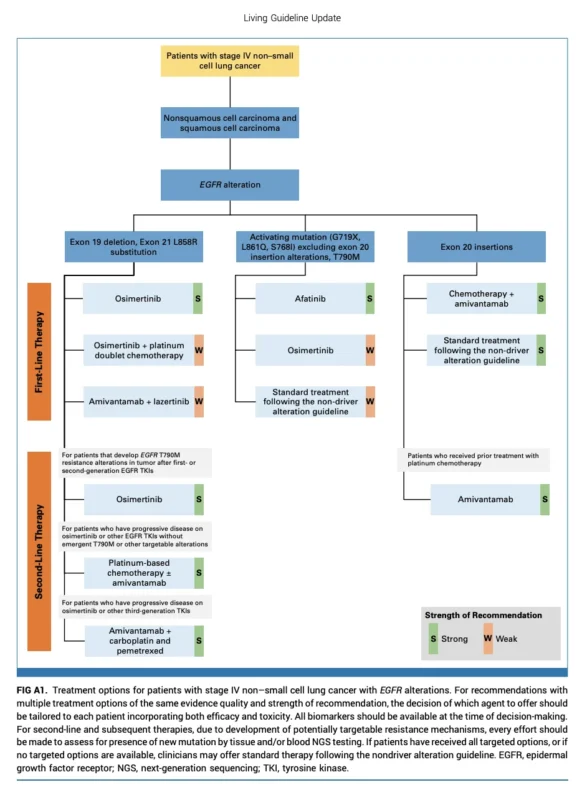
This is particularly important because treatment selection depends on identifying molecular alterations accurately and before initiating systemic therapy. For common EGFR exon 19 deletion and L858R mutations, the guideline continues to support osimertinib plus platinum–pemetrexed chemotherapy or amivantamab plus lazertinib as combination treatment options.
Osimertinib monotherapy remains appropriate for patients not pursuing combination therapy. For EGFR exon 20 insertions, the recommendations include sunvozertinib or platinum-based chemotherapy combined with amivantamab.
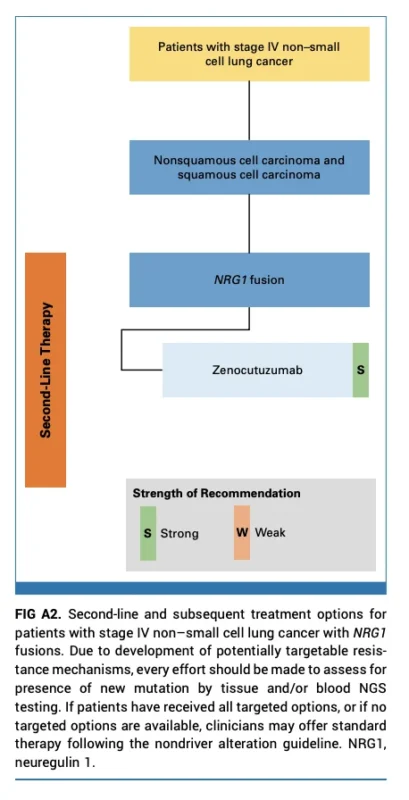
Other established targeted strategies remain available for ROS1 rearrangements, BRAF V600E mutations, MET exon 14 skipping alterations, RET rearrangements, NTRK fusions, and activating HER2 mutations. The consolidated recommendations also recognize newer HER2-targeted options, including zongertinib and sevabertinib, alongside trastuzumab deruxtecan in appropriate previously treated patients.
Importantly, these broader treatment options should not be misrepresented as newly introduced by the October 2026 ALK-focused revision.
Treatment After Progression: Molecular Reassessment Is Essential
The guideline also emphasizes reassessment at disease progression. Resistance to targeted therapy may emerge through secondary driver mutations, bypass pathway activation, or histological transformation. Consequently, tissue biopsy and repeat molecular profiling can provide clinically actionable information that may not be apparent from radiological progression alone.
In EGFR-mutated NSCLC progressing after osimertinib, the consolidated recommendations include platinum-based chemotherapy combined with amivantamab and other treatment options depending on previous therapy and patient characteristics.
For patients with acquired MET amplification following EGFR TKI treatment, osimertinib combined with tepotinib or savolitinib remains a conditional option supported by low-quality evidence in the guideline.
Datopotamab deruxtecan may also be considered after progression on osimertinib and platinum chemotherapy. The broader clinical principle is that resistance should be investigated rather than automatically treated as a biologically uniform event.
For ALK-positive disease, treatment after progression similarly depends on the initial inhibitor, resistance mutation profile, previous drug exposure, and CNS involvement. The growing effectiveness of first-line lorlatinib creates additional sequencing questions, particularly as resistance mechanisms become more complex after prolonged ALK suppression.
What the October 2026 Update Does Not Yet Include
An important consideration is the timing of evidence assessment. Although Version 2026.3.4 was published on October 29, the underlying literature search extended through August 6, 2026. As a result, newly presented results from ESMO Congress 2026 were not part of that systematic review.
This includes recently reported phase III evidence from studies such as SAFFRON and SANOVO, evaluating savolitinib-based strategies in different EGFR/MET-defined treatment settings, and Krascendo 1, which directly compared divarasib with established KRAS G12C inhibitors.
These results may influence future therapeutic positioning, but they should not be presented as evidence already incorporated into the current recommendations. This distinction illustrates the value—and inherent limitations, of a living clinical practice guideline.
Guidelines provide a structured, evidence-based framework, while newly presented trial results may require additional assessment before being integrated into formal recommendations.
OncoDaily Takeaway
ASCO Living Guideline Version 2026.3.4 introduces an important shift in first-line ALK-positive metastatic NSCLC by identifying lorlatinib as the preferred treatment while preserving other active ALK inhibitors as strong alternatives for appropriately selected patients.
The change is driven by exceptional long-term results from CROWN. Seven-year PFS remained 55% with lorlatinib compared with 3% with crizotinib, while the HR for intracranial progression was 0.06. These findings establish a particularly strong rationale for prioritizing durable systemic and CNS disease control.
However, the evidence does not demonstrate direct randomized superiority over alectinib, brigatinib, or ensartinib. Treatment choice must still consider tolerability, comorbidities, access, and individual patient preferences.
The addition of ensartinib to the revised first-line framework further recognizes the importance of maintaining multiple effective options, particularly for patients who cannot tolerate lorlatinib or for whom its long-term toxicity profile may be problematic.
Beyond ALK-positive disease, the update reinforces the broader role of comprehensive molecular testing and biomarker-guided treatment selection in stage IV NSCLC. Resistance assessment, sequential targeted therapy, and access to appropriate molecular diagnostics remain essential components of modern care.
The most important message is that precision oncology is moving beyond identifying the correct target toward selecting the optimal inhibitor based on durability, intracranial protection, safety, and patient-centered priorities.
For ALK-positive metastatic NSCLC, the seven-year CROWN findings have now shifted guideline prioritization. Future updates will determine how emerging therapies and more mature survival outcomes reshape the increasingly complex treatment landscape.
Source
Reuss J, Ismaila N, Doroshow DB, et al. Therapy for Stage IV Non-Small Cell Lung Cancer With Driver Alterations: ASCO Living Guideline, Version 2026.3.4. Journal of Clinical Oncology. Published online October 29, 2026.