
Cancer cells do not communicate with the immune system only through cytokines, receptors, and secreted signals. During direct contact, cells can also physically exchange pieces of their plasma membranes and with them, functional proteins that temporarily change how each cell behaves.
This process is known as trogocytosis. It occurs rapidly between tumor cells and immune cells and can reshape the proteins displayed on their surfaces without requiring a new mutation or permanent genetic change.
What makes trogocytosis especially interesting in cancer is its dual role. In some settings, immune cells use it to recognize and damage tumor cells. In others, malignant cells exploit the same process to reduce antigen visibility, acquire immune-regulatory proteins, and interfere with cellular immunotherapies. (Kim et al., 2025; Guha & Banerjee, 2025).
Understanding this membrane exchange is therefore becoming increasingly relevant to cancer immunology, particularly as treatments such as CAR T-cell therapy depend on stable antigen recognition and sustained immune-cell function.
What Is Trogocytosis and How Does It Occur in Cancer?
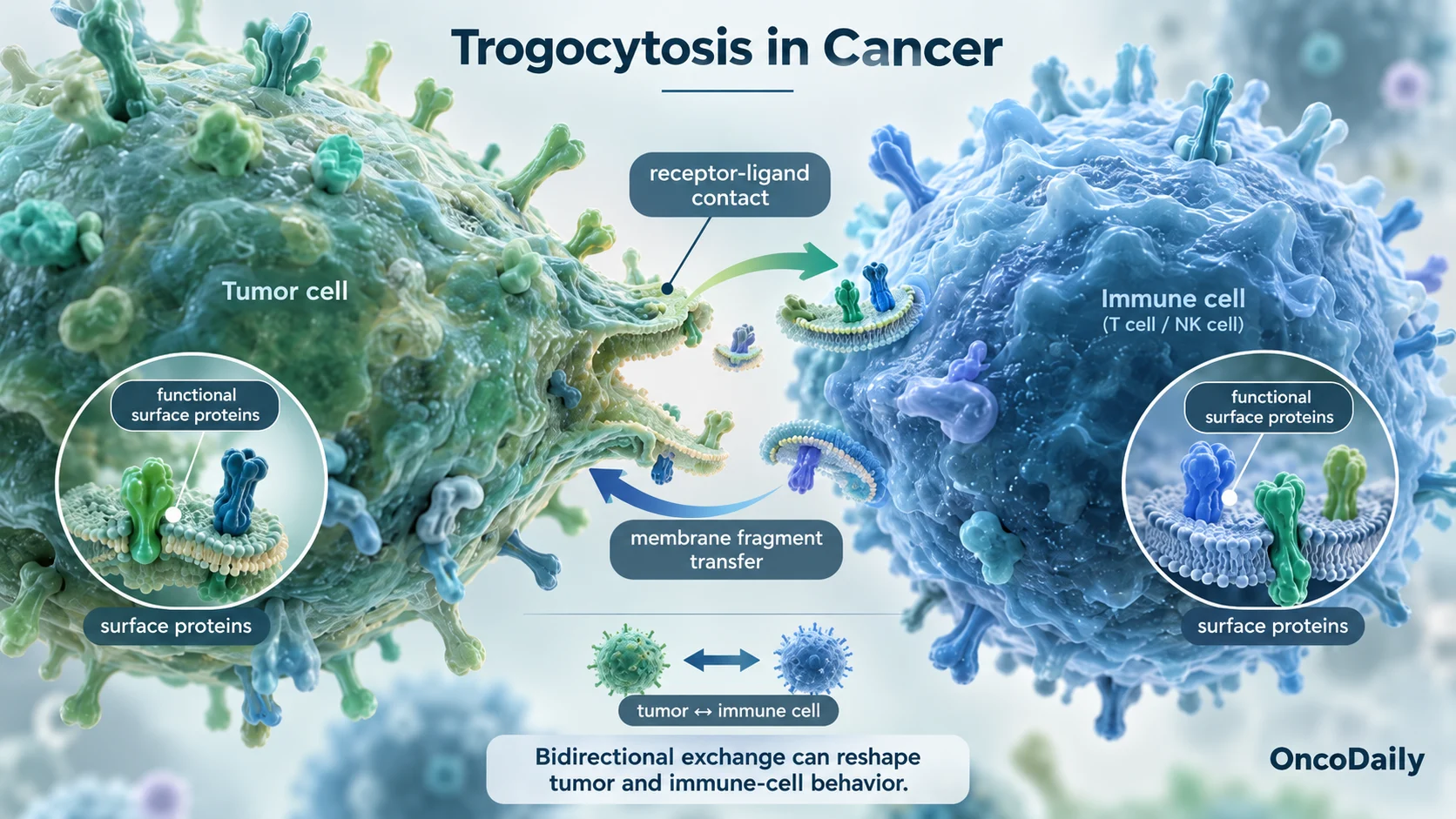
Trogocytosis is a contact-dependent process in which one cell removes a small portion of another cell’s plasma membrane together with the proteins embedded within it. The term comes from the Greek trogo, meaning ‘to gnaw,’ reflecting the way cells take a small ‘bite’ from one another rather than engulfing the entire target. (Kim et al., 2025).
The process begins when two cells form close contact through receptor–ligand and adhesion interactions. Cytoskeletal remodeling at this interface allows a fragment of membrane, surface proteins, lipids, and a small amount of cytoplasmic material to move into the recipient cell. Unlike phagocytosis, the donor cell is not completely engulfed, and the transferred proteins can remain functional on the recipient surface for a period of time. (Kim et al., 2025).
Within the tumor microenvironment, trogocytosis can occur between cancer cells and T cells, NK cells, macrophages, neutrophils, and other immune populations. Importantly, the process is bidirectional. Immune cells can acquire tumor-associated proteins, while tumor cells can acquire immune-cell molecules that change how they are recognized and regulated.
The biological consequence depends on what is transferred and in which direction. In one context, trogocytosis may help immune cells recognize or damage cancer cells. In another, the same exchange may reduce tumor-antigen density or give cancer cells access to inhibitory immune molecules.
Trogocytosis is therefore more than passive membrane exchange. It is a rapid form of cell-to-cell communication capable of changing the surface identity and behavior of both tumor and immune cells.
How Do Cancer Cells and Immune Cells Exchange Membrane Proteins?
Trogocytosis allows intact membrane proteins to move rapidly between cells during direct physical contact. A tumor cell can therefore begin displaying proteins that originated from an immune cell, while an immune cell can temporarily acquire tumor-associated molecules.
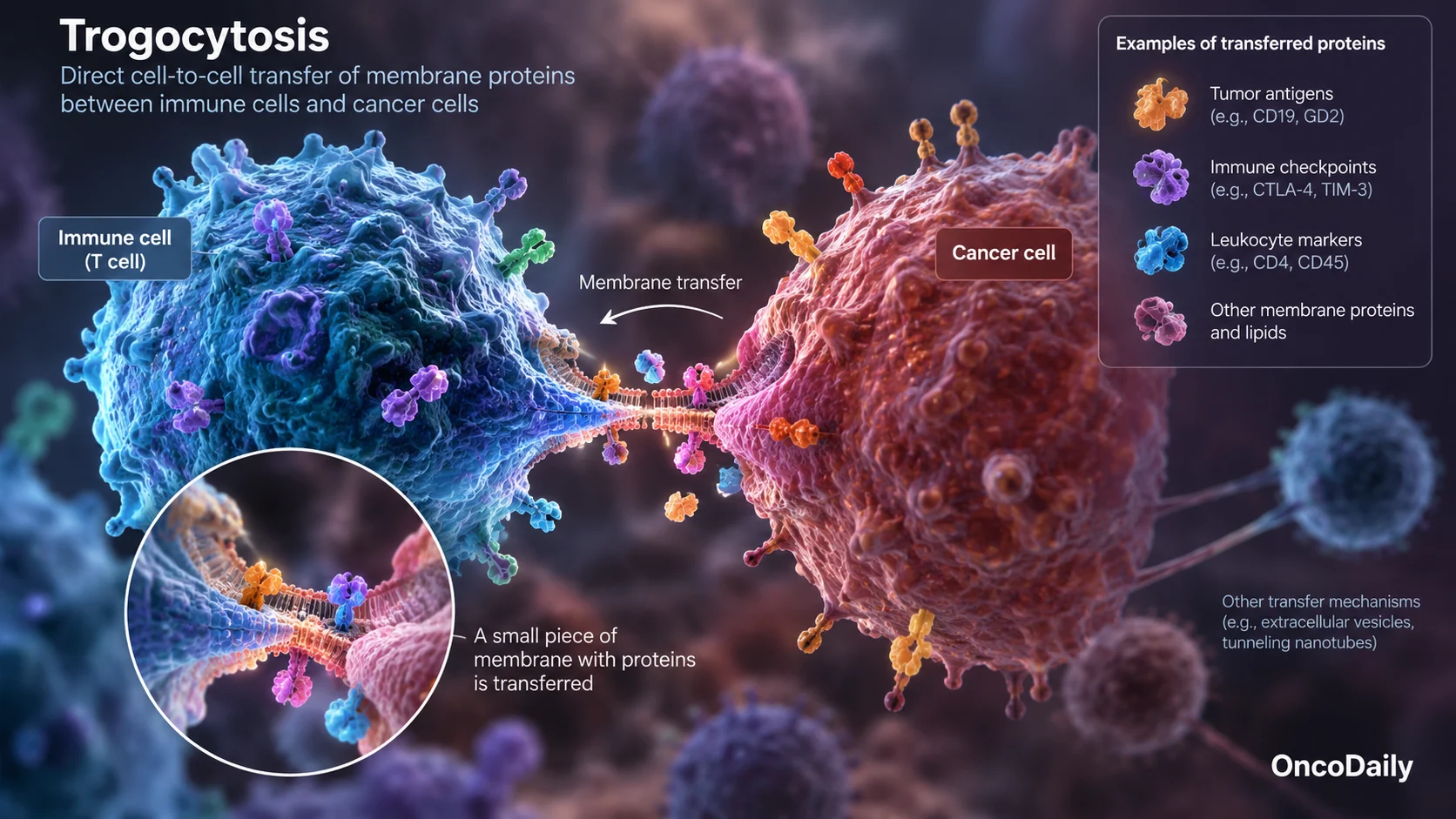
In colon cancer, malignant cells have been shown to acquire lymphocyte proteins including CD4, CD45, CTLA-4, and TIM-3 from tumor-infiltrating lymphocytes. These transferred molecules were not simply passive markers; their acquisition was associated with changes in immune signaling and suppression of Th1- and NK-cell-related pathways. (Shin et al., 2021).
Similar findings have been described in clear-cell renal carcinoma. Tumor cells were found to express immune-associated markers including CD45, CD56, CD14, and CD16, and experimental work supported direct transfer of membrane material from surrounding immune cells. A 2025 study also reported transfer of chromosomal material under experimental conditions, although the broader biological importance of this finding still requires validation. (Marcarian et al., 2025).
This ability to acquire proteins from neighboring cells means that the surface phenotype of a cancer cell is not always determined entirely by its own gene expression. Some of the molecules detected on a tumor cell may have been acquired directly from another cell.
Other mechanisms can move proteins and cellular material as well. Extracellular vesicles transport membrane-associated proteins without requiring continuous contact, while tunneling nanotubes form longer cellular bridges capable of moving proteins, signaling molecules, and even organelles. These processes may operate alongside trogocytosis but remain biologically distinct.
What makes trogocytosis unusual is its speed. A relatively brief cell-to-cell interaction can immediately change the proteins displayed by both cells and alter how they respond to subsequent immune encounters.
How Does Trogocytosis Help Cancer Cells Escape the Immune System?
Trogocytosis can help tumors escape immune attack by reshaping their surface phenotype and redistributing molecules involved in immune recognition.
One route involves the acquisition of immune-regulatory proteins. In colon cancer, malignant cells acquired CTLA-4 and TIM-3 from infiltrating lymphocytes through trogocytosis. By displaying molecules normally associated with immune cells, tumor cells may alter the signals exchanged with surrounding lymphocytes and contribute to a more immunosuppressive local environment. (Shin et al., 2021).
Cancer cells can also acquire a broader range of leukocyte-associated proteins, producing a transient immune-like phenotype. This does not mean that the tumor cell becomes an immune cell, but it may change how that cell interacts with T cells, NK cells, macrophages, or antigen-presenting cells.
At the same time, the donor immune cell can also be affected. When lymphocytes remove tumor membrane, they may acquire tumor antigens or regulatory molecules themselves. The result is not simply one cell gaining a protein the surface composition of both interacting cells changes.
A particularly important consequence is antigen redistribution. When an immune cell removes antigen-containing membrane from a cancer cell, target-antigen density on the tumor can decrease. This may make the malignant cell less visible to antigen-directed immune responses.
The immune cell that acquired the material can simultaneously begin displaying the tumor antigen itself. This becomes especially important in engineered cellular therapies, where recognition depends on the presence of a clearly defined surface target. (Hamieh et al., 2019).
Trogocytosis therefore gives tumors a rapid route to alter immune visibility without waiting for a new mutation or stable epigenetic change. By moving surface proteins between neighboring cells, it can weaken tumor recognition and distort the normal relationship between target and effector cell.
Why Can Trogocytosis Cause CAR T-Cell Fratricide and Exhaustion?
CAR T-cell therapy provides one of the clearest examples of how trogocytosis can directly affect treatment response.
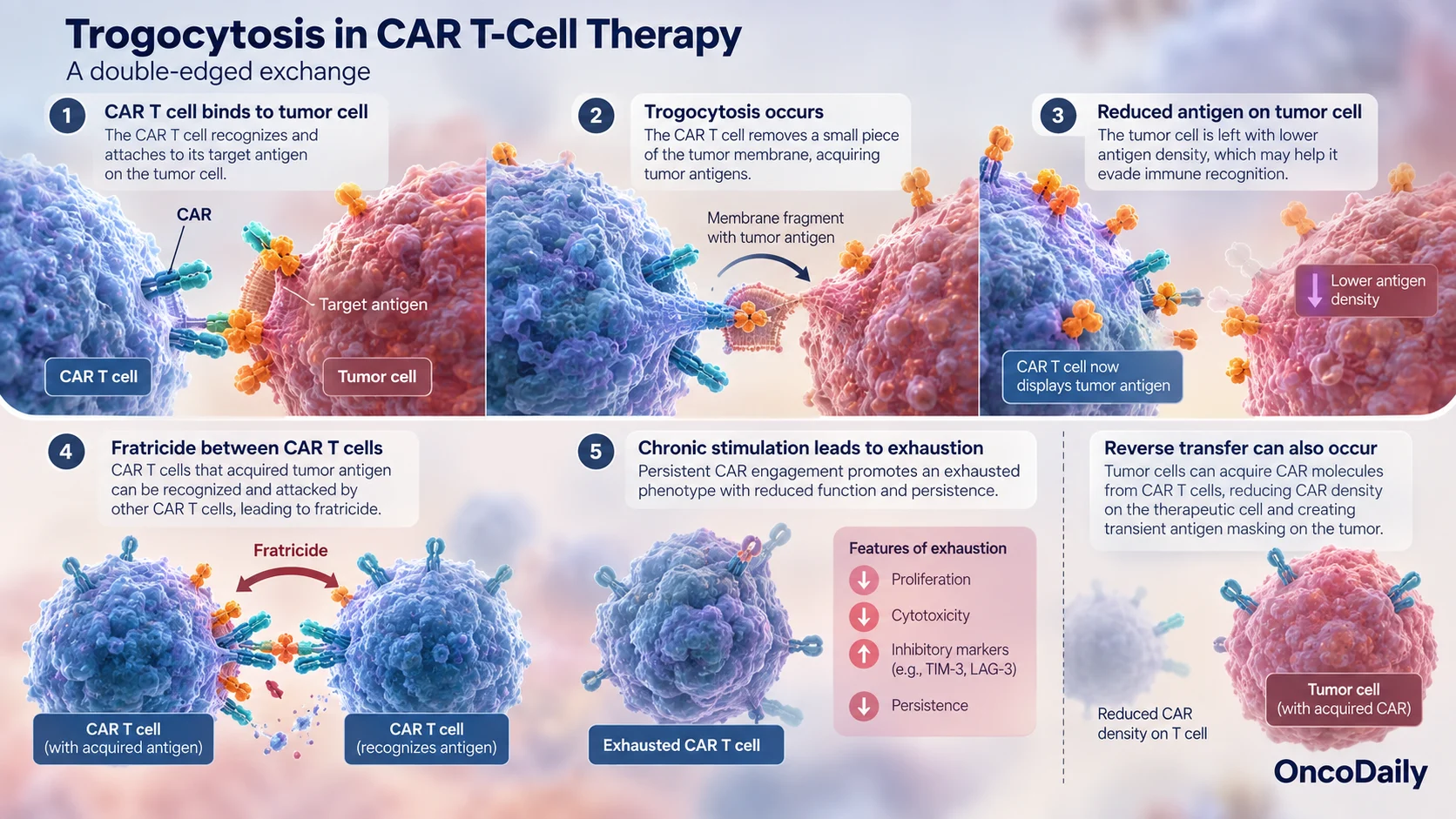
When a CAR T cell recognizes and binds its target on a tumor cell, it can remove part of the tumor membrane and acquire the target antigen itself. The tumor is left with lower antigen density, while the CAR T cell now displays the antigen it was engineered to recognize. Hamieh and colleagues demonstrated this mechanism in CAR T-cell models and showed that it can contribute to tumor-antigen escape. (Hamieh et al., 2019).
Once CAR T cells begin displaying the target antigen, they can become targets for one another. Neighboring CAR T cells recognize the acquired antigen through their CAR and may attack the antigen-positive therapeutic cells, producing fratricide.
The problem extends beyond direct killing. Persistent CAR engagement between CAR T cells creates repeated stimulation even when the interaction is no longer directed toward the tumor. Chronic stimulation can promote an exhausted phenotype characterized by reduced proliferative capacity, impaired cytotoxicity, and diminished persistence.
Recent work has provided stronger mechanistic evidence for this relationship. Dietze and colleagues showed that selectively removing trogocytosed antigen from CAR T cells reduced fratricide and decreased exhaustion-associated markers including TIM-3 and LAG-3. This directly linked the acquired antigen to CAR T-cell dysfunction. (Dietze et al., 2026).
The same study also identified cathepsin B as an important mediator of CAR-mediated trogocytosis. Inhibition of cathepsin B reduced antigen transfer, limited fratricide and exhaustion, and improved CAR T-cell persistence in experimental models. (Dietze et al., 2026).
Transfer can also occur in the opposite direction. Tumor cells have been shown to acquire CAR molecules from CAR T cells, reducing CAR density on the therapeutic cell while creating transient antigen masking on the tumor. This can further interfere with efficient serial killing. (Zhai et al., 2023).
Trogocytosis therefore creates pressure on both sides of the CAR T–tumor interaction: the tumor can become less visible while the therapeutic T cells become increasingly dysfunctional.
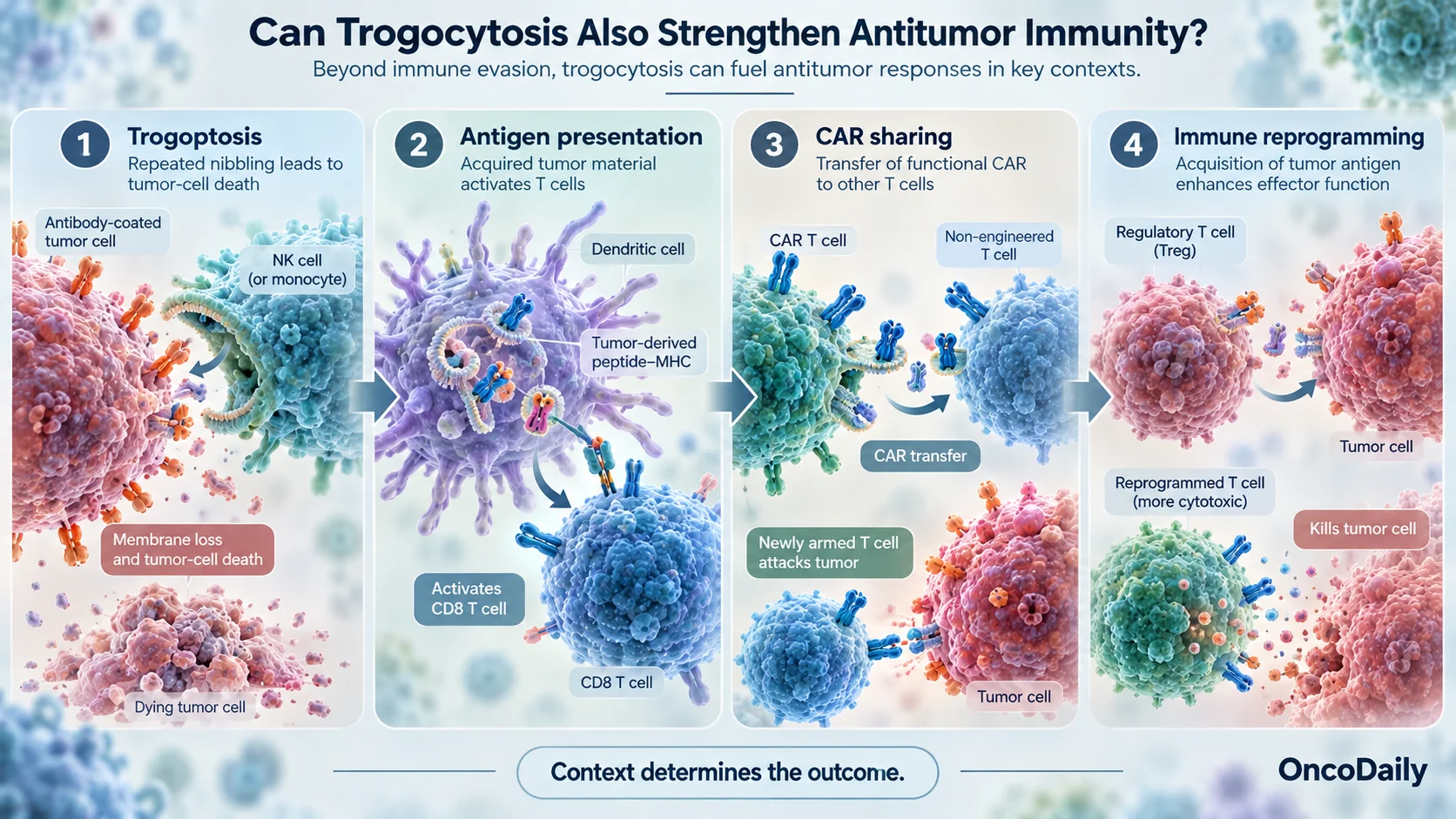
Can Trogocytosis Also Strengthen Antitumor Immunity?
Trogocytosis is not inherently tumor-promoting. Under different conditions, the same membrane-transfer process can support tumor killing, antigen presentation, and broader immune activation. (Khamidova et al., 2026).
One of the clearest examples is trogoptosis. When tumor cells are coated with therapeutic antibodies, innate immune cells can repeatedly remove portions of the tumor membrane through Fc receptor-mediated trogocytosis. If enough membrane is removed, the target cell loses membrane integrity and dies.
Finotti and colleagues demonstrated this mechanism in lymphoma, where slan-positive monocytes killed cells coated with anti-CD20 or anti-CD38 antibodies through trogocytosis-driven membrane damage. (Finotti et al., 2023).
Trogocytosis can also contribute to antigen presentation. Dendritic cells may acquire intact peptide–MHC complexes from tumor cells or other antigen-presenting cells and display those complexes directly on their own surface. This process, sometimes called MHC cross-dressing, can allow dendritic cells to stimulate tumor-specific CD8-positive T cells without first processing the antigen themselves. (Mazzoccoli & Liu, 2024).
Another unusual example involves CAR molecules themselves. Engineered CAR T cells can transfer functional CAR proteins to neighboring, non-engineered T cells through trogocytosis. Recipient cells can temporarily acquire the ability to recognize and kill antigen-positive targets, effectively extending antitumor activity beyond the original engineered population. (Barbera et al., 2025).
Experimental studies have also suggested that trogocytosis can change the behavior of immune populations not usually considered strongly cytotoxic. In melanoma models, regulatory T cells that acquired tumor antigen through trogocytosis developed cytotoxic features and directly killed tumor cells. These findings remain preclinical but illustrate how membrane transfer can alter immune-cell function in unexpected ways. (Erbe et al., 2025).
The biological effect of trogocytosis therefore depends strongly on context. The same basic mechanism can contribute to antigen loss, immune escape, and CAR T-cell dysfunction in one setting, yet support tumor killing and immune activation in another.
That duality is likely to shape future therapeutic strategies. Rather than blocking trogocytosis completely, the more useful goal may be to suppress the forms that tumors exploit while preserving those that strengthen antitumor immunity.
FAQ
What is trogocytosis in cancer?
Trogocytosis is a contact-dependent process in which tumor and immune cells exchange small pieces of membrane and the proteins carried within them.
How can trogocytosis help cancer cells escape the immune system?
It can reduce tumor-antigen density, redistribute immune-regulatory proteins, and alter how tumor cells are recognized by immune cells.
How does trogocytosis affect CAR T-cell therapy?
CAR T cells can acquire tumor antigens through trogocytosis, which may promote antigen loss, fratricide, exhaustion, and reduced treatment persistence.
Can trogocytosis also help the immune system fight cancer?
Yes. In some settings, it can contribute to tumor killing, antigen presentation, and transfer of antitumor receptors between immune cells.
Can trogocytosis be targeted therapeutically?
Potentially. Researchers are studying ways to limit harmful trogocytosis while preserving forms that support antitumor immunity.