Cancer cells are remarkably good at adapting to stress. When oxygen is low, nutrients are scarce, or treatment damages their metabolism, some tumor cells may do something unexpected: acquire mitochondria from the cells around them.
This process, known as mitochondrial transfer in cancer, allows whole mitochondria or mitochondrial material to move between tumor, stromal, immune, and other cells within the tumor microenvironment. In some settings, the acquired mitochondria can restore energy production, improve metabolic flexibility, support survival, and help cancer cells recover from treatment-related stress.
What makes this especially interesting is that mitochondrial transfer is not a one-way process. Tumor cells can both receive and donate mitochondria, creating a dynamic metabolic network that may influence tumor progression, metastasis, treatment resistance, and antitumor immunity.
Understanding how cancer cells ‘borrow’ mitochondrial function from neighboring cells is opening a new way of thinking about tumor metabolism and whether this exchange could eventually become a therapeutic target.
What Is Mitochondrial Transfer in Cancer?
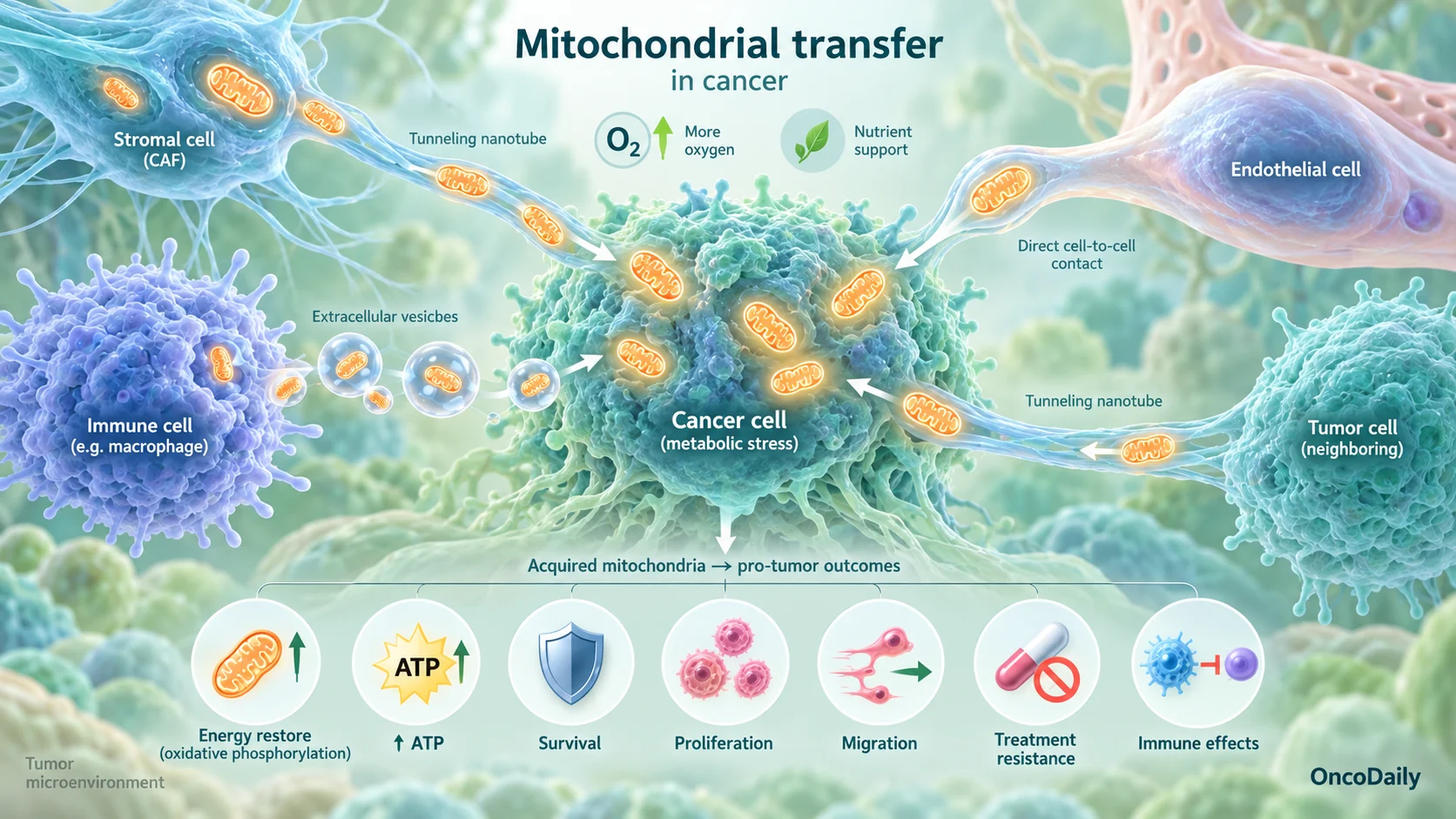
Mitochondrial transfer is the movement of whole mitochondria or mitochondrial material, including mitochondrial DNA, from one cell to another. Within tumors, cancer cells can receive mitochondria from stromal, immune, endothelial, and neighboring tumor cells. (Sahinbegovic et al., 2020; Zampieri et al., 2021).
This exchange may become particularly important under metabolic stress. Cancer cells frequently grow in environments with limited oxygen and nutrients, and acquiring functional mitochondria can restore oxidative phosphorylation, increase ATP production, and improve cellular survival. (Zampieri et al., 2021).
The consequences extend beyond energy production. Mitochondrial transfer has been associated with changes in tumor-cell proliferation, migration, treatment resistance, and immune function. Importantly, these effects are context-dependent and can vary according to the donor cell, recipient cell, and functional state of the transferred mitochondria. (Ka and Woo, 2026).
Mitochondrial transfer is therefore emerging as another way in which cancer cells adapt to their environment and potentially acquire biological capabilities they could not maintain on their own.
How Do Cancer Cells Acquire Mitochondria From Other Cells?
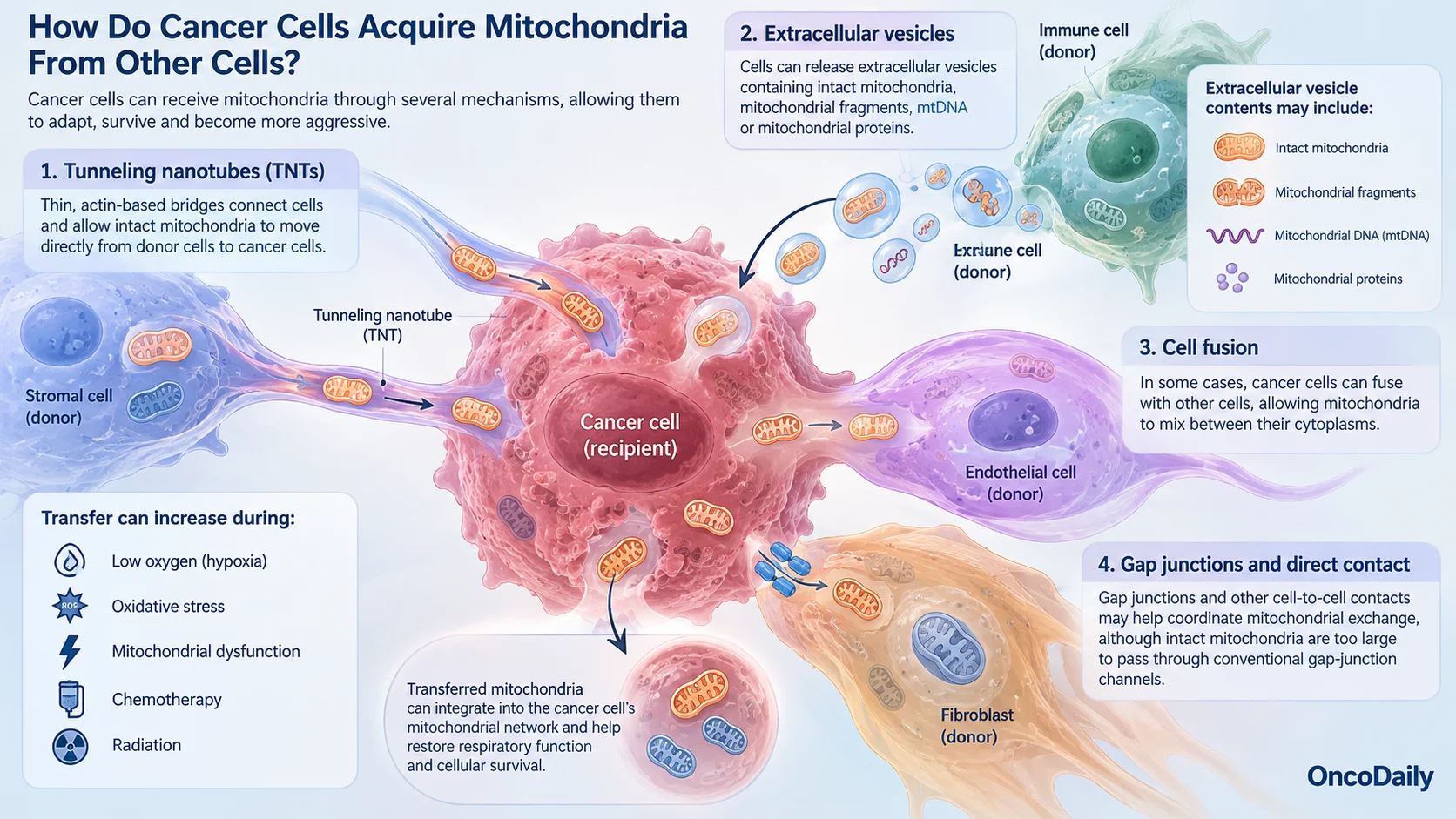
The best-characterized route of mitochondrial transfer involves tunneling nanotubes (TNTs). These thin, actin-based membrane bridges connect cells directly and allow intact mitochondria to move from one cell to another. Transfer through TNTs can increase during hypoxia, oxidative stress, mitochondrial dysfunction, chemotherapy, or radiation. (Guan et al., 2024).
Cancer cells can also acquire mitochondrial material through extracellular vesicles, which may contain intact mitochondria, mitochondrial fragments, mtDNA, or mitochondrial proteins. Other reported routes include cell fusion and direct cell-to-cell interactions. Gap junctions may help coordinate this communication, although intact mitochondria are too large to pass directly through conventional gap-junction channels. (Zampieri et al., 2021; Chen et al., 2026).
Once transferred, functional mitochondria can become incorporated into the recipient cell’s mitochondrial network and help restore respiratory capacity. Importantly, the exchange is not necessarily one-way: tumor cells can also transfer mitochondria to stromal and immune cells, making mitochondrial trafficking part of a broader metabolic communication network within the tumor microenvironment. (Xu et al., 2026).
Which Cells Donate Mitochondria to Tumor Cells?
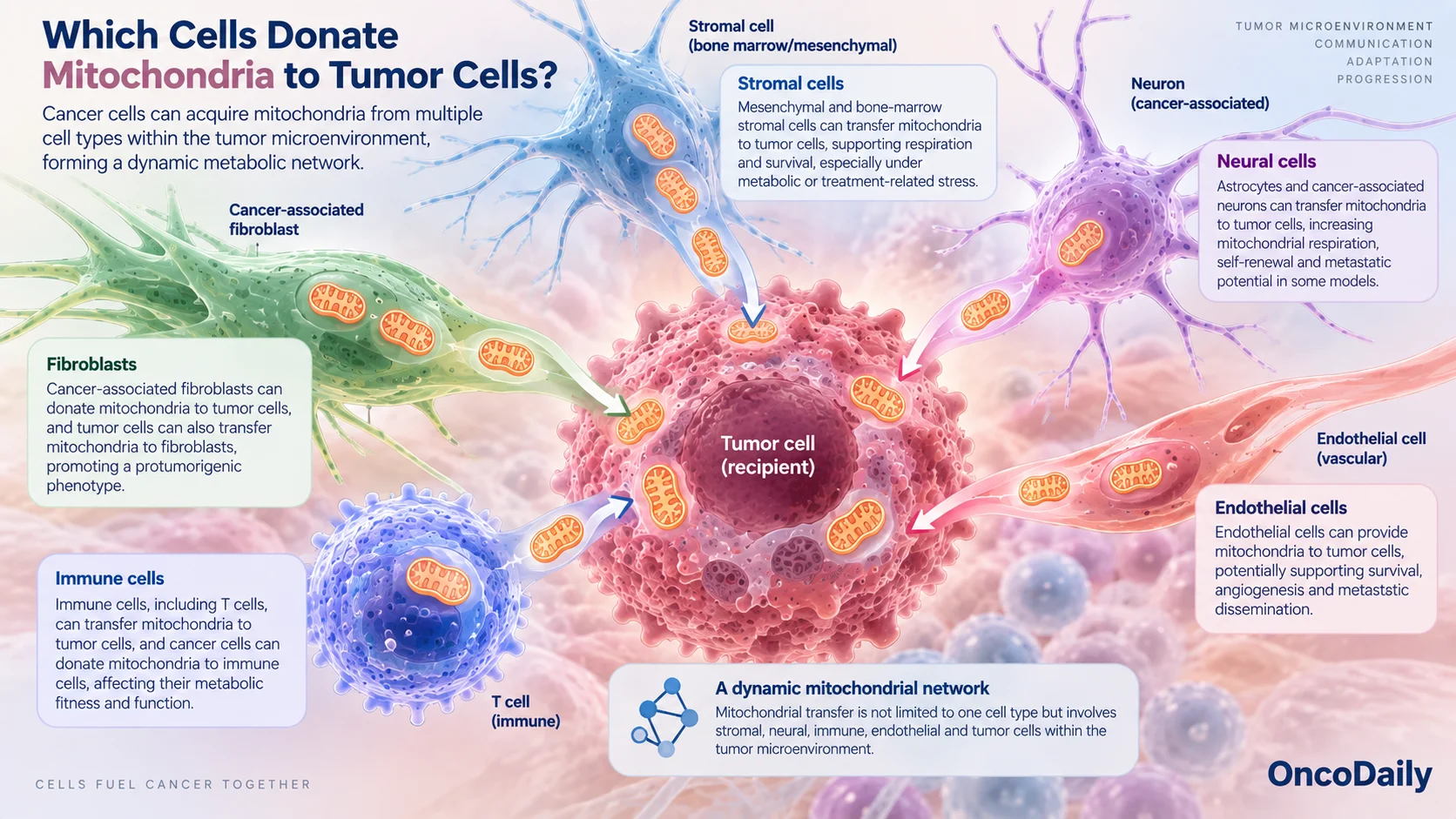
Several cell populations within the tumor microenvironment can serve as mitochondrial donors.
Among the best studied are mesenchymal and bone-marrow stromal cells. In hematologic malignancies, stromal cells can provide mitochondria to leukemia and myeloma cells, supporting respiration and survival during metabolic or treatment-related stress. Similar stromal-to-tumor exchange has been described in solid cancers. (Herst et al., 2018; Ishino et al., 2025).
The nervous system can also participate. In glioblastoma models, astrocytes transferred mitochondria to tumor cells and increased mitochondrial respiration, self-renewal, and tumorigenicity. More recently, cancer-associated neurons were shown to transfer mitochondria to breast cancer cells, increasing metabolic plasticity during metastatic progression. (Watson et al., 2023; Hoover et al., 2025).
Fibroblasts and immune cells are also part of this network, but the direction of transfer can reverse. Cancer cells can donate mitochondria to fibroblasts and induce a protumorigenic cancer-associated fibroblast phenotype, while mitochondrial exchange between cancer cells and T cells can alter the metabolic fitness of both populations. (Cangkrama et al., 2025; Ishino et al., 2025).
The emerging picture is therefore not of a single donor cell, but of a dynamic mitochondrial network connecting tumor, stromal, neural, and immune compartments.
Can Mitochondrial Transfer Promote Metastasis and Tumor Progression?
Mitochondrial transfer may provide cancer cells with more than an immediate metabolic rescue. In experimental models, receiving functional mitochondria can improve survival under stress, increase metabolic flexibility, and support migration and invasion all features relevant to metastatic progression. Most of this evidence remains preclinical. (Zampieri et al., 2021; Chen et al., 2024).
Metastasis places cancer cells under substantial metabolic pressure. They must survive detachment, oxidative stress, circulation, changing nutrient availability, and eventually a new tissue environment. Acquiring mitochondria can restore respiratory function and provide additional metabolic capacity during these transitions. (Chen et al., 2024).
Mitochondrial transfer can also reshape the surrounding tissue. A recent framework describes three interconnected effects: metabolic licensing, which increases tumor-cell fitness; immune rewiring, which can weaken immune control; and stromal remodeling, which creates a more permissive environment for tumor growth and metastatic colonization. (Duan et al., 2026).
The effect is not universally tumor-promoting. Its consequences depend on the cells involved and the condition of the transferred mitochondria. Mitochondrial transfer is therefore better viewed as a context-dependent contributor to metastatic fitness, rather than an independent cause of metastasis.

Does Mitochondrial Transfer Affect Antitumor Immunity?
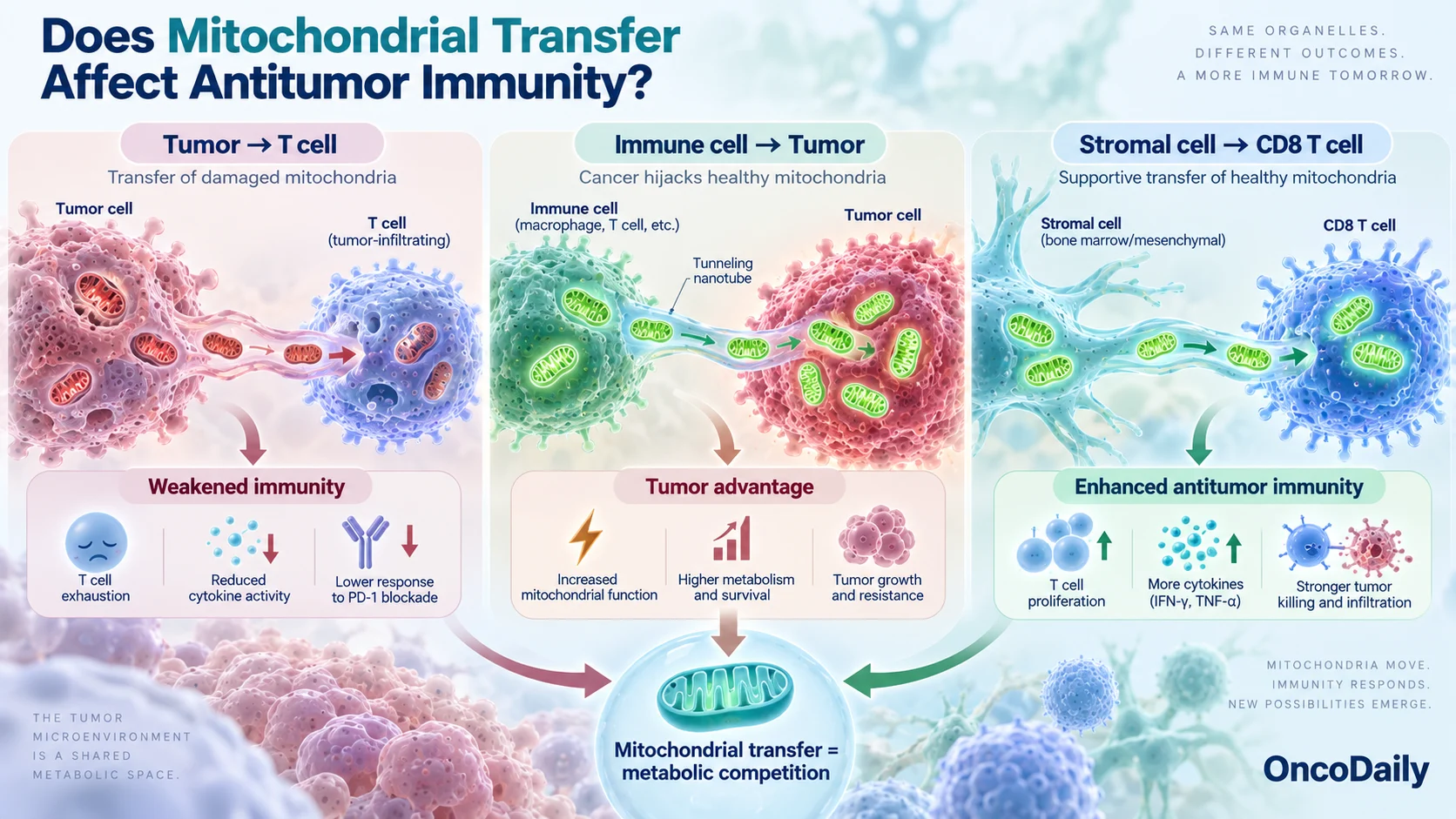
Mitochondrial transfer can either weaken or strengthen antitumor immunity depending largely on the direction of exchange.
One of the clearest examples of immune suppression came from a 2025 Nature study. Ikeda and colleagues found cancer-associated mitochondrial DNA mutations within tumor-infiltrating T cells, providing evidence that mutated mitochondria had moved from tumor cells into lymphocytes. These mitochondria resisted normal mitochondrial clearance and were associated with metabolic dysfunction, senescence-like states, impaired T-cell function, and reduced activity of PD-1 blockade in experimental models. (Ikeda et al., 2025).
Cancer cells can also move in the opposite direction and hijack mitochondria from immune cells. Saha and colleagues showed that cancer cells acquired mitochondria through tunneling nanotubes, increasing their own metabolic capacity while depleting the immune cells they contacted. Blocking nanotube formation reduced transfer and improved antitumor activity when combined with PD-1 blockade in a breast-cancer model. (Saha et al., 2022).
Yet mitochondrial transfer can also strengthen immunity. Bone-marrow stromal cells have been shown to donate mitochondria to CD8-positive T cells, improving mitochondrial respiration, proliferation, tumor infiltration, and resistance to exhaustion. These mitochondria-enriched T cells produced stronger antitumor responses in experimental models. (Baldwin et al., 2024).
Mitochondrial transfer therefore acts as a form of metabolic competition within the tumor microenvironment. Healthy mitochondria acquired by cancer cells can increase tumor fitness, while damaged tumor-derived mitochondria can compromise T cells. Conversely, restoring healthy mitochondria to T cells may strengthen antitumor immunity.
Can Mitochondrial Transfer Be Targeted in Cancer Therapy?
Mitochondrial transfer is increasingly being considered a therapeutic vulnerability, but simply blocking all mitochondrial exchange would be difficult and potentially counterproductive.
One strategy is to interfere with the movement of mitochondria into cancer cells. Tunneling nanotubes and mitochondrial trafficking proteins such as Miro1 are being investigated as potential targets. Recent work also identifies regulators such as USP30 as possible components of the mitochondrial-transfer machinery. (Guan et al., 2024; Ni et al., 2026).
Another strategy is to target the metabolic advantage gained after transfer. Cancer cells that acquire functional mitochondria may become more dependent on oxidative phosphorylation and other mitochondrial pathways, creating potential metabolic vulnerabilities. However, these pathways are also required by normal tissues and immune cells, making selectivity a major challenge. (Deng et al., 2026).
The opposite approach may be equally interesting: deliberately providing healthy mitochondria to immune cells. Experimental studies suggest that mitochondrial augmentation can improve T-cell metabolic fitness and antitumor activity, raising potential applications in adoptive cell and CAR T-cell therapies. (Baldwin et al., 2024; Li et al., 2025).
The field is therefore moving beyond the idea of simply blocking mitochondrial transfer. A more selective strategy may be to prevent mitochondrial exchange that supports cancer survival while preserving or even enhancing transfer that strengthens antitumor immunity. (Ni et al., 2026).
No therapy specifically targeting mitochondrial transfer is currently part of standard cancer treatment. For now, the concept remains experimental, but it introduces an intriguing therapeutic possibility: targeting not only the metabolism cancer cells generate themselves, but also the metabolic resources they acquire from the cells around them.
FAQ
What is mitochondrial transfer in cancer?
It is the movement of whole mitochondria or mitochondrial material between tumor cells and surrounding stromal, immune, or other cells.
Why do cancer cells acquire mitochondria from neighboring cells?
They may use transferred mitochondria to restore energy production, survive metabolic stress, and recover from treatment-related damage.
How are mitochondria transferred between cells?
The main routes include tunneling nanotubes, extracellular vesicles, direct cell contact, and cell fusion.
Can mitochondrial transfer cause treatment resistance or metastasis?
Preclinical studies suggest it can increase metabolic fitness, survival, invasion, and resistance, but its effects are highly context-dependent.
Can mitochondrial transfer be targeted in cancer therapy?
Potentially. Researchers are studying ways to block harmful mitochondrial trafficking or strengthen beneficial transfer into immune cells, but these approaches remain experimental.