
Immune checkpoint inhibitors (ICIs) targeting PD-1, PD-L1, and CTLA-4 have fundamentally transformed the treatment landscape of non–small cell lung cancer (NSCLC), producing unprecedented long-term survival in a subset of patients. Despite these advances, resistance to immunotherapy remains one of the greatest barriers to durable disease control. Many tumors never respond to treatment, while others initially respond and later progress through adaptive immune escape mechanisms. Understanding the biological basis of both primary and acquired resistance has therefore become a central focus of contemporary immuno-oncology research.
Primary Versus Acquired Resistance
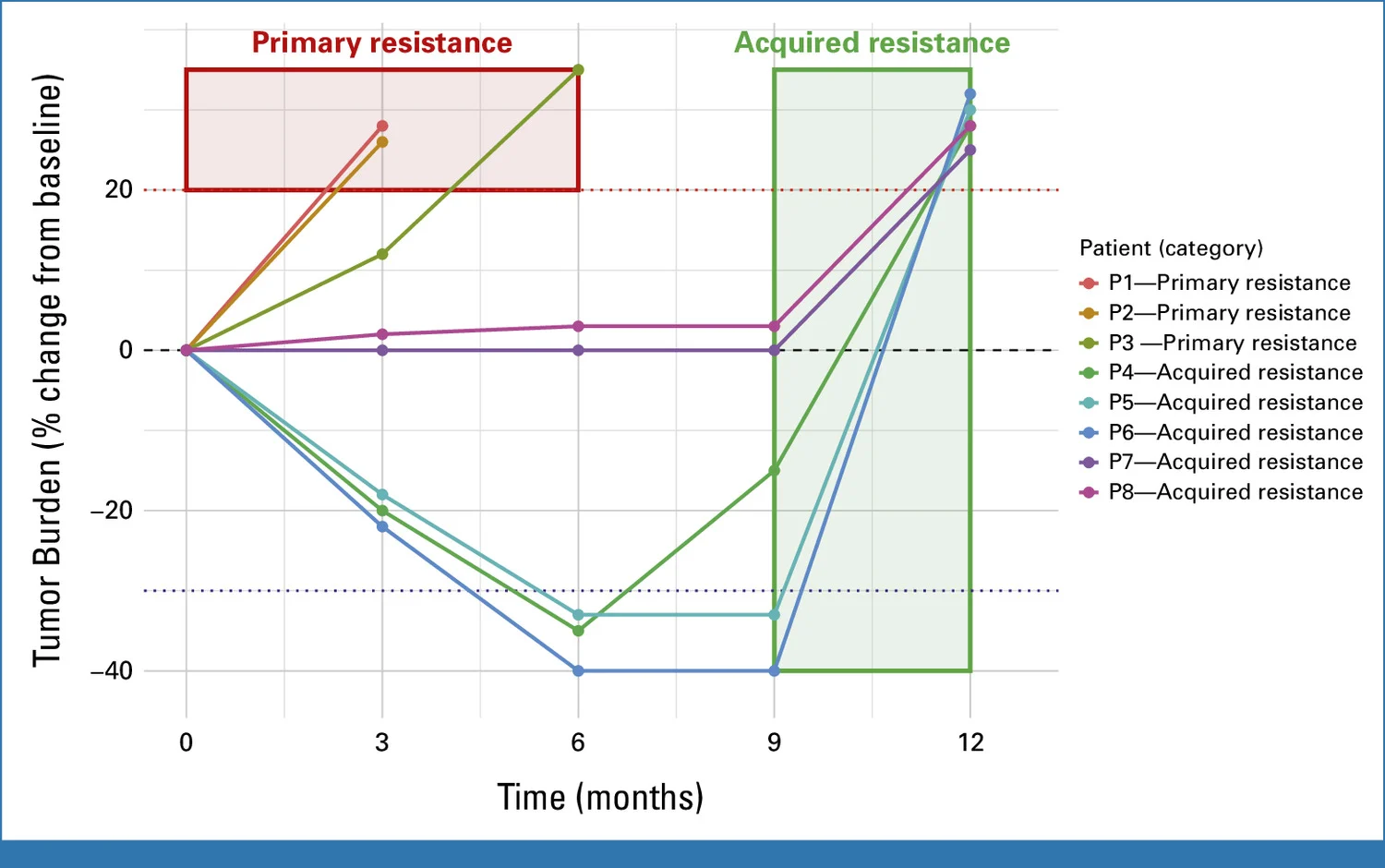
Primary resistance refers to disease progression occurring within the first six months of immunotherapy without prior evidence of tumor shrinkage. In contrast, acquired resistance develops after an initial clinical response or durable stabilization followed by subsequent progression under continued immune checkpoint blockade.
The distinction between these resistance patterns is biologically important. Primary resistance is frequently driven by preexisting tumor-intrinsic features that prevent effective immune activation, whereas acquired resistance reflects dynamic tumor evolution under therapeutic immune pressure.
Retrospective analyses suggest that acquired resistance develops in approximately one-third to two-thirds of NSCLC patients treated with ICIs, most commonly within the first year of therapy. Common relapse sites include lymph nodes, lungs, bone, adrenal glands, and soft tissues.
PD-L1 Expression and Immune-Cold Biology
PD-L1 remains the most established predictive biomarker for immunotherapy response in NSCLC. Early landmark studies such as KEYNOTE-001 demonstrated that tumors with PD-L1 expression ≥50% derive substantially greater benefit from pembrolizumab monotherapy, establishing this cutoff as the clinical standard for frontline single-agent immunotherapy.
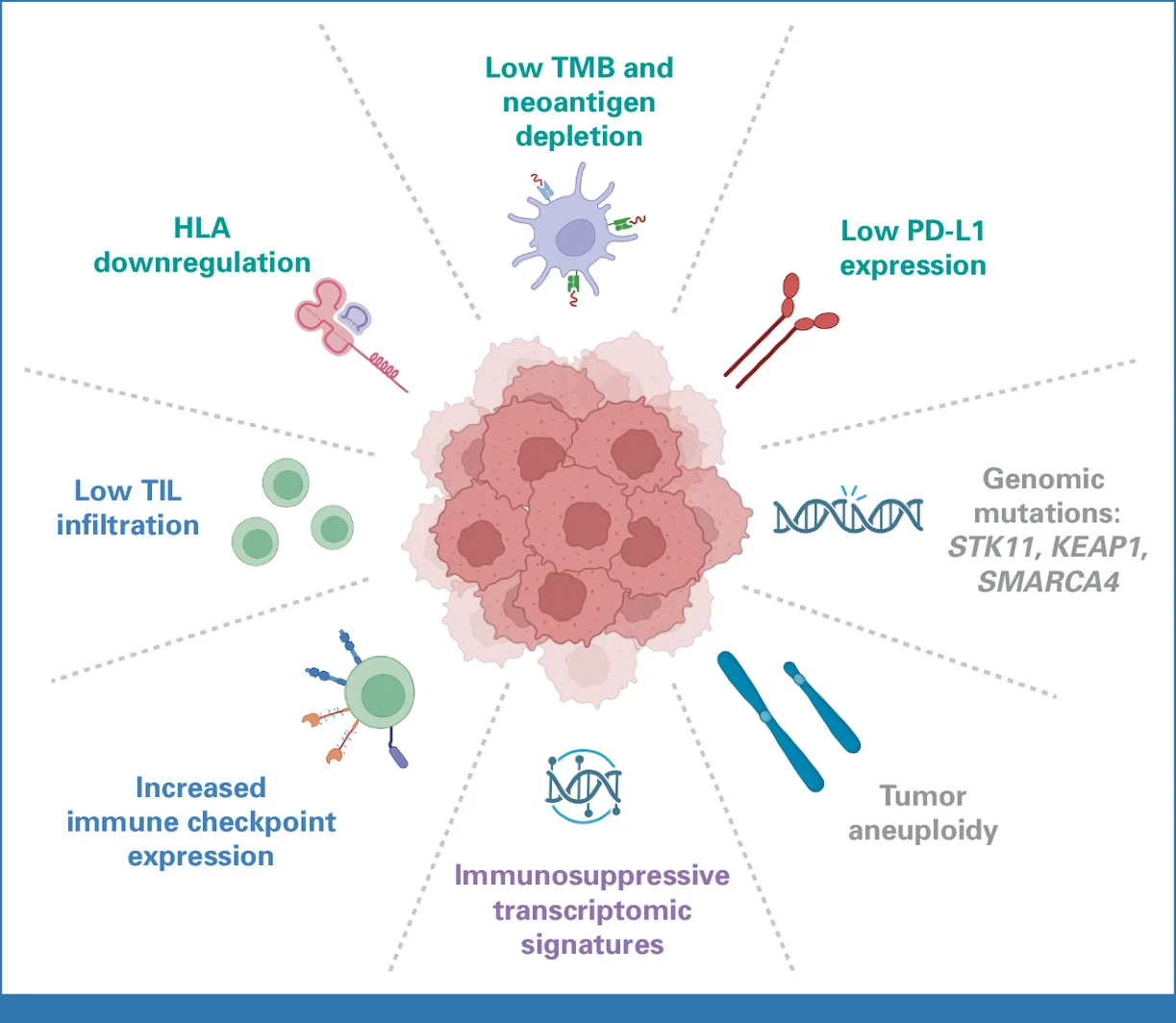
However, PD-L1 expression alone remains an imperfect biomarker. Many highly PD-L1–positive tumors fail to respond, while some PD-L1–negative tumors achieve durable benefit. Increasingly, low PD-L1 expression is viewed less as an isolated biomarker and more as a surrogate for broader “immune-cold” tumor biology characterized by poor T-cell infiltration, impaired antigen presentation, and immunosuppressive microenvironmental signaling.
Studies such as CheckMate-057 and OAK demonstrated significantly reduced survival benefit in PD-L1–negative tumors treated with nivolumab or atezolizumab, reinforcing the association between absent PD-L1 expression and diminished immunotherapy sensitivity.
Genomic Drivers of Primary Resistance
One of the most important advances in immuno-oncology has been the recognition that specific genomic alterations directly shape tumor immune behavior and influence immunotherapy responsiveness.
Among the most clinically relevant resistance-associated mutations are alterations involving STK11 and KEAP1. These mutations are particularly common in KRAS-mutant NSCLC and are strongly associated with immune-cold phenotypes.
STK11 loss impairs CD8-positive T-cell infiltration, suppresses STING signaling, and promotes metabolic reprogramming that favors immune exclusion. KEAP1 mutations activate NRF2-dependent antioxidant pathways, leading to profound remodeling of the tumor microenvironment and suppression of antitumor immunity.
Key Genomic Resistance Findings
- STK11 alterations occur in approximately 25–30% of NSCLC cases.
- KEAP1 mutations occur in roughly 11–27% of tumors.
- Both alterations are associated with poor outcomes during PD-1/PD-L1 blockade.
- Dual checkpoint blockade plus chemotherapy demonstrated encouraging activity in STK11/KEAP1-mutant disease in exploratory POSEIDON analyses.
The phase III TRITON study is currently investigating whether dual CTLA-4 and PD-L1 inhibition combined with chemotherapy may overcome resistance in STK11-, KEAP1-, and KRAS-mutated tumors.
Additional resistance-associated genomic alterations include SMARCA4 loss, PTEN inactivation, WNT/β-catenin activation, and CDKN2A mutations. These abnormalities collectively impair antigen presentation, reduce interferon signaling, suppress dendritic cell recruitment, and limit cytotoxic T-cell infiltration.
Tumor Mutational Burden and Aneuploidy
Tumor mutational burden (TMB) has emerged as another major determinant of immunotherapy responsiveness. Tumors with high mutational loads generate larger numbers of neoantigens capable of stimulating T-cell recognition.
However, recent analyses suggest that only tumors with extremely high TMB derive consistent clinical benefit from immunotherapy. Intermediate TMB may not be sufficient to generate effective antitumor immunity.
The CheckMate 227 and KEYNOTE-158 studies demonstrated that higher TMB correlated with improved response rates and prolonged survival during checkpoint inhibition, although benefit appeared concentrated at the upper extremes of mutational burden.
Important TMB Findings
- KEYNOTE-158 demonstrated approximately 29% response rates in tumors with TMB ≥10 mut/Mb.
- Minimal activity was observed below this threshold.
- CheckMate 227 showed strongest benefit in patients with very high TMB levels.
- Tumors with TMB >20 mut/Mb appeared most likely to derive meaningful immunotherapy benefit.
Tumor aneuploidy also plays a major role in immune resistance. High chromosomal instability correlates with impaired interferon signaling, defective antigen presentation, reduced T-cell recruitment, and higher rates of primary resistance.
An analysis of more than 2,200 NSCLC cases demonstrated that elevated aneuploidy burden was associated with significantly worse immunotherapy outcomes.
Oncogenic Driver Mutations and Immune Exclusion
Certain oncogenic drivers are strongly associated with intrinsic resistance to immunotherapy. EGFR-mutant and ALK-rearranged tumors typically exhibit low TMB, minimal neoantigen generation, and poorly inflamed tumor microenvironments.
Similarly, ROS1-, RET-, and MET-driven tumors generally derive limited benefit from PD-1/PD-L1 blockade. These findings support targeted therapies rather than immunotherapy as preferred frontline strategies for oncogene-driven NSCLC.
Antigen Presentation Failure and Acquired Resistance
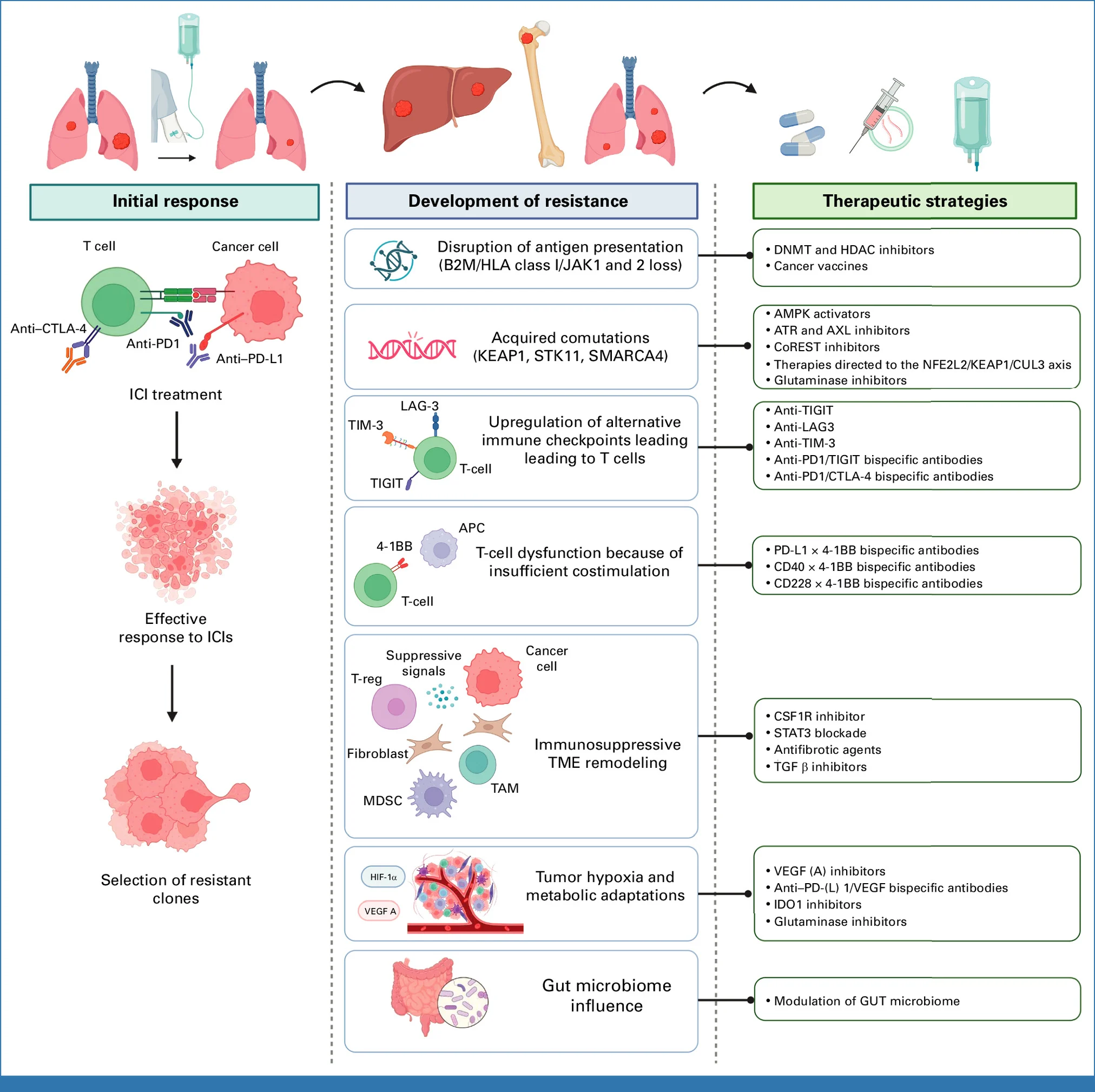
Acquired resistance frequently develops through loss of antigen presentation machinery. One of the best-characterized mechanisms involves β2-microglobulin (B2M) loss, which disrupts MHC class I expression and prevents cytotoxic T-cell recognition.
Under immunotherapeutic pressure, tumors may also undergo immune editing, selectively eliminating highly immunogenic neoantigens and evolving toward less recognizable phenotypes.
Major Acquired Resistance Mechanisms
- B2M loss impairs MHC class I antigen presentation.
- HLA downregulation reduces tumor visibility to T cells.
- Clonal neoantigen depletion promotes immune escape.
- Chronic interferon signaling drives T-cell exhaustion.
These adaptive changes allow tumors that initially responded to checkpoint blockade to progressively evade immune-mediated destruction.
T-Cell Exhaustion and Alternative Immune Checkpoints
Persistent antigen exposure and chronic interferon signaling eventually induce T-cell exhaustion. Exhausted T cells express multiple inhibitory receptors including TIGIT, LAG-3, and TIM-3, limiting their cytotoxic capacity despite ongoing PD-1 blockade.
This phenomenon has driven intense interest in next-generation checkpoint inhibitors targeting alternative inhibitory pathways.
The RELATIVITY-047 study demonstrated that combined LAG-3 and PD-1 blockade improved progression-free survival compared with PD-1 inhibition alone in melanoma, leading to ongoing NSCLC investigations. Meanwhile, TIGIT-directed therapies such as tiragolumab initially generated excitement but produced disappointing phase III results in SKYSCRAPER-01
Emerging Combination Strategies
Several innovative therapeutic approaches are now being explored to overcome immunotherapy resistance in NSCLC.
One promising strategy involves dual targeting of immune and angiogenic pathways. Ivonescimab, a bispecific antibody simultaneously targeting PD-1 and VEGF, demonstrated encouraging progression-free survival improvements in early studies and later showed positive phase III results in HARMONi-6.
Other approaches include cytokine therapies, epigenetic modulators, metabolic inhibitors, and DNA damage response targeting agents designed to restore immune sensitivity.
Novel Therapeutic Approaches Under Investigation
- TIGIT and LAG-3 checkpoint inhibitors.
- PD-1/VEGF bispecific antibodies such as ivonescimab.
- HDAC and DNMT epigenetic modulators.
- ATR inhibitors such as ceralasertib.
- Metabolic therapies targeting STK11/KEAP1 biology.
Although many early trials have shown only modest activity, biomarker-driven combinations may eventually identify subgroups most likely to benefit.
Antibody-Drug Conjugates and Immune Reactivation
Antibody-drug conjugates (ADCs) are increasingly being evaluated in immunotherapy-resistant NSCLC. Beyond direct cytotoxicity, next-generation ADCs may stimulate innate immune signaling pathways such as STING activation, potentially converting immune-cold tumors into inflamed phenotypes.
Agents targeting TROP2, HER3, MET, B7-H3, and integrin β6 have demonstrated encouraging response rates in early-phase studies, particularly in heavily pretreated populations.
Cellular Therapies and Cancer Vaccines
Adoptive cellular therapies represent another rapidly evolving strategy for resistant NSCLC. Tumor-infiltrating lymphocyte (TIL) therapy, TCR-engineered T cells, and CAR-T-cell approaches aim to restore antitumor immunity independently of endogenous immune failure.
LN-145 TIL therapy combined with pembrolizumab achieved response rates approaching 47% in early NSCLC studies, while logic-gated CAR-T platforms and mRNA-supported CAR-T approaches are entering clinical development.
Cancer vaccines are also reemerging as potential immunotherapy sensitizers. Modern vaccine strategies focus on enhancing antigen-specific T-cell priming and synergizing with PD-1 blockade.
Read Full Article Here