Immune checkpoint inhibitors are changing the treatment of cutaneous squamous cell carcinoma (CSCC), extending their role from advanced unresectable disease into potentially curative treatment strategies. Neoadjuvant PD-1 blockade has demonstrated that some patients can achieve profound tumor regression before surgery, including complete elimination of viable cancer cells in the resected specimen. However, an important clinical challenge remains: why do some patients achieve pathological complete response while others experience limited benefit, and can biomarkers identify those at greatest risk of recurrence?
The phase II NEO-CESQ trial, led by Paolo A. Ascierto and colleagues, provides new insights into these questions by investigating perioperative cemiplimab in patients with high-risk, resectable CSCC. Beyond evaluating pathological response and survival, the investigators integrated tumor transcriptomic profiling with longitudinal circulating inflammatory markers to explore the biological characteristics associated with treatment sensitivity and resistance.
The study demonstrated a major pathological response (MPR) rate of 44% and a pathological complete response (pCR) rate of 36% in the intention-to-treat population. More importantly, the translational analyses identified differences in interferon-γ signaling, WNT5A and CD276 expression, and circulating interleukin-6 (IL-6) levels between patients with different treatment outcomes. The investigators also developed an exploratory 10-gene signature, termed NeoSquamos, which showed an association with recurrence risk.
Together, these findings raise a broader question for immuno-oncology: could the biological characteristics of the tumor and its immune environment help predict long-term outcomes beyond the pathological response observed after neoadjuvant treatment?
Why Is Perioperative Immunotherapy Important in Cutaneous Squamous Cell Carcinoma?
Most patients with CSCC are successfully treated with surgery, but locally advanced and high-risk disease can present substantial challenges. Tumors involving the head and neck may require extensive resection, potentially affecting facial structures, function, and quality of life. Even after surgery and postoperative radiotherapy, patients with adverse pathological features remain at risk of local recurrence, regional metastasis, or distant disease progression.
CSCC is also particularly relevant to immunotherapy because ultraviolet radiation can generate a high burden of somatic mutations, potentially increasing the number of neoantigens recognizable by the immune system. Although high tumor mutational burden does not guarantee response, this biological characteristic provides a rationale for PD-1 blockade.
Cemiplimab, a monoclonal antibody targeting PD-1, demonstrated substantial antitumor activity in advanced CSCC and became an established treatment for patients whose disease could not be cured with surgery or radiotherapy. These findings encouraged investigators to evaluate whether PD-1 blockade could also be effective before surgery, when the primary tumor and its associated antigens remain present.
The neoadjuvant setting offers a particularly interesting immunological opportunity. Rather than treating only microscopic residual disease after tumor removal, checkpoint blockade is administered while tumor antigens and tumor-infiltrating immune populations are still available. This may facilitate activation and expansion of tumor-reactive T cells, potentially generating immune responses against both the primary lesion and occult disease.
The clinical potential of this approach was demonstrated in the phase II study by Gross and colleagues, which reported a pCR rate of 51% following neoadjuvant cemiplimab in resectable stage II–IV CSCC. The final analysis, published in the Journal of Clinical Oncology in October 2026, subsequently reported no new disease recurrences after the earlier follow-up, with an estimated 54-month event-free survival rate of 76.2%. Among the 40 patients who achieved pCR, none experienced disease recurrence. These findings provide important context for NEO-CESQ, although differences in treatment schedules and postoperative management prevent direct efficacy comparisons between the studies.
The NEO-CESQ Trial: Investigating Cemiplimab Before and After Surgery
NEO-CESQ (NCT04632433) was a multicenter, single-arm phase II trial conducted across seven Italian centers. Between May 2021 and October 2022, investigators enrolled 25 patients with surgically resectable, high-risk stage III or IV (M0) CSCC of the head and neck. The median patient age was 82 years, reflecting the older population frequently affected by advanced CSCC, and 88% of participants were men.
Patients received cemiplimab 350 mg intravenously every three weeks for two neoadjuvant cycles, followed by surgical resection. After surgery, adjuvant cemiplimab was planned every three weeks for up to one year, while postoperative radiotherapy was permitted according to multidisciplinary assessment rather than required by protocol.
The primary endpoint was MPR, defined as less than 10% residual viable tumor in the resected specimen, including patients with pCR. Secondary assessments included recurrence-free survival, overall survival, safety, and exploratory biomarker analyses.
A distinctive feature of NEO-CESQ was its integration of tissue-based and circulating biomarkers. Baseline tumor specimens underwent transcriptomic profiling using the NanoString PanCancer IO 360 panel, which evaluates genes involved in tumor–immune interactions. Circulating IL-6 concentrations were assessed longitudinally during neoadjuvant and adjuvant treatment, allowing investigators to examine whether systemic inflammatory changes were associated with pathological response or subsequent outcomes.
This approach was designed to investigate not only whether perioperative cemiplimab was active, but also which biological features might distinguish patients with favorable responses from those with persistent or recurrent disease.
Cemiplimab-rwlc (Libtayo) Updates 2025: Uses in cancer, Side effects, Dosage, Expectations and more
Pathological Responses and Long-Term Outcomes
All 25 enrolled patients received neoadjuvant cemiplimab, and 23 subsequently underwent surgical resection. In the intention-to-treat population, 11 patients achieved MPR, corresponding to a rate of 44%, while nine achieved pCR, corresponding to 36%.
Among the 23 patients who underwent surgery, the descriptive MPR rate was 47.8%, including a pCR rate of 39.1%. Two additional patients achieved near-complete pathological response, one had a pathological partial response, and 11 had no pathological response.
Radiological assessment demonstrated an objective response rate of 52%, including six complete and seven partial responses. However, radiological and pathological findings were not always concordant. Only two of the six patients with a radiological complete response achieved pCR, while the remaining patients had residual viable tumor at pathological examination.
This observation is clinically relevant because imaging may not reliably distinguish complete tumor eradication from residual viable cancer following immunotherapy. Treatment-related fibrosis, inflammatory changes, and immune-cell infiltration can complicate radiological interpretation, reinforcing the importance of pathological assessment in neoadjuvant trials.
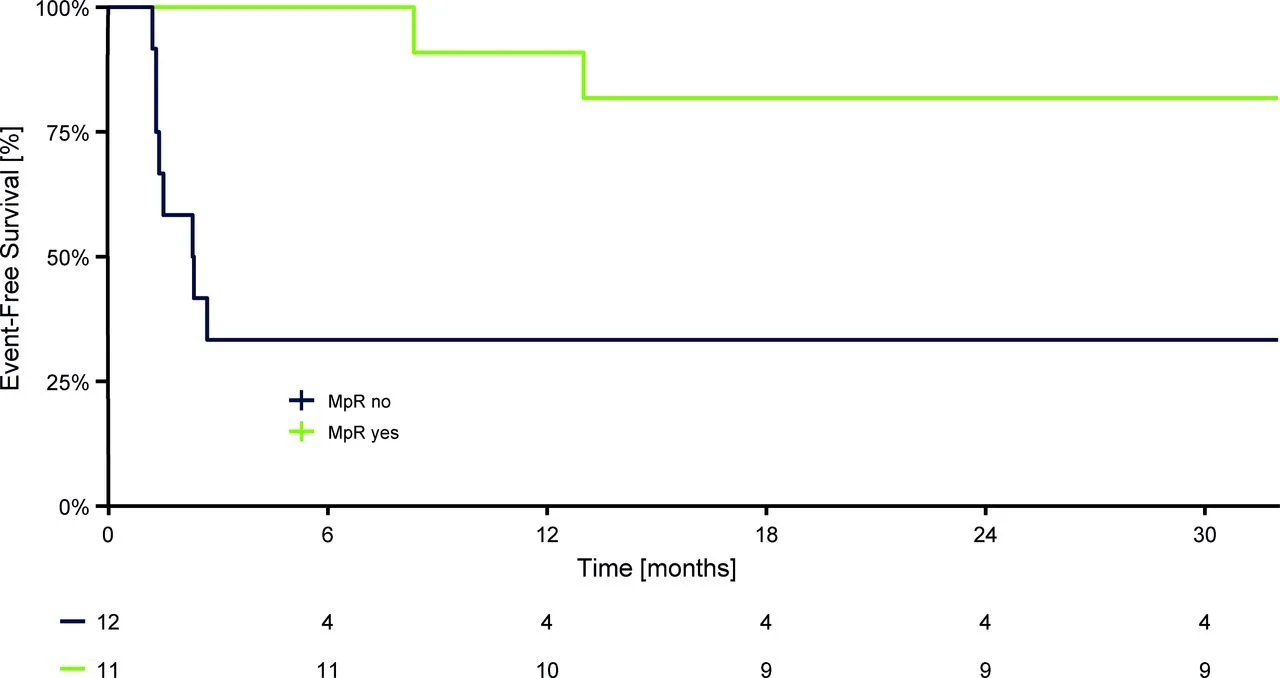
With a median follow-up of 42 months, three recurrence events were reported, all occurring in patients who had not achieved MPR. No recurrence was observed among patients with pCR, and no disease-related deaths occurred during follow-up.
Achieving MPR was associated with improved event-free survival, with a hazard ratio of 0.16 (95% CI 0.03–0.75). A favorable association was also observed for recurrence-free survival, although this did not reach statistical significance (HR 0.17; 95% CI 0.02–1.47).
These findings support the potential prognostic relevance of pathological response after neoadjuvant cemiplimab. However, the small number of recurrence events limits the precision of survival estimates, and the single-arm design does not establish how much of the observed benefit is attributable to the neoadjuvant component, postoperative treatment, or patient selection.
Why Did Some Tumors Respond While Others Remained Resistant?
One of the most informative aspects of NEO-CESQ was the investigation of baseline tumor gene expression. Transcriptomic profiling was successfully performed in 21 patients, allowing investigators to compare immune-related molecular patterns between pathological responders and nonresponders.
Patients achieving MPR demonstrated enrichment of interferon-γ-associated gene signatures, suggesting that tumors with evidence of pre-existing immune activation were more likely to respond to PD-1 blockade. In contrast, nonresponders showed higher expression of WNT5A and CD276, two genes associated with biological processes that may contribute to immune resistance.
These findings are consistent with the concept of adaptive immune resistance, in which an existing antitumor immune response induces inhibitory pathways that can subsequently be targeted by checkpoint blockade.
Interferon-γ is produced by activated T cells and natural killer cells and can stimulate antigen presentation, chemokine production, and immune-cell recruitment. Through JAK–STAT signaling, interferon-γ can also induce PD-L1 expression, creating a feedback mechanism that suppresses further immune activation.
Tumors with an interferon-γ-associated transcriptional profile may therefore contain immune populations that have already recognized malignant cells but remain functionally inhibited. Blocking PD-1 may restore part of this antitumor activity, particularly when sufficient tumor-reactive T cells are present.
The NEO-CESQ findings suggest that baseline immune activation may help explain why certain CSCC tumors are sensitive to cemiplimab. However, the interferon-γ signature showed only moderate discriminatory performance for survival outcomes, and Kaplan–Meier analyses did not demonstrate statistically significant survival differences between high- and low-signature groups.
Therefore, the findings support a biological association with pathological response but do not establish interferon-γ gene expression as a validated predictive or prognostic biomarker in this setting.
WNT5A and CD276: Potential Mechanisms of Resistance to PD-1 Blockade
While responders demonstrated stronger interferon-associated transcriptional activity, nonresponders exhibited increased expression of WNT5A and CD276, suggesting that resistance may involve biological pathways beyond PD-1/PD-L1 signaling.
WNT5A participates in noncanonical WNT signaling and can influence cell migration, tissue remodeling, and interactions between malignant cells and their microenvironment. In some tumor contexts, WNT-associated signaling has been linked to immune exclusion and reduced infiltration by cytotoxic T cells, potentially limiting the effectiveness of checkpoint blockade.
The association between higher WNT5A expression and nonresponse in NEO-CESQ is therefore biologically interesting, although the study does not demonstrate that WNT5A directly causes resistance to cemiplimab in CSCC.
CD276, also known as B7-H3, is another potentially relevant finding. B7-H3 is a member of the B7 immunoregulatory family and is frequently expressed in malignant tissues and components of the tumor microenvironment. Elevated expression has been associated with aggressive tumor behavior, immune dysregulation, and resistance-related pathways in several cancers.
Unlike PD-L1, the precise receptor interactions and immunological functions of B7-H3 remain incompletely characterized. Nevertheless, its expression has attracted substantial interest as a therapeutic target, including for antibody–drug conjugates and other investigational approaches.
In NEO-CESQ, higher baseline CD276 expression was observed in nonresponders, and the investigators also reported an association between elevated CD276 and less favorable event-free survival. These observations raise the possibility that tumors with limited sensitivity to PD-1 blockade may rely on additional inhibitory or tumor-promoting pathways.
However, the study was not designed to test B7-H3-directed therapy or establish a causal relationship between CD276 expression and treatment resistance. The findings should therefore be viewed as a rationale for further mechanistic and therapeutic investigation rather than evidence supporting a specific combination strategy.
Could Circulating IL-6 Help Monitor Response to Cemiplimab?
Beyond tumor gene expression, NEO-CESQ investigated whether circulating inflammatory markers could provide information about treatment response. This is particularly relevant in CSCC, where many patients are elderly and repeated tissue biopsies may be difficult or impractical.
The investigators focused on interleukin-6 (IL-6), a pleiotropic inflammatory cytokine involved in immune regulation, tissue repair, and tumor-associated inflammation. IL-6 can activate JAK–STAT3 signaling and contribute to the expansion and function of immunosuppressive myeloid populations. In some cancers, persistent IL-6-associated inflammation has been linked to an unfavorable immune environment and reduced sensitivity to immunotherapy.
However, IL-6 is not exclusively a tumor-derived cytokine, and its circulating concentration can also be influenced by infection, tissue injury, surgery, and other inflammatory conditions. This makes its interpretation particularly challenging in the perioperative setting.
In NEO-CESQ, patients who achieved pCR had significantly lower circulating IL-6 concentrations before the first adjuvant treatment cycle than those without pCR, with median levels of 5.5 versus 13.5 pg/mL (p=0.003). This difference was also observed at later treatment assessments, including cycle 5, when median concentrations were 4.3 versus 7.6 pg/mL, and cycle 9, when they were 3.7 versus 8.1 pg/mL.
These findings suggest that patients achieving complete pathological tumor clearance may demonstrate a different systemic inflammatory profile during subsequent treatment. However, baseline IL-6 concentrations were not significantly associated with pCR or MPR, and baseline IL-6 stratification did not identify significant differences in recurrence-free or event-free survival.
This distinction is essential because lower IL-6 concentrations measured after neoadjuvant therapy and surgery cannot automatically be interpreted as evidence that IL-6 predicts response before treatment begins. The observed differences may reflect treatment response, changes in tumor-associated inflammation, postoperative recovery, or other factors that were not fully resolved by the study.
The findings therefore support further investigation of IL-6 as a potential longitudinal monitoring biomarker, but they do not establish a clinically actionable threshold for selecting patients for cemiplimab or modifying postoperative treatment.
NeoSquamos: A New 10-Gene Signature Associated With Recurrence Risk
Perhaps the most distinctive translational finding from NEO-CESQ was the development of an exploratory gene expression classifier called NeoSquamos, designed to investigate whether baseline tumor biology could identify patients at increased risk of recurrence following perioperative cemiplimab.
The investigators analyzed pretreatment tumor samples from 21 patients with available transcriptomic data, comparing gene expression between those who subsequently experienced recurrence and those who remained recurrence-free. Ten genes showing higher baseline expression in patients with recurrence were selected to construct the signature: MFGE8, TGFB3, LAMB3, TPM1, ITGAV, THBS1, VCAN, COL5A1, LAMC2, and PKM.
These genes are involved in biological processes including extracellular matrix remodeling, epithelial–mesenchymal transition, cell adhesion, angiogenesis, and metabolic regulation. Their inclusion suggests that recurrence risk may be associated not only with immune activation but also with the structural and functional characteristics of the tumor microenvironment.
This is particularly interesting because tumor resistance to immunotherapy is not necessarily caused by a lack of immune recognition alone. The extracellular matrix, stromal organization, and interactions between malignant cells and surrounding tissues can influence whether immune cells successfully enter tumor regions and engage their targets.
For example, TGFB3 is associated with transforming growth factor-β signaling, which can contribute to stromal remodeling and immune regulation, while genes such as ITGAV, LAMB3, LAMC2, and COL5A1 participate in cellular adhesion and extracellular matrix interactions. These biological functions provide a plausible framework for understanding why the signature might be associated with recurrence, although the study did not experimentally establish the contribution of each gene to resistance.
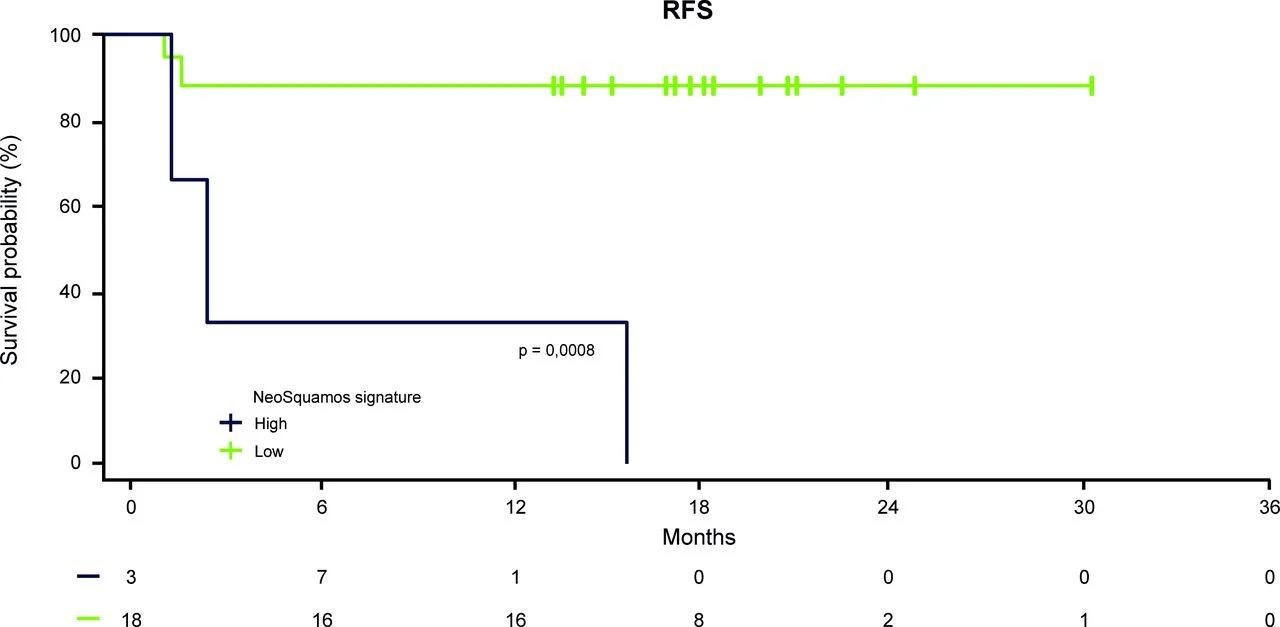
Within the discovery cohort, NeoSquamos demonstrated an area under the receiver operating characteristic curve (AUC) of 0.838 for recurrence discrimination. Patients were classified into higher- and lower-risk groups using an internally derived threshold, with subsequent survival analyses suggesting separation between the groups.
The investigators then evaluated the signature in an independent cohort of 18 patients with advanced CSCC treated with PD-1-based immunotherapy. Applying the previously defined cutoff, they observed significant separation in recurrence-free survival between the risk groups (log-rank p=0.037), with one-year recurrence-free survival estimates of 100% in the low-risk group and 30.3% in the high-risk group.
When the discovery and validation cohorts were combined, the signature remained associated with recurrence-free survival, with a reported hazard ratio of 16.01 (95% CI 3.12–82.13) for the higher-risk classification.
Although these results are notable, their interpretation requires caution. The signature was derived from only 21 patients, including just three recurrence events, creating a substantial risk of statistical overfitting. The external cohort was also small and included patients with advanced disease, limiting direct generalizability to the perioperative setting.
Importantly, NeoSquamos was not significantly associated with MPR or pCR in the discovery cohort. This suggests that the signature may capture biological characteristics associated with longer-term recurrence risk rather than immediate pathological sensitivity to neoadjuvant cemiplimab.
The distinction between predicting pathological response and estimating recurrence risk is clinically important. A biomarker associated with recurrence after treatment is not necessarily capable of identifying which patients will benefit from immunotherapy compared with another treatment strategy. Establishing that predictive role would require appropriately designed comparative studies.
NeoSquamos therefore represents a hypothesis-generating approach to molecular risk stratification rather than a validated test ready for routine clinical use.
Why Might Pathological Response and Recurrence Risk Reflect Different Biology?
One of the most interesting questions raised by NEO-CESQ is why the exploratory NeoSquamos signature was associated with recurrence risk but not significantly associated with pathological response.
Pathological response measures the extent of tumor elimination during a defined period of treatment. In NEO-CESQ, patients received only two neoadjuvant cycles of cemiplimab before surgery, meaning that pathological assessment reflected the effects of approximately six weeks of preoperative therapy.
Recurrence, however, is influenced by a broader range of factors, including residual microscopic disease, tumor-intrinsic aggressiveness, the durability of antitumor immunity, and subsequent postoperative treatment.
A tumor may demonstrate substantial regression after PD-1 blockade but still possess biological characteristics associated with later recurrence. Conversely, a tumor that does not achieve complete pathological response may remain controlled through surgery, postoperative treatment, or sustained immune surveillance.
The NeoSquamos findings suggest that transcriptional programs involving extracellular matrix organization and tumor progression may provide information that is not fully captured by the percentage of viable tumor remaining after neoadjuvant therapy.
This raises the possibility that future risk stratification could combine pathological response with molecular features of the original tumor. Such an approach might eventually help distinguish patients with favorable long-term outcomes from those who remain at risk despite an encouraging initial response.
However, NEO-CESQ does not establish that combining these measurements improves clinical decision-making, and the small number of recurrence events prevents definitive conclusions.
What Does NEO-CESQ Add to the Evolving Perioperative Immunotherapy Landscape?
The findings of NEO-CESQ should be interpreted within the broader development of perioperative PD-1 blockade in CSCC.
Earlier neoadjuvant studies demonstrated that cemiplimab could produce high pathological response rates before surgery, while longer-term analyses have strengthened the association between pathological response and favorable clinical outcomes. In the final analysis of the multicenter phase II study led by Gross and colleagues, published in October 2026, the estimated 54-month event-free survival rate was 76.2%, and no recurrence events were observed among patients who achieved pCR. These findings provide additional evidence that profound pathological responses can be associated with durable disease control, although the trial was not randomized.
The adjuvant setting has also advanced. The randomized phase III C-POST trial demonstrated that cemiplimab improved disease-free survival compared with placebo in patients with high-risk CSCC following surgery and postoperative radiotherapy. At the primary analysis, the estimated 24-month disease-free survival rate was 87.1% with cemiplimab versus 64.1% with placebo, corresponding to a hazard ratio of 0.32. These results supported US regulatory approval of adjuvant cemiplimab in October 2025 for the specified high-risk population.
NEO-CESQ differs from C-POST because it investigated treatment before and after surgery, while postoperative radiotherapy was administered to only three of the 25 enrolled patients. Its findings cannot establish whether perioperative cemiplimab is superior to an adjuvant-only strategy or whether postoperative treatment can safely be reduced in patients achieving pCR.
Nevertheless, NEO-CESQ contributes an important translational perspective by examining why some tumors respond to PD-1 blockade and whether molecular or circulating markers may identify patients with different long-term risks.
The study also reported a manageable safety profile, with no grade 3 or 4 treatment-related adverse events in the enrolled cohort. However, this finding should be interpreted in the context of the small sample size and the selection of patients with ECOG performance status 0–1. The trial excluded organ-transplant recipients and patients receiving chronic systemic immunosuppression, two groups particularly relevant to CSCC management.
Can These Findings Change Clinical Practice?
NEO-CESQ strengthens the evidence supporting the activity of neoadjuvant PD-1 blockade in resectable, high-risk CSCC, but its biomarker findings are not yet sufficient to guide routine treatment decisions.
The association between MPR and favorable event-free survival supports continued investigation of pathological response as a meaningful endpoint. However, the absence of recurrence among patients achieving pCR does not establish that surgery or adjuvant treatment can safely be omitted, particularly in a small, nonrandomized study.
Similarly, the observed differences in interferon-γ signaling, WNT5A, and CD276 expression provide potential explanations for treatment sensitivity and resistance, but none of these markers has been prospectively validated to select patients for cemiplimab or alternative treatments in this setting.
Circulating IL-6 may offer a practical approach to longitudinal monitoring, although its lack of baseline predictive value and susceptibility to non-tumor-related inflammation limit immediate clinical application.
NeoSquamos represents an intriguing approach to molecular recurrence-risk assessment, particularly because its gene composition emphasizes tumor architecture, stromal remodeling, and metabolic regulation rather than relying exclusively on immune activation markers. Nevertheless, the small discovery cohort, limited number of recurrence events, and differences between the discovery and external validation populations mean that larger prospective studies are essential before the signature can be considered clinically reliable.
Future research will need to determine whether integrating tumor transcriptomics, circulating inflammatory markers, pathological response, and potentially circulating tumor DNA can improve the identification of patients at risk of recurrence and support individualized postoperative management.