
Immune checkpoint inhibitors have transformed the treatment landscape of metastatic renal cell carcinoma (mRCC), becoming a cornerstone of first-line therapy in modern practice. Despite these advances, a major challenge remains: not all patients benefit from immunotherapy, and reliable biomarkers capable of predicting response are still lacking.
In a study published in Clinical Genitourinary Cancer, Lars Drüke and colleagues explored whether specific components of the tumor microenvironment could help identify patients most likely to derive benefit from immune checkpoint inhibitors. Using detailed immunohistochemical analysis of tumor samples, the investigators identified two particularly promising biomarkers—CD47 and CD20—that were associated with improved outcomes following immunotherapy.

Kidney Cancer: Symptoms ,Causes, Stages, Diagnosis and Treatment
Why Biomarkers Matter in mRCC
Current treatment selection for metastatic renal cell carcinoma relies largely on clinical risk stratification systems and pathological characteristics. However, these tools provide limited information about the biological interaction between the tumor and the immune system.
Because renal cell carcinoma is one of the most immune-infiltrated solid tumors, researchers have increasingly focused on the tumor microenvironment as a potential source of predictive biomarkers. The presence and activity of immune cells within the tumor may provide important clues regarding whether immune checkpoint blockade will successfully reactivate antitumor immunity.
Study Design
The investigators retrospectively analyzed tumor specimens from 45 patients with metastatic renal cell carcinoma who received immune checkpoint inhibitor therapy. Both treatment-naïve and previously treated patients were included.
To better understand factors associated with clinical benefit, patients were divided according to progression-free survival after immunotherapy:
- Good responders: PFS greater than 18 months
- Intermediate responders: PFS 6–18 months
- Poor responders: PFS less than 6 months
A total of 28 different immune-related markers were evaluated using immunohistochemistry and digital pathology techniques. The researchers then examined whether expression of any of these markers correlated with treatment outcomes.
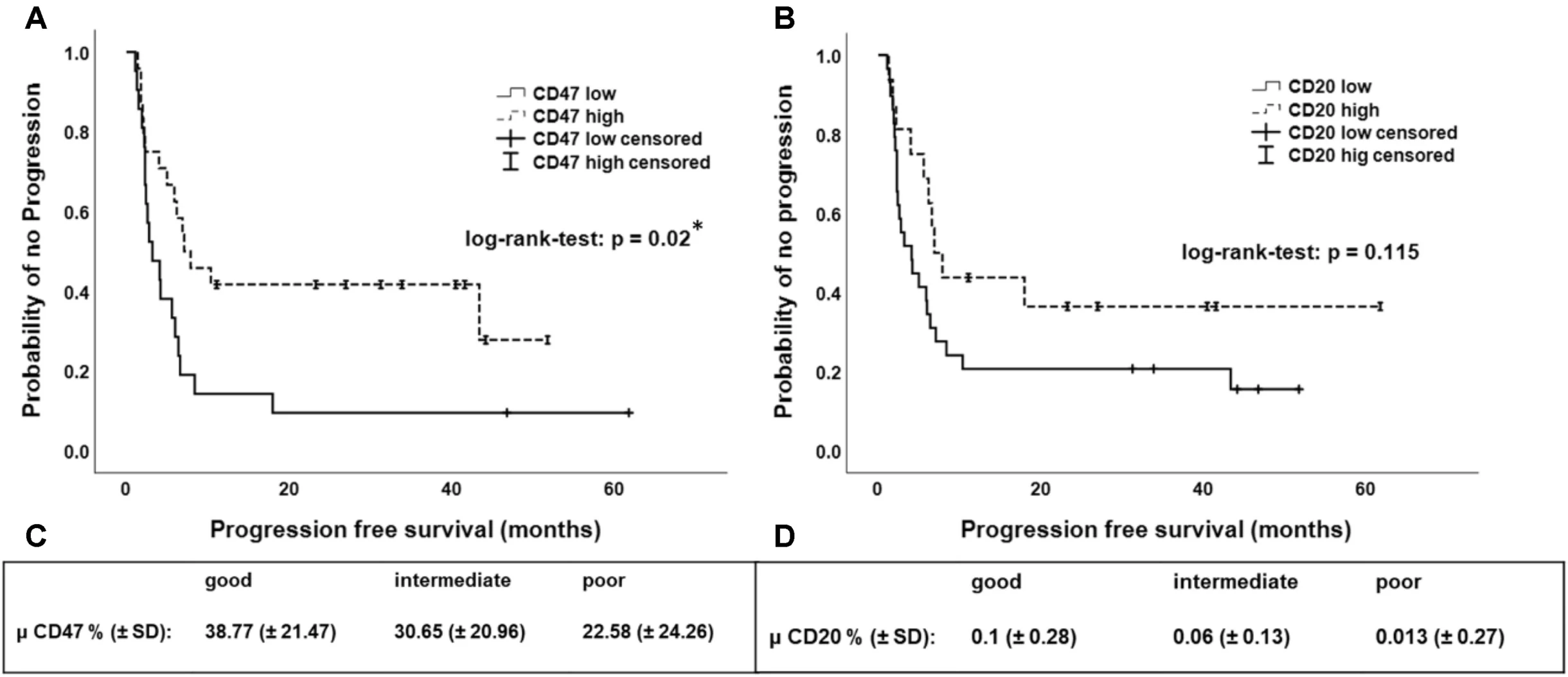
CD47 Emerged as a Predictor of Longer Progression-Free Survival
One of the most interesting findings involved CD47, a molecule often referred to as a “don’t eat me” signal because it helps tumor cells evade destruction by macrophages.
Higher levels of CD47 expression within tumor tissue were associated with significantly longer progression-free survival following immune checkpoint inhibitor therapy.
- Hazard ratio for progression: 0.979
- 95% confidence interval: 0.962–0.997
- P value: .019
Patients whose tumors demonstrated higher CD47 density experienced a lower risk of disease progression after immunotherapy.
At first glance, this finding may appear counterintuitive because CD47 is generally considered an immune-evasion molecule. However, the authors suggest that tumors expressing high levels of CD47 may represent highly immune-infiltrated tumors in which antitumor immune responses are present but functionally suppressed. Such tumors may be particularly susceptible to reactivation through immune checkpoint blockade.
B Cells and CD20 Were Also Associated With Better Outcomes
The second major finding involved CD20, a marker of B lymphocytes.
Higher densities of CD20-positive cells were significantly associated with prolonged progression-free survival. This observation adds to growing evidence that B cells play an important role in shaping effective responses to immunotherapy.
- Correlation coefficient with PFS: 0.34
- P value: .021
Higher CD20 expression was associated with longer progression-free survival after immune checkpoint inhibitor treatment.
Importantly, tumors rich in CD20-positive B cells were also characterized by increased infiltration of other immune cell populations, including cytotoxic T cells and macrophages, as well as higher expression of immune checkpoint molecules such as PD-1, PD-L1, and PD-L2.
These findings suggest that CD20 may identify tumors with an active but suppressed immune microenvironment—a setting in which checkpoint inhibition is most likely to be effective.
What Do These Findings Tell Us About the Tumor Microenvironment?
The study highlights an emerging concept in immuno-oncology: tumors that respond best to checkpoint blockade are often not those lacking immune activity, but rather those with pre-existing immune infiltration that remains restrained by inhibitory pathways.
The investigators observed that tumors with high CD20 expression frequently contained clusters of B cells, helper T cells, cytotoxic T cells, macrophages, and dendritic cells. Such tumors appeared immunologically active despite ongoing mechanisms of immune suppression.
This observation supports the idea that successful immunotherapy may depend less on creating a new immune response and more on releasing an existing one.
Validation Using Single-Cell Sequencing
To strengthen their findings, the researchers performed an independent analysis using publicly available single-cell RNA sequencing data from patients with clear-cell renal cell carcinoma.
Both CD20 and CD47 expression were higher in tumors from patients who achieved complete responses to immunotherapy compared with tumors from patients whose disease was resistant to treatment.
Although exploratory, this external validation provided additional biological support for the observations seen in the immunohistochemical analysis.
Clinical Implications
At present, no tissue biomarker is routinely recommended by NCCN or other major guidelines to predict response to immune checkpoint inhibitors in metastatic renal cell carcinoma. Treatment decisions continue to be guided primarily by clinical risk groups and disease characteristics.
Nevertheless, this study contributes to a growing body of evidence suggesting that the composition of the tumor microenvironment may eventually help personalize immunotherapy selection. If validated in larger prospective cohorts, biomarkers such as CD47 and CD20 could potentially identify patients who are most likely to benefit from checkpoint blockade while sparing others from ineffective treatment and unnecessary toxicity.
Read Full Article Here