Glioblastoma remains one of the most challenging cancers in oncology. Despite aggressive surgery and radiotherapy, outcomes remain poor, particularly for patients with MGMT-unmethylated tumors. In this population, temozolomide provides little benefit, and numerous immunotherapy approaches, including immune checkpoint inhibitors, have failed to significantly improve survival.
A phase 1 study led by Elizabeth A. R. Garfinkle and colleagues, published in Nature Cancer, explores a different strategy: highly personalized neoantigen vaccination. Rather than targeting a single tumor antigen, investigators developed individualized DNA vaccines designed to train the immune system against dozens of patient-specific tumor mutations.
The study evaluated GNOS-PV01, a personalized DNA vaccine administered after surgery and radiotherapy in patients with newly diagnosed MGMT-unmethylated glioblastoma.
Glioblastoma: Causes, Symptoms, Diagnosis, Treatment
Building a Personalized Vaccine for Every Patient
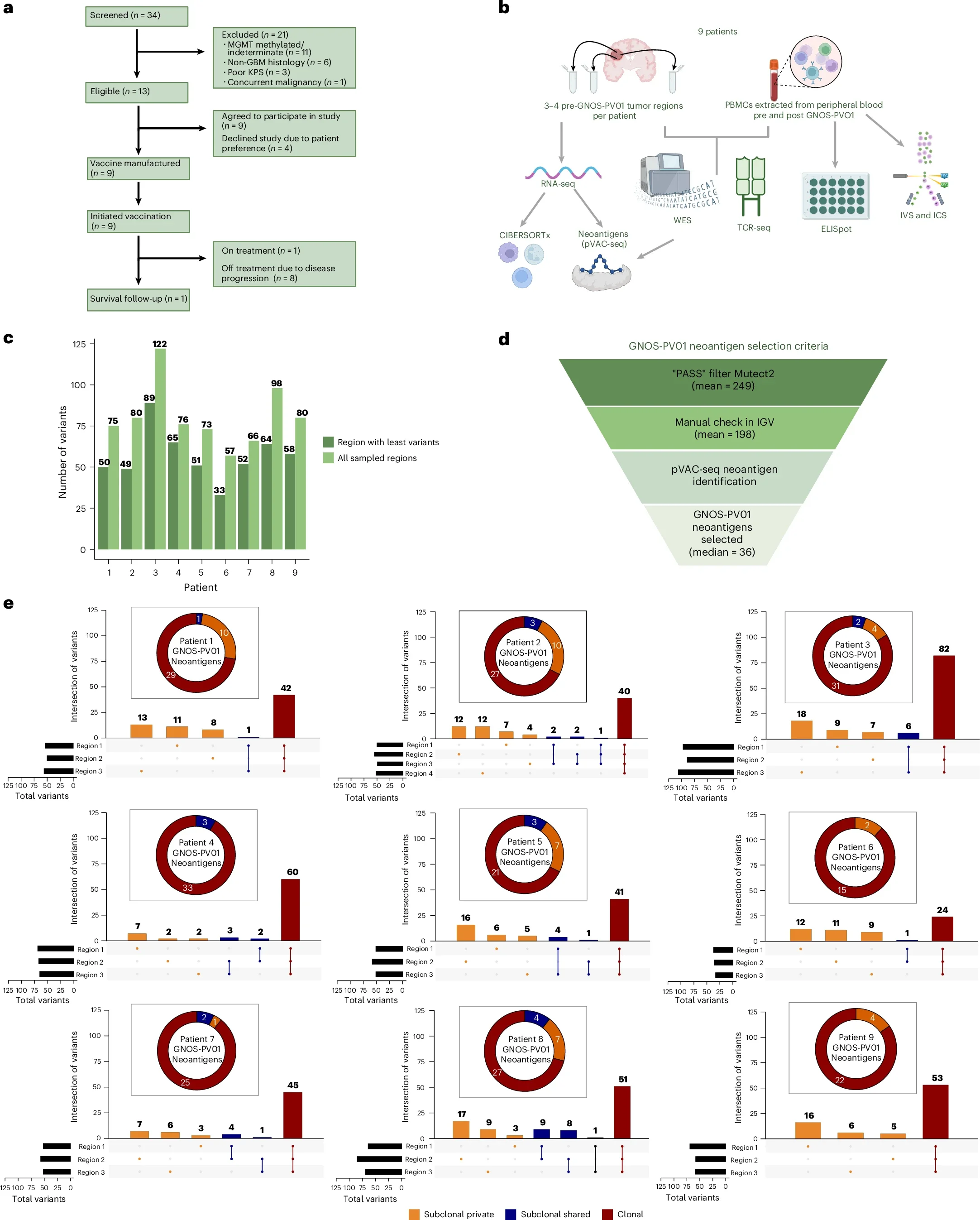
The concept behind the trial was ambitious. Tumor samples were collected from multiple regions of each patient’s glioblastoma at the time of surgery. This multi-regional sampling approach was critical because glioblastoma is highly heterogeneous, with different parts of the tumor often harboring distinct mutations.
Using whole-exome sequencing and RNA sequencing, investigators identified tumor-specific mutations and selected up to 40 neoantigens for each patient. These neoantigens were incorporated into a personalized DNA vaccine designed specifically for that individual’s tumor.
Unlike earlier neoantigen vaccine platforms that were often limited to approximately 20 targets, the DNA-based platform allowed investigators to include a much broader range of tumor mutations, potentially improving coverage of tumor heterogeneity and reducing the risk of immune escape.
Safety and Feasibility
The primary objective of the GT-20 trial was to determine whether such a complex personalized vaccine could be safely manufactured and administered.
The results were encouraging.
The vaccine was successfully produced and administered to all enrolled patients. No dose-limiting toxicities were observed, and no treatment-related grade 3 or higher adverse events occurred. Most side effects consisted of mild injection-site reactions.
Importantly, increasing the number of neoantigens to as many as 40 did not appear to compromise safety.
Key Safety Results
- 9 patients received personalized vaccination
- Up to 40 neoantigens were incorporated per vaccine
- No dose-limiting toxicities were reported
- No treatment-related grade ≥3 adverse events were observed
These findings demonstrate that highly personalized, multi-epitope DNA vaccines are feasible and well tolerated in patients with glioblastoma.
Encouraging Survival Signals
Although the study was not designed to establish efficacy, investigators observed encouraging clinical outcomes.
Among the nine treated patients, two-thirds remained progression-free at six months, and two-thirds were alive at one year. Median progression-free survival reached 8.5 months, while median overall survival was 16.3 months.
Perhaps most strikingly, one-third of patients remained alive at two years, including one patient who was still alive and disease-free more than four years after diagnosis.
Clinical Outcomes
- 6-month progression-free survival: 66.7%
- 12-month overall survival: 66.7%
- Median progression-free survival: 8.5 months
- Median overall survival: 16.3 months
- 24-month survival: 33%
While the small sample size limits definitive conclusions, these outcomes compare favorably with historical expectations for MGMT-unmethylated glioblastoma, a population known to have particularly poor prognoses.
The Vaccine Successfully Activated T Cells
A major question surrounding neoantigen vaccines is whether they can reliably generate meaningful immune responses.
The answer in this study appeared to be yes.
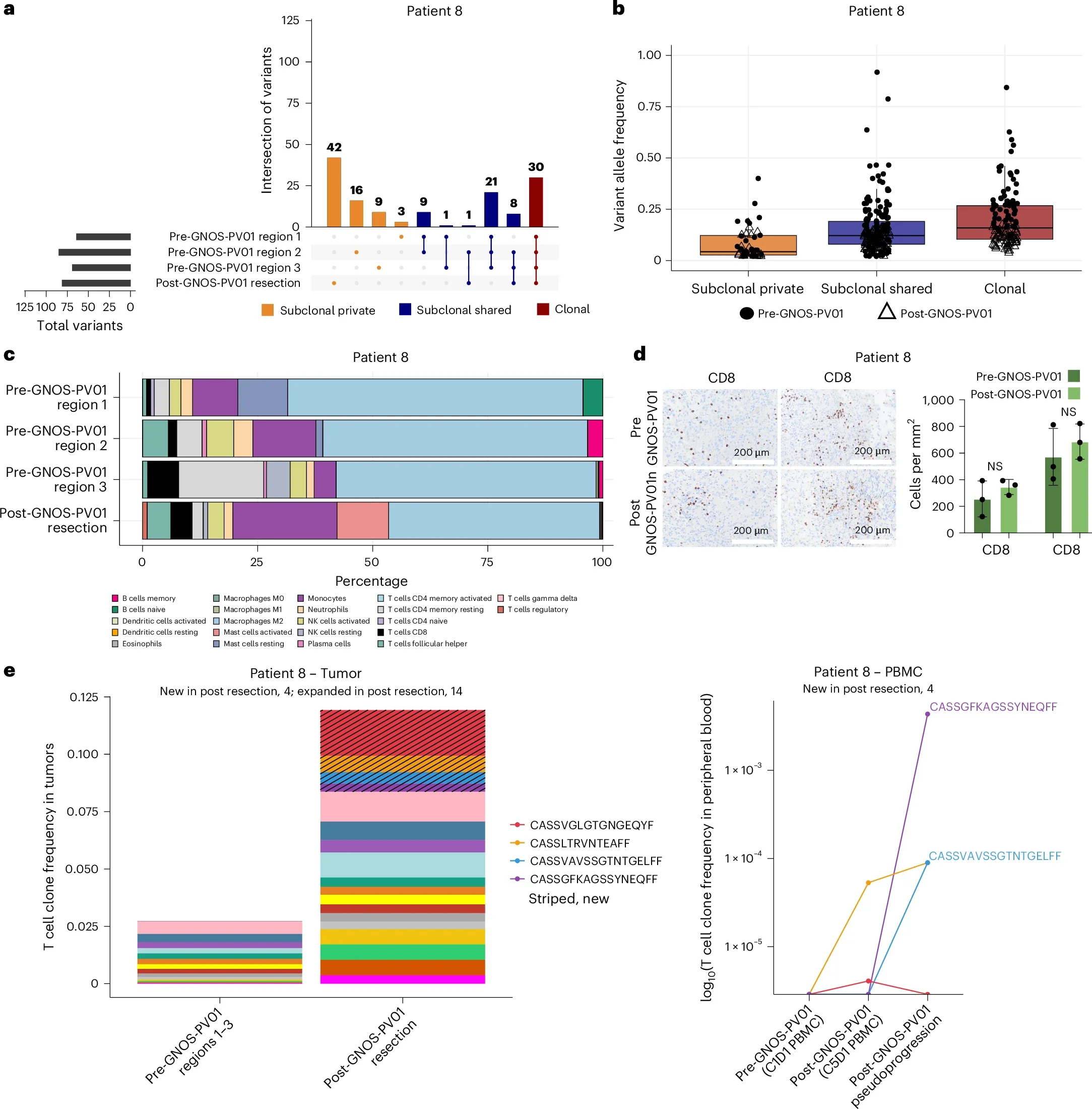
Serial blood analyses demonstrated expansion and activation of neoantigen-specific T cells following vaccination. Investigators observed increased activation markers on both CD4-positive and CD8-positive lymphocytes, along with sustained immune responses over time.
Six of seven evaluable patients developed measurable neoantigen-specific immune responses. The only patient who failed to mount a substantial response was receiving dexamethasone during vaccination, highlighting the suppressive effects of corticosteroids on antitumor immunity.
Notably, stronger CD8-positive T-cell activation correlated with longer overall survival, suggesting that the immune responses generated by the vaccine may have contributed to clinical benefit.
Evidence of Immune Activity Inside the Tumor
One of the most fascinating aspects of the study was the opportunity to analyze tumor tissue obtained after vaccination.
In selected patients who underwent repeat surgery, investigators found evidence that vaccine-induced immune cells had infiltrated the tumor microenvironment. Using T-cell receptor sequencing and advanced single-nucleus RNA sequencing techniques, they identified expansion of specific T-cell clones both in peripheral blood and within recurrent tumor specimens.
These findings suggest that the vaccine was not simply generating immune responses in circulation but was successfully driving immune cells into the tumor itself.
The Impact of Dexamethasone
The study also provided an important clinical lesson regarding corticosteroid use.
Patients receiving dexamethasone demonstrated weaker immune activation, reduced T-cell infiltration, and diminished expression of antigen-presentation machinery. In contrast, patients not receiving steroids showed more robust immune responses and evidence of enhanced T-cell activity within the tumor microenvironment.
These observations reinforce growing evidence that corticosteroids may substantially impair the effectiveness of immunotherapy and vaccine-based approaches in glioblastoma.
Why Multi-Regional Sampling Matters
Glioblastoma is characterized by remarkable genetic diversity, even within a single tumor. By collecting samples from several tumor regions, investigators increased the number of detectable mutations by approximately 45% compared with single-region analysis.
This broader sampling strategy allowed the vaccines to target both dominant clonal mutations and less common subclonal alterations, potentially improving the ability to control heterogeneous disease. The findings suggest that future personalized vaccine approaches may benefit from comprehensive spatial characterization of tumors rather than relying on a single biopsy specimen.
Toward Combination Immunotherapy
Although the vaccine alone generated encouraging immune responses, investigators believe its greatest potential may lie in combination strategies.
The study demonstrated that vaccination can prime the immune system and generate tumor-reactive T cells. Once these T cells are present, immune checkpoint inhibitors such as PD-1 blockade may become more effective. Indeed, some patients showed evidence that vaccination created a tumor microenvironment more receptive to subsequent checkpoint inhibition.
These observations have already provided the rationale for ongoing clinical studies evaluating personalized neoantigen DNA vaccination in combination with PD-1 blockade in newly diagnosed glioblastoma.
Conclusion
The GT-20 trial represents one of the most sophisticated personalized cancer vaccine studies conducted in glioblastoma to date. Garfinkle and colleagues demonstrated that individualized DNA vaccines targeting up to 40 patient-specific neoantigens can be safely delivered, generate robust T-cell responses, and produce encouraging survival signals in patients with MGMT-unmethylated glioblastoma.
While larger studies will be required to confirm clinical benefit, the trial provides compelling evidence that personalized vaccination can successfully activate antitumor immunity in a disease that has historically been resistant to immunotherapy. As combination strategies with checkpoint inhibitors continue to evolve, neoantigen-directed vaccines may emerge as an important component of future glioblastoma treatment.
Read Full Article Here