
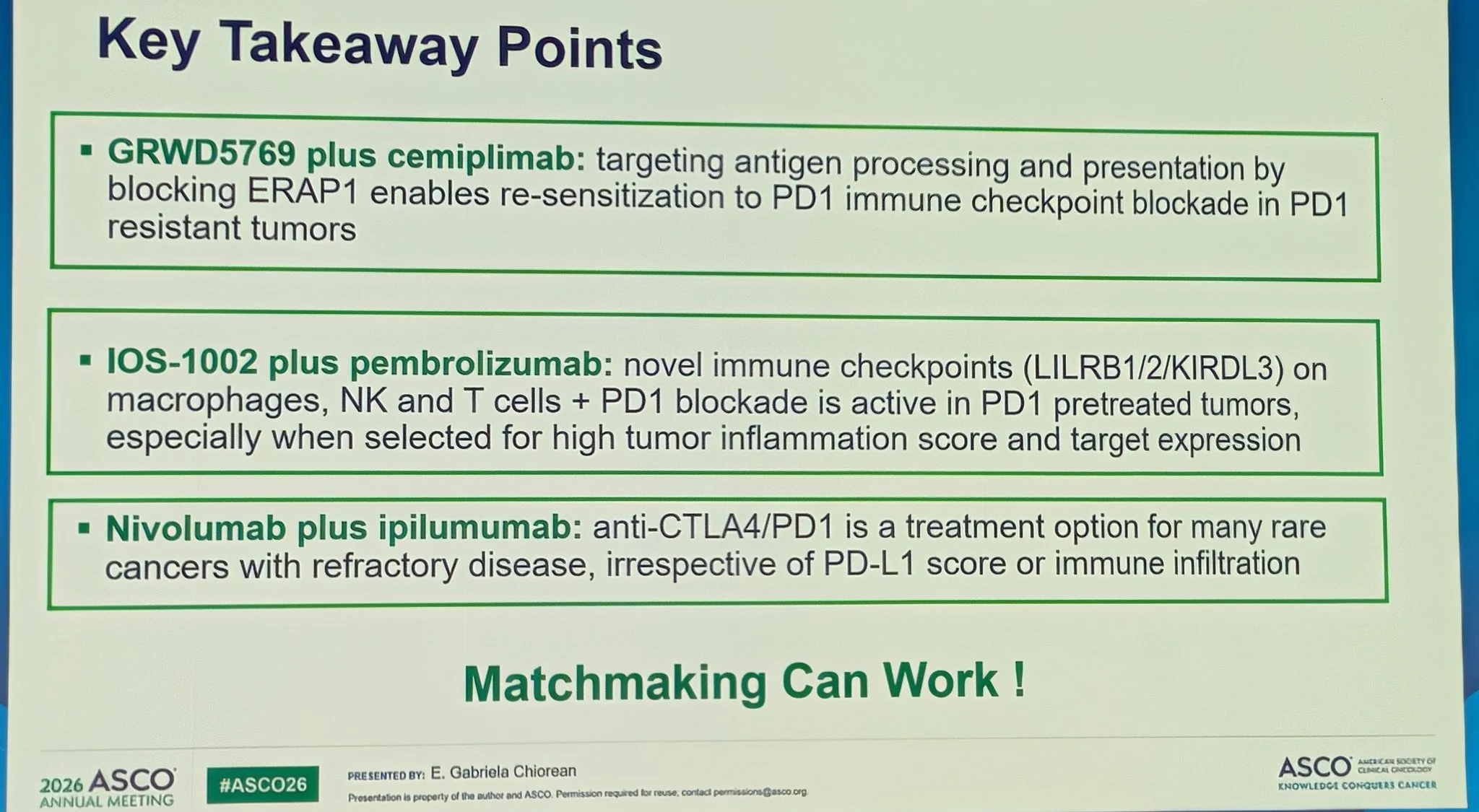
At the 2026 ASCO Annual Meeting, Fiona Thistlethwaite and colleagues presented results from the EMITT-1 study evaluating the combination of the oral ERAP1 inhibitor GRWD5769 with cemiplimab across six completed phase 1b expansion cohorts in patients with solid tumors exhibiting secondary resistance to anti–PD-1 therapy and in microsatellite stable colorectal cancer (MSS-CRC).
Resistance to PD-1 blockade remains a major challenge across oncology, particularly in patients who initially respond to immunotherapy and later develop disease progression. GRWD5769 is a first-in-class oral Endoplasmic Reticulum Aminopeptidase 1 inhibitor (ERAP1i) designed to modulate tumor antigen presentation on MHC-I.
According to investigators, intermittent Q3W on/off dosing of GRWD5769 generates two alternating antigen repertoires, with the goal of broadening T-cell responses while potentially avoiding T-cell exhaustion associated with chronic antigen exposure.
Study Design and Methods
The EMITT-1 trial enrolled patients with:
- Non–small cell lung cancer (NSCLC)
- Urothelial carcinoma (UC)
- Hepatocellular carcinoma (HCC)
- Cervical cancer
- Squamous cell carcinoma of the head and neck (SCCHN)
All patients had secondary resistance to at least 3 months of first-line anti–PD-1 therapy.
The study also enrolled patients with MSS-CRC without liver metastases.
Patients received:
- GRWD5769 400 mg twice daily
- Combined with cemiplimab

Cemiplimab-rwlc (Libtayo) Updates 2025: Uses in cancer, Side effects, Dosage, Expectations and more
The primary clinical assessments included:
- Objective response rate (ORR)
- Durable clinical benefit (DCB), defined as CR, PR, or SD lasting ≥6 months
- Progression-free survival (PFS)
Longitudinal translational analyses evaluated:
- T-cell receptor (TCR) repertoire dynamics
- Immune phenotype changes
Results
All six cohorts were fully recruited, with a total of 81 patients included in this interim analysis. Median follow-up was 6.0 months.
Clinical activity was observed across all completed cohorts.
Key efficacy findings included:
- ORR ranging from 13% to 46%
- Durable clinical benefit observed across multiple tumor types
- Median PFS varied across cohorts
- Median PFS reached 8.2 months in patients with MSS colorectal cancer without liver metastases
The combination demonstrated a favorable tolerability profile with no new safety signals identified.
Immune-mediated adverse reactions (imARs) were reported in 12 patients.
Only one grade ≥3 immune-related adverse event was reported:
- Immune hepatitis requiring treatment discontinuation
Grade ≥3 treatment-related adverse events occurred in approximately 2% of patients.
Translational and Pharmacodynamic Findings
Investigators reported substantial increases in TCR repertoire diversity among patients achieving clinical benefit.
These changes were driven by expansion of low-frequency putative de novo TCR clonotypes.
Responding patients demonstrated cyclical Vß gene-usage dynamics characterized by:
- Broad T-cell clonal expansion
- Subsequent contraction
According to investigators, these findings were consistent with antigen repertoire shifts generated by ERAP1 inhibition. Dynamic activation of T-cell–associated genes further supported antigen-driven T-cell remodeling during therapy.
Mechanistic Insights
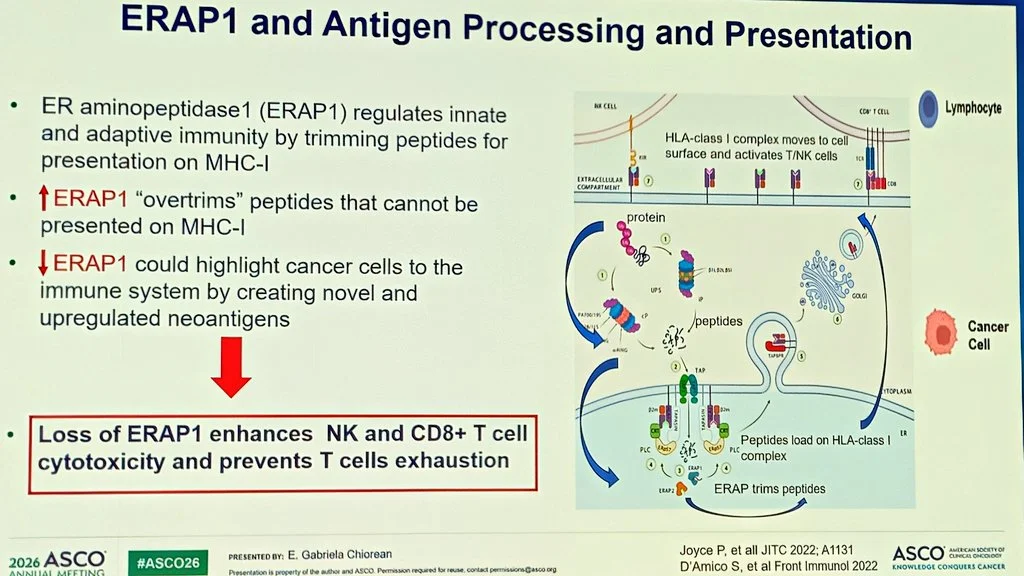
ERAP1 regulates antigen processing and presentation through MHC-I. Excessive ERAP1 activity can overtrim peptides, limiting their presentation to cytotoxic immune cells.
Investigators proposed that ERAP1 inhibition may enhance immune recognition by generating novel antigenic repertoires, increasing tumor visibility to the immune system, enhancing NK-cell and CD8+ T-cell cytotoxicity, and preventing T-cell exhaustion.
These findings support the hypothesis that GRWD5769 may re-sensitize PD-1–resistant tumors to immune checkpoint blockade.
Conclusion
The EMITT-1 study demonstrated clinical activity and manageable tolerability with GRWD5769 combined with cemiplimab across all six completed phase 1b expansion cohorts in patients with secondary anti–PD-1 resistance and MSS-CRC.
Translational analyses suggested that GRWD5769 may exert a dual mechanism of action by:
- Reprogramming antigen-experienced T cells
- Inducing de novo T-cell responses
These findings support the potential role of ERAP1 inhibition in overcoming both primary and secondary resistance to anti–PD-1 therapy.
Based on the observed efficacy and tolerability, stage 2 cohort expansions are ongoing to inform future randomized phase II development.