At the 2026 ASCO Annual Meeting, Maria Vittoria Dieci and colleagues presented findings from the phase III A-BRAVE trial exploring whether the time-of-day (ToDa) administration of immunotherapy influences clinical outcomes in patients with high-risk early-stage triple-negative breast cancer (TNBC).
Circadian rhythms regulate immune functions, and morning administration of immunotherapy has previously been associated with improved survival outcomes across several solid tumors. However, whether ToDa administration influences outcomes in early-stage TNBC, and whether these effects depend on the tumor immune microenvironment, has remained unclear.
The A-BRAVE analysis investigated the relationship between immunotherapy timing, immune biomarkers, and survival outcomes in patients treated with adjuvant avelumab.

Triple-Negative Breast Cancer: Symptoms ,Causes, Types, Diagnosis and Treatment
Study Design and Methods
The A-BRAVE trial randomized patients with high-risk early-stage TNBC to receive one year of adjuvant avelumab or observation.
For this analysis, infusion timing data were collected from electronic case report forms. The AM-rate was defined as the proportion of the first four avelumab infusions administered before 12:30 PM, corresponding to the median treatment time in the cohort.
Patients were classified as:
- AM-dominant (AM-rate ≥50%)
- PM-dominant (AM-rate <50%)
Tumor-infiltrating lymphocytes (TILs) and PD-L1 expression were centrally assessed on treatment-naïve tumor samples.
Distant disease-free survival (DDFS) and overall survival (OS) were evaluated using adjusted Cox proportional hazards models.
Results
Among 235 patients treated with avelumab, time-of-day data were available for 221 patients (94%).
Of these patients:
- 126 (57%) were classified as AM-dominant
- 95 (43%) were classified as PM-dominant
TILs were evaluable in 188 patients (85%), and PD-L1 expression was evaluable in 195 patients (88%).
Infusion timing alone was not associated with clinical outcomes.
For DDFS:
- 3-year DDFS was 73.5% in AM-dominant patients
- 77.4% in PM-dominant patients
- Log-rank p = 0.499
For OS:
- 3-year OS was 83.9% in AM-dominant patients
- 86.0% in PM-dominant patients
- Log-rank p = 0.497
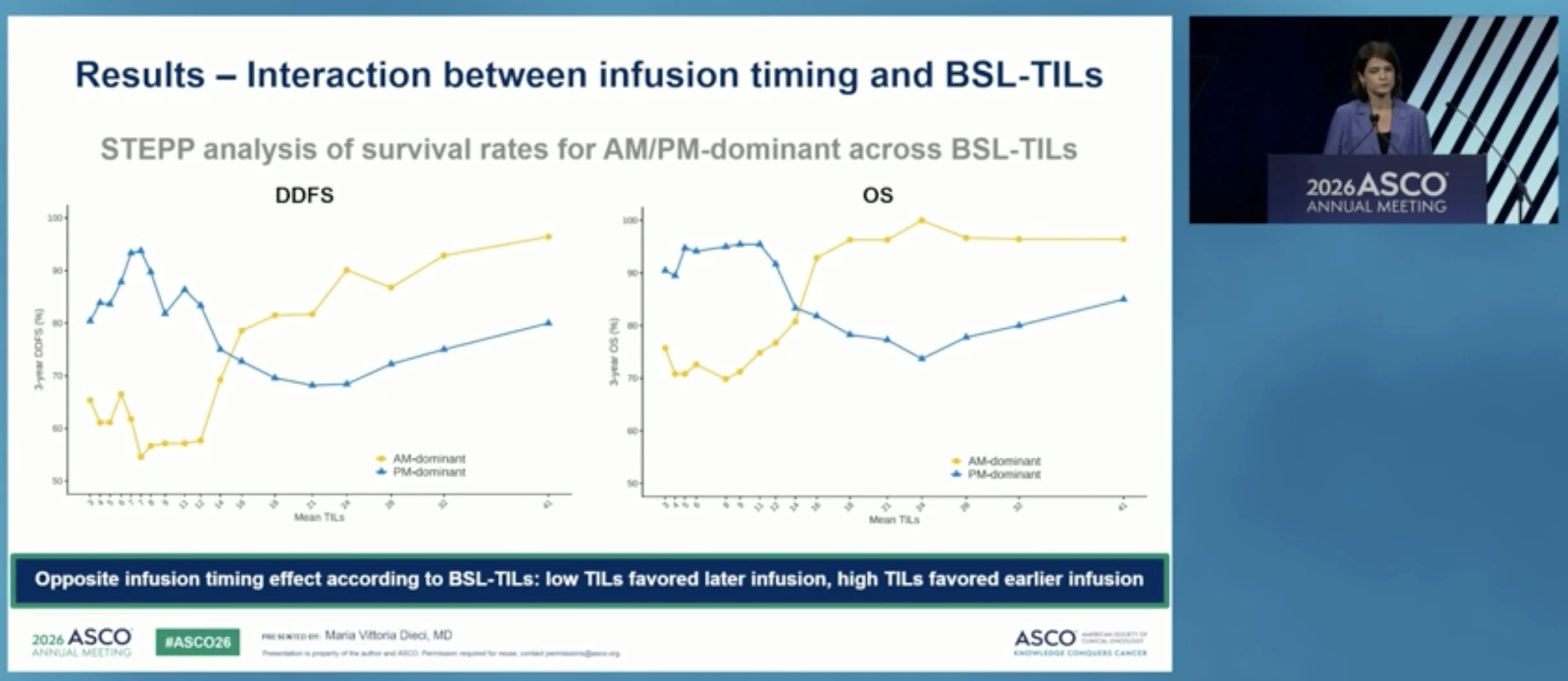
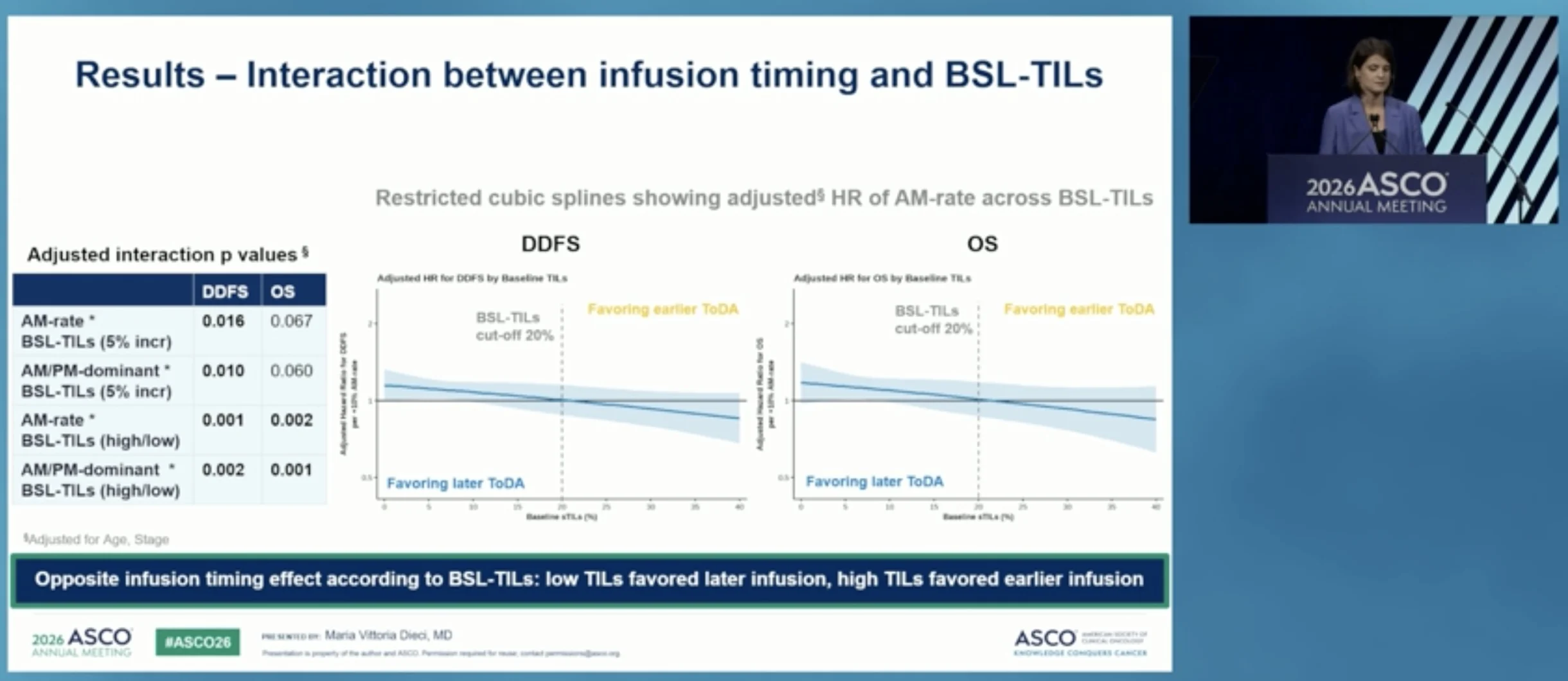
However, exploratory interaction analyses suggested that the association between infusion timing and outcome depended on the baseline immune microenvironment.
In patients with higher baseline TIL levels, earlier (AM) administration appeared to be associated with more favorable outcomes, whereas in patients with lower baseline TIL levels, later (PM) administration appeared to be associated with more favorable outcomes.
Interaction analyses demonstrated significant associations between infusion timing and baseline TIL status. The strongest interaction signals were observed when TILs were analyzed as high versus low groups:
- AM-rate × TIL category: DDFS p = 0.001; OS p = 0.002
- AM/PM-dominant × TIL category: DDFS p = 0.002; OS p = 0.001
Similar directional trends were observed in analyses incorporating PD-L1 expression.
These findings were consistent across multiple statistical approaches and suggested opposite timing effects in immune-hot versus immune-cold tumors.
Conclusion
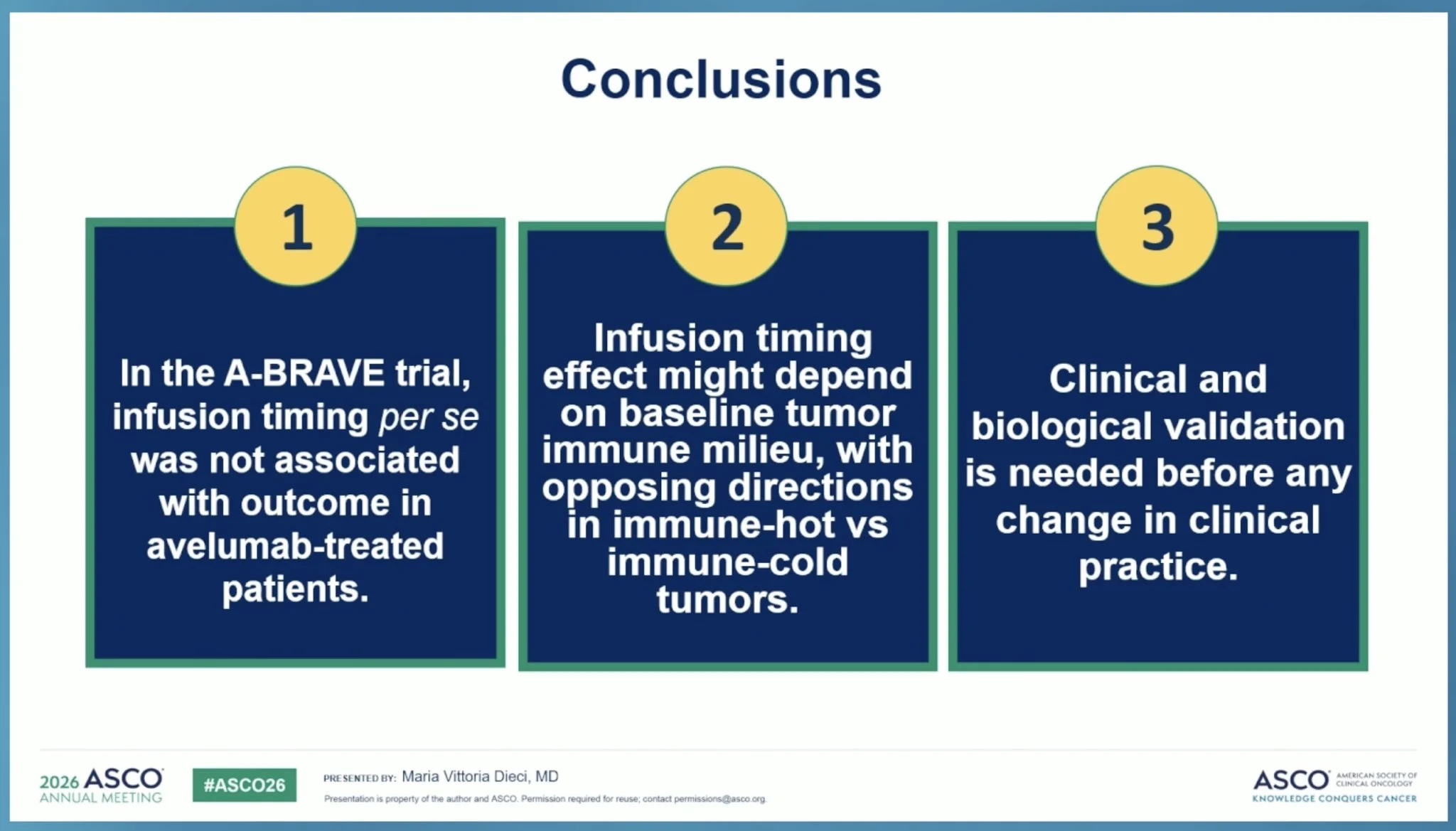
This exploratory analysis of the A-BRAVE trial found that infusion timing alone was not associated with outcomes in avelumab-treated patients with high-risk early-stage TNBC.
However, the relationship between infusion timing and outcome appeared to vary according to the baseline immune milieu. Earlier administration appeared favorable in immune-hot tumors, whereas later administration appeared favorable in immune-cold tumors.
The investigators concluded that infusion timing effects may depend on the tumor immune microenvironment and emphasized that clinical and biological validation is required before any change in clinical practice can be recommended.