
GLP-1 medications, including Ozempic, Wegovy and Mounjaro, have transformed the management of type 2 diabetes and obesity. Their growing use has also raised important questions about cancer: could these drugs increase the risk of certain tumors, or might their effects on metabolism offer some protection?
Recent clinical research has provided largely reassuring findings. Randomized trials have not demonstrated an overall increase in cancer incidence, while several observational studies have reported lower rates of certain obesity-associated cancers. However, thyroid cancer remains an important safety consideration, and the long-term effects of GLP-1 therapy are not yet fully understood.
Understanding the relationship between GLP-1 and cancer requires more than examining cancer diagnoses alone. Researchers are investigating how these medications affect insulin signaling, chronic inflammation, adipose tissue and the biological pathways involved in tumor development. This article examines the underlying mechanisms, major findings from 2025–2026 research, cancer-specific risks and clinical considerations for patients undergoing cancer treatment.
Do GLP-1 Drugs Increase Cancer Risk?
Current clinical evidence does not establish that GLP-1 receptor agonists (GLP-1 RAs) increase overall cancer risk. Randomized trials and systematic reviews have generally found no statistically significant difference in overall cancer incidence between patients receiving GLP-1 medications and those receiving comparison treatments (Silverii et al., 2025; Ko et al., 2026).
The findings are less consistent for individual malignancies. Some studies suggest lower rates of obesity-associated cancers, while others have identified possible increases in thyroid or colorectal cancer incidence. These differences may reflect study design, treatment duration, patient characteristics and the relatively small number of certain cancers reported in clinical trials.
An important distinction is that the absence of a demonstrated overall increase does not establish that GLP-1 medications are free of cancer-specific risks. Their long-term safety requires continued investigation, particularly as treatment increasingly extends beyond diabetes management to younger populations receiving medication for obesity.
What Are GLP-1 Medications?
GLP-1 medications act on the glucagon-like peptide-1 pathway, which regulates glucose metabolism, appetite and gastrointestinal function. GLP-1 is an incretin hormone released primarily by intestinal L cells after food intake. It stimulates glucose-dependent insulin secretion, suppresses inappropriate glucagon release and influences appetite-regulating pathways in the central nervous system (Nauck et al., 2021).
Common GLP-1 receptor agonists include semaglutide (Ozempic, Wegovy, Rybelsus), liraglutide (Victoza, Saxenda) and dulaglutide (Trulicity). These medications differ in formulation, duration of action and approved indications.
Tirzepatide (Mounjaro, Zepbound) is pharmacologically distinct because it activates both GLP-1 and glucose-dependent insulinotropic polypeptide (GIP) receptors. Its dual incretin activity improves glycemic control and produces substantial weight reduction (Frías et al., 2021).
Although developed for metabolic diseases, these drugs have attracted increasing interest in oncology because obesity, insulin resistance and chronic inflammation contribute to the development of several malignancies.
Pathophysiology: How Could GLP-1 Drugs Influence Cancer Development?
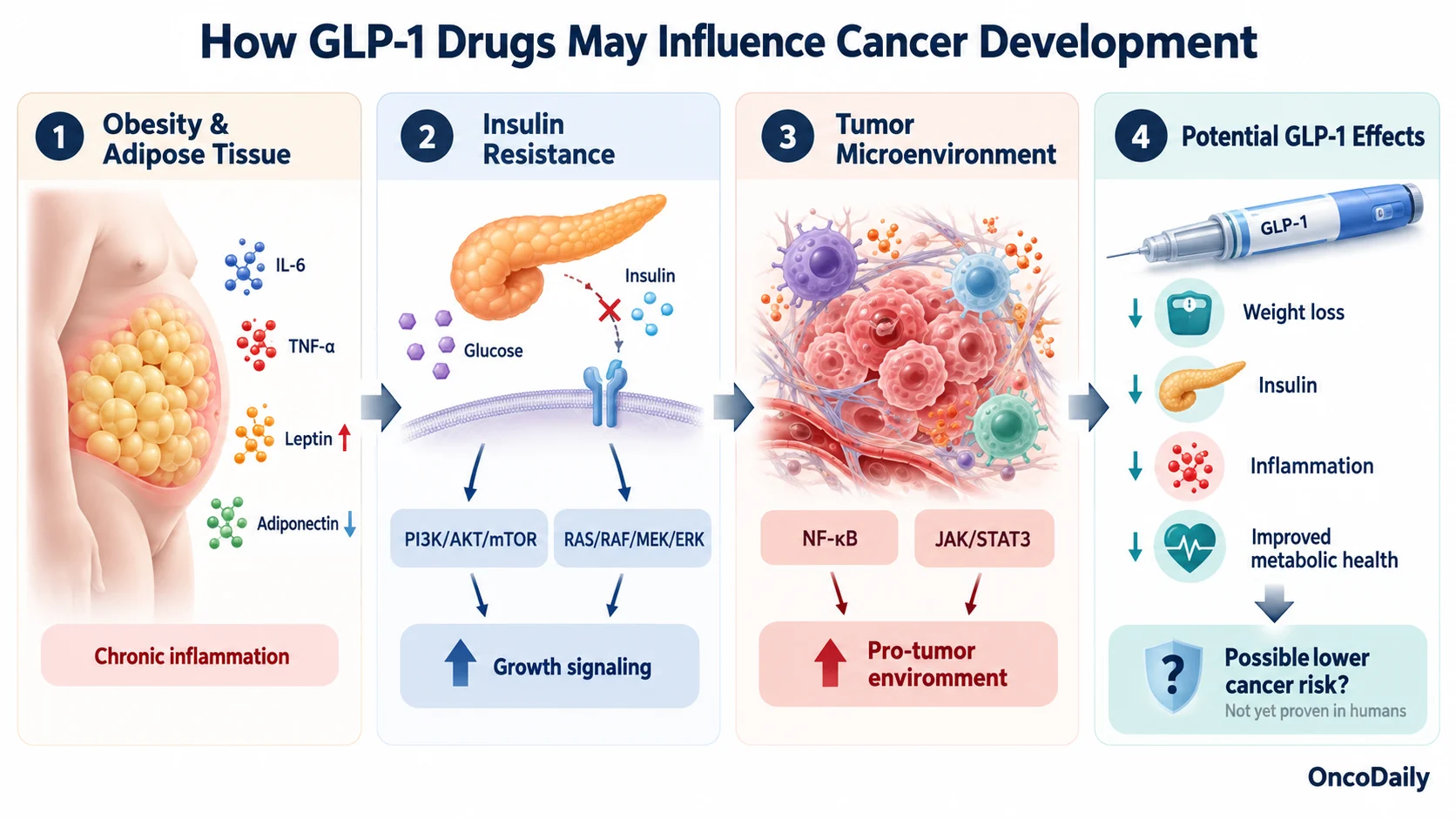
The possible relationship between GLP-1 receptor agonists and cancer is rooted in the biological connections between obesity, metabolic dysfunction and carcinogenesis. Excess adipose tissue can alter hormonal signaling, promote chronic inflammation and influence the tissue environment in which malignant cells develop.
GLP-1 medications affect several of these processes, although it remains uncertain whether the resulting metabolic changes translate into lower cancer incidence.
Obesity, Adipose Tissue and Carcinogenesis
Adipose tissue is an active endocrine organ that produces hormones, adipokines and inflammatory mediators. In obesity, adipocyte enlargement and dysfunction can lead to local hypoxia, macrophage recruitment and persistent low-grade inflammation.
These changes are associated with increased production of proinflammatory cytokines, including interleukin-6 (IL-6) and tumor necrosis factor-alpha (TNF-α). Chronic inflammatory signaling can contribute to oxidative stress, altered immune responses and tissue conditions that favor malignant transformation (Louie et al., 2013).
Obesity also affects circulating adipokines. Leptin concentrations generally increase with adiposity and may promote proliferative signaling in some experimental cancer models. Conversely, adiponectin, which has insulin-sensitizing and anti-inflammatory properties, is often reduced.
By reducing body weight, GLP-1 medications may improve aspects of adipose tissue function. However, reductions in inflammation or changes in adipokines should not be interpreted as direct evidence of cancer prevention.
Insulin Resistance and Growth-Factor Signaling
Insulin resistance is another important link between obesity and cancer. As tissues become less responsive to insulin, the pancreas compensates by increasing insulin secretion, producing chronic hyperinsulinemia.
Insulin and insulin-like growth factor signaling can activate intracellular pathways such as PI3K/AKT/mTOR and RAS/RAF/MEK/ERK. These pathways regulate cellular growth, metabolism, proliferation and survival. Persistent activation may contribute to tumor progression in susceptible tissues.
GLP-1 medications improve glycemic control and, through weight reduction, may improve insulin sensitivity and reduce compensatory hyperinsulinemia. This provides a plausible indirect mechanism through which treatment could influence cancer-related growth signaling.
However, changes in circulating insulin do not necessarily produce equivalent changes within tumors, and these effects may differ considerably between cancer types (Sauter and Agurs-Collins, 2024).
Chronic Inflammation and Tumor
Obesity-associated inflammation can influence the tumor microenvironment through interactions between immune cells, stromal cells, adipocytes and malignant cells.
Inflammatory pathways such as NF-κB and JAK/STAT3 participate in cellular survival, cytokine production and immune regulation. Chronic activation of these pathways may support tumor growth and interfere with effective antitumor immune responses.
Experimental studies suggest that GLP-1 receptor agonists may modify inflammatory signaling and immune-cell activity. However, it remains difficult to distinguish effects related to weight loss and improved glucose metabolism from direct actions of GLP-1 receptor activation (Valencia-Rincón et al., 2025).
Hormonal Changes and Obesity-Related Cancers
Obesity can also influence cancer risk through altered sex-hormone metabolism. In postmenopausal women, adipose tissue contributes to estrogen production through aromatase activity. Increased estrogen exposure, together with insulin resistance and inflammation, is implicated in the development of endometrial cancer and certain breast cancers.
Weight reduction may improve several of these hormonal and metabolic disturbances. This has generated particular interest in GLP-1 medications and hormonally influenced malignancies.
Nevertheless, the relationship is complex. Not every cancer associated with obesity is hormone-dependent, and changes in estrogen or insulin levels do not establish that a medication prevents malignant transformation.
Could GLP-1 Drugs Act Directly on Cancer Cells?
Researchers are also investigating whether GLP-1 receptor activation produces effects independent of weight loss.
Preclinical studies have reported changes in cellular proliferation, inflammatory signaling, oxidative stress and immune-cell behavior following GLP-1-based treatment. Some experiments have suggested tumor-suppressive effects, while other findings remain inconsistent across models.
An important limitation is that GLP-1 receptor expression varies between tissues and tumors. Demonstrating receptor expression does not necessarily establish that receptor activation produces a clinically meaningful effect. Interpretation also depends on the specificity of experimental assays and whether therapeutic drug concentrations are relevant to human exposure.
Valencia-Rincón et al. (2025) emphasized that the biological effects of GLP-1 therapies should be evaluated in the context of tumor type, metabolic status, treatment timing and concurrent anticancer therapy.
These pathways provide a scientific rationale for further research, but direct anticancer activity in humans has not been established.
What Do Studies Show About GLP-1 and Overall Cancer Risk?
Research published between 2024 and 2026 has substantially expanded our understanding of GLP-1 medications and cancer risk. Evidence from randomized clinical trials has generally been reassuring, showing no significant increase in overall cancer incidence. In contrast, several large observational studies have reported lower rates of obesity-associated cancers among GLP-1 users. These differences highlight the importance of study design, patient populations and treatment duration when interpreting the findings.
Evidence From Randomized Clinical Trials
A 2025 meta-analysis by Silverii et al. included 50 randomized clinical trials lasting at least 52 weeks. The investigators found no statistically significant difference in overall cancer incidence between patients receiving GLP-1 receptor agonists and those receiving comparison treatments (odds ratio [OR], 1.05; 95% CI, 0.98–1.13).
However, the analysis identified possible increased risks for two individual malignancies:
- Thyroid cancer: OR 1.55 (95% CI, 1.05–2.27).
- Colorectal cancer: OR 1.27 (95% CI, 1.03–1.57), with the association observed primarily in shorter-duration trials.
These findings suggest that overall cancer safety and cancer-specific outcomes should be considered separately. Importantly, neither association establishes that GLP-1 medications directly cause these malignancies (Silverii et al., 2025).
A subsequent systematic review by Ko et al. (2026), published in Annals of Internal Medicine, evaluated 48 randomized trials involving 94,245 participants. The researchers found that GLP-1-based therapies probably have little or no effect on the incidence of several cancers, although the certainty of evidence varied.
The pooled estimates showed no statistically significant increase in thyroid cancer (OR 1.37), pancreatic cancer (OR 0.84), breast cancer (OR 0.95) or kidney cancer (OR 1.12). Nevertheless, the confidence intervals remained wide for some outcomes, meaning that clinically relevant differences could not be completely excluded (Ko et al., 2026).
Taken together, these meta-analyses provide reassurance about cancer risk during the periods studied, while emphasizing the need for longer follow-up, particularly for uncommon malignancies.
What Have Large Observational Studies Found?
Observational studies have reported more favorable associations, especially among patients with obesity or type 2 diabetes.
One of the largest studies, published by Wang et al. (2024) in JAMA Network Open, examined electronic health records from more than 1.6 million patients with type 2 diabetes. Compared with insulin treatment, GLP-1 receptor agonist use was associated with lower incidence of 10 of 13 obesity-associated cancers, including colorectal, endometrial, liver, pancreatic and ovarian cancers.
However, these reductions were not observed when GLP-1 medications were compared with metformin. This difference is clinically important because patients receiving insulin may have more advanced diabetes or different metabolic risk profiles than those receiving other glucose-lowering therapies (Wang et al., 2024).
Another major study, published by Dai et al. (2025) in JAMA Oncology, examined 86,632 propensity-score-matched adults with overweight or obesity. The researchers reported:
- 17% lower relative hazard of cancer among GLP-1 users compared with nonusers (HR 0.83; 95% CI, 0.76–0.91).
- 13.6 cancer cases per 1,000 person-years among GLP-1 users, compared with 16.4 among nonusers, across the cancers examined.
- Lower incidence of endometrial cancer, ovarian cancer and meningioma, alongside a possible increased-risk signal for kidney cancer.
Although these results are encouraging, they should not be interpreted as proof of cancer prevention. Even after statistical matching, differences in metabolic health, cancer screening, medication use and healthcare access may influence the observed associations (Dai et al., 2025).
Why Do Randomized Trials and Observational Studies Differ?
The differences between these studies do not necessarily indicate contradictory results. Rather, they reflect the strengths and limitations of different research methods.
Randomized clinical trials assign treatments by chance, reducing the influence of many confounding factors. However, most GLP-1 trials were designed to evaluate blood glucose control, weight loss or cardiovascular outcomes, rather than cancer incidence. Their duration is also relatively short compared with the time required for many malignancies to develop.
Observational studies can follow larger populations in routine clinical practice, but their results may be influenced by several factors:
- Comparator medications: Patients receiving insulin, metformin or other treatments may differ in diabetes severity and baseline cancer risk.
- Underlying metabolic conditions: Obesity, insulin resistance and diabetes duration may independently influence cancer development.
- Detection bias: More frequent medical examinations or imaging may lead to increased diagnosis of certain cancers, particularly thyroid cancer.
- Treatment duration: Many patients have not used newer GLP-1 medications long enough to assess risks associated with prolonged exposure.
Cancer development is a multistep biological process that often takes years or decades. Consequently, the absence of increased cancer incidence during relatively short clinical trials cannot exclude every possible long-term effect.
The strongest conclusion from current research is that GLP-1 medications have not demonstrated a significant overall increase in cancer risk, while their potential protective effects remain unproven. Future studies with longer follow-up, appropriate comparison groups and cancer-specific outcomes will be essential to determine whether these therapies influence cancer development beyond their established metabolic benefits.

GLP-1 and Cancer Risk by Cancer Type
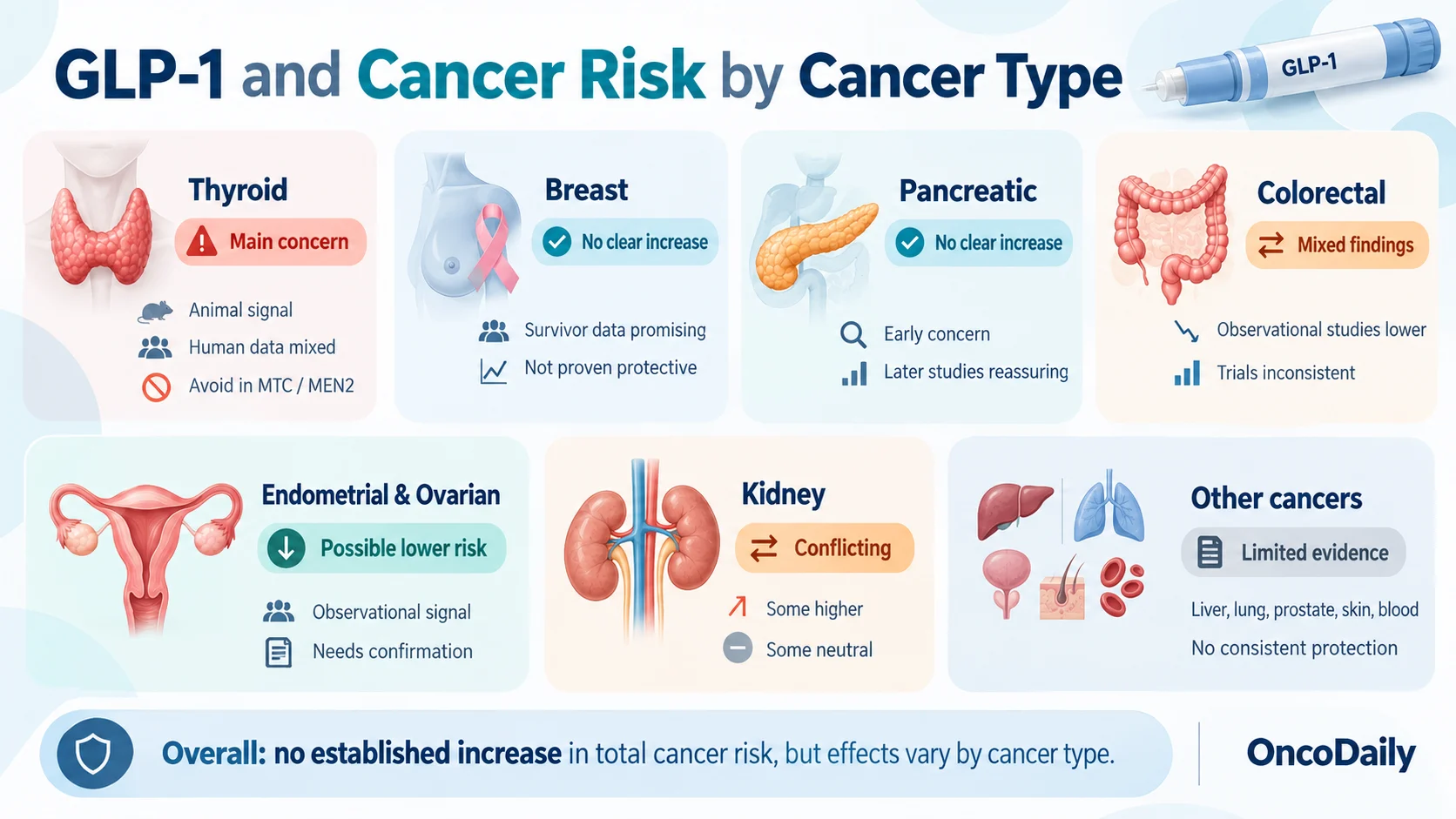
Although current evidence does not establish an overall increase in cancer risk with GLP-1 medications, findings differ across individual malignancies. Differences in tumor biology, underlying metabolic conditions and study design may explain some of these variations.
GLP-1 and Thyroid Cancer
Thyroid cancer remains the principal safety concern associated with GLP-1 medications. Animal studies identified thyroid C-cell tumors, including medullary thyroid carcinoma (MTC), following exposure to certain GLP-1 receptor agonists.
However, human evidence has been less consistent. A large Scandinavian study involving more than 145,000 GLP-1 users found no substantial increase in thyroid cancer risk over an average follow-up of 3.9 years (HR 0.93; 95% CI 0.66–1.31) (Pasternak et al., 2024). In contrast, a randomized-trial meta-analysis identified a possible increased-risk signal (Silverii et al., 2025).
GLP-1 medications carrying the relevant boxed warning are contraindicated in patients with a personal or family history of MTC or multiple endocrine neoplasia syndrome type 2 (MEN2). This contraindication does not specifically apply to papillary or follicular thyroid cancers, which arise from different thyroid cells.
GLP-1 and Breast Cancer
Current evidence does not establish an increased breast cancer risk with GLP-1 medications. A 2026 meta-analysis found no statistically significant association (OR 0.95; 95% CI 0.60–1.49) (Ko et al., 2026).
Research involving breast cancer survivors has reported potentially favorable outcomes. Tatum et al. (2026) observed lower all-cause mortality among GLP-1 users with obesity (HR 0.35; 95% CI 0.21–0.58), alongside favorable recurrence-related findings.
However, these results are observational and do not establish that GLP-1 drugs prevent breast cancer recurrence or improve survival. Evidence also remains insufficient for recommendations based on breast cancer subtype.
GLP-1 and Pancreatic Cancer
Early concerns about pancreatic cancer emerged partly from reports of pancreatitis associated with incretin-based therapies. However, these observations did not establish a causal relationship with pancreatic malignancy.
More recent randomized evidence has not demonstrated an increased pancreatic cancer risk. Ko et al. (2026) reported an OR of 0.84 (95% CI 0.53–1.35), consistent with the findings of Silverii et al. (2025).
Although these results are reassuring, longer-term studies remain necessary. A history of pancreatitis should still be considered when prescribing GLP-1 medications.
GLP-1 and Colorectal Cancer
Observational studies have associated GLP-1 use with lower colorectal cancer incidence, particularly compared with insulin treatment (Wang et al., 2024).
However, randomized-trial findings have been less consistent. Silverii et al. (2025) reported increased colorectal cancer odds (OR 1.27; 95% CI 1.03–1.57), primarily in shorter-duration trials. A subsequent analysis found no clear association, although the certainty of evidence remained low (Ko et al., 2026).
Current evidence therefore does not establish either a protective or a carcinogenic effect.
GLP-1 and Endometrial and Ovarian Cancer
Endometrial and ovarian cancers have attracted research interest because obesity can influence hormonal signaling, insulin resistance and chronic inflammation.
In a 2025 observational study, Dai et al. reported lower endometrial cancer incidence (HR 0.75; 95% CI 0.57–0.99) and ovarian cancer incidence (HR 0.53; 95% CI 0.29–0.96) among GLP-1 users.
Although these findings suggest possible benefits, they require confirmation in prospective studies, particularly across different ovarian cancer subtypes.
GLP-1 and Kidney Cancer
Evidence concerning kidney cancer remains conflicting. Dai et al. (2025) reported a possible increase in kidney cancer incidence (HR 1.38; 95% CI 0.99–1.93), while a randomized-trial meta-analysis found no statistically significant association (OR 1.12; 95% CI 0.78–1.60) (Ko et al., 2026).
Differences in diabetes severity, kidney function and comparison treatments may contribute to these findings. A causal relationship has not been established.
GLP-1 and Other Cancers
GLP-1 medications have also been investigated in liver, esophageal, gastric, gallbladder, prostate, lung, bladder, skin and hematologic cancers.
Some observational studies have reported lower rates of obesity-associated malignancies, particularly liver cancer, among GLP-1 users compared with insulin-treated patients (Wang et al., 2024). However, randomized evidence remains limited, and no consistent protective effect has been established (Ko et al., 2026).
Research involving melanoma and hematologic malignancies, including multiple myeloma, is still preliminary and does not support GLP-1 use for cancer prevention.
Can GLP-1 Drugs Prevent or Treat Cancer?
The metabolic effects of GLP-1 medications have generated considerable interest in their possible role in cancer prevention. However, reducing established risk factors is not equivalent to demonstrating that a medication prevents cancer.
A distinction must also be made between preventing a new cancer diagnosis and treating an existing malignancy. These outcomes involve different biological processes and require different forms of clinical evidence.
Potential Role in Cancer Prevention
Weight reduction, improved insulin sensitivity and changes in inflammatory signaling provide plausible mechanisms through which GLP-1 therapies could influence obesity-associated cancer risk.
However, evidence that weight reduction can influence cancer risk does not establish that every weight-loss intervention produces the same clinical outcome. The magnitude, duration and metabolic consequences of weight loss may differ between lifestyle interventions, bariatric surgery and pharmacological treatment.
Randomized trials designed specifically to evaluate incident cancer would provide stronger evidence of a preventive effect. Such studies would require sufficiently long follow-up and careful consideration of cancer type, baseline metabolic risk and treatment exposure.
Could GLP-1 Medications Have Anticancer Effects?
Preclinical research has examined GLP-1 signaling in relation to cancer cell proliferation, apoptosis, immune regulation and inflammation.
Some studies have reported reduced tumor growth or changes in tumor-associated signaling pathways following GLP-1-based treatment. However, these findings differ between experimental models and cannot establish clinical efficacy.
As discussed by Valencia-Rincón et al. (2025), separating direct receptor-mediated effects from changes caused by weight loss and improved metabolic function remains a central challenge.
At present, GLP-1 medications have no established role as anticancer agents.
Cancer Recurrence, Metastasis and Survival
Research involving cancer survivors has increasingly examined recurrence, metastatic progression and survival.
Some retrospective studies have reported favorable associations between GLP-1 exposure and clinical outcomes, particularly among patients with breast cancer. However, these studies may be affected by differences in disease stage, cancer treatment, underlying health and the timing of medication initiation (Tatum et al., 2026; Hatzis et al., 2026).
No randomized clinical trial has established that GLP-1 medications prevent metastasis, reduce cancer recurrence or improve cancer-specific survival.
Consequently, these drugs should not replace or be used as substitutes for established cancer treatments, including surgery, chemotherapy, radiation therapy, immunotherapy or targeted therapy.
Can Cancer Patients Take GLP-1 Drugs?
A cancer diagnosis does not automatically exclude the use of GLP-1 medications. Patients with active cancer or a history of malignancy may receive these drugs for type 2 diabetes or obesity when the potential benefits outweigh the risks. For cancer survivors, GLP-1 therapy may support weight management, glycemic control and cardiovascular health, although its effects on cancer recurrence and survival remain uncertain (Hatzis et al., 2026). Treatment decisions should consider cancer type, nutritional status, gastrointestinal symptoms and concurrent therapies, with particular caution in patients experiencing unintended weight loss, malnutrition or a history of pancreatitis. GLP-1-based medications carrying the relevant contraindication should not be used in patients with a personal or family history of medullary thyroid carcinoma (MTC) or MEN2.
Are GLP-1 Drugs Safe During Cancer Treatment?
GLP-1 medications may be continued during chemotherapy, immunotherapy or radiation therapy in selected patients, but their gastrointestinal effects can complicate cancer care. Nausea, vomiting, diarrhea and reduced appetite may worsen treatment-related symptoms, increasing the risk of dehydration, malnutrition and muscle loss, particularly in patients with cancer cachexia (Jalleh et al., 2026). Additional precautions are necessary before surgery or procedures requiring anesthesia because delayed gastric emptying may increase aspiration risk, although current guidance supports continuing treatment in many lower-risk patients (Kindel et al., 2024). Persistent vomiting, significant weight loss, suspected pancreatitis or severe gastrointestinal symptoms may warrant temporary interruption.
Decisions should be individualized and coordinated with the oncology and prescribing teams.
What Does the Current Evidence Mean for Patients?
Current research provides reassurance that GLP-1 medications do not appear to increase overall cancer incidence during the periods studied, although long-term safety and cancer-specific effects remain uncertain. Observational studies suggest possible reductions in several obesity-associated cancers, but these findings do not establish cancer prevention. For patients with cancer, GLP-1 medications should be considered primarily for their established metabolic benefits, with careful attention to nutritional status, treatment tolerance and individual risk factors. Until stronger clinical evidence becomes available, these drugs should not be prescribed specifically to prevent cancer, reduce recurrence or improve cancer survival.
FAQ
Do GLP-1 drugs like Ozempic and Wegovy cause cancer?
Current evidence does not establish that GLP-1 medications increase overall cancer risk. Large clinical studies have generally reported reassuring findings, although long-term safety and risks for individual cancer types remain under investigation.
Do GLP-1 medications increase thyroid cancer risk?
Human studies have produced mixed results, and a causal relationship has not been established. However, GLP-1 medications carry a boxed warning for thyroid C-cell tumors based on animal studies and are contraindicated in people with a personal or family history of medullary thyroid carcinoma (MTC) or MEN2.
Can GLP-1 drugs increase pancreatic cancer risk?
Randomized clinical trials and meta-analyses have not demonstrated a statistically significant increase in pancreatic cancer incidence among GLP-1 users. Longer-term research is still needed to evaluate potential risks.
Can Ozempic or other GLP-1 drugs reduce breast cancer risk?
Some observational studies suggest lower breast cancer incidence and potentially favorable outcomes among survivors. However, there is insufficient evidence to establish that GLP-1 medications prevent breast cancer or reduce recurrence.
Can GLP-1 medications prevent or treat cancer?
No GLP-1 medication is currently approved specifically for cancer prevention or treatment. Although research suggests possible benefits for certain obesity-associated cancers, these findings remain preliminary and do not establish anticancer efficacy.
Can cancer patients take GLP-1 medications during chemotherapy?
Some patients can continue GLP-1 medications during chemotherapy when medically appropriate. However, nausea, vomiting, appetite suppression and unintended weight loss may complicate treatment. Decisions should be individualized with the oncology team.
Are GLP-1 medications safe for cancer survivors?
GLP-1 medications may be appropriate for cancer survivors who require treatment for obesity or type 2 diabetes. A previous cancer diagnosis alone is not generally a contraindication, but treatment decisions should consider cancer history, nutritional status and individual risk factors.