
Pancreatic cancer is often diagnosed late, largely because early disease can develop quietly and without clear warning signs.
Small tumors may cause few symptoms, can be difficult to detect on imaging, and cannot be reliably identified with currently available blood tests. This makes early diagnosis especially challenging in people who do not already have a known increased risk.
At the same time, this is one of the fastest-moving areas in pancreatic cancer research. Better surveillance strategies, improved imaging, and newer blood-based biomarkers are bringing us closer to detecting the disease before it becomes advanced.
Why Is Pancreatic Cancer Difficult to Detect Early?
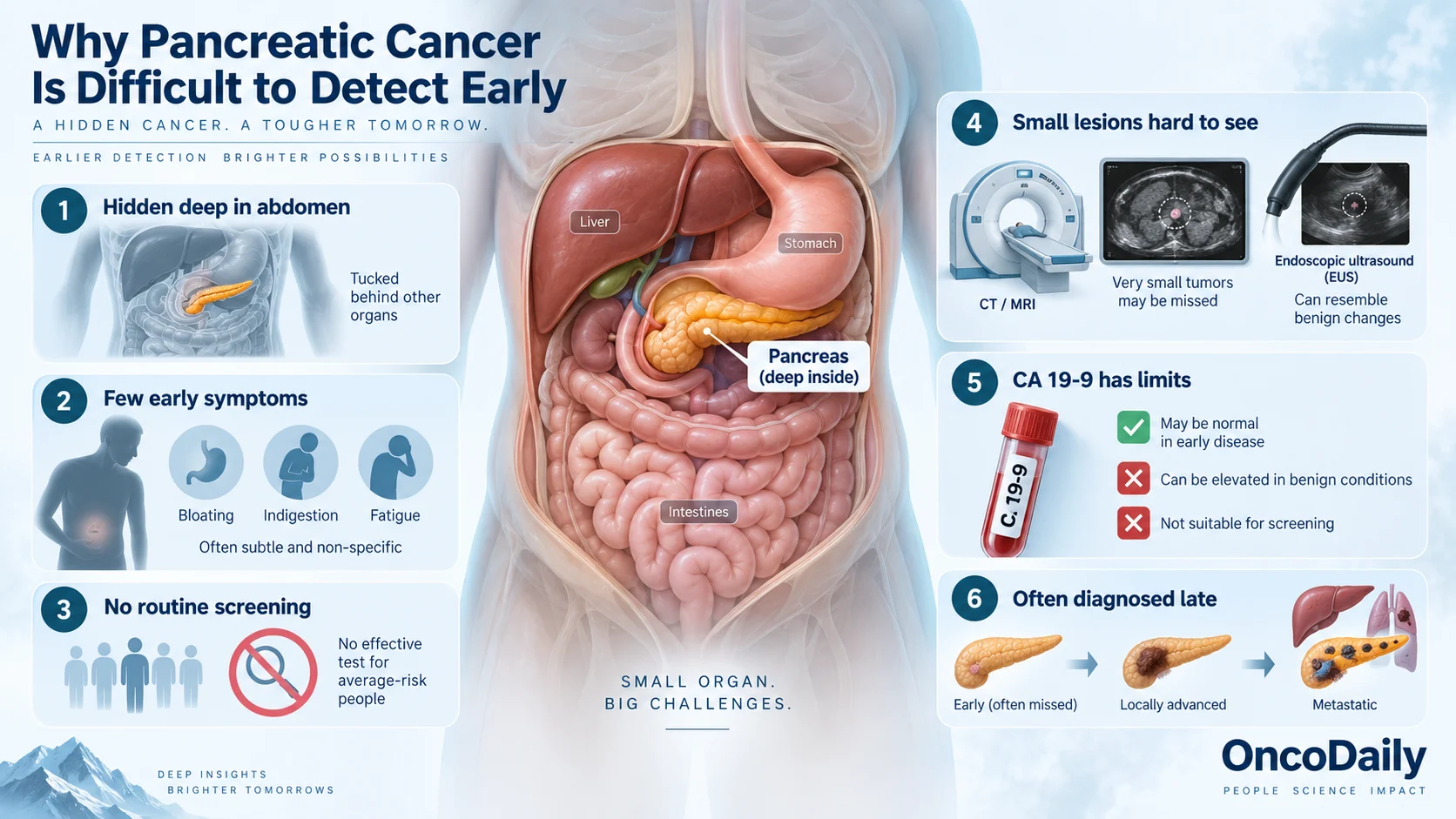
Pancreatic cancer is difficult to detect early because small tumors often develop without clear symptoms. The pancreas is also located deep within the abdomen, so early lesions cannot be identified through routine physical examination.
Early pancreatic ductal adenocarcinoma (PDAC) may remain clinically silent until it begins to affect nearby ducts, nerves, or other structures. When symptoms do appear, they are often vague and can overlap with much more common gastrointestinal or metabolic conditions. (Shen et al., 2025).
Another challenge is the absence of an effective screening test for people at average risk. CT, MRI, and endoscopic ultrasound can identify pancreatic abnormalities, but they are not suitable for population-wide screening, and very small lesions can still be difficult to distinguish from benign changes. (Shen et al., 2025).
Current blood biomarkers have similar limitations. CA 19-9 is useful in established pancreatic cancer but does not have the sensitivity or specificity required to detect early disease in asymptomatic people.
These limitations help explain why pancreatic cancer is still frequently diagnosed after it has become locally advanced or metastatic. Early-detection research is therefore increasingly focused on identifying people at higher risk and developing more sensitive molecular and imaging approaches. (Shen et al., 2025; Hussain et al., 2026).
What Are the Early Symptoms of Pancreatic Cancer?
Early pancreatic cancer often causes no symptoms. When symptoms do develop, they tend to be subtle and nonspecific.
One of the more characteristic presentations is painless jaundice, particularly with tumors in the head of the pancreas that obstruct the common bile duct. Patients may develop yellowing of the skin or eyes, dark urine, pale stools, or itching. (Shen et al., 2025).
Other possible symptoms include unexplained weight loss, reduced appetite, persistent upper abdominal or back pain, fatigue, nausea, and changes in digestion. These symptoms are common in many other conditions, which can delay further investigation.
New-onset diabetes is also receiving increasing attention as a potential early clue. In adults over 50, particularly when diabetes develops alongside unexplained weight loss or other atypical features, it may occasionally reflect metabolic changes caused by an otherwise clinically silent pancreatic tumor. (Tao et al., 2026).
No single symptom is specific enough to diagnose pancreatic cancer. The concern is greater when symptoms are persistent, unexplained, or occur together.

Who Is at High Risk for Pancreatic Cancer and Should Be Screened?
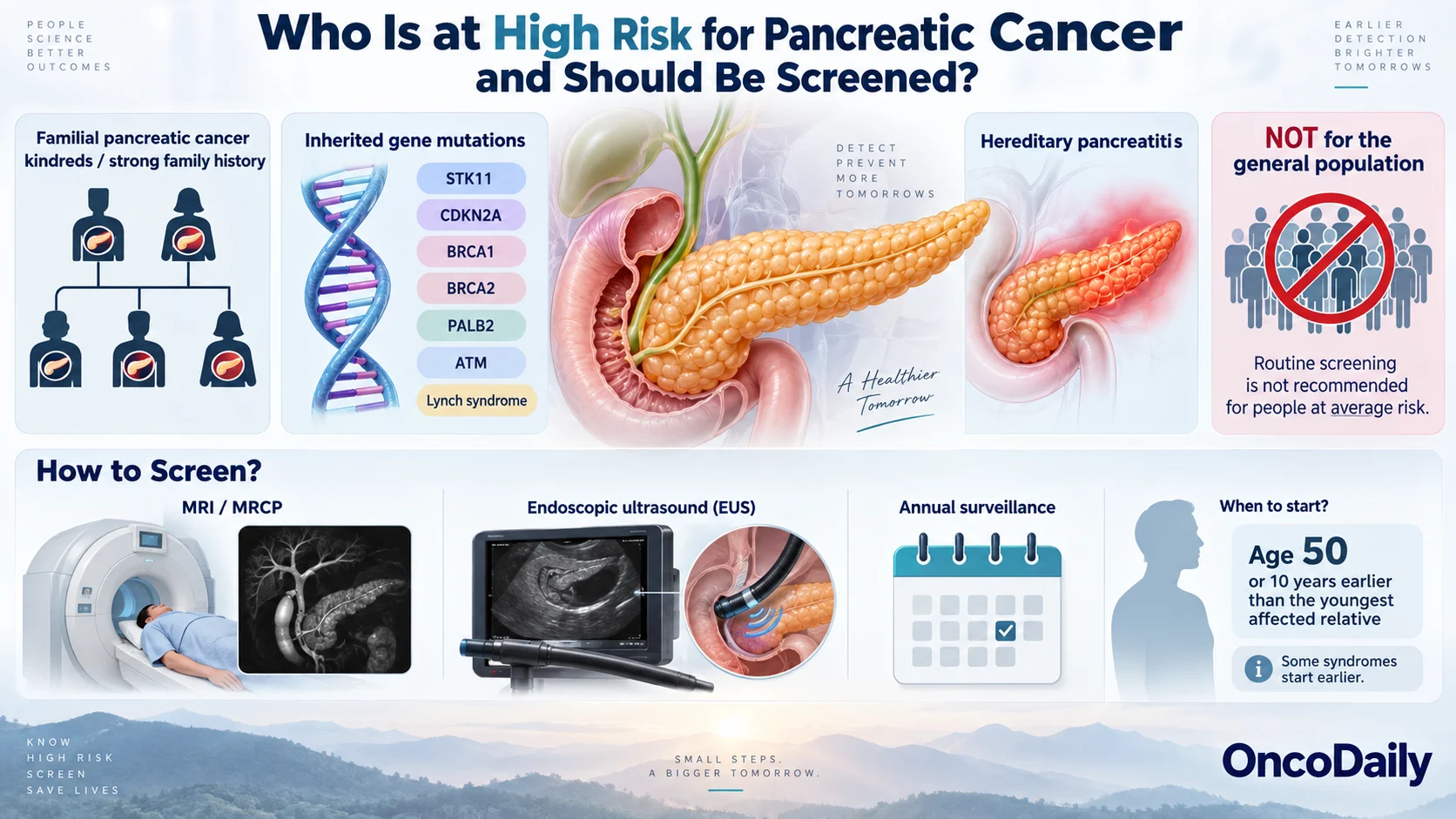
Routine pancreatic cancer screening is not recommended for the general population. Surveillance is focused on people with a sufficiently high inherited or familial risk. (Goggins et al., 2020; Aslanian et al., 2020).
This includes individuals from familial pancreatic cancer kindreds and carriers of certain pathogenic germline variants, including STK11, CDKN2A, BRCA1, BRCA2, PALB2, and ATM, as well as genes associated with Lynch syndrome. Hereditary pancreatitis is another recognized high-risk condition. (Goggins et al., 2020; Sawhney et al., 2022).
Eligibility varies somewhat between guidelines. Surveillance is particularly well established for Peutz–Jeghers syndrome and CDKN2A-associated familial atypical multiple mole melanoma syndrome, while recommendations for other susceptibility genes can differ according to family history and guideline. (Goggins et al., 2020; Sawhney et al., 2022).
For many high-risk individuals, surveillance begins around age 50 or 10 years before the youngest pancreatic cancer diagnosis in the family, although some syndromes require an earlier start. Surveillance is generally performed annually when no concerning abnormality is found. (Goggins et al., 2020; Sawhney et al., 2022).
Because both the benefits and potential harms need to be considered, surveillance is best performed in experienced multidisciplinary centers.
What Tests Are Used to Detect Pancreatic Cancer Early?
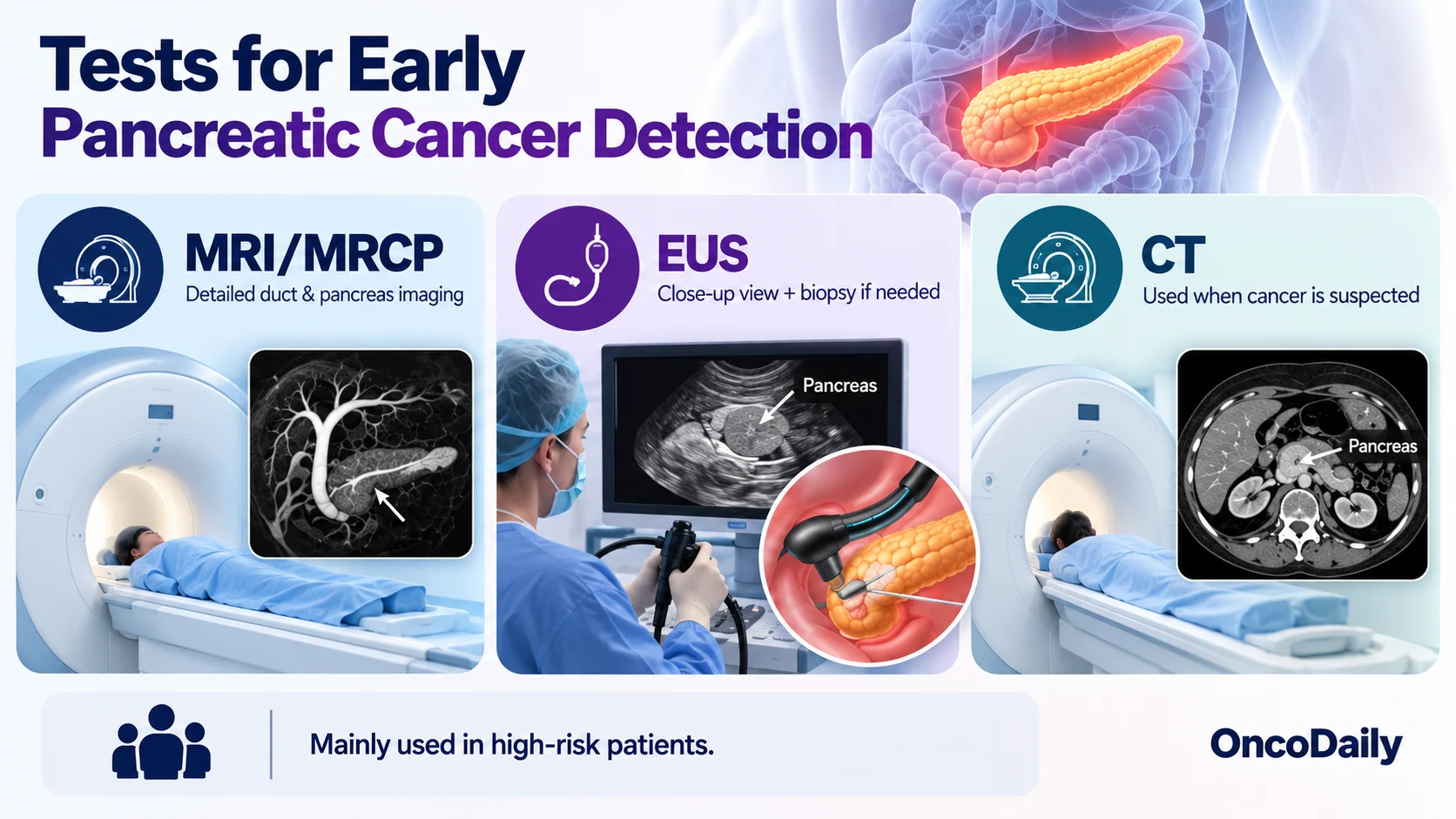
For people at increased risk, the main surveillance tools are MRI/MRCP and endoscopic ultrasound (EUS).
MRI/MRCP provides detailed, noninvasive imaging of the pancreas and pancreatic ducts and is particularly useful for detecting cystic abnormalities. EUS provides high-resolution imaging from close to the pancreas and can be particularly useful for small solid lesions. Tissue sampling can also be performed when a suspicious abnormality is identified. (Goggins et al., 2020; Shen et al., 2025).
Contrast-enhanced CT remains important when pancreatic cancer is suspected. It is widely used to characterize a pancreatic mass, assess vascular involvement, and stage disease. However, it is generally not the preferred test for repeated surveillance of asymptomatic high-risk individuals. (Shen et al., 2025).
Current guidelines therefore favor MRI/MRCP, EUS, or a combination of the two for pancreatic surveillance, with the choice depending on individual risk, findings, patient preference, and local expertise. (Goggins et al., 2020; Sawhney et al., 2022).
Can Blood Biomarkers Such as CA 19-9 Detect Pancreatic Cancer Early?
CA 19-9 cannot reliably detect pancreatic cancer early on its own and is not recommended as a screening test for asymptomatic people.
One major problem is sensitivity. Early pancreatic cancers may produce little or no measurable CA 19-9, so a normal result cannot exclude disease. In addition, approximately 5–10% of people have a Lewis antigen phenotype that limits or prevents CA 19-9 production. (Takahashi et al., 2026).
Specificity is another limitation. CA 19-9 can rise with biliary obstruction, cholestasis, pancreatitis, liver disease, and other benign conditions, making an isolated elevated result difficult to interpret. (Shen et al., 2025; Takahashi et al., 2026).
Its established clinical value is therefore greater in patients who already have pancreatic cancer, where serial measurements can contribute to assessment of treatment response and disease course.
For early detection, CA 19-9 may ultimately be more useful as one component of a multi-marker panel rather than as a stand-alone test. (Wang et al., 2026).
What New Biomarkers and Liquid Biopsy Tests Are Being Studied for Early Detection?
Early pancreatic tumors release relatively small amounts of material into the bloodstream, making liquid biopsy particularly challenging. Research is therefore moving away from single biomarkers toward tests that capture several molecular signals at once.
One approach is circulating tumor DNA (ctDNA). Tumor-associated mutations such as KRAS can be detected in blood, but mutation-only assays have limited sensitivity in early PDAC because small tumors may shed very little ctDNA. (Takahashi et al., 2026).
Newer methods examine DNA methylation and fragmentomics in addition to mutations. These approaches analyze epigenetic changes and patterns in cell-free DNA fragments that may provide information about both the presence and tissue origin of a tumor. (Anees et al., 2026).
Other strategies include circulating microRNAs, extracellular vesicles, and multi-protein signatures. For example, panels combining CA 19-9 with additional circulating proteins have shown better discrimination of early PDAC than CA 19-9 alone in validation studies. (Anees et al., 2026; Wang et al., 2026).
The broader direction is toward multi-omic blood tests that integrate mutations, methylation, fragment patterns, RNA, and proteins, sometimes using machine-learning models to combine these signals. (Hussain et al., 2026; Anees et al., 2026).
These approaches are promising, but they remain investigational. Large prospective studies are still needed to determine whether they can reliably detect clinically important pancreatic cancers early enough to improve outcomes.

Can Pancreatic Cancer Screening Improve Early Diagnosis and Survival?
In carefully selected high-risk individuals, pancreatic surveillance has produced a clear stage shift toward earlier disease.
In the multicenter CAPS5 study, seven of nine pancreatic cancers detected while participants were actively undergoing surveillance were stage I. The broader CAPS experience also showed substantially better survival among surveillance-detected cancers than cancers diagnosed outside surveillance. (Dbouk et al., 2022).
A subsequent analysis compared high-risk individuals diagnosed through CAPS surveillance with matched patients from the general population. Surveillance was associated with smaller tumors and substantially more stage I disease. Five-year overall survival was approximately 50% versus 9% in the matched comparison group. (Blackford et al., 2024).
These findings are encouraging, but they do not prove that screening reduces mortality in the same way a randomized screening trial would. Lead-time and selection effects remain important considerations.
They also do not support screening average-risk adults. The current evidence favors targeted surveillance of people with substantial familial or genetic risk, where detecting PDAC or a high-grade precursor lesion before symptoms develop may create a greater opportunity for curative treatment. (Goggins et al., 2020; Blackford et al., 2024).
FAQ
Can pancreatic cancer be detected early?
Yes, but early detection is still difficult. Surveillance is mainly recommended for people with a strong familial or genetic risk.
What are the early symptoms of pancreatic cancer?
Possible signs include painless jaundice, unexplained weight loss, upper abdominal or back pain, appetite loss, fatigue, digestive changes, and new-onset diabetes.
Is CA 19-9 useful for early pancreatic cancer detection?
Not on its own. CA 19-9 lacks the sensitivity and specificity needed for screening asymptomatic people.
What tests are used to screen people at high risk?
MRI/MRCP and endoscopic ultrasound (EUS) are the main surveillance tools used in high-risk individuals.
Can liquid biopsy detect pancreatic cancer early?
Potentially. ctDNA, methylation, fragmentomics, microRNAs, and multi-protein panels are promising, but most are still being studied and are not yet standard screening tests.