Germline BRCA1 pathogenic variants are well established as major inherited drivers of breast cancer risk, but their effects may extend beyond cancer cells themselves. New research suggests that heterozygous germline BRCA1 alterations can also influence the immune system, producing measurable dysfunction in circulating and tumor-infiltrating T cells.
In a 2026 study published in Immuno-Oncology and Technology, Kay and colleagues analyzed peripheral blood and tumor samples from individuals with and without germline BRCA1 pathogenic variants. They found that gBRCA1 carriers had lower circulating T cell counts, reduced BRCA1 expression after T cell activation, impaired proliferation, and decreased production of key effector molecules. In triple-negative breast cancer tumors, BRCA1 carriers also showed a highly expanded but skewed T cell receptor repertoire associated with greater tumor and frameshift mutation burden (Kay et al., 2026).
The findings suggest that BRCA1 haploinsufficiency could influence antitumor immunity at the level of the host immune system, not only through the genomic instability of BRCA1-deficient cancer cells. However, the investigators emphasize that the results remain hypothesis-generating and require validation before they can influence treatment selection or immunotherapy strategies.
Why Look at BRCA1 Inside T Cells?
BRCA1 is best known for its role in homologous recombination and DNA damage repair. Germline pathogenic variants substantially increase the lifetime risk of breast cancer, and BRCA1-associated breast tumors are frequently triple-negative.
The biological consequences of BRCA1 alterations within immune cells, however, are much less understood.
Activated T cells undergo rapid proliferation after antigen recognition. This expansion requires efficient DNA replication and repair. The investigators therefore proposed that carrying only one fully functional BRCA1 allele could make activated T cells more vulnerable to replication stress and eventually impair their ability to proliferate and maintain antitumor effector function.
Previous preclinical work had already shown that complete BRCA1 loss can interfere with T cell development and CD8-positive T cell function. The new study asked a clinically more relevant question: does heterozygous germline BRCA1 loss alter human T cell function in actual BRCA1 carriers? (Kay et al., 2026).
How Was the Study Conducted?
The investigators collected peripheral blood mononuclear cells from healthy donors and treatment-naïve patients with early-stage breast cancer with or without germline BRCA1 pathogenic variants.
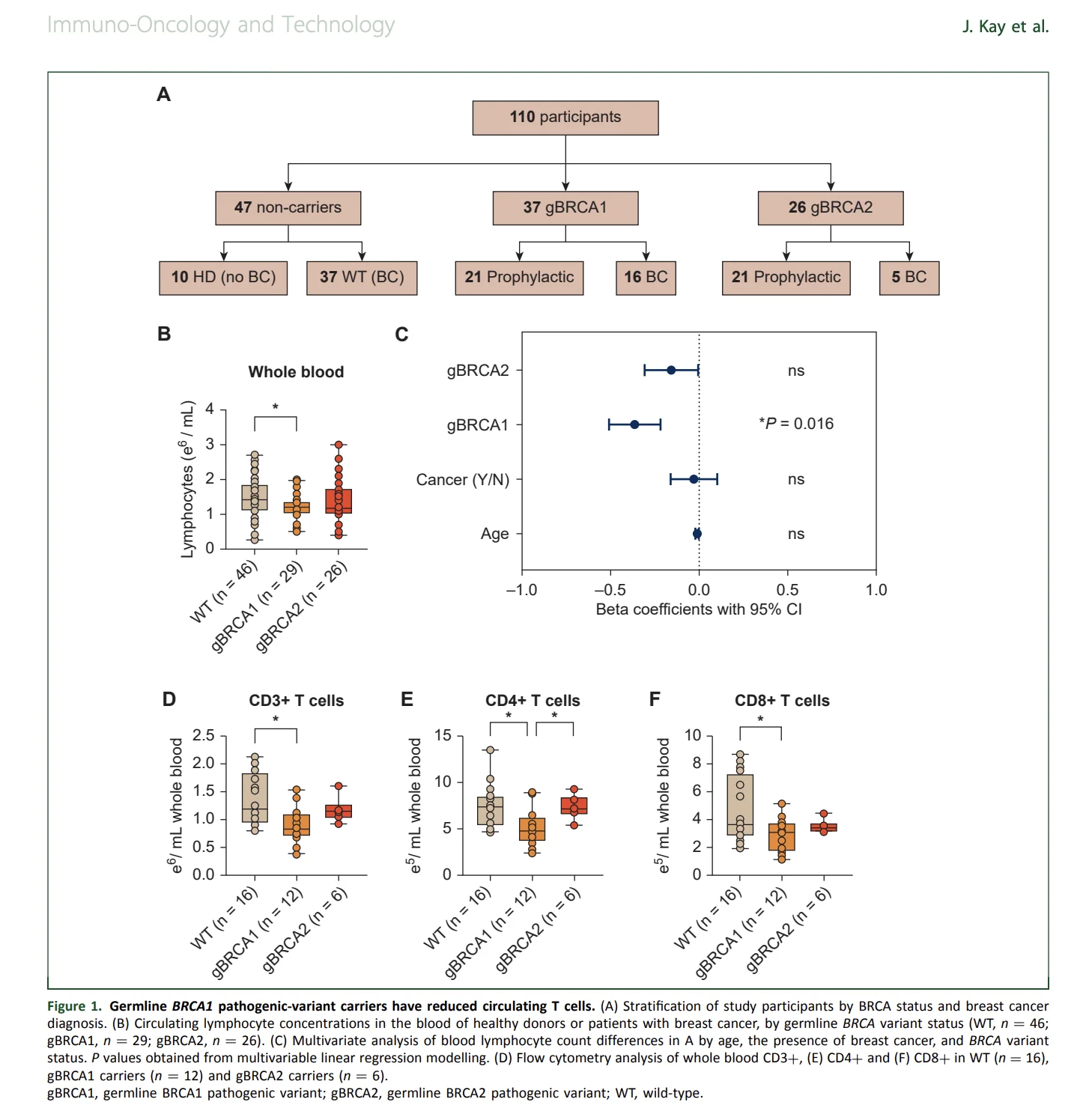
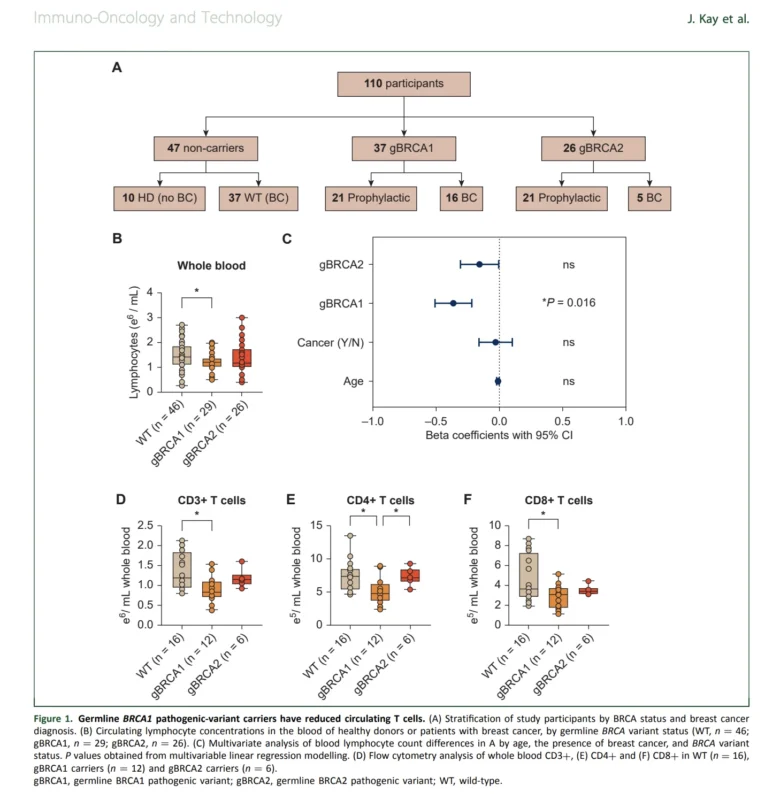
For the analysis of circulating lymphocytes, blood samples from 110 individuals were evaluated according to germline BRCA status. The cohort included non-carriers, gBRCA1 carriers and gBRCA2 carriers.
T cells isolated from peripheral blood were then activated repeatedly in vitro and evaluated using several complementary methods, including flow cytometry, immunoblotting, quantitative PCR, RNA sequencing and cytokine analysis.
To investigate the tumor immune environment, the researchers also analyzed pretreatment tumors from 18 patients with early-stage triple-negative breast cancer. Eleven tumors were from gBRCA1 carriers and seven from BRCA1 wild-type patients.
Tumor samples underwent T cell receptor sequencing and whole-exome sequencing, allowing the investigators to compare T cell clonality with tumor mutation burden and frameshift mutation burden (Kay et al., 2026).
BRCA1 Carriers Had Fewer Circulating T Cells
The first major finding appeared in peripheral blood.
Compared with individuals without BRCA1 pathogenic variants, gBRCA1 carriers had significantly lower circulating lymphocyte concentrations. The same reduction was not observed in gBRCA2 carriers.
Further flow-cytometry analysis showed significantly reduced absolute numbers of CD3-positive, CD4-positive and CD8-positive T cells in gBRCA1 carriers compared with wild-type participants.
Importantly, multivariable analysis indicated that neither age nor the presence of breast cancer explained the difference. Germline BRCA1 status remained significantly associated with lower circulating lymphocyte levels.
The distribution of CD4 and CD8 populations relative to total lymphocytes was not significantly altered, suggesting that the finding reflected an overall reduction in circulating T cell numbers rather than selective depletion of one T cell subtype (Kay et al., 2026).
The study’s Figure 1 on page 6 illustrates this pattern, showing reduced circulating lymphocytes and lower CD3-positive, CD4-positive and CD8-positive T cell concentrations among gBRCA1 carriers.
Activated T Cells Normally Increase BRCA1 Expression
The investigators next examined whether BRCA1 is actively used by human T cells.
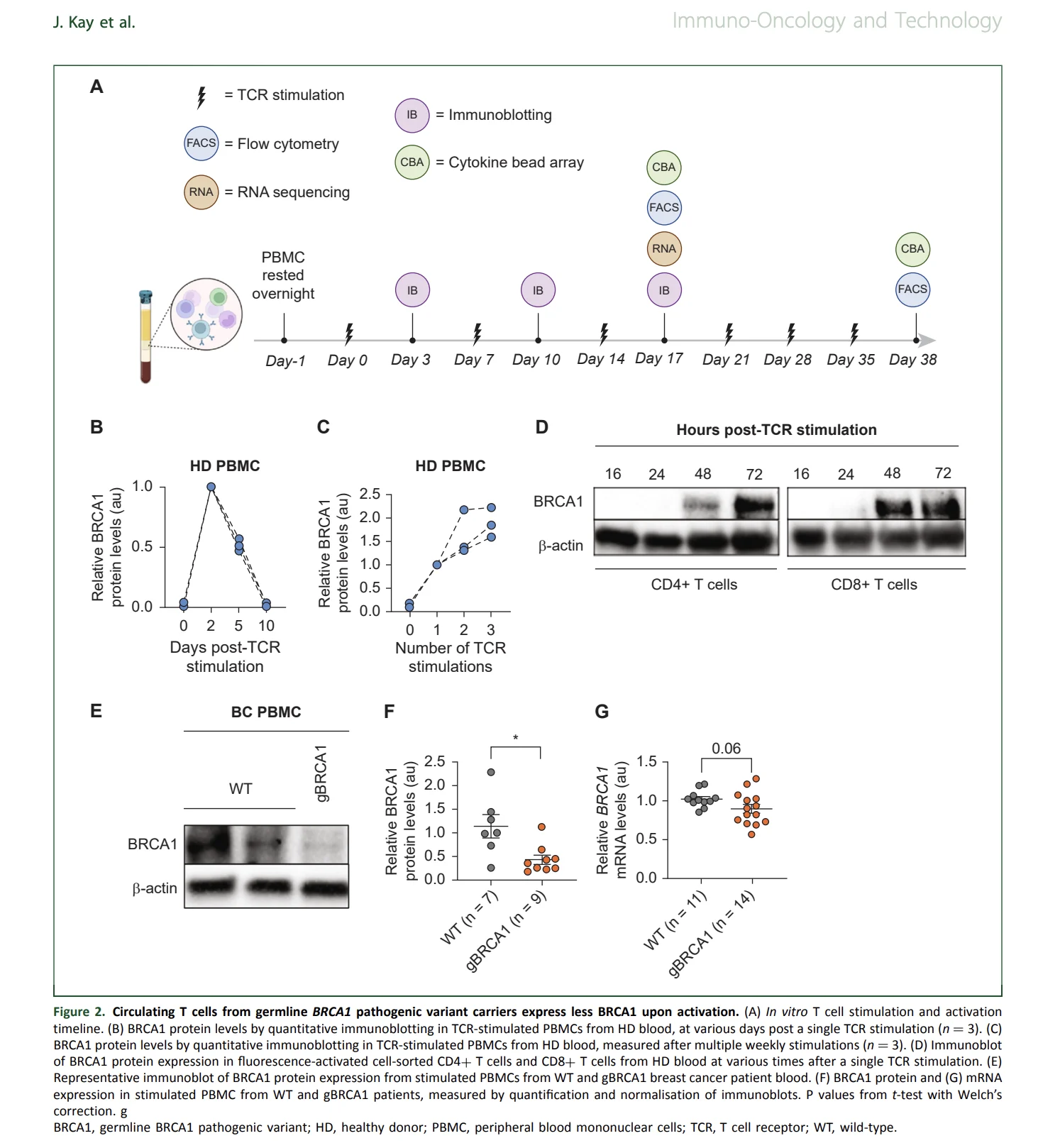
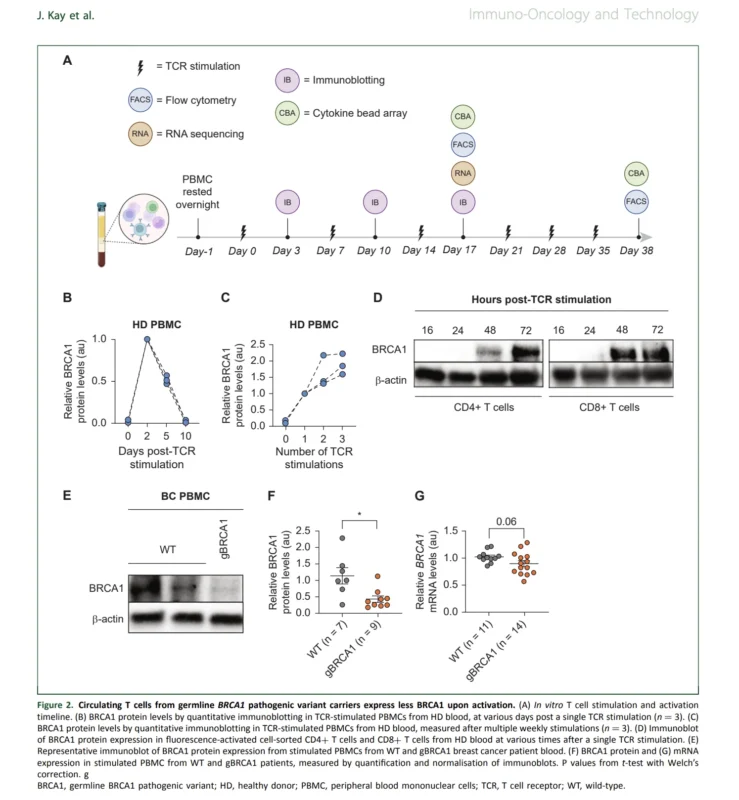
In resting T cells from healthy donors, BRCA1 protein and messenger RNA expression were minimal or undetectable. After T cell receptor stimulation, however, BRCA1 expression increased markedly.
After a single stimulation, expression subsequently declined toward baseline. When T cells were repeatedly stimulated, BRCA1 expression increased again over time.
The response was observed in both CD4-positive and CD8-positive T cells.
This activation-dependent expression supports the biological premise that BRCA1 becomes particularly important when T cells enter a highly proliferative state and require increased DNA repair capacity (Kay et al., 2026).
BRCA1 Expression Was Reduced in T Cells From gBRCA1 Carriers
The difference became particularly clear when activated T cells from breast cancer patients with and without germline BRCA1 variants were compared.
Activated peripheral blood cells from gBRCA1 carriers expressed approximately half the BRCA1 protein level observed in wild-type patients.
BRCA1 messenger RNA expression was also reduced, to approximately 0.8-fold of wild-type levels.
These findings suggest that the remaining functional BRCA1 allele does not fully compensate during T cell activation.
The authors interpret this as evidence of BRCA1 haploinsufficiency within human immune cells, although the precise biological mechanism remains incompletely characterized (Kay et al., 2026).
The protein and mRNA findings are shown in Figure 2 on page 7, which also demonstrates how strongly BRCA1 expression increases after T cell receptor activation.
What Happened When BRCA1-Carrier T Cells Were Repeatedly Stimulated?
At baseline, the investigators found no major transcriptomic differences between T cells from gBRCA1 carriers and controls.
The picture changed after repeated activation.
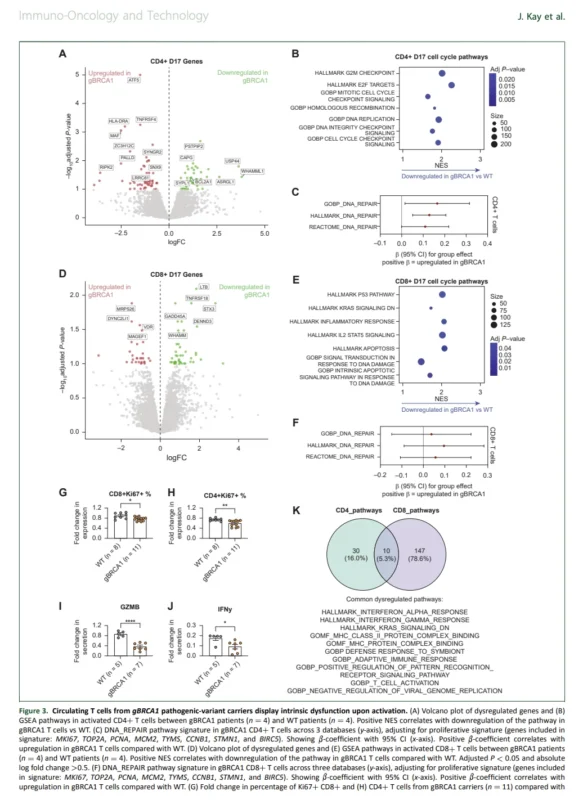
After approximately three weeks of stimulation, CD4-positive and CD8-positive T cells from gBRCA1 carriers developed distinct gene-expression profiles.
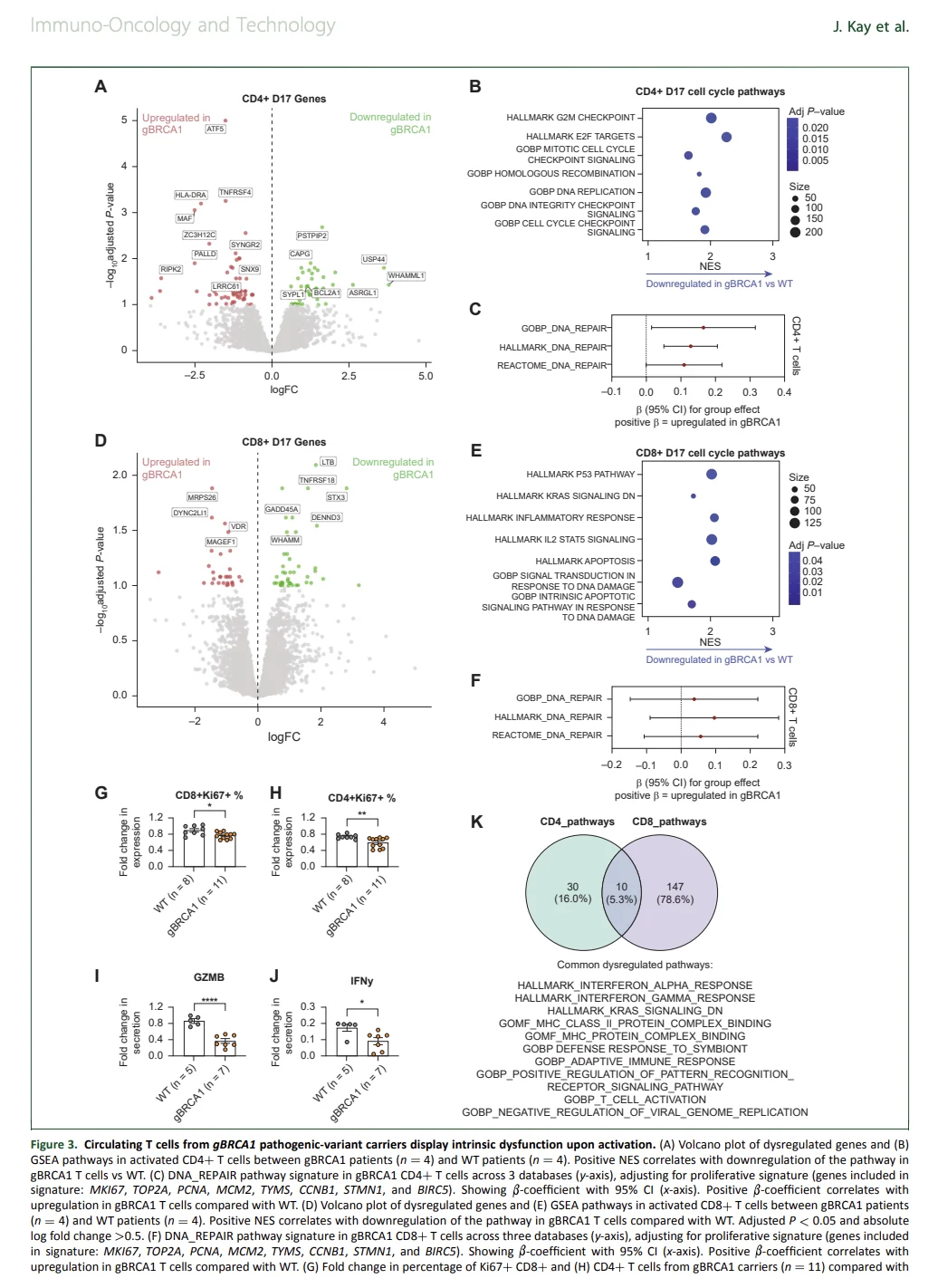
Among activated CD4-positive T cells, the investigators identified 105 differentially expressed genes between gBRCA1 and wild-type breast cancer patients.
Among activated CD8-positive T cells, 75 differentially expressed genes were identified.
Several cell-cycle and proliferation pathways were downregulated in gBRCA1 T cells. CD4-positive cells showed reduced activity in pathways involving G2/M checkpoints and E2F targets, while CD8-positive cells demonstrated dysregulation involving apoptosis, p53 signaling and other pathways related to cellular proliferation and stress (Kay et al., 2026).
These changes were not simply molecular signals. They were accompanied by measurable functional impairment.
Proliferation and Effector Function Were Reduced
Flow cytometry showed significantly reduced proportions of Ki67-positive CD4-positive and CD8-positive T cells among gBRCA1 carriers after repeated stimulation.
Ki67 is a marker associated with cellular proliferation, making the finding consistent with the reduced cell-cycle activity observed in the RNA-sequencing analysis.
The investigators also observed reduced secretion of two important T cell effector molecules:
- granzyme B and interferon-γ.
Both are important components of T cell-mediated antitumor responses.
The combination of impaired proliferation and decreased effector-molecule production led the investigators to describe the phenotype as intrinsic T cell dysfunction after sustained activation (Kay et al., 2026).
The multidimensional changes are summarized in Figure 3 on page 8, which combines transcriptomic analyses with Ki67, granzyme B and interferon-γ measurements.
Does This Mean BRCA1-Carrier T Cells Cannot Recognize Tumors?
Not necessarily.
One of the most interesting findings was that T cells inside BRCA1-associated triple-negative breast cancers appeared capable of substantial clonal expansion.
The investigators analyzed T cell receptor sequences from 18 treatment-naïve TNBC tumors, including 11 from gBRCA1 carriers and seven from wild-type patients.
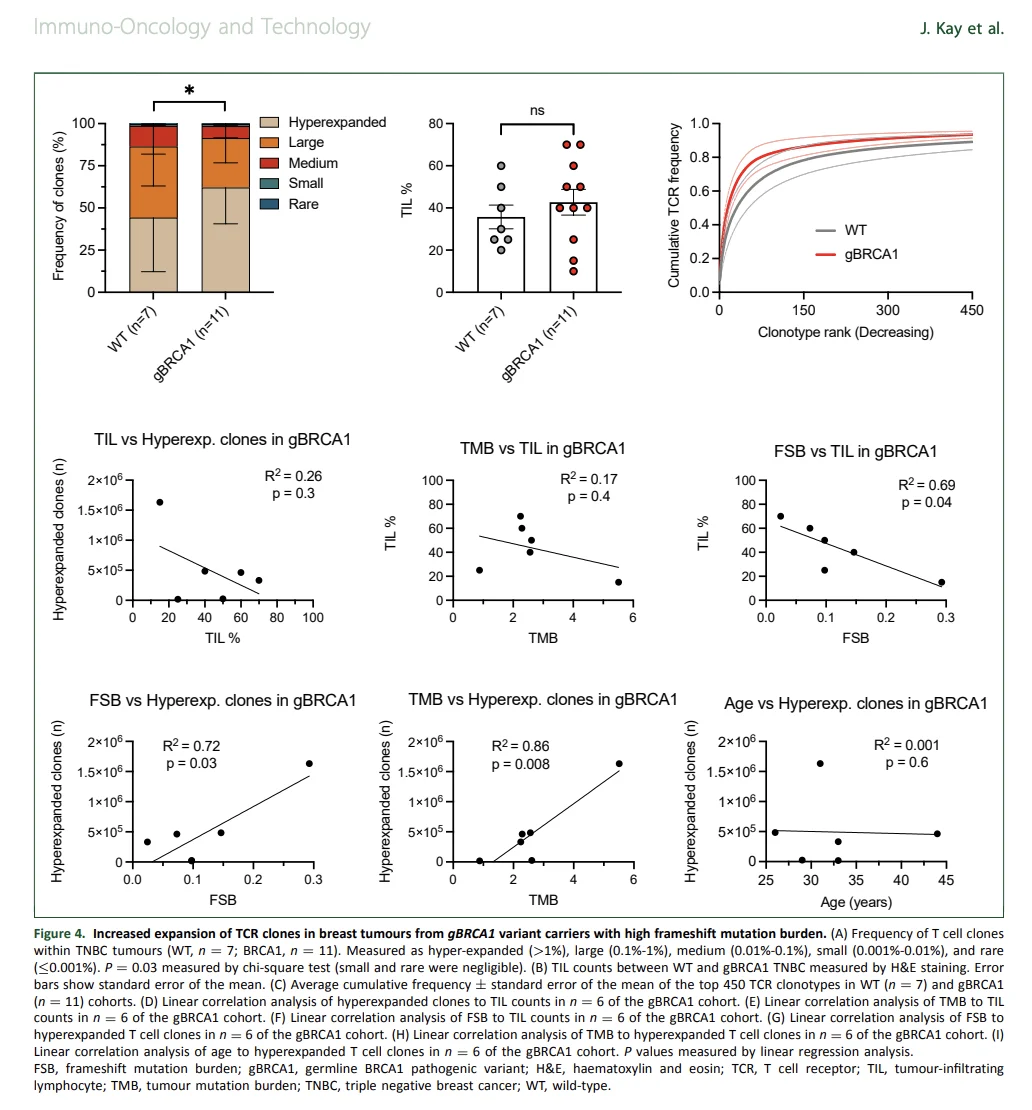
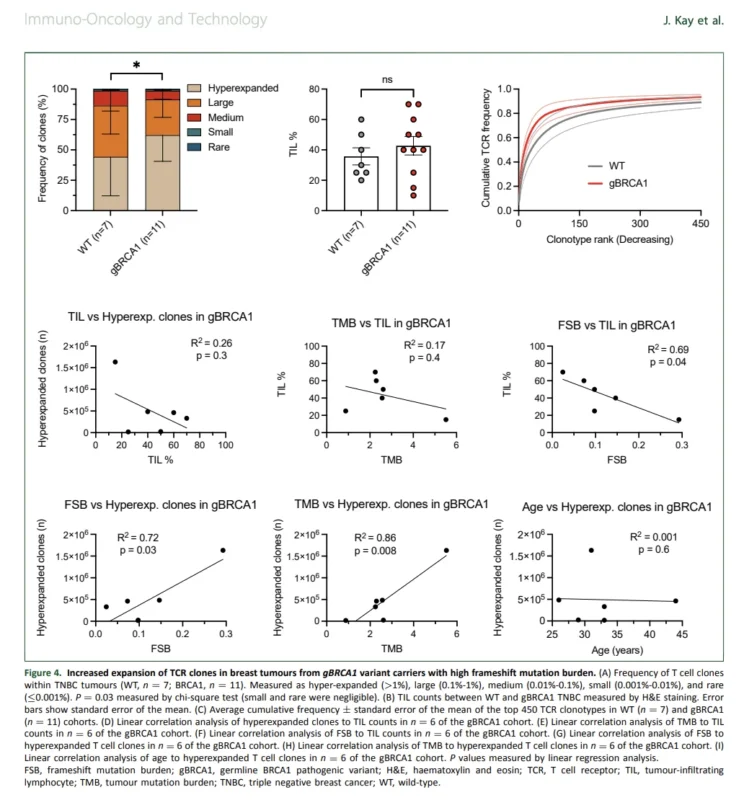
T cells from BRCA1-associated tumors showed significantly greater representation of hyperexpanded T cell clones.
The top approximately 70 T cell clonotypes accounted for around 80% of cumulative TCR frequency in gBRCA1 tumors, compared with approximately 65% in wild-type tumors.
This suggests that a relatively limited group of T cell clones had undergone substantial expansion inside BRCA1-associated tumors (Kay et al., 2026).
Importantly, overall tumor-infiltrating lymphocyte quantities were not significantly different between gBRCA1 and wild-type tumors.
The key distinction was therefore not simply how many lymphocytes were present, but how clonally concentrated the immune response had become.
Mutation Burden Was Closely Linked to T Cell Hyperexpansion
The strongest molecular correlations emerged when T cell clonality was compared with tumor genomic features.
Among gBRCA1 tumors, the number of hyperexpanded T cell clones showed a strong positive correlation with overall tumor mutation burden:
- R² = 0.86; P = 0.008
Hyperexpanded T cell clones were also strongly associated with frameshift mutation burden:
- R² = 0.72; P = 0.03
Frameshift mutations can generate abnormal proteins and potentially create neoantigens capable of stimulating tumor-reactive T cells.
These observations led the authors to propose that the high mutational and frameshift burden characteristic of some BRCA1-associated tumors could generate recognizable neoantigens and drive substantial T cell clonal expansion (Kay et al., 2026).
This relationship is visualized in Figure 4 on page 10, where both tumor mutation burden and frameshift mutation burden correlate strongly with the number of hyperexpanded T cell clones in gBRCA1-associated TNBC.
A Paradox: Strong T Cell Recognition but Weaker T Cell Function?
The findings create an intriguing biological paradox.
BRCA1-associated tumors may produce substantial mutational diversity and neoantigens capable of stimulating specific T cell clones. Those clones appear able to recognize antigen and expand.
At the same time, T cells from gBRCA1 carriers demonstrated reduced BRCA1 expression, impaired proliferative capacity and decreased granzyme B and interferon-γ production after sustained stimulation.
The authors therefore propose a model in which T cells can still recognize tumor antigens and clonally expand, but intrinsic BRCA1 deficiency could make it more difficult for them to maintain sustained effector function.
In other words, the immune system may detect the tumor without necessarily maintaining the full functional response required for effective long-term immune control.
The investigators emphasize that other tumor-specific factors, including antigen presentation, HLA alterations, neoantigen burden and characteristics of the tumor microenvironment, are also likely to contribute. The data therefore do not establish BRCA1 haploinsufficiency as the sole explanation for the observed immune phenotype (Kay et al., 2026).
Could Germline BRCA1 Status Influence Immunotherapy Response?
This is one of the most clinically interesting implications of the study, but also one that requires particular caution.
Immune checkpoint blockade is part of the treatment landscape for selected patients with triple-negative breast cancer, making any host factor that alters T cell function potentially relevant.
The present study provides biological evidence that germline BRCA1 status can affect T cells themselves. It therefore raises the possibility that inherited BRCA1 alterations could influence how antitumor immunity develops or responds to immune-modulating treatments.
However, the study did not test clinical immunotherapy outcomes.
It did not demonstrate that gBRCA1 carriers respond better or worse to pembrolizumab or another checkpoint inhibitor, nor does it establish that germline BRCA1 status should currently alter immunotherapy selection.
The authors instead describe their findings as a framework for future studies examining immunotherapy in BRCA1-associated TNBC (Kay et al., 2026).
That distinction is essential: this is mechanistic and translational evidence, not a treatment-selection study.
Why Is the Difference Between BRCA1 and BRCA2 Interesting?
Another notable observation was that reduced circulating lymphocyte numbers were detected in gBRCA1 carriers but not in gBRCA2 carriers.
BRCA1 and BRCA2 are often grouped together because both are central components of homologous recombination repair and hereditary breast cancer biology. However, they are not biologically interchangeable.
The study’s findings suggest that inherited BRCA1 deficiency could exert immune effects that are not necessarily reproduced by BRCA2 pathogenic variants.
The authors identify direct comparison of BRCA1- and BRCA2-associated immune biology as an important future direction, particularly in relation to proliferative stress and T cell exhaustion (Kay et al., 2026).
Could These Findings Extend Beyond Breast Cancer?
Potentially, but this remains speculative.
The study demonstrates that an inherited cancer-predisposition gene can influence the phenotype and function of immune cells in addition to altering cancer susceptibility.
That raises a broader biological question: could other hereditary cancer syndromes also affect host immunity directly?
The authors suggest that their findings could provide a framework for examining immune dysfunction in other inherited cancer syndromes.
However, the present experiments focused specifically on BRCA1 pathogenic variants, breast cancer patients and BRCA1-associated TNBC. Extrapolation to other hereditary cancer genes or tumor types requires dedicated studies (Kay et al., 2026).
What Are the Main Limitations?
The most important limitation is sample size.
Several functional and genomic analyses involved relatively small numbers of patients because germline BRCA1 carriers represent a limited and biologically specific population.
The tumor TCR analysis, for example, included only 18 TNBC tumors, with detailed correlations between mutation burden and hyperexpanded clones based on even smaller evaluable subsets.
The investigators therefore characterize the results as hypothesis-generating.
The mechanistic pathway connecting reduced BRCA1 levels to T cell dysfunction also remains incompletely established. Although the data support relationships involving cell-cycle regulation, proliferation stress, DNA repair and impaired effector activity, they do not fully determine which biological process is dominant.
Finally, the study does not connect the immune phenotype directly with clinical endpoints such as recurrence, overall survival or response to immunotherapy.
Those questions require prospective clinical validation (Kay et al., 2026).
The Bottom Line
The study expands the biological meaning of germline BRCA1 pathogenic variants beyond their established role in hereditary breast cancer.
Among gBRCA1 carriers, the investigators found reduced circulating CD3-positive, CD4-positive and CD8-positive T cells, along with substantially lower BRCA1 expression after T cell activation.
After repeated stimulation, BRCA1-carrier T cells demonstrated altered transcriptional programs, impaired proliferation and reduced production of granzyme B and interferon-γ.
At the same time, BRCA1-associated TNBC tumors contained more hyperexpanded T cell clones. Hyperexpansion was strongly correlated with tumor mutation burden (R² = 0.86) and frameshift mutation burden (R² = 0.72), suggesting that highly mutated tumors can still generate substantial antigen-driven T cell responses.
Together, the findings support a model in which BRCA1-associated tumors can stimulate T cell recognition and expansion while germline BRCA1 haploinsufficiency simultaneously limits the ability of those T cells to maintain normal proliferative and effector function.
The study does not yet establish a change in clinical management. But it introduces an important concept for breast cancer immunology: inherited BRCA1 status may shape not only the tumor genome, but also the immune system attempting to control that tumor (Kay et al., 2026).
References
- Kay J, Harris MA, Lara Gonzalez LE, van Geelen CT, Clarke KA, Virassamy B, Caramia F, Pang J-M, O’Malley MMR, Hun ML, Salgado R, Thorne H, Visvader J, Neeson PJ, Darcy PK, Loi S. Germline BRCA1 pathogenic variants and T cell dysfunction. Immuno-Oncology and Technology. 2026;31:101601. doi:10.1016/j.iotech.2026.101601.