At the 2026 ASCO Annual Meeting, Hannah Ruth Robinson, MD, from the University of Colorado Anschutz School of Medicine, presented real-world outcomes and circulating tumor DNA dynamics in patients with microsatellite instability-high metastatic colorectal cancer (MSI-H mCRC) treated with immune checkpoint inhibitors.
Immune checkpoint inhibitors can produce durable benefit in MSI-H metastatic colorectal cancer, but optimal treatment duration and monitoring strategies remain unclear. Imaging-based response assessment can also be challenging because of pseudoprogression and residual scar. This study evaluated real-world treatment patterns, outcomes, and longitudinal ctDNA dynamics during and after immune checkpoint inhibitor treatment.
Study Design
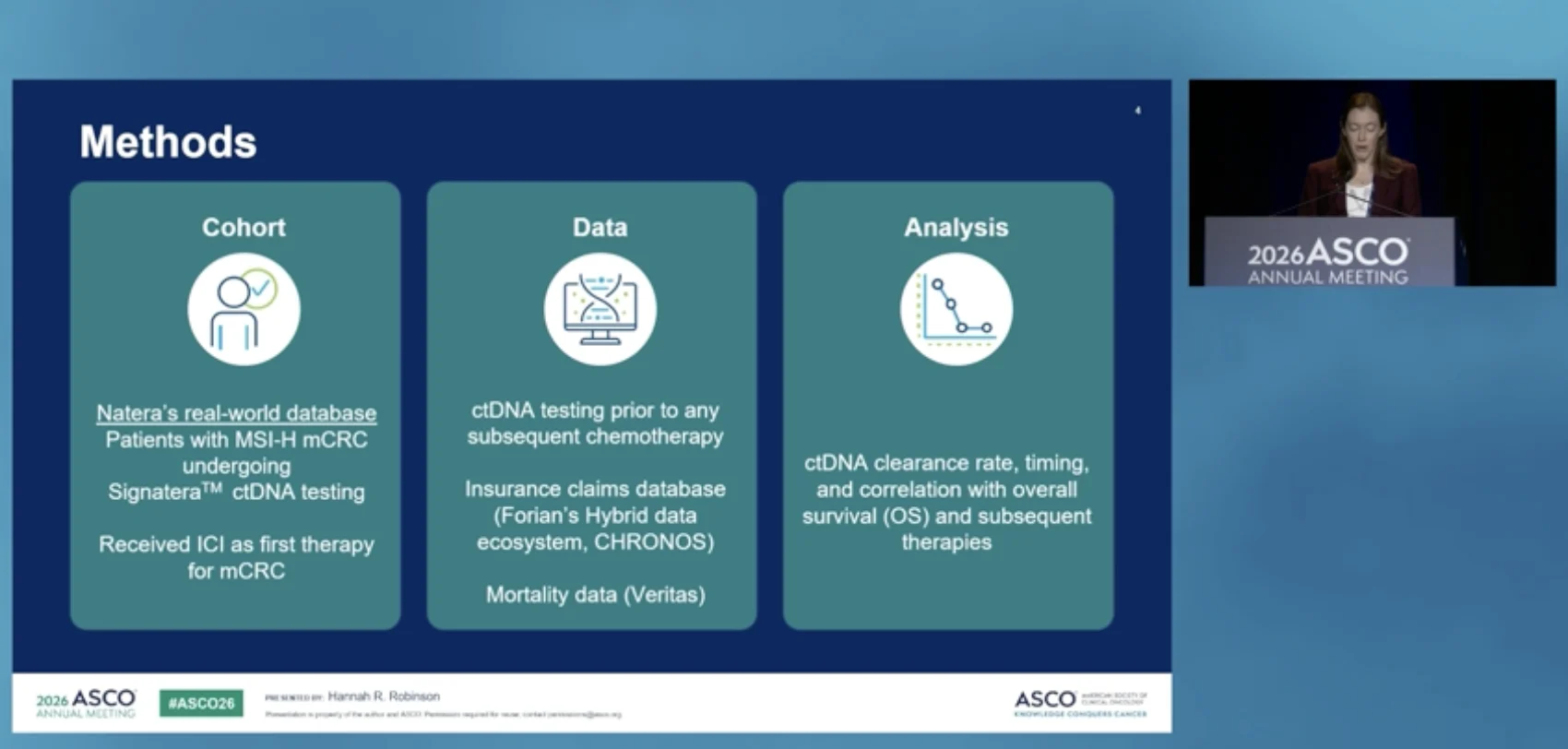
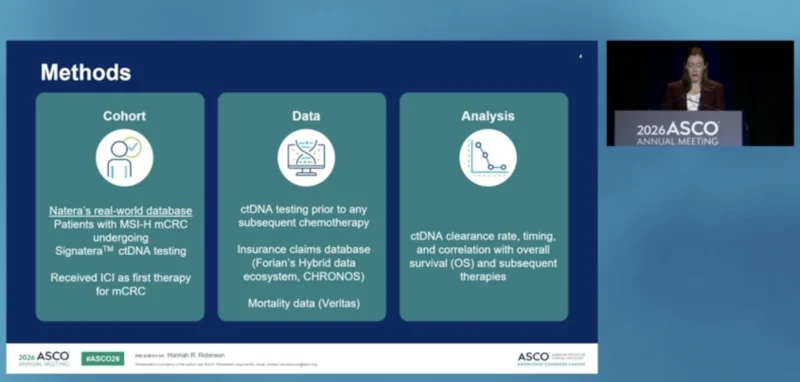
Patients with MSI-H metastatic colorectal cancer treated with first-line immune checkpoint inhibitors were identified from Natera’s real-world database. Patients underwent Signatera ctDNA testing, with linked insurance claims data from Forian’s CHRONOS database and mortality data from Veritas.
ctDNA status was assessed before immune checkpoint inhibitor treatment when available and longitudinally after treatment initiation. Outcomes included overall survival, time to next treatment, ctDNA clearance rate, timing of clearance, and treatment patterns after immune checkpoint inhibitor therapy.
Results
A total of 561 patients with MSI-H metastatic colorectal cancer were included. The median age was 65 years, median follow-up was 28.7 months, and the median duration of immune checkpoint inhibitor therapy was 240 days.
First-line immune checkpoint inhibitor therapy included pembrolizumab in 70.2% of patients, ipilimumab plus nivolumab in 16.6%, nivolumab in 10.9%, and another single-agent immune checkpoint inhibitor in 2.3%. Among 108 patients who were ctDNA-positive before immune checkpoint inhibitor treatment, 81.0% achieved ctDNA clearance at any time on or after treatment initiation, while 19.0% had persistent ctDNA positivity. Early clearance occurred in 55% of patients who cleared ctDNA, and 83% achieved sustained clearance. The median time to ctDNA clearance was 95 days.
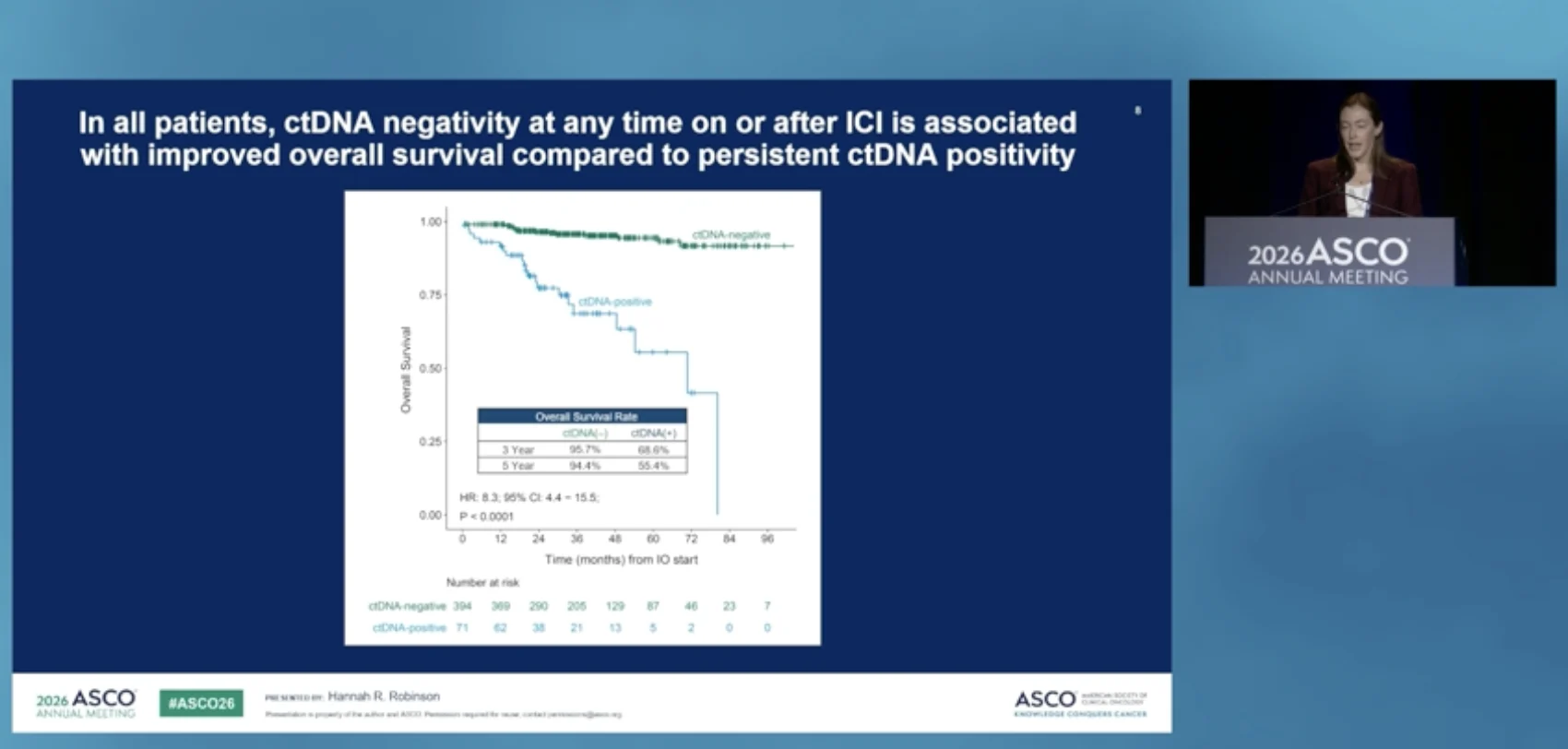
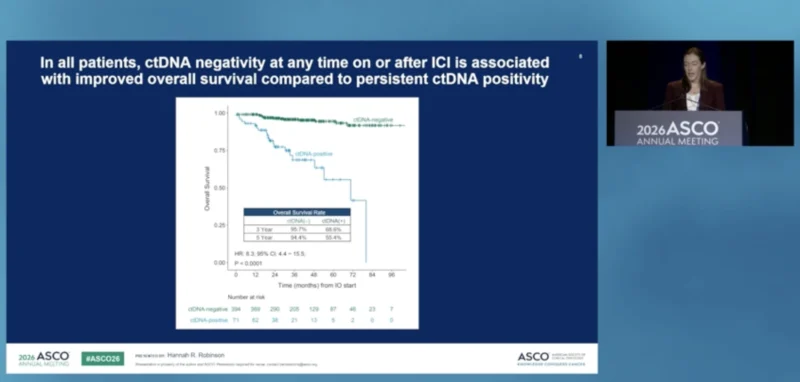
ctDNA clearance rates were similar between patients treated with single-agent and dual-agent immune checkpoint inhibitor therapy, at 80.5% and 84.6%, respectively. Across all patients, ctDNA negativity at any time on or after immune checkpoint inhibitor treatment was associated with improved overall survival compared with persistent ctDNA positivity. The 3-year overall survival rate was 95.7% for ctDNA-negative patients and 69.6% for ctDNA-positive patients. The 5-year overall survival rate was 94.4% and 55.4%, respectively.
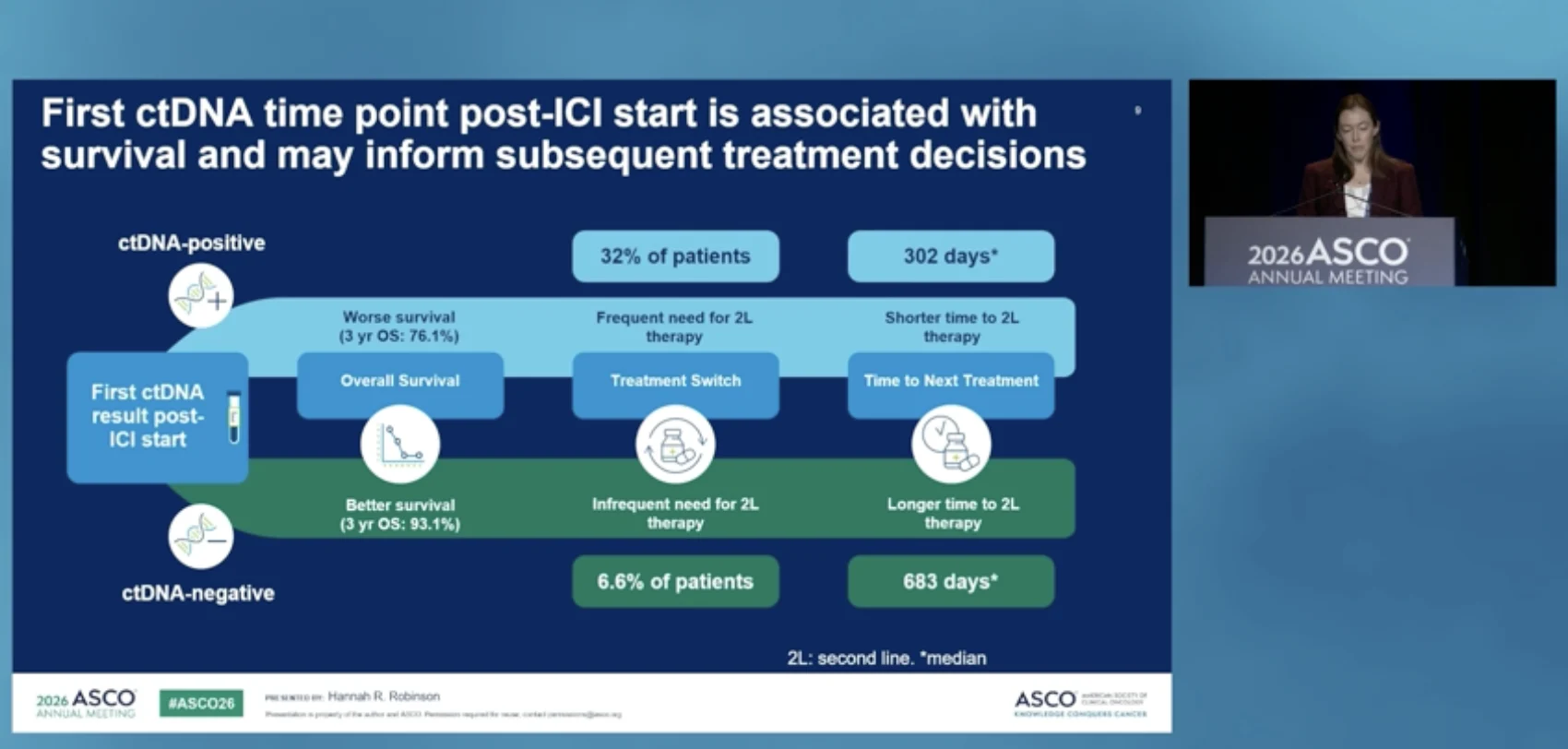
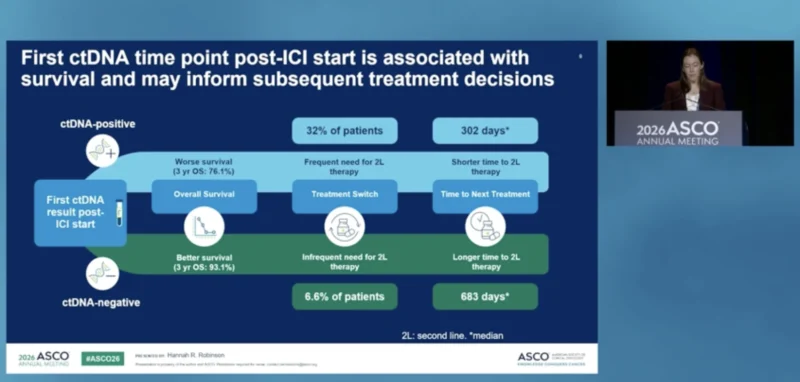
The first ctDNA result after immune checkpoint inhibitor initiation was also associated with survival. Patients with ctDNA-positive first post-treatment results had inferior overall survival compared with those with ctDNA-negative results. The 3-year overall survival rate was 76.1% in ctDNA-positive patients and 93.1% in ctDNA-negative patients.
When the analysis was restricted to patients whose first ctDNA timepoint occurred within 4 months after immune checkpoint inhibitor initiation, an overall survival trend was observed, with 3-year overall survival of 78.8% in ctDNA-positive patients and 89.3% in ctDNA-negative patients.
First post-treatment ctDNA status was also associated with subsequent treatment patterns. Among patients with a ctDNA-positive first post-treatment result, 32% required second-line therapy, with a median time to next treatment of 302 days. In comparison, 6.6% of patients with a ctDNA-negative first post-treatment result required second-line therapy, with a median time to next treatment of 683 days.
After immune checkpoint inhibitor discontinuation, ctDNA dynamics further stratified long-term outcomes. ctDNA status was persistently negative in 77.2% of patients, persistently positive in 12.8%, changed from positive to negative in 4.1%, and showed variable patterns in 5.9%.
Patients with persistently negative ctDNA after immune checkpoint inhibitor discontinuation had better long-term outcomes than those with persistent ctDNA positivity. The 3-year overall survival rate was 96.6% in persistently ctDNA-negative patients and 58.2% in persistently ctDNA-positive patients.
Conclusion
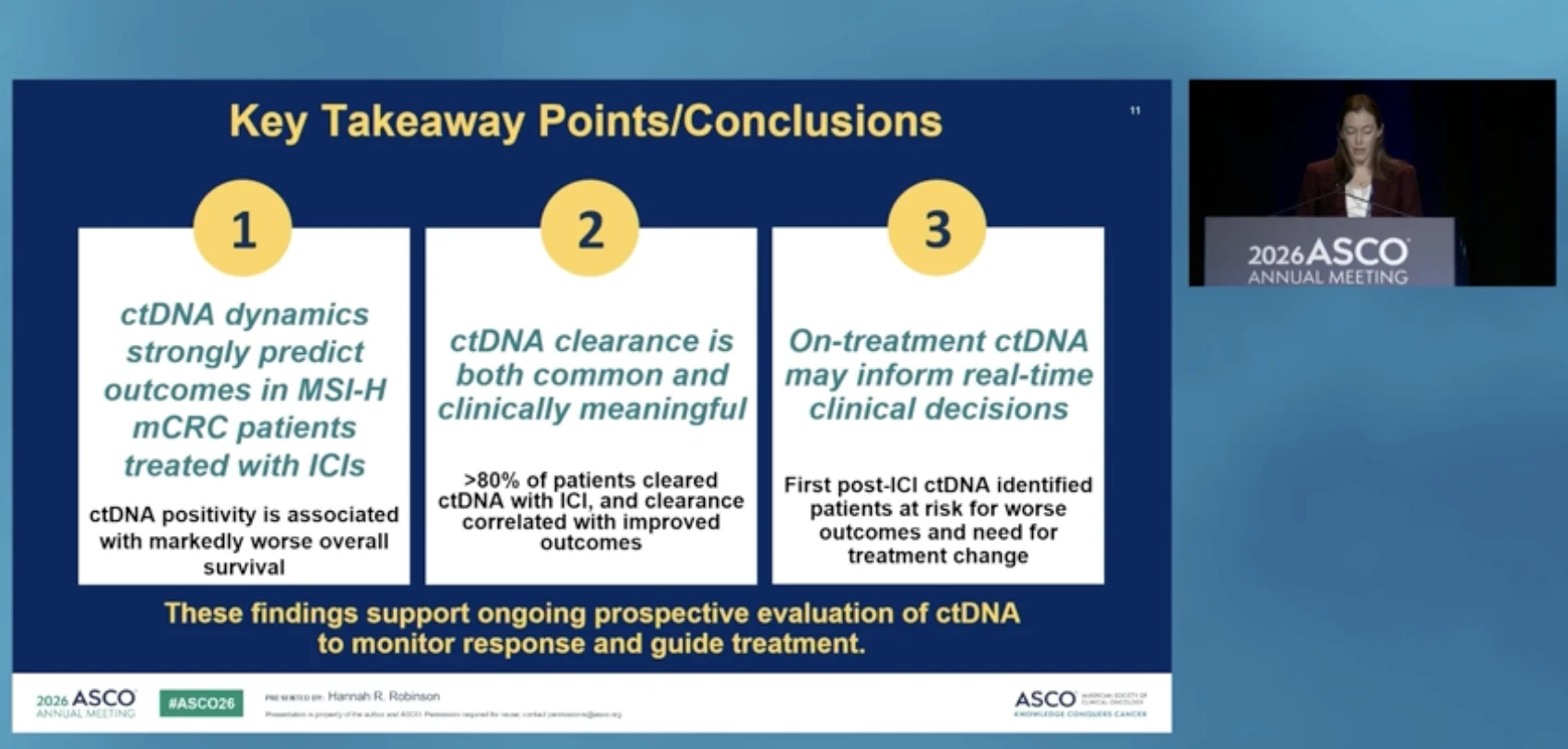
In this large real-world cohort of patients with MSI-H metastatic colorectal cancer treated with first-line immune checkpoint inhibitors, longitudinal ctDNA dynamics were strongly associated with overall survival and subsequent treatment patterns.
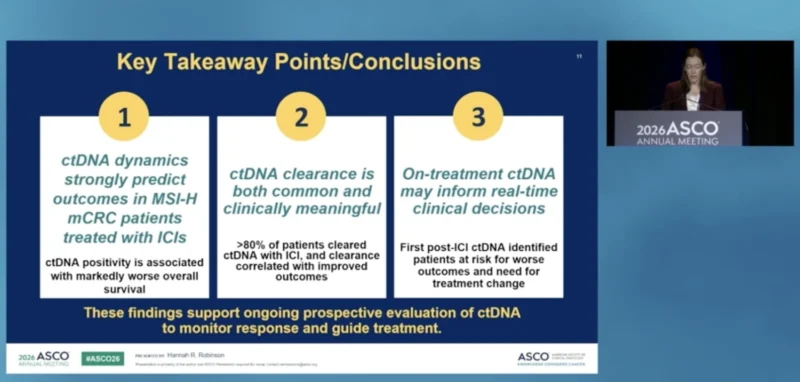
ctDNA clearance was common and clinically meaningful, while persistent ctDNA positivity identified patients with worse outcomes and greater need for treatment change. These findings support ongoing prospective evaluation of ctDNA monitoring to assess response and guide treatment in MSI-H metastatic colorectal cancer.
The full abstract is available on the official ASCO website.