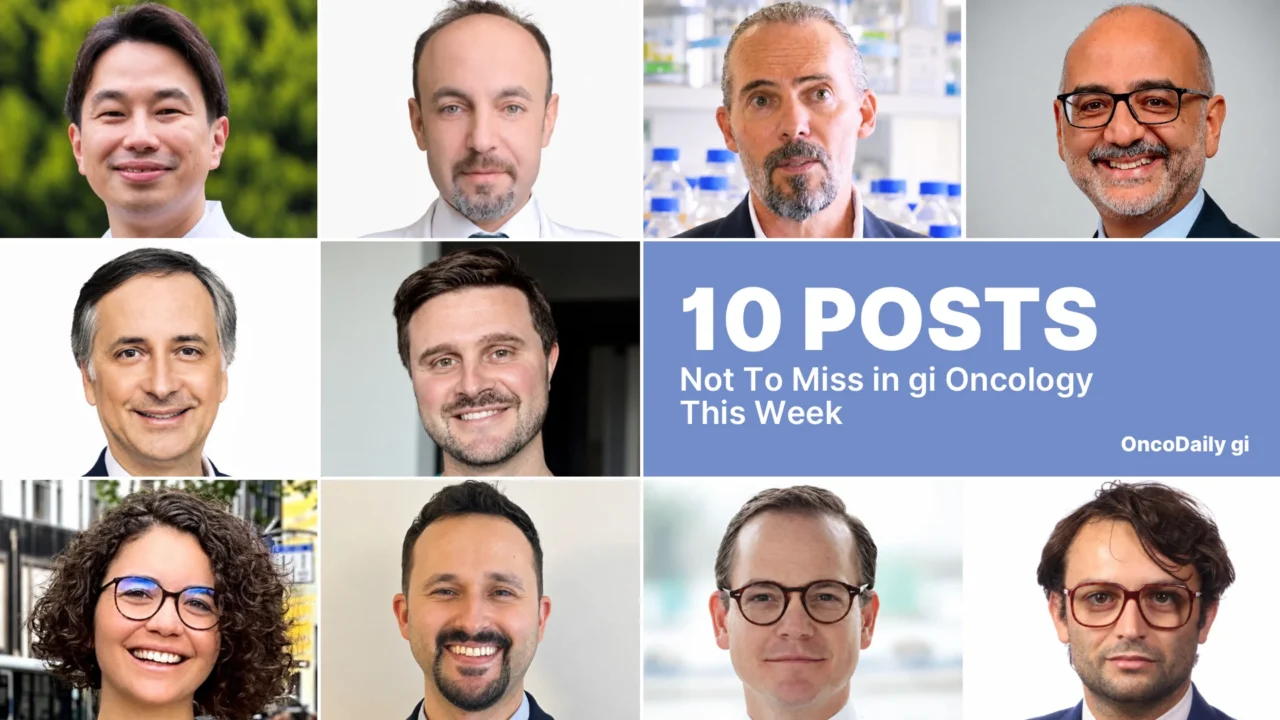
The second week of September, covering updates from September 7–13, brought together important developments across GI oncology, with expert posts covering pancreatic cancer, colorectal cancer, hepatocellular carcinoma, biliary tract cancer, esophagogastric cancer, and gastric cancer.
This week’s selection includes updates on transcriptomic sensitivity to neoadjuvant FOLFIRINOX in pancreatic cancer, actual 5-year survival after neoadjuvant therapy and resection for localized pancreatic ductal adenocarcinoma, immune evasion mechanisms in pancreatic tumors, and BLAZE-PDAC, an investigator-initiated phase 2 study exploring a chemotherapy-free strategy for KRAS G12D-mutated, basal-like metastatic PDAC.
Other posts highlight tumor evolution and organ-specific metastatic patterns in colorectal cancer, ctDNA-guided panitumumab rechallenge in RAS/BRAF wild-type metastatic colorectal cancer, cfDNA fragmentome-based detection of hepatocellular carcinoma, neoadjuvant pembrolizumab in localized dMMR/MSI esophagogastric cancers, MATTERHORN final results with perioperative durvalumab plus FLOT, and adjuvant therapy after biliary tract cancer resection.
Together, these posts reflect the continued evolution of GI oncology across molecular profiling, neoadjuvant therapy, targeted treatment, immunotherapy, liquid biopsy, translational research, surgical outcomes, and risk-adapted multidisciplinary care.
Nelson Dusetti — INSERM Research Director at CRCM and Paoli-Calmettes Institute; Pancreatic Cancer Researcher; Co-founder of Predicting Med | France
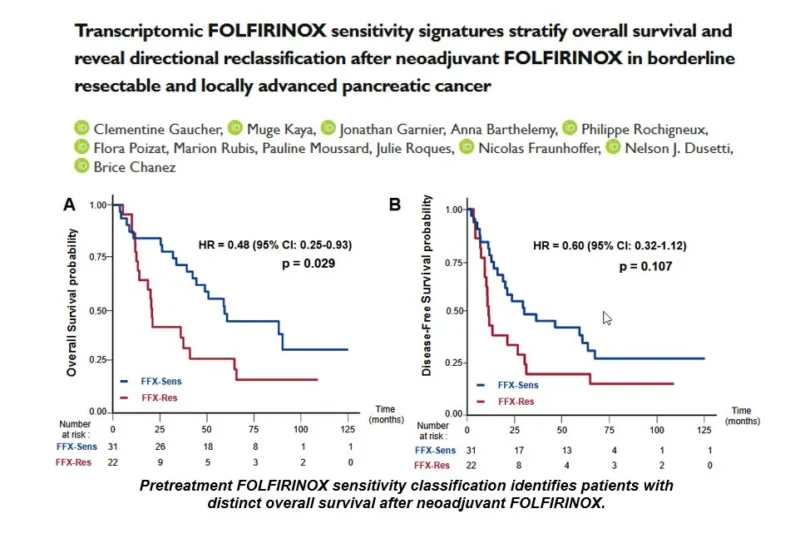
“We are pleased to share our new preprint, now available on bioRxiv.
In patients with borderline-resectable or locally advanced pancreatic cancer treated with neoadjuvant FOLFIRINOX, pretreatment transcriptomic sensitivity classification was associated with overall survival. Importantly, analysis of paired tumors before and after treatment revealed a preferential shift from a FOLFIRINOX-sensitive to a resistant profile.
This suggests that the molecular state of the residual tumor evolves during treatment and may differ substantially from that measured at diagnosis. Reassessing residual disease could therefore be important for understanding tumor evolution and guiding subsequent therapeutic decisions.
This work offers a first clinical glimpse of the broader transcriptomic-guided strategy now being prospectively tested in the PRODIGE 104A-NEOPREDICT trial.
It also illustrates the strength of translational research between CRCM – Centre de Recherche en Cancérologie de Marseille and Institut Paoli-Calmettes, connecting patient samples, molecular research, and prospective clinical evaluation.”
Stefano Crippa — Associate Professor of Surgery at Università Vita-Salute San Raffaele | Italy
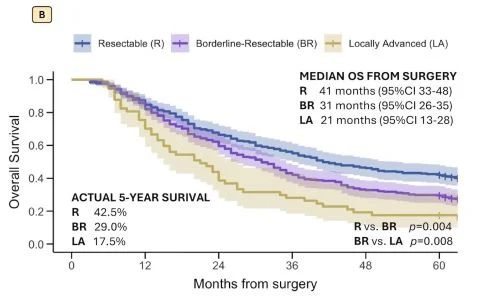
“Actual 5-year survival after neoadjuvant therapy and resection for localized pancreatic ductal adenocarcinoma.
The Mass General Brigham and Ospedale San Raffaele experience has been published in Annals of Surgery. The study included 660 patients who underwent surgical resection after neoadjuvant therapy for pancreatic ductal adenocarcinoma between 2015 and 2021.
Actual 5-year survival was 34.5%.
The recurrence rate was 74%, and two-thirds of recurrences were diagnosed within 12 months after surgery among patients who did not achieve 5-year survival. Long-term survivors more often had late recurrence, defined as recurrence after more than 2 years, locoregional recurrence, or lung metastases.
Independent predictors of 5-year survival were low comorbidity burden, baseline CA19-9 below 200 U/mL, resectable disease at diagnosis, ypT0–1 stage, and R0 resection.
One-third of patients undergoing neoadjuvant therapy and resection for pancreatic ductal adenocarcinoma were alive at 5 years, most of them disease-free. Early systemic recurrence remains a major determinant of poor long-term survival.”
Erman Akkus — Medical Oncologist and Internal Medicine Physician at Ankara University | Turkey
“Is pembrolizumab safe and effective as neoadjuvant treatment in localized dMMR/MSI esophagogastric cancers?
Results from the IMHOTEP phase 2 study, published in ESMO Open.”
Paolo Manca — Medical Oncologist, GI Tumors | Italy
“Our work is now published in Cancer Cell.
Led by Henry W., Walid Chatila, Rona Yaeger, and myself, this study integrates clinical and genomic data from more than 7,000 colorectal cancers from Memorial Sloan Kettering Cancer Center patients to investigate how tumor evolution shapes organ-specific metastatic patterns.
Recurrent oncogenic alterations are frequently clonal and reinforced through allelic imbalance, supporting their early and persistent role in tumor evolution.
Mutation dosage adds information beyond mutation status alone.
KRAS allelic imbalance frequently involves gain of the mutant allele, and in metastatic left-sided colorectal cancer, this gain was associated with shorter survival.
The co-occurrence of mutant KRAS gain with MDM2 gain, particularly in TP53 wild-type tumors, suggests a possible alternative mechanism of p53 pathway suppression and raises the hypothesis of a therapeutically relevant role for MDM2.
Metastatic dissemination follows recognizable patterns.
In microsatellite-stable disease, brain and adrenal metastases tend to occur late and have worse prognostic impact, while lung involvement predicts a higher risk of brain dissemination.
Combining primary tumor location and genomic features can help stratify the risk of metastasis to specific organs.”
Victor Velculescu — Professor at Johns Hopkins; Founder of DELFI and Artemyx | United States
“Can an AI-enabled, cfDNA fragmentome-based blood test provide a high-performing and accessible approach to detecting liver cancer across diverse populations and disease etiologies?
Our latest study shows that it can.
Across 377 individuals from geographically distinct cohorts in Guatemala and Romania, we found that a previously developed, locked cfDNA fragmentome classifier detected hepatocellular carcinoma across stages and etiologies and outperformed AFP.
Combining fragmentomics with AFP and clinical risk factors further improved detection, including for early-stage disease.
Using our new tissue-of-origin approach, MethID, we also found that circulating DNA signals reflect not only tumor and liver cells, but also vascular and immune responses to cancer.
These findings highlight the potential of the cfDNA fragmentome for both early cancer detection and understanding disease biology.
Congratulations to Hope Orjuela, Carter Norton, Shashikant Koul, John Groopman, Zachariah Foda, and our many collaborators at Johns Hopkins Medicine, the National Cancer Institute, DELFI Diagnostics, and in Guatemala and Romania who made this work possible.”
Yakup Ergün — Medical Oncologist at Bower Hospital | Turkey
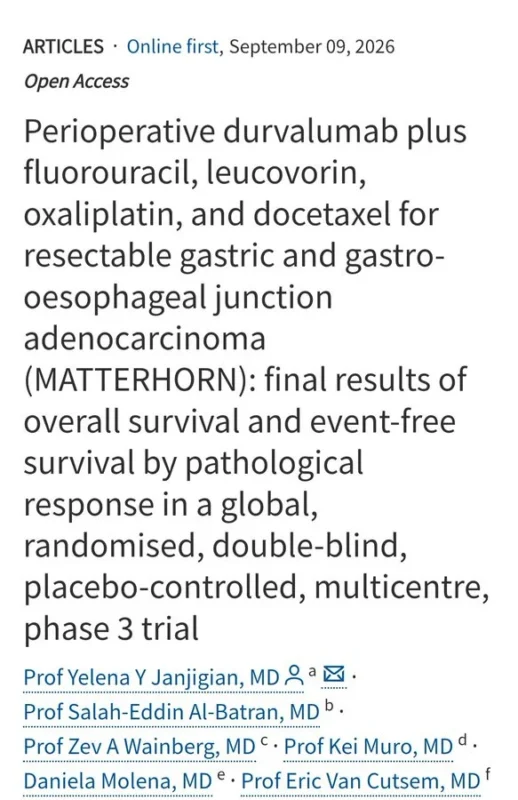
“MATTERHORN final results showed a 7% absolute improvement in 3-year overall survival with perioperative durvalumab plus FLOT compared with FLOT alone: 69% versus 62%, with an HR of 0.78.
Perioperative durvalumab plus FLOT: standard of care.
However, concerns remain about the magnitude of benefit in diffuse-type and PD-L1–negative disease.”
Patrick Starlinger — Professor of Surgery and HPB Surgeon at Mayo Clinic Rochester | United States
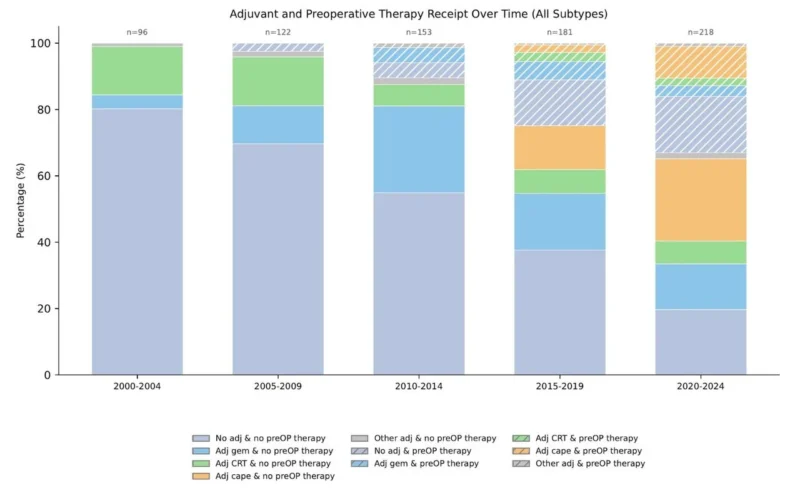
“If adjuvant chemotherapy helps in biliary tract cancer, why is it so hard to prove, and why do the patients who need it most often not get it?
Guidelines recommend adjuvant capecitabine after biliary tract cancer resection, but the trial evidence remains mixed. We looked at what happens in the real world: 770 patients across all four biliary tract cancer subtypes, including intrahepatic, perihilar, and distal cholangiocarcinoma, as well as gallbladder cancer, resected at Mayo Clinic over 25 years.
Complications block treatment. Only 44% received adjuvant therapy. Non-receipt was independently driven by older age, longer hospital stays, and surgery-related major complications, not only by tumor factors.
No overall survival benefit was observed in the full cohort. After excluding 90-day mortality, adjuvant therapy was not associated with better overall survival in the full cohort, with a p value of 0.978, and this held up in propensity-matched analysis.
However, high-risk patients appeared to benefit. Among patients with node-positive disease, R1 resection, or advanced-stage disease, adjuvant therapy was linked to longer overall survival: 37.3 versus 30.1 months.
The signal was strongest in patients with two or more adverse features. The clinical paradox is that the patients most likely to benefit from adjuvant therapy are often the least likely to receive it, because complex disease and complex surgery can lead to complications that prevent treatment.
The takeaway: a uniform ‘treat everyone’ approach may not fit biliary tract cancer. The signal points toward risk-adapted use and toward a surgical goal that is easy to overlook: preventing the complications that quietly close the door on adjuvant therapy.
Congratulations to Dr. Dong on this important additional piece, and on another example of what can be learned from retrospective analyses.”
Chiara Falcomatà — Postdoctoral Research Fellow Icahn School of Medicine at Mount Sinai | United States
“Pancreatic tumors are highly heterogeneous and immunosuppressive.
But is immune resistance imposed across the whole tumor, or can it be built locally by distinct cancer-cell states? I’m thrilled to share our new paper, published in Nature.
Using Perturb-map, a spatial functional genomics approach, we uncovered how cancer-cell programs locally organize the extracellular matrix and shape distinct immune neighborhoods, revealing a spatial logic of immune evasion. We identified SERPINB2 and SERPINE1 as local organizers of immune suppression.
Tumor cells expressing these serpins stabilize fibrin-rich extracellular matrix niches that retain and reprogram macrophages while excluding cytotoxic T cells. Our findings suggest that fibrin is not simply a physical barrier.
It can act as an immunoregulatory scaffold through which specific cancer-cell states influence tumor behavior beyond their own boundaries. Targeting this serpin-fibrin-myeloid axis improved tumor control and sensitized preclinical models to PD-1 blockade. Tumor heterogeneity is therefore not only about what individual cancer cells do.
Specific cancer-cell states can build protective neighborhoods that shape the fate of many surrounding cells. A huge thank you to Brian Brown, Maximilian Schaefer, Bhavya Singh, and everyone who contributed to this work. I’m deeply grateful to have been part of such a wonderful team effort.”
Daisuke Kotani, MD, PhD — Department of Gastroenterology and Gastrointestinal Oncology, National Cancer Center Hospital East | Japan
“Our phase 2 PURSUIT trial evaluating ctDNA-guided panitumumab rechallenge for RAS/BRAF wild-type metastatic colorectal cancer is now published in Communications Medicine.”
Davide Melisi — Associate Professor of Medical Oncology at University of Verona | Italy
“We are proud to share that our BLAZE-PDAC project was ranked first in the inaugural independent clinical research call on pancreatic cancer promoted by Fondazione Umberto Veronesi ETS and FICOG.
Pancreatic ductal adenocarcinoma remains one of the most aggressive and challenging cancers to treat.
The basal-like subtype is characterized by particularly aggressive clinical behavior and resistance to chemotherapy.
Our study is based on a clear biological rationale: simultaneously targeting two key mechanisms involved in tumor growth and treatment resistance, KRAS G12D and the TGF-β signaling pathway.
Over the next 36 months, seven centers of the Gruppo Oncologico dell’Italia Meridionale will participate in this investigator-initiated phase 2 clinical trial.
Approximately 600 patients with newly diagnosed metastatic pancreatic ductal adenocarcinoma will undergo centralized molecular profiling to identify the biological and genetic features of their tumors and determine which patients may be eligible for the experimental treatment.
Patients with KRAS G12D-mutated, basal-like tumors will receive the KRAS G12D inhibitor INCB161734 in combination with the TGFβR2×PD-1 bispecific antibody INCA33890.
We will evaluate treatment response, safety, and biomarker modulation, with the goal of investigating whether an innovative chemotherapy-free therapeutic strategy may be developed for a carefully selected group of patients.
This is an ambitious hypothesis that still needs to be tested clinically.
However, it responds to a major unmet medical need and reflects our commitment to translating biological insights into better treatment opportunities for patients.
We sincerely thank Fondazione Umberto Veronesi, FICOG, GOIM, all participating centers, and our colleagues for making this project possible.
Most importantly, we thank the patients, because every step forward in research is ultimately for them.”
Find out 10 Must-Read Posts in GI Oncology from the last week of August on OncoDaily.