The third week of August brought together important updates across GI oncology, with expert posts covering pancreatic cancer, cholangiocarcinoma, upper gastrointestinal cancers, biliary tract cancer, gastroesophageal cancer, hepatocellular carcinoma, rectal cancer, colorectal cancer, and esophageal squamous cell carcinoma.
This week’s selection includes updates on ablative MR-guided SBRT in pancreatic cancer, FDA approval of the OncoSil Medical device for eligible patients with distal cholangiocarcinoma, multidisciplinary recommendations on image-guided radiotherapy for upper gastrointestinal tumors, BILCAP-Real and adjuvant capecitabine in biliary tract cancers, and the ASCO Living Guideline on immunotherapy and targeted therapy for advanced gastroesophageal cancer.
Other posts highlight γδ T cells as a potential biomarker of response to atezolizumab/bevacizumab in HCC, total neoadjuvant treatment with dose escalation in rectal cancer, TALENTOP and response-adapted treatment in locally advanced HCC, mechanisms of KRAS inhibitor resistance in colorectal cancer, and SKYSCRAPER-07 in unresectable esophageal squamous cell carcinoma after definitive chemoradiotherapy.
Together, these posts reflect the continued evolution of GI oncology across radiotherapy, targeted radiation devices, clinical guidelines, adjuvant therapy, immunotherapy biomarkers, neoadjuvant strategies, resistance biology, and multidisciplinary care.
Michael Chuong, MD, FACRO — Vice Chair, Medical Director, Lead GI Radiation Oncologist – Dept of Radiation Oncology at Herbert Wertheim Cancer Institute | United States
“I am extremely proud of our team at Baptist Health and Florida International University Herbert Wertheim College of Medicine, whose work over nearly a decade had a significant impact on the ASTRO clinical practice guidelines for pancreatic cancer.
When we began our MR-guided radiation program in 2018, ablative SBRT for pancreatic cancer was not a widely supported standard of care due to concerns about severe toxicity.
It is incredible to see how far we have come since then, with ablative SBRT now being strongly recommended by the ASTRO guidelines.
We frequently see patients referred for ablative MR-guided SBRT not only from radiation oncologists, but also from medical and surgical oncologists at other institutions who have seen firsthand the outcomes that are possible.
The number of long-term survivors I see in follow-up clinic years after treatment is a testament to how fundamentally different radiation therapy is today for pancreatic cancer.
We have a long way to go, but it is exciting to see how much real progress we have made.”
Juan W. Valle, MB ChB, MSc, FRCP — Chief Medical Officer at Cholangiocarcinoma Foundation | United Kingdom
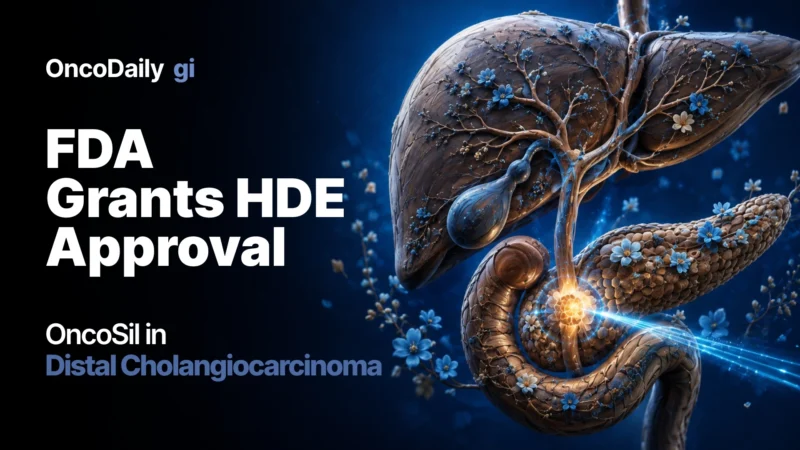
“Today’s FDA approval of the OncoSil Medical device for eligible patients with distal cholangiocarcinoma is an important development for our community.
For patients with unresectable, non-metastatic disease, additional treatment options are urgently needed.
This approval provides an opportunity for U.S. specialist centers to gain experience with targeted radiation delivered directly within the tumor and to better understand its role in multidisciplinary care.
There is still much work ahead, but developments like this bring new possibilities for patients and families facing cholangiocarcinoma.”
Elena Galofaro — Radiotherapy Unit, Department of Internal Medicine, Azienda Ospedaliero-Universitaria delle Marche | Italy
“We are pleased to share the publication of our new paper in Oncologie:
‘Multidisciplinary Delphi Consensus-Based Recommendations on the Use of Image-Guided Radiotherapy for Upper Gastrointestinal Tumours: An AIRO–AITRO–AIFM Study.’
This study represents a joint multidisciplinary effort of three Italian scientific societies: AIRO, the Italian Association of Radiotherapy and Clinical Oncology; AITRO; and the Italian Association of Medical Physicists.
Through a structured two-round modified Delphi process, a panel of 20 experts brought together the perspectives and expertise of radiation oncologists, medical physicists, and radiation therapists.
The aim was to provide shared, practical recommendations for the use of image-guided radiotherapy in upper gastrointestinal cancers.
A special thanks to Rita Marina Niespolo, who strongly believed in this project from its very beginning, and to all the experts involved for their time, expertise, and invaluable contribution.
We are very happy to finally see this collaborative project published.”
Anthony Turpin — GI Oncologist at Lille University Hospital | France
“New publication: results from the French multicenter BILCAP-Real study, nested within the ACABi-PRONOBIL cohort and accepted in JHEP Reports.
No statistically significant benefit of capecitabine was observed for either recurrence-free survival or overall survival.
Nevertheless, the signal suggesting prolonged recurrence-free survival remains consistent with the intention-to-treat results of the BILCAP trial.
Tolerability deserves particular attention:
• Nearly half of patients required at least one dose reduction
• One-third discontinued treatment because of toxicity
The decision to use adjuvant chemotherapy in biliary tract cancers should carefully balance potential benefits against risks.
There is a crucial need to continue adjuvant trials, particularly those advancing personalized medicine, such as SAFIR-Impact.”
Sarbajit Mukherjee, MD, MS — Chief of GI Medical Oncology | United States
“The ASCO Living Guideline on Immunotherapy and Targeted Therapy for Advanced Gastroesophageal Cancer is now published in JCO.
The treatment landscape in gastroesophageal cancer continues to evolve rapidly, with biomarkers increasingly shaping treatment selection and sequencing.
Keeping guidance current is essential as new evidence moves into clinical practice.
Grateful to Dr. Manish Shah for his leadership and to the American Society of Clinical Oncology for including me on the expert panel.”
Joseph Steward — Medical, Technical & Marketing Writer | Biotech, Genomics, Oncology & Regulatory | Python Data Science, Medical AI & LLM Applications | Content Development & Management | United States
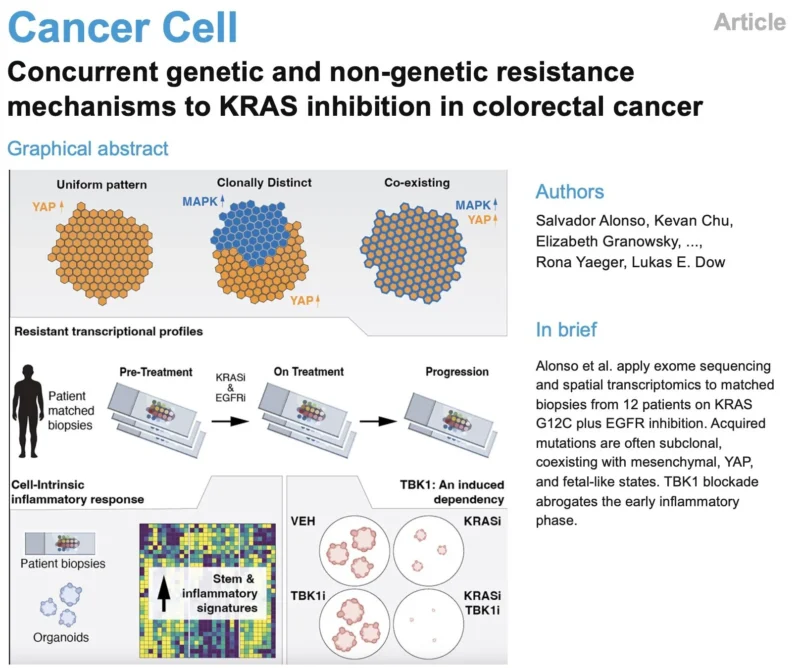
“KRAS is mutationally activated in 45%–50% of colorectal cancer cases, and while KRAS-targeted therapies have shown clinical promise, drug resistance limits their efficacy.
To explore the mechanisms underlying KRAS inhibitor resistance, we used targeted exome sequencing and spatial transcriptomics on patient-matched colorectal cancer biopsies following combined treatment with KRAS G12C and EGFR inhibitors.
We show that acquired genetic events are identified in most patients at progression, but are often subclonal and coexist with transcriptional adaptive states. Mesenchymal, YAP, and fetal-like transcriptional signatures predominate in resistant tumors, while inflammatory programs are induced early on treatment.
Single-cell spatial analysis reveals intratumoral heterogeneity, with diverse adaptive states in different zones of individual tumors.
Using human and murine organoid models, we show that drug-induced inflammatory programs are, at least in part, cancer-cell autonomous and precede the emergence of drug resistance. We identify TBK1 as a target to abrogate the inflammatory adaptive phase and enhance responses to KRAS inhibition.”
Manon Allaire — Associate Professor and Hospital Practitioner at AP-HP | France
“Very happy to share our new paper published in Clinical Cancer Research:
‘Baseline Circulating and Tumor γδ T Cells and Early Circulating CD8⁺PD1⁺ Expansion Predict Response to Atezolizumab-Bevacizumab in HCC.’
We identified γδ T cells as a potential biomarker of response to atezolizumab-bevacizumab in hepatocellular carcinoma, with consistent findings across circulating immune cells and tumor transcriptomic analyses.
Importantly, a high intratumoral γδ T-cell signature was associated with better response, PFS, and OS exclusively in patients treated with atezolizumab-bevacizumab, but not with sorafenib.
Interestingly, this signal extended beyond HCC: in an independent cohort of MSI-H colorectal cancer treated with immunotherapy, a high γδ T-cell signature was also associated with longer PFS, suggesting that γδ T cells may represent a broader marker of sensitivity to immunotherapy.
Together, these findings highlight γδ T cells as a promising candidate biomarker of immunotherapy response and provide new insights into the immune determinants of treatment efficacy.”
Carmen Saiz Guisasola — Specialist in Radiation Oncology | Unidad de Protonterapia Quiron Salud | Partner at Sobit Technologies | Master in clinical and applied investigation in Oncology | Spain
“It is out: our experience of total neoadjuvant treatment for rectal cancer with dose escalation.
Congratulations to the amazing team, especially Dr. Ovidio Hernando Requejo.”
Arndt Vogel — Medical Oncologist; Head of the Center for Personalized Medicine at Hannover Medical School | Germany
“Liver resection after atezolizumab and bevacizumab versus maintenance therapy for locally advanced hepatocellular carcinoma: TALENTOP, a multicenter phase 3 trial, published in The Lancet.
The study supports neoadjuvant concepts in HCC and response-adapted treatment.”
Erman Akkus — Medical Oncologist and Internal Medicine Physician at Ankara University | Turkey
“Atezolizumab with or without tiragolumab in unresectable esophageal squamous cell carcinoma following definitive concurrent chemoradiotherapy: SKYSCRAPER-07.
This was a randomized phase 3 study published in Annals of Oncology.”
Find out 10 Must-Read Posts in GI Oncology from the secondweek of August on OncoDaily.