The second week of August brought together important updates across GI oncology, with expert posts covering gastric cancer, colorectal cancer, biliary tract cancer, cholangiocarcinoma, oesophagogastric adenocarcinoma, pancreatic cancer, hepatopancreatobiliary cancers, and early-onset colorectal cancer.
This week’s selection includes updates on multimodal prehabilitation in gastric cancer surgery, anti-EGFR rechallenge and potential biomarkers in refractory ctDNA RAS/BRAF wild-type metastatic colorectal cancer, real-world outcomes of cisplatin, gemcitabine, and durvalumab according to TOPAZ-1 eligibility, and mechanisms of acquired resistance to daraxonrasib in RAS-driven cancers.
Other posts highlight comprehensive genomic profiling in GI cancers, the phase 3 FIGHT-302 trial of pemigatinib in FGFR2-rearranged cholangiocarcinoma, maintenance rucaparib after first-line platinum-based chemotherapy in HER2-negative advanced oesophagogastric adenocarcinoma, the Lancet Regional Health – Europe Series on early-onset colorectal cancer, precision oncology trial design challenges in rare genomic subgroups, and FAPI PET/CT in hepatopancreatobiliary cancers.
Together, these posts reflect the continued evolution of GI oncology across prehabilitation, biomarker-driven therapy, real-world evidence, molecular profiling, targeted therapy, resistance biology, imaging, clinical trial design, and multidisciplinary care.
Maria Wobith — Visceral Surgeon at National University Hospital | Singapore
“I am very happy to share the first publication arising from our work within the International Gastric Cancer Association Prehabilitation Working Group:
‘Unimodal to Multimodal Prehabilitation in Gastric Cancer Surgery: Systematic Review of Randomised Controlled Trials.’
We systematically reviewed the randomized evidence for prehabilitation specifically in patients undergoing gastric cancer surgery.
Across 14 RCTs, prehabilitation showed an overall favorable signal, but not all prehabilitation appears to be equal.
The clearest benefits were seen with multimodal programs, particularly when delivered over longer periods and integrated into the oncological treatment pathway.
Short-term, unimodal nutritional interventions showed much more mixed results.
Multimodal programs showed promising effects not only on postoperative morbidity and functional capacity, but also across the wider cancer treatment pathway, including tolerance and completion of neoadjuvant chemotherapy.
At the same time, our review clearly shows where the field needs to improve: 14 trials reported 53 different outcomes, methodological quality was variable, heterogeneity remains high, and the certainty of evidence remains low.
For me, one of the most important conclusions is that prehabilitation should not be considered a one-size-fits-all intervention.
We need to better understand which patients need which intervention, at what intensity, and which outcomes matter most and should be measured in a standardized approach.”
Davide Ciardiello — MD, PhD, Medical Oncologist at the Division of Gastrointestinal Medical Oncology and Neuroendocrine Tumours, European Institute of Oncology, IEO, IRCCS | Italy
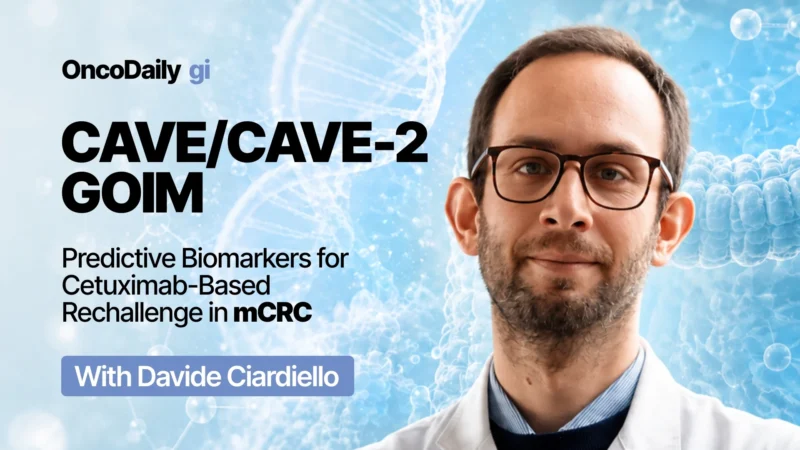
“Rechallenge with anti-EGFR agents is a therapeutic option for patients with refractory ctDNA RAS/BRAF wild-type metastatic colorectal cancer.
However, the search for potential biomarkers remains an unmet clinical need.
We conducted an individual patient data pooled analysis of the CAVE-GOIM and CAVE-2 GOIM trials, involving patients with ctDNA RAS/BRAF/EGFR-ECD wild-type, MSS/pMMR mCRC who underwent rechallenge with cetuximab with or without avelumab.
To date, this represents the largest cohort evaluated for this therapeutic strategy.
The data confirm the activity of rechallenge with anti-EGFR agents.
An interesting finding is that the activity of single-agent cetuximab is maintained regardless of the clinicopathological factors investigated.
For treatment with cetuximab plus avelumab, the absence of liver metastases was the only variable associated with improved PFS and OS in the multivariable analysis.
These data confirm the potential role of liver metastases as a predictive biomarker of response to immunotherapy in MSS/pMMR mCRC.”
Andrea Casadei Gardini — Associate Professor at Università Vita-Salute San Raffaele | Italy
“New publication in the International Journal of Cancer.
Proud to share our new work: ‘Outcomes of Cisplatin, Gemcitabine, and Durvalumab According to TOPAZ-1 Study Eligibility: A Large Global Analysis in a Real-World Setting.’
One of the major challenges in oncology is understanding how well results from randomized clinical trials translate to the patients we treat every day.
In this large international real-world study of 1,358 patients with advanced biliary tract cancer treated with first-line cisplatin, gemcitabine, and durvalumab across 55 centers, almost one-third of patients, 32.9%, would not have fulfilled the TOPAZ-1 eligibility criteria.
Importantly, despite their less favorable baseline characteristics, outcomes in the TOPAZ-1-out population remained remarkably close to those reported in the experimental arm of TOPAZ-1, with a median OS of 12.5 months versus 12.9 months, and without an evident increase in toxicity.
Among trial-ineligible patients, active infection, elevated bilirubin, and ECOG PS >1 emerged as the main factors associated with poorer survival, while several other traditional exclusion criteria did not appear to substantially compromise outcomes.
These findings provide further evidence that the benefit of chemoimmunotherapy may extend beyond the highly selected populations enrolled in randomized trials and highlight the importance of generating high-quality real-world evidence to complement clinical trials.
A very special thank you to Federica Loprinzi and Margherita Rimini, co-first authors of this work, and to Lorenza Rimassa and Lorenzo Fornaro, with whom I had the pleasure of sharing senior authorship.
And, of course, a huge thank you to all our co-authors, investigators, and the 55 participating centers worldwide. This study would not have been possible without such an extraordinary international collaboration.”
Wungki Park — Physician-Scientist; KRAS and DNA Repair; Translational Research; Founder of sPARKlab and GRIT – GI RAS Innovative Therapeutics | United States
“The RAS era is entering its next chapter.
One of the most exciting aspects of targeted therapy is that every clinical success creates a new scientific question.
As RAS inhibitors transform the treatment landscape, understanding why resistance develops becomes the foundation for designing the next generation of therapies.
Congratulations to Ida Aronchik, Sumit Kar, Kevin Lin, Andrew Aguirre, Mallika Singh, and the entire multidisciplinary team on this outstanding Nature Medicine study defining mechanisms of acquired resistance to daraxonrasib and identifying rational therapeutic strategies to overcome them.
I also highly recommend the accompanying News & Views by Paula Lynch, Teresa Macarulla, and Grainne O’Kane.
It provides an elegant synthesis of where the field stands today and where it is heading next.
From resistance biology to rational combinations and biomarker-driven precision oncology, this is exactly how the field advances.
Clinical observation informs biology, biology informs the next clinical trial, and each iteration brings us closer to more durable outcomes for patients with RAS-driven cancers.”
Read the full article
Federico Nichetti — Medical Oncologist at Veneto Institute of Oncology | Italy
“Have a look at our new work out now in JCO Precision Oncology.
This was the first study I worked on after joining the GI team at Istituto Oncologico Veneto IOV – IRCCS in Padova, so it has a special personal meaning.
Beyond the survival benefit and encouraging Kaplan-Meier curves, the paper conveys a very pragmatic message: comprehensive genomic profiling in GI cancers comes with many practical challenges.
Tumor site, sample selection, and timing all matter, and can determine whether profiling is feasible and clinically useful.”
Davide Melisi — Associate Professor of Medical Oncology at the University of Verona | Italy
“Proud to see the results of the phase 3 FIGHT-302 trial published in the current issue of the Journal of Clinical Oncology.
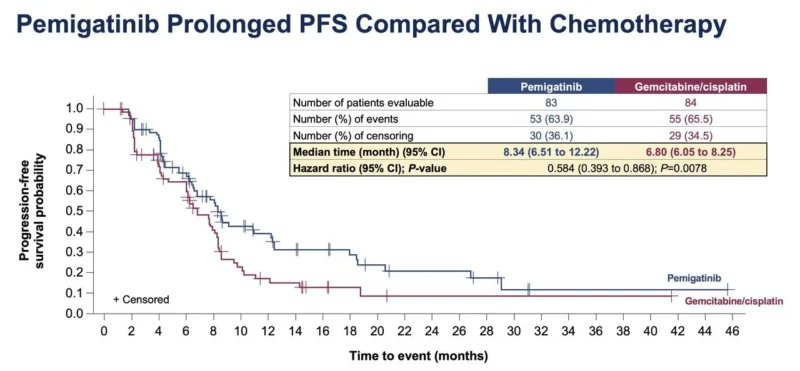
FIGHT-302 evaluated pemigatinib versus gemcitabine/cisplatin as first-line treatment for patients with advanced cholangiocarcinoma harboring FGFR2 rearrangements.
This was the largest randomized first-line phase 3 trial of a targeted therapy in this molecularly selected population.
Despite the study closing early following a change in the first-line standard of care, the results are compelling:
• Median PFS: 8.3 versus 6.8 months; HR 0.58, 95% CI 0.39–0.87
• ORR: 47% versus 15%
• Median duration of response: 14.2 versus 6.3 months
• No new safety signals were identified
Beyond the scientific results, this publication is particularly meaningful to me because Italy was the leading country worldwide in patient enrollment for FIGHT-302, with Verona as the top-enrolling Italian site.
This is something our entire team in Verona can be proud of.
These results add important evidence supporting precision oncology in cholangiocarcinoma and reinforce why comprehensive molecular profiling should be an integral part of the care pathway for patients with advanced disease.
Most importantly, my sincere thanks go to every patient and family who participated. Without them, none of this would have been possible.”
Erman Akkus — Medical Oncologist and Internal Medicine Physician at Ankara University | Türkiye
“Maintenance rucaparib after first-line platinum-based chemotherapy in HER2-negative advanced oesophagogastric adenocarcinoma: results from the PLATFORM study.”
Alberto Puccini — Medical Oncologist at Humanitas Cancer Center | Italy
“I am extremely grateful for the opportunity to co-coordinate, together with Chiara Cremolini, this new The Lancet Regional Health – Europe Series on early-onset colorectal cancer.
This project has brought together dozens of outstanding scientists, colleagues, and friends, all deeply committed to understanding and addressing the alarming rise of early-onset colorectal cancer.
What makes this initiative particularly special is its truly multidisciplinary perspective, bringing together expertise from medical oncology, surgery, gastroenterology, genetics, epidemiology, public health, and many other fields.
Most importantly, we were privileged to have the direct involvement of two exceptional patient advocates, Laura Daphne Marziali and Yvette Davis, whose perspectives are fundamental to keeping patients’ needs and experiences at the center of this discussion.
Over the next few months, the different manuscripts of the Series will be published, exploring early-onset colorectal cancer from multiple and complementary perspectives.
A huge thank you to everyone who has contributed to this ambitious collaborative effort.
Special thanks to Ivana Nedic for the invitation and the collaboration.”
Fen Saj — Research Fellow, Medical Oncologist | United States
“Delighted to share our editorial in Nature Reviews Clinical Oncology, coauthored with my mentor Lipika Goyal, on the phase 3 FIGHT-302 trial.
This impressive global effort, led by Tanios Bekaii-Saab and colleagues, tested first-line pemigatinib against chemotherapy in FGFR2-rearranged cholangiocarcinoma.
The drug improved response rates and PFS, but, like two similar trials before it, the study closed early due to recruitment challenges.
In the editorial, we discuss a broader challenge in precision oncology: conventional phase 3 designs may not be the right framework for evaluating novel therapies in rare cancers with even rarer genomic alterations.
We propose alternative strategies that could help bridge this gap.”
Mara Veenstra — MD, PhD Candidate in Radiology and Nuclear Medicine | Netherlands
“I am very happy to share that our latest study on FAPI PET/CT in hepatopancreatobiliary cancers has now been published in the European Journal of Nuclear Medicine and Molecular Imaging.
‘Real-World Evidence in a Large Cohort Comparing FAPI and FDG PET/CT for Hepatopancreatobiliary Cancer Diagnosis.’
This is, to our knowledge, the largest study to date evaluating the performance of FAPI PET/CT across HPB malignancies, including cholangiocarcinoma, gallbladder, pancreatic, periampullary, and hepatocellular carcinoma.
In 176 patients who underwent both [¹⁸F]FDG and [⁶⁸Ga]Ga-FAPI-46 PET/CT, we found that FAPI PET/CT demonstrated higher sensitivity and diagnostic accuracy than FDG PET/CT, particularly for primary tumor and lymph node assessment.
These findings further support the potential role of FAPI PET/CT in the clinical evaluation and staging of HPB cancers.
What makes this study especially meaningful to me is the international collaboration behind it, bringing together colleagues from Erasmus MC in Rotterdam, the Netherlands, and AIG Hospitals in Hyderabad, India.
A huge thank you to AIG Hospitals for their support, expertise, and assistance throughout this project.
It has been a pleasure working together, and we are already developing new study ideas and working toward establishing a long-term collaborative research program.”

Find out 10 Must-Read Posts in GI Oncology from the first week of August on OncoDaily.