The first week of August brought important updates across GI oncology, covering colorectal, upper gastrointestinal, biliary tract, hepatocellular, gastric, pancreatic, anal canal cancers, and peritoneal metastases.
This week’s selection includes updates on EPISODE-III and adjuvant aspirin in stage III colorectal cancer, ATM deficiency in esophageal and gastric cancer, liver transplantation after SIRT for unresectable intrahepatic cholangiocarcinoma, machine learning for anal canal cancer recurrence prediction, and PCI assessment in peritoneal metastases.
Other posts highlight BEACON-HCC, the phase 3 TORCH trial, BilT-02 maintenance therapy in advanced biliary tract cancer, sarcopenia in gastric cancer, and RASolute 302 with daraxonrasib in pancreatic cancer. Together, these posts reflect the continued evolution of GI oncology across biomarkers, surgery, machine learning, liver-directed therapy, maintenance treatment, nutrition, targeted therapy, and multidisciplinary care.
Jeremy Meyer — Digestive, Colorectal and Robotic Surgeon; Coordinator of the Colorectal Cancer Center; Associate Editor at BJS Open
“EPISODE-III just reported results in 880 patients with stage III colorectal cancer.
Aspirin 100 mg/day for 3 years was added to standard chemotherapy and showed a 3-year DFS of 78.8% versus 75.4% with placebo, with HR 0.84 and p=0.099.
This is the second trial to fail in an unselected population, following ASCOLT.
Meanwhile, ALASCCA, targeting PI3K-pathway-altered tumors, showed a clear and significant benefit on cancer recurrence.
Guidelines have already caught up: NCCN now recommends PIK3CA pathway testing for all stage II–III colon cancers, with aspirin reserved for those who test positive.”
Florian Lordick, MD, FESMO — Oncologist; Professor of Medicine at University of Leipzig; Head of Medical Oncology; Director of the Comprehensive Cancer Center Central Germany | Germany
“Excellent science grows through excellent partnerships.
Congratulations to Zuzanna Trybala on this outstanding publication and impressive piece of scientific work.
The paper tackles one of the most exciting questions in precision oncology for upper gastrointestinal cancers: Can ATM deficiency become an actionable biomarker?
Our article comprehensively reviews the biology of ATM, its clinical relevance in esophageal and gastric cancer, and the therapeutic opportunities arising from defects in the DNA damage response.
Importantly, our review identifies ATR inhibition as the most promising therapeutic strategy for ATM-deficient tumors, while emphasizing that ATM alterations should not simply be considered ‘BRCA-like.’
We also highlight the next steps needed to translate these insights into clinical practice.
This publication is another great example of the fruitful collaboration between the Masaryk Memorial Cancer Institute in Brno and the Comprehensive Cancer Center Central Germany, Leipzig–Jena.
It demonstrates how international cooperation, shared expertise, and the exchange of talented young scientists can accelerate innovation in cancer research.
We are particularly proud that this work has been fostered within the PRESSURE Consortium, supported by the European Union’s Horizon Europe programme and led by Maarten Bijlsma.
Investing in young researchers and cross-border collaboration is one of the best ways to shape the future of oncology.
Congratulations again, Zuzanna, on this excellent achievement.”
Julien Edeline — Medical Oncologist at Centre Eugène Marquis; Professor of Oncology at Rennes University | France
“Small series, and of course very restrictive selection.
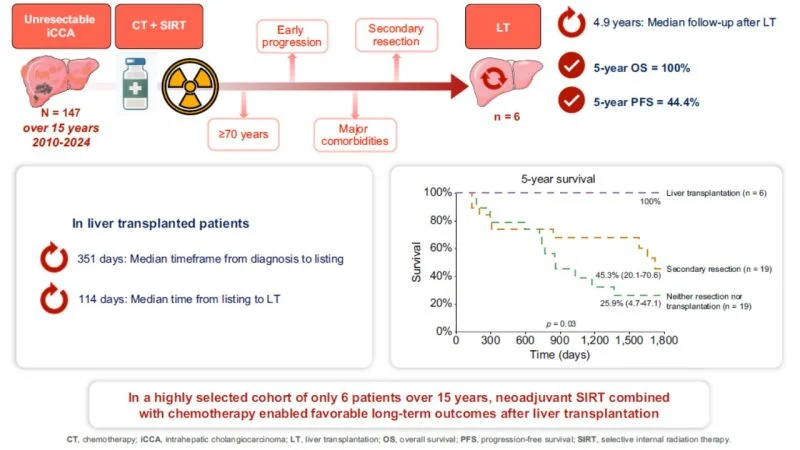
However, we suggest very good long-term outcomes in unresectable intrahepatic cholangiocarcinoma treated with liver transplant after treatment that included SIRT, also known as Y90-radioembolization.
This is a strategy that requires further prospective multicenter studies, such as the RIS-TH study led by Mohamed Bouattour, NCT06910722.”
Charles Raynaud — President of SFjRO; Radiation Oncology Resident at AP-HP | France
“I am pleased to share the publication of our work in Radiotherapy and Oncology, stemming from my Master 2 thesis in biomedical informatics.
We developed an interpretable machine learning model to predict the risk of local recurrence at 3 years in anal canal cancer, based on data from 1,015 patients in the prospective multicenter FFCD-ANABASE cohort.
The results show good predictive performance, with a C-index of 0.735 and a 3-year AUC of 0.755, as well as good calibration.
SHAP analysis also makes it possible to interpret the results by showing which variables influenced the prediction.
Of course, this work is a proof of concept and is not suitable for use in routine clinical practice.
Thank you to all the co-authors, especially Prof. Jean-Emmanuel Bibault for supervising my Master’s year and this work, as well as Prof. Véronique Vendrely, the FFCD, and the SFRO for their support through the Maurice Tubiana research grant.”
Silvia Guerrero Macías — Surgical Oncologist | Specialist in Gastrointestinal and Peritoneal Surface Malignancies | Cancer Research | Founding Member of the Colombian Association of Surgical Oncology (ACCIONCOL) | Colombia
“I am pleased to share our latest publication in the Journal of Gastrointestinal Cancer:
‘Concordance Among Radiological, Laparoscopic and Laparotomic Peritoneal Cancer Index Assessments in Patients Undergoing Cytoreductive Surgery for Peritoneal Metastases.’
Accurate preoperative assessment of the Peritoneal Cancer Index remains one of the greatest challenges in selecting patients for cytoreductive surgery.
In this study, we evaluated the concordance between radiological, laparoscopic, and intraoperative PCI.
The study showed that while imaging provides a reliable estimation of tumor burden, it systematically underestimates disease extent.
Diagnostic laparoscopy demonstrated closer agreement with the surgical PCI in selected patients, supporting its complementary role in preoperative staging.”
Mark Yarchoan — Associate Professor at Johns Hopkins Hospital | United States
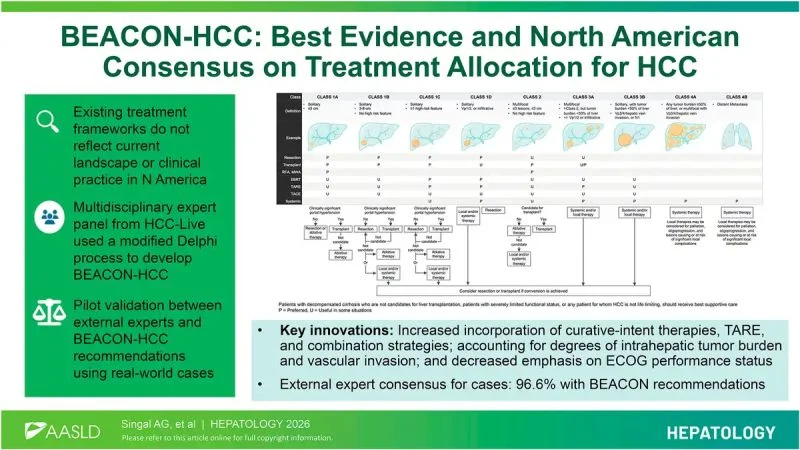
“Published today in Hepatology: BEACON-HCC, a new treatment allocation framework for hepatocellular carcinoma, developed by the HCC-LIVE consortium.
Since its introduction in 1999, the BCLC system has become the most widely used staging and treatment allocation framework for HCC.
But the treatment landscape has changed dramatically.
BEACON-HCC was designed to better reflect contemporary HCC care.
It incorporates the extent of intrahepatic disease and vascular invasion, AFP and other biologic features, and a broader range of modern treatment options, including EBRT, TARE, and systemic-locoregional combinations.
In pilot validation using real HCC cases, expert concordance was higher with BEACON-HCC than with the BCLC framework: 96.6% vs 72.4%.
Further validation efforts are planned.
This was a major collaborative effort across hepatology, medical oncology, surgery, radiation oncology, and interventional radiology, co-led by Dr. Amit Singal and colleagues on behalf of the HCC-LIVE Steering Committee.”
Arndt Vogel — Medical Oncologist; Head of the Center for Personalized Medicine at Hannover Medical School | Germany
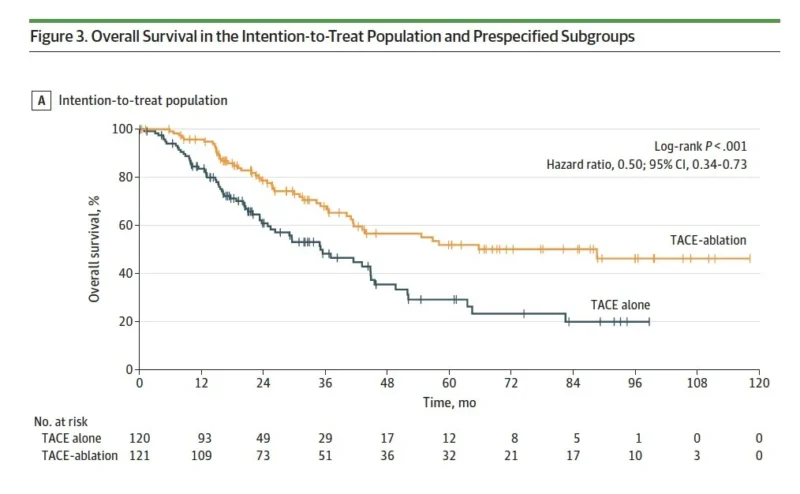
“TACE plus thermal ablation in unresectable hepatocellular carcinoma.
The phase 3 TORCH randomized clinical trial was published in JAMA Oncology.
Sequential TACE and thermal ablation for patients with liver-confined unresectable HCC improved survival compared with TACE alone.”
Erman Akkus — Medical Oncologist and Internal Medicine Physician at Ankara University | Türkiye
“A phase 2 multicenter trial of rucaparib and nivolumab as maintenance therapy in patients with advanced biliary tract cancer: BilT-02.
Published in Clinical Cancer Research, American Association for Cancer Research.”
Paula Ravasco — Professor; Clinician; Team Leader; Specialist in Immuno-Haematology; ESPEN Faculty and Guidelines Committee Member | Portugal
“Sarcopenia in gastric cancer: key predictor of treatment tolerance.
Our recent findings highlight an important message for clinical practice.
Approximately two-fifths of patients with gastric adenocarcinoma undergoing perioperative FLOT chemotherapy had CT-defined sarcopenia.
More importantly, reduced skeletal muscle mass was significantly associated with:
• Higher risk of grade ≥3 chemotherapy toxicity
• Inferior overall survival
• Clinically relevant risk that was not adequately captured by conventional nutritional assessment tools
Interestingly, commonly used parameters such as BMI, NRS-2002, and serum albumin showed limited ability to identify patients at increased clinical risk.
These findings reinforce an increasingly important concept in oncology nutrition: nutritional risk is not synonymous with low body weight.
A patient can have a normal or even elevated BMI while presenting with substantial muscle depletion and a markedly increased risk of treatment-related complications.
This is where routine CT-based assessment of skeletal muscle may offer a valuable opportunity.
Staging CT scans are already routinely performed in many patients with cancer, meaning that body composition assessment can potentially be incorporated into clinical practice without requiring an additional imaging procedure.
Identifying sarcopenia before systemic treatment may allow earlier implementation of:
• Personalized nutritional support
• Adequate protein and energy strategies
• Resistance exercise programs
• Multidisciplinary prehabilitation
• Closer monitoring during chemotherapy
• Early intervention in patients at high risk of toxicity
This approach is consistent with the growing emphasis of ESPEN recommendations on integrating nutritional assessment, muscle health, and functional status into oncology care.
In oncology, BMI alone does not tell the whole story.
The muscle may be a much more important biomarker than the scale suggests.”
Shubham Pant — Professor, Department of Gastrointestinal Medical Oncology and Investigational Cancer Therapeutics, The University of Texas MD Anderson Cancer Center | United States
“For nearly 40 years, KRAS was considered ‘undruggable.’
I sat down with my colleague David S. Hong from MD Anderson Cancer Center to talk about how that is changing, and fast.
A few things that still amaze me about this moment in pancreatic cancer research:
KRAS drives almost 90% of pancreatic cancers. It is stuck in the ‘on’ position, like a light switch you cannot flip off. For decades, we did not have a way to reach it.
RASolute 302 changed that. Patients on daraxonrasib, a pan-RAS inhibitor taken as a daily pill, lived a median of 13.2 months versus 6.7 months on standard chemotherapy after one prior line of treatment.
In a disease where past ‘wins’ have meant a few extra weeks, doubling survival is hard to overstate.
We are not stopping there.
Multiple trials are now underway targeting pan-RAS as well as allele-specific inhibitors, moving these therapies earlier in treatment, into the adjuvant setting after surgery, and into combination with PRMT5 inhibitors, immunotherapy, and antibody-drug conjugates.
Grateful to David for the conversation, and to every patient who trusted us with a clinical trial to get us here.”
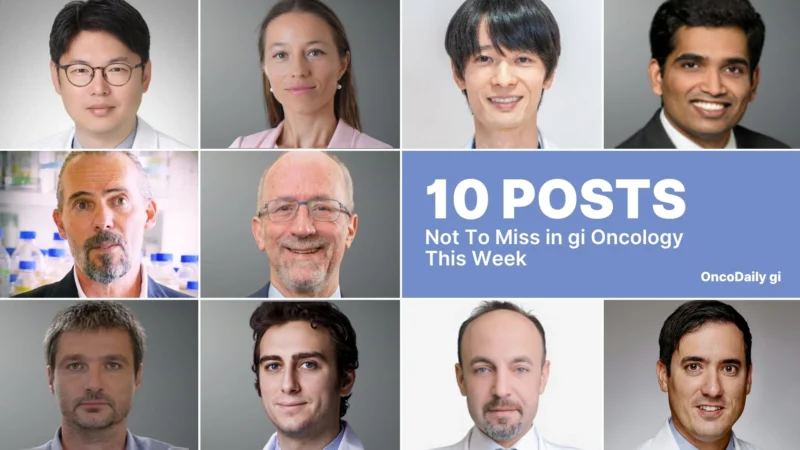
Find out 10 Must-Read Posts in GI Oncology from the last week of July on OncoDaily.