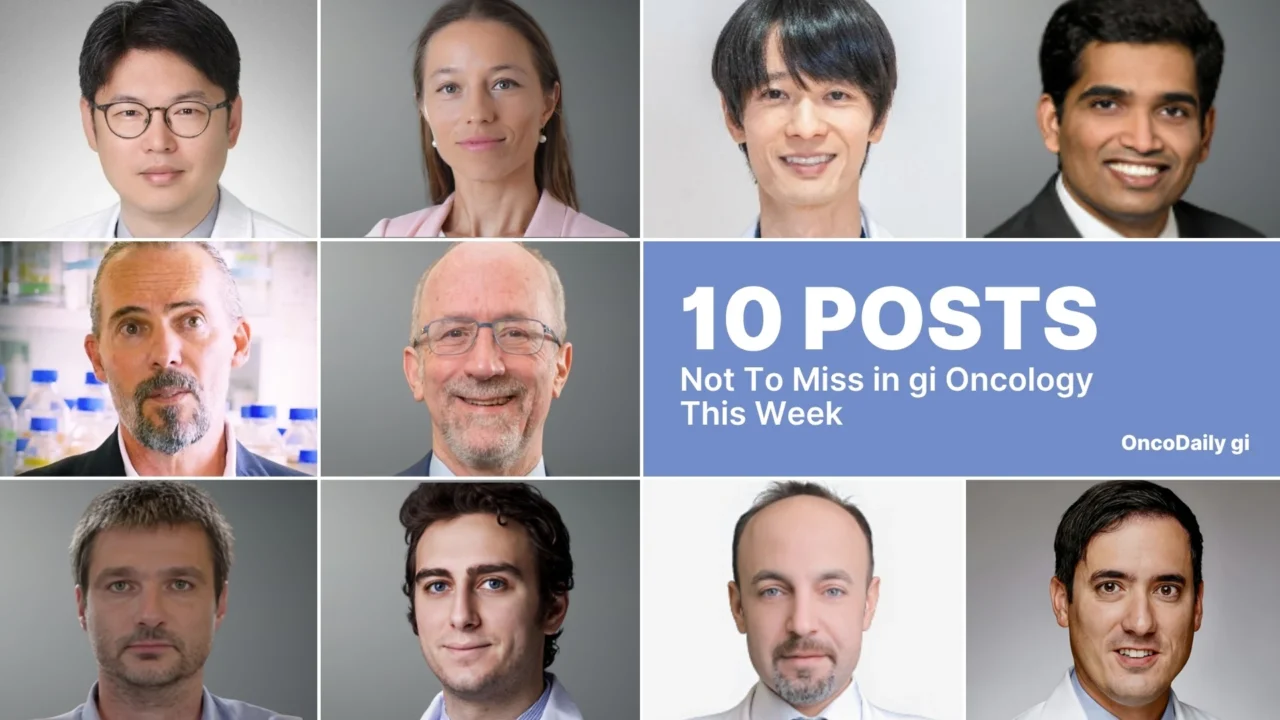
The last week of July brought together important updates across GI oncology, with expert posts covering rectal cancer, colorectal cancer, pancreatic cancer, biliary tract cancer, gastric and gastroesophageal junction cancers, hepatocellular carcinoma, and dMMR/MSI-H colorectal cancer.
This week’s selection includes updates on the ARISTOTLE phase 3 rectal cancer trial and AI-derived tumour cell density as a candidate predictive biomarker, surgery after systemic therapy in locally advanced biliary tract cancer, the TESAR trial after local excision of early rectal cancer, and AI-based pathology approaches for predicting benefit from adjuvant chemotherapy after pancreatic cancer surgery.
Other posts highlight trastuzumab deruxtecan in HER2-expressing biliary tract and pancreatic tumors, positive phase 3 CLARITY-Gastric 01 results with AZD0901 in CLDN18.2-positive gastric/GEJ cancer, real-world comparison of atezolizumab/bevacizumab versus durvalumab/tremelimumab in first-line advanced HCC, AI-based relapse prediction in stage II bowel cancer, the COMMIT trial in metastatic MSI-H/dMMR colorectal cancer, and ctDNA as a predictor of recurrence and survival in resected biliary tract cancer.
Together, these posts reflect the continued evolution of GI oncology across clinical trials, translational research, AI-driven pathology, liquid biopsy, molecularly targeted therapy, immunotherapy, surgical decision-making, biomarker development, and real-world evidence.
David Sebag-Montefiore — Professor of Clinical Oncology and Health Research | United Kingdom
“It is fantastic to see the simultaneous publication of two important papers arising from the Cancer Research UK-funded ARISTOTLE phase 3 rectal cancer trial.
The long-term clinical outcomes are published in The Lancet Oncology, alongside a translational research paper in eBioMedicine, led by Zhuoyan Shen and Maria Hawkins, evaluating tumour cell density quantified using AI from samples collected from ARISTOTLE patients.
Key takeaways include:
• 45 Gy chemoradiotherapy delivered excellent outcomes in MRI-defined high-risk rectal cancer, with low rates of locoregional recurrence and low treatment-related toxicity
• The addition of irinotecan to concurrent chemoradiotherapy did not improve disease-free survival and was associated with increased side effects
• ARISTOTLE helped establish a high standard of care for patients with locally advanced rectal cancer through rigorous evaluation in a large, prospective phase 3 trial
• The biomarker study found that patients with high tumour cell density derived benefit from the addition of irinotecan to standard chemoradiotherapy
• These findings support further validation of AI-derived tumour cell density as a candidate predictive biomarker
Together, these publications highlight the critical importance of integrating discovery and translational science within clinical trials. While ARISTOTLE has helped define contemporary standards of care, the biomarker work points toward a future in which treatment can be tailored more precisely according to tumour biology.
This is a key focus of radiation research more broadly, and of the Cancer Research UK Radiation Research Centres of Excellence in particular. The biomarker work was supported through a RadNet network grant fostering collaboration between the University of Leeds and UCL.
A huge thank you to the teams who made this possible: the investigators and research teams across the UK, the UCL Innovative Clinical Trials Unit, Cancer Research UK, and most importantly, the patients who participated in the trial. Without their commitment and generosity, none of this would have been possible. It has been a real privilege to work alongside you all.”

Andrea Casadei Gardini — Associate Professor at Università Vita-Salute San Raffaele | Italy
“New publication in the International Journal of Cancer.
We are pleased to share the results of our large multinational study: ‘Exploring the Role of Surgery After Systemic Therapy in Locally Advanced Biliary Tract Cancer: Outcomes From a Large Retrospective Multinational Real-World Cohort Treated With Cisplatin, Gemcitabine, and Durvalumab.’
For patients with locally advanced biliary tract cancer, systemic treatment is generally considered palliative. However, meaningful tumour response may allow surgery to be reconsidered in a carefully selected subgroup.
In this international real-world cohort, including patients treated across 55 centres in 12 countries, we evaluated the role and outcomes of surgery following first-line treatment with cisplatin, gemcitabine, and durvalumab.
Among 219 patients with locally advanced disease, 24 patients, or 10.9%, underwent surgery after systemic therapy.
Our findings suggest that chemoimmunotherapy may represent more than a palliative strategy for a small but clinically relevant proportion of patients. In selected cases, it may become the first step of a multidisciplinary pathway with potential curative intent.
We also developed a clinical index based on routinely available variables to help identify patients who may be more likely to become candidates for surgery. This tool showed promising discriminatory performance, although prospective validation will be essential before its use in clinical practice.
These results reinforce several important messages:
• resectability should be reassessed during systemic treatment rather than considered a definitive baseline condition
• patients with locally advanced disease should be discussed repeatedly within an experienced multidisciplinary team
• close collaboration between medical oncologists, radiologists, and hepatobiliary surgeons is essential
• prospective studies are now needed to define selection criteria, optimal timing, and perioperative strategies
Because of the retrospective nature of the study and the strong possibility of selection bias, these findings should not be interpreted as definitive evidence of a survival benefit from surgery.
Nevertheless, they provide an important real-world foundation for future prospective research into conversion strategies in biliary tract cancer.
A sincere thank you to Margherita Rimini, all our coauthors, and every participating centre for making this large international collaboration possible.
Special thanks to Lorenzo Fornaro and Lorenza Rimassa, with whom I had the privilege of sharing senior authorship.”
Jeremy Meyer — Digestive, Colorectal and Robotic Surgeon; Coordinator of the Colorectal Cancer Center
“The results of the TESAR trial have been released in The Lancet Gastroenterology & Hepatology.
After local excision of early rectal cancer, defined as high-risk pT1 or low-risk pT2 disease, the trial assessed adjuvant chemoradiotherapy versus completion total mesorectal excision, including 197 patients across 25 Dutch and French centres.
Non-inferiority for 3-year locoregional recurrence could not be formally established, with a difference of 3.9%, as accrual stopped early because of loss of equipoise.
Overall survival was identical at 98.9%.
All isolated locoregional recurrences were salvaged, although mostly by abdominoperineal resection, and the 3-year stoma rate decreased from 45.4% to 2.6%.
The authors consider this enough to challenge completion total mesorectal excision as the standard of care.
With a median tumour height of 40 mm in both arms, the argument seems strongest in the low rectum, where completion total mesorectal excision carries the heaviest price.”
Read the full article
Nelson Dusetti — INSERM Research Director| CRCM and Institut Paoli-Calmettes | Translational & Precision Oncology | Co-founder of Predicting Med | France
“Delighted to see this work published in the Journal of Clinical Oncology.
Congratulations to Rémy Nicolle, Jakob Nikolas Kather, and Jerome Cros for leading this study, and to all co-authors for this outstanding collaborative effort.
This study shows that routine H&E slides contain clinically meaningful information that can help predict which patients are more likely to benefit from adjuvant mFOLFIRINOX or gemcitabine after pancreatic cancer surgery.
It is another important step toward treatment selection based on tumor biology, rather than relying only on clinical criteria.
I am particularly happy that our team contributed to this work. For many years, we have been developing transcriptomic predictors of chemotherapy response in pancreatic cancer.
Seeing complementary AI-based pathology approaches converge toward the same objective reinforces the idea that integrating multiple layers of biological information will be essential to truly personalize treatment for our patients.
This is exactly what translational research should achieve: bringing discoveries from the laboratory into tools that can support clinical decision-making and improve patient care.
Congratulations again to everyone involved, and thank you to the patients, clinicians, pathologists, and researchers who made this work possible.”
Yakup Ergün — Medical Oncologist at Bower Hospital | Turkey
Yakup Ergün shared an ESMO Open post about the DESTINY-PanTumor02 subgroup analysis of trastuzumab deruxtecan in HER2-expressing biliary tract and pancreatic tumors, saying:
“This analysis suggests that trastuzumab deruxtecan has substantial activity in centrally confirmed HER2 IHC 3+ and preferably HER2-amplified biliary tract cancer.
However, the marked discordance in HER2 testing underscores the need for organ-specific standardization, while the current data in pancreatic cancer remain insufficient to draw firm conclusions.”
Kohei Shitara — Medical oncologist at National Cancer Center Hospital East | Japan
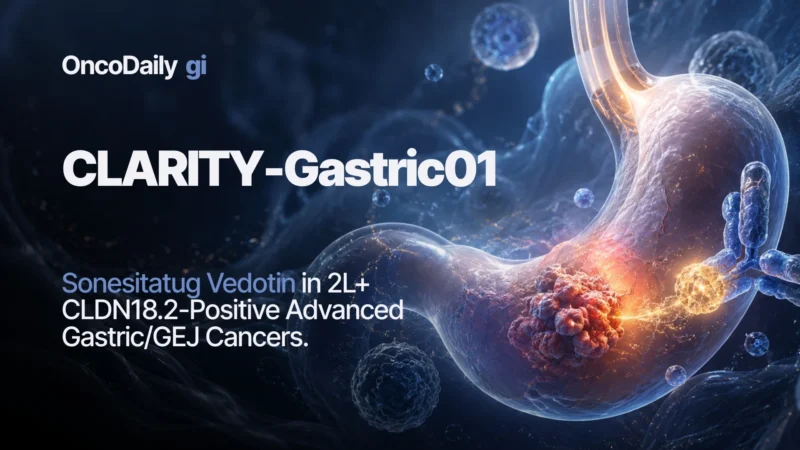
“Excited to see the positive results from the phase 3 CLARITY-Gastric 01 trial.
AZD0901, an anti-CLDN18.2 antibody-drug conjugate, improved overall survival versus second- or later-line chemotherapy in patients with CLDN18.2-positive gastric or gastroesophageal junction cancer.
Please stay tuned for more details.”
Hong Jae Chon — Director of the Cancer Center, Professor of Medical Oncology at CHA Bundang Medical Center, CHA University School of Medicine | Republic of Korea
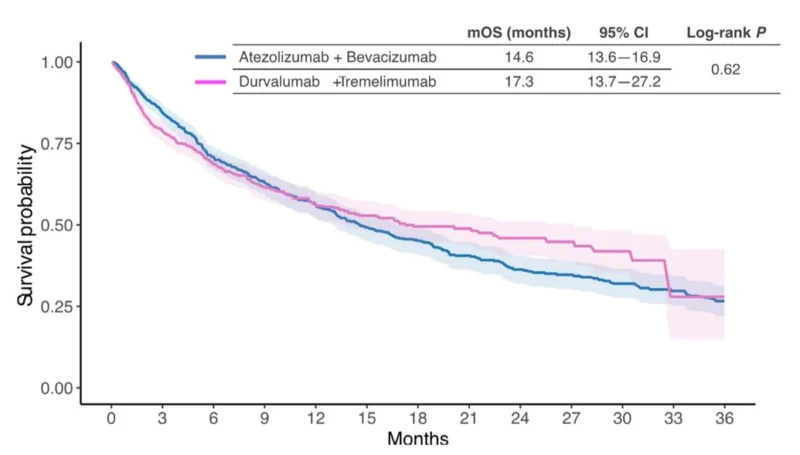
“Atezolizumab/bevacizumab versus durvalumab/tremelimumab in first-line advanced hepatocellular carcinoma: which regimen to choose in real-world practice? A new TriNetX global real-world study, including 1,530 propensity-score-matched pairs, was published in the Journal of Gastroenterology and Hepatology.
Key findings:
• Overall survival was comparable: median OS 14.6 vs 17.3 months; adjusted HR 0.96; p=0.62
• Treatment-requiring immune-related adverse events were significantly lower with atezolizumab/bevacizumab: 20.2% vs 24.6%; adjusted HR 0.61; p<0.001
• Bleeding and hypertension were broadly comparable between groups”
Patricia Haueiss — Managing Director of the La Trobe AI Institute | Australia
“Bowel cancer is Australia’s fourth most commonly diagnosed cancer and the second most common cause of cancer death. La Trobe University researchers developed a new AI tool that could help predict which stage II bowel cancer patients are at risk of relapse, in an advance that could ultimately lead to thousands getting life-saving treatment earlier.
Congratulations to lead author Francis Magisson and senior researchers Associate Professor Zhen He from La Trobe Institute for Molecular Science and the Australian Centre for Artificial Intelligence in Medical Innovation, and Associate Professor David Williams from Austin Health and Olivia Newton-John Cancer and Wellness Centre, together with collaborators from WEHI and other leading Australian centres, on advancing AI applications in cancer care.
The study demonstrates how AI can complement pathology by helping identify patients at higher risk of recurrence, supporting more informed treatment decisions and potentially improving outcomes.”
Midhun Malla — Associate Professor of Medicine | United States
“I am excited to share our latest publication on ctDNA in resected biliary tract cancer, which is the largest real-world BTC ctDNA study to date, to our knowledge.
The study included 167 patients and 751 longitudinal plasma samples.
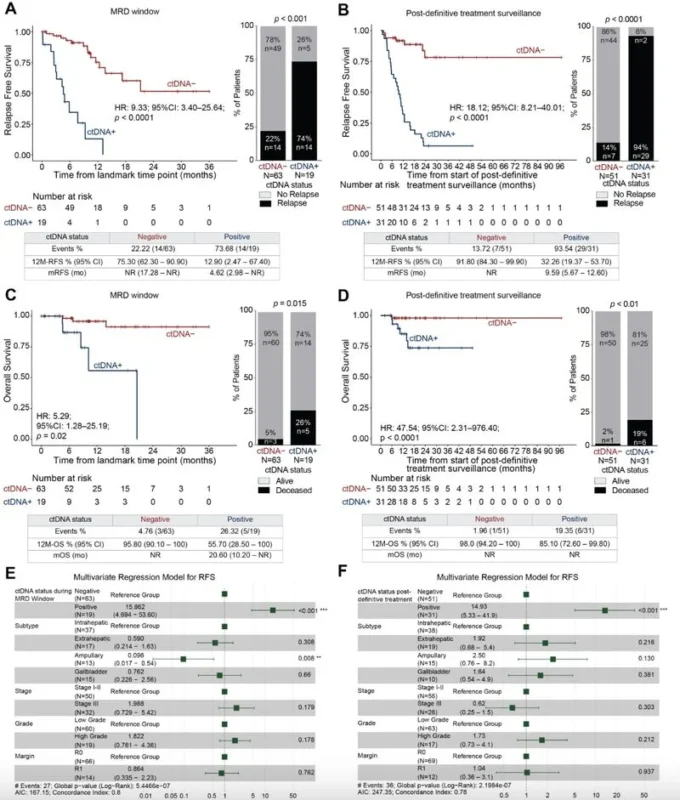
ctDNA was the strongest independent predictor of recurrence and survival, outperforming conventional clinicopathologic factors. ctDNA detected recurrence a median of 3.7 months before radiographic imaging, creating an opportunity for earlier intervention.
These results provide a strong foundation for prospective ctDNA-guided clinical trials in biliary tract cancer. A heartfelt thank you to all our patients and study teams across participating institutions. This publication is the result of years of dedication, teamwork, and perseverance. Proud to be part of this incredible collaborative effort advancing precision oncology for patients with biliary tract cancer.”
Nicholas Hornstein — GI Medical Oncologist | United States
“COMMIT is, on paper, a positive trial.
It is also a striking demonstration that atezolizumab monotherapy should not be used for metastatic MSI-H colorectal cancer, although the adjuvant setting is a separate discussion.
COMMIT was a randomized first-line study in metastatic MSI-H/dMMR colorectal cancer. It began as a 3-arm trial of:
• mFOLFOX6/bevacizumab
• atezolizumab alone
• mFOLFOX6/bevacizumab/atezolizumab
After KEYNOTE-177 changed the standard of care, the chemotherapy-only arm closed after 20 patients. The trial continued with 82 patients randomized between atezolizumab alone and the four-drug combination. The headline is that adding FOLFOX/bevacizumab to atezolizumab improved PFS:
• HR: 0.42
• Median PFS: 24.5 vs 5.3 months
• ORR: 86% vs 46%
• Primary progression: 2.8% vs 32.4%
However, atezolizumab appears to compare unfavorably with contemporary PD-1/PD-L1 agents in this setting. Single-agent atezolizumab:
• 12-month PFS: 35%
• 24-month PFS: 32%
For comparison, pembrolizumab in KEYNOTE-177 showed:
• 12-month PFS: 55%
• 24-month PFS: 48%
Nivolumab in CheckMate 8HW showed:
• 12-month PFS: 63%
• 24-month PFS: 56%
This is not evidence that every patient with metastatic MSI-H colorectal cancer needs chemotherapy, bevacizumab, and immunotherapy. It is evidence that atezolizumab should not be used in metastatic MSI-H colorectal cancer.
At the same time, the only positive randomized adjuvant immunotherapy strategy in stage III dMMR colon cancer is ATOMIC: FOLFOX plus atezolizumab. That makes COMMIT more than a critique. It raises an important question about ATOMIC: should atezolizumab be used in the adjuvant setting, and do we need chemotherapy there?
Looking forward to what others make of this, but this is the real question.”
Find out 10 Must-Read Posts in GI Oncology from the fourth week of July on OncoDaily.