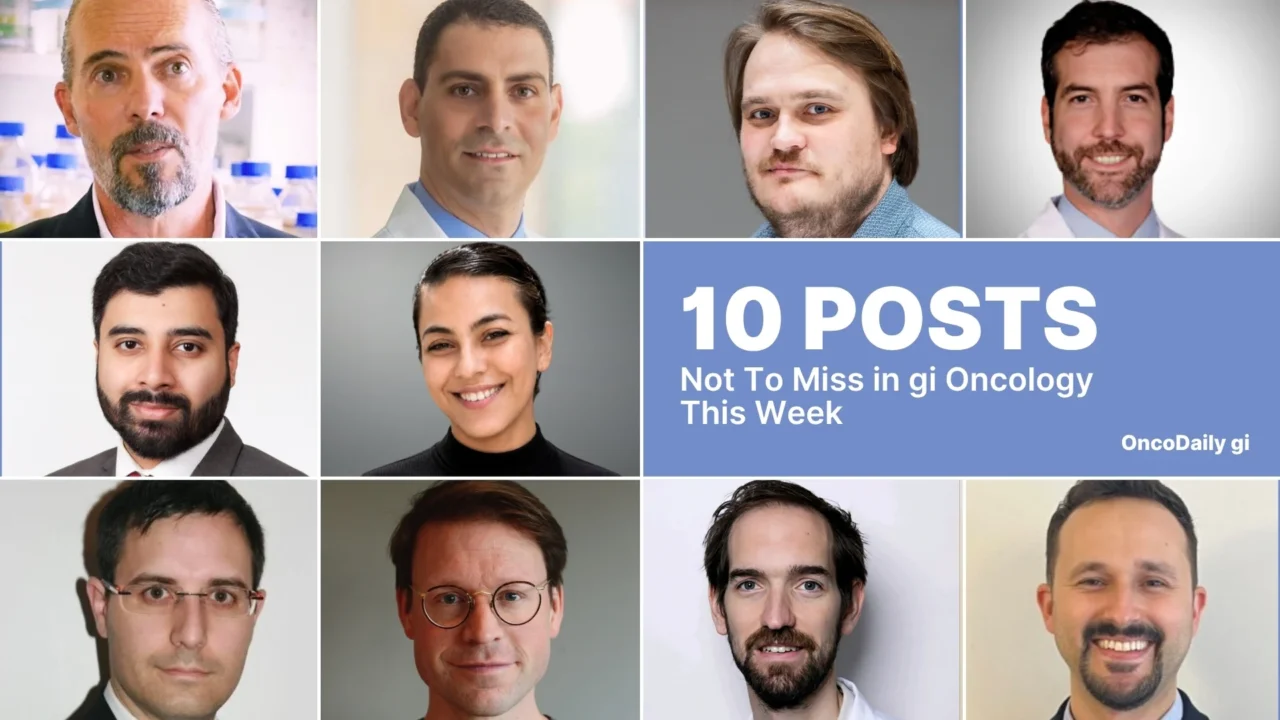
The fourth week of July brought together important updates across GI oncology, with expert posts covering biliary tract cancer, pancreatic cancer, hepatocellular carcinoma, colorectal cancer, gastroesophageal cancer, gastric cancer, gastrointestinal neuroendocrine tumors, and dMMR/MSI-H digestive tumors.
This week’s selection includes updates on real-world ctDNA analysis in biliary tract cancers, European practice heterogeneity in non-metastatic pancreatic adenocarcinoma, first-line curative treatment approaches for early hepatocellular carcinoma within Milan criteria, and a comprehensive proteomic secretome dataset from primary pancreatic cancer cell cultures.
Other posts highlight daraxonrasib in pancreatic cancer, explainable synergy predictions for drug combinations in colorectal cancer, neoadjuvant immunotherapy followed by surgery versus non-operative management in dMMR/MSI gastroesophageal adenocarcinoma, PET/MR imaging of the gastrointestinal tract, and the IMMUNODIG study on immune-related adverse events and immunotherapy efficacy in dMMR/MSI-H digestive tumors.
Together, these posts reflect the continued evolution of GI oncology across liquid biopsy, surgical decision-making, real-world evidence, pancreatic cancer biology, targeted therapy, artificial intelligence-guided drug discovery, molecular imaging, immunotherapy, and multidisciplinary care.
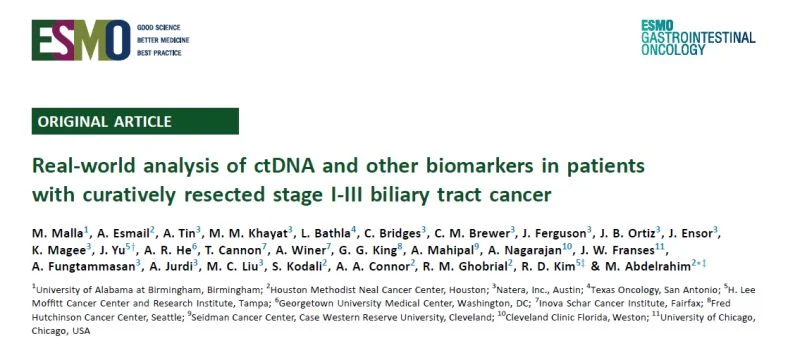
Maen Abdelrahim — Professor of Medicine; Chief of GI Medical Oncology; Medical Director of CCAT Phase I Center, Houston Methodist | United States
“Pleased to share our new paper on real-world analysis of ctDNA in biliary tract caners. One of the largest multi-institutional study in the US and proof of concept. That will help our patients with cholangiocarcinoma track their disease recurrence after curative surgery.
Thanks to all our collaborators and colleagues. Team work!”
Matthieu Delaye — Medical Oncologist at Institut Curie | France
“Delighted to share our study published in ESMO Gastrointestinal Oncology.
In this survey conducted in Europe through the EORTC network, we examined clinical practices regarding non-metastatic pancreatic adenocarcinoma.
Although conducted among expert centers, this survey reveals a very high degree of heterogeneity in care, ranging from the initial evaluation to certain treatment timelines.
It calls for efforts to standardize practices at the European level, which will need to evolve in line with emerging therapeutic innovations.”
Jean-Charles Nault — Professor and Hospital Practitioner at AP-HP, Assistance Publique – Hôpitaux de Paris | France
“New publication out in Liver International.
With Christian Hobeika, François Cauchy, Olivier Seror, and a national collaborative group, we compared laparoscopic and open liver resection versus multibipolar radiofrequency ablation as first-line curative treatments for hepatocellular carcinoma within Milan criteria on advanced fibrosis or cirrhosis.
Key findings:
• Multicenter retrospective cohort of 1,040 patients across 9 French expert centers, including 606 treated with multibipolar radiofrequency ablation, 266 with laparoscopic liver resection, and 168 with open liver resection
• After propensity-score matching, laparoscopic liver resection achieved better overall survival and recurrence-free survival than multibipolar radiofrequency ablation, with similar transplant-free survival
• Open liver resection provided oncological outcomes similar to multibipolar radiofrequency ablation but was associated with significantly more severe adverse events and higher 90-day mortality
• Multibipolar radiofrequency ablation maintained optimal transplant-free survival with substantially less morbidity, positioning it as a safe first-line option, particularly for patients with more advanced liver disease
• Minimally invasive modalities should be prioritized over open surgery when treating early HCC on cirrhosis, with treatment choice guided by the trade-off between oncological control and morbidity”
Nelson Dusetti — INSERM Research Director| CRCM and Institut Paoli-Calmettes | Translational & Precision Oncology | Co-founder of Predicting Med | France
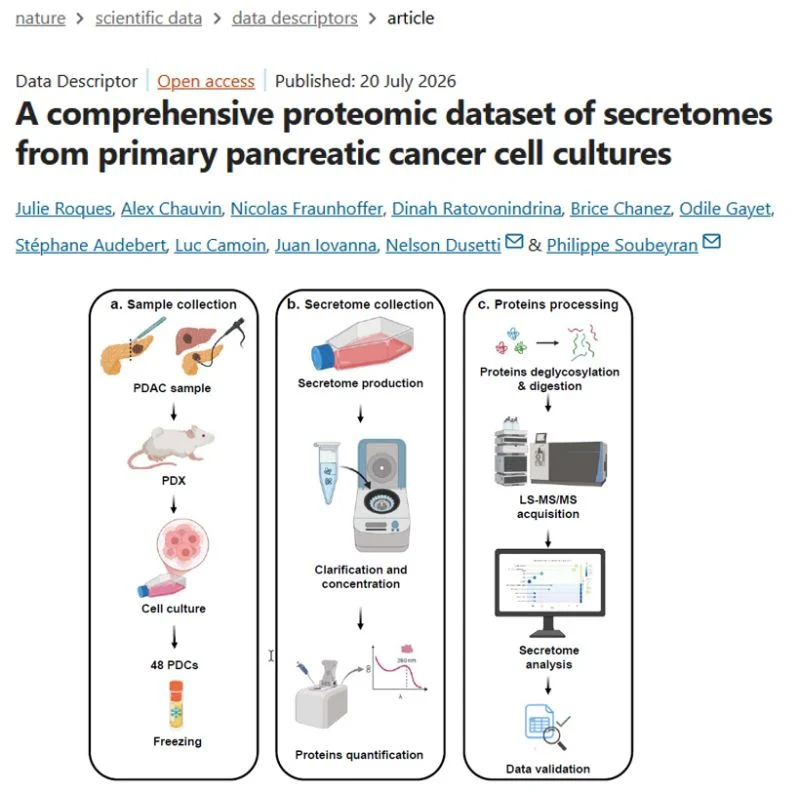
“New resource for the pancreatic cancer research community.
I am pleased to share our latest work published in Scientific Data: ‘A comprehensive proteomic dataset of secretomes from primary pancreatic cancer cell cultures.’
In this study, we generated and made publicly available a comprehensive proteomic dataset derived from the secretomes of 48 low-passage patient-derived pancreatic cancer cell cultures, representing the biological heterogeneity of pancreatic ductal adenocarcinoma.
We identified more than 4,200 proteins, many of them associated with extracellular vesicles and canonical secretion pathways, providing a valuable resource for:
• biomarker discovery
• comparative analyses across preclinical models
• integrative multi-omics approaches
• the development of non-invasive strategies for patient monitoring
This work is not intended to provide immediate clinical answers. Rather, it offers a shared resource that we hope will help the community better understand PDAC biology and accelerate future discoveries.
I would particularly like to acknowledge the remarkable work of all co-authors and collaborators involved in this project.
This study reflects the strength of long-term collaborative efforts developed at CRCM – Centre de Recherche en Cancérologie de Marseille and Institut Paoli-Calmettes, combining clinical expertise, preclinical models, proteomics, and translational research.
Building comprehensive and well-annotated datasets remains, in my opinion, an essential step toward more effective and personalized approaches for patients with pancreatic cancer.
Congratulations and sincere thanks to all members of the team.”
Victor Moreno — Director of Clinical Research, Early Phase Clinical Trials at START Madrid-FJD, Hospital Universitario Fundación Jiménez Díaz | Spain
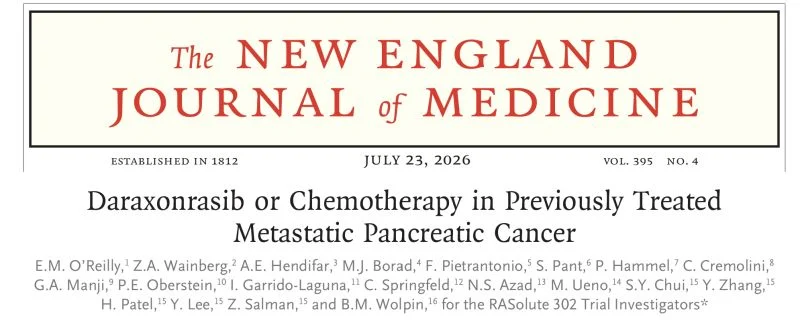
“A few months ago, during the ASCO Plenary Session, the audience rose to give a standing ovation to the daraxonrasib results in pancreatic cancer.
Today, July 23, the article appears in the print edition of The New England Journal of Medicine.
A paper that has transformed the treatment landscape in pancreatic cancer, and whose print publication also happens to coincide with my birthday.
Some birthday presents come wrapped in NEJM.”
Asmund Flobak — Professor at NTNU; Consulting Oncologist at St. Olavs Hospital, Trondheim University Hospital; Senior Researcher at SINTEF | Norway
“Our paper on drug combinations in colorectal cancer is just out.
Focusing on explainable synergy predictions, we simulated 210 drug pairs across 16 colorectal cancer cell lines, resulting in 3,360 cell line-drug combinations.
We took 8% of them to the lab, and 78% came back synergistic.
Two target pairs were synergistic in all 16 cell lines, comprising variations of MTOR + ERK and MTOR + BCL2, validated by six compound combinations not previously reported in colorectal cancer.
The models also propose molecular biology mechanisms underpinning the synergies.”
Erman Akkus — Medical Oncology Fellow at Ankara University, Faculty of Medicine | Turkey
“Neoadjuvant immunotherapy followed by surgery versus non-operative management in dMMR/MSI gastroesophageal adenocarcinomas: a case series and review of the literature, published in ESMO Gastrointestinal Oncology.”
Maryam Daneshpour, PhD, MBA — Biotech and Pharma Market Research; Competitive Intelligence and Scientific Marketing | Turkey
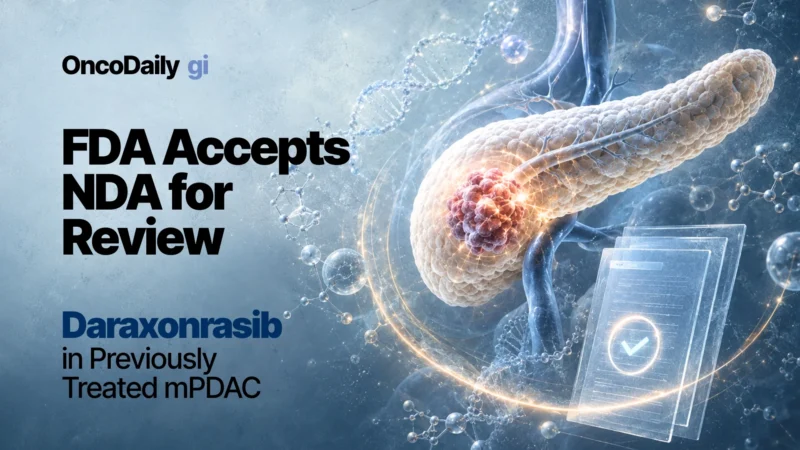
“The RAS race has a clear frontrunner: daraxonrasib enters an accelerated 1–2-month FDA review.
The FDA accepted Revolution Medicines’ NDA for daraxonrasib in previously treated metastatic pancreatic ductal adenocarcinoma.
The drug was selected for the FDA Commissioner’s National Priority Voucher program, targeting a review in just 1–2 months. But the regulatory speed is only part of the story.
Daraxonrasib, also known as RMC-6236, is an oral, multi-selective RAS(ON) inhibitor. Rather than targeting only one KRAS mutation, it blocks the active state of multiple RAS variants, including G12D, G12V, and G12R.
The Phase 3 results were first announced on April 13:
• Median OS: 13.2 vs 6.7 months
• Risk of death: 60% lower
• Median PFS: 7.2 vs 3.6 months
• ORR: 31.6% vs 11.2%
• Time to pain deterioration: 9.2 vs 3.8 months
Competition is also building, with several companies developing RAS- or pancreatic cancer-directed strategies, including ERAS-0015, BBO-11818, AN9025, and atebimetinib.
If approved, this would be the first commercial drug approval for Revolution Medicines.”
Khurram Khaliq Bhinder — Radiology Research Fellow at Mayo Clinic, Rochester; US Ex-Chief Resident Radiology at Shifa International Hospitals | Pakistan
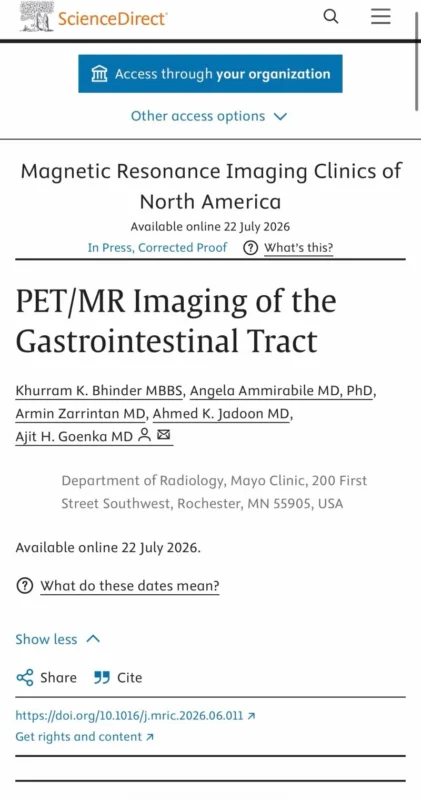
“New review out in Magnetic Resonance Imaging Clinics of North America: ‘PET/MR Imaging of the Gastrointestinal Tract.’
PET/MR pairs molecular PET data with multiparametric MRI in one exam, with lower radiation exposure than PET/CT.
This review covers where it adds the most value: liver metastasis detection and treatment response in colorectal cancer, tracer selection in gastric cancer, staging of gastrointestinal neuroendocrine tumors, and IBD enterography.”
David Tougeron — Professor at Poitiers University Hospital; MD, PhD | France
“It is a great pleasure to share our latest international IMMUNODIG study, published in JITC, showing that immune-related adverse events are not correlated with immunotherapy efficacy in dMMR/MSI-H digestive tumors.”

Find out 10 Must-Read Posts in GI Oncology from the third week of July on OncoDaily.