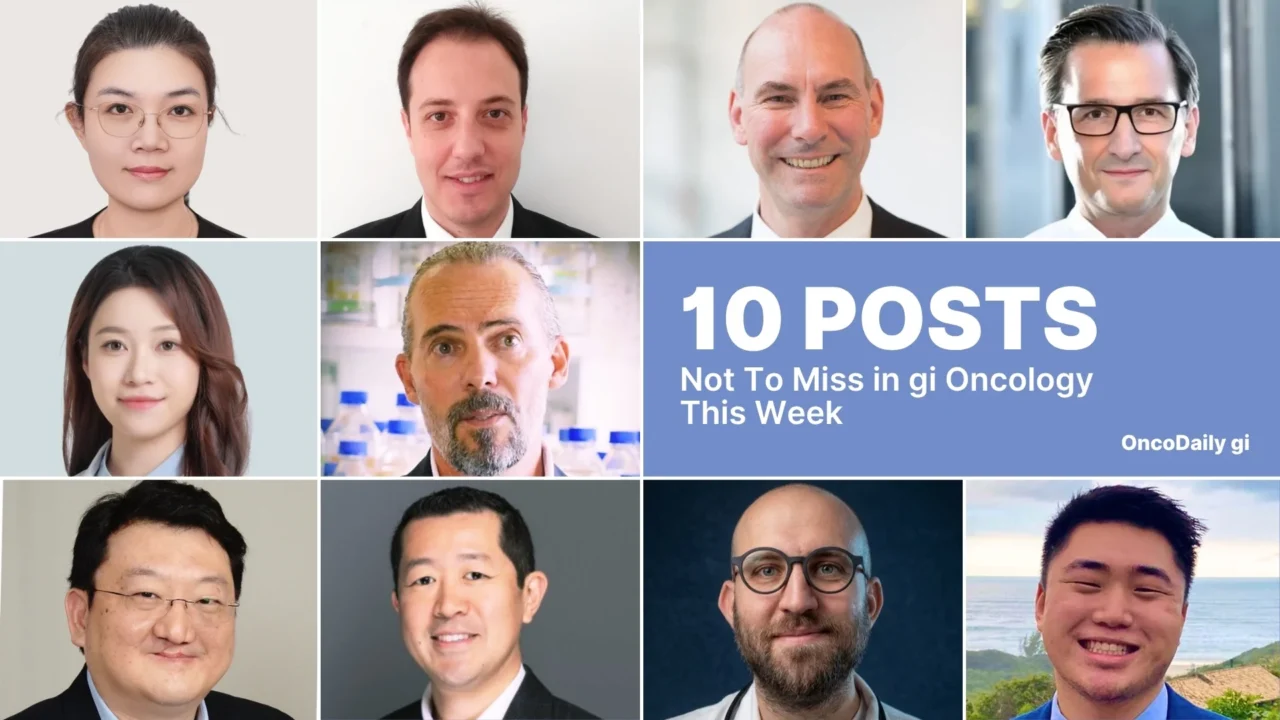
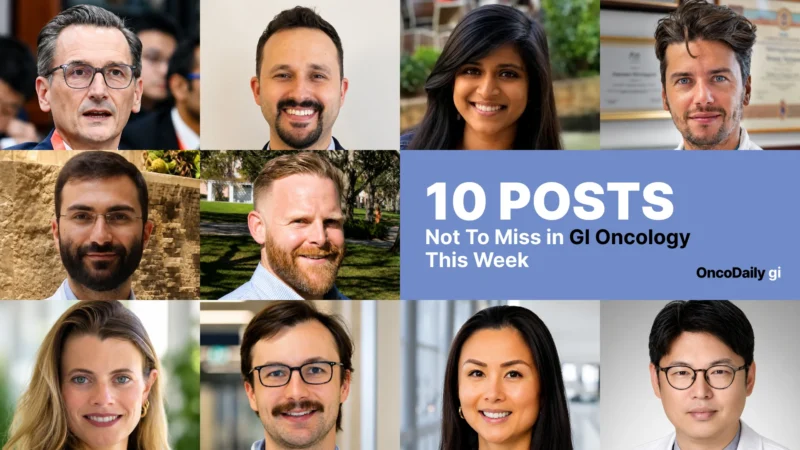
The third week of July brought together important updates across GI oncology, with expert posts covering gastric and gastroesophageal cancers, hepatocellular carcinoma, pancreatic cancer, colorectal cancer, esophageal squamous cell carcinoma, and gastroenteropancreatic neuroendocrine tumors.
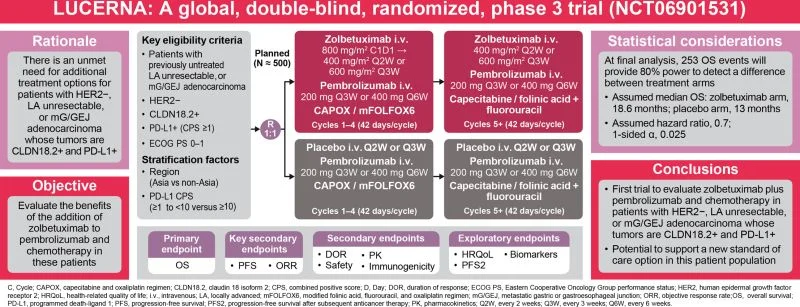
This week’s selection includes updates on the LUCERNA trial in advanced CLDN18.2-positive and PD-L1-positive gastric cancer, radiation therapy in multidisciplinary care for hepatocellular carcinoma, rare epithelial gastric cancers, biologically informed precision medicine in pancreatic cancer, and zanidatamab-based regimens in HER2-positive metastatic gastric and gastroesophageal adenocarcinoma.
Other posts highlight the COMPETE trial of [¹⁷⁷Lu]Lu-edotreotide versus everolimus in gastroenteropancreatic neuroendocrine tumors, dose heterogeneity after 90Y-SIRT in hepatocellular carcinoma, PD-1–TIM-3 and PD-1–LAG-3 bispecific antibodies in advanced esophageal squamous cell carcinoma, immune checkpoint inhibitors added to TACE in unresectable hepatocellular carcinoma, and immune cytolytic activity in the colorectal cancer tumor microenvironment.
Together, these posts reflect the continued evolution of GI oncology across biomarker-driven treatment, radiation oncology, nuclear medicine, immunotherapy, cellular and molecular biology, translational research, and multidisciplinary care.
Florian Lordick, MD, FESMO — Oncologist, Professor of Medicine at University of Leipzig, Head of Medical Oncology, Director of the Comprehensive Cancer Center Central Germany | Germany
“LUCERNA is moving the field forward for patients with advanced CLDN18.2-positive and PD-L1-positive gastric cancer.
The trial explores the potential of a biomarker-driven combination strategy to further improve outcomes.
Exciting to see this trial in progress published in ESMO Gastrointestinal Oncology.”
Michael Chuong, MD, FACRO — Vice Chair, Medical Director, and Lead GI Radiation Oncologist, Department of Radiation Oncology at Herbert Wertheim Cancer Institute | United States
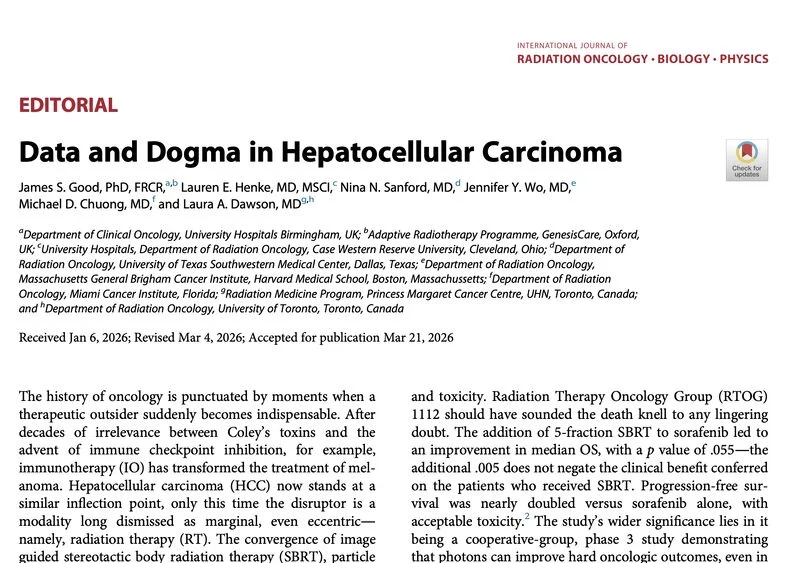
“In this data-driven editorial, we advocate that radiation therapy be routinely considered in multidisciplinary tumor board discussions for appropriate patients with hepatocellular carcinoma.
Thanks to James Good for leading this work with Laura Dawson, Nina Sanford, Lauren Henke, and Jen Wo.”
Lingling Tian — Editor, Therapeutic Advances in Medical Oncology, Co-Editor, Clinical Medicine Insights: Oncology | Rare Tumors | China
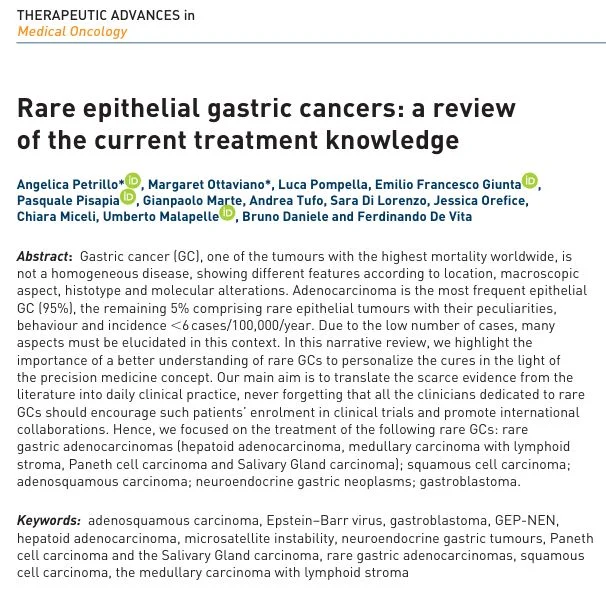
“Review published in Therapeutic Advances in Medical Oncology.
Rare epithelial gastric cancers are often overlooked but pose significant clinical challenges due to their heterogeneity and limited evidence base.
This review brings together current treatment knowledge, offering valuable insights to support clinical decision-making and identify future research priorities.
Key highlights:
• Overview of rare gastric cancer subtypes
• Current therapeutic strategies and limitations
• Emerging perspectives for improved patient outcomes”
Nelson Dusetti — INSERM Research Director, CRCM & Paoli-Calmettes Institute| Pancreatic Cancer (PDAC) | Translational & Precision Oncology | Transcriptomic Signatures | Co-founder, Predicting Med | France
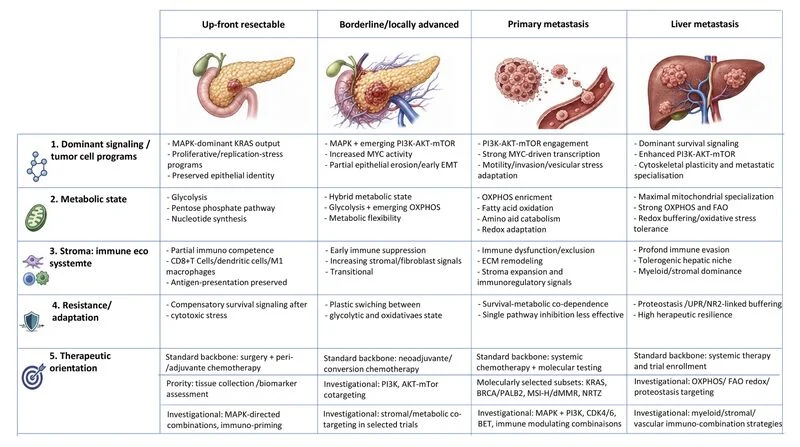
“Towards biologically informed precision medicine for pancreatic cancer.
I am pleased to share our latest collaborative review published in Translational Oncology, resulting from a growing scientific interaction between research groups from Argentina and France, including colleagues from CONICET, CRCM – Centre de Recherche en Cancérologie de Marseille, and Institut Paoli-Calmettes.
Beyond the review itself, this work reflects a shared vision that has progressively emerged within our international network: pancreatic cancer should increasingly be understood and managed according to its biological dependencies rather than solely by anatomical criteria.
Over the past years, major efforts from our groups and many others have contributed to:
• defining molecular and transcriptomic stratification approaches
• characterizing tumor and microenvironmental heterogeneity
• identifying pathway dependencies and adaptive states
• developing predictive signatures of therapeutic sensitivity
These advances are progressively moving the field toward a new paradigm in which patient stratification and treatment selection may ultimately rely on the integration of molecular, functional, and clinical information.
This conceptual framework is particularly important because it provides a common language to connect several ongoing international initiatives dedicated to:
• biological classification of PDAC
• prediction of treatment sensitivity and resistance
• identification of actionable vulnerabilities
• development of personalized therapeutic strategies
We believe that future progress in pancreatic cancer will depend on strong international collaborations capable of integrating multidisciplinary expertise and large clinically annotated patient cohorts.
The Franco-Argentinian scientific network represents an excellent example of how long-term international collaborations can contribute to shaping this emerging vision of precision oncology.
Very grateful to all co-authors and collaborators involved in this collective effort.”
Federico Nichetti — MD, Medical Oncologist | Italy
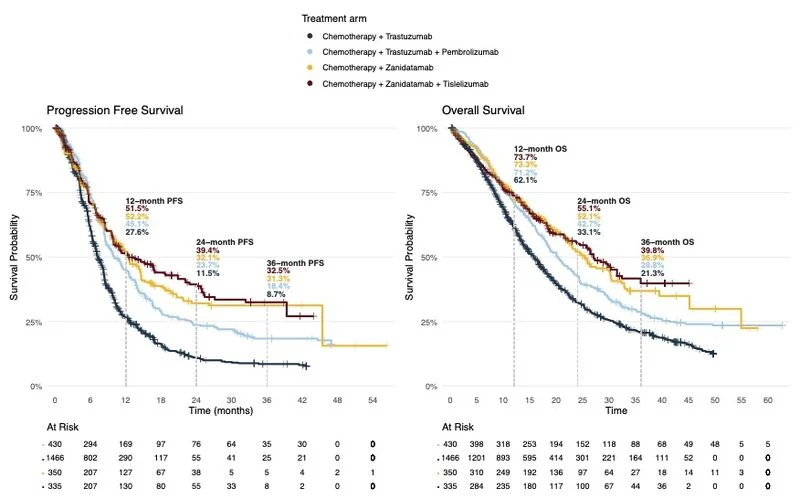
“Have a look at our latest work, just published in The Oncologist by Oxford University Press, titled ‘Zanidatamab versus Trastuzumab with or without PD-1 blockade in HER2-positive metastatic gastric cancer: a reconstructed patient-level pooled analysis.’
How should we position zanidatamab against the current first-line standard in HER2-positive advanced gastric and gastroesophageal adenocarcinoma?
And how might sequencing evolve as new options mature?
To explore these questions, we used reconstructed patient-level data from nine phase 2/3 trials to perform a pooled comparison of first-line regimens.
Zanidatamab-based regimens were associated with longer PFS and OS compared with the pembrolizumab plus trastuzumab plus chemotherapy standard.
This is an exploratory, hypothesis-generating analysis based on indirect comparison, not final evidence, and direct randomized trials remain necessary.
It is meant as a reflection on how treatment strategies and sequencing in this setting may evolve.”
Arndt Vogel — Head of the Center for Personalized Medicine, MHH at Medical University of Hanover | Germany
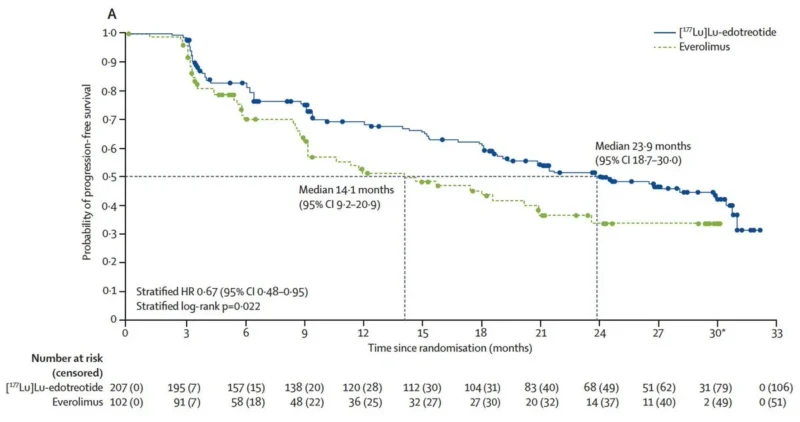
“[¹⁷⁷Lu]Lu-edotreotide versus everolimus for gastroenteropancreatic neuroendocrine tumors: COMPETE, published in The Lancet.
• ORR: 22% vs 4%
• Median PFS: 23.9 vs 14.1 months
• Median OS: 63 vs 58 months
These data support PRRT as an effective second-line treatment.”
Huan Xi — MD, PhD Candidate at UMCG, Nuclear Medicine Researcher in Y-90 Radioembolization | Dosimetry | Netherlands
“Happy to share that our paper has been published in EJNMMI.
In this study, we investigated how dose heterogeneity influences treatment response and toxicity following 90Y selective internal radiation therapy for hepatocellular carcinoma.
Our findings suggest that different patterns of dose heterogeneity provide complementary information beyond conventional dose metrics for predicting tumor response and treatment-related toxicity.
Many thanks to my supervisors Walter Noordzij, Oleksandra Ivashchenko, Andor Glaudemans, and all co-authors for their guidance and collaboration.
I am also grateful to the Graduate School of Medical Sciences – University of Groningen and the UMCG Nuclear Medicine and Molecular Imaging Department for providing a supportive research environment.
Effects of dose heterogeneity on response and toxicity after 90Y-SIRT for HCC.”
Henry Kao, PhD — Immuno-Oncology Translational Medicine Strategy, Oncology Drug Development | United States
“Our Phase 2 trial comparing the bispecifics lomvastomig, a PD-1–TIM-3 bispecific antibody, and tobemstomig, a PD-1–LAG-3 bispecific antibody, with nivolumab in patients with advanced esophageal squamous cell carcinoma has now been published in Clinical Cancer Research.
Together with the recently published first-in-human studies of lomvastomig and tobemstomig, this work reflects several years of clinical research aimed at defining the distinct contributions of TIM-3 and LAG-3 blockade with PD-1 inhibition through integrated clinical and translational biomarker studies.
My sincere thanks to the outstanding translational, clinical, and cross-functional teams whose expertise and dedication made these studies possible, and above all to the patients and their families for participating in these trials and advancing cancer research.
Publications:
A Randomized, Nivolumab-controlled, Phase 2 and Biomarker Study of Lomvastomig and Tobemstomig in Advanced or Metastatic Squamous Cell Carcinoma of the Esophagus
A First-in-Human Phase I Clinical Trial Evaluating Clinical Activity and Proof of Mechanism of Tobemstomig, a PD-1–LAG-3 Bispecific Antibody, in Patients with CPI-Experienced Melanoma
First-in-Human Study of Lomvastomig, a PD-1–TIM-3 Bispecific Antibody, in Patients with Advanced and/or Metastatic Solid Tumors”
Henrique Kim — Medical Oncology Resident at A.C. Camargo Cancer Center | Brazil
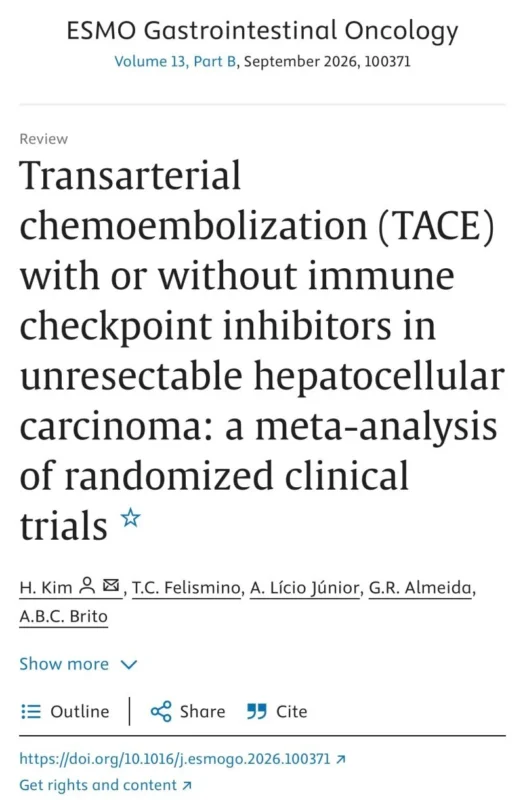
“I’m very happy to share that our new meta-analysis has been published in ESMO Gastrointestinal Oncology.
Our study included six randomized clinical trials involving more than 2,400 patients with unresectable hepatocellular carcinoma.
Our findings showed that adding immune checkpoint inhibitors to TACE:
• improved progression-free survival
• increased objective response rates
• was associated with higher toxicity
• showed a borderline overall survival benefit, although the data remain immature and longer follow-up is needed
I’d also like to thank this incredible team for making this possible, especially Dr. Tiago Cordeiro Felismino and Dr. Angelo Brito, for their amazing mentorship and support throughout this project.”
Apostolos Zaravinos — Professor of Cancer Genetics at European University Cyprus | Cyprus
“Very happy to share our latest publication in IJMS: ‘Immune Cytolytic Activity Correlates with Tumor Microenvironmental Aberrations in Colorectal Cancer.’
In this study, we investigated the relationship between immune cytolytic activity and the tumor microenvironment in colorectal cancer, highlighting how immune-mediated tumor killing is associated with distinct microenvironmental alterations.
Our findings provide insights into the complex interplay between antitumor immunity and the tumor microenvironment, with potential implications for patient stratification and the development of more effective immunotherapeutic strategies.
Warm congratulations to the team.”
Find out 10 Must-Read Posts in GI Oncology from the second week of July on OncoDaily.